
This New York Flea Market Makes Every Sunday Feel Like A Festival For Treasure Hunters
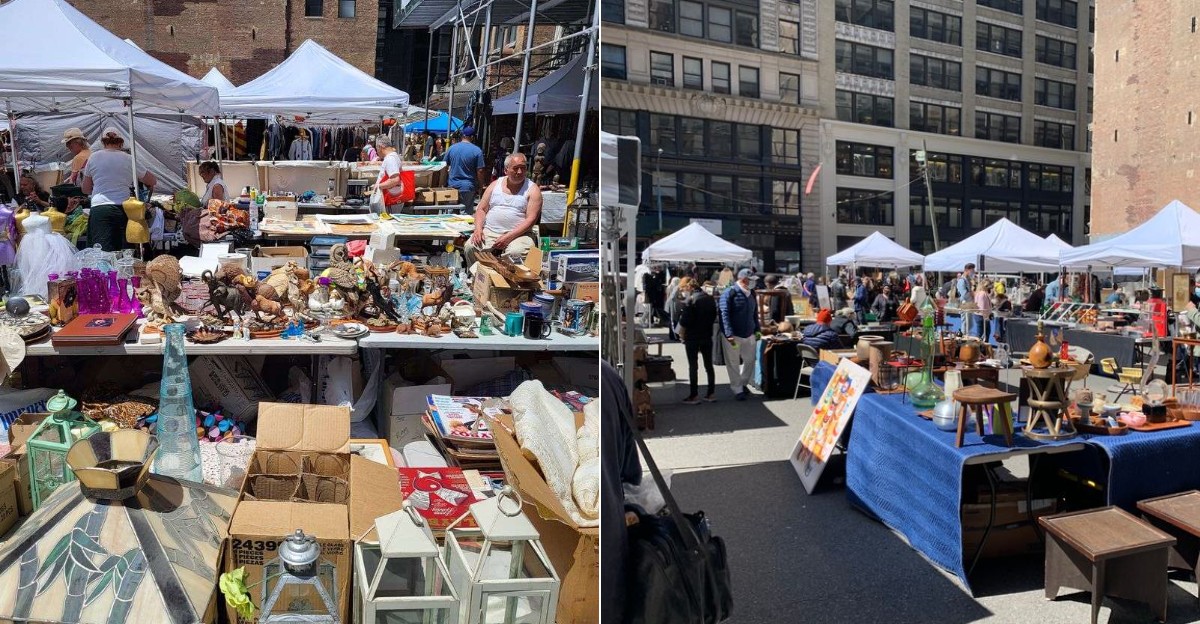
Some mornings in New York start with coffee and a plan. Others start with folding tables snapping open, crates sliding across pavement, and vendors arranging objects that have already lived a hundred lives.
Picture a single city block where an Art Deco brooch sits beside dusty vinyl, a carved wooden statue leans against a battered typewriter, and nobody rushes you along. Every weekend, it turns into an open-air party for people who love the thrill of the find.
Collectors arrive early with cash. Designers scan the tables for one perfect piece.
Tourists wander in by accident and leave hours later carrying something they cannot stop grinning about.
Prices get discussed, stories get traded, and the selection changes every weekend. It is louder, messier, and far more fun than a polished shop.
If treasure hunting sounds like your kind of sport, New York has a market waiting for you.
A Weekend Block Full Of Wonders
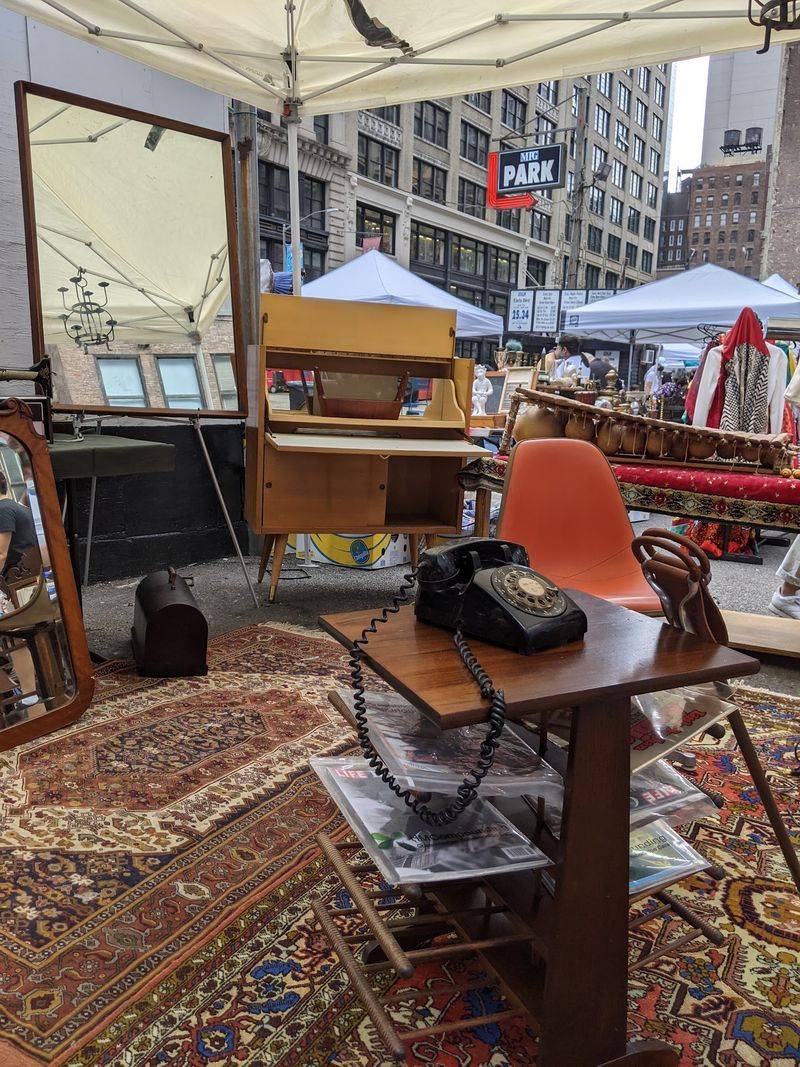
Chelsea Flea is the name to remember, and it sits on a single Manhattan block that fills up with tables, racks, crates, and curiosities every weekend. Between 50 and 60 regular vendors set up here most weekends, and during busy stretches that number can climb toward 135.
The market is compact, which is honestly part of the charm. You will not need a map or a whole afternoon.
A thorough lap takes about an hour, though plenty of visitors lose track of time and stay longer.
Entry costs nothing at all. You simply walk in, and suddenly you are surrounded by antique furniture, decorative arts, old coins, retro toys, comic books, global textiles, and jewelry piled high in glittering tangles.
Everything happens outdoors, year-round, rain or shine. That means the mood shifts with the seasons.
A crisp autumn morning here feels completely different from a warm spring one, and regulars will tell you both are worth showing up for.
New York has plenty of shopping options, but few of them let you handle objects with real history attached. Here, the hunt is the whole point.
Vintage Fashion Racks Worth Digging
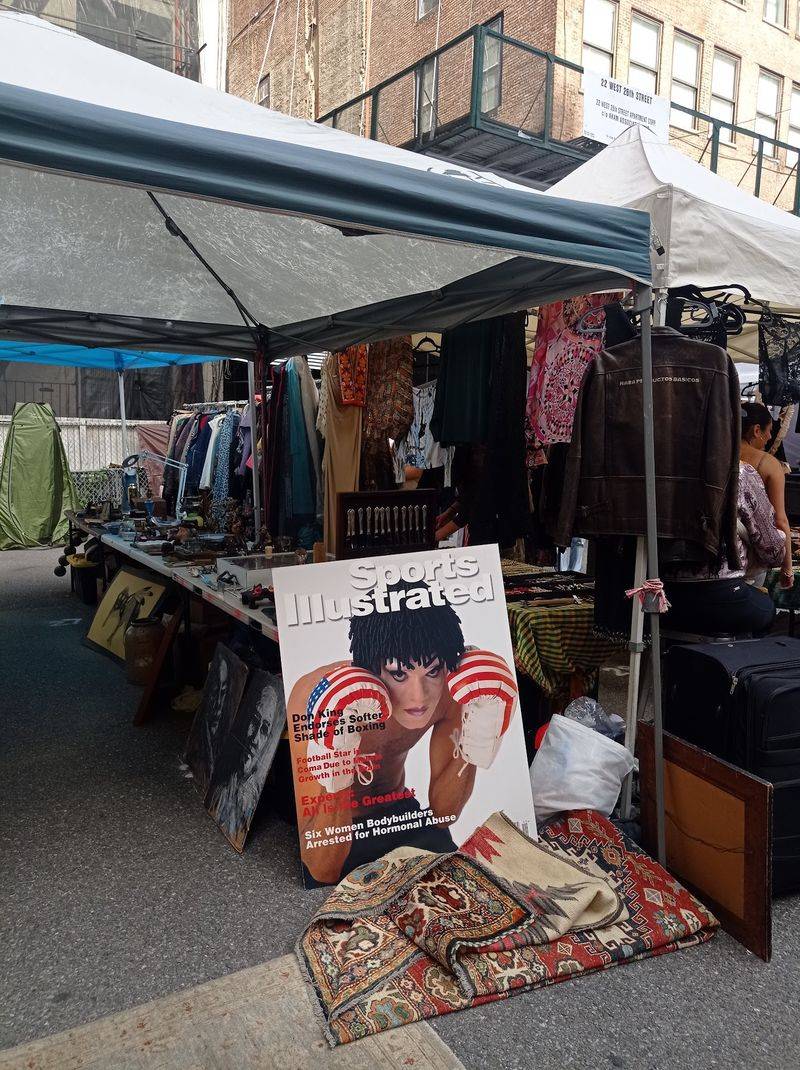
Racks of clothing here are not sorted by size or season. They are stuffed, layered, and gloriously random, which is exactly why fashion lovers keep coming back.
Expect vintage coats with heavy shoulders, silk scarves in patterns nobody prints anymore, leather bags with worn handles, and shoes that have clearly walked through several decades. Mid-century pieces mix with 1970s finds and the occasional designer label hiding between two ordinary jackets.
One tourist described the experience as untangling a giant knot of necklaces until something beautiful appeared. Patience genuinely pays off at these tables.
Here is a practical tip visitors share often: make one full lap before buying anything. The same style of ring or similar handbag may appear at three different booths at three different prices.
Circling back saves money and prevents that sinking feeling of spotting a better deal ten minutes too late.
Try things on if the vendor allows it, since old sizing rarely matches modern labels. Bring a tote bag too, because arms fill up fast.
New York fashion history is stitched into these garments, and wearing one home means carrying a piece of that story with you.
Are you the type who hunts for a specific decade, or do you let the rack surprise you?
Jewelry Tables That Sparkle Loud
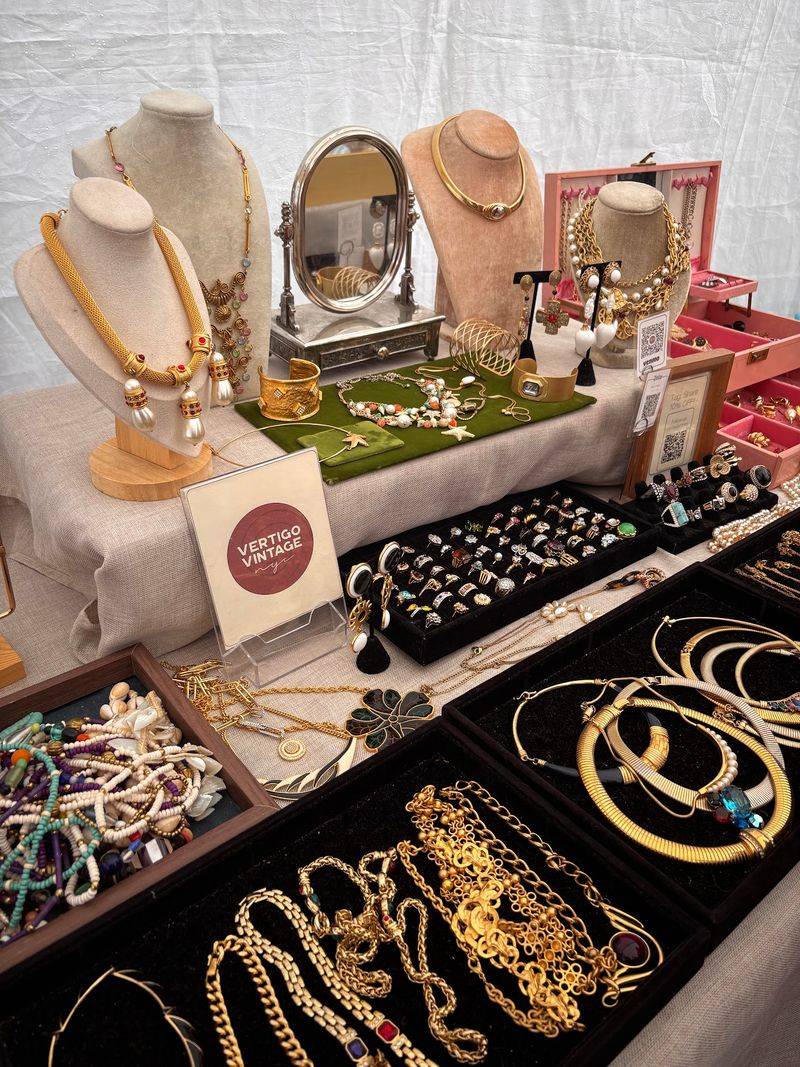
Glass cases catch the morning light first, and jewelry is one of the biggest draws on this block. Art Deco rings, mid-century brooches, pearl strands, antique watches, and cufflinks fill velvet trays that vendors guard with obvious pride.
Some sellers specialize in one era and can tell you the decade of a setting just by glancing at it. Others simply dump a mountain of chains on a table and let shoppers dig.
Both approaches have their fans.
Small bills help enormously here. Many vendors prefer cash, some do not take cards at all, and having exact change makes friendly price talk much smoother.
ATMs sit on site but usually charge a fee.
Bargaining is normal and expected, though not every vendor budges. Ask politely, listen to the answer, and move along if the number stays firm.
There is always another table.
A quick word of advice from experienced buyers: if you are eyeing something expensive, check the piece carefully in daylight and know roughly what similar items sell for elsewhere.
New York collectors treat these tables like a serious sport, and watching them work is entertainment on its own.
Records, Cameras And Retro Curiosities
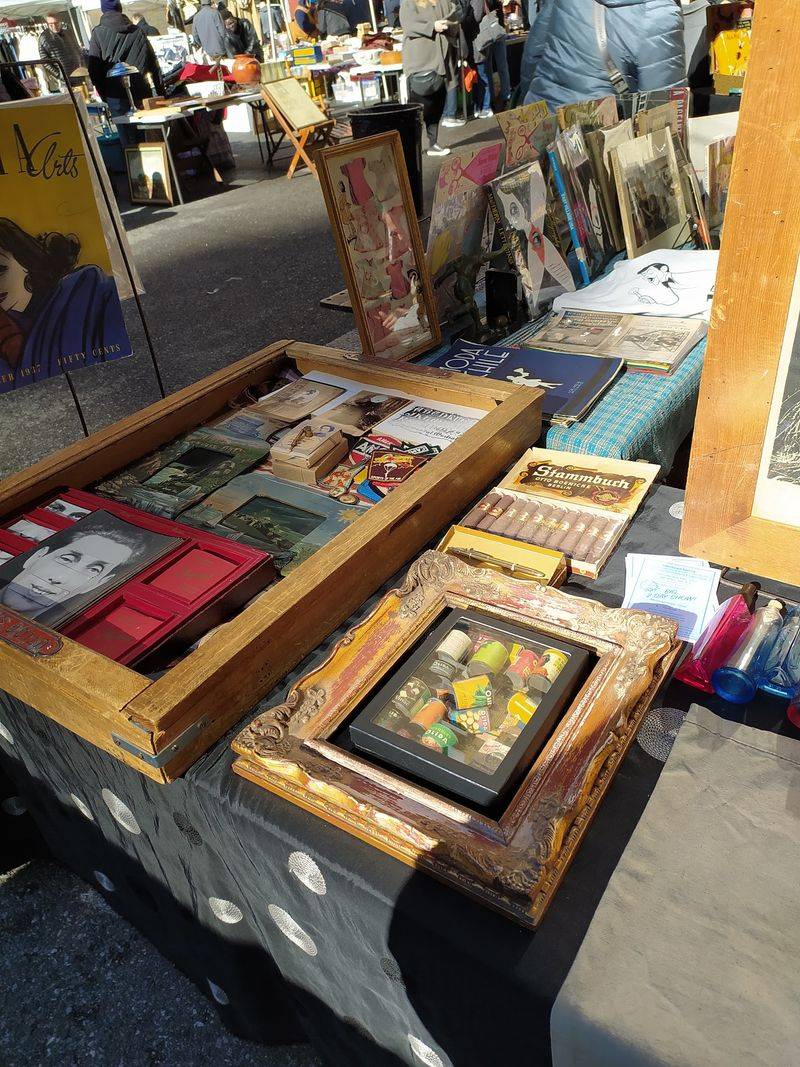
Flip, flip, flip. That sound of fingers moving through record crates is the soundtrack of one corner of this market, and it pulls in music lovers like a magnet.
Vinyl sits alongside old film cameras, vintage magazines, stamps, comic books, and toys that once lived in someone’s childhood bedroom. Musical instruments appear too, sometimes scratched, sometimes surprisingly playable.
Collectors love this section because inventory rotates constantly. Many vendors have traded here for years and keep bringing fresh stock, so the album you passed up last weekend is probably gone, replaced by something else entirely.
Do not skip the back alley or the sellers stationed along the side of the street. Visitors frequently mention that some of the best oddities hide in those overlooked spots.
Examine records before buying. Slide the disc out, tilt it toward the light, and check for deep scratches.
Same goes for cameras: open the back, test the shutter, ask whether film is still available for that model.
Ephemera fans will find old postcards, ticket stubs, and paper scraps of New York life that never made it into any museum.
Which would tempt you more: a record you have hunted for years, or a camera that still clicks perfectly?
Global Art With Real Stories
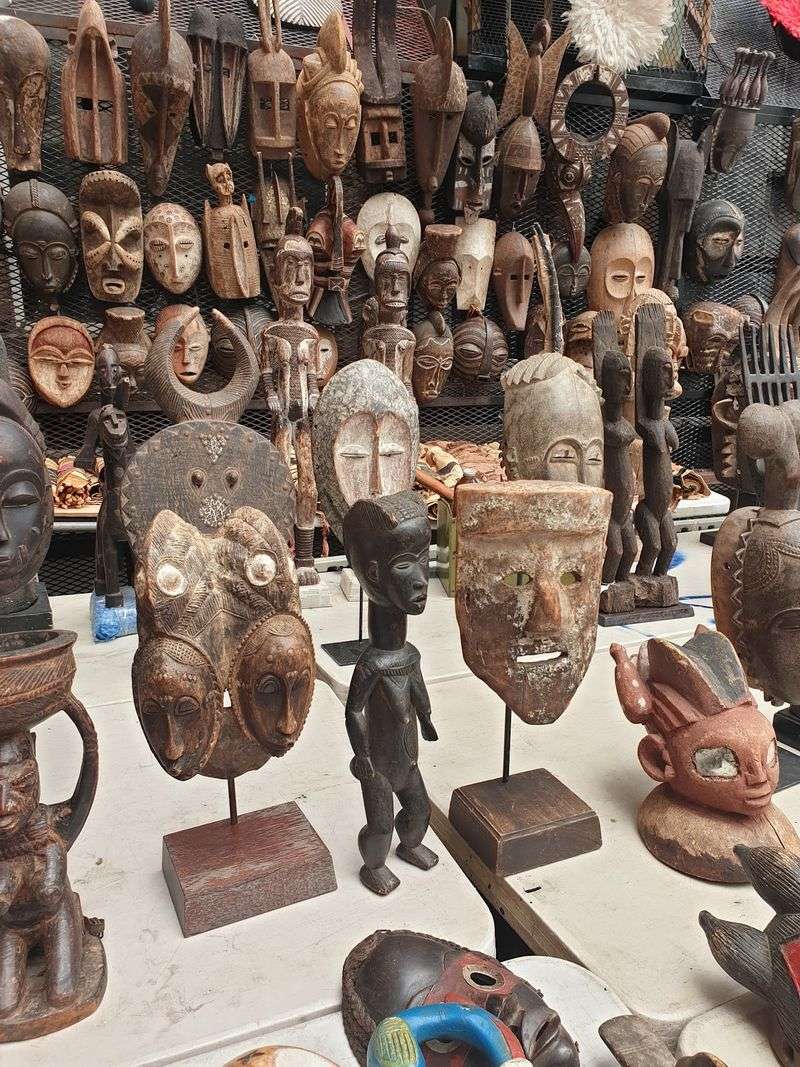
One visitor from Brazil bought a carved wooden statue here, learned it came from Ivory Coast, gave it a name, and now keeps it displayed at home as a family favorite. Objects at this market tend to travel with their stories attached.
Hand-carved African masks and figures fill a few of the larger stalls, along with textiles from around the world, Chinese artifacts, and decorative pieces that clearly crossed oceans before landing on this block.
Architectural salvage shows up too. Old door handles, iron brackets, sections of molding, and light fixtures rescued from buildings that no longer stand.
Vendors in this section often enjoy explaining where an item came from, so asking questions is welcome. That conversation frequently turns out to be the best souvenir of all.
Think about size and weight before you commit. A large statue looks manageable until you are carrying it through a subway turnstile, so consider shipping options or plan a taxi ride.
New York has always been a city built by people from everywhere, and these tables reflect that beautifully. The mix feels honest rather than staged.
If you brought home one handmade object from across the world, where would you put it in your house?
Snack Stops Between The Stalls
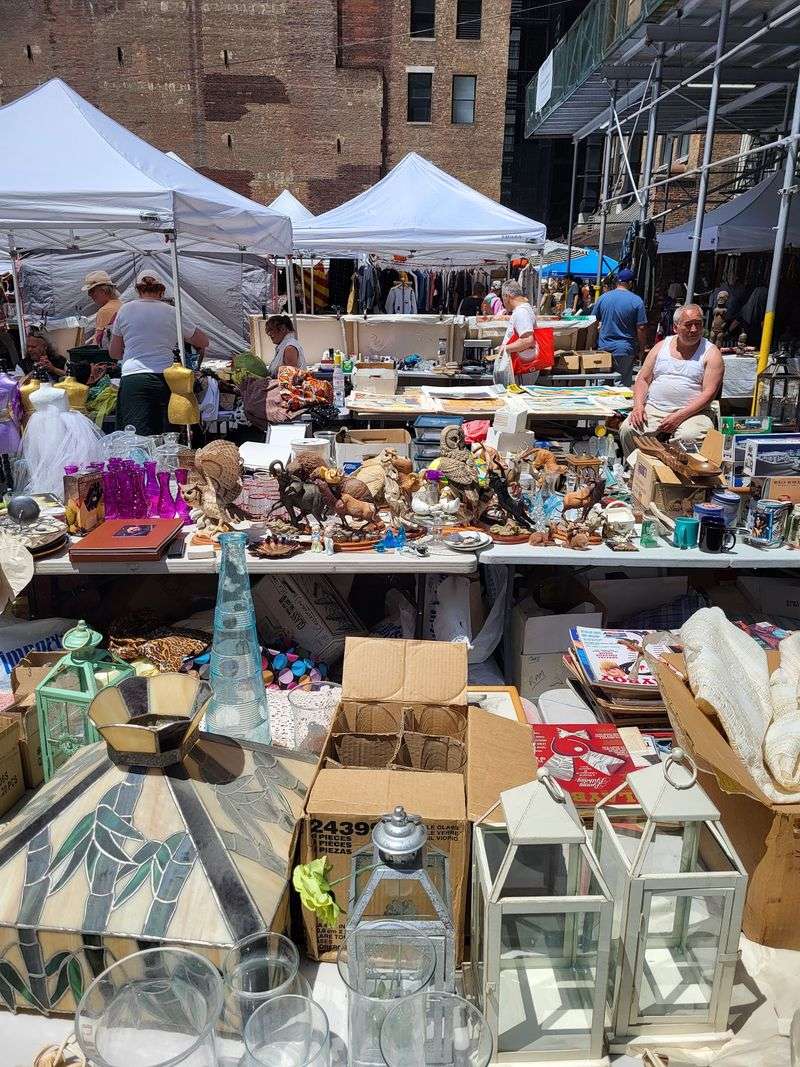
Treasure hunting burns energy, and thankfully the food situation here is handled properly. Vendors connected to Smorgasburg, the famous weekend food market, set up alongside the antique tables.
Pop-up stalls lean toward crowd-pleasers. Sweet treats appear regularly, and Mexican-inspired elote shows up with its warm corn, creamy topping, and generous dusting of cheese and spice.
Gluten-free, vegan, and vegetarian choices are usually available too.
Eating here is part of the rhythm. Shop a while, grab something warm, watch the crowd, then head back in for round two with renewed focus.
The people-watching alone justifies a snack break. Serious collectors examine porcelain with a flashlight, interior designers photograph chairs, and curious first-timers hold up strange objects trying to figure out what they even are.
Leashed pets are welcome, so expect a few dogs weaving between shopping bags and collecting attention from strangers.
Menus shift with the seasons and vendor schedules, so treat every visit as a small surprise rather than a guaranteed order.
A Market With Deep Roots
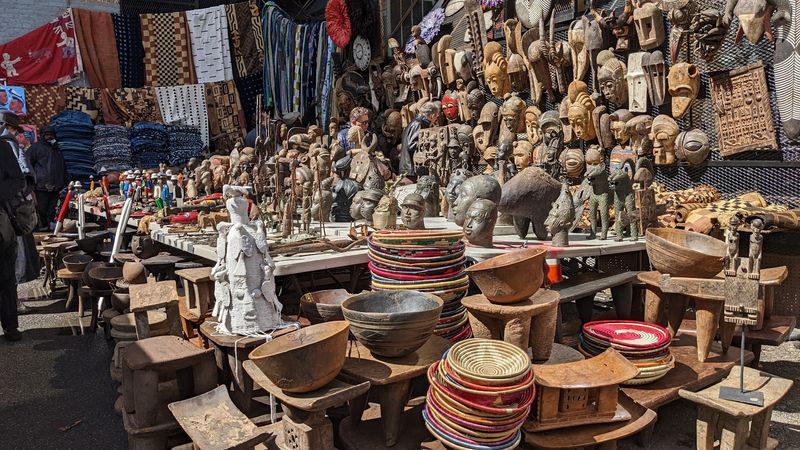
Back in 1976, an entrepreneur opened what became known as the Annex Markets on this stretch of Manhattan, and the whole thing grew into one of the largest flea markets in the city.
Historians of the neighborhood give it real credit. The market helped pull artists and galleries into Chelsea during the 1990s, shaping the arts district the area became known for.
Things shifted over the years. In 2019 the Hell’s Kitchen Flea Market merged into what remained of the Chelsea operation.
Then in 2020 the market was revived and renamed under the team behind Brooklyn Flea.
Plenty of original vendors are still here, which regular visitors point out with genuine affection. Some have been selling on this block for decades, and their knowledge runs deep.
That history is one reason the selection feels unusually strong. Longtime traders know what matters, what is rare, and what deserves shelf space.
New York changes constantly, buildings rise, shops close, neighborhoods reinvent themselves. A weekend market that has survived since the 1970s is a small miracle worth appreciating while you browse.
Smart Tips Before You Arrive
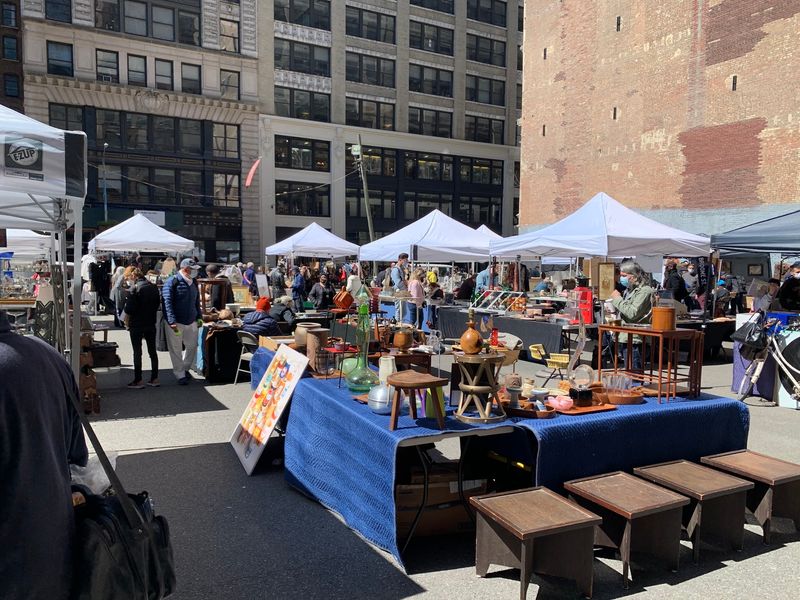
Early birds win here, plain and simple. Doors open at 8 AM on market weekends, and the first two hours bring the best selection with the thinnest crowds.
Closing time is 5 PM and it happens promptly.
Hours and special event dates can shift, so check the official website or social media before you head out. Nobody enjoys arriving to a locked gate.
Bring cash. Many vendors prefer it, some accept nothing else, and small bills make price conversations easier.
On-site ATMs exist but may add a fee.
Wear comfortable shoes and pack a reusable bag or two. The pavement is unforgiving and your hands will fill up faster than expected.
Skip driving if you can. Street parking in this part of Manhattan gets tricky, and subway lines 1, R, or W drop you near 28th Street within an easy walk.
Madison Square Park sits close by for a post-shopping rest.
The address to save in your phone is 29 West 25th Street, New York, NY 10010, sitting neatly between 5th and 6th Avenues in the heart of the city.
New York rewards visitors who wander with open eyes, so what treasure will you carry home from this one?