
This New York Forest Is One Of The Last Places On Earth Where You Can Walk Among 400-Year-Old Ancient Trees
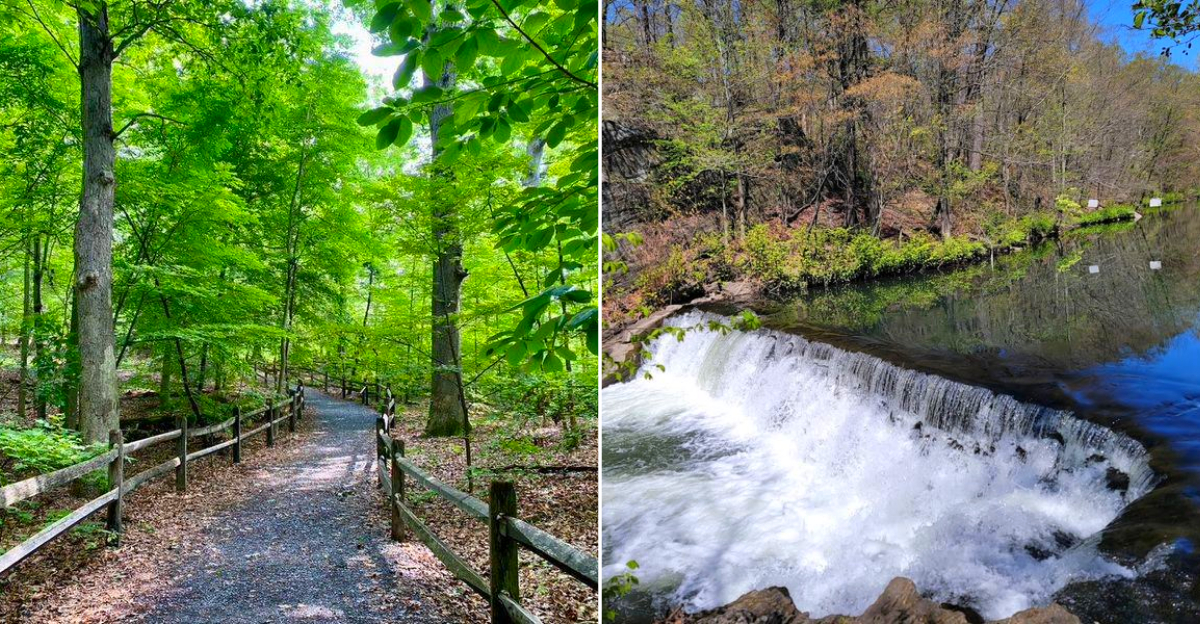
Four hundred years old means these trees were already grown before the United States existed. Before this state had a name. Before almost anything in the modern world was built or imagined or even considered possible.
Walking among them produces a feeling that is hard to name exactly but easy to recognize. Something between humility and complete awe that arrives quietly and stays longer than expected.
Old growth forest this rare does not exist in many places anymore. Most of it was cleared long ago and never came back. New York held onto this particular patch and what remains is something genuinely extraordinary.
The whole place feels older than the trail running through it and it is. Visitors who come expecting a nice walk in the woods leave having experienced something considerably more significant than that.
Go slowly. Pay attention. Not many places like this are left.
A Forest That Time Forgot
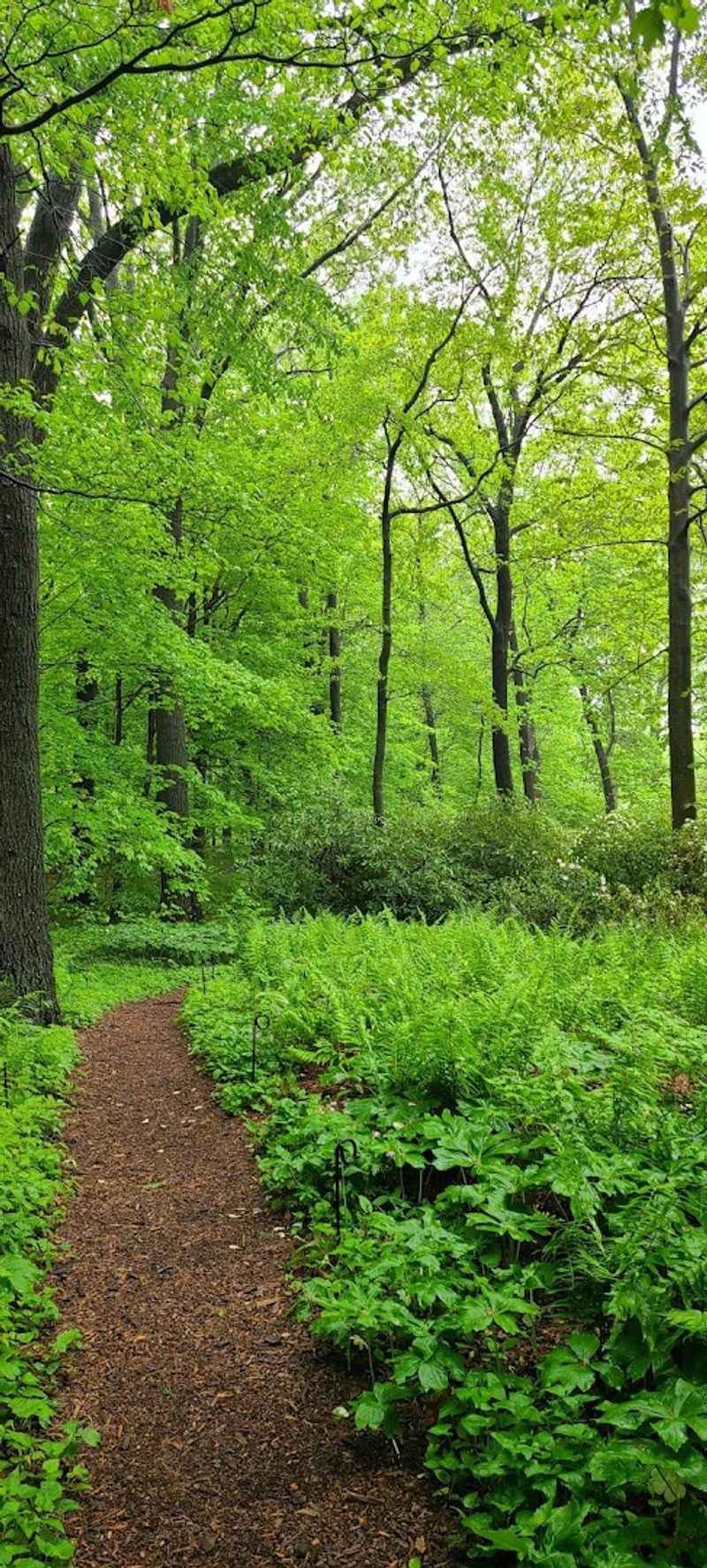
Before New York City was a city, before roads cut through the land and buildings rose toward the sky, a forest was already growing in what is now the Bronx. That same forest is still standing today.
It has never been cleared for farmland or timber, which makes it extraordinarily rare on the entire East Coast of North America.
Old-growth forests are not just old trees. They are complete, layered ecosystems that took centuries to develop.
The soil, the fungi, the birds, the insects, and the trees all work together in ways that a young forest simply cannot replicate. Walking through one feels entirely different from a typical park stroll.
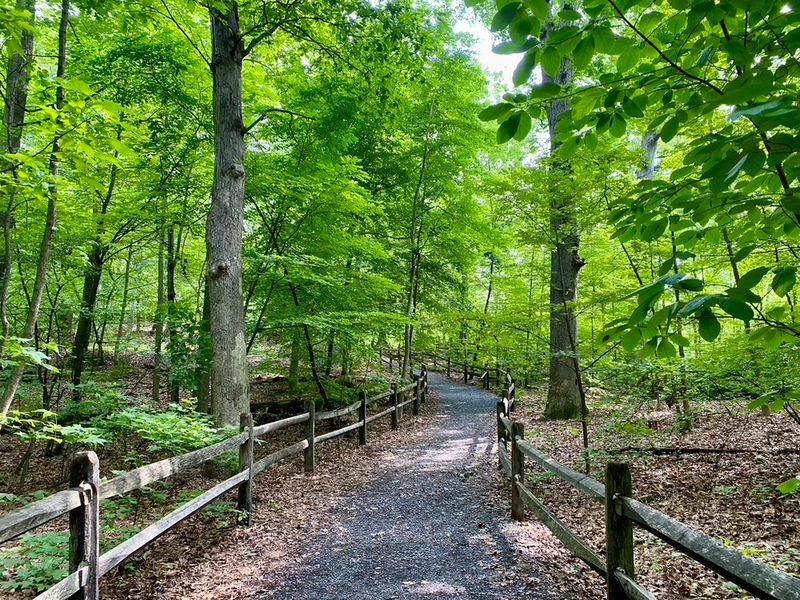
The canopy here is thick and cathedral-like. Massive oaks and tulip trees stretch upward, blocking out the city noise and replacing it with birdsong and rustling leaves.
You genuinely forget you are in one of the most densely populated cities on the planet. That kind of escape is priceless and increasingly hard to find anywhere in the world.
Welcome To The Thain Family Forest
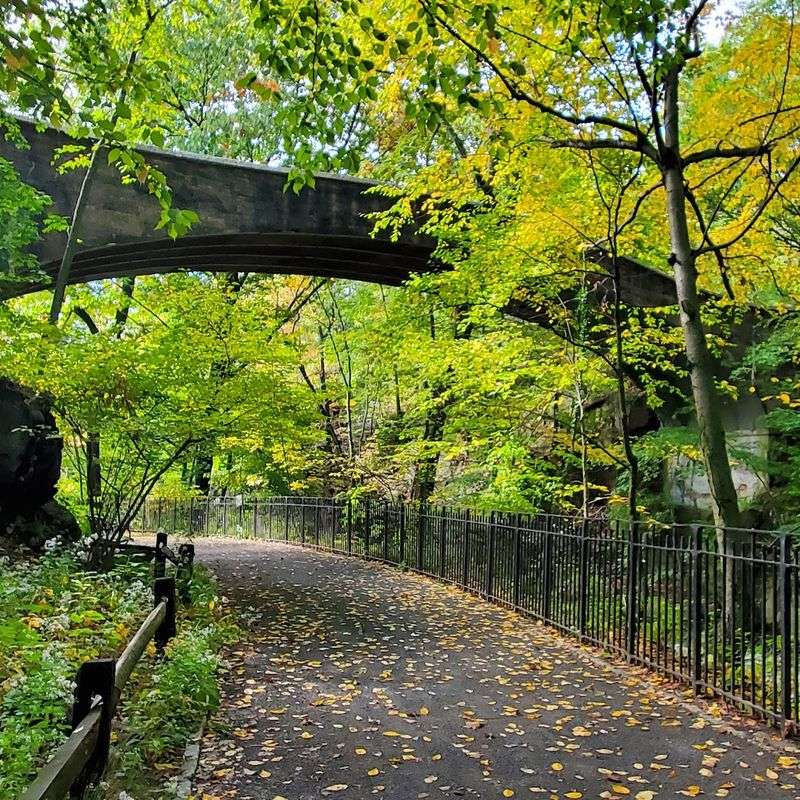
The Thain Family Forest sits within the grounds of the New York Botanical Garden at 2900 Southern Blvd, Bronx, NY 10458. Covering 50 acres, it is widely recognized as the largest surviving remnant of the original woodland that once blanketed much of New York City.
That is not a small claim, and it holds up completely.
The garden itself was founded in 1895, and the founders specifically chose this site because of the forest.
Nathaniel Lord Britton, a co-founder and the garden’s first director, called the forest “the most precious natural possession of the city of New York.” That quote is over a century old and still rings completely true.
Getting there is straightforward whether you take the Metro-North train to the Botanical Garden stop or drive up to the Bronx. The garden opens at 10 AM Tuesday through Sunday and is closed on Mondays.
Plan to spend at least a few hours here because the forest alone deserves your full, unhurried attention. Rushing through it would be a genuine disservice to yourself.
Trees Older Than The Nation Itself
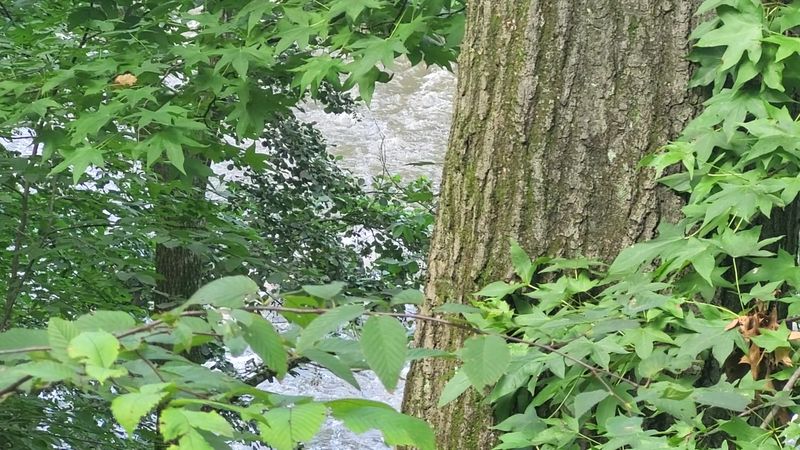
Some of the trees standing in the Thain Family Forest were already mature when the first European settlers arrived in New York. Certain oaks and tulip trees are estimated to be 300 years old or more, which means they were growing long before the United States existed as a country.
That kind of age is almost impossible to fully process.
Standing at the base of one of these giants gives you a perspective that no museum exhibit can match. The trunk is so wide you cannot wrap your arms around it.
The bark is deeply furrowed, like the surface of something ancient and wise. You are not just looking at a tree.
You are looking at a living timeline.
The forest features native hardwoods including oaks, sweetgums, maples, and towering tulip trees, all growing together as they have for centuries. Each species plays a role in the larger ecosystem, and none of them were planted by human hands.
They grew here naturally, on their own schedule, completely indifferent to the city that eventually grew up around them. That indifference is oddly inspiring.
Trails Carved By Native Americans
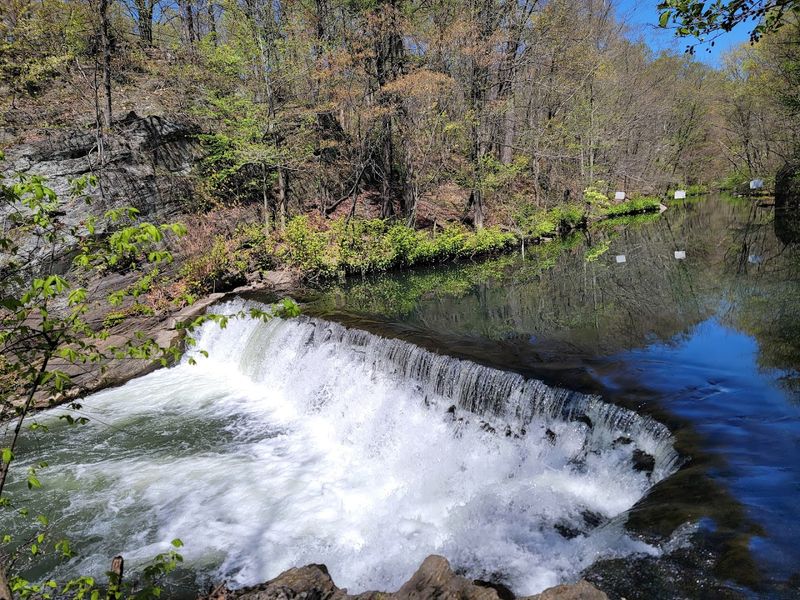
The paths winding through the Thain Family Forest are not modern constructions. Many of them follow routes originally carved out by the Lenape people, the indigenous people who lived in and around present-day New York for thousands of years before European contact.
Walking these trails means literally following in their footsteps.
There is something deeply grounding about that knowledge. Every turn in the path, every rise and dip in the terrain, was shaped by human feet long before the word “Bronx” existed.
The forest holds that history quietly, without fanfare, and it rewards visitors who take the time to slow down and pay attention.
The trails are well-maintained but still feel genuinely wild. Tree roots cross the paths, the ground is soft and uneven in places, and the light changes dramatically as you move through different parts of the canopy.
Wear comfortable shoes with good grip because the terrain can be unpredictable. Bring water, leave your earbuds at home, and let the forest do what it has been doing for centuries, which is offering a rare and honest kind of quiet.
Why This Forest Survived At All
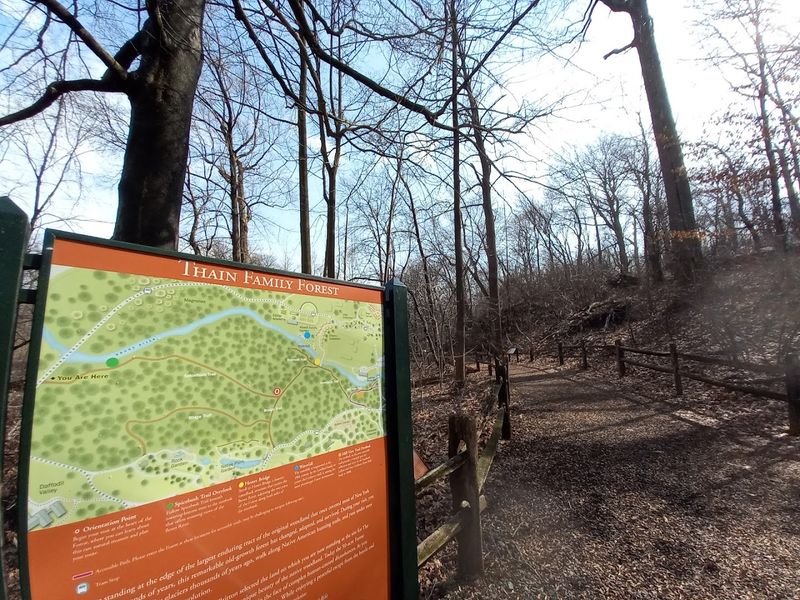
The fact that the Thain Family Forest exists at all is a minor miracle of circumstance and foresight. New York City underwent massive development over the past two centuries, and nearly every natural woodland within city limits was cleared.
The fact that this particular forest survived comes down to timing and intention.
When the New York Botanical Garden was being established in the 1890s, the founders recognized the ecological and historical value of the existing woodland on the site.
Rather than clearing it for garden beds or structures, they chose to preserve it as a core feature of the institution.
That decision protected the forest through the most intense period of urban expansion the city ever experienced.
The garden has maintained that commitment ever since. The forest is actively managed to remove invasive plant species and support native biodiversity, but it is never cultivated or artificially shaped.
The goal is always preservation and ecological health. As a result, visitors today are experiencing something that is genuinely irreplaceable.
No amount of money or technology could recreate what took centuries to grow naturally in the heart of New York.
The Sounds And Senses Of The Forest
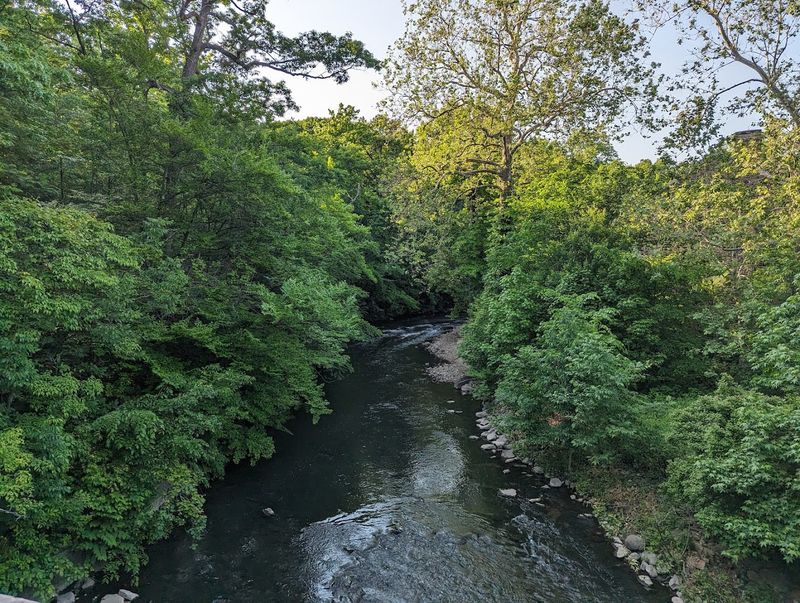
One of the first things visitors notice when they enter the Thain Family Forest is the sound, or rather, the change in sound. The ambient noise of the Bronx does not disappear entirely, but it fades quickly into the background.
What replaces it is birdsong, wind through the upper canopy, and the occasional creak of a large branch overhead.
The forest is home to a remarkable variety of bird species throughout the year. Migratory birds use the canopy as a rest stop during their seasonal journeys, and resident species call the forest home year-round.
Birdwatchers frequently visit specifically for the forest, and the garden even hosts guided birding tours for those who want expert company on the trails.
Beyond the sounds, the sensory experience of the forest is layered and rich. The air smells different here, earthy and cool even in summer.
The light shifts constantly as clouds move overhead and the canopy sways. The ground under your feet has a slight give to it from centuries of accumulated leaf litter.
Every one of your senses gets a genuine workout, and none of it feels staged or manufactured. That authenticity is the whole point.
Best Times To Visit And What To Expect
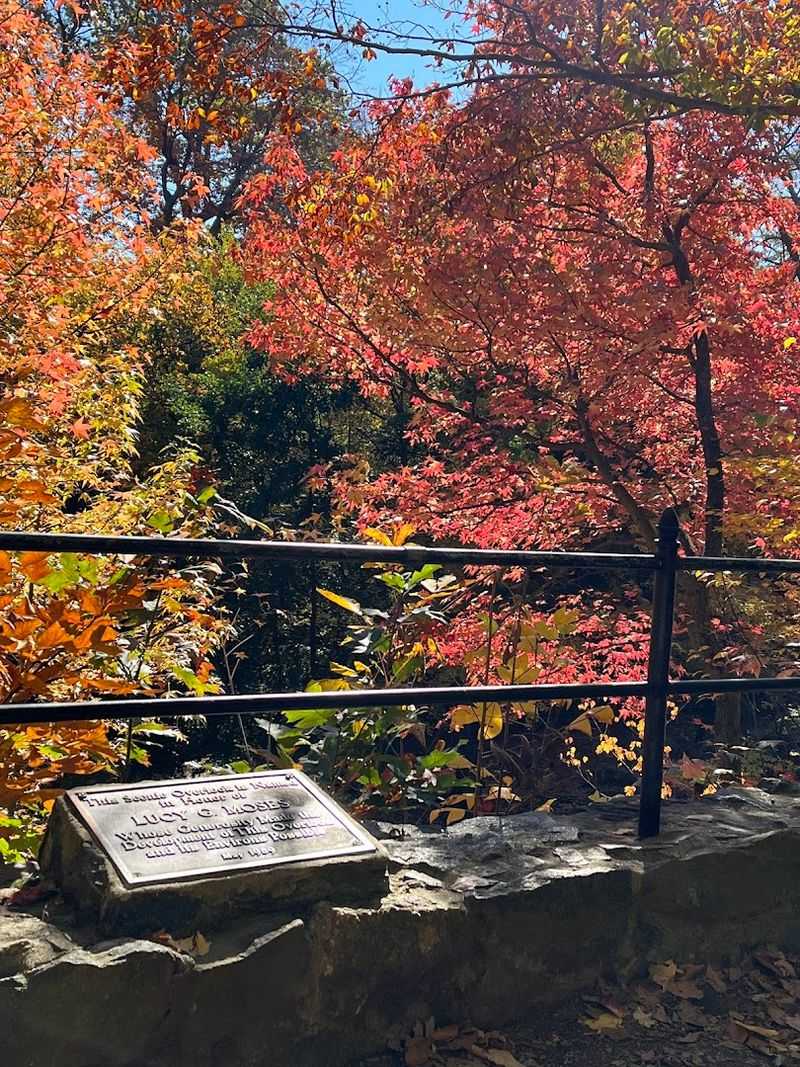
Every season brings a different version of the Thain Family Forest, and each one has something worth seeing. Spring brings wildflowers to the forest floor and fills the canopy with fresh green growth.
Summer deepens the shade and makes the forest feel like a cool refuge from the city heat. Fall turns the whole place into a spectacle of red, orange, and gold foliage that is genuinely hard to describe.
Winter is underrated. Without leaves on the trees, the full scale and structure of the forest becomes visible in a way that is impossible in warmer months.
The massive trunks and interlocking branch systems create a dramatic silhouette against the winter sky. Serious photographers often prefer this season for exactly that reason.
The New York Botanical Garden opens at 10 AM Tuesday through Sunday and is closed on Mondays. Admission is required to enter the garden grounds, and the forest is included with general admission.
Weekday mornings tend to be quieter, which is the ideal time to experience the forest without crowds. Bring comfortable walking shoes, dress for the weather, and allow yourself at least 90 minutes to explore the trails without feeling rushed.
A Living Lesson In Why Old Forests Matter
Old-growth forests are among the rarest ecosystems on Earth. Scientists study them to understand how healthy forests function before human interference.
The Thain Family Forest provides researchers and students with a living laboratory that cannot be replicated anywhere else in New York City. Its ecological value goes far beyond the beauty of the trees themselves.
The forest floor alone is a complex world. Fungi break down organic matter and transfer nutrients between trees through underground networks.
Insects and small mammals cycle energy through the system. Fallen logs and dead branches provide habitat for species that cannot survive in younger, managed woodlands.
Every element has a role, and every role has been in play for centuries.
For everyday visitors, the takeaway is simpler but no less powerful. Standing inside a forest that has never been cut down, that has grown and evolved on its own terms for hundreds of years, changes how you think about nature and cities and time.
The Thain Family Forest is not just a green space. It is a reminder that some things are worth protecting not because of what they produce, but because of what they simply are.
New York is lucky to still have it.