
This New York Market Brings Authentic European Bread Meats And Pastries To Shoppers
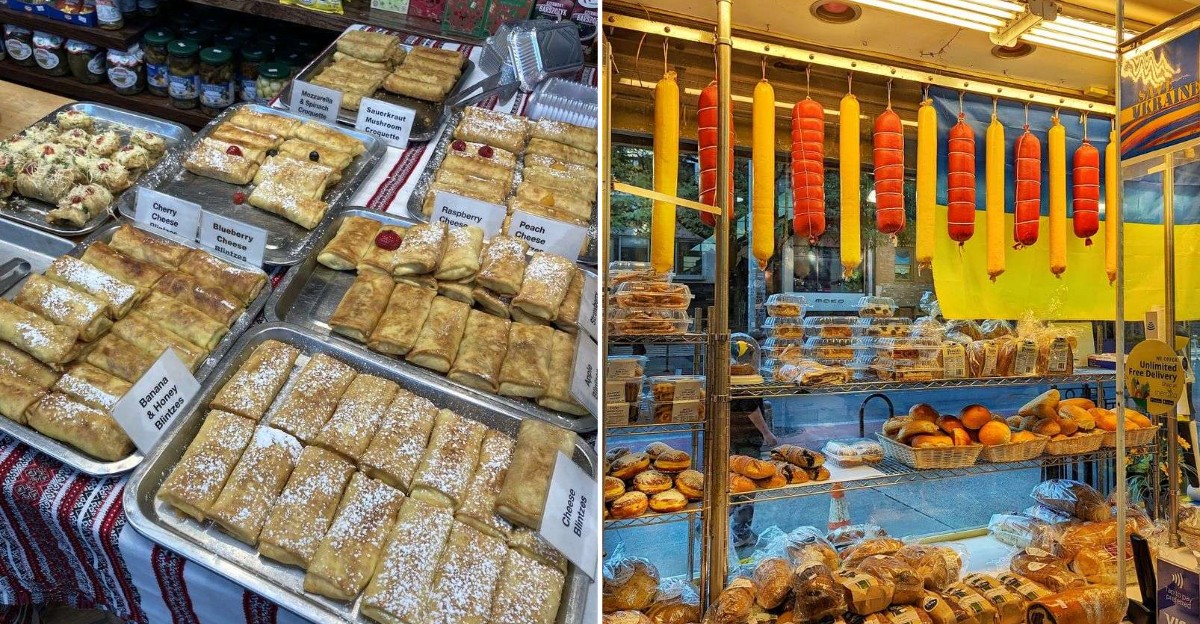
A European market in the heart of America, who would have guessed. This New York spot brings authentic bread, meats, and pastries straight from European tradition to local shoppers.
Shelves stretch floor to ceiling with imported goods most stores nearby simply don’t carry. Bread comes out fresh throughout the day, prepared using recipes passed down rather than modern shortcuts.
Meats and cheeses arrive sourced directly from regions known for producing them the traditional way. Regulars know exactly which imports to ask for by name, some available only in limited batches.
Nothing about the selection feels adapted or simplified for convenience over authenticity. This market proved that authenticity can travel further than expected and still feel completely at home.
A Ukrainian Dream That Opened Its Doors In 1970
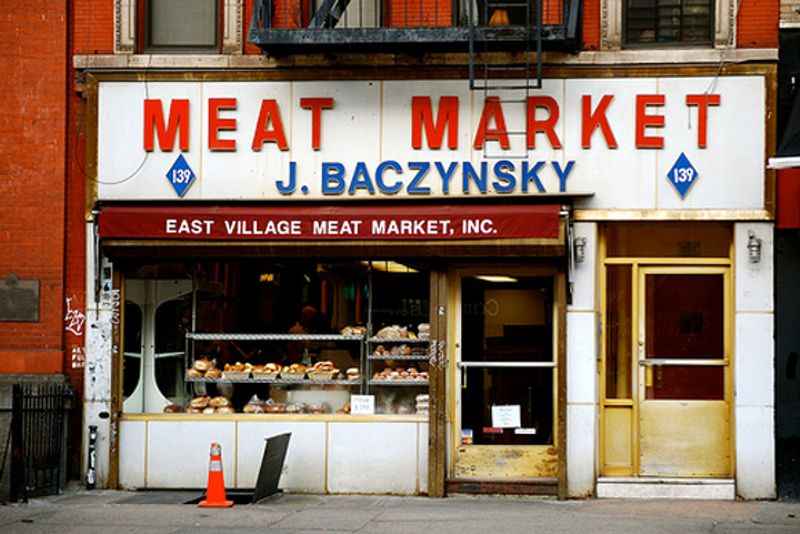
Julian Baczynsky arrived in the United States from Ukraine in 1950 with a fairly simple goal. Own a business. Keep the food of home alive in a new country.
Twenty years later, in 1970, he opened a butcher shop on Second Avenue in a stretch of Manhattan known as Little Ukraine. The neighborhood back then was full of Ukrainian churches, social clubs, bakeries, and delis.
Most of those shops have closed. Rents climbed, families moved, tastes shifted, and the block slowly changed around this one storefront.
What is remarkable is that the shop never chased trends to survive. No rebrand, no fancy relaunch, no gimmicks in the window.
The sausages still hang where sausages have always hung. The counter still runs long and busy on Saturday mornings.
For anyone curious about immigrant history in New York, a place like this teaches more than a plaque ever could. It shows a culture that stayed put through decades of change, one smoked ham at a time.
Weekday hours run from morning into the afternoon, and Sunday is a rest day, so planning matters. Saturdays draw the biggest crowds, mostly because that is when the widest spread appears.
You can find it at East Village Meat Market, 139 2nd Ave #1, New York, NY 10003.
Old School Butchers Working Behind The Counter
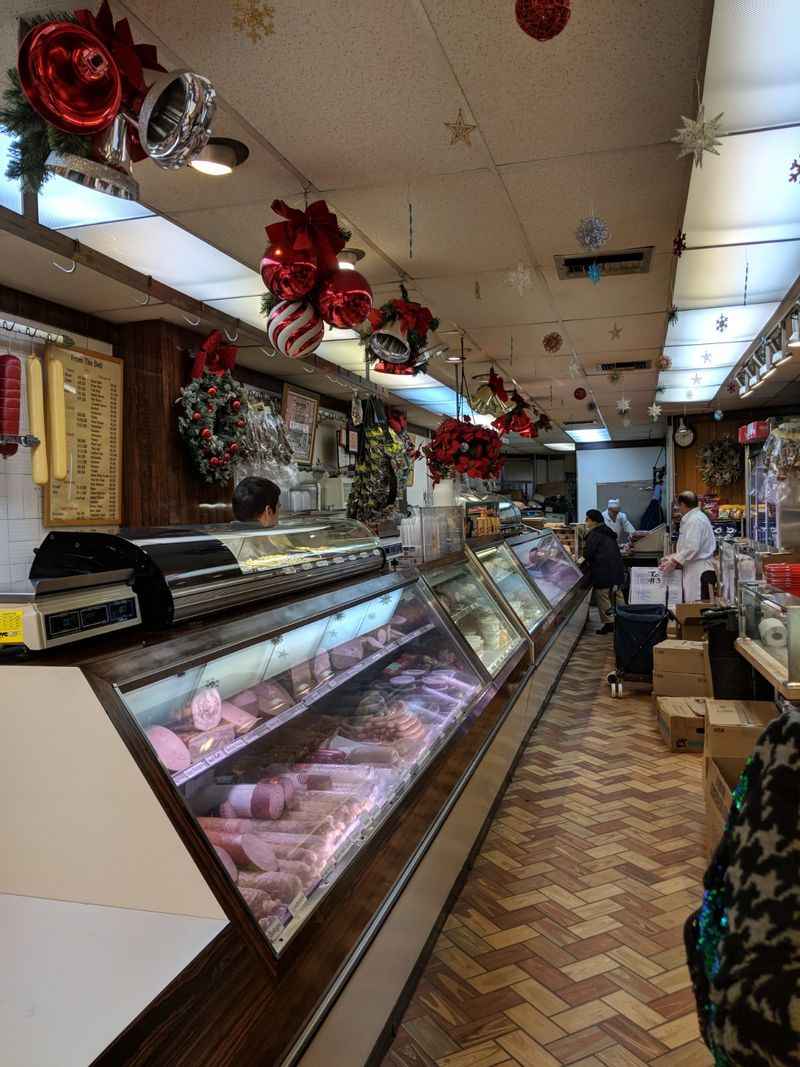
Aprons, paper wrapping, and a display case packed shoulder to shoulder with cold cuts. That is the setup here, and it has not changed much in decades.
The butchers actually know how to break down meat, not just pull trays from a warehouse box. Custom sausage blends get made to order, and dry-aged beef gets treated with real care.
Prime cuts sit alongside Ukrainian specialties in the same case, which is a fun contrast. A porterhouse and a link of house-smoked kielbasa share the same countertop.
Ordering works the old way. You tell the person behind the glass what you want; they slice it, wrap it in butcher paper, and hand it over.
That back-and-forth is half the appeal. Questions get answered, cuts get explained, and nobody rushes you toward a self-checkout screen.
The shop stays small, so on busy days the line forms fast. A little patience pays off, especially near holidays like Easter when the place turns into organized chaos.
Here is a practical tip. Go on a weekday morning if you want time to browse and chat without a crowd pressing behind you.
Butchery as a craft is disappearing from most neighborhoods. Watching it still happen daily on a Manhattan block feels like catching a rerun of a better show.
Kielbasa Smoked Fresh In The Back Kitchen
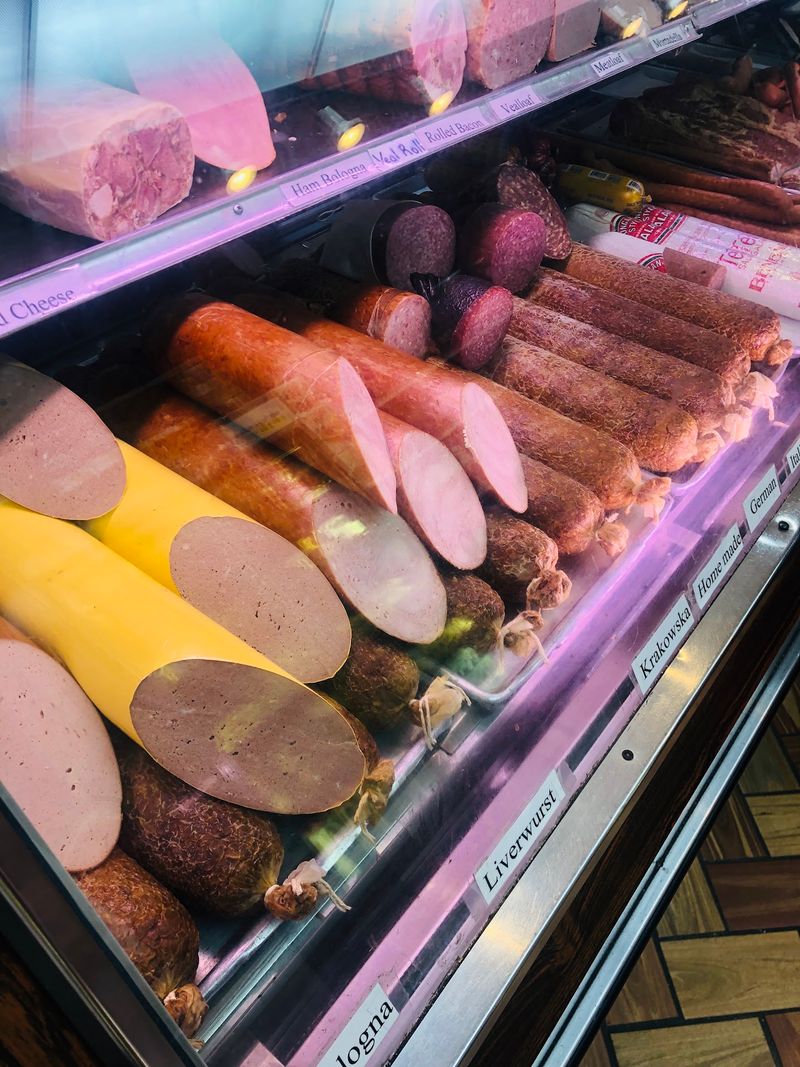
If this shop has a headline act, it is the kielbasa. Made fresh every single day, then smoked right there in the kitchen behind the counter.
That matters more than it sounds. Sausage smoked on site tastes different from sausage trucked in from a factory three states away.
The flavor leans deep and savory with real smoke behind it, not a syrupy liquid-smoke shortcut. Slice it cold for sandwiches or warm it in a pan and let the edges crisp.
Different styles show up throughout the week, including thin dried kabanos links and smoked pork sausages of various sizes. Salo kobasa has its own devoted following.
People order it from other states and have it shipped, which tells you plenty. Someone in Wyoming wanting this specific taste of childhood is a strong endorsement of the recipe.
Around Easter and Christmas, kielbasa demand goes through the roof. Families building a holiday table treat it as non-negotiable.
A simple serving idea works best. Rye bread, sharp mustard, a few pickles, and thick slices of kielbasa make a lunch that beats most restaurant plates.
Fresh sausage freezes well too, so buying extra is smart. Wrap it tightly, label it, and future you will be grateful on a lazy Tuesday night.
Smoked Hams That Take Their Time
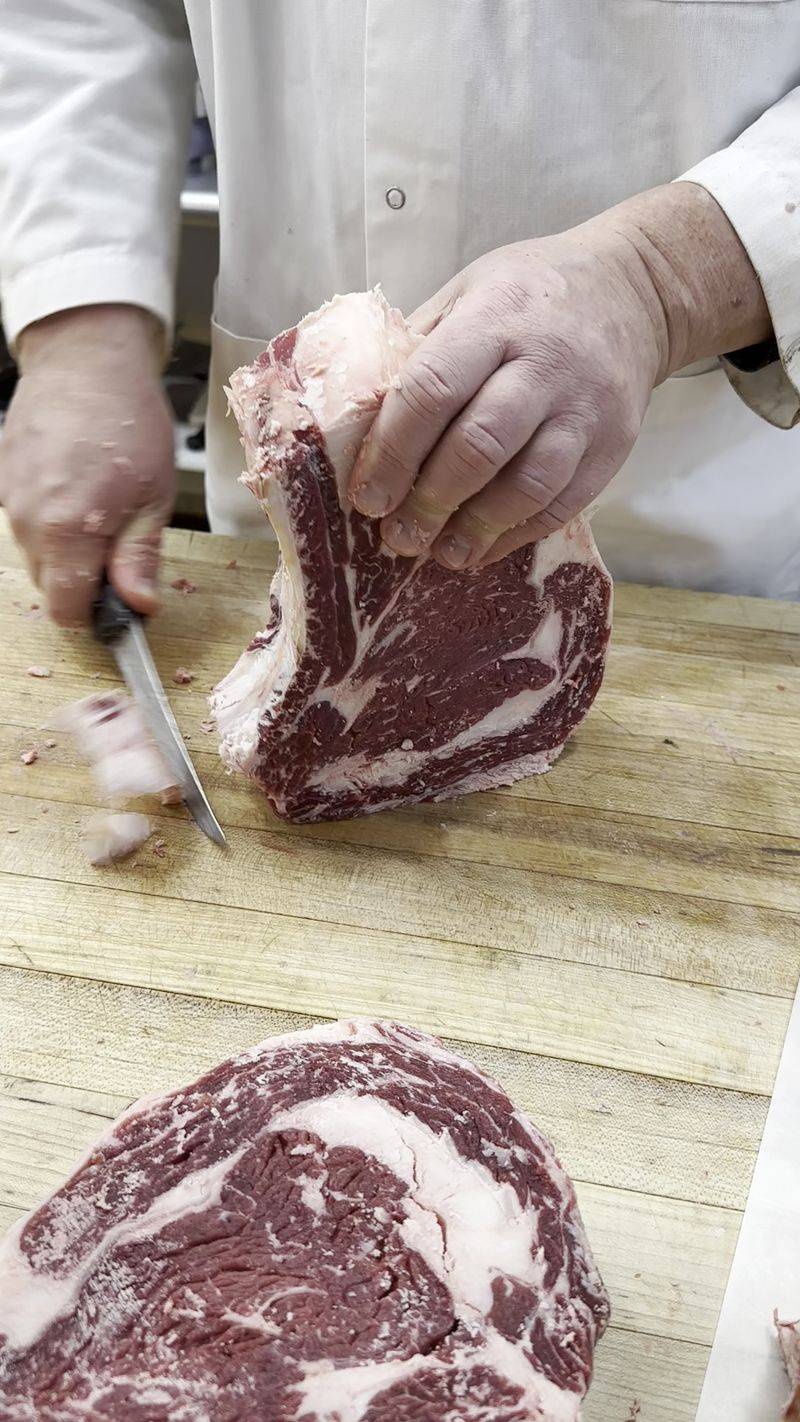
Ham gets treated seriously in this shop, which is a phrase you rarely hear anymore. Country ham and Canadian-style ham both hold spots in the case.
The country ham carries a firm texture and a smoky, salty punch that stands up to strong mustard. Canadian style leans leaner and slices beautifully thin.
Pork knuckle also shows up, and it is exactly the kind of hearty, old-country item most supermarkets abandoned years ago. Slow-cook it with cabbage and potatoes, and dinner takes care of itself.
Ham bologna belongs in this conversation too. It has been a holiday staple for families shopping here across generations.
What separates house-smoked ham from the plastic-sealed stuff is honestly the aroma. Open the paper at home and the whole kitchen knows about it.
For sandwiches, ask for a medium slice thickness rather than paper-thin. The texture holds together better, and the smoke flavor comes through more clearly.
An inn owner from Vermont reportedly planned to serve these pork products to guests, which says something about the quality level. That is not casual grocery shopping.
Pair a few slices with provolone, tomato, and a soft roll, and you have the kind of lunch that makes people ask where you got it.
Pierogies And Potato Pancakes On Deck
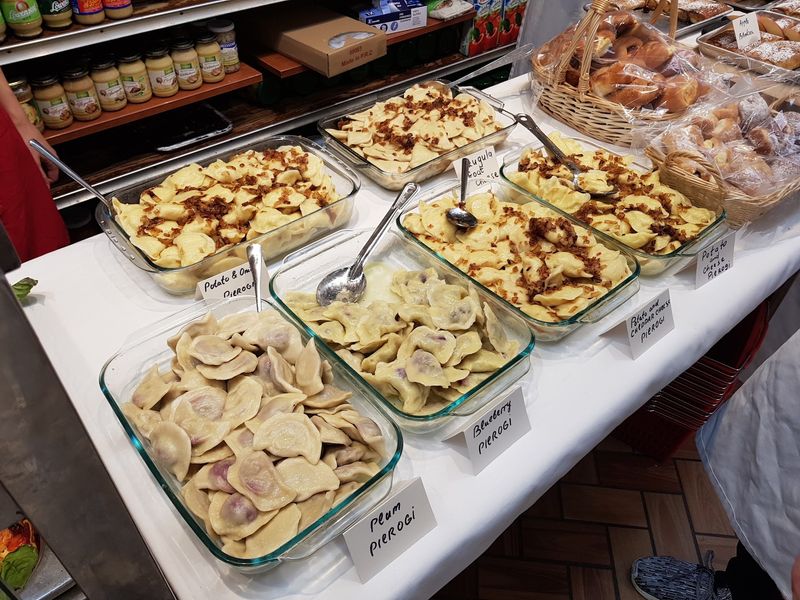
Not everyone walks in for meat. Plenty of shoppers head straight for the trays of dumplings and pancakes.
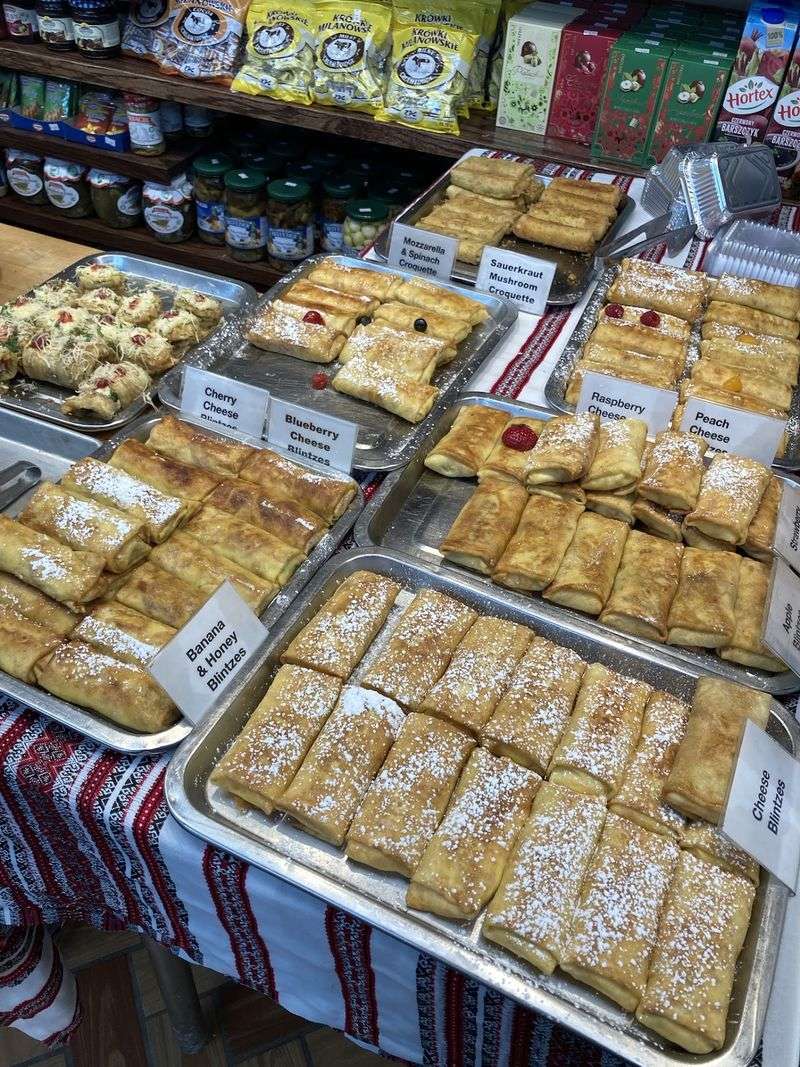
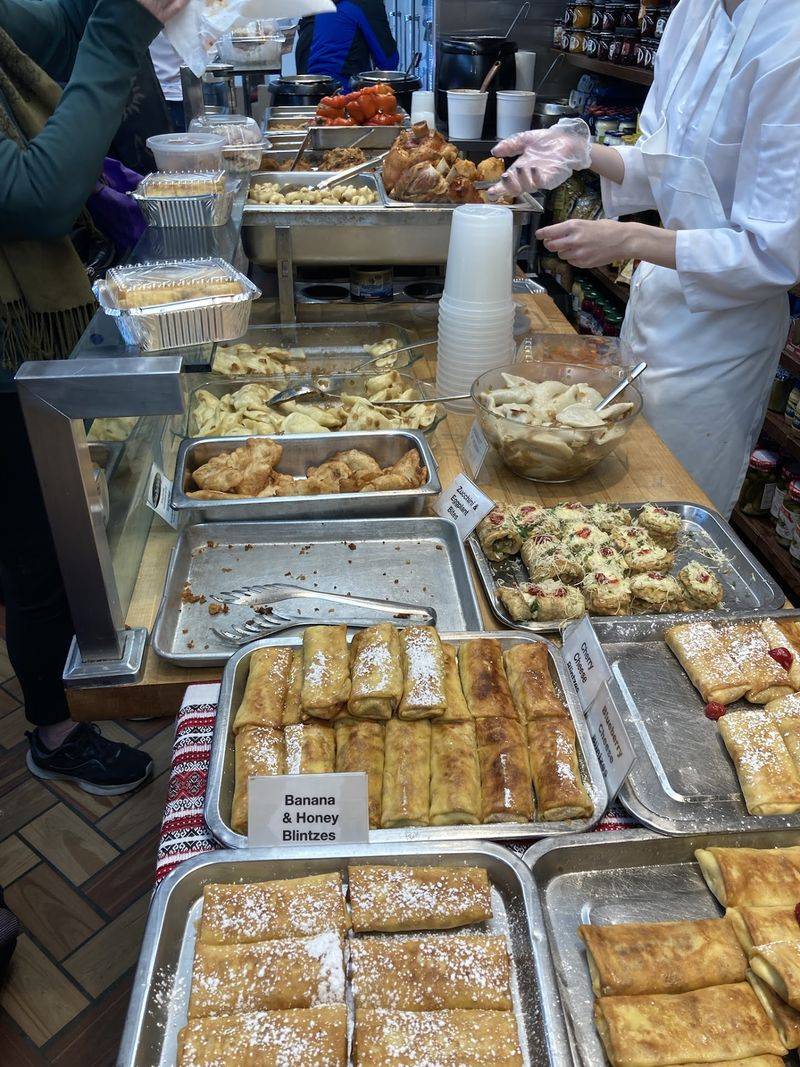
Pierogies come stuffed with the classics, and they cook up fast in a pan with butter and onions. Blintzes handle breakfast or dessert duty depending on your mood.
Potato pancakes round out the trio. Crisp on the outside, soft in the middle, and impossible to eat just one of.
Stuffed cabbage rolls deserve their own mention. Meat-filled versions and meatless rice versions both exist, and they are famously large.
Soups sit in the refrigerated case as well, including white borscht, chicken soup, and pea soup. Cold weather in New York and a container of hot borscht go together perfectly.
Saturdays bring the biggest lineup of prepared dishes. Veal goulash, chicken Kyiv, chicken paprikash, brisket, meatloaf, pork loin, and barbecue ribs have all made appearances on the hot table.
That hot table turns the shop into a full meal solution. Grab a few containers, skip cooking entirely, and nobody at home complains.
Here is the honest advice. Arrive earlier on Saturday morning, because the best hot dishes disappear and the line near the cooked meats gets long fast.
Veal meatballs with mushroom gravy have earned real loyalty too.
Babkas, Poppy Seed Rolls, And Polish Donuts
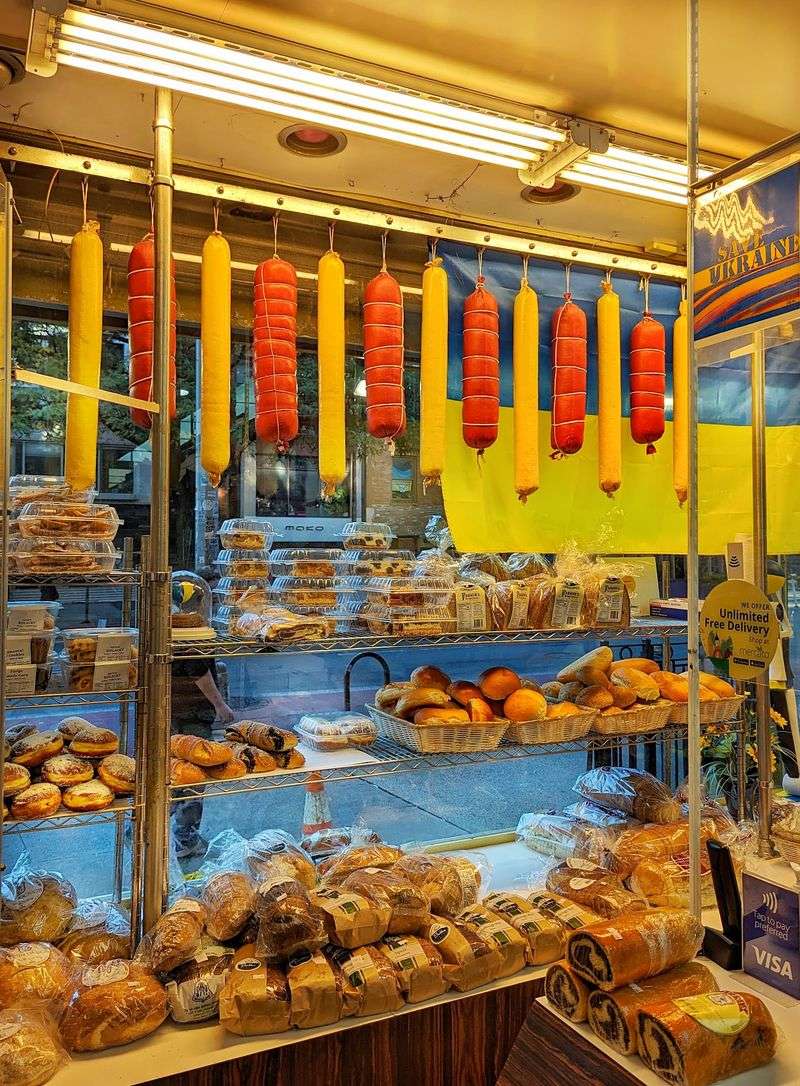
Sweet things share the space with the sausage, and honestly, that combination is very Eastern European. Babka sits near the register looking like it knows exactly how good it is.
Cheese babka has its own fan club. Poppy seed rolls, dense and swirled dark inside, are the other traditional pick.
Polish donuts, strudels, poppy seed danishes, and cheese danishes fill out the pastry lineup. None of them are delicate little bites, which is the point.
Bread deserves attention too. Crusty European-style loaves show up regularly, and flax-seeded rye from Moonrise Bakehouse has been offered through pre-order.
Rye bread here is not a side character. It is the correct partner for smoked meat, and buying both in one trip is the smart move.
Around Orthodox Easter, the bread selection expands, and the shop fills with people grabbing loaves for holiday tables. Window displays of bread have literally pulled passersby inside.
Storage tip worth knowing. Slice babka and freeze half, then toast a piece later, and it tastes nearly fresh.
These pastries lean traditional rather than trendy, so expect real butter, real poppy seed filling, and zero pastel frosting. Bakeries chasing viral photos have not touched this recipe list, and that is the whole charm.
Shelves Packed With Imports From Poland And Ukraine
Look past the meat case, and the shelves start telling their own story. Jars, boxes, and cans imported straight from Poland and Ukraine line the walls.
Borscht mix makes weeknight soup ridiculously easy. Cherry jam belongs on toast, inside pastries, or spooned over pretty much anything.
Sauerkraut, pickles, canned goods, and condiments fill the rest of the space. Home cooks trying to recreate family recipes come here specifically for these ingredients.
Finding authentic Eastern European pantry items in Manhattan is not easy. Big chain stores carry maybe two options, and neither one tastes right.
Shoppers who grew up with these labels recognize them instantly. For everyone else, it is a fun excuse to try something unfamiliar without booking a flight.
A good strategy is to pick one new jar per visit. Build a small collection over a few trips and your cooking suddenly has range.
Staff members are known for answering questions patiently, so asking how something is traditionally used is completely fair game. Nobody expects you to already know.
Combine a jar of borscht mix, a loaf of rye, and some smoked sausage, and you have essentially bought a complete Eastern European dinner from one small shop on Second Avenue. That kind of one-stop shopping is rare in the city now.
A Family Legacy Still Carried On Second Avenue
Here is the part of the story that sticks. The shop is no longer run by the man who founded it, but the mission was never handed off to strangers.
Andrew Ilnicki started as an employee. Over time, he became the owner, and now his son Roman works alongside him.
An employee growing into the owner is not a common business arc. It usually means someone cared about the place long before they had any reason to.
Because of that, the recipes and methods stayed intact. Daily sausage making, in-house smoking, hand carving, butcher paper wrapping all of it survived.
The shop also ships orders around the country, which keeps far-flung families connected to holiday traditions. A FedEx box of Easter food is not glamorous, but it does the job.
Little Ukraine has fewer Ukrainian businesses every year. Each one that stays open holds a piece of the neighborhood’s identity in place.
Supporting a shop like this is genuinely simple. Buy the bread, buy the sausage, tell a friend, come back.
Second Avenue keeps changing around it, with new restaurants opening and closing at a dizzying pace. Meanwhile, the meat market keeps smoking kielbasa every morning, exactly the way it has since 1970.
That kind of consistency in New York is its own small miracle.