
This New York Soul Food Restaurant Is So Loved, Locals Don’t Want Outsiders To Know
There’s a special kind of comfort in places where the outside world seems to soften the moment you step through the door. City noise fades, shoulders drop, and suddenly there’s space for conversation, appetite, and the simple pleasure of being welcomed somewhere that feels lived-in rather than staged.
The best neighbourhood restaurants carry this quiet confidence. Familiar without being flashy, steady without needing attention, giving us that sense of ease that regulars come back for again and again.
Step inside Amy Ruth’s and that feeling settles in naturally. The city noise fades like someone turned down a dimmer switch, leaving room for conversation, appetite, and a welcome that feels earned.
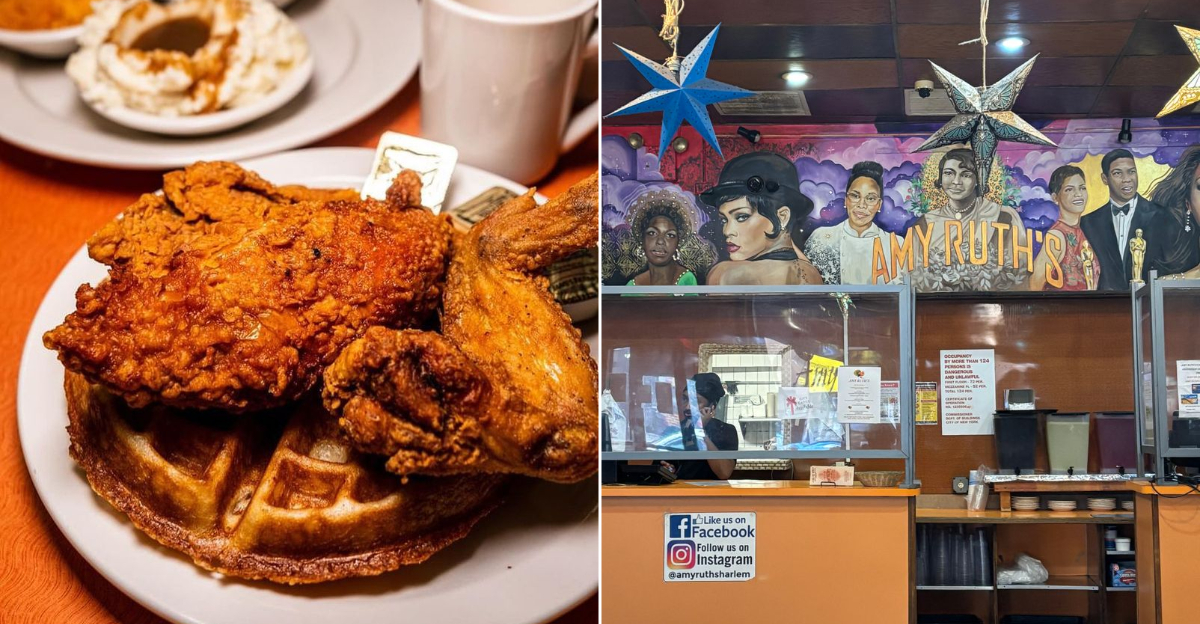
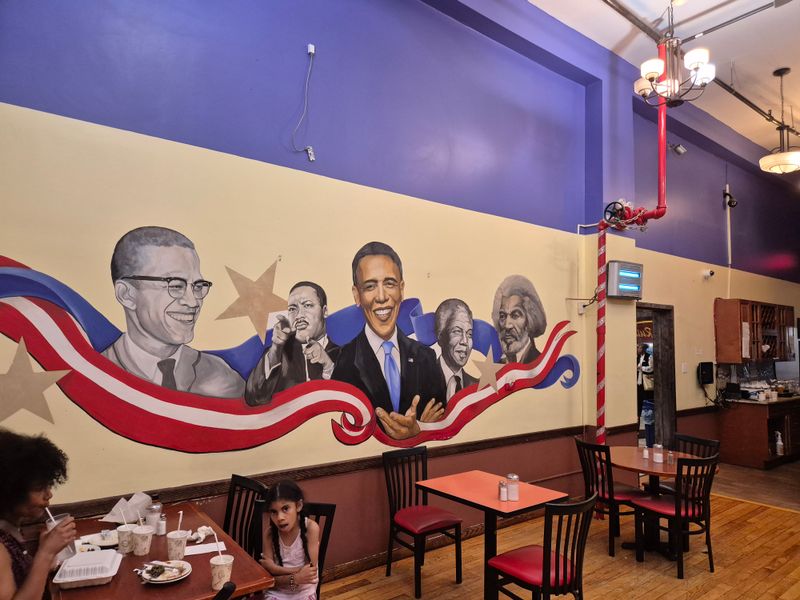
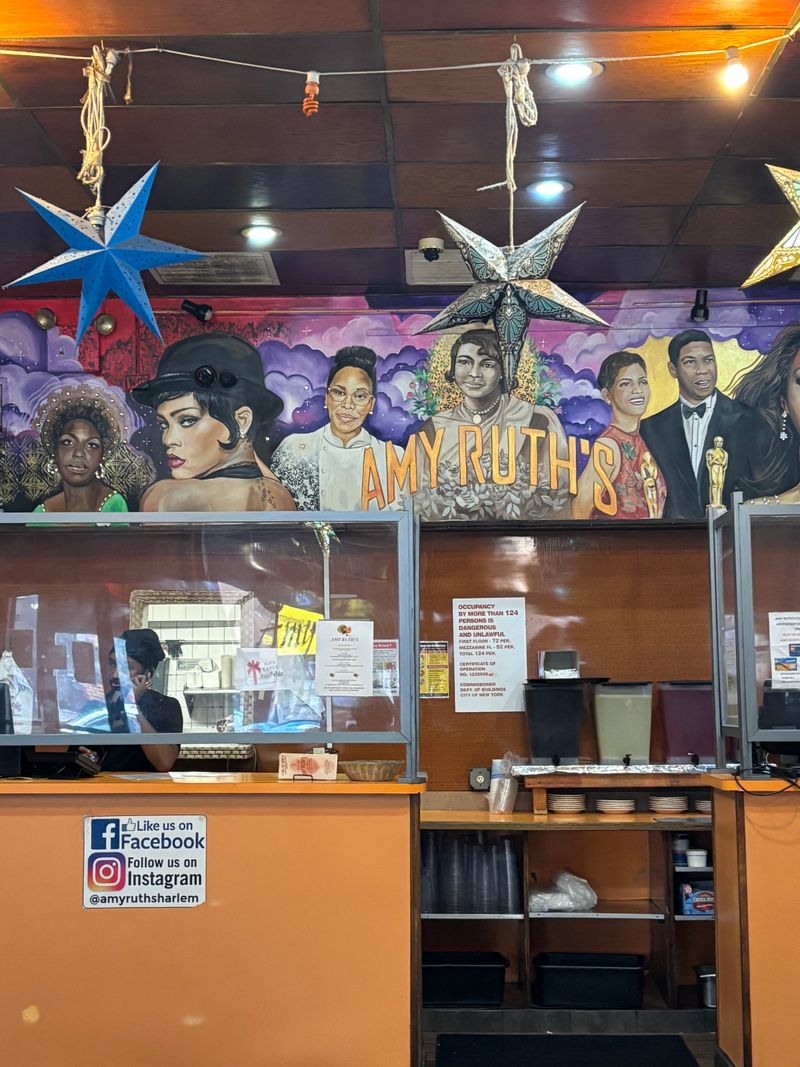
You notice the muraled walls first, and what follows is deeply tuned cooking that understands how to fill your soul with absolute joy one bite at a time.
A Threshold That Feels Like Home
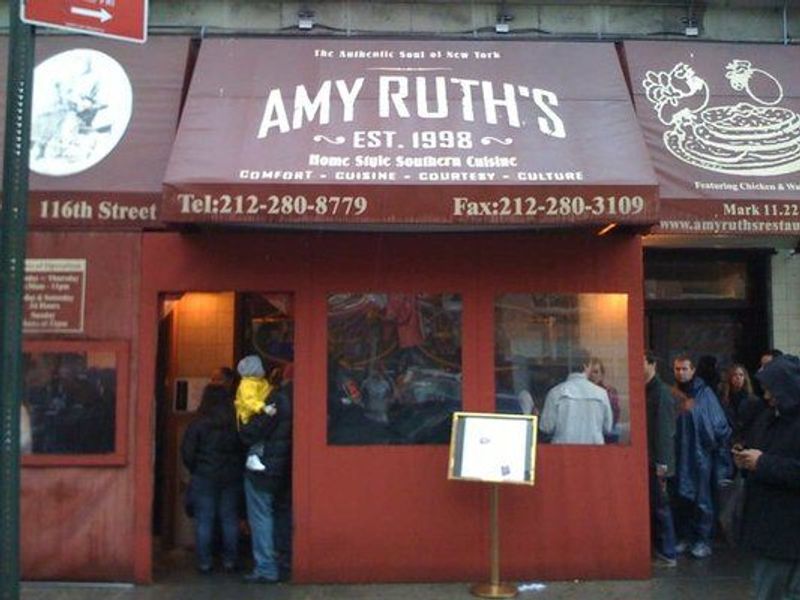
First impressions linger longest when they feel unforced, and this entrance does exactly that. You step off the sidewalk and into a room tuned to hospitality rather than theater, with music low enough to let voices breathe.
Murals watch over the tables, not as decoration, but as company. The lighting reads gentle and honest, steering clear of gimmicks while allowing plates to shine.
About halfway to your seat, you recall the address, 113 West 116th Street in Harlem, a coordinate that quietly explains the equilibrium here. Regulars slide into booths with the certainty of routine, and newcomers take their cues from the room’s calm cadence.
Staff greet without flourish, a nod and smile saying what scripts never do. It is a living room masquerading as a restaurant, and everyone seems in on the arrangement.
Conversation carries the tempo while servers move like seasoned ushers, part choreography, part muscle memory. Nothing chases you from your plate, and no table turns feel hurried.
The result is a pace that suits supper, not spectacle. You settle, you exhale, and appetite follows.
A Grandmother’s Legacy, Carried Forward
Stories that endure rarely arrive embellished, and this one begins with Amy Ruth Moore Bass. Her name anchors the restaurant, and her spirit informs its logic: feed people with care, season with intention, and let generosity be the signature.
The narrative resists romance for its own sake, preferring the sturdier truth of Sunday School lessons and a garden’s steady yield. Memory here is a compass, not a costume.
Opened in 1998, the restaurant staked its claim on West 116th before trend-chasers learned the neighborhood’s vocabulary. The kitchen did not modernize Southern food into abstraction, choosing instead to cook like someone you trust would cook at home.
That decision reads clearly on the plate, in restraint and balance. You taste conviction rather than choreography, and the point feels refreshingly simple.
Legacy thrives when it welcomes the present, and that is the quiet achievement at work. The dining room evolves in small ways while keeping its center steady.
Service habits, recipes, and pacing respect what came before without staging nostalgia. It is continuity practiced, not performed.
Reading The Menu Like A Map Of Comfort
Menus can feel like puzzles, but this one reads like directions to someplace familiar. Fried chicken and waffles headline without swagger, surrounded by smothered plates, seafood, and a chorus of sides.
There is assurance in the lineup, a promise that technique will meet expectation. You order with confidence rather than calculation, and that alone is a relief.
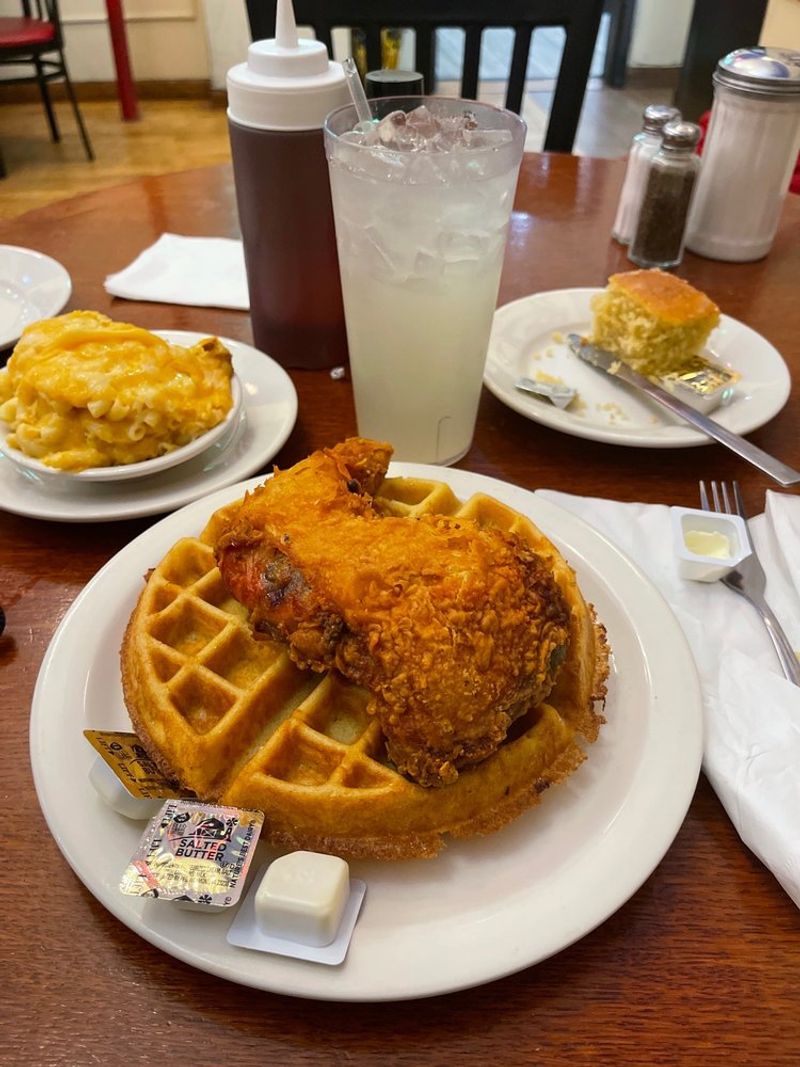
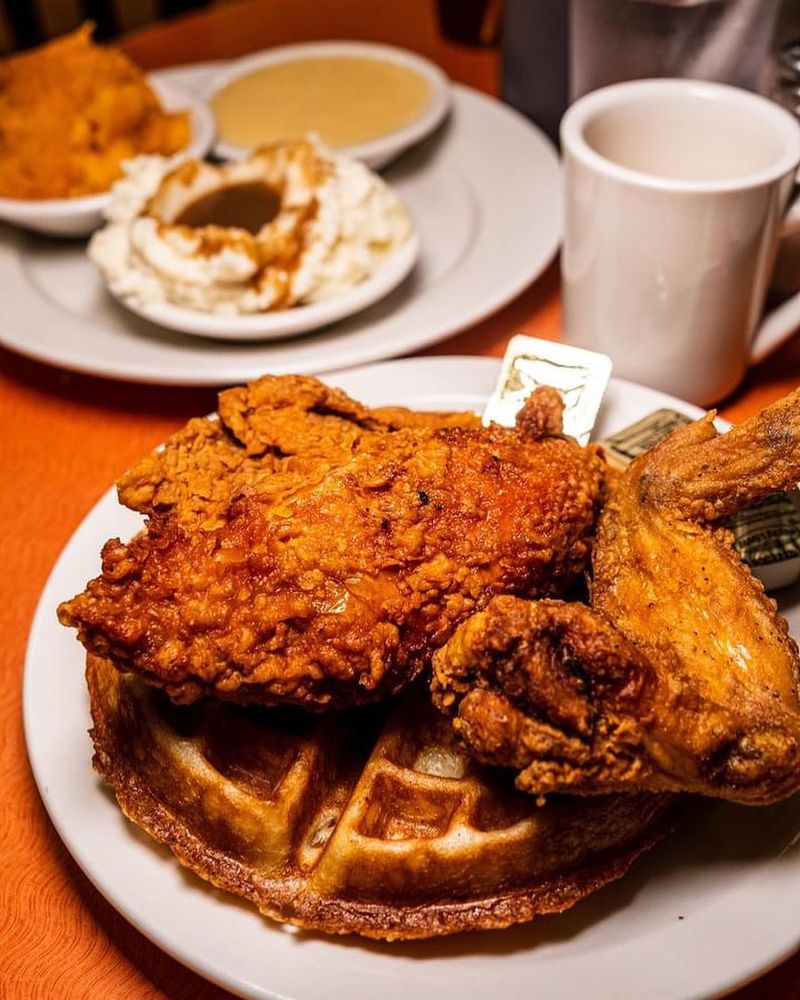
Fried chicken arrives with a crust that speaks in whispers, not shouts, crisp yet tender, seasoned for depth instead of shock. The meat stays succulent, heat-holding and steady, resisting the sog that punishes dawdlers.
Waffles lean plush, edges lightly crisp, calibrated for syrup without surrendering structure. Together they strike a cordial truce between savory and sweet, pleasing without dramatics.
Smothered dishes trade crunch for resonance, gravy carrying warmth rather than weight. Catfish and shrimp extend the range, fried to protect moisture and preserve character.
Portions appear thoughtful, aiming for satisfaction over spectacle. You recognize the map’s landmarks as soon as your fork finds them.
Fried Chicken That Sets The Standard
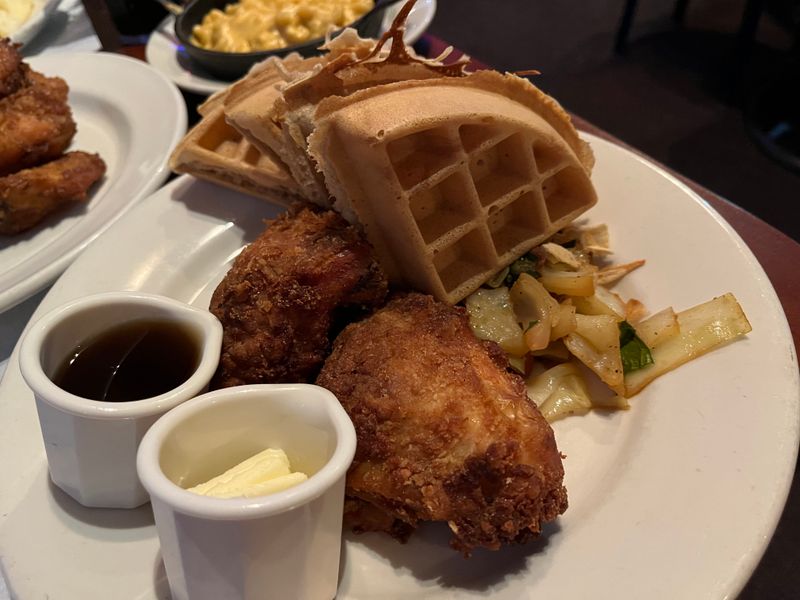
Great fried chicken does not announce itself; it convinces slowly with each bite. The exterior here breaks with a delicate crackle, never glassy, never greasy, and seasons the palate without bullying it.
Beneath that, the meat holds moisture as if by quiet agreement, juicy but not loose, saline in the right measure. You find yourself thinking about balance rather than bravado.
On the plate, the bird keeps its presence, even as syrup approaches from the waffle’s edge. A honey dip option glows with a polite sheen, inviting rather than insisting.
Dark meat carries depth while white stays surprisingly plush, proof of disciplined frying and steady oil temperature. The kitchen treats time as an ingredient, not an obstacle.
What you taste is a method sharpened by repetition and respect for the ingredient. The seasoning whispers in layers you notice only after the second bite.
No sauce feels required, though hot sauce behaves like a friendly footnote. Standards are not set loudly, only consistently.
Waffles, Syrup, And The Pleasure Of Proportion
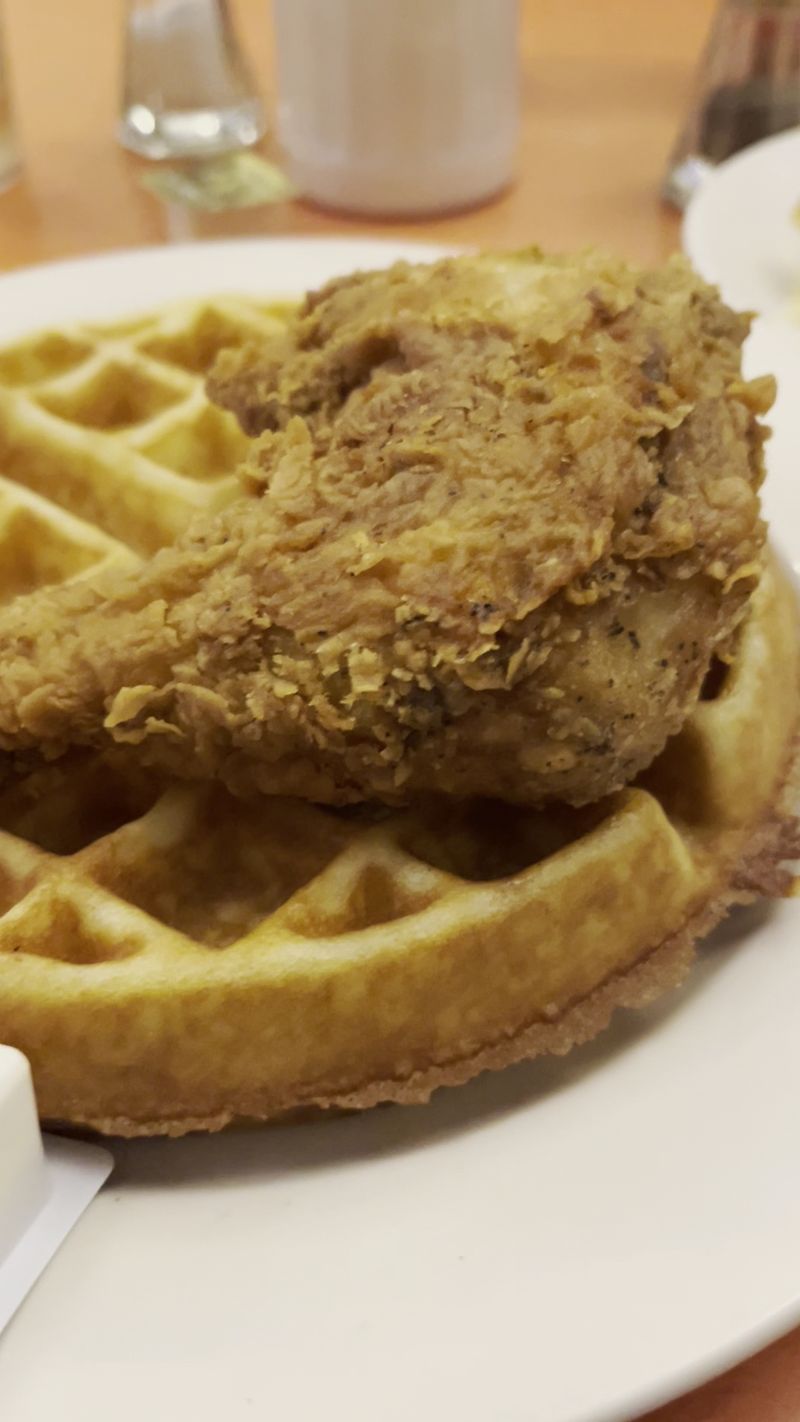
Waffles here understand their role: support the chicken, console the syrup, and stay composed. The crumb is tender without turning cake-like, the grid catching butter in small pools that behave like punctuation.
Edges keep a courteous crunch, a contrast that survives conversation. You cut with ease, not with apology.
Maple syrup moves like a measured argument across the surface, sweet enough to be noticed but not so loud it smothers nuance. The chicken benefits from the duet, savor meeting sweetness at a comfortable middle.
When honey enters the mix, it adds warmth rather than sugar shock, a roundness that flatters the crust. Proportion does the heavy lifting.
Order this pairing at lunch and it feels like permission; order it late and it reads as celebration. The plate resists the slump that wilts lesser waffles, holding texture to the final bites.
You finish at a pace that respects appetite and conversation equally. Satisfaction, properly portioned, lingers.
Sides That Earn Their Place
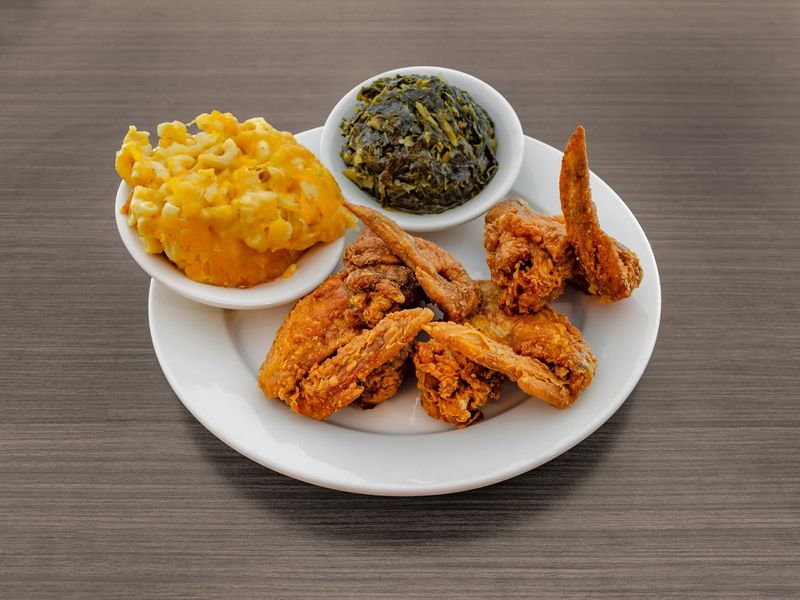
Some sides trail behind the entree; these stride alongside it. Baked macaroni and cheese arrives squared and confident, a cohesive slice that balances cream and structure.
Cheese leans savory, offering richness without fatigue, leaving room for another forkful. The edges carry a gentle bake, pleasing without theatrics.
Collard greens speak softly but carry history, long-simmered until tender yet still distinct. Seasoning threads through, smoky and rounded, never brash.
Black-eyed peas contribute quiet ballast, earthy and slightly sweet, the kind of comfort that does not need to announce itself. Together they sketch the plate’s architecture.
Candied yams choose restraint over syrupy collapse, letting the vegetable’s own character lead. Cornbread keeps a moist crumb that plays well with gravy, remaining intact until the final swipe.
Each side feels considered rather than convenient, a partner rather than a passenger. The table reads complete because every element understands the assignment.
Service With Steady Hands
Service here prefers competence over choreography, and the difference shows. Staff move with the tempo of people who know the room’s corners, where to slow, where to glide.
Suggestions arrive as gentle nudges rather than sales pitches, born from actual tasting rather than scripts. You feel guided, not steered.
Weekday lunches attract regulars who order with shorthand, while weekends host families and unhurried conversations. Despite shifts in pace, the tone holds steady, neither hurried nor languid.
Familiar faces return often enough to create continuity, making hospitality feel cumulative. The welcome strengthens with repetition.
Water refills, check timing, and course pacing track a comfortable middle lane. The room allows lingerers without penalizing them, an increasingly rare courtesy.
Questions about sides or heat levels meet practical answers, not buzzwords. By the time you leave, the service has done its work with quiet precision.
Harlem, Continuity, And Why Locals Care
Neighborhoods change as surely as seasons, yet some places hold their line with grace. Amy Ruth’s sits within that story, not outside it, offering a steady table while storefronts flip scripts around it.
The restaurant is not a museum, and it is not a stage; it is a practice. Meals become habits, and habits become anchors.
For locals, affection grows from consistency: portions that satisfy, prices that feel fair for the tenderness delivered, and people who remember faces. Visitors find a primer on Harlem hospitality without spectacle.
The address appears uncomplicated on a map, but its meaning is cumulative through years of birthdays, church Sundays, and weekday lunches. Continuity lives in repetition done well.
Protectiveness follows naturally, a soft boundary around a place that still belongs to the neighborhood. Outsiders are welcome, but the room’s center of gravity remains local.
In a city that edits itself constantly, this dining room keeps a steady paragraph intact. That, more than novelty, explains its staying power.