
This No-Fuss Arizona Restaurant Serves A Navajo Taco Worth The Road Trip
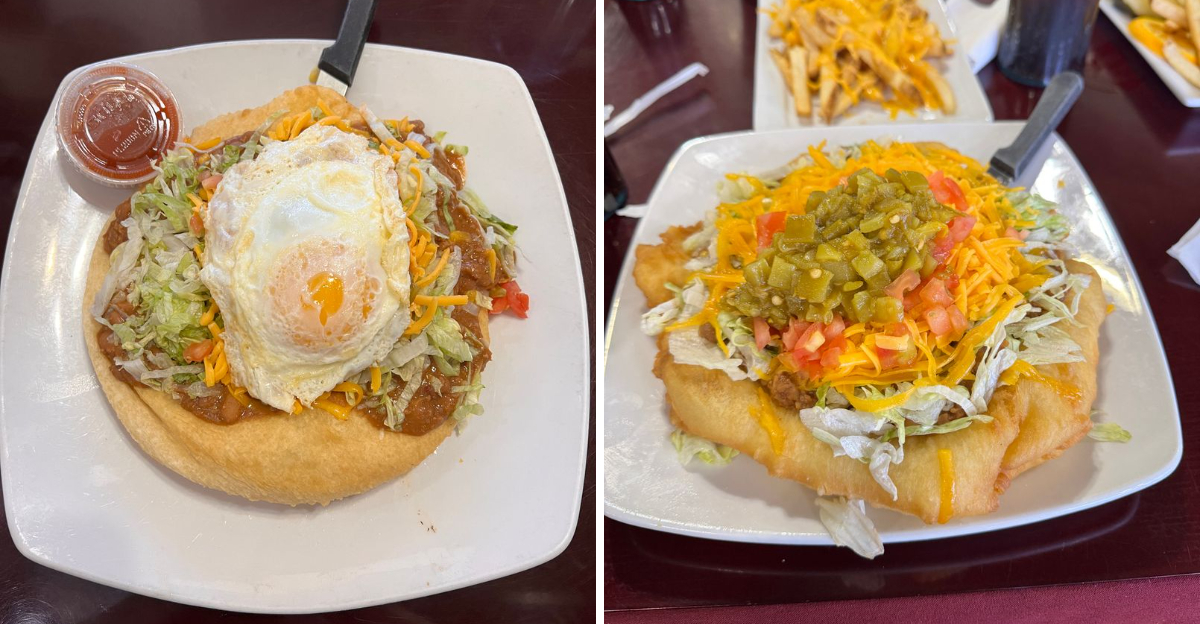
Somewhere between the desert dust and the edge of the Grand Canyon sits a restaurant that people drive hours to visit, not for fancy decor or celebrity chefs, but for one legendary dish: the Navajo Taco. Cameron Trading Post Restaurant in northern Arizona has been serving travelers since 1916, and their signature fry bread creation has become the stuff of road-trip legend.
If you’re looking for authentic Native American cuisine served in a dining room that feels like stepping back in time, this unassuming spot along Highway 89 delivers something you won’t find anywhere else.
The “Worth-the-Drive” Navajo Taco They Call Their Most Popular Meal
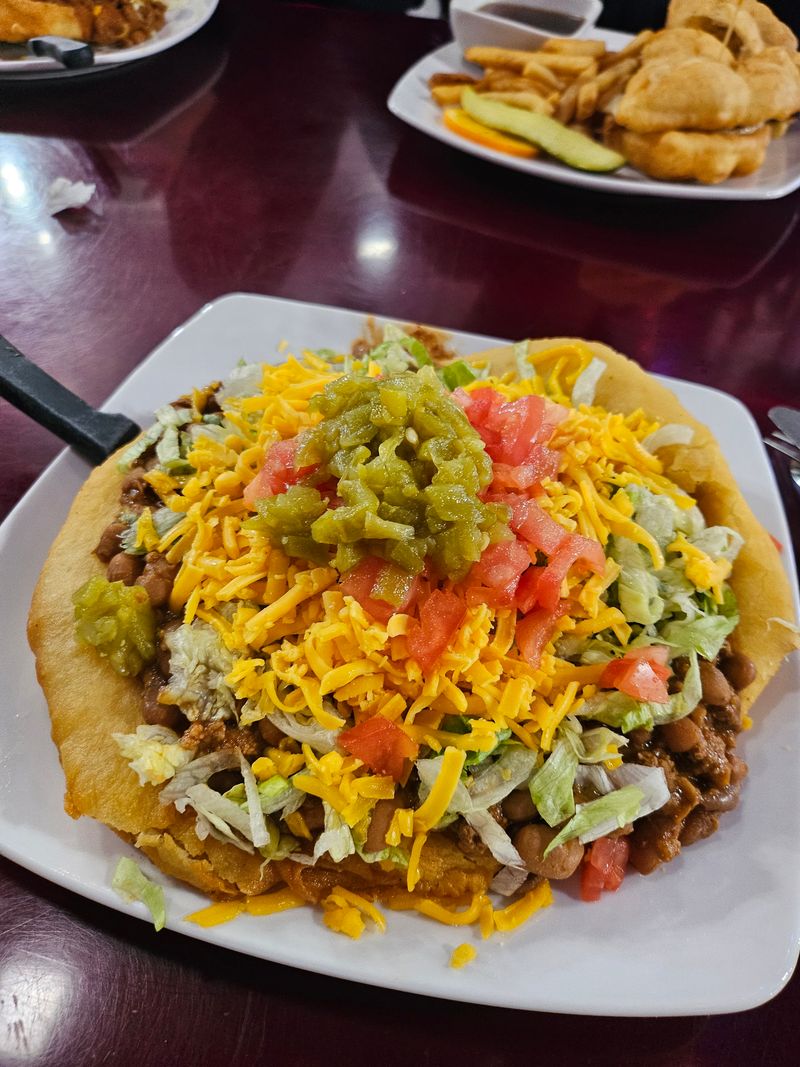
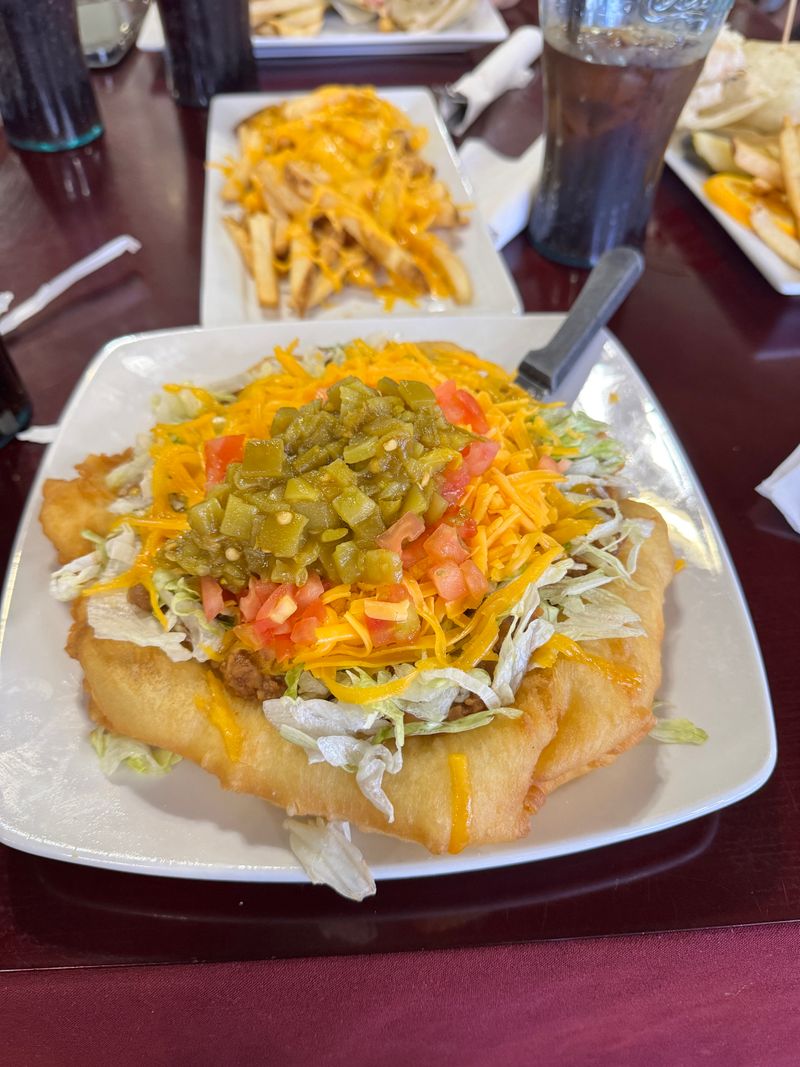
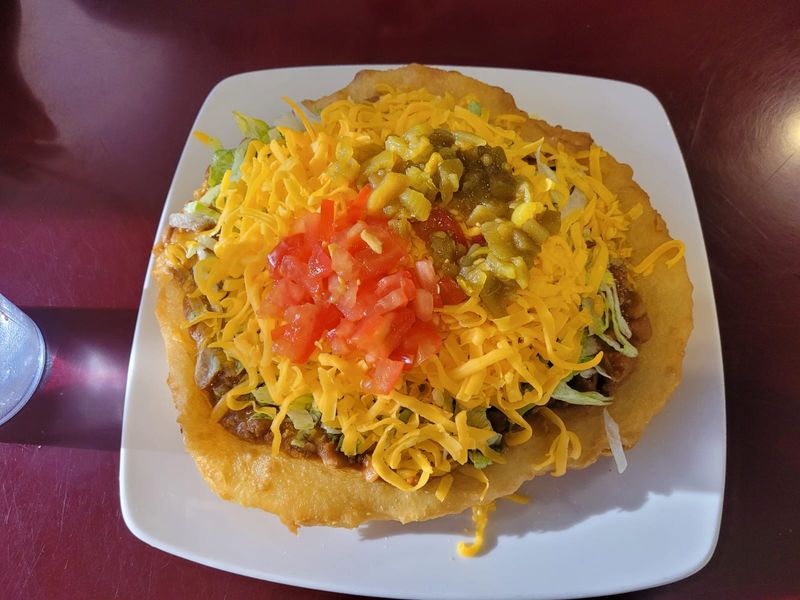
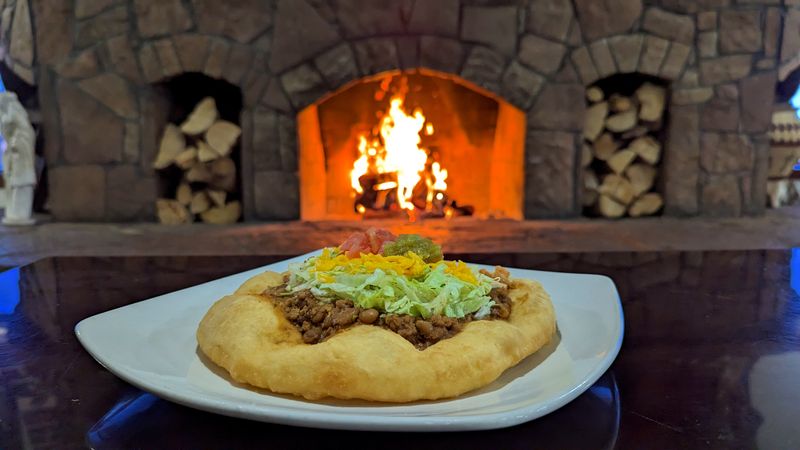
Fry bread piled high with seasoned beef, beans, lettuce, tomatoes, cheese, and green chile creates a dish so massive that seasoned eaters often split it between two people. Cameron Trading Post’s version stands out because the fry bread arrives golden and crispy on the edges while staying pillowy soft in the center, providing the perfect foundation for layers of toppings that reach almost comical heights.
Reviews consistently mention that this single dish justifies the entire detour, with many travelers planning their Grand Canyon trips specifically around a meal stop here.
The kitchen sends out these beauties in under ten minutes most days, which feels miraculous given the portion size. Vegetarian versions swap the beef for extra beans and vegetables, proving that even plant-based eaters can experience the magic without compromise.
At around thirteen dollars, the value proposition borders on ridiculous when you consider that most diners leave with a to-go box containing tomorrow’s lunch.
First-timers often underestimate the sheer scale of what arrives at their table, ordering additional entrees they’ll never finish.
A Road-Trip Restaurant Hiding in Plain Sight on US-89
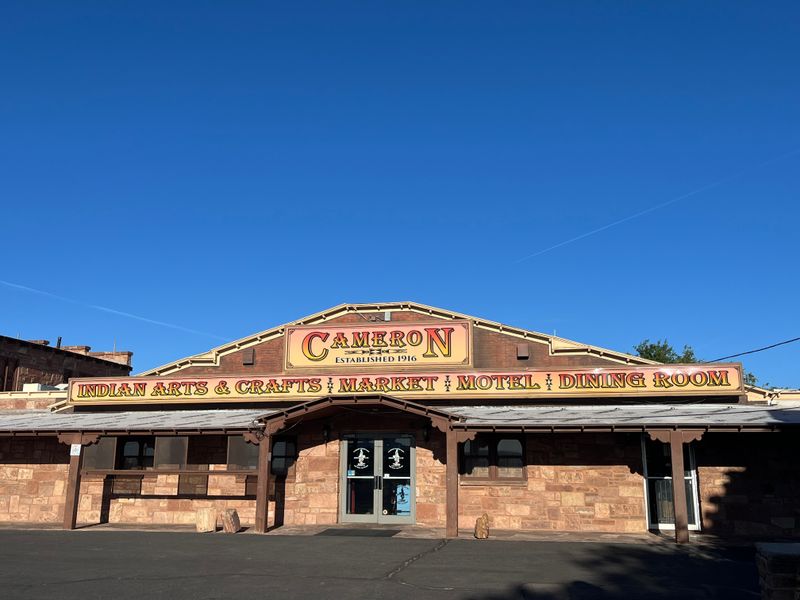
Highway 89 cuts through some of Arizona’s most desolate and breathtaking landscape, and Cameron Trading Post sits at a crossroads that feels like the middle of nowhere and the center of everything simultaneously. Located at 466 US-89 in Cameron, the restaurant complex appears almost suddenly after miles of open desert, offering one of the few full-service dining options between Flagstaff and the Utah border.
Travelers heading to either rim of the Grand Canyon, Monument Valley, or Lake Powell pass right by this spot, making it a natural stopping point that also happens to serve exceptional food.
The building’s exterior maintains that classic Southwestern trading post aesthetic, with stone accents and wooden beams that telegraph authenticity before you even walk through the door. Parking proves plentiful even during peak tourist season, and the attached gift shop means you can browse Native American crafts while waiting for your table during busy lunch hours.
Many visitors stumble upon this place by accident, following Google Maps or roadside recommendations, only to return deliberately on future trips.
Breakfast, Lunch, or Dinner—This Taco Shows Up Anytime
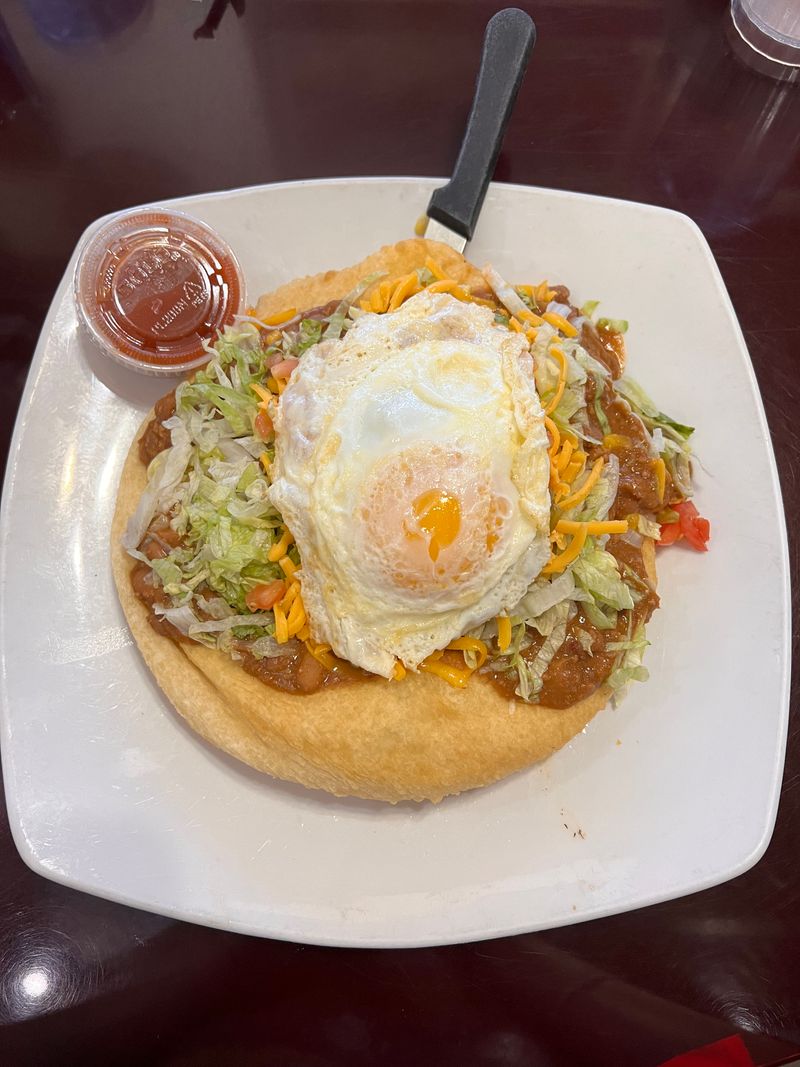
Operating hours stretch from six in the morning until nine at night, seven days a week, and the Navajo Taco makes an appearance on the menu regardless of when you arrive. Morning versions might include scrambled eggs and breakfast meats atop that signature fry bread, while lunch and dinner offerings lean toward the traditional beef and bean preparations that made the dish famous.
This flexibility means you’re never at the wrong time to experience what the restaurant does best, whether you’re an early-rising photographer chasing sunrise light or a late-arriving traveler who miscalculated drive times.
Breakfast enthusiasts rave about the “Warrior,” which transforms the Navajo Taco concept into a morning meal substantial enough to fuel hours of hiking or driving. The kitchen maintains consistent quality across all dayparts, suggesting that whoever’s manning the fry bread station takes their craft seriously no matter the hour.
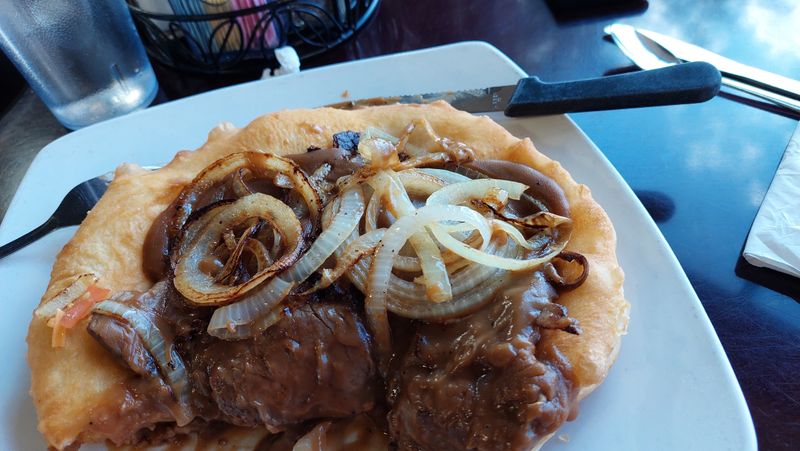
Servers refill coffee with impressive frequency during breakfast service, and the honey-drizzled Indian bread that accompanies the beef stew works equally well as a dessert course after savory dishes.
The View Isn’t a Bonus—It’s Part of the Meal
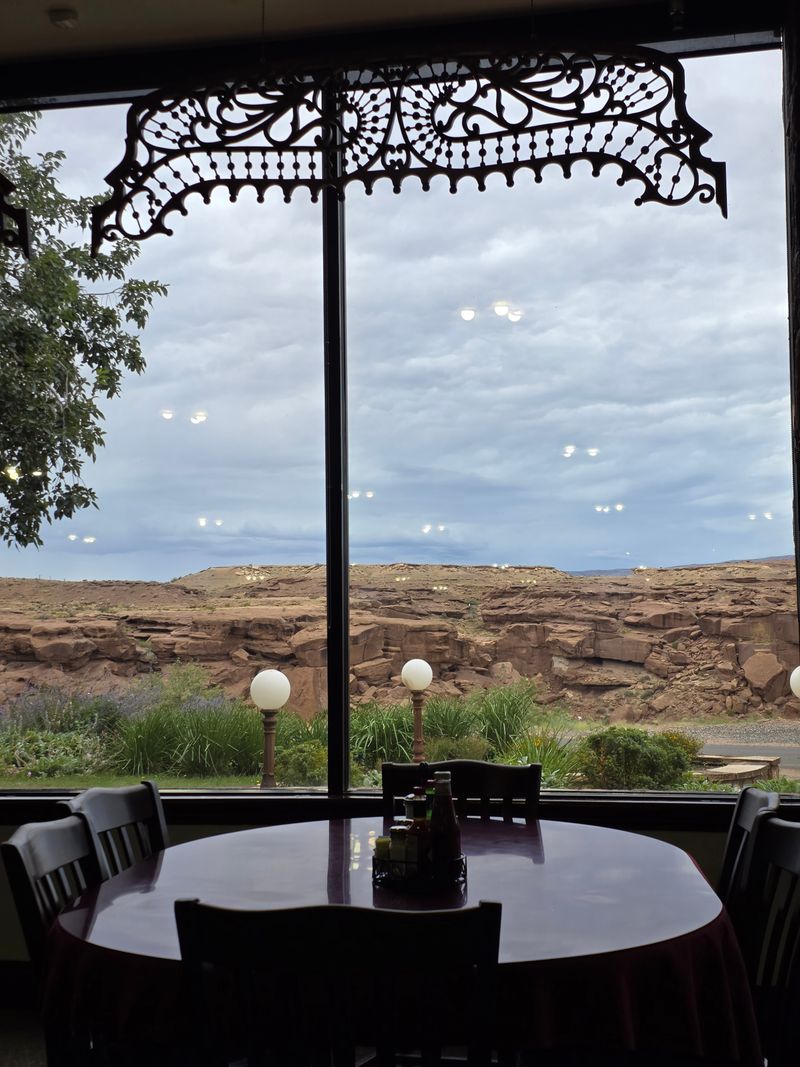
Picture windows spanning the dining room’s eastern wall frame a canyon view that shifts color throughout the day, from soft morning pastels to the harsh midday glare to golden-hour amber that makes everything look like a vintage postcard. Cameron sits along the Little Colorado River gorge, and the restaurant capitalizes on this geography by positioning tables to maximize the scenic overlook.
Diners mention that this vista adds an unexpected dimension to what could have been just another roadside meal, elevating the experience from fuel stop to memorable occasion.
The landscape outside feels quintessentially Southwestern, with layered rock formations and scrubby vegetation that remind you exactly where you are even before the Navajo-inspired menu reinforces the point. During slower periods, servers don’t rush you away from window seats, understanding that people want to linger over coffee while watching the light change across the canyon walls.
Photographers often time their visits to coincide with optimal lighting conditions, treating the meal as an excuse to access this particular viewpoint with comfort and air conditioning.
A Dining Room That Feels Like a Mini Museum
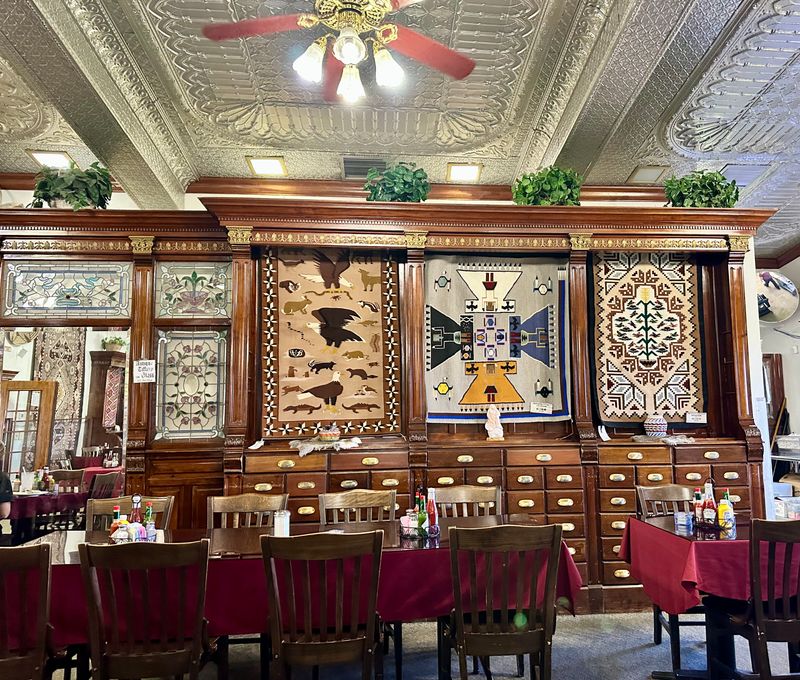
Navajo weavings hang on walls throughout the space, their intricate geometric patterns adding color and cultural context to what could have been generic restaurant decor. Sand paintings, pottery, and other traditional artworks create an environment where you’re essentially dining inside a gallery dedicated to Native American craftsmanship.
The presentation feels respectful rather than exploitative, showcasing pieces with the care typically reserved for museum displays while maintaining the relaxed atmosphere of a family restaurant.
This artistic abundance reflects the building’s dual identity as both eatery and trading post, with the gift shop next door offering similar items for purchase if something catches your eye during your meal. Guests frequently mention that the surroundings enhance their appreciation for the food, creating connections between the visual culture and culinary traditions that share common roots.
Children seem particularly fascinated by the artifacts, asking questions that turn an ordinary dinner into an educational opportunity their parents didn’t anticipate. The staff answers these inquiries with patience and knowledge, suggesting that cultural education forms part of their unspoken mission.
The Giant Rock Fireplace “Reset Button”
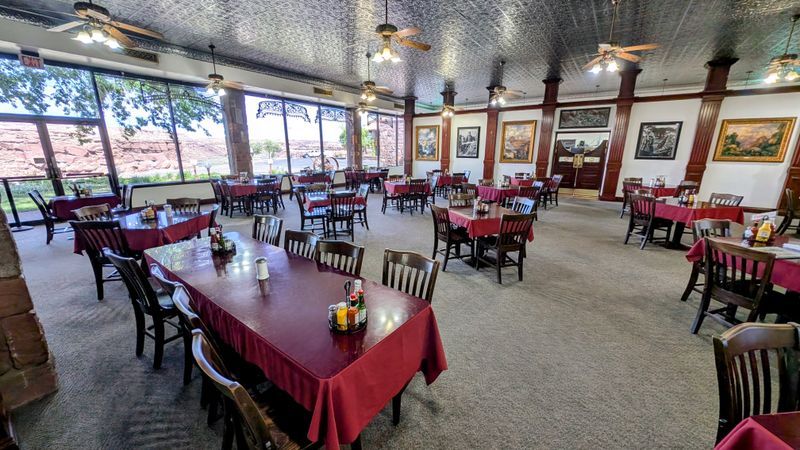
Constructed from native stone and rising two stories through the dining room’s center, the fireplace anchors the space both architecturally and atmospherically. During cooler months, flames crackle behind the grate, providing warmth and the hypnotic visual focus that only real fire delivers.
Travelers mention sitting near this feature specifically, treating it as a reset point after hours behind the wheel navigating empty highways and overwhelming natural landmarks.
The stonework showcases the varied colors and textures of local geology, creating a sculptural element that would cost a fortune to replicate today but was simply standard construction practice when the building went up. Something about gathering near fire taps into ancient human instincts, making the dining experience feel less transactional and more communal even when you’re eating with strangers at neighboring tables.
Summer visitors might not see the fireplace in action, but the structure itself remains impressive, and the stone stays cool enough to provide pleasant contrast against the desert heat outside. Couples frequently request tables adjacent to this focal point, understanding that ambiance matters almost as much as menu selections when creating memorable meals.
The Menu Mix: American + Mexican + Native American Comfort Food
Enchiladas share menu space with burgers, while traditional Navajo stew competes for attention against chicken noodle soup and chef salads. This culinary democracy means that road-tripping families with divergent tastes can all find something appealing without negotiation or compromise.
The kitchen handles this diversity with surprising competence, suggesting that the cooks possess genuine skill rather than simply reheating pre-made components from different cultural traditions.
Fry bread appears as a burger bun option, creating fusion moments that feel natural rather than forced, and the green chile that tops various dishes delivers authentic New Mexico-style heat without overwhelming less adventurous palates. Reviewers mention ordering multiple dishes to share, treating meals as sampling opportunities that reveal the kitchen’s range and consistency across categories.
Prices remain shockingly reasonable given both portion sizes and the captive-audience situation that could justify gouging; a family of four can eat well for under a hundred dollars including appetizers and drinks. The beef stew arrives with Indian bread and honey on the side, transforming a simple soup into a multi-course experience that costs eleven dollars.
A Vegetarian Navajo Taco Exists—and It’s Still the Main Event
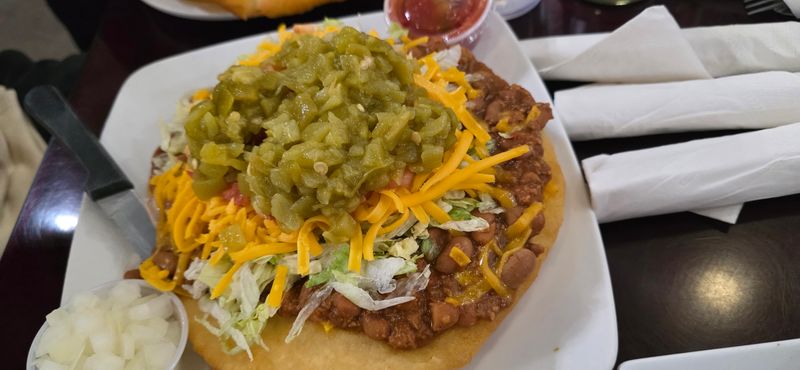
Plant-based eaters often face limited options at restaurants specializing in regional American cuisine, but Cameron Trading Post treats vegetarian versions of their signature dish as legitimate menu items rather than reluctant accommodations. Swapping beef for additional beans and vegetables maintains the structural integrity and visual impact that makes the Navajo Taco Instagram-worthy while respecting dietary choices that might stem from health, ethics, or religious observance.
The kitchen doesn’t phone in these preparations or treat them as lesser alternatives; reviews from vegetarian diners express genuine enthusiasm rather than grateful-for-anything resignation.
This inclusive approach expands the restaurant’s appeal beyond meat-eating road-trippers to include the growing number of travelers who seek plant-forward options without sacrificing cultural authenticity or culinary adventure. The fry bread itself contains no animal products, meaning the foundation remains identical regardless of topping choices, and the combination of beans, cheese, vegetables, and chile creates sufficient flavor complexity to satisfy even confirmed carnivores.
Avocado features prominently in some vegetarian builds, adding creamy richness that compensates for the absence of meat-derived fats and proteins.
The Spot That’s Also a One-Stop Travel Base
Beyond the restaurant itself, Cameron Trading Post functions as a comprehensive road-trip resource offering lodging, fuel, and that sprawling gift shop packed with souvenirs ranging from affordable trinkets to investment-grade Native American art. Travelers appreciate consolidating multiple needs into a single stop, especially when the next services might be fifty miles down the highway in either direction.
The attached hotel provides reasonable rates for visitors who want to break their journey into manageable segments rather than pushing through exhaustion toward distant destinations.
Gas pumps handle the practical necessity of refueling vehicles while the restaurant refuels humans, and the gift shop addresses the eternal tourist question of where to find authentic regional items without resorting to airport kiosks selling made-in-China knockoffs. This clustering of services reflects the trading post’s original function as a frontier supply hub where travelers restocked everything from food to equipment before continuing into less-settled territories.
Modern visitors benefit from this same consolidation, even if their journeys involve air-conditioned vehicles rather than horses and wagons. You can literally arrive on empty, leave fully supplied, and enjoy an excellent meal during the transition.
A Historic Trading Post Backstory (Established in 1916)
Opening its doors over a century ago, Cameron Trading Post began serving the Navajo Nation and intrepid travelers when Arizona had barely achieved statehood and the Grand Canyon was just gaining recognition as a must-see destination. The establishment weathered the Depression, multiple wars, the rise of automobile tourism, and countless shifts in American dining habits while maintaining its essential character and mission.
This longevity speaks to adaptability balanced with consistency, evolving enough to remain relevant without abandoning the core identity that made the place special in the first place.
Historical photographs displayed throughout the property document this evolution, showing how the buildings expanded and modernized while retaining architectural elements that connect present to past. Understanding this timeline adds depth to the dining experience, transforming a simple meal into participation in an ongoing story that predates your grandparents and will likely continue long after your visit becomes memory.
The Navajo Taco you’re eating descends from recipes and techniques refined across generations, not invented last year by some consultant trying to capitalize on food trends. That authenticity registers in both flavor and feeling.
Still Family-Rooted: Hospitality Is the “Secret Sauce”
Corporate ownership hasn’t absorbed this operation, meaning decisions still reflect family values rather than shareholder demands for quarterly profit increases. Servers demonstrate genuine friendliness that reads as authentic rather than scripted, remembering coffee preferences and accommodating special requests with flexibility that chain restaurants can’t match.
Multiple reviews mention staff members by name, particularly highlighting instances of thoughtfulness like providing car seat holders for parents dining with infants or immediately correcting mistakes without defensive excuses.
Management remains visible on the floor, seating guests and checking table satisfaction in ways that signal genuine investment rather than supervisory surveillance. This hands-on approach maintains quality control and creates accountability that keeps standards high even during busy periods when shortcuts might tempt less-committed operations.
The phone number, 800-338-7385, connects you to actual humans who can answer questions about menu options, hours, and road conditions rather than automated systems that frustrate more than assist. Family businesses understand that reputation depends on every single interaction, creating service cultures that prioritize long-term relationships over short-term transactions.