
This North Carolina Waterfall Remains One Of The State’s Best Kept Secrets
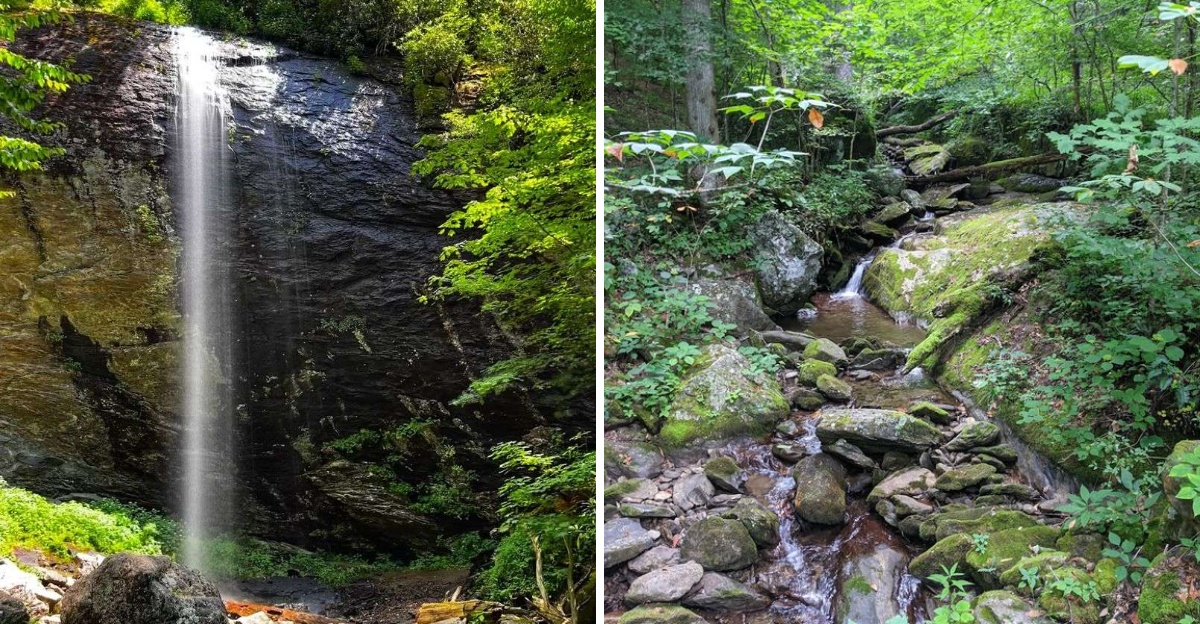
Crowds can ruin a waterfall before you even hear it. That is why finding a 60-foot cascade in North Carolina with no one else around felt almost unreal.
I expected a busy trail and people everywhere. Instead, the forest stayed quiet except for rushing water and birds overhead.
Reaching it can be as easy or demanding as you choose. One route offers a short half-mile walk, while another stretches into a seven-mile challenge through Pisgah National Forest.
I chose the longer option and earned every view along the way. The final approach felt exciting without becoming overwhelming.
By the time the falls appeared through the trees, I already knew this would be one hike I would remember for many years.
Two Completely Different Ways To Reach The Same Waterfall
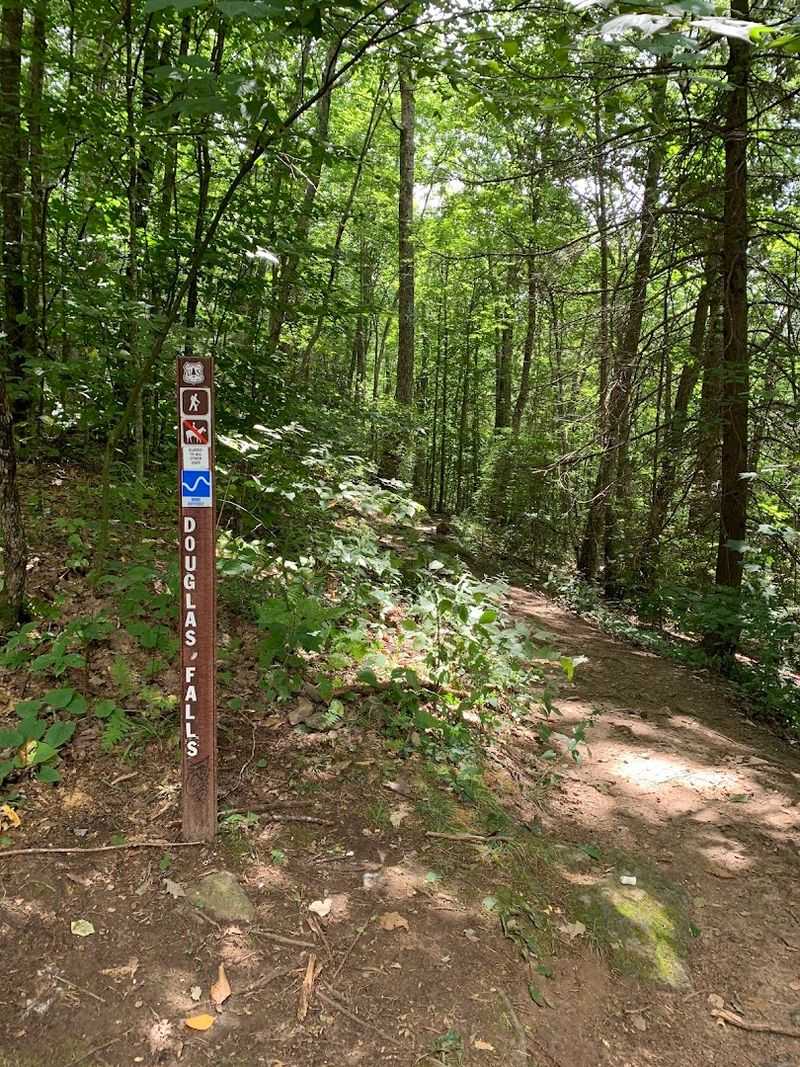
Getting to Douglas Falls feels like choosing your own adventure. I’ve tried both routes, and each offers something completely different.
The easy option starts from Big Ivy Road, which is Forest Service Road 74 heading east from Barnardsville. You’ll drive about nine miles on a winding gravel road that demands patience and careful steering.
The road itself becomes part of the experience, taking roughly 40 minutes to navigate, but you’ll pass several smaller waterfalls along the way that make excellent photo stops. Once you reach the trailhead parking area, it’s only a half-mile hike to the falls.
The challenging alternative begins at Craggy Gardens Visitor Center on the Blue Ridge Parkway. This route covers 7.4 to 9 miles roundtrip depending on which exact path you take.
I learned the hard way that this trail involves over 4,000 feet of elevation change, with steep descents on the way down and brutal climbs coming back up.
Standing Beneath A 60-Foot Natural Curtain
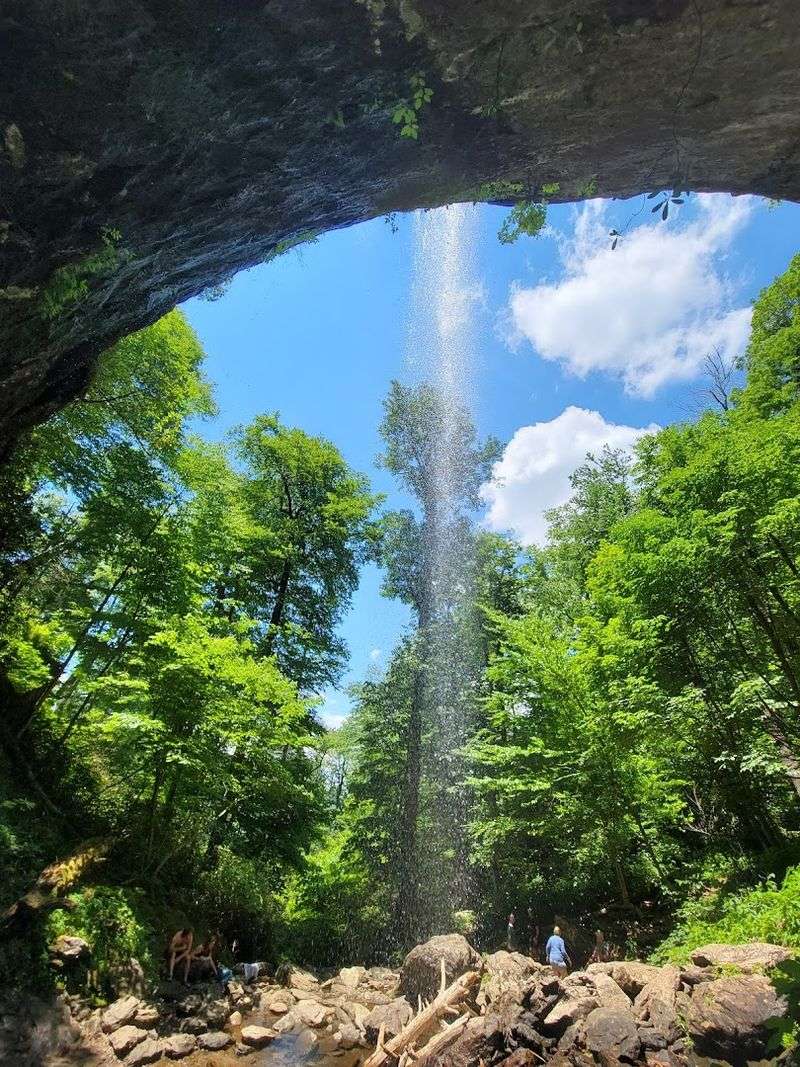
The waterfall itself absolutely justifies whatever effort you put into reaching it. Water plunges 60 feet over a massive cliff face, creating a thunderous sound that fills the entire area.
What makes Douglas Falls truly special is the rock formation behind it. Small cave-like alcoves have formed in the cliff, and you can actually walk behind certain sections of the falling water.
I spent a good hour exploring different angles and perspectives, getting soaked in the process but not caring one bit. The mist creates natural rainbows on sunny days, and the pool at the base is surprisingly deep.
The volume of water varies dramatically based on recent rainfall and the season. I visited after several days of rain and found the falls absolutely roaring with power.
Friends who came during drier months reported a gentler flow that was still beautiful but less dramatic. Spring tends to offer the most impressive water volume.
Why This Trail Feels Like Your Private Paradise
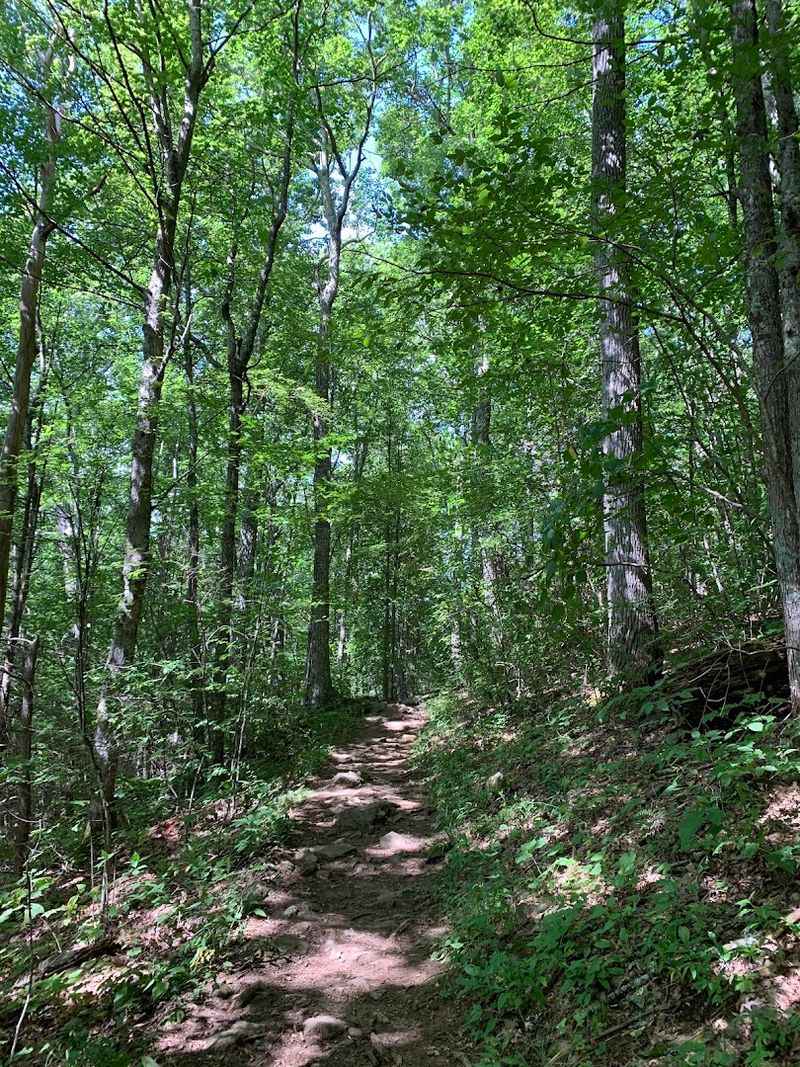
Privacy is the unexpected luxury at Douglas Falls. Unlike popular waterfalls where you’re jockeying for position with dozens of other visitors, I’ve had this place entirely to myself on multiple occasions.
The difficulty of access naturally filters out casual tourists, which means those who do make the journey are rewarded with an intimate experience. On a Friday in July, I didn’t encounter a single other hiker on the trail from Craggy Gardens.
Even on weekends, the visitor count remains remarkably low compared to destinations like Looking Glass Falls or Linville Falls. This solitude transforms the experience from a simple waterfall viewing into something almost meditative.
The quiet forest setting amplifies this peaceful atmosphere. You’ll hear birds singing, water trickling over rocks in the numerous creek crossings, and the rustle of leaves in the breeze.
It’s the kind of place where you can sit and think without interruption, something increasingly rare in our connected world.
Navigating The Gravel Road Adventure From Barnardsville
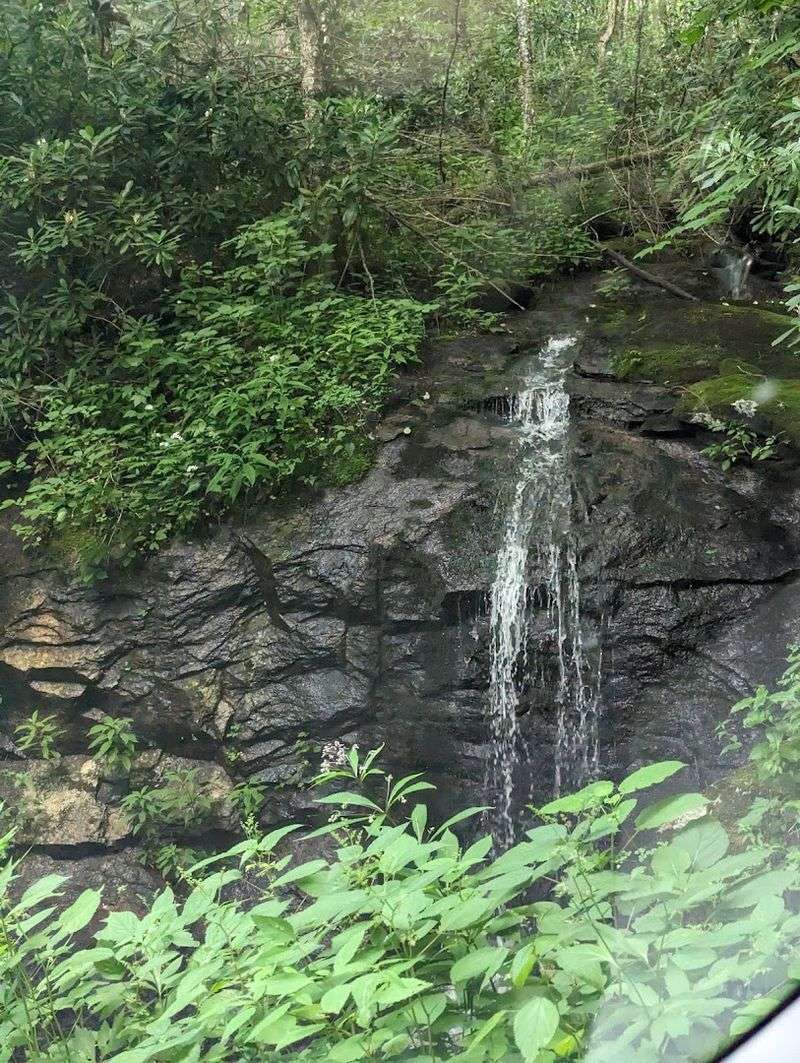
Dillingham Road starts innocently enough as a paved route out of Barnardsville, but it transforms into Forest Road 74 as you enter the national forest. The pavement disappears, replaced by gravel that requires your full attention.
This nine-mile stretch is narrow, winding, and demands respect. I drove it in a standard sedan without problems, but you’ll want to take it slow, especially around the tight curves where visibility is limited.
The road is well-maintained enough for two-wheel-drive vehicles, but high clearance helps in a few spots where erosion has created deeper ruts. Meeting another vehicle means someone needs to find a wide spot to let the other pass.
The drive time of 40 minutes might seem excessive for nine miles, but rushing would be foolish and dangerous. I actually enjoyed the slow pace because it let me spot several roadside waterfalls and appreciate the changing forest scenery as elevation increased.
The Craggy Gardens Route For Serious Hikers
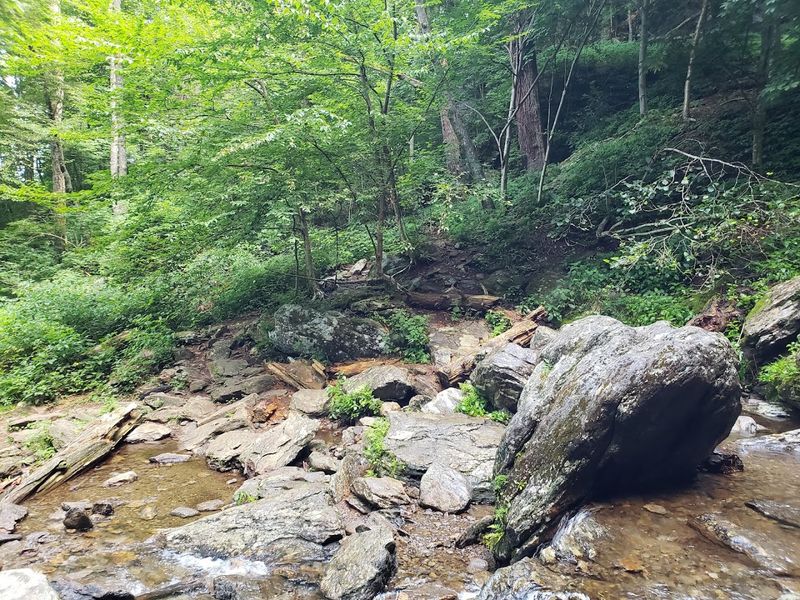
Starting from Craggy Gardens turns the waterfall visit into a genuine wilderness challenge. The trailhead sits at the far left side of the visitor center parking area, clearly marked but warning you about what lies ahead.
I covered approximately 7.6 miles roundtrip with 1,750 feet of elevation gain, though other hikers report distances ranging up to 9 miles depending on exact route variations. The trail descends steeply through switchbacks for the first portion, crossing three small creeks where careful rock-hopping keeps your boots dry.
About 1.5 miles in, a junction splits toward Greybeard Mountain Overlook or continues to the falls.
The terrain is relentlessly rocky with exposed roots creating natural obstacles throughout. Several fallen trees require climbing over or ducking under, though forest service crews work to maintain passable routes.
My knees protested loudly during the return climb, and I learned why experienced hikers recommend bringing trekking poles. This route took me five hours total, and I was genuinely exhausted at the end despite being in decent shape.
Creek Crossings And Forest Canopy Magic
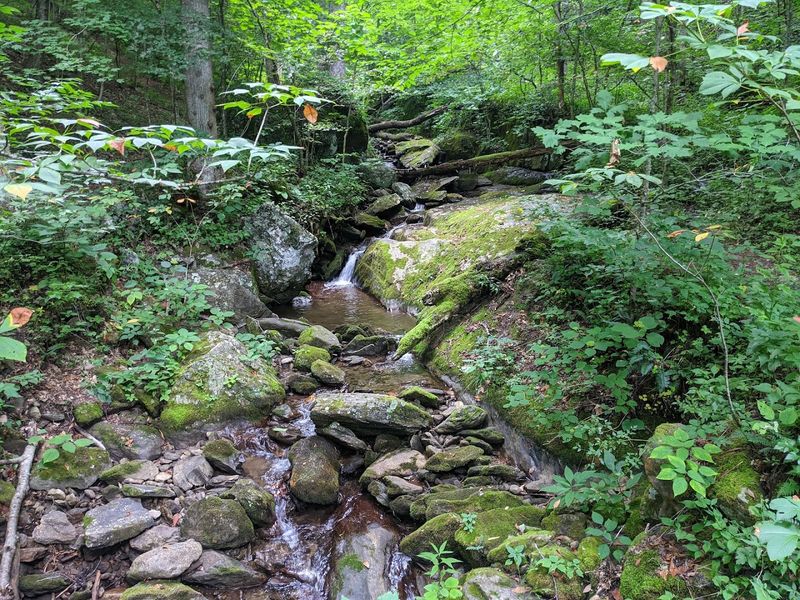
Multiple creek crossings punctuate the trail, each one adding character to the journey. These aren’t major water obstacles, just pleasant interruptions where you hop across carefully placed rocks.
The creeks run crystal clear, and I found myself stopping at several to refill water bottles and cool off during the summer heat. Watching these small tributaries tumble downhill, I realized they all eventually feed into the waterfall itself, which gave me a new appreciation for how watersheds work.
The sound of running water becomes a constant companion, sometimes faint and sometimes quite loud depending on your proximity to larger streams.
Above these crossings, the forest canopy creates a green cathedral effect. Massive trees filter sunlight into dappled patterns on the trail, and the shade provides welcome relief during warmer months.
I noticed an incredible diversity of plant life, from delicate ferns to robust rhododendrons that create natural tunnels in places. The ecosystem here feels primeval and untouched despite the maintained trail.
Seasonal Considerations And Best Visiting Times
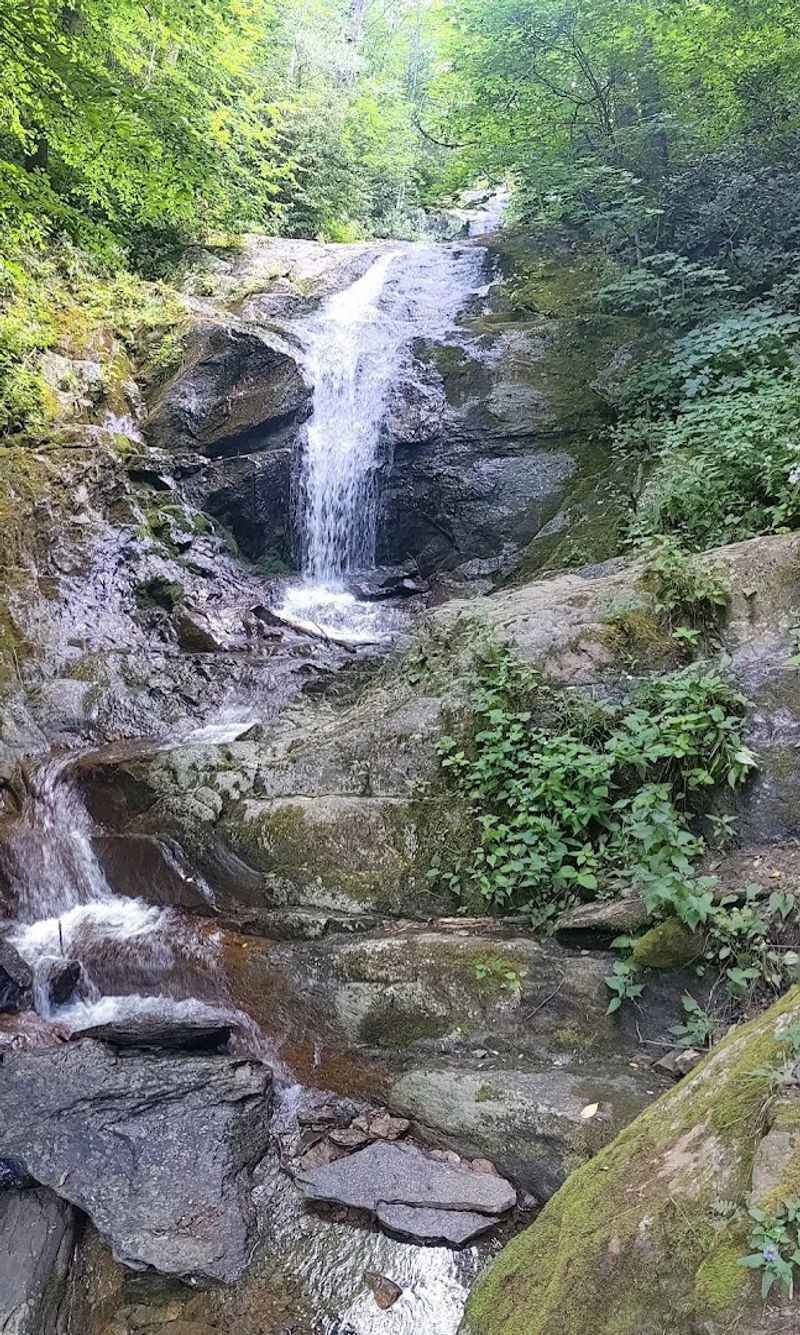
Timing your visit to Douglas Falls dramatically affects the experience. Spring brings the most impressive water volume as snowmelt and frequent rains swell the cascade into a powerful torrent.
I visited in early May and found the falls absolutely thundering, with spray reaching 20 feet from the base. The surrounding forest explodes with wildflowers during this season, creating a botanical wonderland along the trail.
Summer offers easier hiking conditions with stable weather, though water flow decreases unless recent storms have passed through. Fall transforms the forest into a palette of reds, oranges, and yellows, making the hike visually stunning even if the waterfall runs lower.
Winter access depends on your chosen route. Big Ivy Road closes seasonally, typically from late fall through early spring, making the waterfall accessible only via the challenging Craggy Gardens trail if the Blue Ridge Parkway remains open.
Some adventurous hikers report spectacular ice formations during freezing conditions, though I haven’t personally witnessed this phenomenon yet.
Hurricane Helene’s Impact On The Landscape
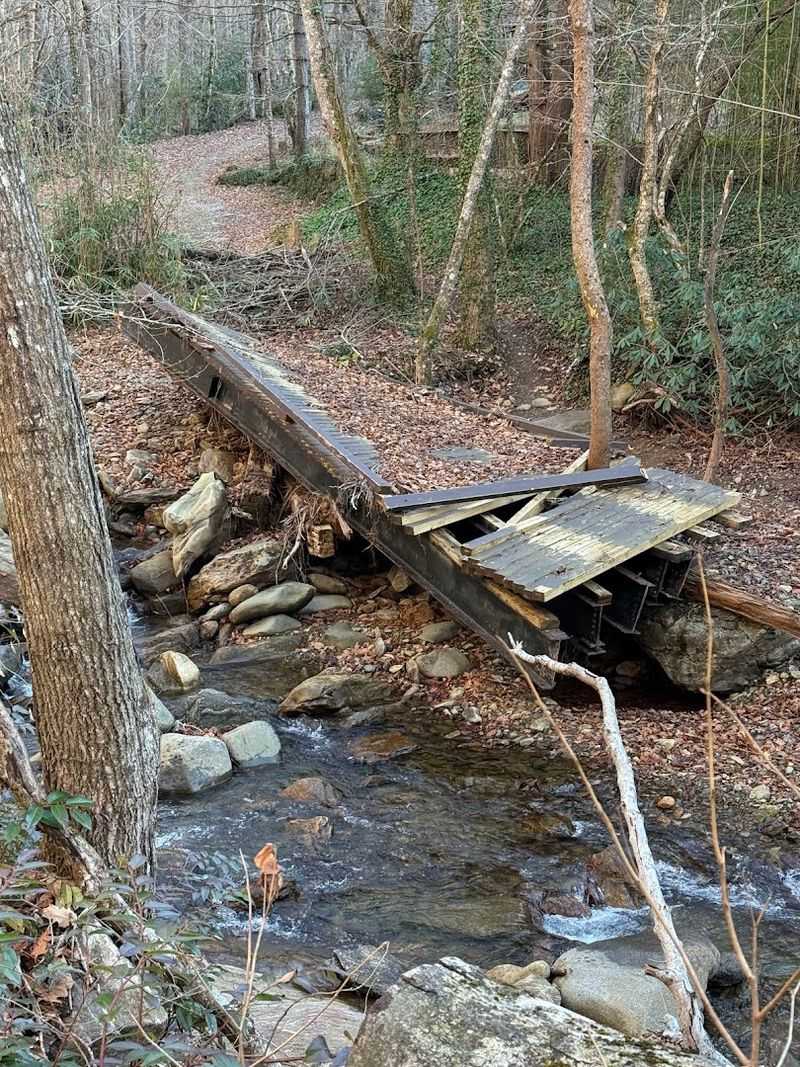
Recent natural events have left visible marks on the area around Douglas Falls. Hurricane Helene hit the Mount Mitchell region particularly hard, and evidence of this destruction remains visible from various points along the trail.
I hiked through sections where massive trees lay across the path, victims of the storm’s incredible winds. Forest service crews have worked to create passable routes around or through these obstacles, but the sheer number of downed trees testifies to the hurricane’s power.
From certain viewpoints, you can see damage flows on neighboring mountains where entire swaths of forest were stripped away.
Interestingly, this destruction adds a layer of geological and ecological education to the hike. You can observe how forests recover from major disturbances, with new growth already emerging around fallen giants.
The trail itself has proven remarkably resilient, though some sections required rerouting. This natural drama reminds visitors that these mountains are dynamic, living landscapes constantly shaped by powerful forces beyond human control, much like the ever-changing conditions you might observe in Ohio’s own varied terrain.
What To Pack For Either Route
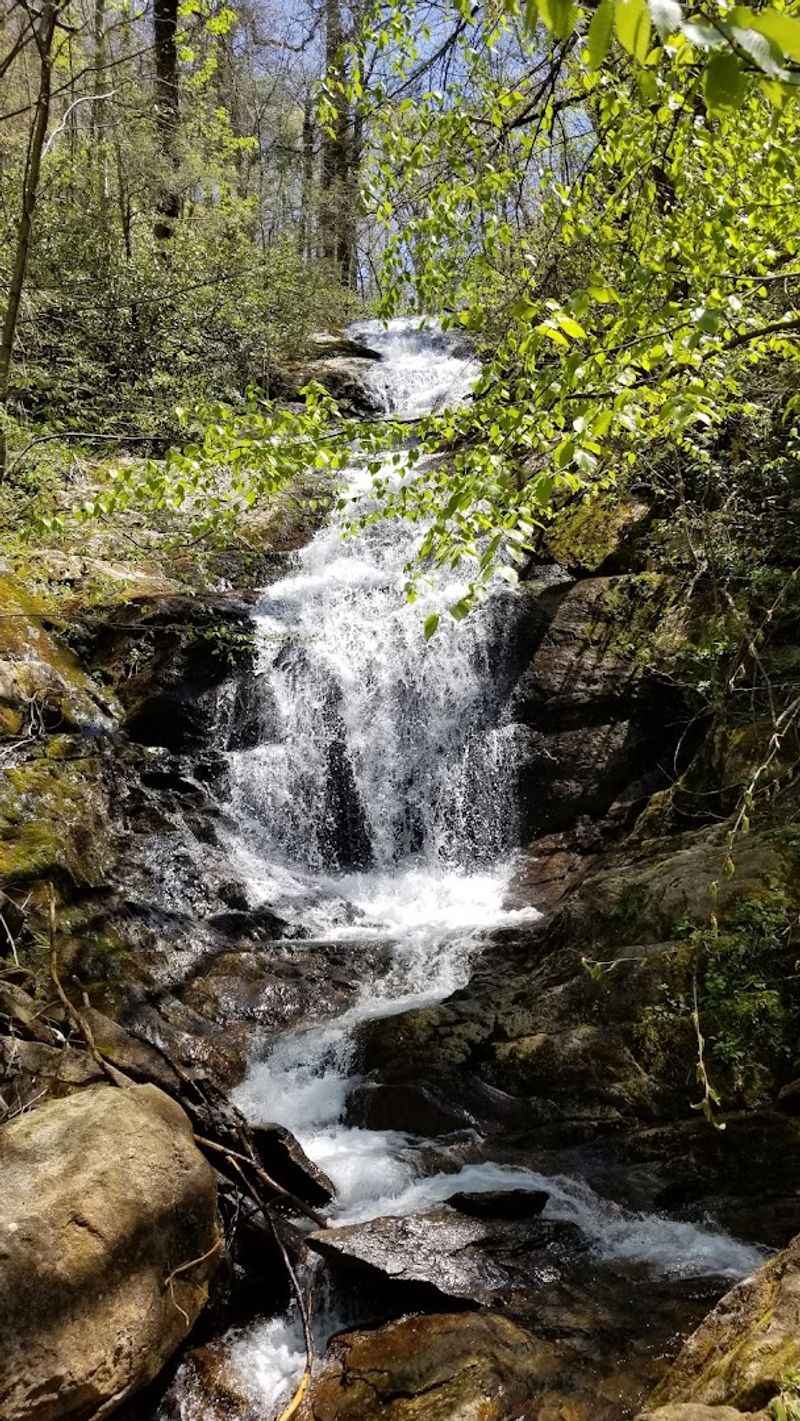
Preparation makes the difference between a memorable adventure and a miserable ordeal. Water tops the essential list regardless of which route you choose, and I learned to bring more than seems necessary.
For the Craggy Gardens route, I now pack at least three liters per person plus energy-dense snacks like trail mix, energy bars, and fruit. The strenuous nature of that hike burns calories fast, and running out of fuel midway creates real problems.
Proper footwear matters immensely on the rocky terrain. I wore hiking boots with good ankle support and aggressive tread, which saved me from several potential twisted ankles.
The shorter Big Ivy route is more forgiving, and sturdy walking shoes suffice for most people.
Trekking poles proved invaluable on steep sections, taking pressure off my knees during descents and providing stability on uneven ground. A small first-aid kit, map or GPS device, and extra layers for changing weather conditions round out the smart packer’s list.
Even Ohio hikers accustomed to flatter terrain will appreciate proper preparation here.
The Geology Behind The Beauty
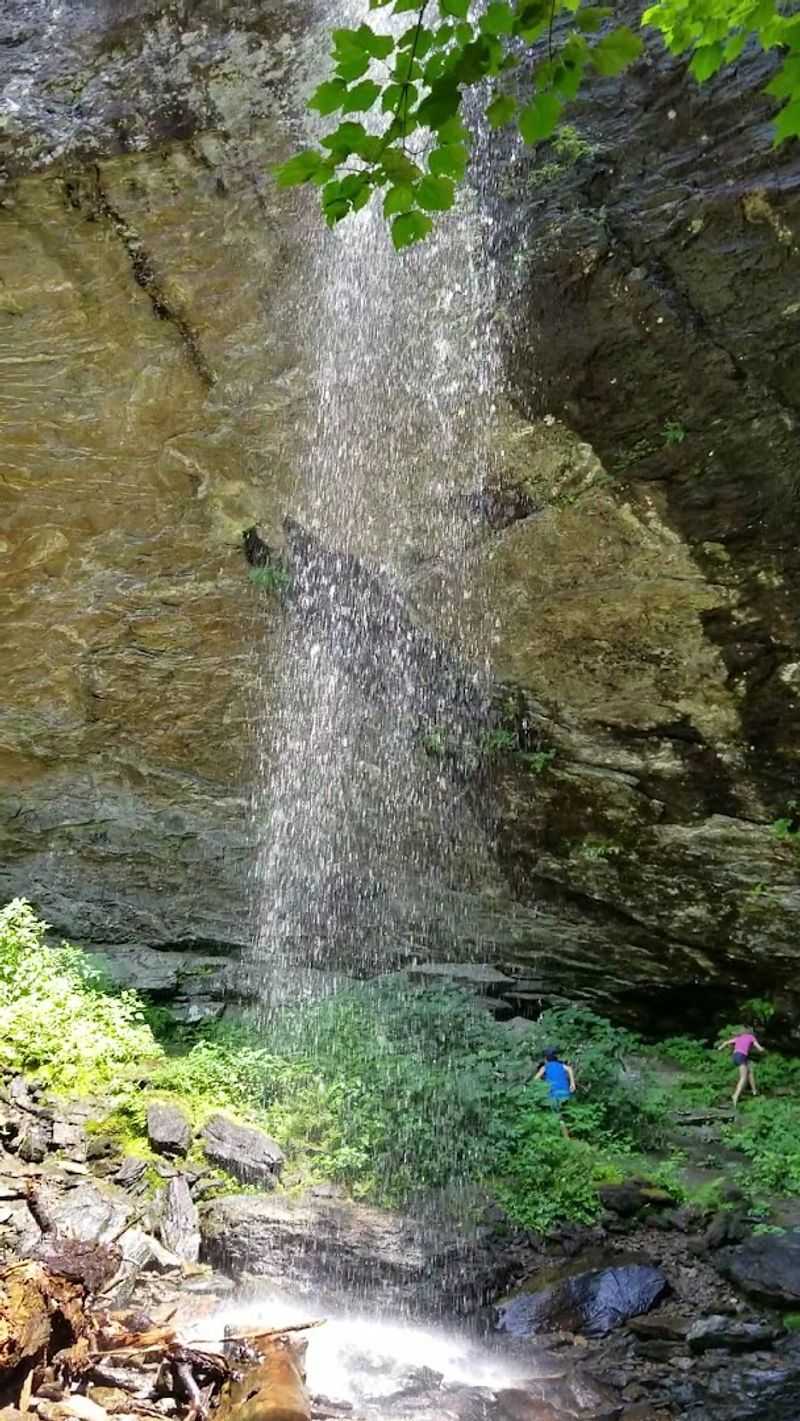
Douglas Falls showcases fascinating geological processes that have been unfolding for millions of years. The 60-foot cliff face consists of layered rock that erodes at different rates, creating the alcoves and cave-like features behind the waterfall.
Standing at the base, you can see how water has carved through softer rock layers while harder formations remain more intact. This differential erosion creates the dramatic overhang that allows visitors to walk behind portions of the falling water.
The pool at the bottom has been carved out by centuries of hydraulic action as water pounds relentlessly against the bedrock.
The tributary feeding the falls is part of the larger Ivy River watershed system. During my visit, a geology professor I met on the trail explained how these mountains represent some of the oldest rock formations in North America, predating even the Rocky Mountains.
The Appalachian range, of which these peaks are part, once rivaled the Himalayas in height before millions of years of erosion wore them down to their current rounded profiles.
Wildlife And Natural Wonders Along The Way
The trail to Douglas Falls offers remarkable biodiversity that enhances the hiking experience beyond just reaching the waterfall. I encountered dozens of butterflies during my summer visit, their colorful wings creating moving artwork against the green backdrop.
Salamanders are particularly abundant near the creek crossings, and patient observers can spot several species unique to these southern Appalachian mountains. Bird songs fill the forest throughout spring and summer, with everything from tiny warblers to impressive pileated woodpeckers making appearances.
I’ve seen deer tracks but never the animals themselves, suggesting they’re present but wisely avoid the trail during daylight hours.
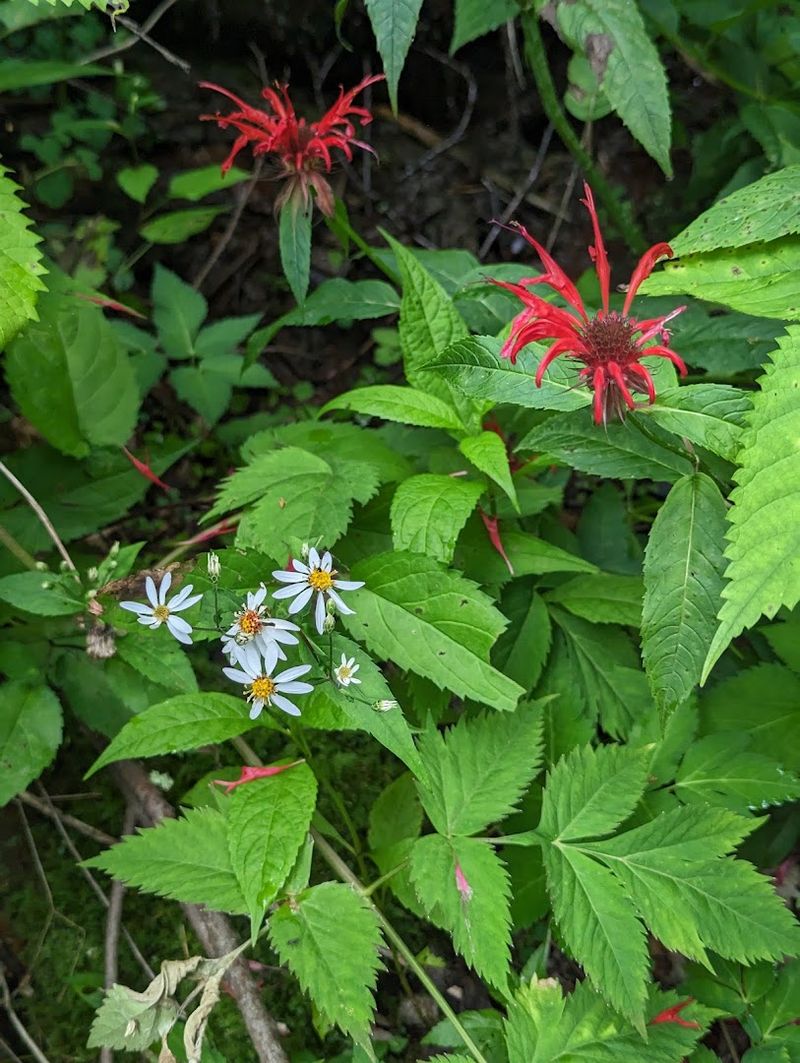
Plant diversity rivals the animal life, with ferns, mosses, mushrooms, and wildflowers creating a botanical wonderland. Spring brings displays of trillium, bloodroot, and dozens of other wildflowers that carpet the forest floor.
The rhododendron tunnels that form in places are particularly magical, creating natural archways over the trail. This ecological richness makes the hike educational for anyone interested in natural history, rivaling what you might find in Ohio’s own diverse ecosystems.
Making The Journey Your Own Adventure
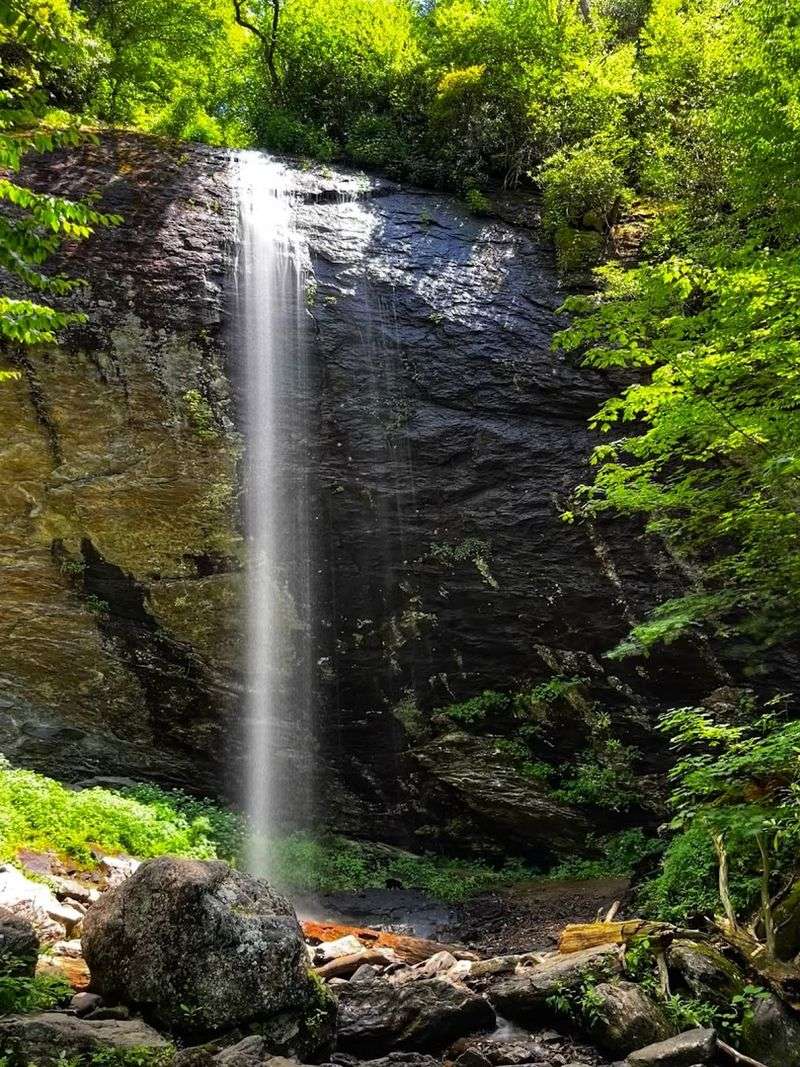
Douglas Falls rewards visitors in proportion to the effort they invest. Whether you choose the easy half-mile stroll from Big Ivy or the grueling trek from Craggy Gardens, you’ll find something special waiting at the end.
I’ve now visited three times using different routes and seasons, and each experience felt unique. The waterfall itself remains constant, but everything around it changes with weather, water levels, and the particular mood you bring to the journey.
Some people treat it as a quick nature stop during a longer road trip through the area. Others, like the backpackers I met who camped overnight, turn it into a multi-day wilderness experience.
What makes this waterfall truly one of North Carolina’s best-kept secrets isn’t just its beauty or relative isolation. It’s the way it offers multiple ways to experience the same destination, accommodating different fitness levels and adventure appetites.
Standing beneath that 60-foot cascade, surrounded by ancient mountains and primeval forest, you’ll understand why some places deserve to remain a bit hidden, shared only among those willing to seek them out, much like hidden treasures back in Ohio that locals cherish and protect.