
This Peaceful River Town In Illinois Is A Secret Locals Guard Closely
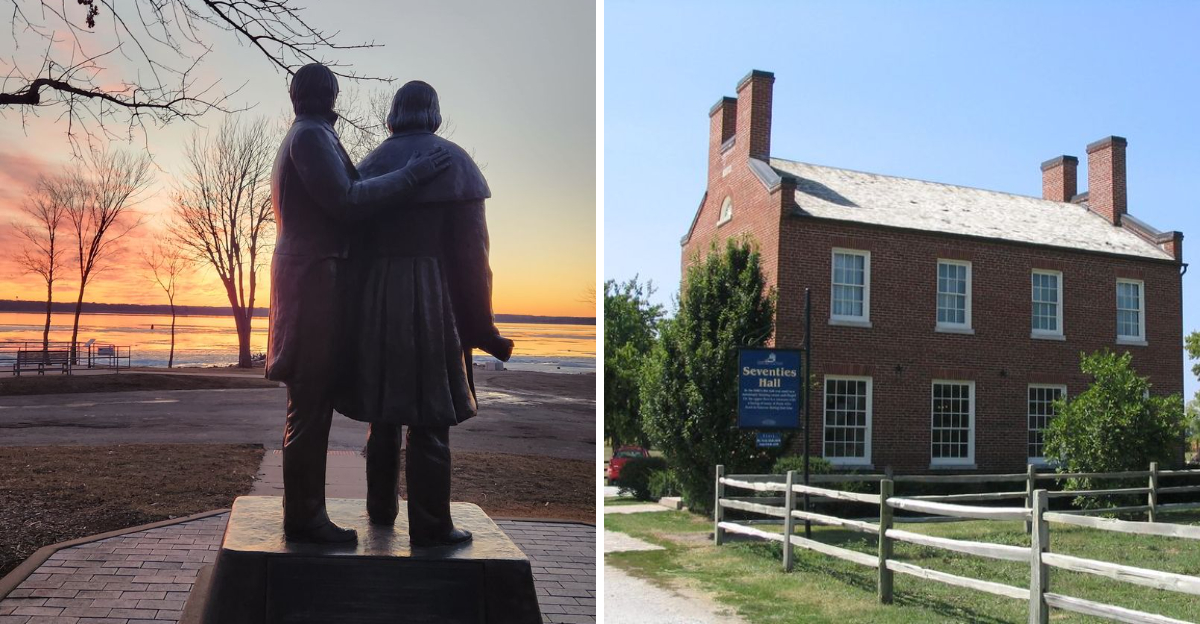
Nauvoo sits along the Mississippi River in western Illinois, a town of fewer than a thousand residents that operates at a different rhythm than most American destinations. The streets here remain quiet even during peak tourist months, and locals have developed a protective fondness for their community that borders on conspiratorial.
This river settlement carries layers of American history within its restored buildings and brick pathways, yet it never announces itself with billboards or aggressive marketing. Visitors who discover Nauvoo often stumble upon it by accident or arrive through word-of-mouth recommendations, finding a place that rewards slow exploration and genuine curiosity about the past.
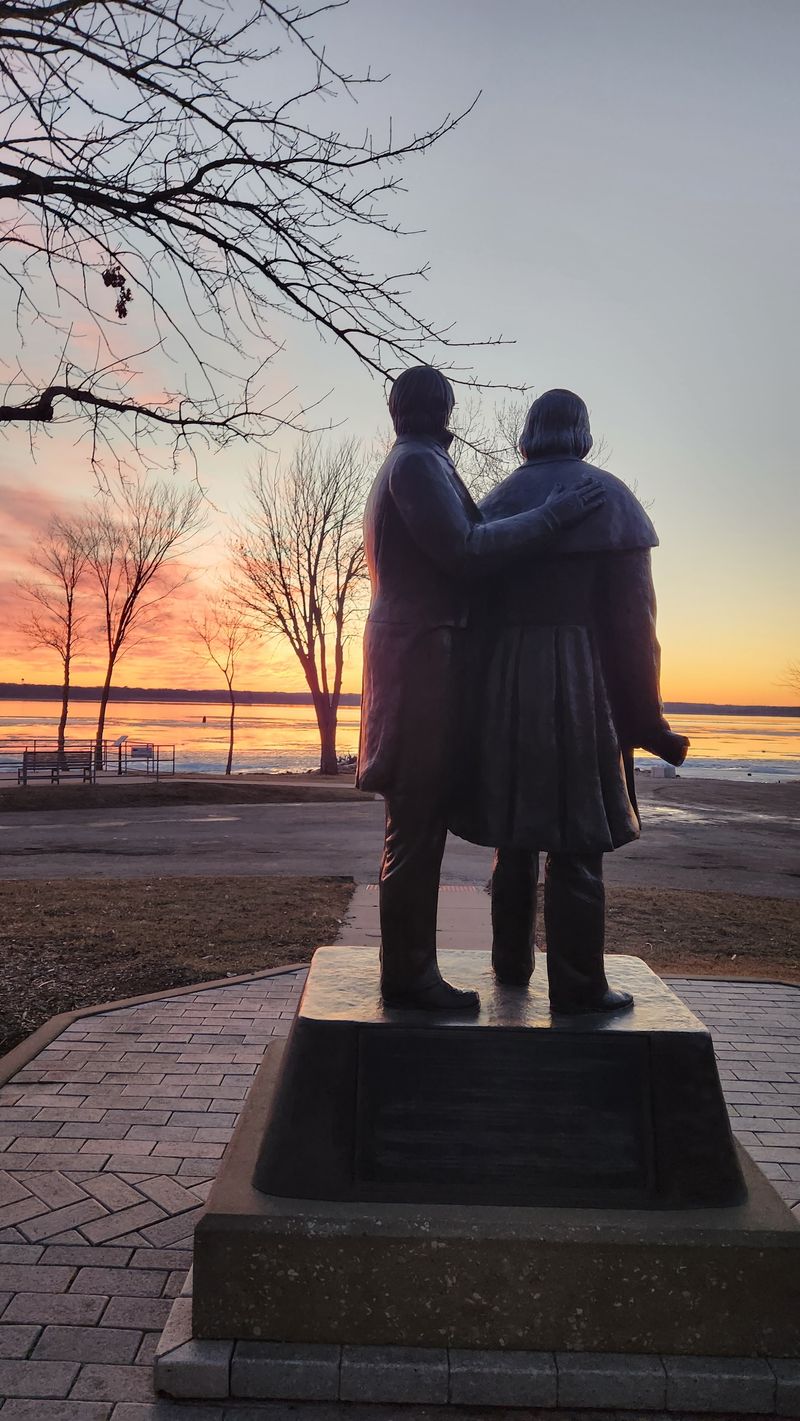
The river defines everything about Nauvoo, from its founding to its current identity as a preservation-minded community. Standing at the waterfront, you can watch the Mississippi curve around the Illinois shoreline with Iowa farmland visible across the channel.
The river moves with deliberate power here, carrying barges and occasional recreational boats past limestone bluffs and wooded banks.
Early morning visits to the riverfront reveal fog lifting off the water in seasonal patterns, while evening hours bring soft light that photographers appreciate. The town sits on elevated land above the floodplain, providing natural vantage points that early settlers recognized immediately.
Several public access areas allow visitors to approach the water directly, though much of the immediate riverbank remains undeveloped.
This geographic position made Nauvoo strategically important during its 19th-century peak, and the river continues to shape local weather patterns, wildlife populations, and the overall atmosphere. The waterfront never feels crowded, even during summer weekends when other river towns become congested with tourists.
Nauvoo experienced a remarkable population surge in the early 1840s when members of The Church of Jesus Christ of Latter-day Saints established a major settlement here after fleeing religious persecution in Missouri. Within five years, the town grew to rival Chicago in size, becoming one of the largest cities in Illinois with sophisticated civic planning and ambitious construction projects.
This period left an architectural legacy that defines the town today.
The departure of most Mormon settlers in 1846 created a demographic vacuum that French Icarian socialists partially filled, adding another cultural layer to the community. German and Swiss immigrants arrived later, establishing wine-making traditions that persisted for generations.
Each group contributed distinct building styles and social structures that remain visible in the town layout.
Modern Nauvoo exists because of deliberate preservation efforts that began in the 1960s, when church organizations and local residents recognized the historical significance of deteriorating structures. The town now functions as both a living community and an open-air museum of 19th-century Midwestern settlement patterns.
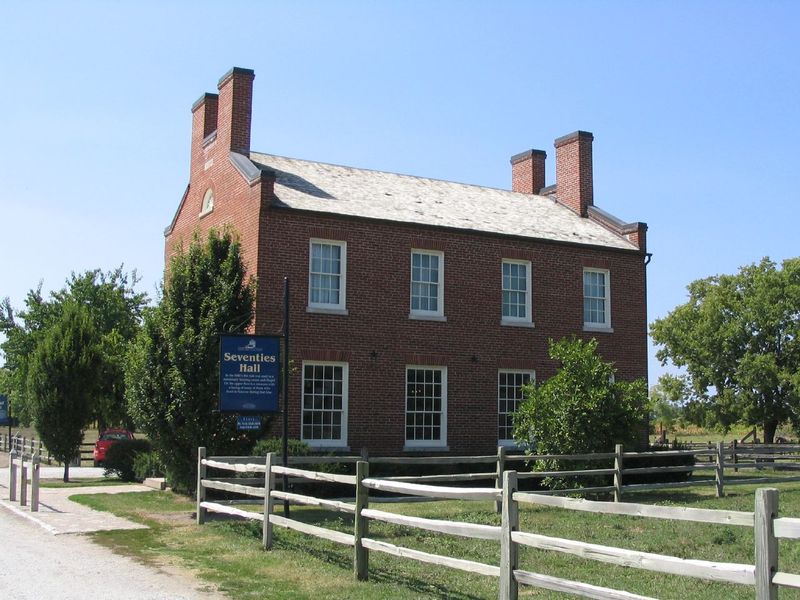
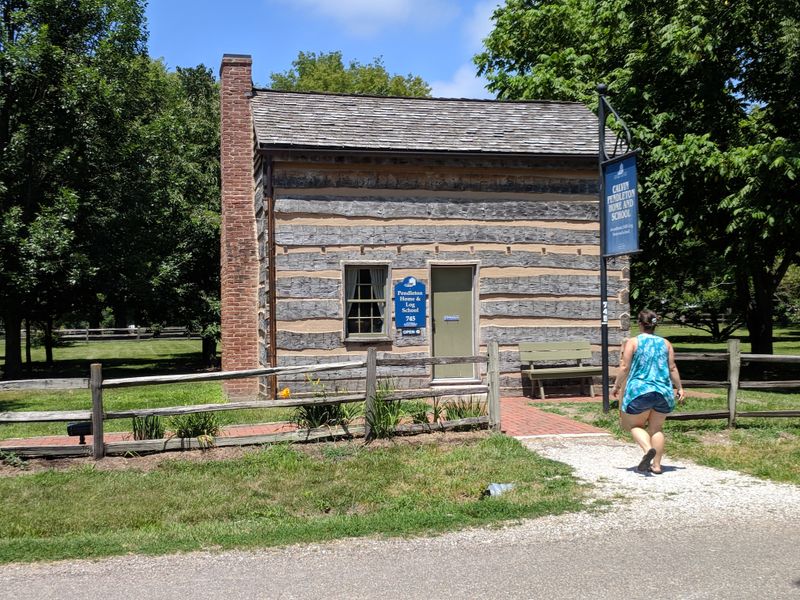
Walking through the historic district feels like moving through a carefully maintained time capsule, with over two dozen restored structures offering glimpses into different aspects of 19th-century life. The buildings range from modest log cabins to substantial brick homes, each furnished with period-appropriate items and interpreted by knowledgeable guides.
Many structures function as working demonstrations where visitors can watch blacksmithing, baking, candle-making, and other traditional crafts.
The restoration work reflects serious archaeological and historical research rather than romanticized recreations. Original building materials were preserved when possible, and reproduction elements follow documented construction methods from the 1840s.
Several homes belonged to specific historical figures whose personal stories add depth to the physical spaces.
Admission to most buildings comes at no cost, though donations support ongoing preservation work. The self-guided walking tour allows visitors to move at their own pace, spending more time in structures that match their interests.
Summer months bring costumed interpreters who add theatrical elements without overwhelming the authentic atmosphere that makes these buildings compelling.
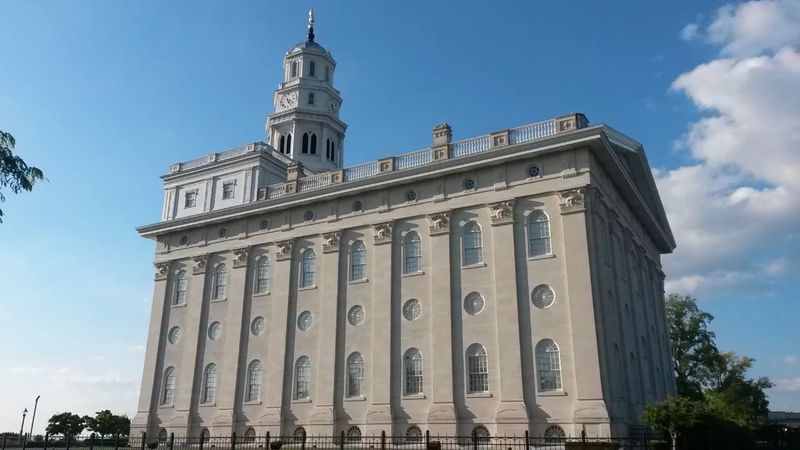
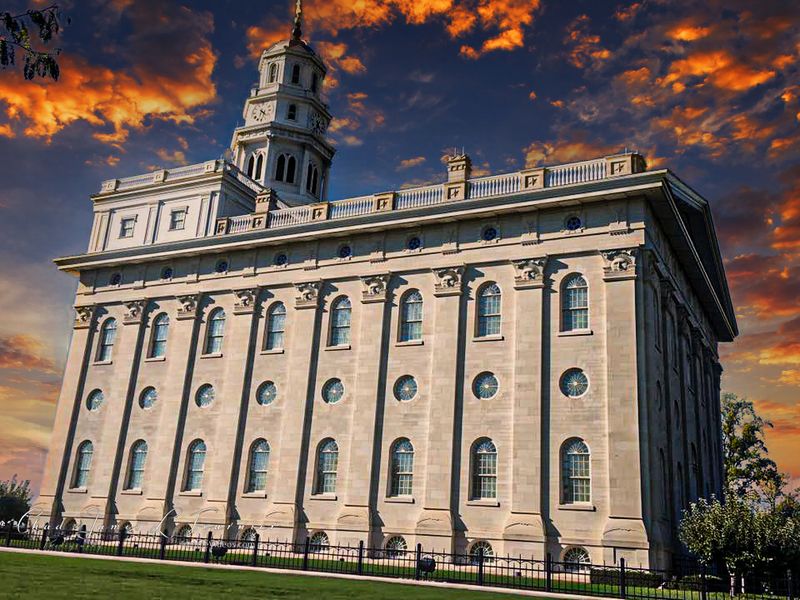
The reconstructed temple dominates the Nauvoo skyline from its elevated position above the historic district, a massive limestone structure that replicates the original building destroyed by fire and tornado in the 1840s and 1850s. The current building, completed in 2002, follows the original architectural plans with remarkable precision, including hand-carved details and period construction techniques.
Its white exterior catches sunlight throughout the day, creating a visual anchor visible from multiple points around town.
Non-members cannot tour the temple interior, but the exterior grounds remain open for visitors to walk and photograph. The building represents the largest construction project in Nauvoo since the 19th century, and its presence significantly impacts the town’s identity and economy.
Interpretive signs around the perimeter explain the original structure’s history and construction details.
The temple grounds offer some of the best elevated views of the Mississippi River valley, particularly from the north side where the land drops away toward the water. Evening lighting transforms the building into a glowing presence that can be seen from Iowa across the river.
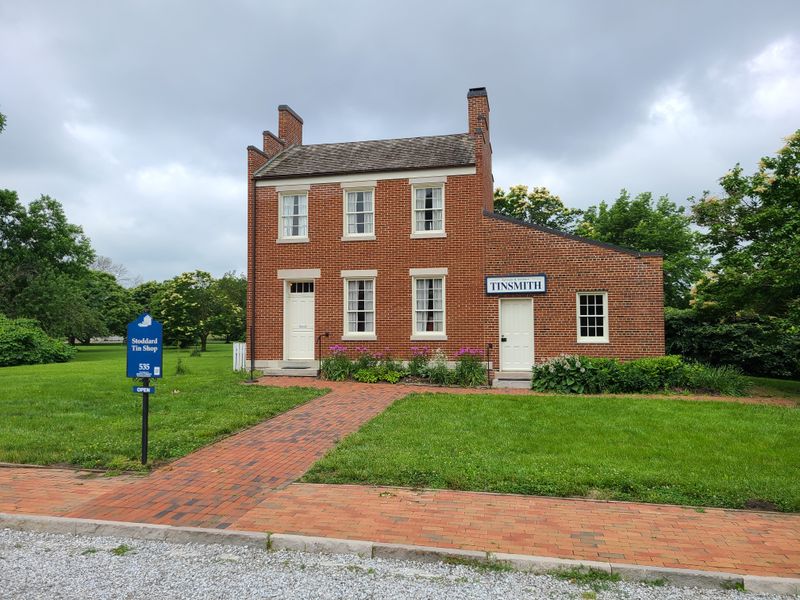
The core historic area covers several square blocks of flat terrain that visitors can easily explore on foot without returning to their vehicles. Streets follow the original grid pattern established in the 1840s, with wide thoroughfares that accommodate modern traffic while maintaining a 19th-century scale.
Many roads remain unpaved or feature brick surfaces that reinforce the historical character.
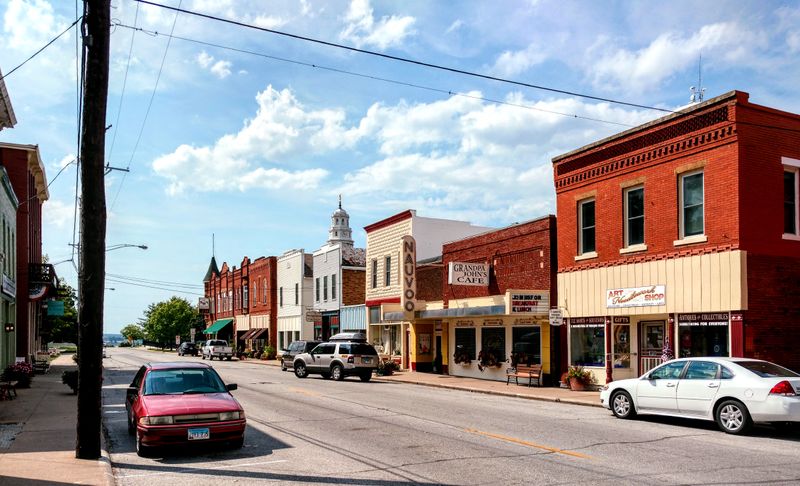
Traffic volume stays remarkably low even during peak visiting hours, making street crossings simple and allowing conversations to continue without competing with engine noise. The absence of commercial signage, modern storefronts, and typical tourist infrastructure creates an unusually clean visual environment.
Sidewalks connect major points of interest, though many visitors simply walk in the streets where vehicle presence remains minimal.
Mature trees provide shade along most routes, and the gentle topography makes the district accessible for visitors with limited mobility. The compact layout means that even a short visit allows time to see multiple buildings and locations.
Spring and fall temperatures make walking particularly pleasant, though summer humidity can challenge visitors unaccustomed to Mississippi River valley weather patterns.
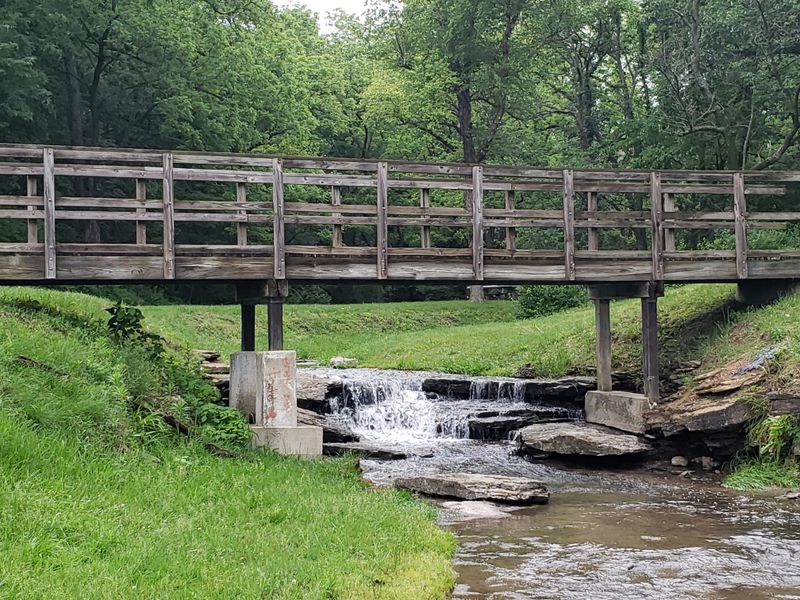
Located south of the historic district, this 148-acre state park provides outdoor recreation opportunities that complement the town’s historical attractions. The park occupies land that once served as the vineyard and living quarters for the Icarian community, and some original structures still stand within the boundaries.
Hiking trails wind through mature hardwood forests and along ridges that overlook the river valley.
The park museum houses artifacts from both the Mormon and Icarian periods, offering context that helps visitors understand Nauvoo’s layered history. Camping facilities attract visitors who want to spend multiple days exploring the area, and the park serves as a staging area for fishing and boating activities.
Bird watchers appreciate the location during spring and fall migration periods when the Mississippi flyway concentrates species along the river corridor.
Winter visits reveal the park’s quiet character, with trails open for hiking and cross-country skiing when snow conditions permit. The park never feels crowded, and weekday visits often mean having trails entirely to yourself.
Facilities remain basic but well-maintained, reflecting the park’s focus on natural experience rather than developed amenities.
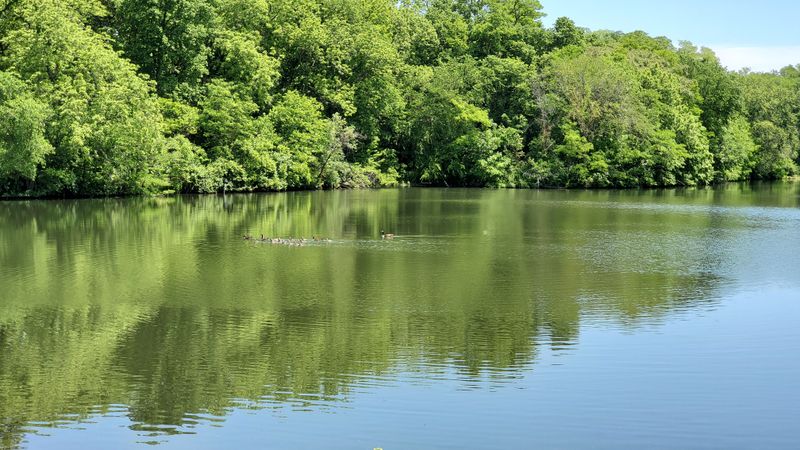
The Mississippi River at Nauvoo supports various water activities, from fishing for catfish and bass to kayaking along the Illinois shoreline. Several boat ramps provide access for visitors bringing their own watercraft, and the relatively calm waters near town create suitable conditions for less experienced boaters.
The river channel here runs deep enough for large commercial traffic, so recreational boaters must remain aware of barge movements and wakes.
Charter fishing services operate from nearby communities, targeting species that migrate through this section of the river seasonally. Pontoon boat rentals allow families to explore at leisurely speeds, often anchoring near sandbars or quiet backwaters.
The river’s width creates impressive sight lines, with Iowa bluffs forming a dramatic eastern backdrop.
Sunset boat tours provide different perspectives on Nauvoo’s skyline, particularly the illuminated temple visible from the water. Swimming remains unofficial in most areas due to current strength and commercial traffic, though some locals know specific spots where conditions prove safer.
Spring floods can alter riverbank access and create hazardous conditions that persist into early summer.
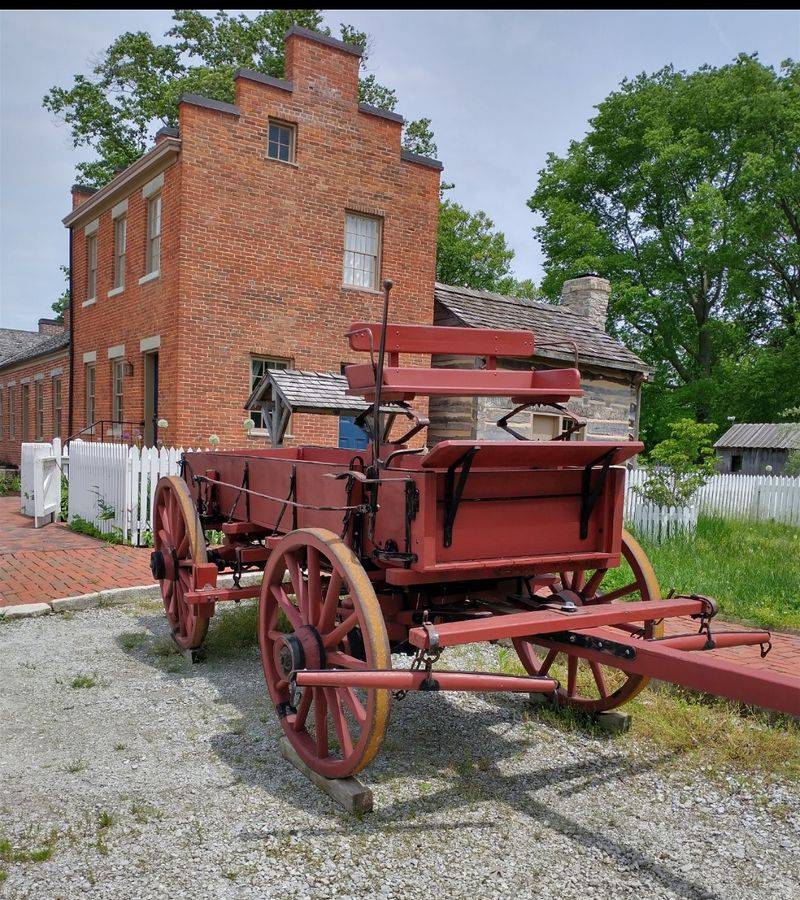
Late autumn through early spring transforms Nauvoo into an even quieter version of itself, with visitor numbers dropping dramatically after October. Many historical buildings reduce their operating hours or close entirely until spring, but the town itself remains fully accessible for those who appreciate solitude and stark seasonal beauty.
Winter light creates different photographic opportunities, and the absence of foliage reveals architectural details obscured during growing months.
Local restaurants and shops maintain limited schedules, so advance research helps avoid disappointment. The off-season allows more casual interactions with year-round residents who have more time for conversations when tourist demands decrease.
Snow cover transforms the historic district into scenes that resemble 19th-century winter landscapes, particularly when wood smoke rises from chimneys in occupied buildings.
Spring arrives gradually, with ice breaking up on the river and migrating birds returning in waves that birdwatchers can track. The shoulder seasons of April-May and September-October offer comfortable temperatures, manageable crowds, and the opportunity to experience Nauvoo without the summer rush.
Off-season visits require more self-direction but reward visitors who enjoy exploration without constant interpretation.
Commercial establishments in Nauvoo operate on a scale that matches the town’s modest population, with family-run businesses providing services for both residents and visitors. The Hotel Nauvoo dining room serves traditional Midwestern meals in a building that has hosted guests since the 19th century, maintaining recipes and service styles that feel deliberately unhurried.
Other cafés and bakeries occupy storefronts along Mulholland Street, offering simple menus focused on execution rather than novelty.
Gift shops sell historical books, reproduction items, and local crafts without the aggressive merchandising found in larger tourist destinations. Owners often work the counters themselves, sharing knowledge about local history and current community events.
Prices reflect small-town economics rather than tourist inflation, and the selection emphasizes practical items alongside souvenirs.
Operating hours can be unpredictable, particularly during off-season months when businesses adjust to reduced customer traffic. This inconsistency frustrates some visitors but reinforces the authentic small-town character that makes Nauvoo distinctive.
The absence of chain restaurants and corporate retail creates a commercial environment that feels genuinely local rather than manufactured for visitor consumption.
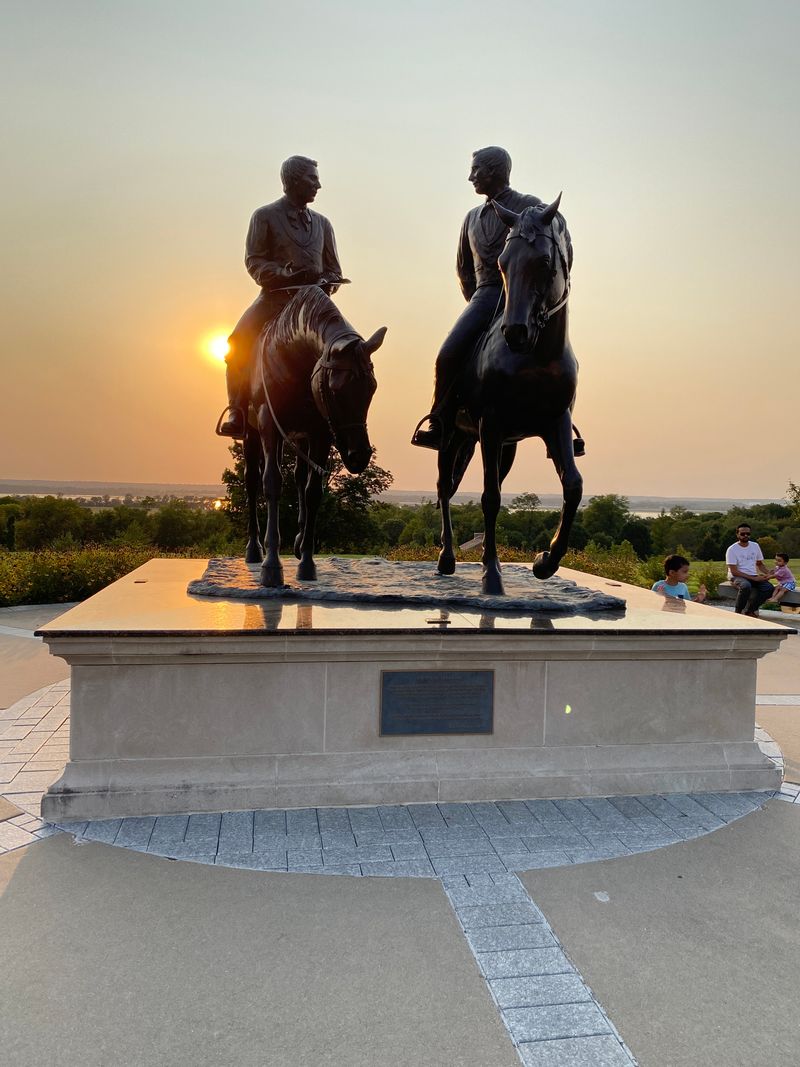
The western-facing orientation of Nauvoo’s riverfront creates exceptional conditions for sunset viewing, particularly from elevated positions in the historic district or temple grounds. The Mississippi River reflects sky colors during the golden hour, often creating mirror effects when wind conditions calm the water surface.
Iowa’s eastern bluffs form a dark horizon line that emphasizes the light show developing above.
Photographers appreciate the foreground elements available in Nauvoo, from historic buildings to natural vegetation that frames sunset compositions. The lack of light pollution allows stars to emerge quickly after sunset, extending the viewing experience beyond the initial color display.
Seasonal variations affect sunset timing and quality, with autumn’s clearer air often producing the most dramatic results.
Unlike larger river cities where crowds gather at designated overlooks, Nauvoo’s sunset viewing remains an intimate experience. You might share a viewpoint with a handful of other visitors or find yourself completely alone with the changing light.
The quietness enhances the visual experience, allowing full attention to the natural display without urban noise or distraction.
The ongoing preservation work in Nauvoo depends on collaboration between religious organizations, government agencies, and local residents who share commitment to maintaining historical integrity. This cooperative approach has prevented the commercialization that often accompanies heritage tourism, keeping development scaled to the town’s actual needs rather than speculative visitor projections.
Community meetings still address preservation standards and tourism management with seriousness that reflects genuine investment in outcomes.
Long-term residents express pride in their town’s significance without the boosterism common in tourist-dependent communities. Many families have lived in Nauvoo for multiple generations, creating social continuity that reinforces preservation values.
The volunteer network supporting historical sites includes people who donate significant time to interpretation, maintenance, and research without financial compensation.
This preservation ethic extends beyond designated historical structures to include landscape management, signage control, and infrastructure decisions that affect the town’s character. Visitors sensitive to authentic places versus manufactured attractions recognize the difference immediately.
The result feels less like a museum and more like a functioning community that happens to occupy historically significant space with unusual care and respect.