
This Perfect Wyoming Road Trip Has Thermal Springs, Wildlife Crossings, And Views You Won’t Believe
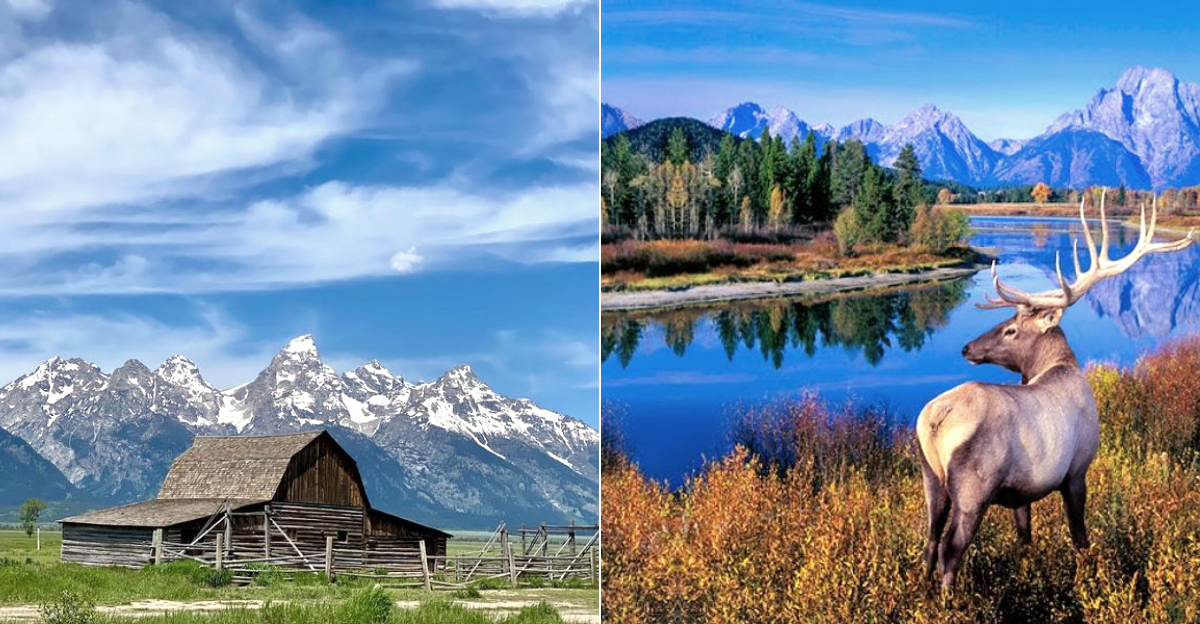
One great drive can completely change the mood of a vacation. This route keeps delivering one unforgettable stop after another, making it almost impossible to stay inside the car for very long.
Wyoming packs soaring peaks, quiet rivers, bubbling hot springs, and incredible wildlife into one adventure. Every bend reveals another view that makes reaching for the camera feel automatic.
One stop leads to famous mountain reflections on calm water. Another brings wide open valleys where bison, moose, and bears sometimes appear when least expected.
Then the road climbs higher, opening up even bigger views across the landscape.
A relaxing soak in natural hot springs adds the perfect break before heading back out for more exploring. A short boat ride and an easy walk can lead to waterfalls that make the extra time completely worthwhile.
The 42-Mile Scenic Loop Drive
Some roads are just roads. This one is an experience.
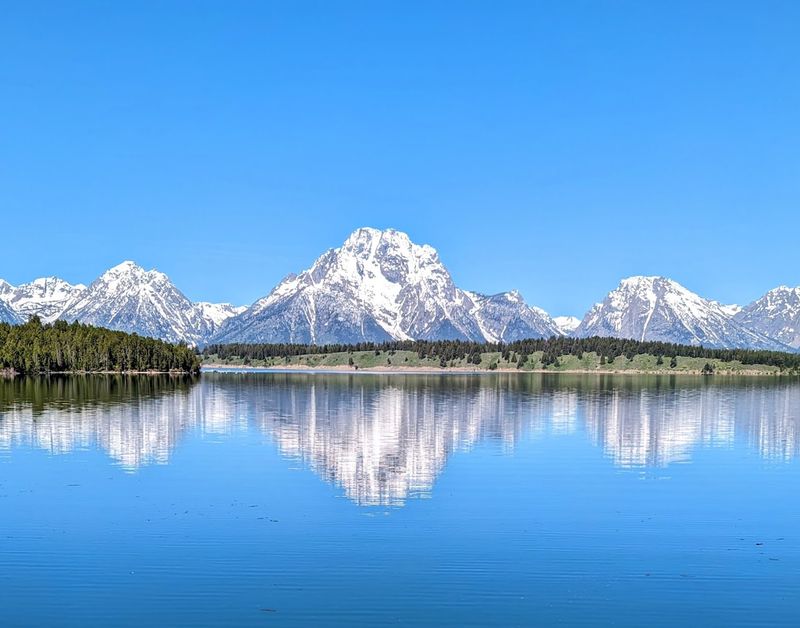
The 42-mile scenic loop connecting Teton Park Road and US Highway 191/89/26 between Moose and Moran is the kind of drive that makes you pull over every five minutes.
The Teton Range rises straight up from the valley floor with no foothills to soften the view. It is dramatic, almost unreal, like someone placed a postcard in front of your windshield.
The loop passes lakes, river bends, historic sites, and wildlife hotspots all in one go. You could rush it in a couple of hours, but why would you?
Plan a full day and stop at every turnout that calls your name.
Bring snacks, charge your camera, and keep the windows down. The mountain air alone is worth the detour.
Signal Mountain Summit Road branches off the main loop and adds another five miles of paved road to a viewpoint 1,000 feet above the valley.
From up there, you can see the Tetons, Jackson Hole, and on a clear day, hints of Yellowstone in the distance. That view alone could be the highlight of someone’s entire trip.
Ready to hit the road?
Oxbow Bend Overlook
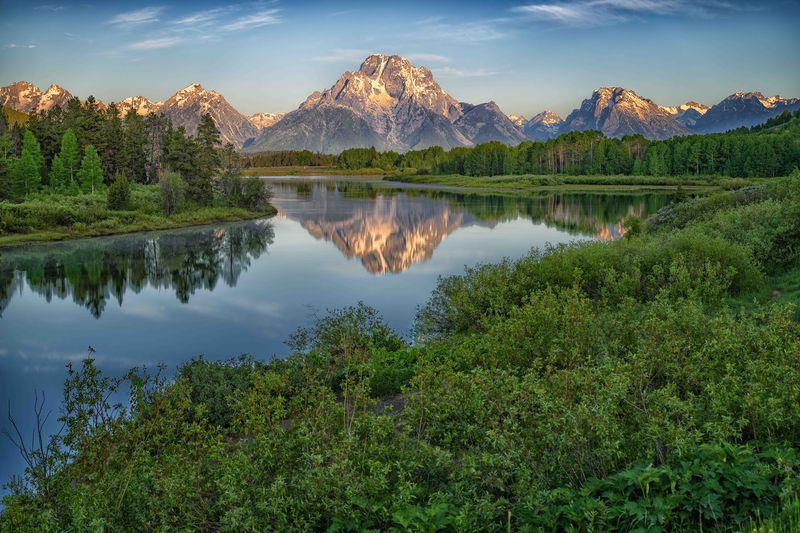
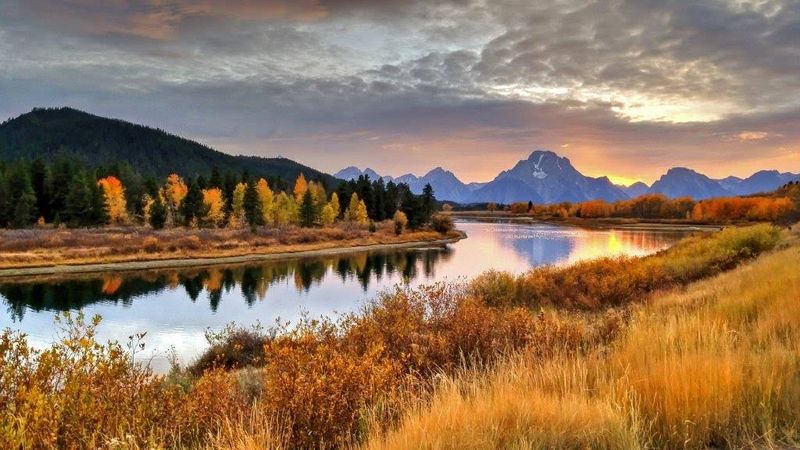
Photographers set their alarms for this one. Oxbow Bend Overlook is where the Snake River curves in a slow, lazy arc and reflects Mount Moran like a mirror on a calm morning.
Show up at sunrise and the light turns everything gold. The mountain, the water, the cottonwood trees along the bank, all of it glows like something out of a nature documentary.
Beyond the photography appeal, Oxbow Bend is one of the best wildlife viewing spots in the entire park. Moose wade through the shallows.
Great blue herons stand perfectly still at the water’s edge. Grizzly bears have been spotted here too, so keep your eyes open and your binoculars handy.
The overlook is easy to access right from the main road, so there is no big hike required. Just park, walk to the edge, and let the view do its thing.
Even on an overcast day, the reflection and the wildlife activity make it worth every minute. Families love it because even the youngest travelers get excited when a moose appears out of nowhere.
What would you do if a grizzly bear walked into your frame? At Oxbow Bend, that question is not entirely hypothetical.
Come prepared, stay alert, and enjoy one of Wyoming’s most spectacular natural stages.
Granite Hot Springs Near Jackson
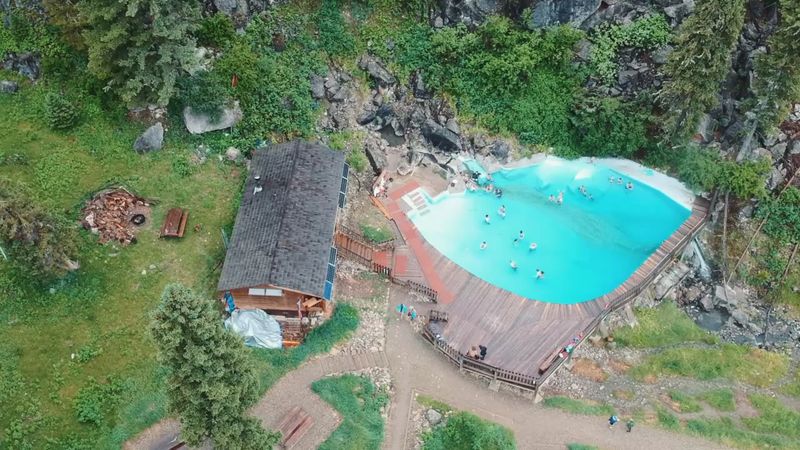
About an hour outside Jackson, a winding eight-mile dirt road leads to one of Wyoming’s most satisfying rewards. Granite Hot Springs is a developed soaking pool built back in the 1930s, managed by the Forest Service, and it earns every mile of that bumpy drive.
The pool sits in a forested canyon setting that feels completely removed from the rest of the world. No cell service, no rush, just warm water and mountain scenery doing all the talking.
There is an entry fee to soak, and the pool operates year-round, which makes it a four-season destination. Summer access is straightforward by regular vehicle, but winter is where things get really interesting.
When snow covers the road, the only ways in are by snowmobile, dog sled, skis, or fat bike. That kind of adventure makes the soak feel even better when you finally get there.
The water temperature stays consistently comfortable and the surrounding views shift with every season. Fall brings golden aspens.
Winter brings deep snow and steam rising off the pool surface. Spring brings rushing snowmelt and wildflowers starting to push through.
Always check current conditions and hours before heading out since seasonal access can change. Treat yourself to a soak and let the mountains remind you that slowing down is always a good idea.
Wildlife Crossings At Trappers Point
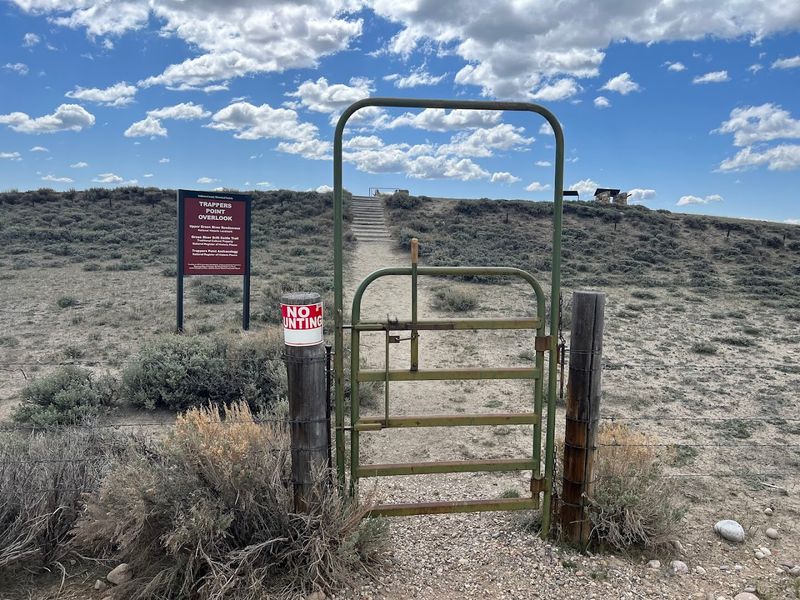
Here is something most tourists never think about but will never forget once they know. Near Pinedale, Wyoming, just south of Grand Teton National Park, sits Trappers’ Point, a federally designated wildlife migration corridor that sees thousands of pronghorn pass through every single year.
These animals travel a 150-mile route between the park and the upper Green River Basin, following paths their ancestors have used for centuries. That kind of loyalty to a route is honestly inspiring.
The problem was the highway cutting right through their path. So in 2012, engineers built a series of wildlife underpasses and overpasses along US 191, resulting in a dramatic reduction in wildlife-vehicle collisions.
The result was an approximately 80 percent reduction in wildlife-vehicle collisions.
That is not just a win for the animals. It is a win for drivers too.
Watching a pronghorn use a bridge built specifically for its safe passage is a genuinely moving experience.
Wildlife corridors like this one are becoming more common across the American West, but Trappers’ Point remains one of the most well-documented success stories. Road trippers passing through on US 191 can actually see the structures from the highway.
Keep your eyes open around dawn and dusk when animal movement peaks. Will you be lucky enough to spot a pronghorn crossing?
The odds are better here than almost anywhere else in Wyoming.
Snake River Overlook And Ansel Adams Views
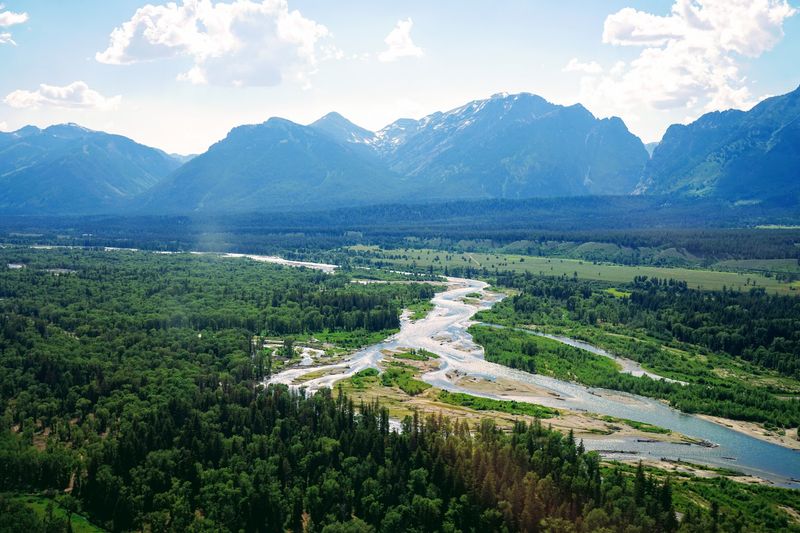
Ansel Adams stood at this very spot in 1942 and took one of the most famous landscape photographs in American history. Snake River Overlook has not lost a single bit of that magic since then.
The view sweeps across the entire Teton Range, with the Snake River curving through the valley floor below like a silver ribbon. It is the kind of scene that makes even non-photographers reach for their phones.
The overlook sits right along the main park road, making it one of the easiest stops on any Grand Teton itinerary. Parking is available, and the viewpoint is just a short walk from the lot.
Morning light hits the mountains from the east and sets the peaks glowing in soft orange and pink tones. Afternoon brings sharp contrasts and deep blue skies that make the snow on the summits look almost painted on.
Sunset turns the whole scene into something that feels almost too beautiful to be real. Many visitors return to this spot multiple times during a single park visit because the light changes so dramatically throughout the day.
Bring a tripod if photography is your thing, or just bring yourself and stand there for a while. Some views deserve more than a quick glance.
Snake River Overlook is absolutely one of them.
Jenny Lake And The Cathedral Group
Jenny Lake might be the most photographed spot in Grand Teton National Park, and once you see it in person, that makes complete sense. The water is so clear and so blue it almost looks edited.
The Cathedral Group, a cluster of towering peaks including the Grand Teton itself, frames the lake from the west and creates a backdrop that feels almost theatrical. Every angle is a postcard.
The five-mile Jenny Lake Scenic Drive is a one-way loop that hugs the eastern shore and delivers nonstop views of the water and the mountains. It is perfect for a slow cruise with the windows down.
For those who want to get closer to the peaks, a boat shuttle crosses the lake and drops visitors at the trailhead for Hidden Falls and Inspiration Point. The shuttle runs seasonally, so check dates before planning around it.
Hiking options around Jenny Lake range from flat and easy to steep and rewarding. Even a short walk along the shore gives a completely different perspective than viewing from the road.
Families, solo travelers, and photography enthusiasts all find something worth stopping for here. Colter Bay, just a bit further north, offers another stunning lake experience with benches right along the water.
Could there be a more perfect lunch spot than a bench beside Jenny Lake with the Tetons rising above? That question pretty much answers itself.
Mormon Row And Moulton Barns
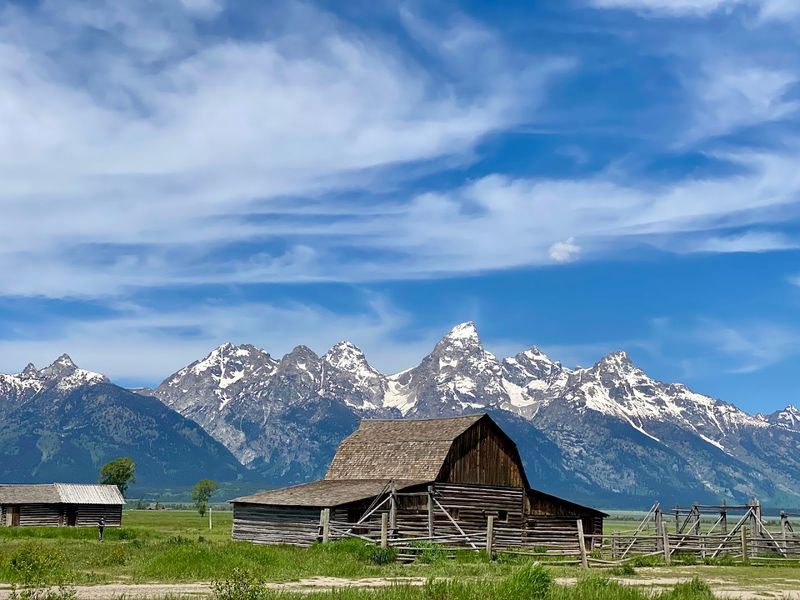
Not every great view in Grand Teton involves a lake or a trail. Sometimes it is a pair of old wooden barns standing on a flat stretch of road with mountains rising impossibly high behind them.
Mormon Row on Antelope Flat Road is home to the Moulton Barns, historic homestead structures that date back to the early 1900s. These barns have appeared in more photographs than most professional models.
The contrast between the weathered wood and the sharp, snow-capped peaks is striking in every kind of light. Sunrise turns the scene into something warm and golden.
Midday brings sharp shadows and vivid colors. Sunset is almost unfair in how good it looks.
Bison often graze in the surrounding fields, which adds a layer of pure Wyoming magic to the whole experience. Pronghorn are frequently spotted here too, moving quickly across the sagebrush flats.
The area is part of the Kelly Loop and Antelope Flats route, one of the park’s best spots for viewing plains species. You can drive the loop and stop whenever something catches your eye, which will be often.
Sunset at Mormon Row has become a bucket-list moment for many visitors, and it is easy to see why. Pack a camera, arrive early to find a good spot, and let the Teton Range do what it does best.
Moose-Wilson Road And Wildlife Watching
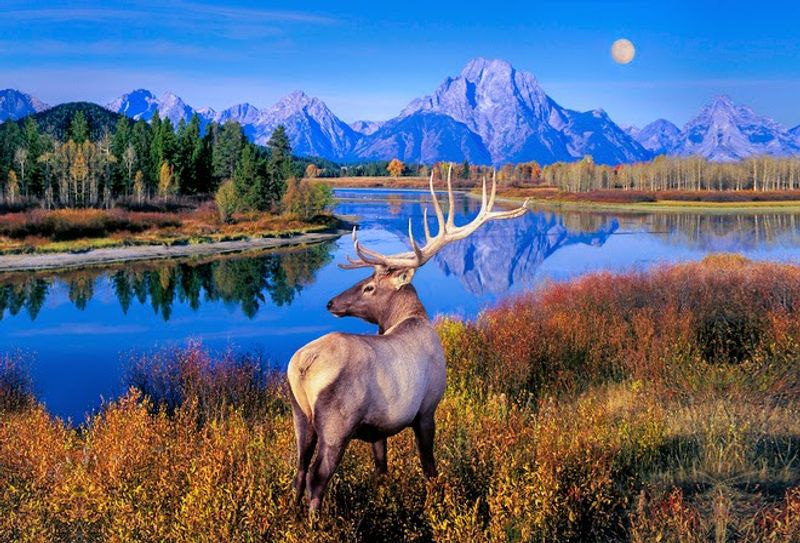
This is the road that wildlife lovers talk about in hushed, excited tones. Moose-Wilson Road is a narrow, partially unpaved route that cuts through some of the wildest and most productive wildlife habitat in the entire park.
Moose are the headline act here, often spotted wading through the willow marshes that line the road. Beavers work their ponds just off the shoulder.
Black bears have been seen along the forest edges, especially in summer.
The road runs between the Moose Entrance and the Granite Canyon Entrance, making it a natural connector for anyone exploring the southern part of the park. It is not a fast road, and that is entirely the point.
Drive slowly. Stop often.
Roll the windows down and listen. The sounds of the marsh, the birds, the occasional splash of something large moving through the willows, add up to an experience that no overlook can replicate.
Moose-Wilson Road is closed seasonally, typically from late fall through spring, so always check current conditions before heading out. The closure during early May means visitors planning spring trips should plan accordingly.
Large vehicles and trailers are not permitted on this road, so keep that in mind when packing the vehicle. For everyone else, this narrow little route through the trees might end up being the most memorable stretch of the entire Wyoming road trip.