
This Quiet Arkansas River Backwater Remains A Refuge Longtime Locals Rarely Notice
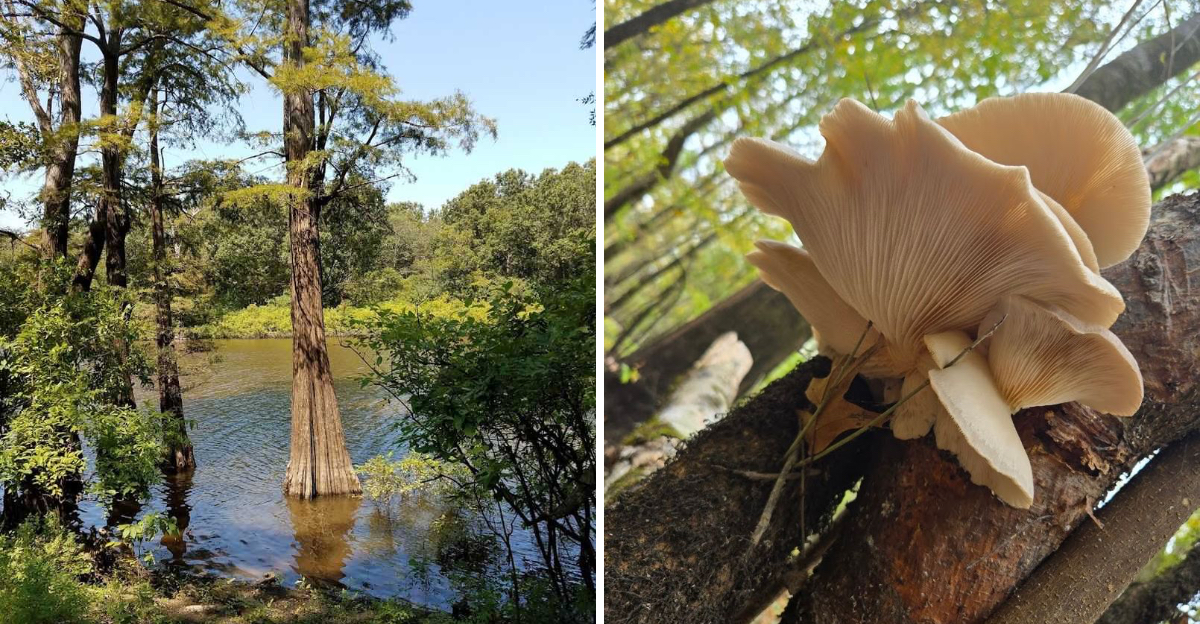
Deep past a bend most drivers speed by, floodwaters have been quietly rewriting this backwater for nearly a century. Arkansas holds its share of hidden places, and this one guards its secrets well.
Every winter the forest floods on purpose, turning bottomland hardwoods into one of the largest greentree reservoirs anywhere. Mallards arrive by the hundreds of thousands.
Black bears slip through cypress groves few locals bother to explore. Otters glide past sunken logs while alligators nest nearby, and eagles trace slow circles overhead.
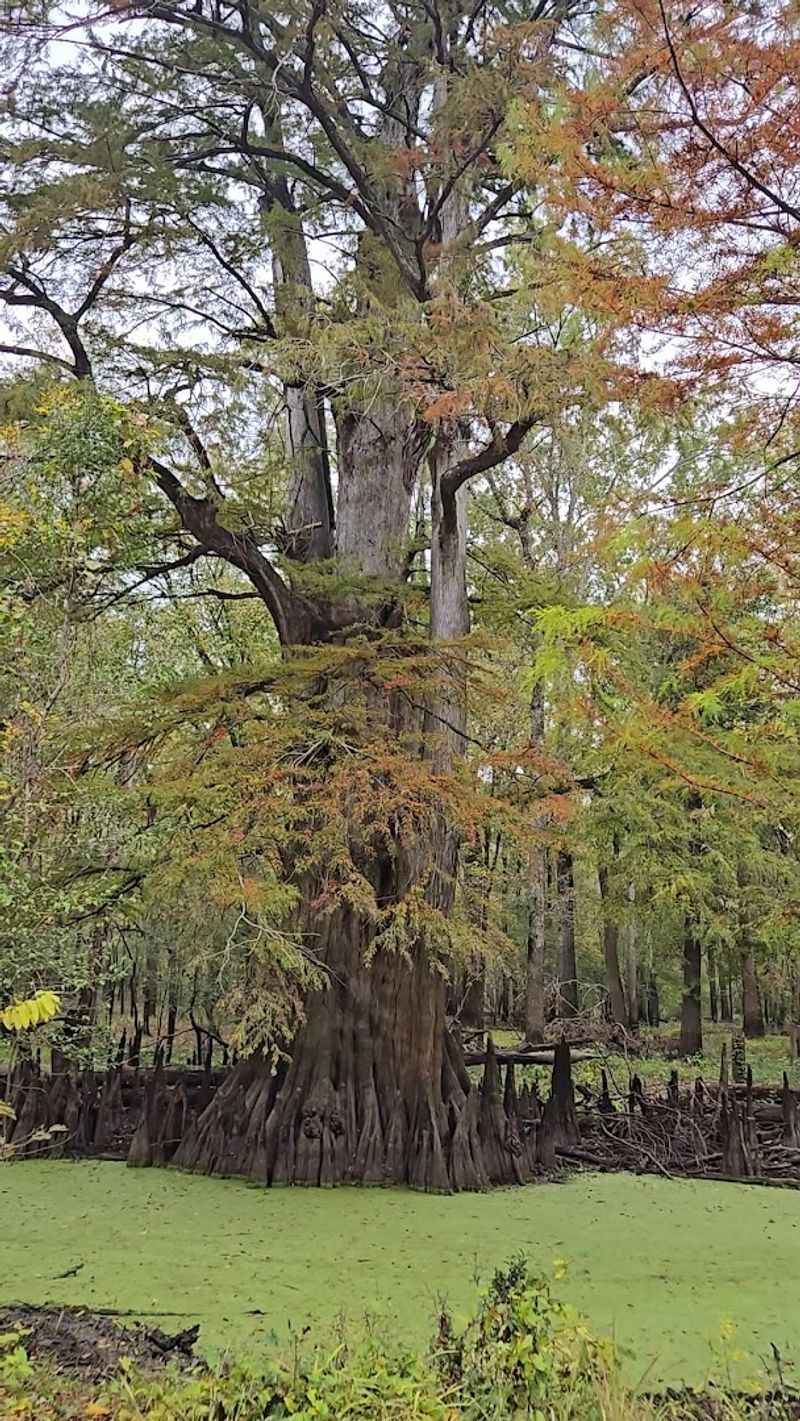
A single trail leads to the state’s largest bald cypress, its trunk wide enough to humble anyone standing beneath it.
Getting to know this quiet stretch of Arkansas takes patience, and it rewards every bit of it.
How A President And A Senator Shaped This Wild Place
Few wildlife refuges carry the weight of nearly a century of conservation history the way this one does. President Franklin D.
Roosevelt established the White River National Wildlife Refuge on September 5, 1935. Its founding purpose was to protect migratory birds and critical wildlife resources along one of North America’s most important flyways.
The refuge became only the second of its kind established in Arkansas. Funding came largely from the Duck Stamp program, a tax paid by hunters that helped acquire these vital lands.
In April 2014, the refuge received a new name honoring former Arkansas Governor and Senator Dale Bumpers. His legacy includes preventing the channelization of rivers and facilitating key land exchanges that preserved enormous tracts of habitat.
An ancient Quapaw village site known as “Arkansea” was also rediscovered within refuge boundaries in 2003, adding deep historical significance to an already remarkable landscape. Conservation and history run equally deep here.
The Landscape That Floods On Purpose
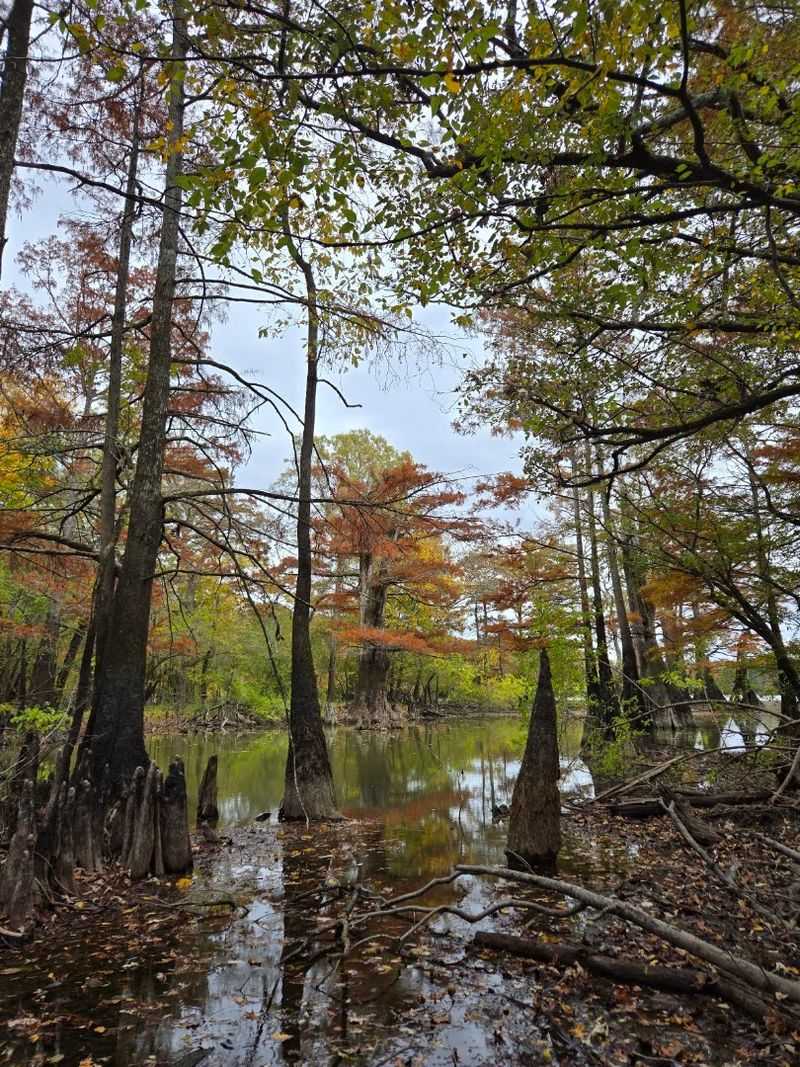
Water is the architect here. The White River regularly floods approximately 75 percent of the refuge’s bottomland hardwood forests each winter, creating one of the largest greentree reservoirs anywhere in the world.
This is not a problem. It is the entire point.
The refuge spans roughly 90 miles along the lower White River in Arkansas, ranging from a quarter mile to ten miles wide. Its location near the confluence of the White and Mississippi rivers makes it a critical stopover for wildlife moving along the continent’s central flyway.
The terrain includes expansive bottomland hardwood forests filled with overcup oak, Nuttall oak, bald cypress, tupelo gum, sweetgum, pecan, and willow oak. More than 350 natural and manmade lakes dot the landscape, covering around 10,000 acres of open water.
Over 200 oxbow lakes and permanent beaver ponds add further complexity to this watery mosaic. The refuge earned designation as a Wetland of International Importance in 1989, a title it continues to deserve.
Mallards By The Hundreds Of Thousands
No other wintering ground for mallard ducks in North America compares to what happens here each December. Up to 350,000 birds can gather within the refuge at peak season, turning the flooded forests into a roaring, splashing spectacle that has to be seen to be believed.
The refuge supports approximately two-thirds of all bird species found in Arkansas. That list includes neotropical migratory songbirds like prothonotary warblers, Acadian flycatchers, yellow-billed cuckoos, and blue-gray gnatcatchers.
American pelicans, bald eagles, great blue herons, and various species of shorebirds, owls, and hawks round out the impressive roster.
Waterfowl hunters have long known about this place, but birdwatchers are increasingly making the trip to St. Charles just to witness the winter duck spectacle. Early mornings offer the most dramatic views, when birds lift off the water in massive, noisy waves.
The refuge has held Globally Important Bird Area status since 2001, and the birds themselves make that case every single year.
Bears, Otters, And Alligators Share The Same Backwater
Black bears in Arkansas have a stronghold here. The refuge is home to the only native population of black bears in the state, and they move through the dense hardwood forests with a quiet confidence that reminds visitors they are the guests in this place.
River otters glide through the oxbow lakes. Beavers build their lodges along the banks.
Mink hunt the shallows. White-tailed deer pick their way through the understory at dusk.
Wild turkeys strut across the forest floor in spring. The mammal diversity alone would make most nature lovers plan a return trip.
American alligators nest within the refuge boundaries, sharing the warm-season wetlands with bullfrogs, treefrogs, turtles, and an array of aquatic invertebrates. Over 100 species of fish thrive in the refuge waters, and the endangered pink mucket mussel lives in the riverbed.
This is not a curated wildlife exhibit. Every creature here lives on its own terms, in a landscape built entirely around their needs.
Fishing Waters That Reward The Patient Angler
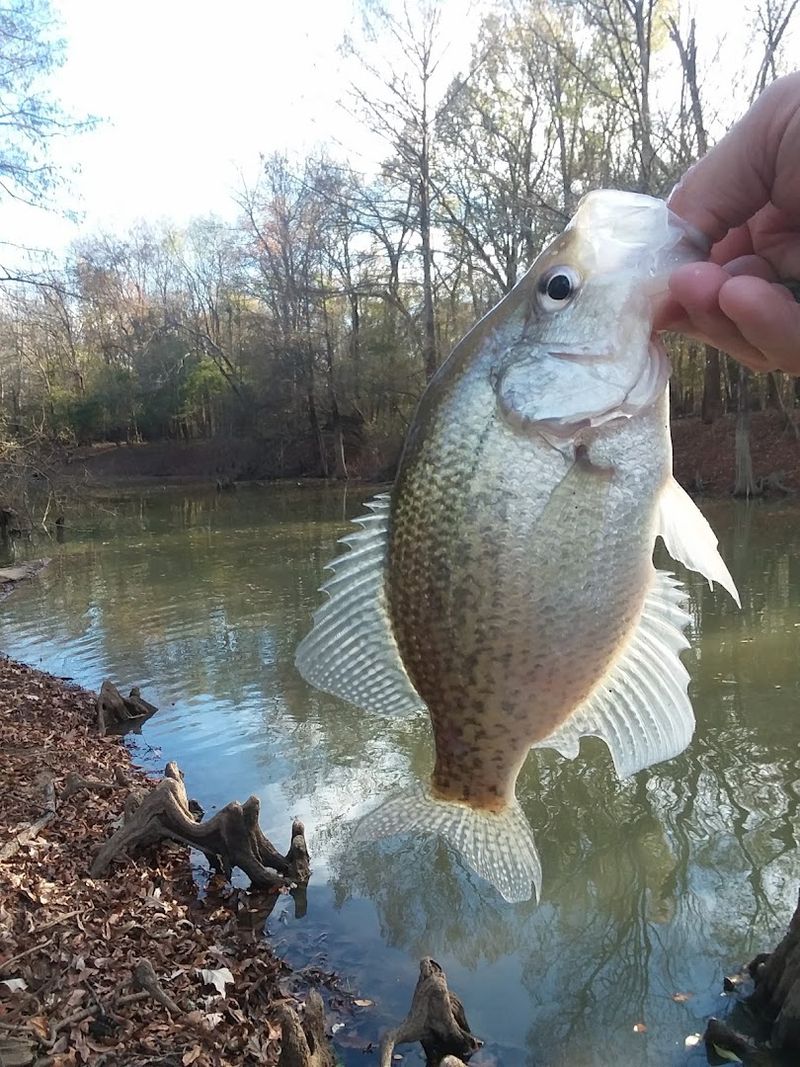
Crappie, bluegill, largemouth bass, and catfish populate the refuge’s lakes and backwaters in impressive numbers. Anglers who know this place treat it with a kind of reverence usually reserved for fly fishing destinations that cost far more to reach.
Fishing is permitted year-round in the North Unit. The South Unit is open from March 1 through November 30.
Small jon boats, canoes, and kayaks suit the shallow, vegetation-filled waters far better than larger vessels. The pace here is slow by design, and that suits most anglers just fine.
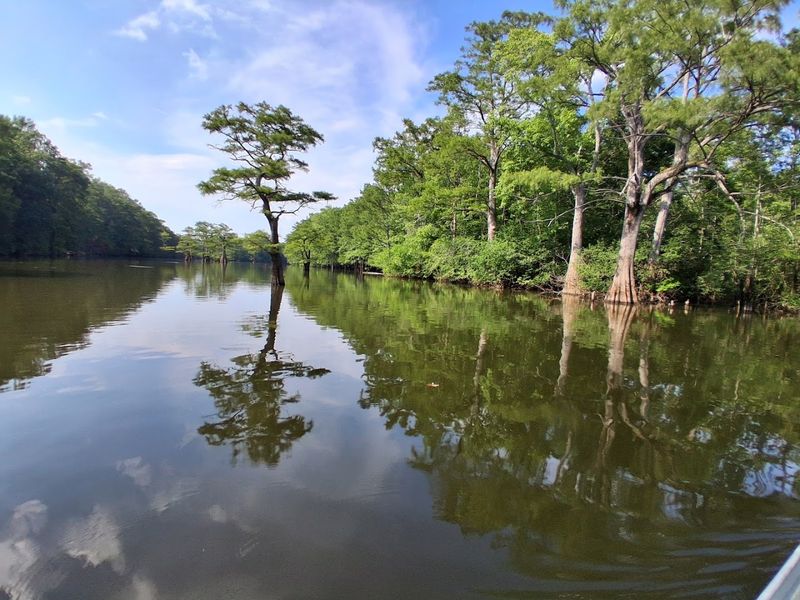
A 3.3-mile paddle trail at H Lake offers one of the more scenic routes through the refuge, winding past cypress stands and through open water stretches where herons stand motionless in the shallows. Frogging is also permitted during certain seasons.
An Annual Public Use Permit is required for fishing and most other recreational activities. The permit costs a modest fee for adults, while those 15 and younger receive one free of charge.
The Biggest Bald Cypress Tree In All Of Arkansas
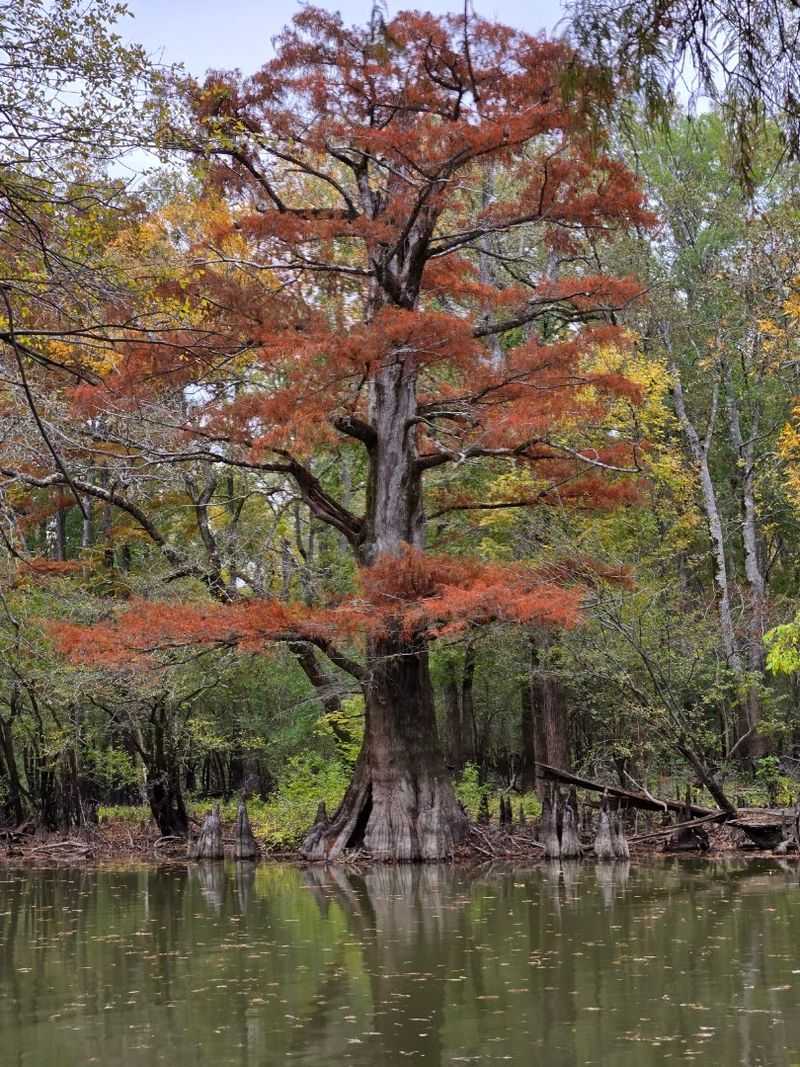
Champion trees draw a certain kind of traveler. The 1.2-mile Champion Big Cypress Trail leads to the largest bald cypress tree in Arkansas, a cathedral-scale specimen that makes every other tree in the forest look modest by comparison.
The trail is open from March 1 to December 15 each year.
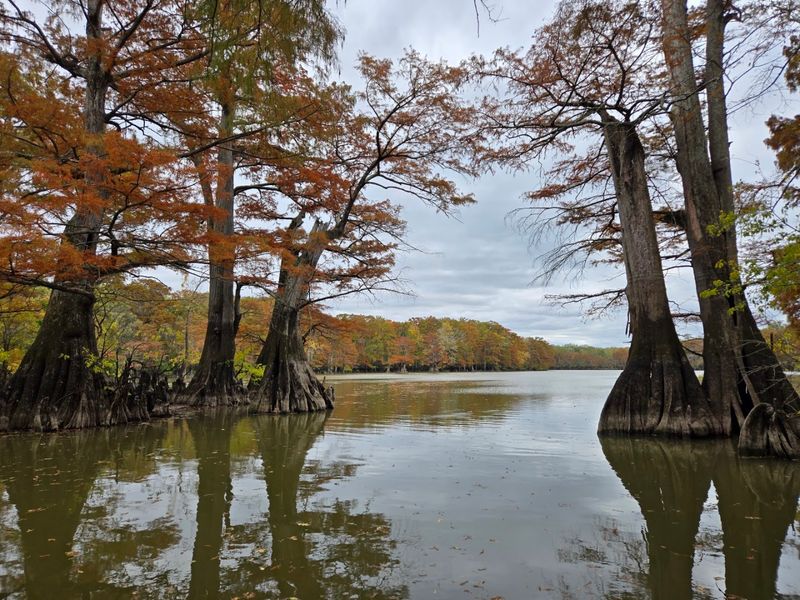
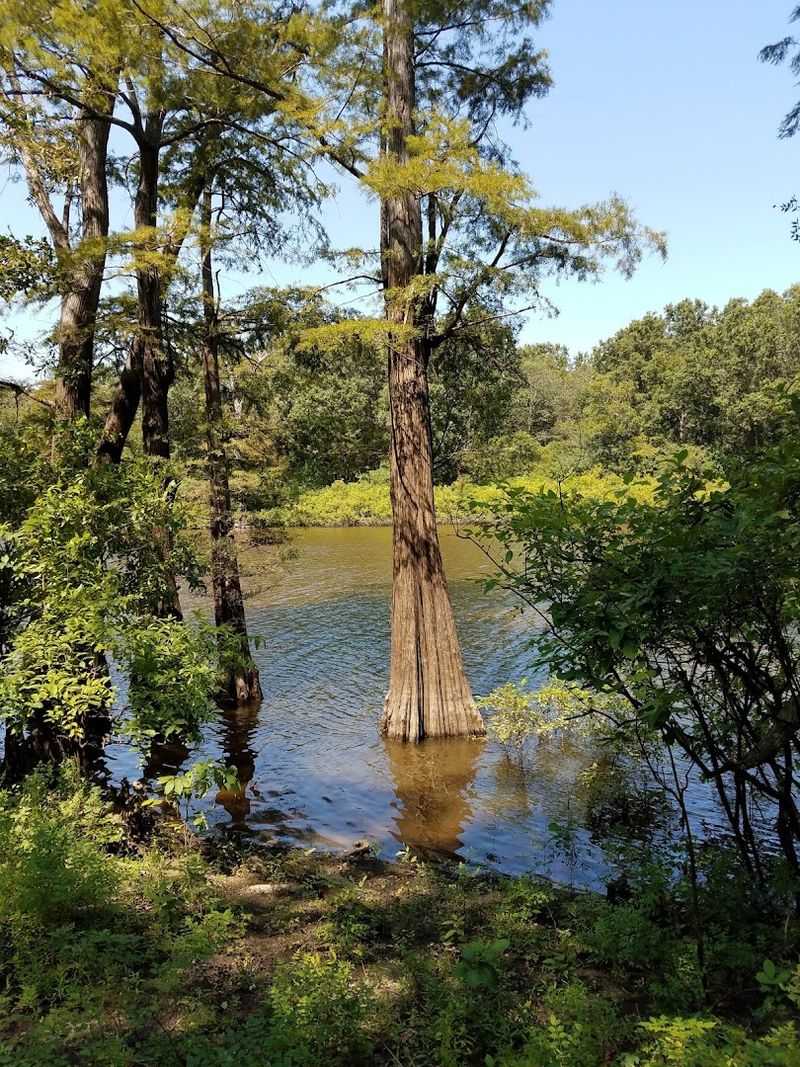
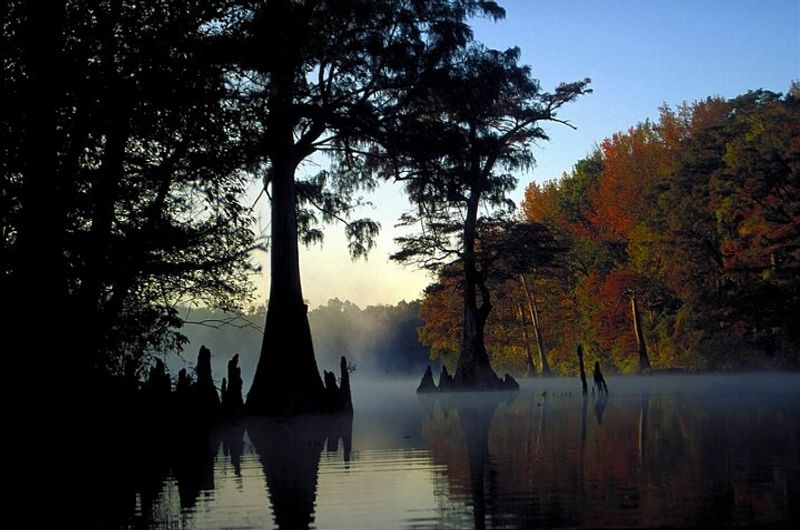
Bald cypress trees define much of the visual character of this refuge. Their wide, fluted bases rise from the water like ancient columns.
Their feathery foliage turns a warm russet in autumn before dropping entirely, leaving ghostly silhouettes against winter skies.
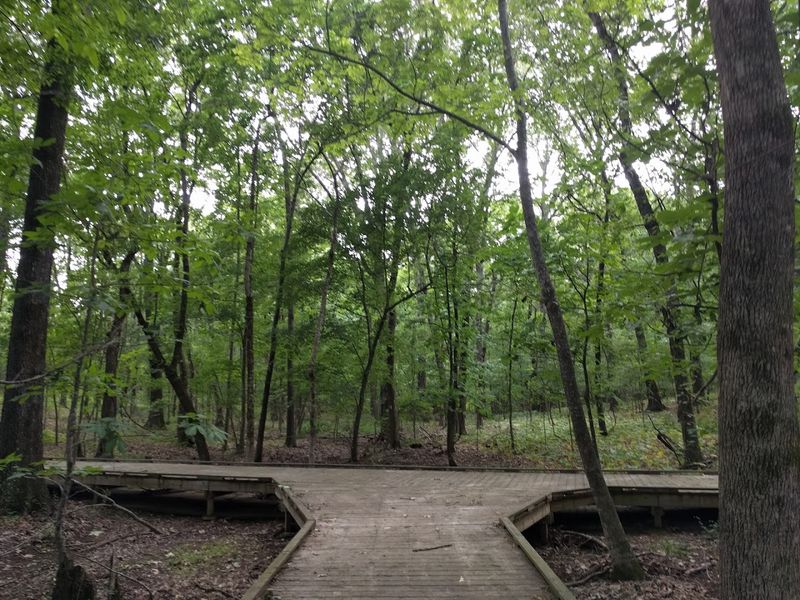
Walking the Champion Big Cypress Trail offers more than just a single impressive tree. The surrounding forest is dense and layered, full of ferns, wildflowers in season, and the constant sound of birds moving through the canopy.
It is one of the most accessible natural highlights in the entire refuge, and it gives visitors a concrete sense of just how old and undisturbed this Arkansas landscape truly is.
Hunting Seasons That Draw Visitors From Across The Region
Duck hunters have been making the pilgrimage to this refuge for generations. The flooded timber in late December, packed with mallards, creates hunting conditions that are difficult to replicate anywhere else in the country.
Word travels quietly among those who know.
The U.S. Fish and Wildlife Service regulates all hunting seasons within the refuge.
Waterfowl, wild turkey, squirrel, rabbit, and white-tailed deer are among the species with designated seasons. ATV use is permitted in certain areas during specific periods, though regulations are strict and visitors should check current rules before arrival.
Primitive camping is available at 19 designated sites across the refuge. These sites have no facilities and operate on a first-come, first-served basis.
Stays are limited to 14 days, and some camping areas are restricted between March and December. Mud is a constant companion at nearly every campsite, regardless of season.
Preparation matters here. Packing the right gear, and plenty of insect repellent, separates a great trip from a frustrating one.
The Visitor Center That Makes Sense Of It All
Raw wilderness can feel overwhelming without context. The refuge visitor center, located at 57 South CC Camp Road in St. Charles, Arkansas, opened in 2003 and spans 10,000 square feet of thoughtfully designed exhibit space.
It is the ideal first stop for anyone new to the refuge.
Interpretive displays cover wetland ecology, migratory bird patterns, the history of bottomland hardwood forests, and the conservation legacy of the refuge itself. A small bookstore carries field guides, maps, and resources that prove genuinely useful once visitors head into the backcountry.
Knowledgeable refuge staff are available during operating hours to answer questions and point visitors toward the best current wildlife viewing spots. Educational programs are occasionally offered for groups and schools.
Geo-referenced maps for the paddle trail and other areas are available for download ahead of time, which is wise given that cell service in this part of Arkansas can be unpredictable. Arriving informed makes the entire experience significantly richer.
What The Wildlife Drive Reveals Around Every Bend
Just beyond the visitor center, a designated Wildlife Drive leads to an observation tower overlooking the Demonstration Area. This managed wetland unit is open from March 1 through October 31 and offers some of the most reliable wildlife viewing in the entire refuge.
From the tower, visitors can scan open water and mudflats for wading birds, shorebirds, and waterfowl depending on the season. White-tailed deer frequently appear at the edges of the wetland in early morning and late evening.
Beaver activity is visible along the banks year-round.
Driving the refuge roads slowly, with windows down and eyes scanning the tree line, reveals raccoons, turtles sunning on logs, river otters slipping into the water, and the occasional alligator in warmer months. One visitor review described spotting all four of those species in a single afternoon drive.
Road conditions change with the river. Flooding can close routes without much warning, so checking for current closures before heading out is always a practical move.
Why This Refuge Keeps Drawing People Back Year After Year
Places that feel genuinely wild are increasingly rare. This refuge does not try to be convenient.
There are no stores in St. Charles. Fuel up before arriving.
Pack food. Expect mud.
Expect flooded roads in winter. Expect to be completely out of cell range for hours at a stretch.
What the refuge offers in return is hard to put a price on. The silence between bird calls is its own kind of reward.
The sight of a bald eagle lifting off a snag above the river carries a weight that photographs rarely capture. Visitors who return season after season describe a place that feels different every time, shaped by water levels, migration cycles, and the slow turning of the natural year.
Arkansas has no shortage of beautiful landscapes, but few places in the state carry this combination of ecological scale and raw wilderness character. The Dale Bumpers White River National Wildlife Refuge earns its quiet reputation one unhurried visit at a time, and it asks only that visitors show up prepared and pay attention.