
This Quiet Lake In Georgia Feels Like Your Own Private Escape
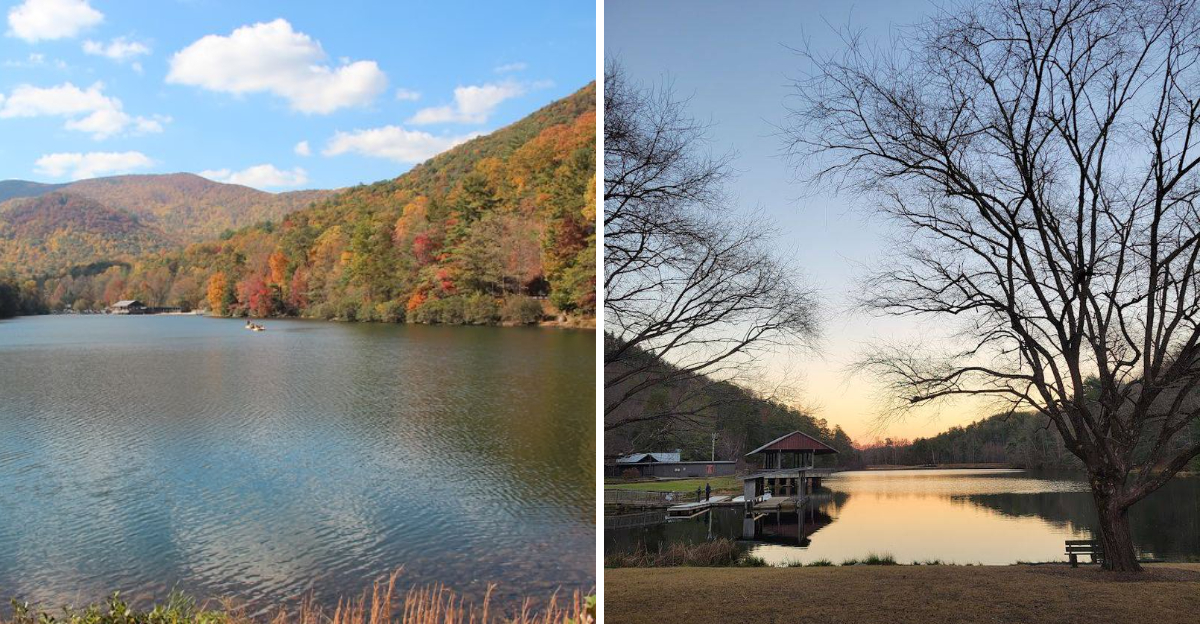
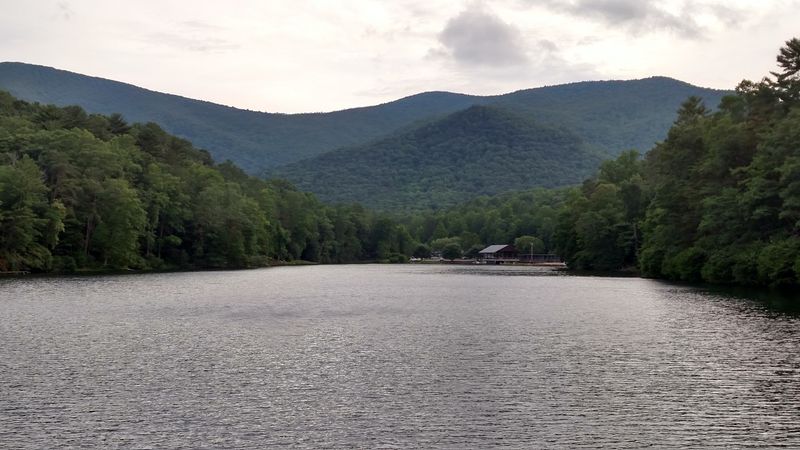
Not every lake is built for crowds and constant movement, and Lake Trahlyta proves just how refreshing that can be. Set within Vogel State Park near Blairsville, Georgia, this 22-acre mountain lake trades noise for calm and busy shorelines for quiet forest views.
Sitting high in the Blue Ridge Mountains, it offers still water, easy trails, and a slower pace that feels increasingly rare. It’s the kind of place where you can pause, look around, and feel like you’ve found something personal.
This Small Mountain Lake Feels Tucked Away From Everything
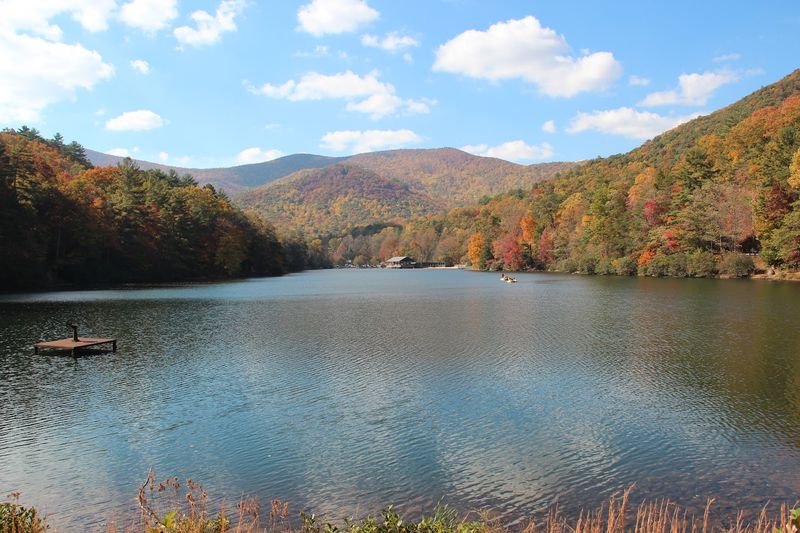
Vogel State Park is one of Georgia’s oldest state parks, and Lake Trahlyta sits at its heart with a composure that feels almost deliberate. The lake spans roughly 22 acres, which is small enough to feel personal but large enough to hold your attention for an entire afternoon.
Tall hardwoods and pines press in close on all sides, and the forest canopy creates a sense of enclosure that most mountain lakes simply cannot offer.
Visitors who arrive expecting the usual weekend chaos tend to leave pleasantly surprised. The park’s location near Blairsville, Georgia, keeps it somewhat under the radar compared to more commercialized destinations in the region.
There are no jet skis cutting across the surface, no amplified music drifting from the shore, and no long queues at the entrance. What you find instead is birdsong, the occasional ripple from a fishing line, and a stillness that feels genuinely earned.
The Lake Sits At Nearly 2,500 Feet In The North Georgia Mountains
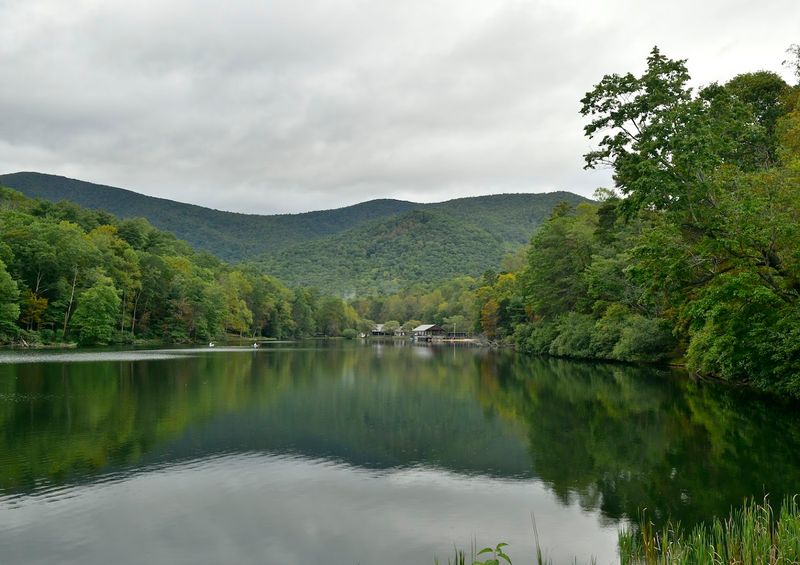
Elevation changes everything about a lake experience, and Lake Trahlyta benefits from sitting at approximately 2,500 feet above sea level in the North Georgia mountains. The air carries a coolness that even summer afternoons struggle to fully erase, and the surrounding ridgelines give the landscape a layered, painterly quality that flatland reservoirs simply cannot replicate.
Mornings here arrive with mist rolling across the water before the sun burns it away.
The mountain setting also means that temperatures remain noticeably more comfortable than in Georgia’s lowland areas, making the lake a practical retreat during the warmer months. Blairsville, the nearest town, sits in Union County and serves as a useful base for supplies before heading into the park.
The drive into Vogel State Park along Georgia State Route 180 Spur offers glimpses of forested ridges that build anticipation before you even reach the water’s edge.
A Waterfall Hidden Below The Dam Adds To The Quiet Atmosphere
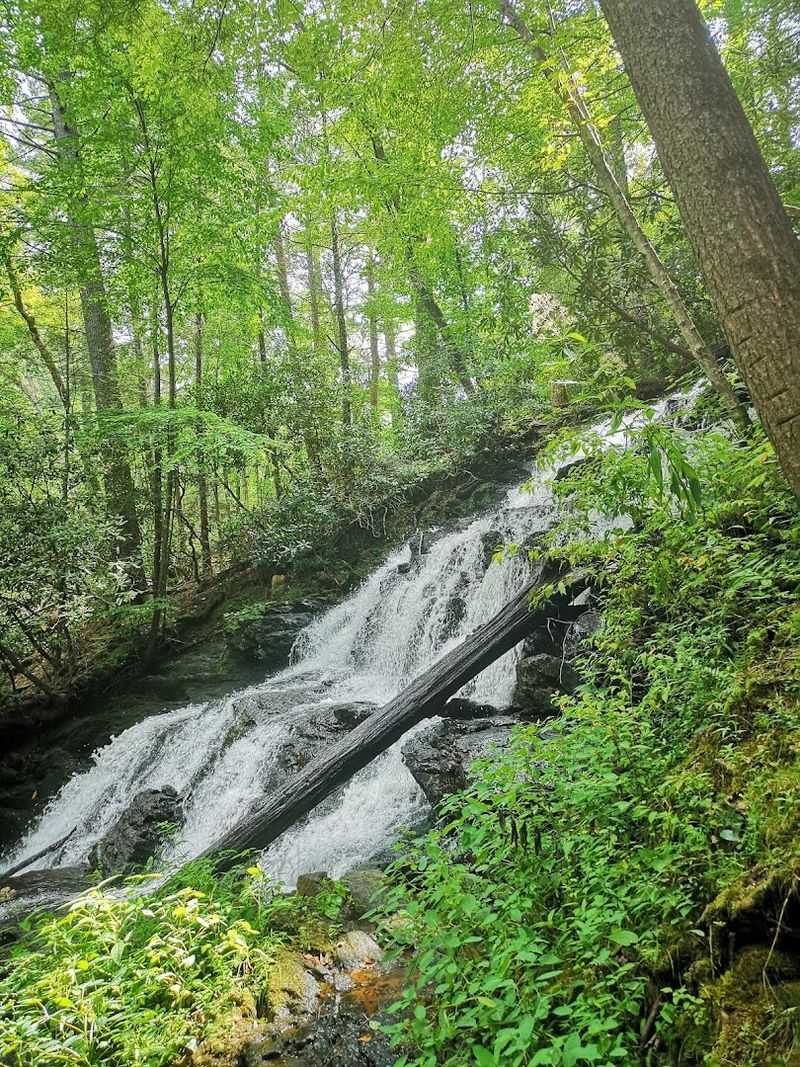
Below the dam that holds Lake Trahlyta in place, a small waterfall drops into the creek below with a sound that carries through the trees on quiet mornings. It is not the kind of waterfall that ends up on travel posters, but that understated quality is precisely what makes it worth seeking out.
The water moves over mossy rocks with a rhythm that encourages you to stop, sit, and simply observe for a few minutes longer than you planned.
Visitors frequently mention the waterfall in reviews as one of the park’s more memorable details, often noting that it takes only about 15 minutes on mostly flat ground from the main parking area to reach it. The surrounding vegetation stays dense and green for much of the year, keeping the area shaded and cool.
Finding it feels like a small reward for paying attention, which is exactly the kind of discovery a place like this deserves.
The Easy Loop Trail Circles The Entire Lake In About A Mile
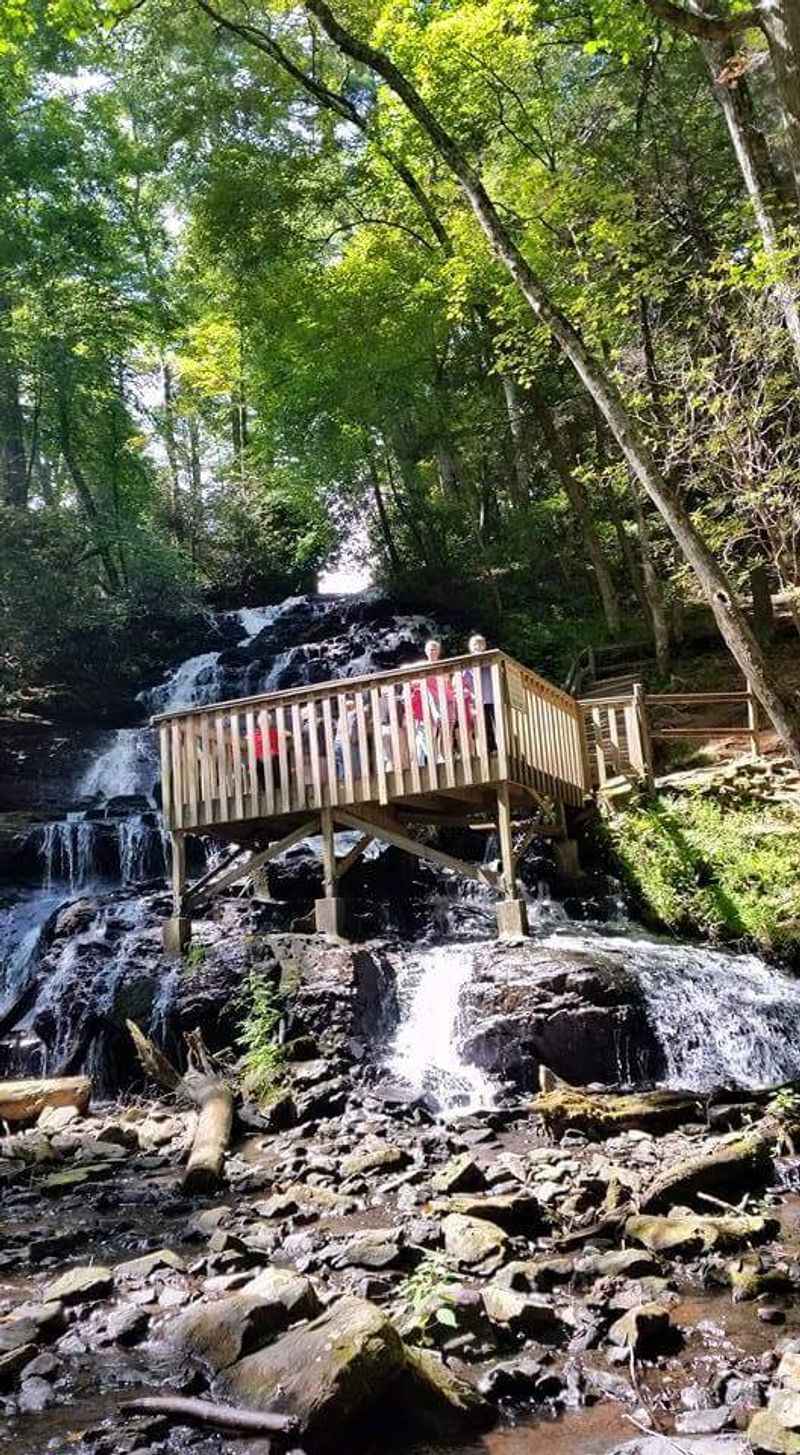
A one-mile loop trail runs the full perimeter of Lake Trahlyta, offering a walk that almost anyone can complete comfortably regardless of fitness level. The path stays close to the water for much of its length, giving walkers repeated views of the lake through gaps in the trees.
Footing is generally reliable, and the trail’s modest elevation changes keep it accessible to families with younger children as well as older visitors looking for a manageable outing.
What makes the loop particularly satisfying is how the scenery shifts as you move around the lake. The northern end near the waterfall feels wilder and more secluded, while the southern stretch opens up toward the beach and picnic areas.
Completing the full circuit takes roughly 30 to 45 minutes at a comfortable pace, though most people find themselves stopping frequently to watch the water or listen to the forest. The trail earns its reputation as one of the park’s most reliable pleasures.
Non-Motorised Boats Keep The Water Calm And Peaceful
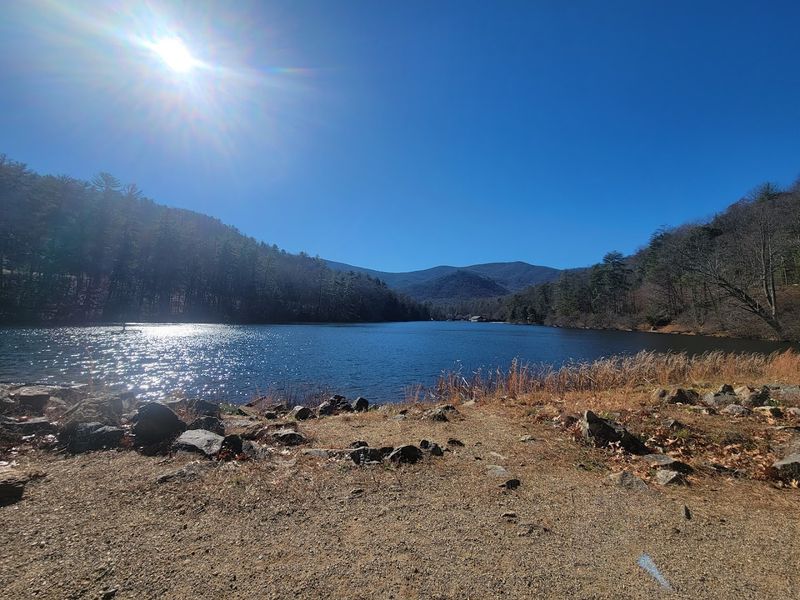
One of the more consequential rules at Lake Trahlyta is the restriction on motorized watercraft, and the effect on the lake’s atmosphere is immediate and obvious. Canoes, kayaks, and paddleboats move across the surface without disturbing the water more than necessary, and the absence of engine noise allows the surrounding forest sounds to fill the air instead.
Reviewers consistently describe the lake as calm and peaceful, and that reputation is directly connected to this single policy.
Boat rentals are available within the park, making it easy for visitors who arrive without their own equipment to get out on the water. Kayaking around the lake’s perimeter offers a different perspective on the shoreline and the mountain ridges above, and the shallow, clear water makes paddling feel relaxed rather than effortful.
For couples or families looking for a shared activity that does not require any particular skill or preparation, an hour on the lake in a rented kayak is a reliable highlight.
The Lake Was Created By The Civilian Conservation Corps In The 1930s
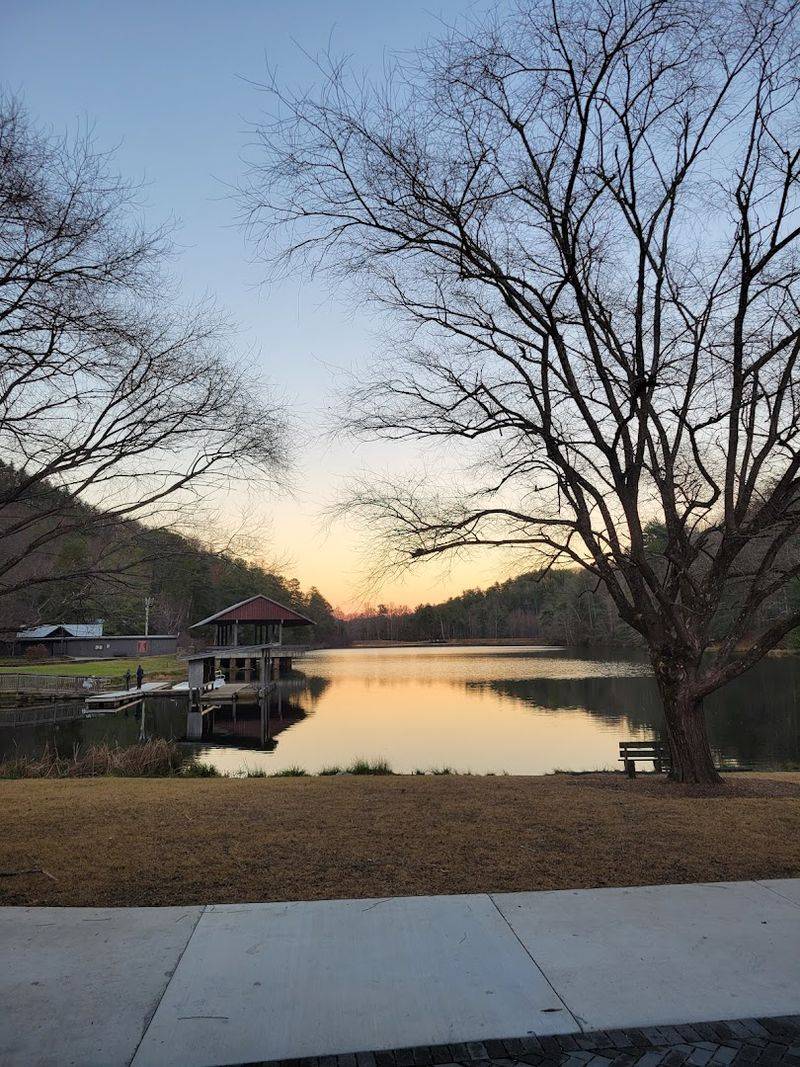
Lake Trahlyta did not exist before the 1930s. The Civilian Conservation Corps, one of the most ambitious work programs of Franklin Roosevelt’s New Deal era, constructed both Vogel State Park and the dam that created the lake during that decade.
Young men from across the country were employed to build trails, structures, and recreational facilities in parks throughout the United States, and their work at Vogel produced a landscape that has remained largely intact for nearly a century.
The craftsmanship visible in the park’s older stone structures reflects the care that went into the original construction, and walking through the park today is a quiet form of contact with that history. Vogel State Park, which opened in 1931, holds the distinction of being one of Georgia’s oldest state parks.
Knowing that the lake itself was shaped by human hands during a period of national hardship adds a layer of meaning to an otherwise straightforward afternoon by the water.
The Surrounding Forest Feels Dense, Quiet, And Immersive
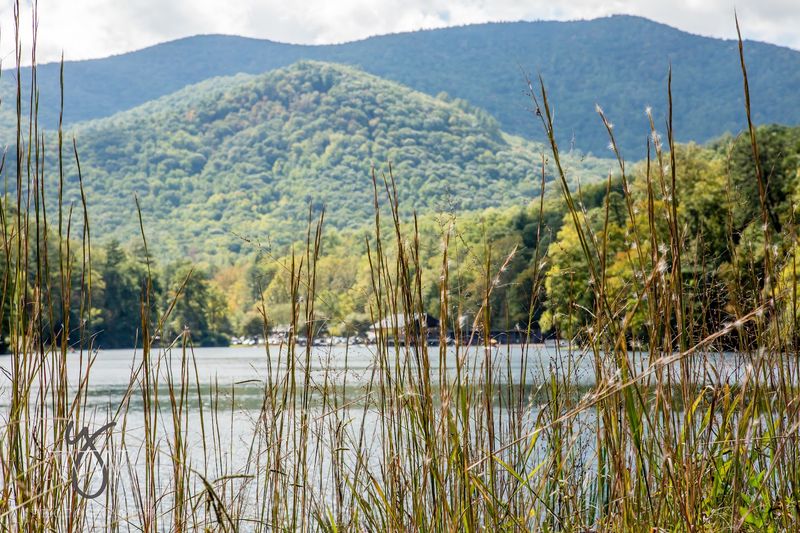
Standing at the edge of Lake Trahlyta and looking toward the tree line, the forest communicates a depth that is difficult to fully absorb at first glance. Hardwoods and conifers grow close together across the slopes, and the canopy overhead is thick enough in summer to reduce direct sunlight to a soft, filtered glow.
The undergrowth stays lush through most of the year, and the combined effect is that of a forest that feels genuinely wild rather than managed for aesthetics.
Longer trails extend beyond the lake loop and push deeper into that forest for visitors who want more than a casual stroll. Vogel State Park connects to the Coosa Backcountry Trail, which offers roughly 13 miles of more demanding terrain through the surrounding mountains.
The transition from the lake’s open shoreline to the enclosed forest interior happens quickly and feels like stepping into a different kind of quiet altogether. Both experiences are worth seeking out in the same visit.
The Lake Is Named After A Cherokee Legend With A Tragic Story
The name Trahlyta belongs to a Cherokee legend that has been associated with this part of the North Georgia mountains for generations. According to the story, Trahlyta was a Cherokee woman who possessed enduring youth because she drank from a sacred spring in the mountains near present-day Dahlonega.
She was eventually taken far from the spring by a warrior who loved her, and separated from its waters, she aged and died. Her dying wish was to be buried near the spring that had sustained her.
A cairn of stones near Vogel State Park is said to mark her resting place, and the tradition of adding a stone to the pile as you pass has persisted for many years among visitors. The legend gives the lake’s name a weight that sits quietly beneath the surface of an otherwise relaxed day outdoors.
History and mythology share space here without demanding attention, which is part of what makes the place feel layered rather than simply scenic.
A Small Beach Area Offers A Quiet Spot To Sit By The Water
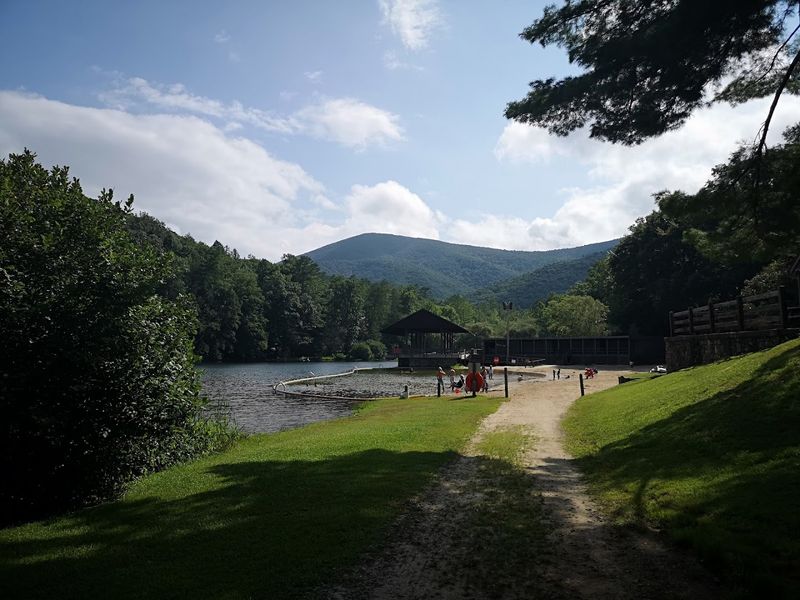
Along the southern edge of Lake Trahlyta, a small beach area provides a place to stop and make direct contact with the water rather than simply admiring it from a trail. The beach is modest in scale, which keeps it from becoming crowded even on busier weekends, and the surrounding forest backdrop gives it a natural framing that larger, more developed beaches rarely achieve.
Swimming is permitted during designated seasons, and the water stays clear enough to see the bottom in the shallows.
Families tend to gravitate toward this area, particularly those traveling with younger children who want to wade and explore the creek bed for interesting rocks. Visitors have described finding small stones that resemble gems in the creek, which turns a simple afternoon into an impromptu treasure hunt.
The beach also serves as a natural resting point during the loop trail walk, offering a bench or a patch of sand where you can pause before continuing around the lake.
Fishing And Seasonal Trout Stocking Add To The Slow-Paced Experience
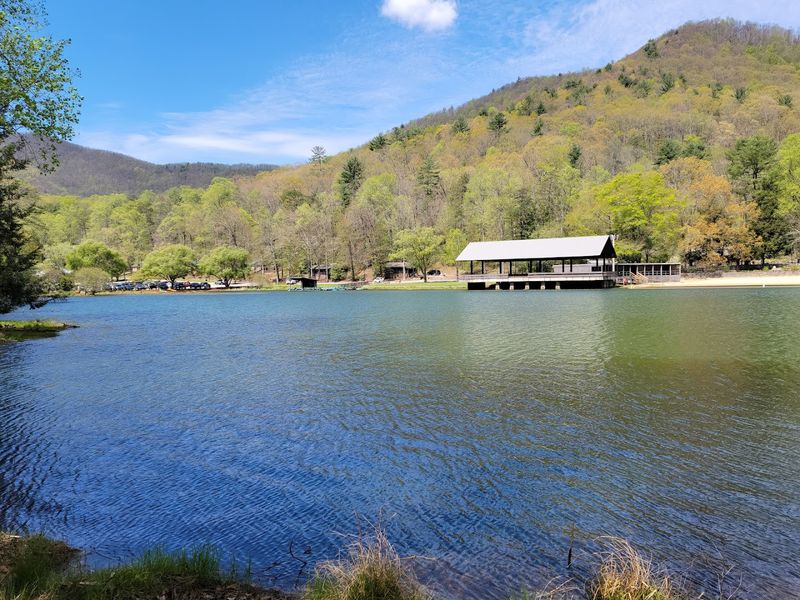
Fishing at Lake Trahlyta operates on a schedule that suits the lake’s overall temperament. The Georgia Department of Natural Resources stocks the lake with trout on a seasonal basis, which draws anglers who appreciate the combination of mountain scenery and a reasonable chance of catching something worth keeping.
A valid Georgia fishing license is required, and the regulations that apply to the lake are consistent with standard state guidelines for stocked trout waters.
The pace of fishing here aligns naturally with the rest of the lake experience. There is no pressure to cover ground quickly, no competition for prime spots along the shoreline, and no background noise to interrupt the concentration that good fishing demands.
Reviewers have noted that the fishing quality is solid, though cabin availability at the park is famously limited, with some units reportedly booked years in advance. Day visitors who fish from the bank or from a rented boat tend to find the experience quietly satisfying in a way that more crowded fishing destinations rarely manage.