
This Rainbow-Colored Nevada Geyser Looks Like Something From Another Planet
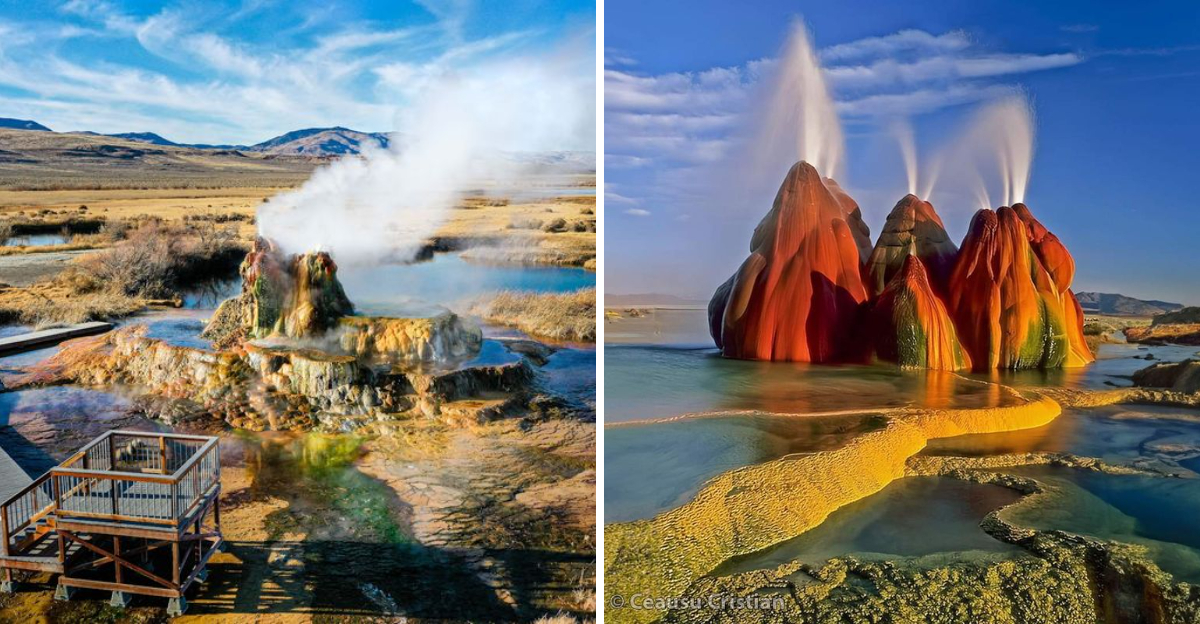
Out in Nevada’s wide-open desert, plenty of strange sights exist, but this one looks like nature got handed a paintbrush and a science experiment at the same time. In a quiet stretch of open land, hot water bursts upward, spills over mineral mounds, and leaves behind colours that seem almost too bright to be real.
The wild part? This otherworldly scene did not begin as some ancient mystery.
It started with a drilling mistake, then heat, minerals, and time took over. Now the result keeps changing year after year, shaped by water and coloured by tiny heat-loving organisms.
It feels less like a roadside stop and more like proof that accidents can sometimes become unforgettable.
A Rainbow-Colored Geyser In The Nevada Desert
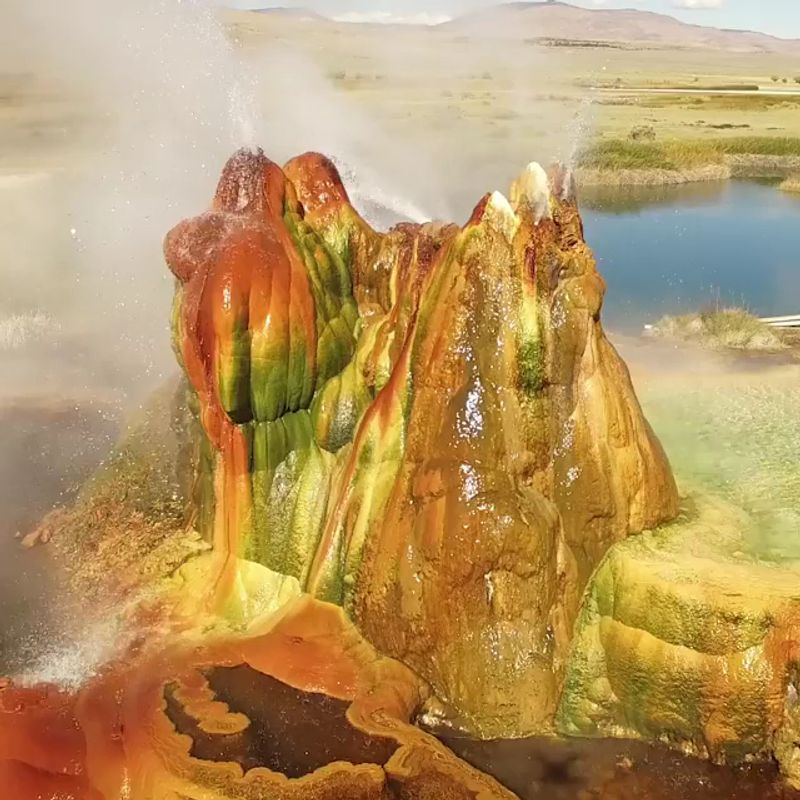
Most geysers erupt in shades of white or gray, their mineral deposits forming pale crusts that blend into surrounding rock. Fly Ranch Geyser defies that expectation entirely.
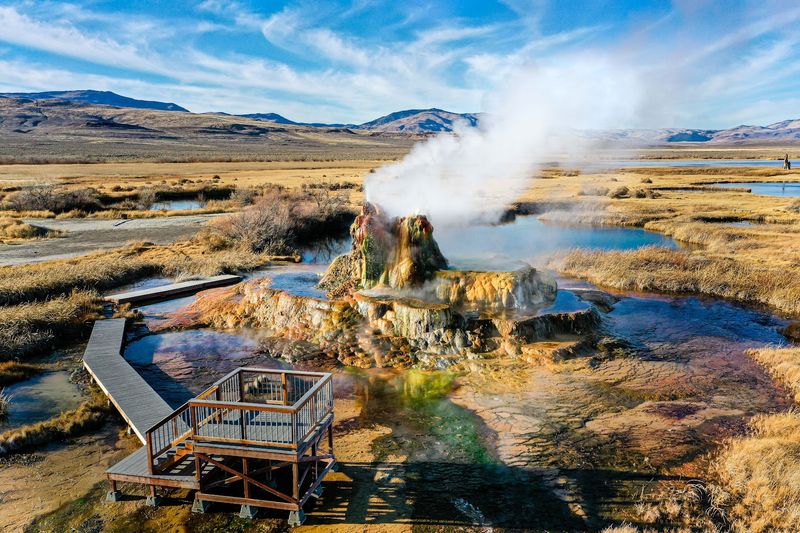
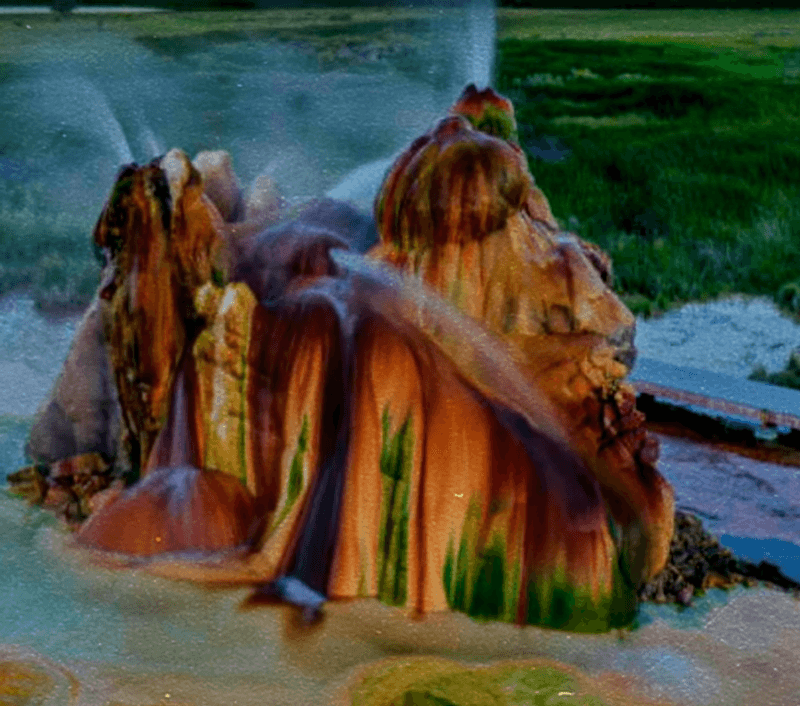
Its terraced mounds rise in layers of green so vivid they seem painted, interrupted by streaks of rust red and burnt orange that shift depending on the angle of sunlight.
The colors come from thermophilic algae that colonize the mineral-rich water as it cools slightly upon contact with air. These microscopic organisms are among the few life forms capable of surviving in water that reaches temperatures well above what most plants or animals could tolerate.
They create biofilms that coat the travertine deposits, turning what would otherwise be dull stone into something that resembles a canvas.
Located near Gerlach, NV 89412, the geyser sits on a flat expanse where little else grows. The contrast between the barren desert floor and the explosion of color makes the formation appear even more surreal, as though it were dropped from orbit rather than born from the ground.
The Colors Come From Heat-Loving Algae
Algae typically grow in ponds, lakes, and slow-moving streams where sunlight filters through cool water. The organisms thriving on Fly Ranch Geyser operate under entirely different rules.
These are thermophiles, a category of extremophiles that not only tolerate heat but require it to survive.
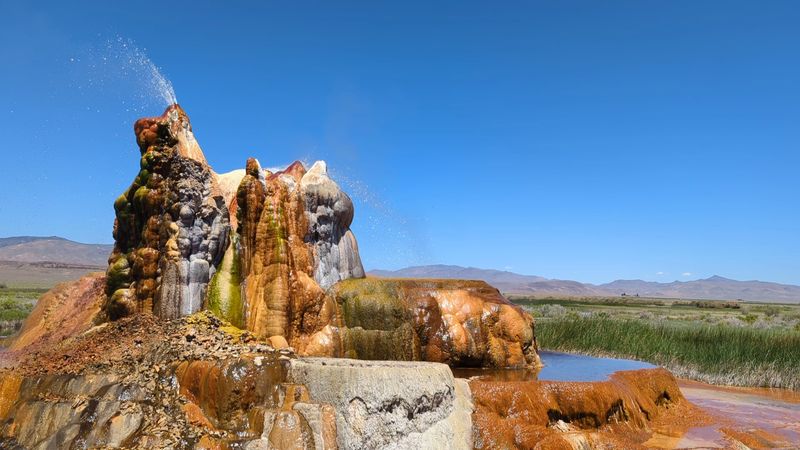
As water erupts from the geyser and cascades down the terraces, it cools incrementally. Different species of algae colonize different temperature zones, creating bands of color that correspond to specific thermal thresholds.
The brightest greens appear where water is hottest, while reds and oranges dominate cooler edges where the flow slows and pools.
This biological gradient turns the geyser into a living laboratory. Scientists study these algae to understand how life adapts to extreme conditions, knowledge that has implications for everything from industrial processes to the search for life on other planets.
The algae do not simply survive here; they shape the visual identity of the formation itself, adding pigment to what would otherwise be a monochrome mineral heap.
This Otherworldly Sight Was Created By Accident
Fly Ranch Geyser owes its existence to a miscalculation made decades ago during a search for geothermal energy. In 1964, a company drilled into the earth hoping to tap into a heat source suitable for power generation.
They found hot water, but it was not hot enough to be commercially viable.
Rather than properly sealing the well, workers either left it uncapped or plugged it inadequately. Pressurized water began escaping to the surface, carrying dissolved minerals that precipitated as the water cooled.
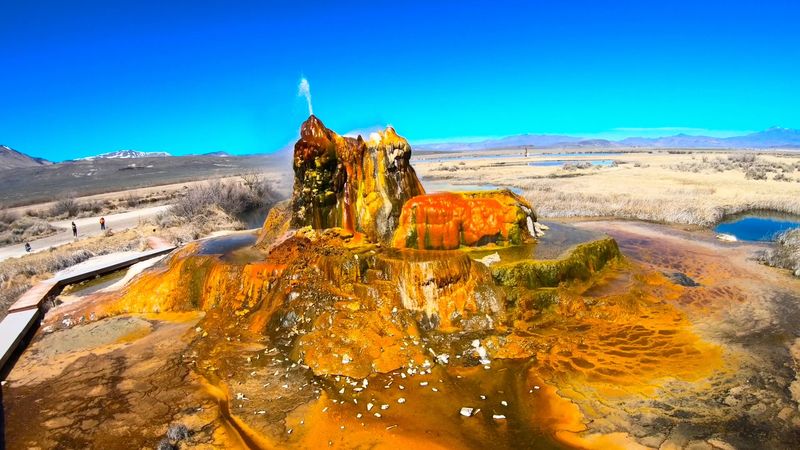
Over the years, these deposits accumulated, forming the mounds visible today. The geyser has been erupting continuously ever since, growing taller and wider with each passing season.
What makes this accident so remarkable is not just that it happened, but that it happened in a place where the conditions were perfect for creating something visually spectacular. Had the water been cooler or the mineral content lower, the result might have been a muddy puddle.
Instead, the combination of heat, chemistry, and biology produced a formation that looks like it belongs on another world.
Mineral Deposits Keep Shaping The Geyser
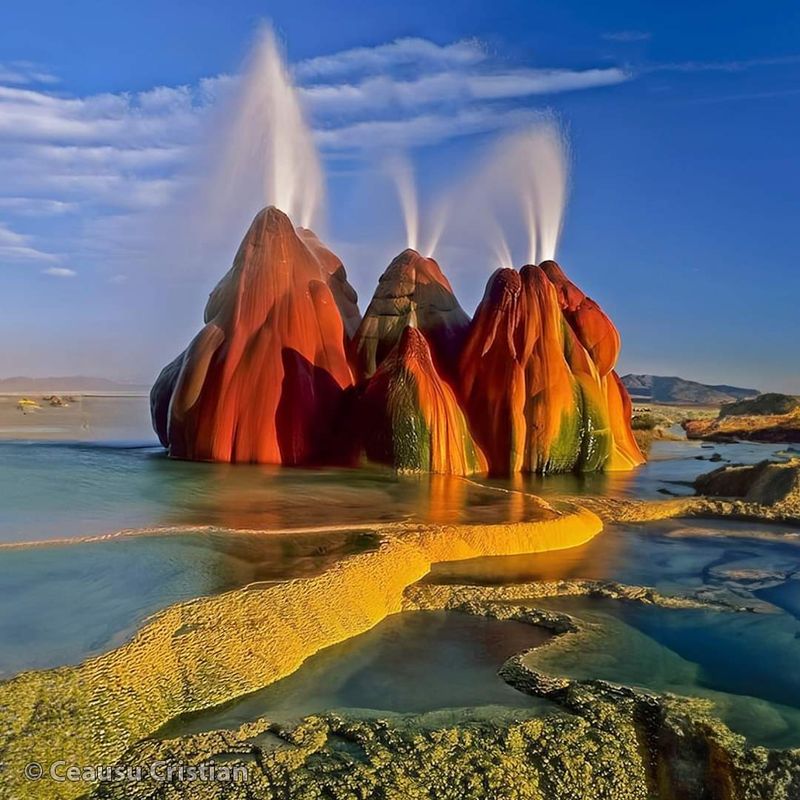
Travertine is a type of limestone that forms when calcium carbonate precipitates from water. At Fly Ranch Geyser, this process occurs continuously as hot water flows over the surface of the mounds.
Each drop leaves behind a microscopic layer of mineral, which over time builds into the terraces and spires visible today.
The geyser grows in all directions, but not uniformly. Water channels shift as deposits accumulate, redirecting flow and creating new formations while older sections dry out and harden.
This means the geyser looks slightly different each year, with new colors appearing as algae colonize fresh surfaces and old channels become sealed by mineral buildup.
The rate of growth depends on the mineral content of the water and the volume of flow. During periods of high activity, the geyser can add several inches of height in a single year.
This constant evolution is part of what makes the site so compelling; it is not a static monument but a dynamic structure shaped by ongoing geological and biological processes.
The Water Sprays Almost Constantly
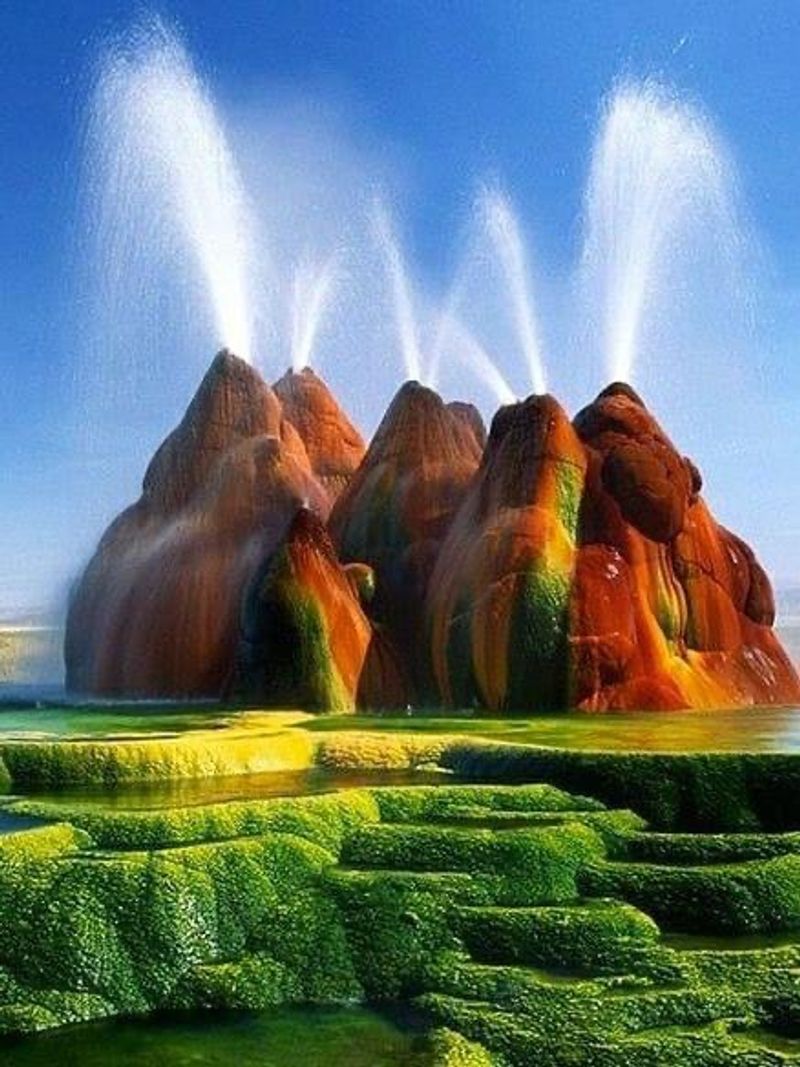
Unlike geysers such as Old Faithful, which erupt on intervals, Fly Ranch Geyser operates in a near-constant state of discharge. Water shoots from multiple vents across the surface of the mounds, some producing steady streams while others pulse irregularly.
The pressure beneath the surface remains high enough to sustain this activity year-round.
The water originates from a geothermal aquifer deep underground, heated by residual volcanic activity that still warms the region. As it rises through the poorly sealed well, it encounters less resistance than it would in a natural system, allowing it to escape freely.
This explains why the geyser never seems to rest.
Visitors who arrive expecting a dramatic eruption followed by silence will find instead a landscape of perpetual motion. Steam rises continuously from the hottest vents, creating a haze that drifts across the desert floor.
The sound of flowing water is audible from a distance, a rare acoustic intrusion in an otherwise silent expanse. This relentless activity is what has allowed the geyser to grow so large in such a relatively short span of time.
Fly Ranch Sits Near The Black Rock Desert
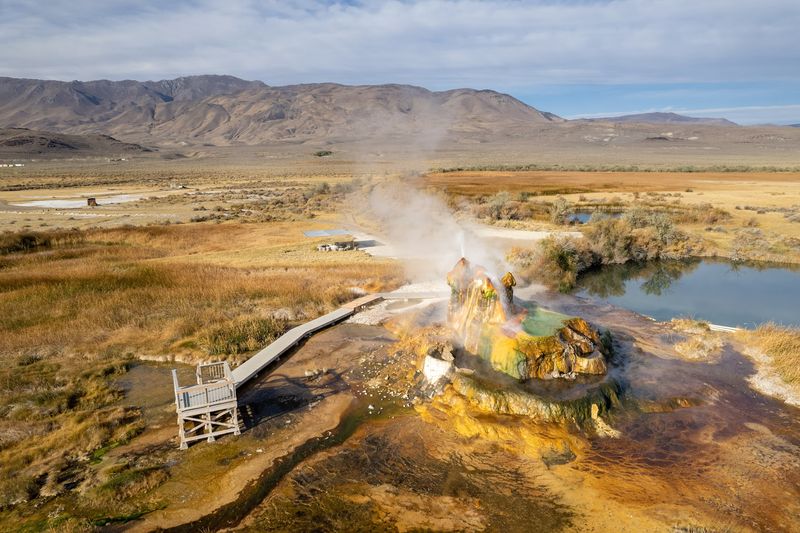
The Black Rock Desert is a dry lakebed covering hundreds of square miles in northwestern Nevada. Its surface is flat enough that land speed records have been set here, and its stark beauty draws photographers, off-roaders, and festival-goers each year.
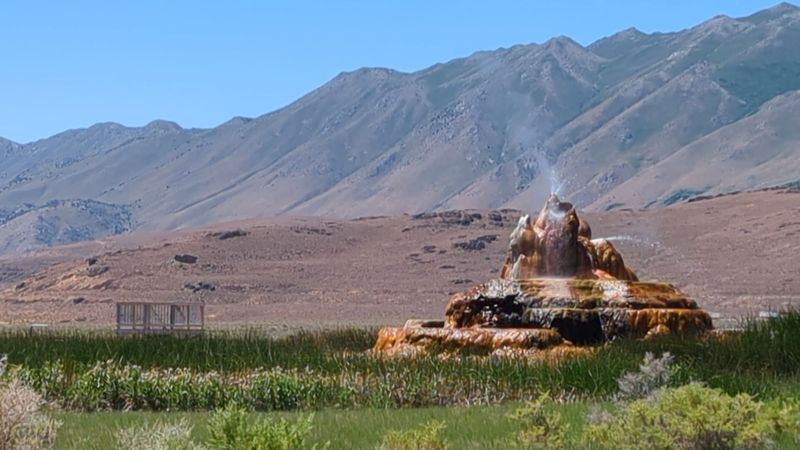
Fly Ranch occupies a small section along the edge of this expanse, where the playa meets low hills and scattered vegetation.
The proximity to the Black Rock Desert adds context to the geyser’s strangeness. In a region defined by emptiness and uniformity, the sudden appearance of a multicolored formation spraying water feels like a disruption of natural order.
The desert amplifies the visual impact, offering no competing landmarks to distract from the geyser itself.
The area is also known for hosting Burning Man, the annual art and music festival that transforms the playa into a temporary city. In 2016, the Burning Man Project purchased Fly Ranch, bringing the geyser under the stewardship of an organization committed to environmental conservation and public access.
This acquisition has shaped how visitors experience the site today.
It Is Located On Private Land
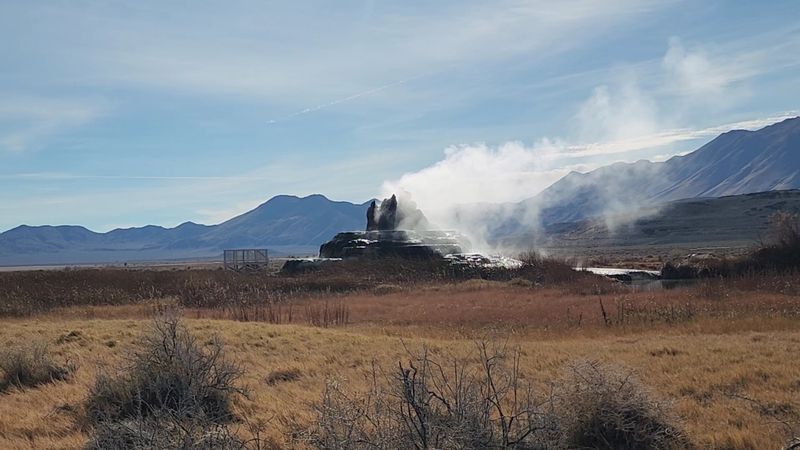
Fly Ranch Geyser is not a public park or open space. It sits on private property, and access is tightly controlled.
This has been a source of frustration for travelers who arrive unaware of the restrictions, only to find themselves turned away at a locked gate. The ranch spans thousands of acres, and the geyser itself is not visible from any public road.
The Burning Man Project, which now owns the property, has implemented a reservation system to manage visits. This approach aims to protect the fragile ecosystem surrounding the geyser while allowing limited public access.
Without these restrictions, the site would likely suffer from overuse, with foot traffic damaging the delicate mineral formations and disturbing the wetlands that have developed from geyser runoff.
Spontaneous visits are not possible. Anyone hoping to see the geyser must plan ahead, book a tour through Friends of Black Rock-High Rock, and follow strict guidelines once on site.
This level of control may seem excessive, but it reflects the reality of managing a unique natural feature that exists on private land in a remote location.
Guided Nature Walks Are The Only Way To Visit
Tours of Fly Ranch Geyser are conducted by volunteers affiliated with Friends of Black Rock-High Rock, a conservation group working in partnership with the Burning Man Project. These guided walks last approximately two and a half to three hours and cover roughly three miles of terrain.
The route includes the geyser itself, as well as surrounding wetlands, desert flora, and occasional art installations left over from Burning Man events.
Guides provide context about the geyser’s history, the geology of the region, and the conservation efforts underway at Fly Ranch. They also enforce rules designed to protect the site, including restrictions on where visitors can walk and when they can take photographs.
Some find these rules frustrating, but they serve a purpose in minimizing impact on fragile formations.
For those unable to walk the full distance, a caravan option allows visitors to drive closer to the geyser. Tickets must be purchased in advance, typically for around fifty dollars, and tours fill up quickly during peak seasons.
The structured nature of the experience ensures that the site remains accessible without being overrun.
The Area Includes Wetlands, Wildlife, And Art
Water flowing from Fly Ranch Geyser does not simply disappear into the desert. It collects in pools and channels, creating a series of wetlands that support a surprising variety of life.
Wild horses graze near the water, migratory birds stop to rest during seasonal journeys, and jackrabbits dart through the vegetation that grows along the damp edges.
These wetlands are ecologically significant in a region where water is scarce. They provide habitat for species that would otherwise have no reason to linger in such an arid landscape.
The Burning Man Project has made wetland restoration a priority, working to enhance these habitats while studying how they interact with the surrounding desert.
In addition to natural features, visitors encounter remnants of Burning Man art scattered across the property. These installations range from sculptures to interactive pieces, offering a surreal counterpoint to the geyser itself.
The combination of natural wonder, wildlife, and human creativity gives Fly Ranch a character distinct from other desert destinations. It is not just a geological curiosity but a living experiment in land stewardship and artistic expression.
Why This Nevada Geyser Feels So Unusual
Most natural wonders form over millions of years through processes that operate on geological timescales. Fly Ranch Geyser formed in a human lifetime, the product of a mistake that nobody intended.
This compressed timeline gives the site an almost artificial quality, as though someone constructed it deliberately rather than allowing it to emerge from natural forces.
The colors contribute to the sense of unreality. Geothermal features are typically muted, their beauty subtle and understated.
Fly Ranch Geyser is neither subtle nor understated. It demands attention with its brightness, its constant motion, and its refusal to blend into the surrounding landscape.
The effect is disorienting, especially for visitors accustomed to the subdued palette of the desert.
There is also the question of permanence. The geyser continues to grow, but it could stop at any time if the underground pressure shifts or the well becomes blocked.
This fragility adds urgency to any visit. You are not viewing an ancient monument but a transient phenomenon, one that may look entirely different in another fifty years or may not exist at all.