
This Remote Corner Of Michigan’s Coastline Offers Night Skies You’ll Never Forget
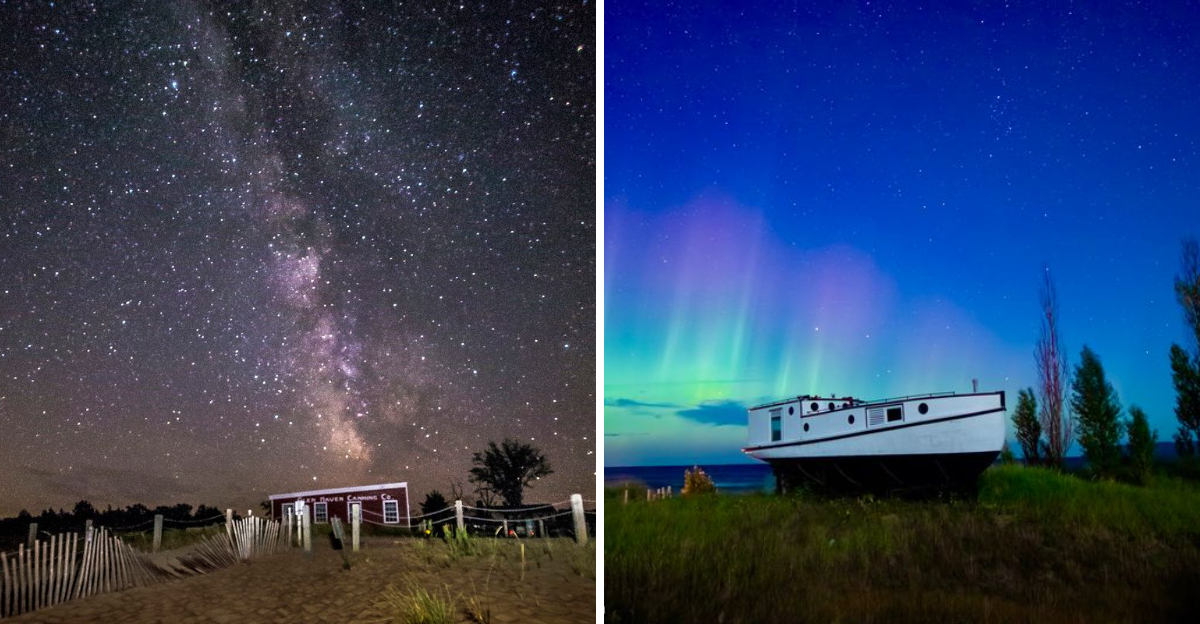
Along a quiet stretch of Lake Michigan’s shoreline, a tiny historic village sits near towering dunes and miles of protected lakeshore. During the day, the scenery alone makes the area memorable.
Once night falls, the sky becomes the real attraction. Far from major cities and surrounded by protected land, the darkness here reveals a stunning canopy of stars that many people rarely experience.
On clear evenings, the Milky Way can appear bright and unmistakable across the sky. For anyone hoping to see the night sky at its most dramatic, this peaceful corner of Michigan offers a setting well worth the journey.
Historic Village Inside Sleeping Bear Dunes National Lakeshore
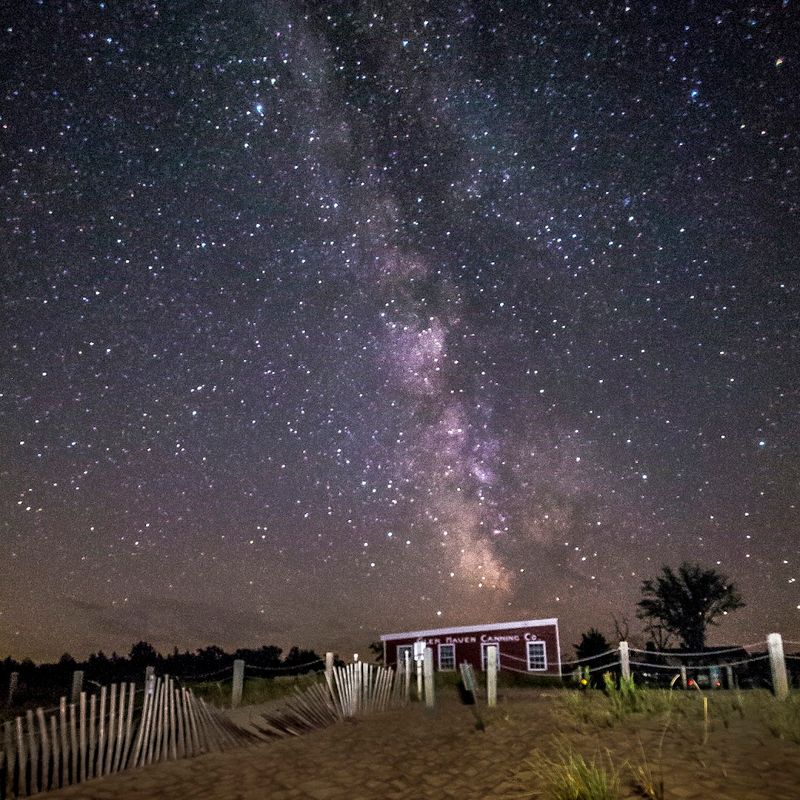
Few places in Michigan carry the quiet authority of a working 19th-century port village that has been carefully preserved rather than rebuilt from scratch. Glen Haven, located within Sleeping Bear Dunes National Lakeshore in Glen Arbor Township, MI 49630, is exactly that kind of place.
The National Park Service maintains the village with a steady hand, keeping its original character intact without turning it into a theme park version of itself.
Walking through the grounds, you get a genuine sense of what commercial life looked like along Lake Michigan’s shoreline during the late 1800s. The buildings are authentic, the layout is logical, and the atmosphere is calm without being sterile.
Visitors who arrive expecting a polished tourist attraction often leave pleasantly surprised by how honest the whole experience feels. Glen Haven rewards curiosity more than it rewards speed, so give yourself at least a full afternoon to absorb what this village has to offer.
Dark Night Skies Along Lake Michigan’s Shoreline
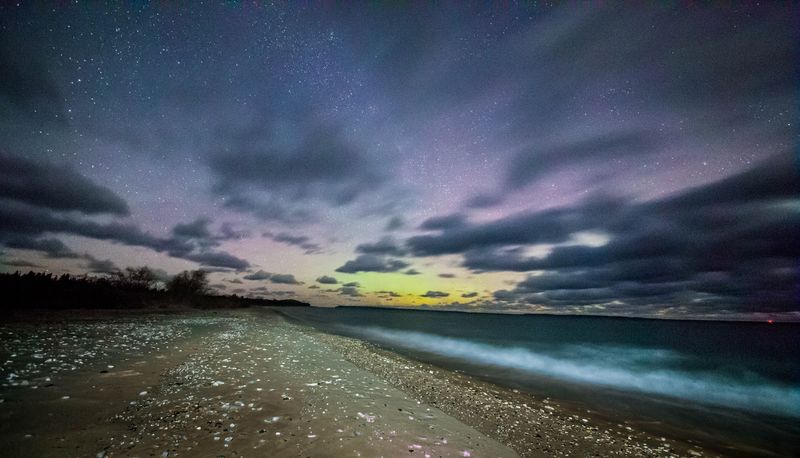
Standing at the water’s edge in Glen Haven after sunset is a fundamentally different experience from most places along the Great Lakes. The absence of nearby urban centers means the horizon stays dark in every direction, and the sky above Lake Michigan becomes a continuous field of visible stars.
On clear nights, the atmosphere here has a clarity that photographers and astronomers travel considerable distances to find.
Glen Haven Beach, positioned along Sleeping Bear Bay, is one of the most accessible points for nighttime observation in the entire national lakeshore. The lake’s surface adds a secondary dimension to the experience, reflecting starlight and amplifying the sense of depth overhead.
Arriving around twilight gives your eyes time to adjust gradually, which makes the full transition into true darkness feel almost theatrical in its pace. Bring a blanket, a red-light flashlight, and patience, because the sky rewards those who stay long enough to let it unfold completely.
Lake Michigan Views With Almost No Light Pollution
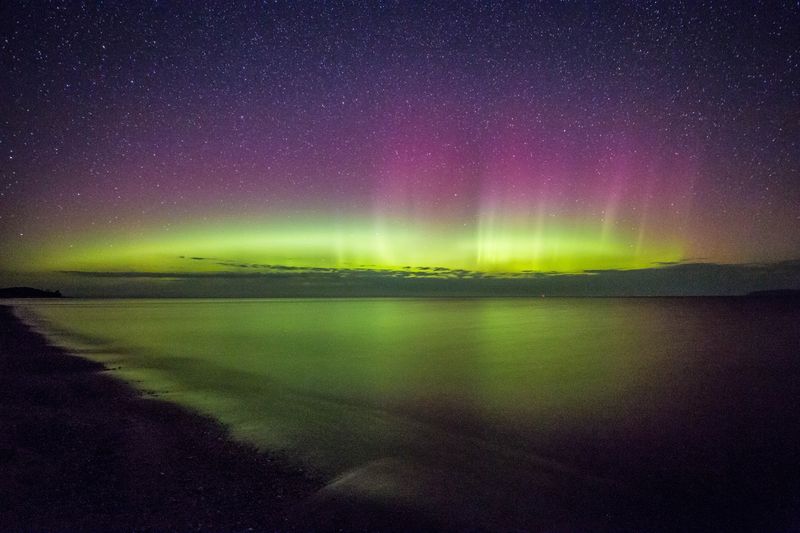
Light pollution is the invisible enemy of stargazing, and Glen Haven happens to sit in one of the most naturally shielded positions along Michigan’s western shoreline. The surrounding forests of Sleeping Bear Dunes National Lakeshore absorb ambient light from inland communities, while the vast open water of Lake Michigan stretches westward without a single city on the opposite shore for hundreds of miles.
The result is a viewing environment that holds up against dedicated dark sky parks in other parts of the country.
The Bortle scale, which measures sky darkness from one to nine, places this area comfortably in the lower range, meaning the Milky Way appears not as a faint smudge but as a distinct, textured band across the sky. First-time visitors often underestimate just how much is visible to the naked eye until they actually look up.
No telescope is required to have a genuinely memorable experience here, though binoculars add a satisfying layer of detail to the brighter star clusters.
Milky Way Views Over Lake Michigan
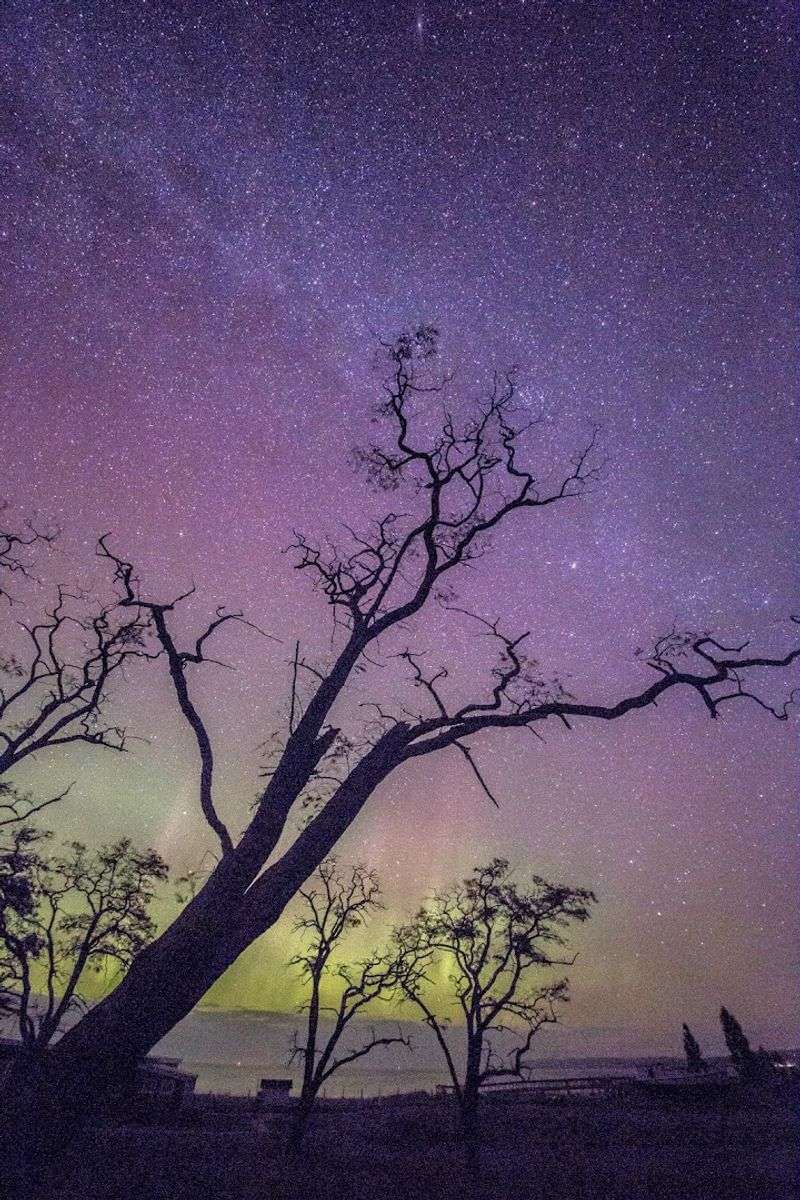
The Milky Way appears over Glen Haven during summer months with a consistency that makes planning a visit relatively straightforward. From late June through early September, the galactic core rises in the southern sky after midnight, positioning itself above the open expanse of Lake Michigan in a way that makes wide-angle photography almost effortless.
The combination of a flat water horizon and minimal atmospheric interference gives the galaxy a presence that feels almost three-dimensional.
Photographers who have shot the Milky Way from various Great Lakes locations often point to Glen Haven Beach as one of the most compositionally rewarding spots in the region. The gentle curve of Sleeping Bear Bay provides natural foreground interest, and the absence of boat traffic during late-night hours keeps the water calm and reflective.
For non-photographers, simply lying back on the sand and watching the galactic core drift slowly across the sky is an experience that recalibrates your sense of scale in a way that is hard to articulate afterward.
Historic Buildings From A 1800s Shipping Village
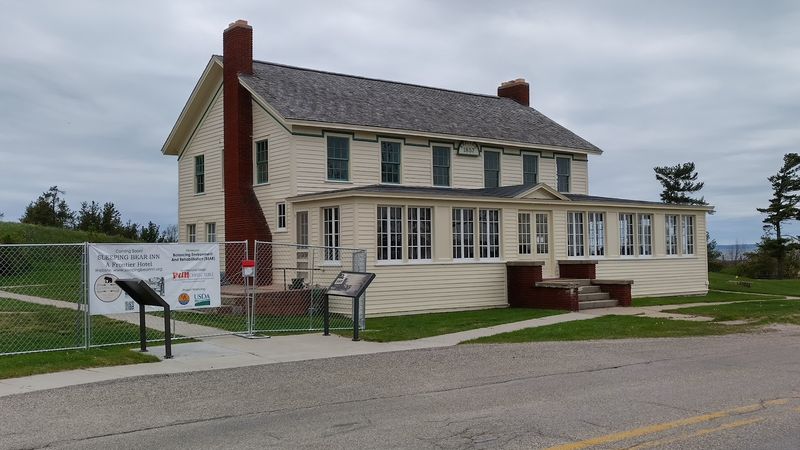
Glen Haven’s original function was purely commercial. During the second half of the 19th century, it operated as a wood-fueling station for steamships crossing Lake Michigan, and the surviving structures reflect that practical, no-frills purpose with admirable clarity.
The general store, the cannery, and the associated outbuildings were built to work, not to impress, which is precisely what makes them visually compelling today.
The National Park Service has restored several of these buildings to a standard that respects their age without making them feel artificially preserved. Paint choices, hardware, and interior furnishings align with what would have been available and appropriate during the village’s active years.
Historians and architecture enthusiasts find a great deal to examine here, but you do not need specialized knowledge to appreciate the straightforward craftsmanship on display. The buildings tell a story about commerce, Lake Michigan’s role as a transportation corridor, and the communities that formed along its shoreline during a particularly active period of American expansion.
Cannery Boathouse Maritime Museum
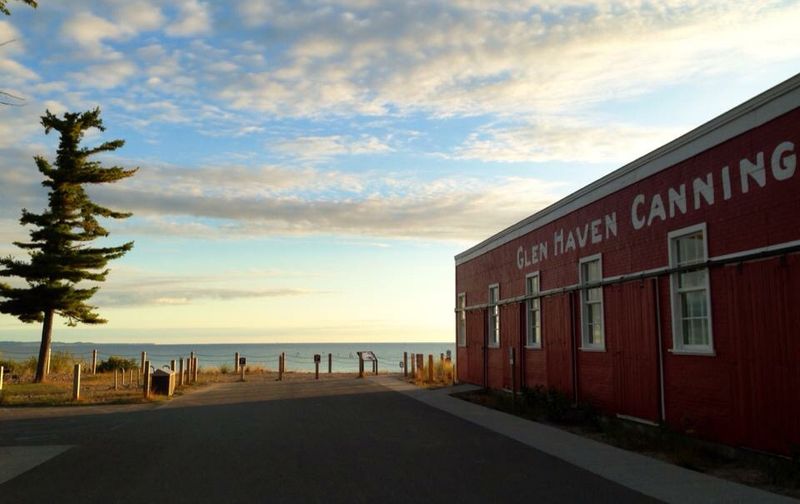
The Cannery Boathouse at Glen Haven holds a small but genuinely informative maritime collection that traces the village’s relationship with Lake Michigan across several decades. Originally used for boat storage and fish processing, the structure has been repurposed as a museum space that keeps its industrial bones visible while adding interpretive exhibits that place the artifacts in proper context.
Old wooden vessels, rescue equipment, and navigation tools sit alongside explanatory panels that are written clearly and without condescension.
What makes this museum particularly effective is its scale. It is compact enough to explore thoroughly in a single visit without fatigue, yet detailed enough to leave you with a clear picture of how lake commerce and maritime safety shaped daily life in this corner of Michigan.
The Life-Saving Service history is given special attention, honoring the crews who operated out of nearby stations during the era when Lake Michigan’s shipping lanes were among the busiest in North America. Plan at least forty-five minutes here.
Sleeping Bear Dunes Just Minutes Away
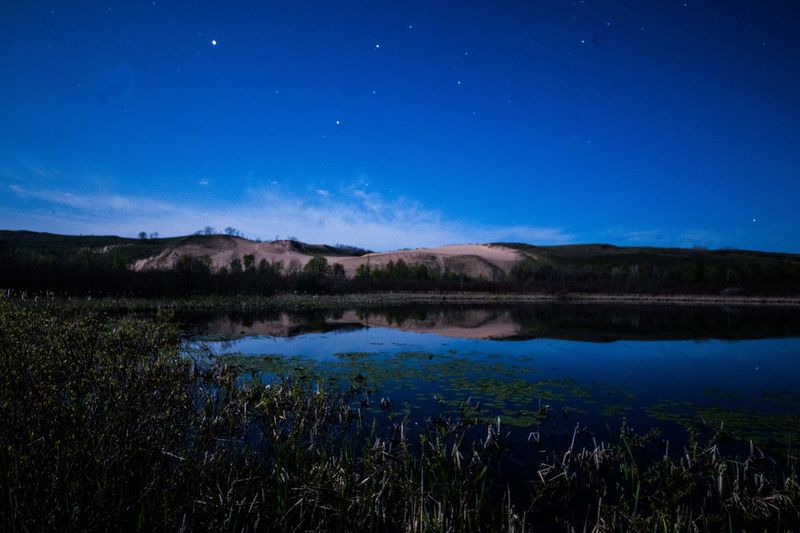
Glen Haven sits at the edge of one of the most dramatic landscapes in the Great Lakes region. The Sleeping Bear Dunes rise to heights exceeding 400 feet above Lake Michigan’s surface, and the main dune climb along Pierce Stocking Scenic Drive is accessible within a short drive from the village.
The experience of standing at the top of those dunes and looking west over the lake is one that earns its reputation without any promotional assistance.
The dunes also serve an important function for nighttime visitors. Their elevation creates natural observation platforms with unobstructed 180-degree views of the western sky, making them genuinely useful for stargazing beyond their daytime appeal.
The Empire Bluff Trail, located south of Glen Haven, provides another elevated vantage point with similarly open sightlines toward the lake. Visiting the dunes during the day and returning after dark for stargazing turns a single-day trip into a layered experience that covers both the geological and astronomical highlights of this stretch of Michigan’s coastline.
Quiet Beach For Sunset And Evening Walks

Glen Haven Beach operates on a different frequency than the more heavily visited shores along Michigan’s western coastline. The crowds that fill Sleeping Bear Dunes during peak summer weekends thin out considerably by the time visitors reach this particular stretch of Sleeping Bear Bay.
The result is a shoreline that feels genuinely unhurried, where a sunset walk does not require navigating around other people’s beach setups or competing for a clear sightline to the horizon.
Sunsets here are legitimately impressive, largely because the western exposure over open water gives the sky room to perform without obstruction. Colors tend to linger longer than you expect, transitioning from orange to deep red to a blue-gray that slides almost imperceptibly into the first stars of evening.
Evening walks along the waterline after dark carry their own appeal, with the sound of small waves and the gradual appearance of stars overhead combining into an atmosphere that is restorative in a way that is difficult to manufacture elsewhere.
Stargazing Stop Along Scenic M-109
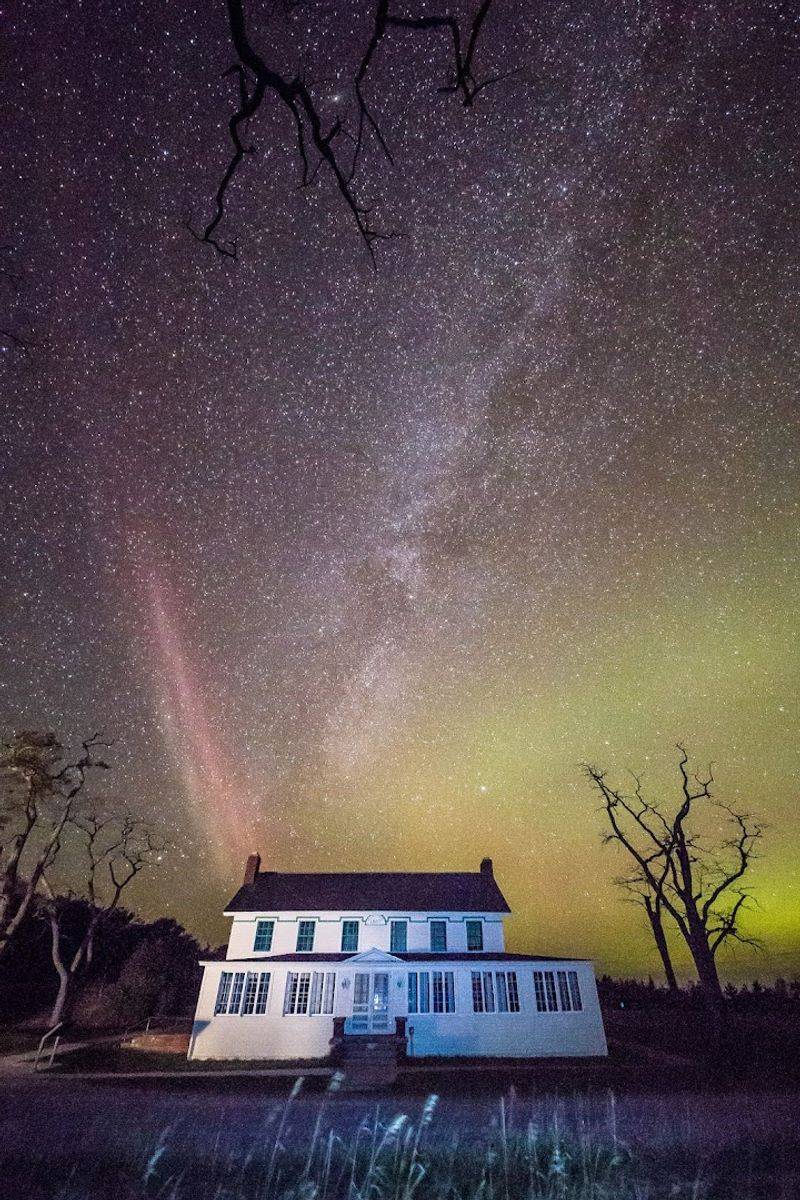
Michigan Highway M-109 runs through the heart of Sleeping Bear Dunes National Lakeshore, passing through forest, farmland, and shoreline terrain before reaching Glen Haven at its western terminus. The road itself is worth driving for its daytime scenery, but after dark it becomes something else entirely.
Several pull-offs along M-109 offer clear sightlines above the tree line, and the absence of streetlights along most of its length makes it one of the more practical stargazing corridors in the Lower Peninsula.
Stopping along M-109 on a clear night and stepping out of the car is a quick way to gauge just how dark the sky becomes in this part of Leelanau County. The road noise from other vehicles is minimal after 9 p.m. in most seasons, and the surrounding forest creates a natural buffer against any ambient glow from inland towns.
Astronomy apps work well here for identifying constellations, but even without them, the sheer density of visible stars makes orientation surprisingly intuitive once your eyes have adjusted fully.
Seasonal Ranger Programs And Talks
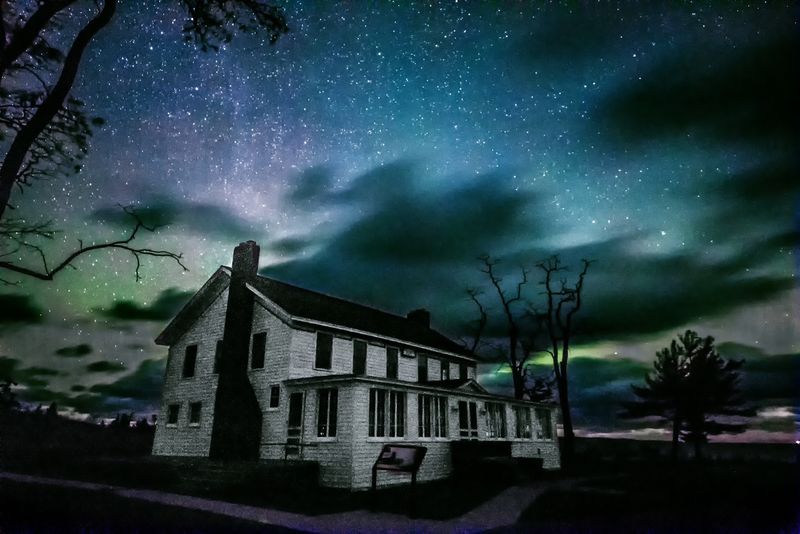
The National Park Service rangers assigned to Sleeping Bear Dunes National Lakeshore bring a level of knowledge and enthusiasm to their programs that consistently elevates the visitor experience beyond what self-guided exploration alone can provide. Seasonal evening programs at Glen Haven and nearby locations within the park cover topics ranging from the area’s maritime history to celestial navigation and dark sky preservation.
Attendance is generally free with park admission, which makes these talks an unusually good value.
Night sky programs are offered with particular frequency during summer and early fall, timed to coincide with optimal Milky Way visibility and major meteor showers. Rangers often set up telescopes for public use during these events, allowing visitors to see Jupiter’s moons or Saturn’s rings without any equipment of their own.
Checking the park’s official schedule at nps.gov/slbe before your trip takes about two minutes and can significantly improve the quality of your visit by aligning your arrival with a program that matches your interests.
Where Lake Michigan Waves Meet The Night Sky
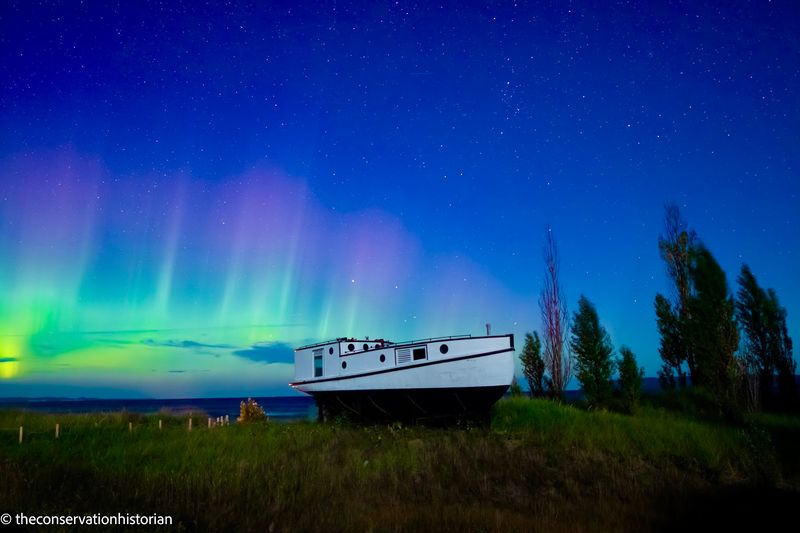
There is a particular quality to standing at the shoreline in Glen Haven after full dark that is worth describing with some precision. The sound of Lake Michigan’s waves creates a continuous low rhythm that occupies just enough of your attention to quiet the mental noise that most people carry with them into natural spaces.
Above that sound, the sky opens up in a way that feels disproportionate to the modest effort it took to get here.
The meeting point of water and sky along this stretch of shoreline has a compositional logic that photographers recognize immediately and non-photographers feel without being able to name. Stars appear to rise directly out of the lake’s western horizon, and on calm nights the surface reflects enough light to make the boundary between water and sky genuinely ambiguous.
This is the kind of place that people describe inadequately to friends afterward, not because the experience was too complex, but because it was too complete to reduce to a sentence or two.