
This Remote New Mexico Desert Village That Looks Like It Belongs In A Western Movie
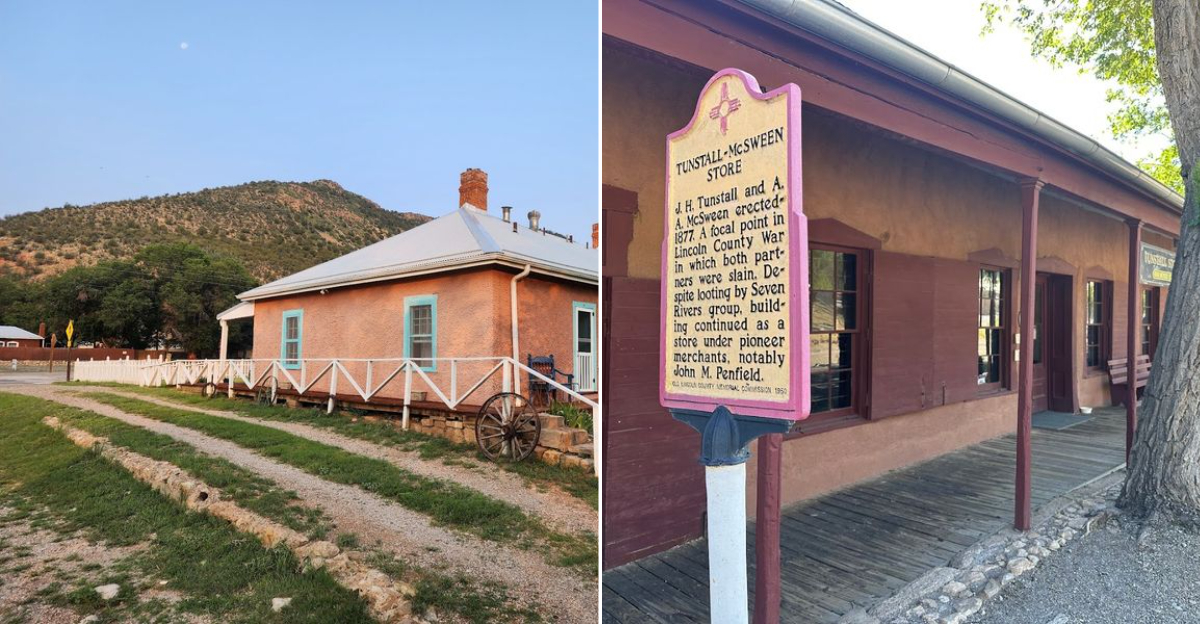
The drive in prepares nobody for what the village actually looks like. Adobe walls, dusty streets, and a horizon that stretches in every direction without a single modern interruption.
New Mexico has landscapes that stop people mid-sentence, but this particular village operates on a different frequency. It doesn’t look preserved or restored.
It looks untouched, which is a distinction that becomes immediately clear to anyone who has visited the former and assumed they were getting the latter. Film crews have found it for the same reason travelers do.
The light falls differently here at certain hours and the architecture absorbs it in a way that no set design has ever fully replicated. A village that exists on its own terms, indifferent to the attention and unchanged by it.
History And Origins Of The Desert Village
This village started as a small trading post settlement in the Bonito Valley during the 1850s. It sat between the Capitan and Sacramento Mountains, which made it a natural crossroads for travelers and ranchers.
The village grew quickly and became the county seat of Lincoln County. By the late 1870s, it was one of the most important and most dangerous places in the entire American Southwest.
President Rutherford B. Hayes reportedly called Lincoln’s main street the most dangerous street in America.
That is not a nickname most villages want, but Lincoln earned it honestly during a violent period called the Lincoln County War.
The Lincoln County War ran from 1878 to 1881 and involved rival business factions fighting for control of the region’s cattle trade. It turned neighbors into enemies and put Lincoln on the national map for all the wrong reasons.
Today, Lincoln is recognized as a National Historic Landmark, declared in 1960. It is also the most widely visited state historic site in all of New Mexico.
The village sits along a single mile-long stretch of U.S. Route 380, also known as the Billy the Kid Trail.
Architectural Styles Reflecting Western Heritage
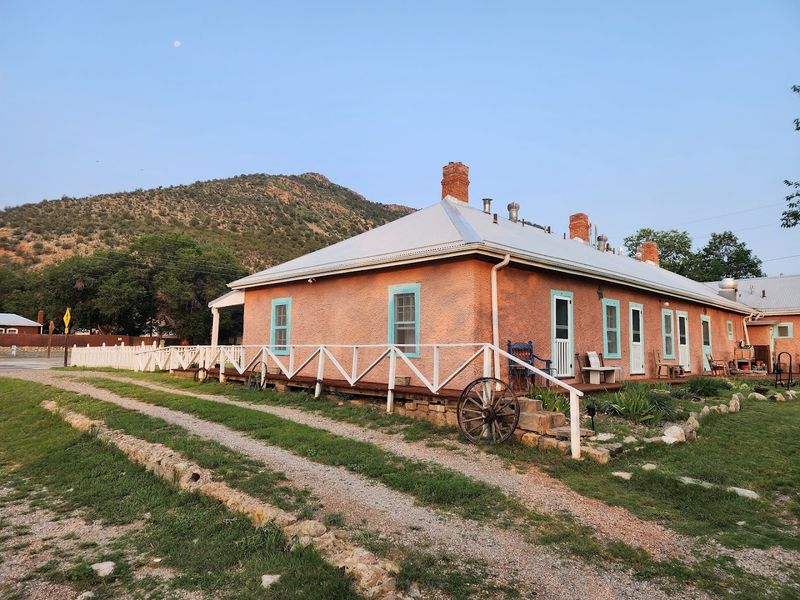
Adobe walls define Lincoln more than anything else. Almost every building in the village is built in the Territorial Style, which uses thick sun-dried mud bricks and flat rooflines typical of the 1800s Southwest.
Territorial Style architecture was practical and smart for desert life. The thick walls kept interiors cool in summer and warm in winter, which mattered a lot before air conditioning existed.
Lincoln has 17 historic structures and outbuildings still standing today. Seven of them are open year-round as museums, and two more open seasonally so visitors can explore them up close.
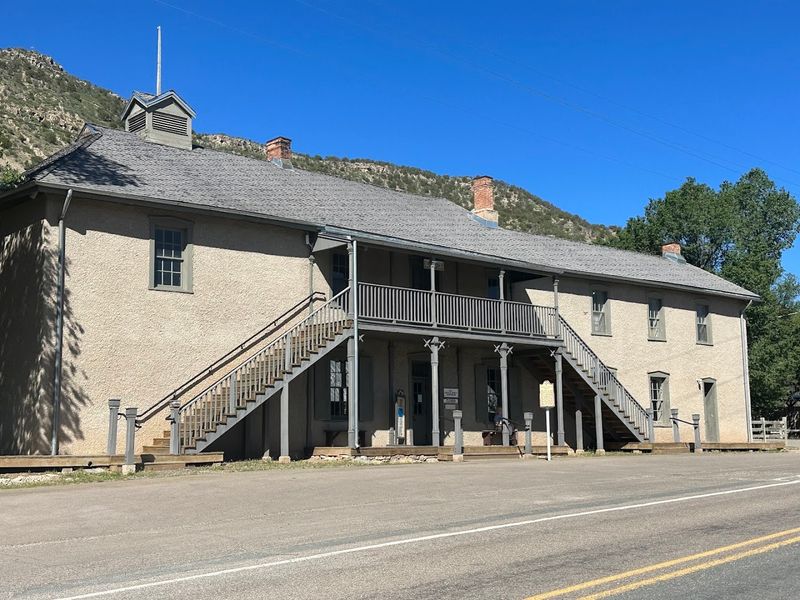
The Old Lincoln County Courthouse is one of the most visited buildings in the village. This is the exact spot where Billy the Kid made his famous escape in April 1881, and the building still looks remarkably close to how it did back then.
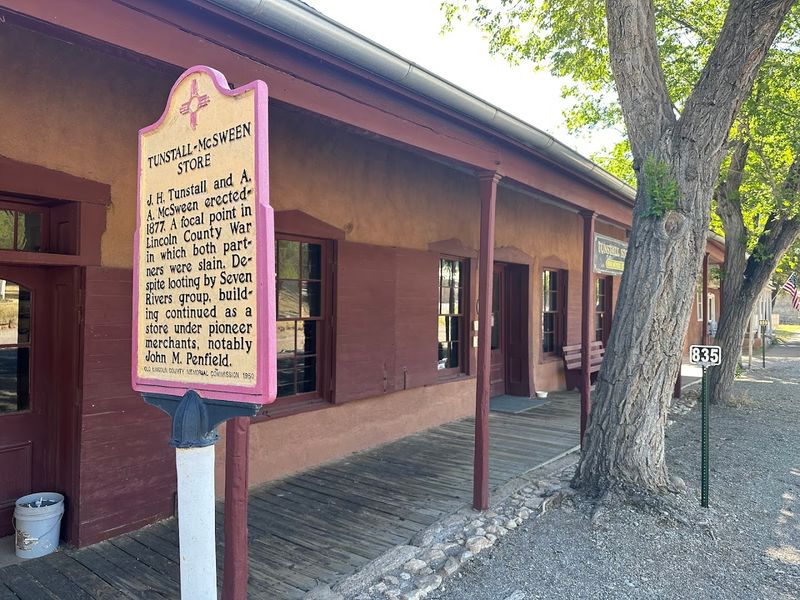
The Tunstall Store is another architectural spot. It still displays original 19th-century merchandise on its shelves, making it feel less like a museum and more like the store just closed for lunch a hundred years ago.
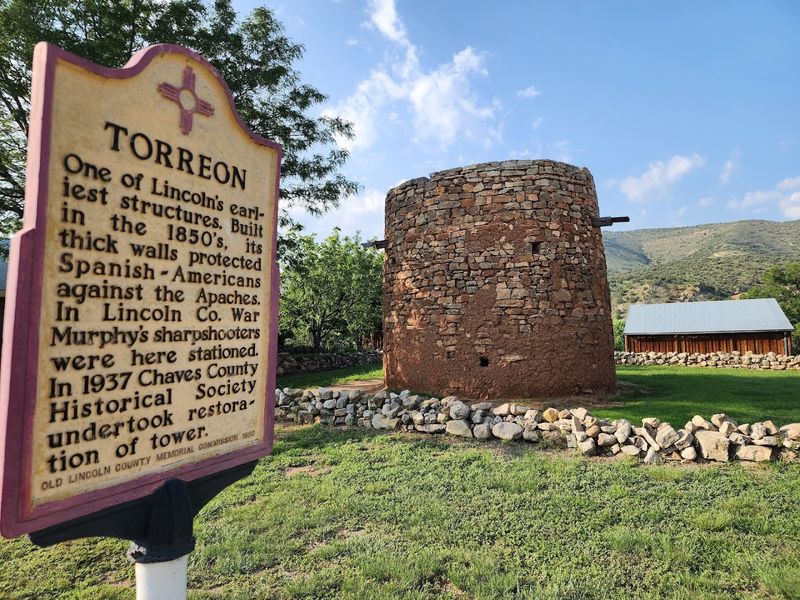
El Torreón is a round defensive stone tower built in the 1850s. It was constructed to protect settlers from raids, and its thick stone walls are still completely intact.
Walking past it feels like a genuine history lesson without any textbook required.
Local Flora And Fauna Of The Surrounding Desert
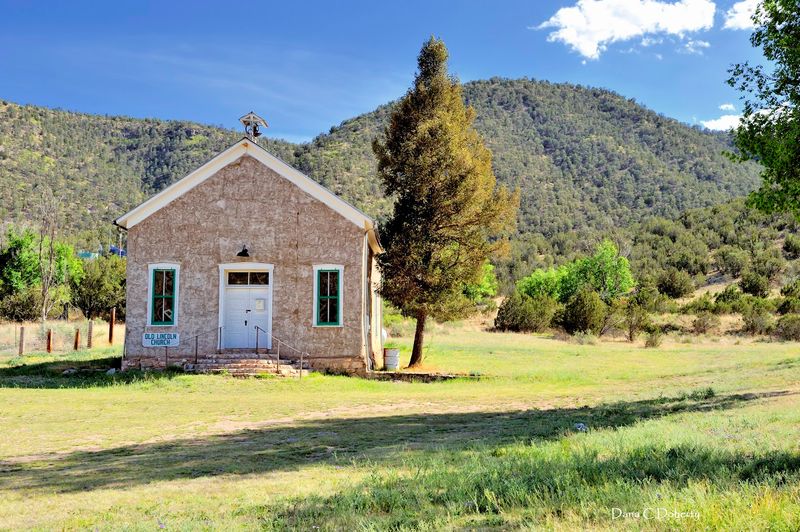
The landscape around Lincoln is a beautiful mix of desert scrub and mountain forest. The Bonito Valley sits at an elevation that gives it a slightly cooler climate than the lower desert regions of New Mexico.
Yucca plants are everywhere along the roadsides and hillsides. Their tall white flower stalks shoot up in late spring and are genuinely hard to miss against the blue sky.
Juniper and pinon pine trees cover the lower mountain slopes surrounding the valley. Their earthy, resinous scent hits you the moment you step out of your car, and it is one of those smells you remember for a long time.
Ponderosa pines dominate the higher elevations of the Capitan and Sacramento Mountains nearby. These forests are home to mule deer, wild turkey, and black bears, all of which occasionally wander closer to the valley floor.
Roadrunners are a local favorite wildlife sighting. They really do sprint across the roads at surprising speeds, and yes, they look exactly like the cartoon version, just without the cloud of dust behind them.
Rattlesnakes are also part of the local ecosystem, so watching where you step on trail hikes is genuinely good advice. The desert here is alive in ways that remind you nature has been running this place far longer than any human settlement ever has.
Seasonal Weather Patterns And Best Times To Visit
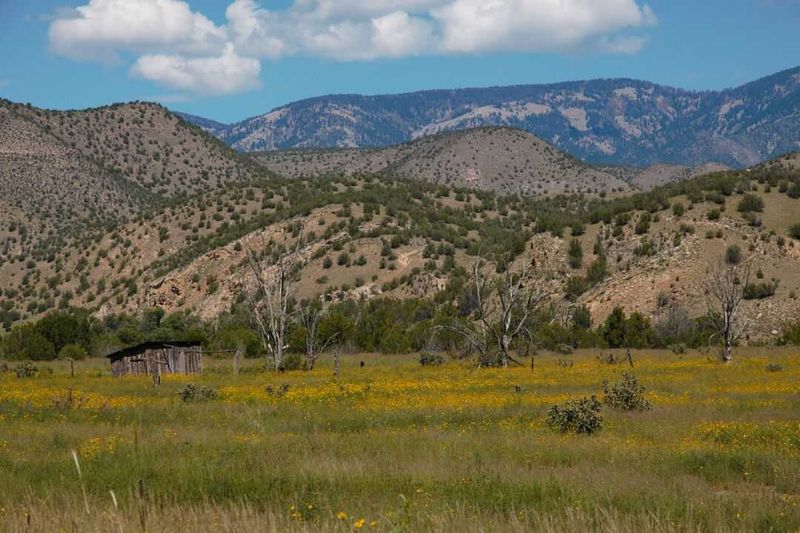
Lincoln sits at roughly 5,700 feet in elevation, which makes its weather noticeably different from the flat low desert of southern New Mexico. Summers are warm but not scorching, and winters get genuinely cold with occasional snow.
Spring is a solid choice for visiting. Temperatures are mild, wildflowers start appearing across the hillsides, and the crowds have not fully arrived yet.
Summer brings afternoon monsoon thunderstorms from July through September. These storms roll in fast over the mountains and create dramatic skies that honestly look like a painting.
They usually pass quickly and leave the air smelling incredible.
August is the most popular month to visit, largely because of Old Lincoln Days, the village’s major annual festival. The event draws visitors from across the state and beyond, so booking accommodations early is a smart move.
Fall is arguably the most visually stunning season. The cottonwood trees along the Bonito River turn brilliant gold, and the mountain slopes shift into warm amber and orange tones that make every photo look professionally edited.
Winter is quiet and peaceful in Lincoln. A light dusting of snow on the adobe rooftops is genuinely picturesque, and the smaller crowds mean you can explore the historic sites at your own pace without anyone rushing you along.
Traditional Food And Cuisine Common In The Area
New Mexico food culture is its own universe, and the Lincoln area gives you a solid taste of it. Green chile is not just an ingredient here.
It is practically a food group.
Green chile stew is the regional comfort food that shows up on nearly every local menu. It is a hearty bowl of roasted green chiles, potatoes, pork or chicken, and enough warmth to make you forget the drive it took to get there.
Red or green is the most important question you will answer at any New Mexico restaurant. It refers to which chile sauce you want on your food.
Answering Christmas means you want both, and that is always a valid answer.
Posole is another traditional dish common in the area. It is a slow-cooked hominy stew with pork and dried chiles that has been a staple of New Mexican cooking for centuries.
It is filling, deeply flavorful, and perfect after a long day of exploring.
Sopapillas are the local bread of choice. These puffy fried dough pillows arrive warm at the table, and locals drizzle them with honey.
They are simple, delicious, and somehow always better than you expect.
The Wortley Hotel in Lincoln has historically served as a dining spot for visitors. Food in this region carries real cultural roots that connect directly to the Native American, Spanish, and Mexican traditions that shaped New Mexico over centuries.
Cultural Events Celebrating Western Legacy
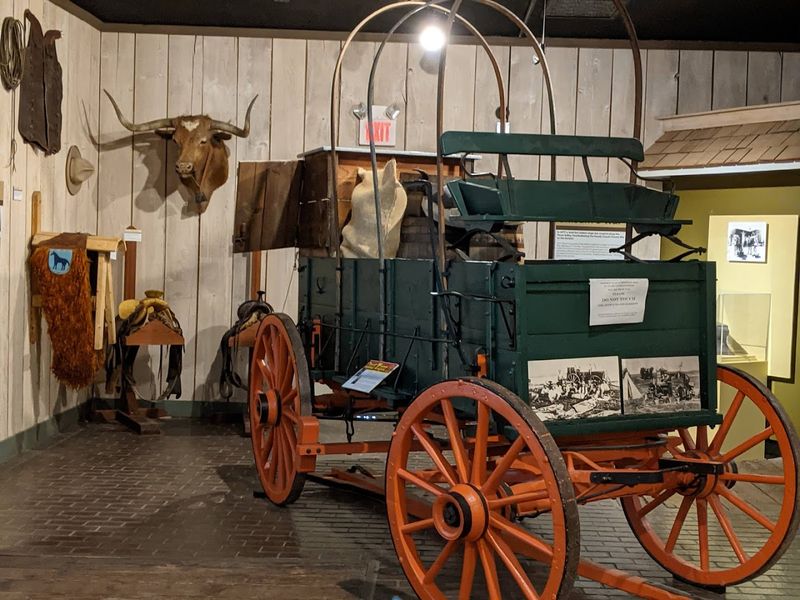
Old Lincoln Days is the event that puts this tiny village on everyone’s radar every August. It is a full weekend celebration packed with history, performance, and community energy that is hard to replicate anywhere else.
The main attraction is the reenactment of Billy the Kid’s Last Escape. Actors recreate the dramatic jailbreak from the Old Lincoln County Courthouse with impressive detail, and the crowd reaction makes it feel genuinely exciting every single time.
A traditional pageant is also performed during Old Lincoln Days. It tells the broader story of the Lincoln County War through dramatic performances that are surprisingly engaging even for people who did not think they liked history.
A parade winds through the village during the festival weekend. Local groups, horses, and costumed participants fill the main street, which is already only a mile long, so the whole parade feels wonderfully close and personal.
Traditional crafts are a big part of the celebration. Artisans demonstrate and sell handmade goods rooted in Southwestern and Native American traditions, from pottery and weaving to leatherwork and woodcarving.
Beyond August, Lincoln hosts smaller events throughout the year tied to its historic status.
Living history demonstrations are held regularly at museum sites, with interpreters recreating the 1870s through hands-on activities for all ages.
The village genuinely commits to keeping its past alive and accessible year-round.
Outdoor Activities And Scenic Desert Trails
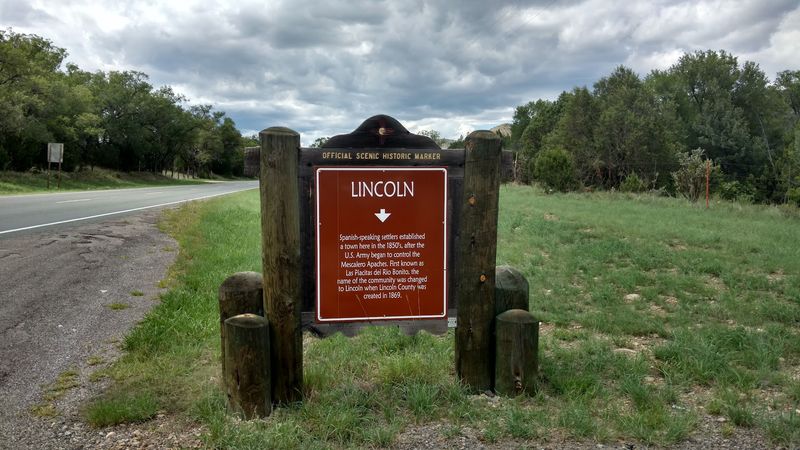
Lincoln is surrounded by outdoor adventure, and most people do not realize how much is available until they arrive. The Capitan Mountains to the north and the Sacramento Mountains to the south offer serious hiking territory.
The Lincoln National Forest covers a massive area around the region. It offers trails ranging from easy valley walks to challenging mountain climbs, and the scenery shifts dramatically as you gain elevation.
Smokey Bear Historical Park is just a short drive away in Capitan. It honors the real Smokey Bear, who was found as an orphaned bear cub in the Capitan Mountains after a 1950 forest fire.
Yes, the actual Smokey Bear was real, and he was from right here.
Fishing is popular along the Bonito River and nearby Bonito Lake. The water runs cold and clear from the mountains, and it is a genuinely peaceful way to spend a morning before exploring the historic sites in the village.
Horseback riding fits perfectly in a landscape that has been cowboy country for over 150 years. Several outfitters in the broader Lincoln County area offer trail rides through terrain that looks exactly like classic Western film locations.
Stargazing is another underrated activity here. Lincoln County sits far from major city light pollution, and the night skies on a clear evening are absolutely packed with stars.
Bring a blanket and just look up. It delivers every time.
Preservation Efforts For Historic Buildings
Keeping a village frozen in the 1870s takes serious work, and Lincoln has been doing that work for decades. The state of New Mexico manages the Lincoln Historic Site, which covers the majority of the village’s preserved structures.
The New Mexico Department of Cultural Affairs oversees the site’s operations and ongoing conservation. Their goal is not just to maintain the buildings but to keep them historically accurate down to the materials used in repairs.
Adobe is notoriously high-maintenance. Rain, freeze-thaw cycles, and time all slowly wear away mud brick walls, so skilled preservation workers regularly apply traditional mud plaster to keep the structures stable and authentic.
Lincoln was declared a National Historic Landmark in 1960, which gave it significant federal recognition and helped attract preservation funding over the years. That designation carries real weight when applying for grants and restoration resources.
The Tunstall Store is one of the most carefully preserved buildings in the entire Southwest.
Its original shelves, merchandise, and interior fixtures have been maintained with careful attention to keeping everything as close to the original as possible.
Community involvement plays a real role in Lincoln’s preservation story. Local families, historians, and volunteers regularly contribute to maintaining the site and sharing its stories with new generations of visitors.
The village treats its history not as a burden but as a living legacy worth protecting for the long haul.