
This Remote Texas Desert Town Is So Underrated Most Travelers Drive Right Past
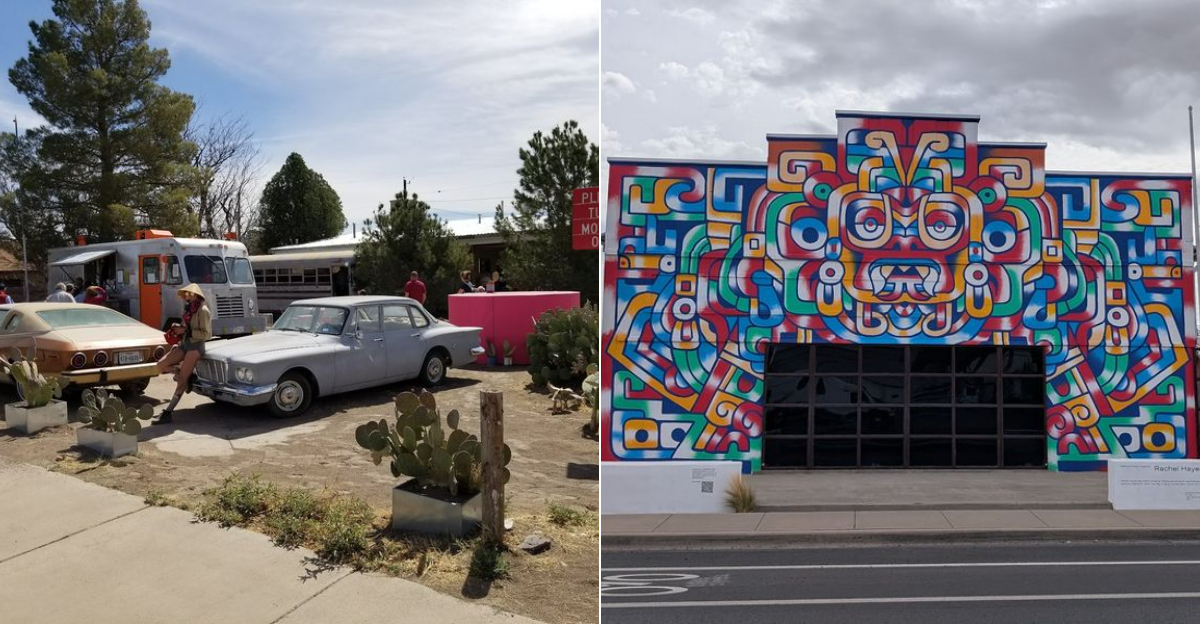
Far out in West Texas, the highway stretches so long and straight that it feels like the road forgot to end. Golden grass waves on both sides.
Antelope watch from the fence line. Mountains float on the horizon like blue paper cutouts.
Most drivers keep going, eyes fixed on Big Bend or El Paso, never guessing that one small desert town along the way holds contemporary art worth flying across the world to see.
A fake luxury boutique stands alone in the scrub. Giant aluminum boxes glow inside old army sheds.
Strange lights bob across the dark plain, still unexplained after more than a hundred years.
This is high desert Texas, sitting nearly a mile above sea level, where nights turn cold even in summer and the stars come out in absurd numbers. Best of all, hardly anyone rushes here.
Slowing down is the whole point, and the desert makes that easy.
A Tiny Railroad Stop Turned Icon
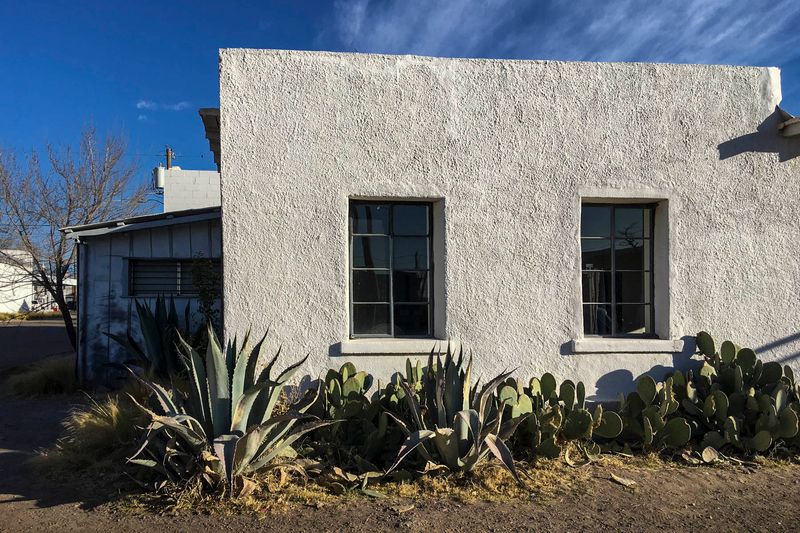
Start with the name, because it deserves one: Marfa. A dot on the map in far West Texas, home to fewer than 2,000 people, and somehow known by artists in New York, Berlin, and Tokyo.
It began in 1883 as a water and freight stop for the railroad. Trains needed water, the desert had a little, and a town grew around the tracks.
For decades, ranching and the military kept things going.
Then, in the 1970s, minimalist artist Donald Judd arrived. He fell for the high desert plains, bought up buildings and old army land, and installed enormous permanent artworks.
Word spread. Galleries followed.
Today the town holds nearly two dozen of them.
What makes the place work is the mix. Cowboy hats and concept art share the same sidewalk.
A ranch supply store sits near a design shop. Nobody seems to find this strange.
Sitting at almost 4,700 feet, the air is dry and thin, and summer evenings cool off fast. Bring a jacket even in July.
The county seat of Presidio County, Marfa is the kind of Texas town where you park once and walk everywhere. Streets are wide and quiet.
Dogs nap in doorways.
Mystery Orbs On Mitchell Flat
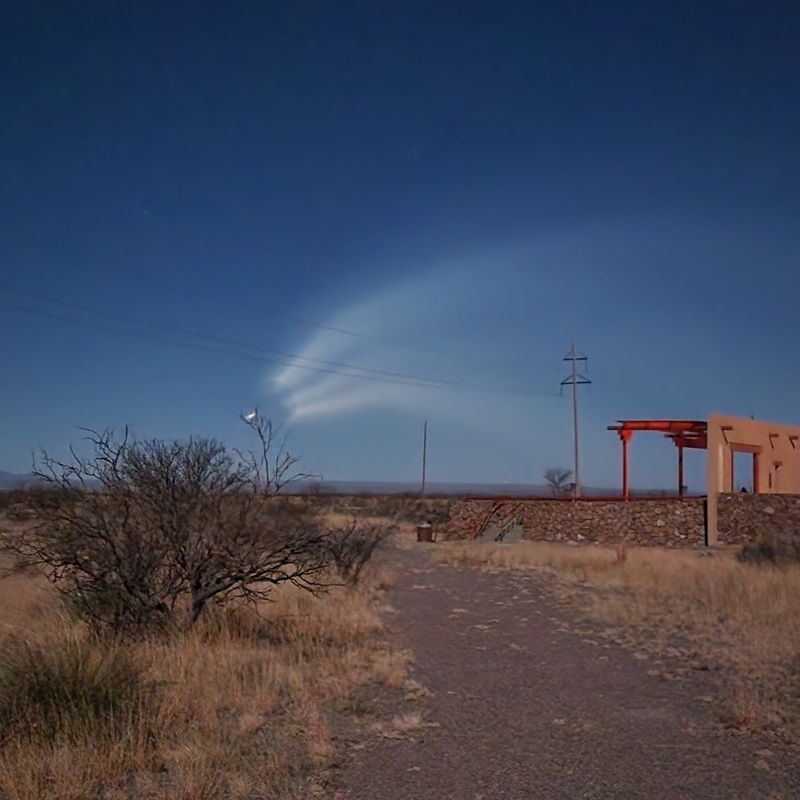
Nobody has solved it. Not scientists, not ranchers, not the thousands of visitors who show up each year with folding chairs and thermoses of coffee.
The lights appear out on Mitchell Flat, east of town near U.S. Route 67.
They hover, split apart, drift sideways, and blink out. Reports go back to the 1800s, long before cars had headlights.
Theories pile up. Atmospheric reflections.
Distant headlights bending through layers of cool and warm air. Campfires.
Something else entirely. Take your pick.
The official viewing area sits nine miles east of town on U.S. 90. There are benches, fixed binoculars, and plaques explaining what people have reported over the years.
Admission costs nothing.
Show up around sunset and stay a while. The lights are shy and unpredictable, so patience matters more than luck.
Some nights bring nothing at all.
Even on a quiet night, the trip pays off. This corner of Texas holds a Dark Sky designation, meaning almost no light pollution.
The Milky Way stretches from one horizon to the other like spilled sugar.
Dress warmer than you think you need to. Desert nights drop fast once the sun disappears.
Bring a red flashlight to protect your night vision, and skip the phone screen.
What would you tell your friends back home if you actually saw them?
Giant Boxes In Old Army Sheds
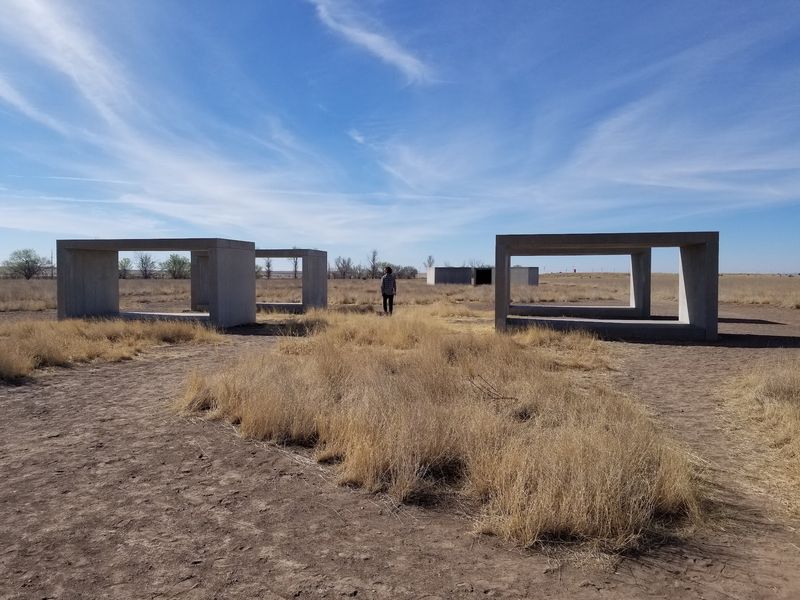
Three hundred forty acres of desert, an abandoned army post, and some of the most famous minimalist art on the planet. The Chinati Foundation is not a normal museum.
Donald Judd founded it on the grounds of Fort D.A. Russell, a decommissioned Army outpost.
Instead of hanging small pictures on white walls, he filled entire buildings with permanent installations.
The showstopper is 100 untitled works in mill aluminum. Rows of polished aluminum boxes fill two long artillery sheds, each one slightly different inside.
Sunlight moves across them all day, and they never look the same twice.
Outside, 15 untitled works in concrete march across a grassy field. They are massive, blunt, and oddly beautiful against the mountains.
Other artists share the campus too, including Dan Flavin and John Chamberlain. Flavin’s fluorescent light corridors glow pink, green, and blue inside old barracks.
Guided tours explain what you are looking at, which helps a lot if minimalism usually leaves you shrugging. Tours can sell out, especially in cooler months, so book ahead.
Wear comfortable shoes and bring water. You will walk between buildings across open ground, and West Texas sun does not negotiate.
Photography rules vary by building, so ask first.
Does art hit differently when the room around it used to house soldiers?
The Fake Boutique Everyone Photographs
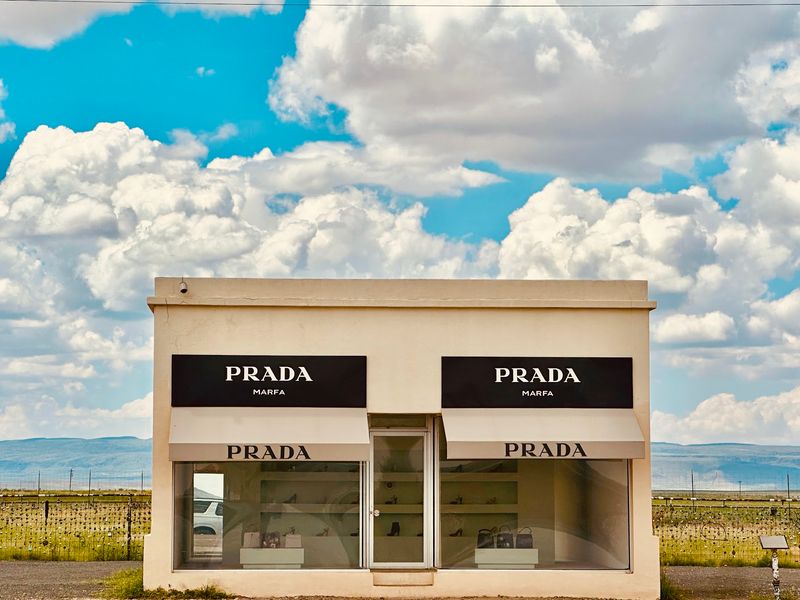
Drive west on U.S. 90 toward Valentine and something ridiculous appears beside the road. A sleek little luxury storefront.
Two glass windows. Handbags and right-foot shoes on display.
Nothing else for miles.
Prada Marfa is a permanent art installation, co-produced by Ballroom Marfa, and it has never sold a single thing. The door does not open.
That is the joke, and it is a good one.
The items inside came from a real collection years ago. Weather, dust, and time have worked on the building, which somehow makes it better.
Art critics call it a comment on luxury and isolation. Everyone else calls it the best photo stop in Texas.
It sits roughly 39 to 40 miles west of town, so plan for a round trip of about an hour and a half with photo time. Fill your gas tank first.
Service stations out here are rare.
Golden hour is magic, with long shadows and pink light on the grassland. Sunrise brings the same glow and even fewer people.
Pull well off the highway when you park. Trucks move fast on this stretch.
Look, but do not touch. The installation has been vandalized before, and locals care about keeping it intact.
Which pose are you going with, the shopper or the confused traveler?
Galleries, Ballrooms And Warhol Surprises
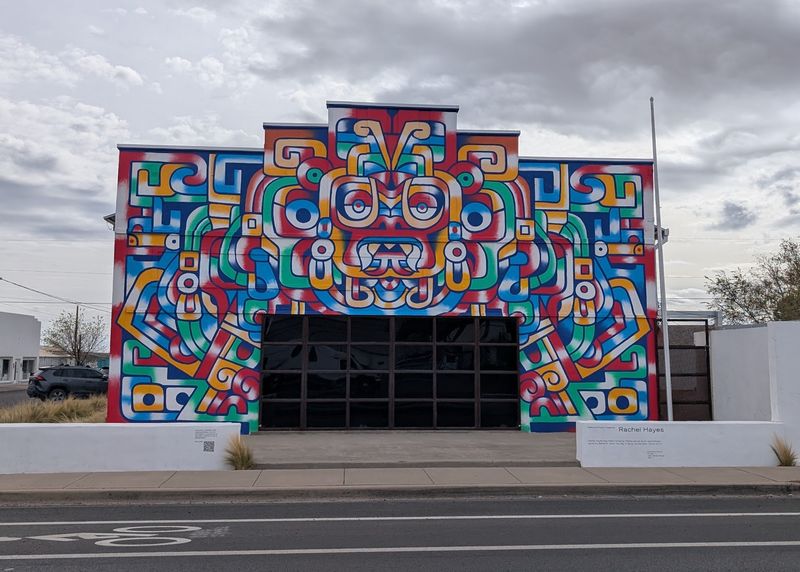
For a town this size, the art count is absurd. Nearly two dozen galleries and art spaces, most within walking distance of each other.
Ballroom Marfa anchors the scene. It lives inside a 1920s dance hall and shows work by both famous names and artists nobody has heard of yet.
Music performances and film screenings happen here too. Admission is free, with a suggested donation.
Then there is the Ayn Foundation, which quietly holds Andy Warhol’s The Last Supper series. Standing in a small West Texas room with monumental Warhol canvases is a genuinely strange thrill.
The Judd Foundation offers something more personal. Tours take you through the artist’s former private living and working spaces, still arranged the way he left them.
His library, his furniture, his views out the window.
Smaller spots keep the discoveries coming. Brothers Art Marfa, Rule Gallery, and Esperanza Vintage & Art each have their own personality.
Some are open only a few days a week, so check ahead.
Most galleries cluster near Highland Avenue and the surrounding blocks. A slow afternoon on foot covers plenty.
Talk to whoever is working the front desk. The conversations here tend to be unhurried and genuinely interesting.
Could you spend a whole day gallery hopping in a town of 1,788 people?
Boots, Gemstones And Curious Shops
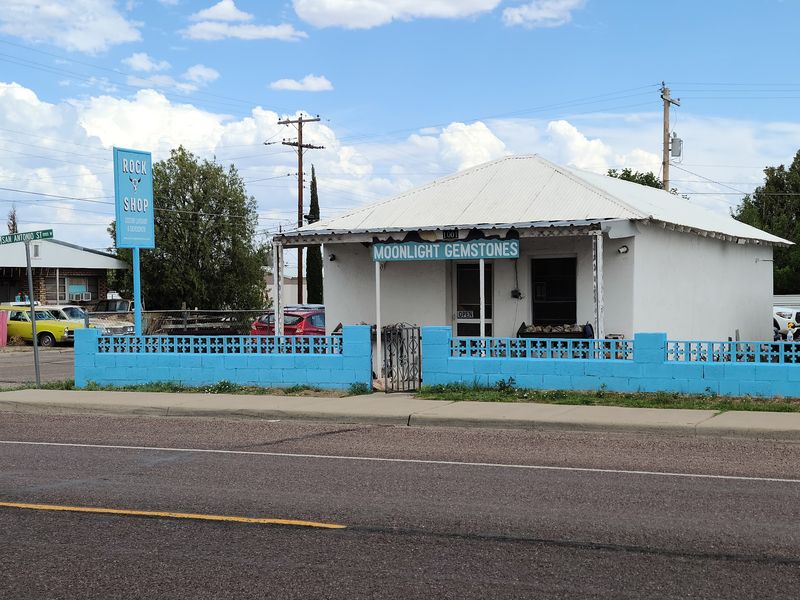
Shopping here has nothing to do with malls. Independent makers set up because the art scene brought curious people, and those people wanted something real to carry home.
Cobra Rock Boot Company builds handmade boots on site. Simple shapes, sturdy leather, made to last years rather than seasons.
Custom orders take time, so ask about the wait.
Moonlight Gemstones sells stones and jewelry pulled from the surrounding region. West Texas geology turns out to be full of agate and quartz, and the stories behind the pieces are half the fun.
The Wrong Store lives up to its name with a collection of curios that resist easy description. Marfa Brands makes soaps you will want to sniff before buying.
Communitie Marfa focuses on hats and apparel.
Esperanza Vintage & Art is worth a slow browse. Curated secondhand clothing hangs beside original artwork, and prices range widely.
The Marfa Store gathers locally made goods under one roof, handy if you are short on time.
Fair warning about hours. Many shops open only Thursday through Sunday, and some close for weeks in the hottest or quietest stretches.
Call or check online before you plan your route.
Cash is welcome at smaller spots, though cards work most places.
What would you actually bring back from a desert town in Texas?
Burritos, Pizza And Garden Menus
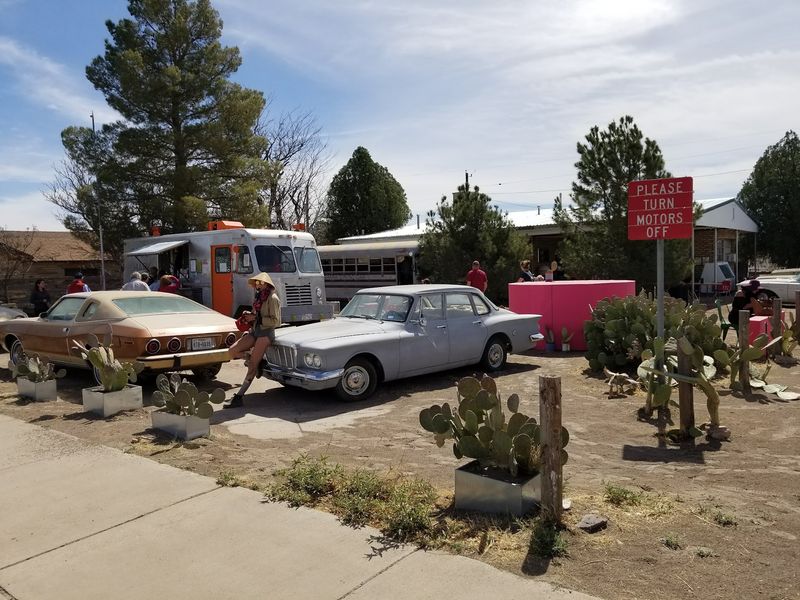
The food here punches far above the population count. Chefs moved out for the quiet and stayed for the freedom to cook whatever they want.
Marfa Burrito is legend. Flour tortillas made fresh, folded around eggs, potatoes, and whatever else you point at.
Order it wrapped in foil and eat it warm at a picnic table.
Cochineal sits at the fancier end, with seasonal menus driven by its own garden. Reservations are smart, since the dining room is small.
For something casual, The Water Stop handles burgers and grain bowls without fuss. Para Llevar fires made-to-order pizzas with proper crust and simple toppings.
Coffee shops and small cafes fill the gaps, and several double as informal meeting spots where you will overhear ranch talk and gallery gossip in the same breath.
Here is the practical part. Restaurant hours in this part of Texas bend to the seasons and the size of the crowd.
Many places run Thursday through Sunday and close early. Always check before you count on a specific meal.
Pack snacks and extra water in the car. Distances between towns out here are long, and options thin out fast after dark.
Vintage Trailers And Movie Star History
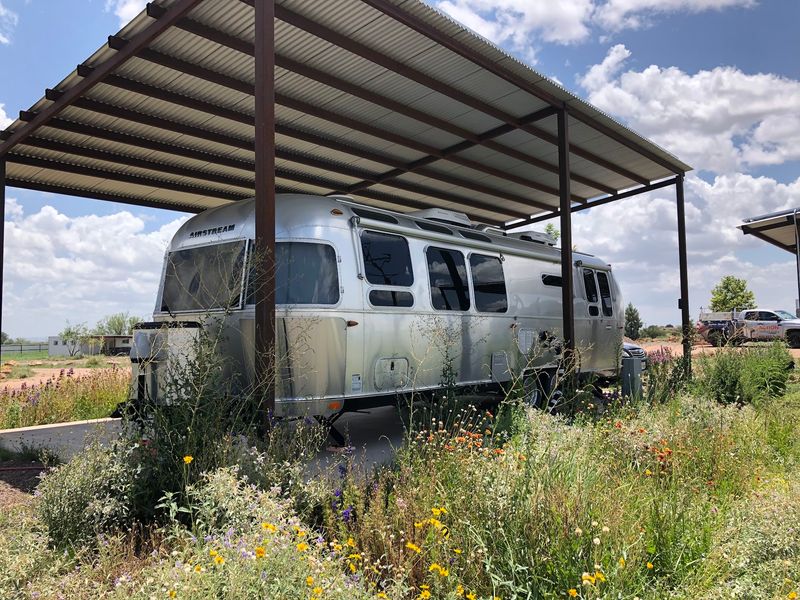
Where you sleep might end up being your favorite memory. El Cosmico spreads restored vintage trailers, yurts, safari tents, and tepees across open desert land.
Hammocks, outdoor tubs, and enormous skies come standard.
Prefer walls and history? Hotel Paisano opened in 1930 and housed the cast and crew of the 1956 film Giant, including James Dean, Elizabeth Taylor, and Rock Hudson.
Old photos line the halls. There is a pool, a restaurant called Jett’s Grill, and a retail gallery.
Hotel Saint George brings a modern, design-forward feel with a bookstore attached. The Lincoln Marfa offers boutique suites around communal courtyards.
Marfa House splits a renovated historic home into apartments and studios.
More choices keep appearing. Thunderbird Hotel, Glampinn Marfa with its tiny homes, and Bohemio with its lodges, pickleball court, and sauna.
Book early. Festival weekends and cooler months fill up quickly in this part of Texas, and there simply are not many rooms.
Use the town as a base for bigger adventures too. Davis Mountains State Park has hiking trails and overlooks, and Big Bend National Park is a scenic drive south.
You will find it all around Marfa, Texas 79843, out where U.S. 90 meets U.S. 67 in Presidio County.
Trailer under the stars or historic hotel suite?