
This Scenic New York Trail Leads Past Waterfalls And Fascinating Abandoned Buildings
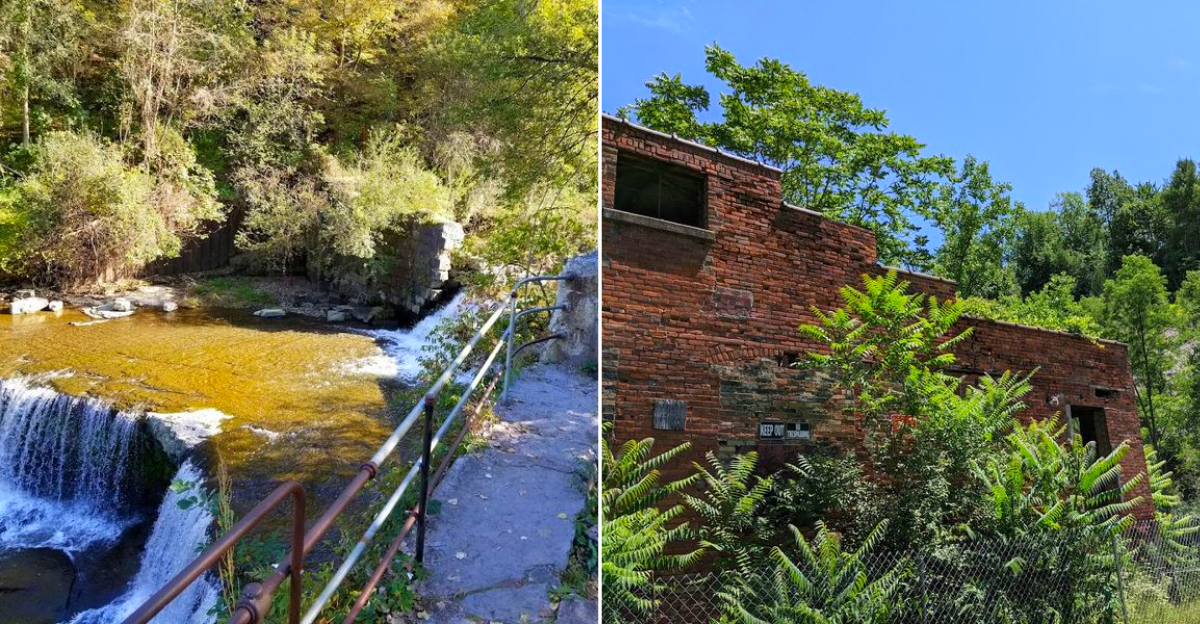
History and nature rarely share the same trail this dramatically. Along this scenic path in New York, the landscape shifts between rushing waterfalls, mossy stone ruins, and abandoned structures that quietly tell stories from another era.
Every step feels like a small discovery waiting around the next bend.
The trail winds through forested terrain where water tumbles over rock ledges and old foundations sit hidden among the trees.
What makes the experience especially memorable is the contrast between natural beauty and the remnants of the past that still linger along the route. It is the kind of hike that feels part outdoor adventure, part time capsule.
Curious which New York trail combines waterfalls with these fascinating abandoned buildings? Keep reading to find out.
A Trail Where History And Nature Share The Same Path
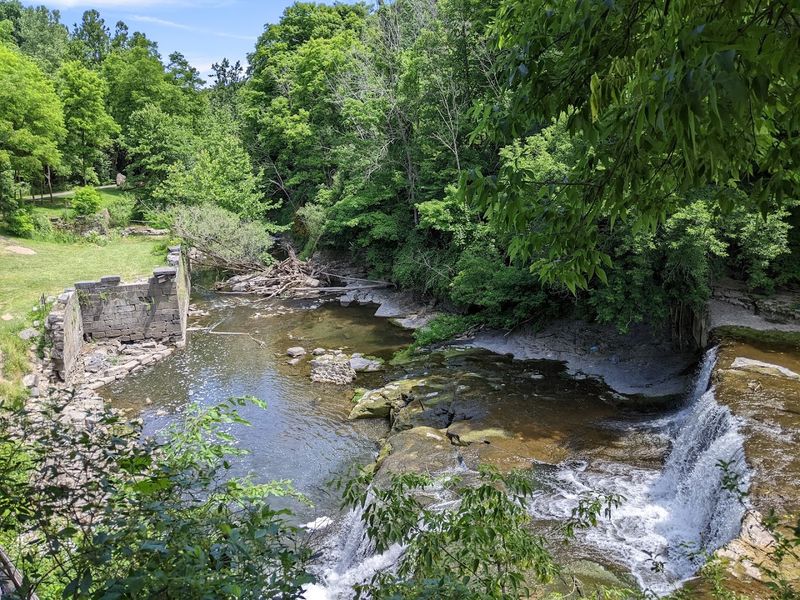
Few trails in New York manage to hold your attention the way this one does, and that is not a small claim in a state full of genuinely remarkable hiking destinations. The Keuka Lake Outlet Trail runs 6.8 miles through a narrow, wooded gorge carved by the outlet stream connecting Keuka Lake to Seneca Lake.
Every mile reveals something worth pausing over, from the sound of rushing water to the sight of stone foundations slowly being reclaimed by moss and roots.
The trail follows two historic routes laid one on top of the other. First came the Crooked Lake Canal, built in the 1830s to move goods between the two lakes.
Then came the Fall Brook Railroad, which replaced the canal in the 1870s and ran freight and passengers through this same corridor for decades.
What makes the experience feel so layered is that neither history has been scrubbed away or dramatized. The ruins simply exist alongside the trees, the water, and the birdsong, letting you piece together the story at your own pace.
The trail is well-maintained and mostly flat, making it accessible to a wide range of hikers without losing any of its depth.
The Crooked Lake Canal And Its Quiet Legacy
Opened in 1833, the Crooked Lake Canal was an ambitious project for its time. It stretched about 21 miles and used a series of locks to lift boats from Seneca Lake up to the level of Keuka Lake, allowing farmers and merchants to move salt, grain, and other goods across the region with far greater ease than overland routes allowed.
The canal was never a massive commercial success, but it served its community faithfully for several decades before the railroad made it obsolete.
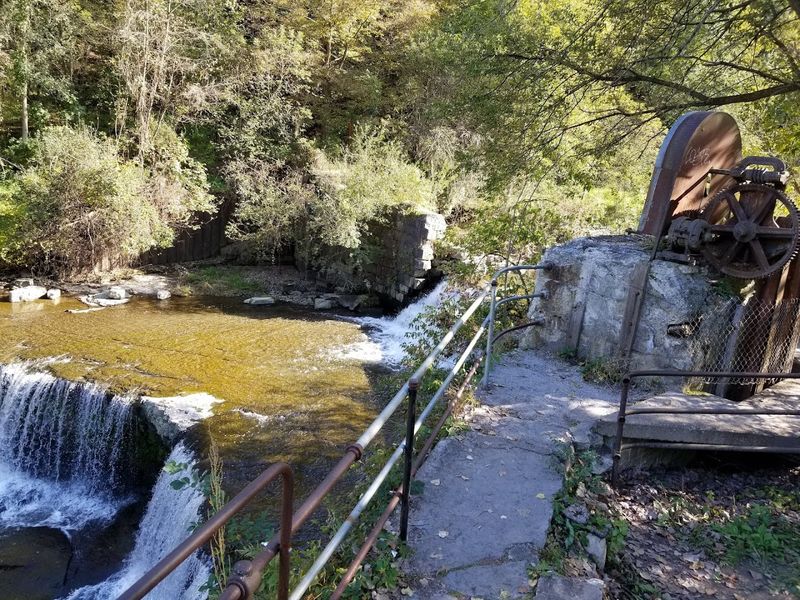
Walking the trail today, you can still spot remnants of the old lock chambers, their dressed stone walls standing at odd angles among the undergrowth. These are not reconstructed displays or interpretive replicas.
They are the actual structures, weathered and worn, waiting quietly for someone to notice them.
Canal history in the United States often gets overshadowed by the fame of the Erie Canal, but smaller waterways like this one were just as vital to the towns they connected. The Crooked Lake Canal helped Penn Yan grow into a real commercial hub during the mid-1800s.
Standing beside one of its old lock walls, you get a genuine sense of how much effort went into building something that the modern world has almost entirely forgotten.
Seneca Mills Falls And The Ruins That Frame It
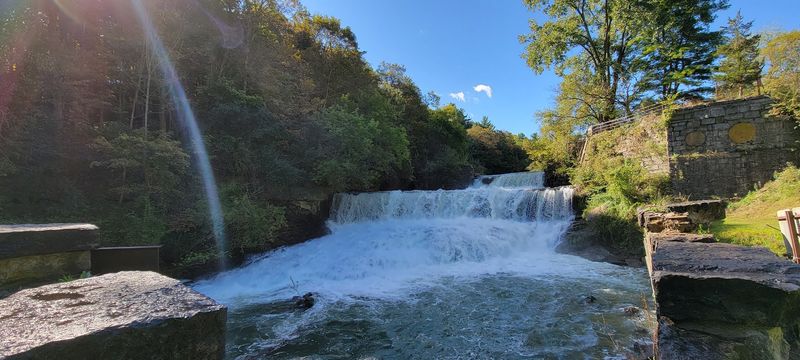
Seneca Mills Falls is one of the most photographed spots along the entire trail, and once you see it, the reason becomes obvious. The waterfall drops with genuine force over a rocky ledge, and the ruins of an old grist mill frame the scene in a way that no landscape architect could have planned better.
The combination of falling water and crumbling stonework creates an atmosphere that feels both energetic and melancholy at the same time.
The mill at Seneca Mills operated during the 1800s, grinding grain brought in by farmers from the surrounding area. When the railroad declined and the local economy shifted, the mill was eventually abandoned and left to the elements.
What remains today is a collection of stone walls, archways, and foundation blocks that have been slowly softened by decades of moisture and plant growth.
Standing at the base of the falls, you can hear the water before you see it, which adds a small but satisfying moment of anticipation to the approach. The ruins sit close enough to the water that the mist occasionally drifts across the old stonework, giving everything a slightly dreamlike quality without any need for exaggeration.
This spot alone justifies the drive to Penn Yan.
Cascade Mills Falls And The Second Act Of Wonder
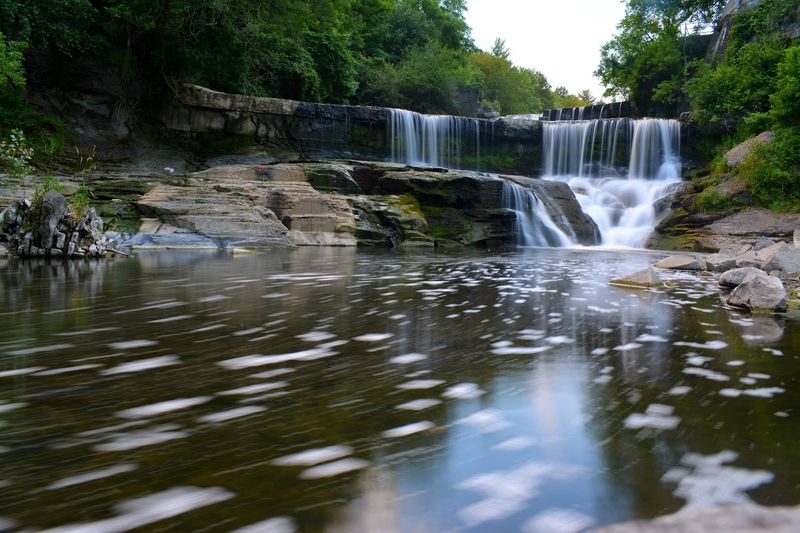
Just when the trail starts to feel familiar, Cascade Mills Falls arrives to reset your expectations entirely. Located further along the outlet, this waterfall has a different character from Seneca Mills Falls, cascading in a more layered, spreading pattern that catches light differently depending on the time of day and season.
The ruins here tell a parallel story of industrial ambition and eventual abandonment, with stone remnants scattered across the slope like a slow-motion collapse caught mid-frame.
The mill complex at Cascade Mills was also active during the 19th century, processing grain and taking advantage of the reliable water flow from the outlet stream.
The site changed hands several times over the decades before eventually falling silent, leaving behind the kind of structural fragments that archaeologists and curious hikers both find irresistible.
What sets this stop apart from a typical waterfall overlook is the way the ruins and the water interact visually. Old stone channels and retaining walls direct the eye from the cascade down through the remains of the mill works, creating a natural flow that connects the human-made and the geological.
Bringing a camera here is almost mandatory, though no photograph quite captures the full sensory experience of standing in that spot and listening to the water find its way through the old stonework.
The Fall Brook Railroad And The Iron Age It Carried
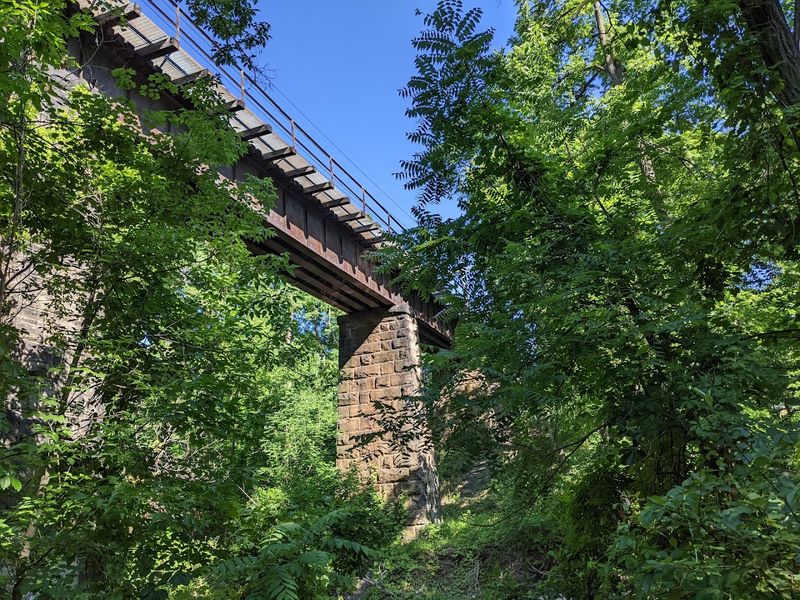
By the 1870s, the canal era was drawing to a close across much of New York State, and the Fall Brook Railroad moved into the outlet corridor with the confidence of a technology that knew it had won.
The railroad carried coal southward from the mines of Pennsylvania and shipped local agricultural products northward, threading through the same narrow gorge that the canal had used for decades.
At its peak, the line was a reliable and well-used route through a part of the state that valued connectivity above almost everything else.
The railroad ceased operations in the 20th century, and the right-of-way was eventually converted into the trail that hikers use today.
This kind of rail-to-trail conversion is common across the United States, but the Keuka Lake Outlet corridor is particularly well-suited for it because the original railroad grade was almost completely flat, following the natural slope of the outlet stream from lake to lake.
Hikers who pay attention to the ground underfoot will notice the subtle signs of the old rail bed, including the slightly elevated, well-drained surface that distinguishes a former railroad corridor from a naturally formed path.
The trail is roughly 6.8 miles long and runs between Penn Yan and Dresden, New York 14527, making it easy to plan a point-to-point hike with a car shuttle or a simple out-and-back walk.
Wildlife, Seasons, And The Living Landscape
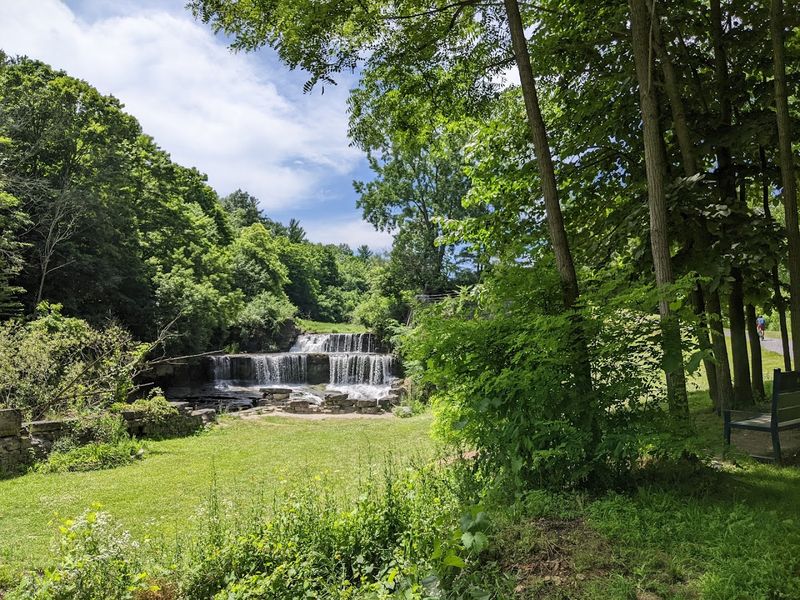
The Keuka Lake Outlet Trail is not only a history lesson on foot. The natural environment along the corridor is genuinely rich, supporting a variety of bird species, aquatic life, and forest vegetation that changes noticeably with the seasons.
Great blue herons are commonly spotted standing motionless in the shallows of the outlet stream, and wood ducks, kingfishers, and various warblers make regular appearances for those who move quietly and keep their eyes up.
Spring brings a surge of wildflowers along the banks, and the water runs high and fast with snowmelt, giving the waterfalls extra drama during that season. Summer settles the trail into a green, shaded corridor that stays cooler than the surrounding farmland, which makes it a welcome escape during hot afternoons.
Fall transforms the entire gorge with color, turning the canopy into a mix of amber, orange, and deep red that reflects off the surface of the outlet below.
Winter is the most overlooked season on this trail, but it has its own rewards. The waterfalls slow to thin curtains of water or freeze entirely at their edges, and the bare trees open up long sightlines through the gorge that summer foliage completely conceals.
Each season offers a different version of the same path, which means returning visitors rarely feel like they are walking the same trail twice.
Planning Your Visit To Penn Yan And Dresden
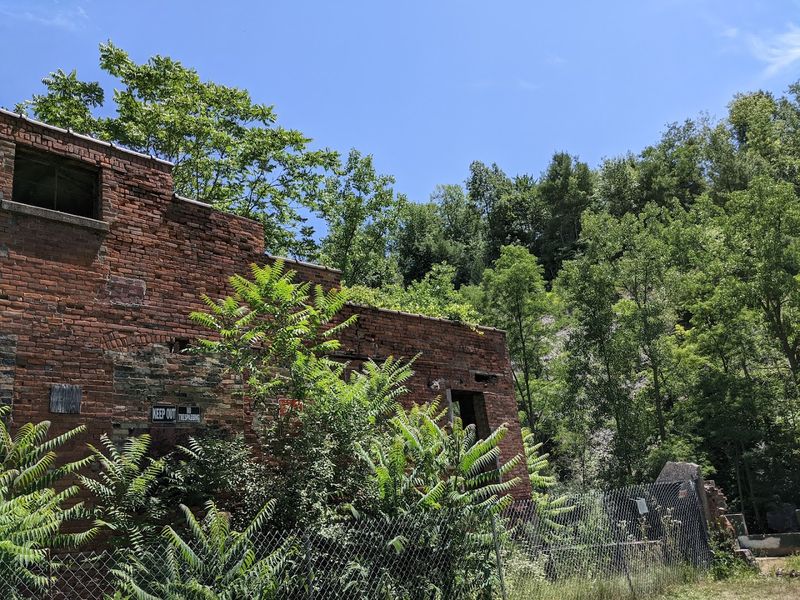
Getting to the Keuka Lake Outlet Trail is straightforward for anyone coming from the major population centers of upstate New York. Penn Yan, the northern terminus, sits in Yates County and is accessible via Route 14A.
The southern end of the trail terminates in Dresden, a small hamlet near the shores of Seneca Lake. Most hikers begin at the Penn Yan end, where parking and trailhead facilities are more developed, though starting from Dresden and walking north works equally well depending on your preference.
The trail is open year-round and free to access, which makes it an attractive option for families, solo hikers, and anyone looking for a full day of exploration without a significant expense.
Trail shoes or light hiking boots are sufficient for most of the route, though the surface can become muddy after heavy rain, particularly near the waterfall areas where the ground stays damp.
Bringing water, a snack, and a camera is the standard advice, but the more useful tip is to allow more time than you think you need. Most people underestimate how often they will stop, not because the trail is difficult, but because there is always something worth looking at a little longer.
The ruins, the water, and the general atmosphere of the place have a way of slowing your pace in the best possible sense.