
This Scenic Tennessee Park Shows Off Some Of The State’s Best Natural Beauty
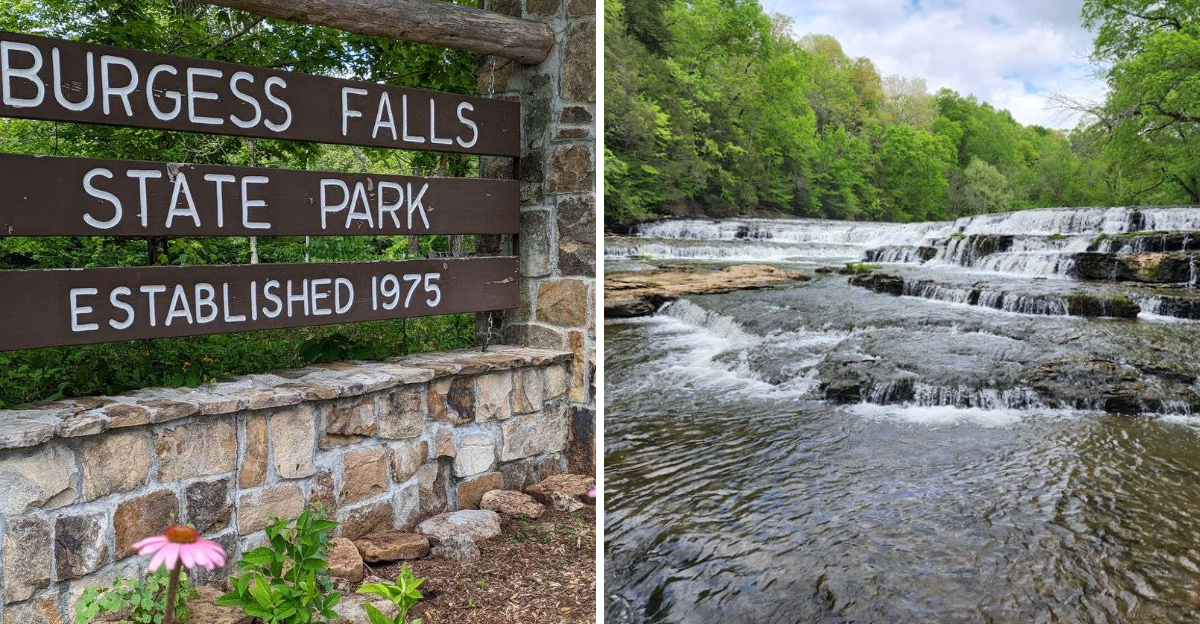
Some places manage to quiet your thoughts the moment you step onto the trail, and this park does exactly that. Water echoes through the trees, mist hangs lightly in the air, and every turn brings another view that makes you slow your pace without realizing.
Burgess Falls State Park feels dramatic and calming all at once, mixing rugged cliffs, flowing water, and shady paths that invite wandering. The sound of cascading falls becomes a steady companion as the scenery unfolds in layers, each more striking than the last.
A visit to Burgess Falls State Park, at 4000 Burgess Falls Dr, Sparta, TN 38583, delivers a refreshing reminder of just how beautiful Tennessee’s natural landscapes can be.
Riverside Approach And First Impressions
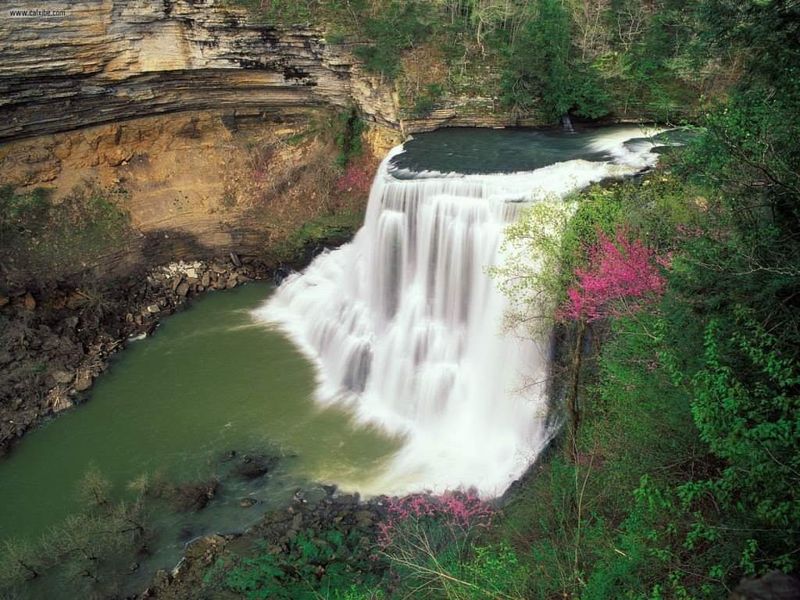
The first stretch along the Falling Water River makes an honest introduction, with water sliding past roots and stones like a practiced host. Sunlight threads through sycamore and tulip poplar, scattering small coins of brightness across the path.
You notice the soil first, dark and well trodden, then the limestone, pale as old paper and just as textured.
Here, the park sets a steady rhythm that encourages an unhurried pace. Birdsong arrives in layers, and a light breeze carries the faint scent of damp rock.
Wayfinding feels straightforward, and the river keeps you oriented without fuss.
Close to the bank, minnows pivot in tight choreography, and leaves sometimes skim the water like absentminded notes. Conversation drops to a murmur because the current does the talking.
Nothing monumental yet, only the patience of a river doing what it has always done.
As you walk, steps lengthen naturally and the path clarifies your purpose. Small overlooks appear like reminders that a larger view is coming.
You begin to sense elevation changes ahead, the faint hum of distant water growing rounder and more insistent.
Tracing The Cascades To The Big Reveal
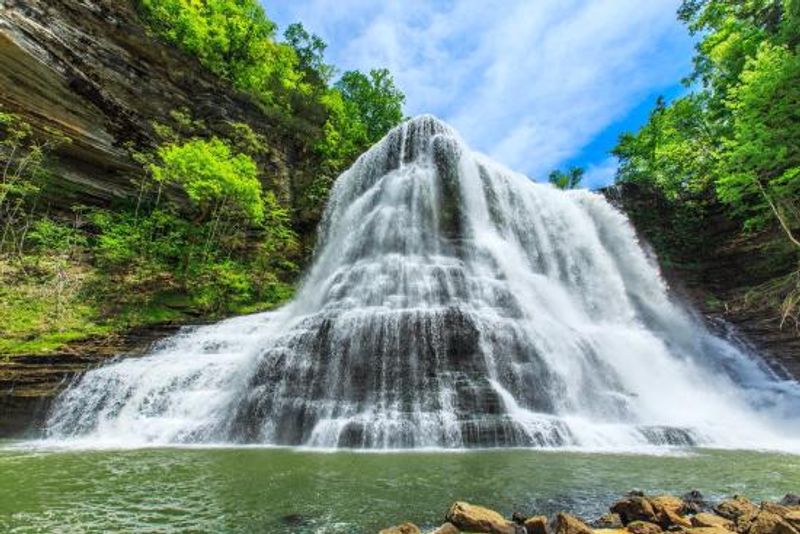
The trail builds anticipation through a sequence of smaller falls that act like chapter headings. Water folds over shelves of limestone, gathering voice as it descends.
Each cascade leaves a little mist on the air, and the footing asks for attention without demanding worry.
Benches appear at useful intervals, letting you pause before the final reveal. Overlooks are sturdy, thoughtfully placed, and angled to frame the water rather than compete with it.
Railings give confidence while you lean into the sound.
As the grade steepens, the river condenses into a single intent. The path edges closer to the gorge rim, and the roar takes on a steady cadence you feel through the boards.
People tend to slow down here, not out of fatigue, but to stretch out the moment.
The big falls waits like a patient teacher, allowing every smaller drop to make its case first. When you arrive, the scale becomes a quiet fact rather than a stunt.
The journey writes the ending, and the water signs it with a flourish.
The Overlook With The Thundering View
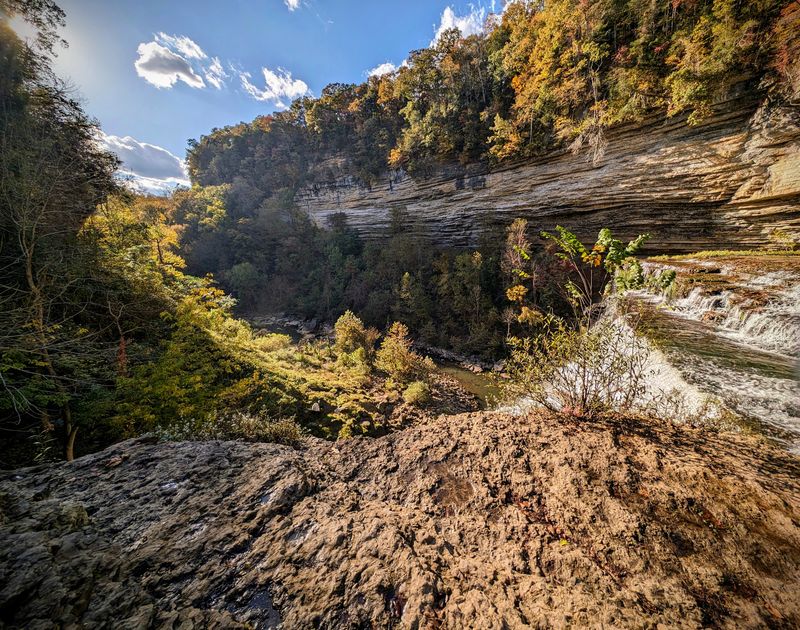
The principal overlook sits exactly where your curiosity peaks, then answers with abundant detail. A sheet of water throws itself clear of the lip and breaks into a muscular curtain.
Mist rises like a polite interruption, cooling faces and camera lenses alike.
Angles make all the difference, and this platform offers several. Step left for the clean drop, step right for the long tongue of river feeding it.
Planks underfoot feel sound and recently maintained, which lets your focus stay on the gorge.
During higher water, the falls broadens and thickens, changing voice and posture. Lower flow reveals rock architecture, showing ledges that act like ribs under the current.
Either way, the scene refuses to feel repetitive.
Photographers wait out passing clouds to balance exposure, while casual visitors lean on the rail and simply listen. The sound lands in the chest more than the ears.
After a few minutes, you find yourself speaking softly, as if the place deserves a library tone.
Limestone, Time, And The Shape Of Water
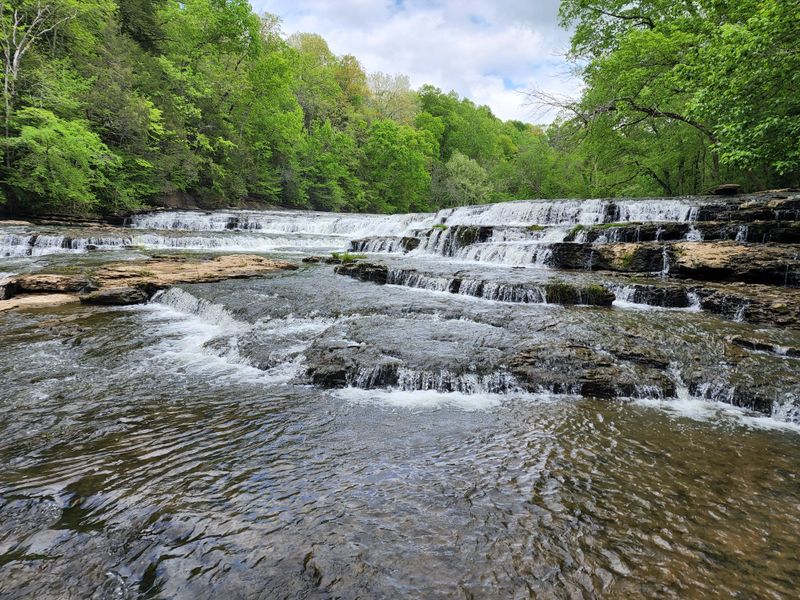
Rocks here read like slow literature, each layer holding a long sentence about ancient seas. Limestone steps and shelves, pocked by solution channels, give the river its choreography.
You see scalloped edges where water has written in cursive for millennia.
Karst terrain shows in small sinkholes nearby, and springs slip from the bluff with no fanfare. Fallen leaves find pockets and make temporary mosaics.
Moss and liverwort hold their green even on thin margins.
A hand placed on the stone feels the day’s temperature in reverse, cool where the air is warm. Tiny fossils sometimes present themselves, quiet proofs of older lives.
The rock does not grandstand, it just endures and shapes the line of travel.
With patience, patterns emerge that change how you watch the falls. Rather than spectacle alone, you start seeing cause and effect.
Water carves the channel, the channel answers back, and the park becomes a conversation.
Birdsong, Canopy, And A Moving Breeze
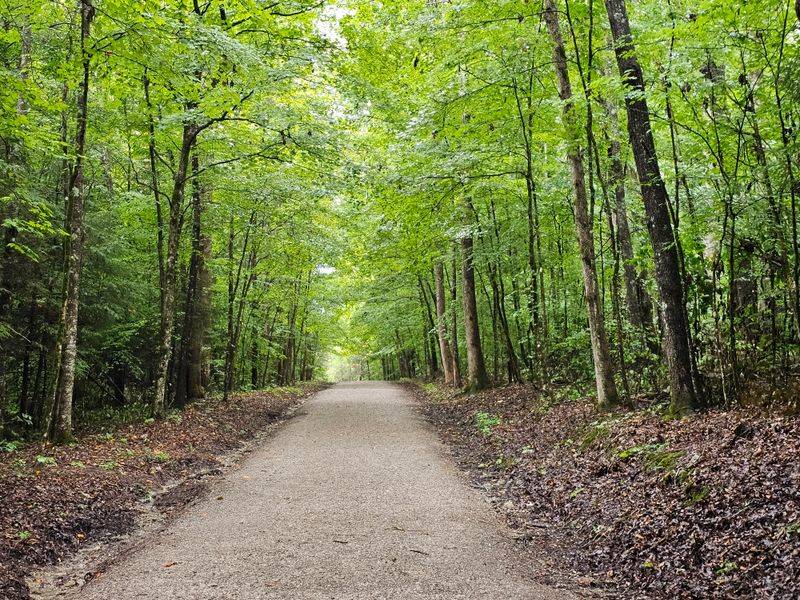
Forests at Burgess Falls keep their own calendar, and the canopy narrates it with steady poise. Spring brings warblers like bright commas in the trees, while autumn trades color for clarity.
Throughout, a breeze moves the leaves with a small, convincing hush.
Listen closely and you will pick out chickadee chatter, the distant tap of a woodpecker, and the brief hush when a hawk passes overhead. Trails run under oak, hickory, and beech, with understory spicebush lending a soft citrus note when brushed.
Even casual observers can assemble a satisfying checklist.
Midday quiet encourages unhurried looking, and morning light sharpens edges without harshness. Binoculars help, but patience helps more.
Squirrels provide comic relief, scolding everything and nothing with equal vigor.
By late afternoon, shadows lengthen and the river voice returns to the foreground. Birds settle, and the forest trades chatter for gentle rustle.
You leave with a soundscape still playing, the kind that follows you back to the car.
A Trail System Built For Steady Discovery
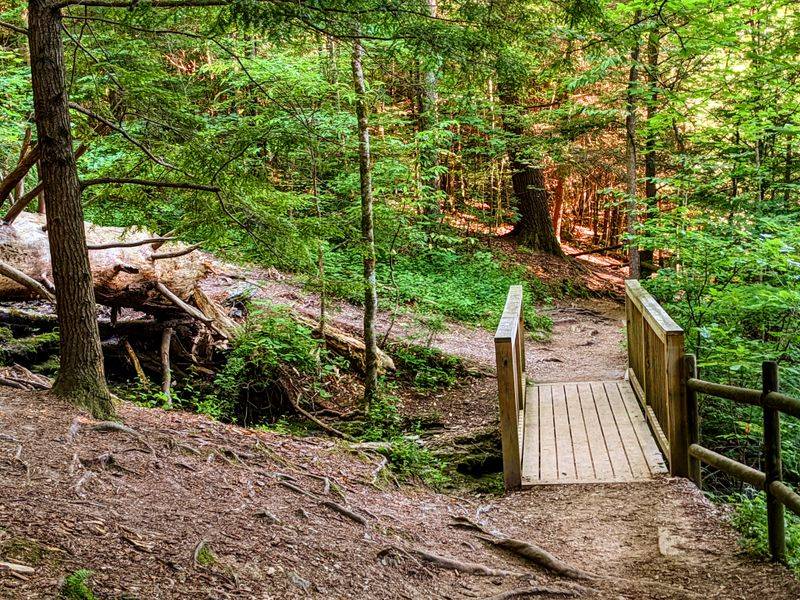
Trails here favor sensible gradients and clear signage, encouraging confidence for a wide range of visitors. Surfaces vary from packed dirt to boardwalk and steps, with railings where the gorge tightens.
Wayfinding maps are placed where questions tend to arise.
Distance feels manageable, and the route between overlooks keeps motivation high. Intersections are intuitive, with markers that avoid clutter.
Mud in wetter months is real but navigable with decent footwear.
Pacing works because the park breaks the journey into small wins. A bend grants a view, a stair run closes the gap, and a bench provides a pause that does not break momentum.
Families, photographers, and solo walkers mix without friction.
Etiquette holds well on busy days, with natural passing zones and patient exchanges. You can settle into a sustainable rhythm that leaves space for observation.
The trail design seems to trust visitors, and that trust is returned.
Seasons That Recolor The Same Story
Seasons rotate through Burgess Falls like careful editors, reshaping tone but preserving meaning. Spring wakes the understory with phlox and trillium while river levels often rise, lending vigor to the plunge.
Summer brings full shade and a slower, more deliberate flow.
Autumn converts the gorge to an album of ochre and rust, each gust sending a new page across the path. Overlooks feel warmer in hue even when the air turns crisp.
Winter strips the scene to structure, making the rockwork read clearly.
Photographers talk about dynamic range, but regular eyes manage fine with patience. The falls wears each season differently, always recognizable, never repetitious.
Footing changes with weather, so boots and expectations adjust accordingly.
Returning at different times rewards attention rather than novelty hunting. You recognize a familiar bend, then notice a new detail beside it.
The park stays itself while finding fresh ways to be seen.
Quiet Corners And Unhurried Lunches
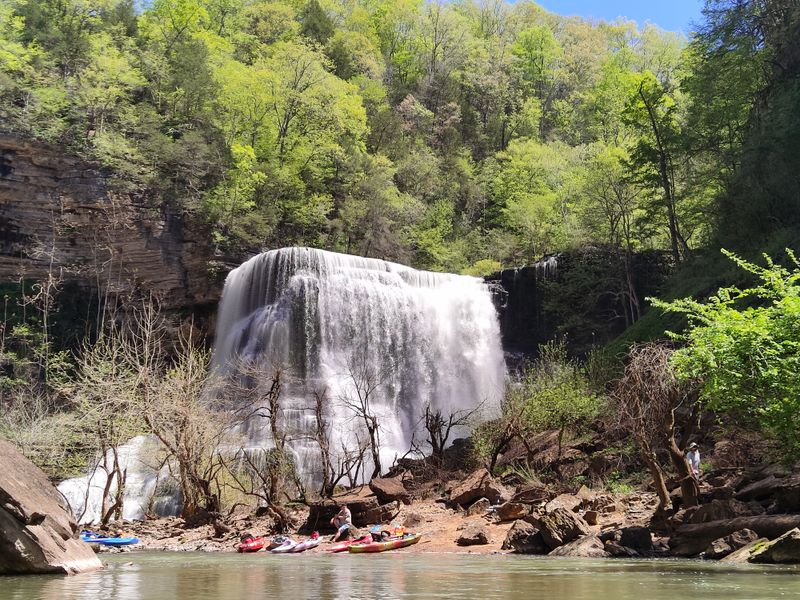
Picnic spots settle under generous shade, close enough to the river to borrow its calm. Tables sit level, and ground space invites a blanket when seats are full.
The air carries a faint mineral edge that pairs nicely with simple food.
Conversations soften in these corners because the park does the heavy lifting. A woodpecker occasionally supplies percussion, and children tend to wander toward the water with safe curiosity.
Litter is rare, thanks to steady stewardship and mindful visitors.
Unhurried lunches suit this place, where time feels politely stretched. A thermos, a sandwich, and a shared apple turn into quiet ceremony.
You end up eating slower than usual without noticing.
When you rise, the body feels ready for another easy mile. The mind, meanwhile, has already cleared some space.
Good parks accomplish that without making a speech about it.
History Etched In Water And Work
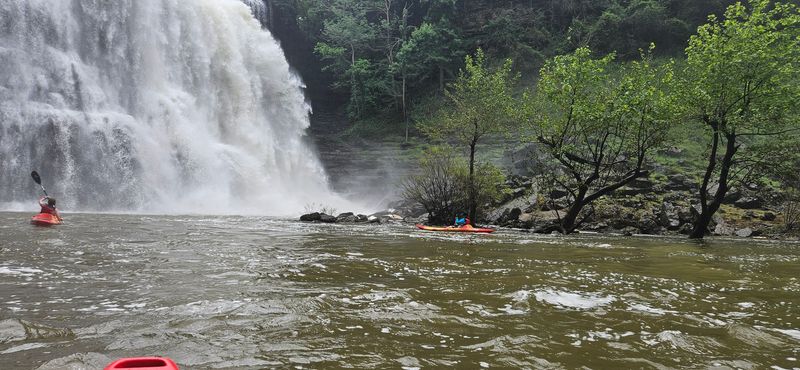
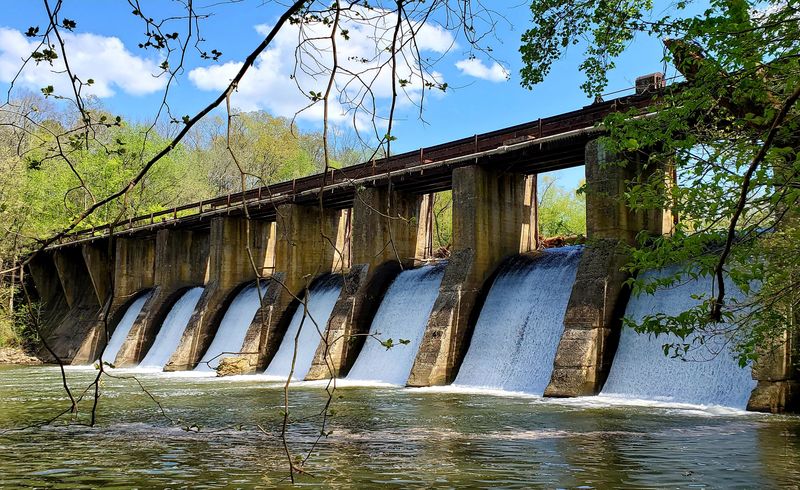
History shows up in quiet ways along the river corridor, where industry once borrowed the current’s muscle. Remnants of old works and interpretive signs sketch a chapter of mills and power generation.
The place remembers without dwelling, letting nature lead the present tense.
Reading a plaque can change how you hear the falls, which once served more than scenery. Water became labor, then labor moved on, and the river kept its appointment with the gorge.
Respect grows for the people who mapped utility onto a stubborn landscape.
Stonework hides under moss, and straight lines appear where only rock should be. These hints tighten the link between past and present without demanding sentimentality.
The park handles the story with balance, neither romantic nor dismissive.
Afterward, each view feels a shade deeper because context has stepped into frame. Beauty stands on its own, and meaning sits beside it.
That partnership is one reason the return walk feels richer.
Practical Calm For A Well Planned Visit
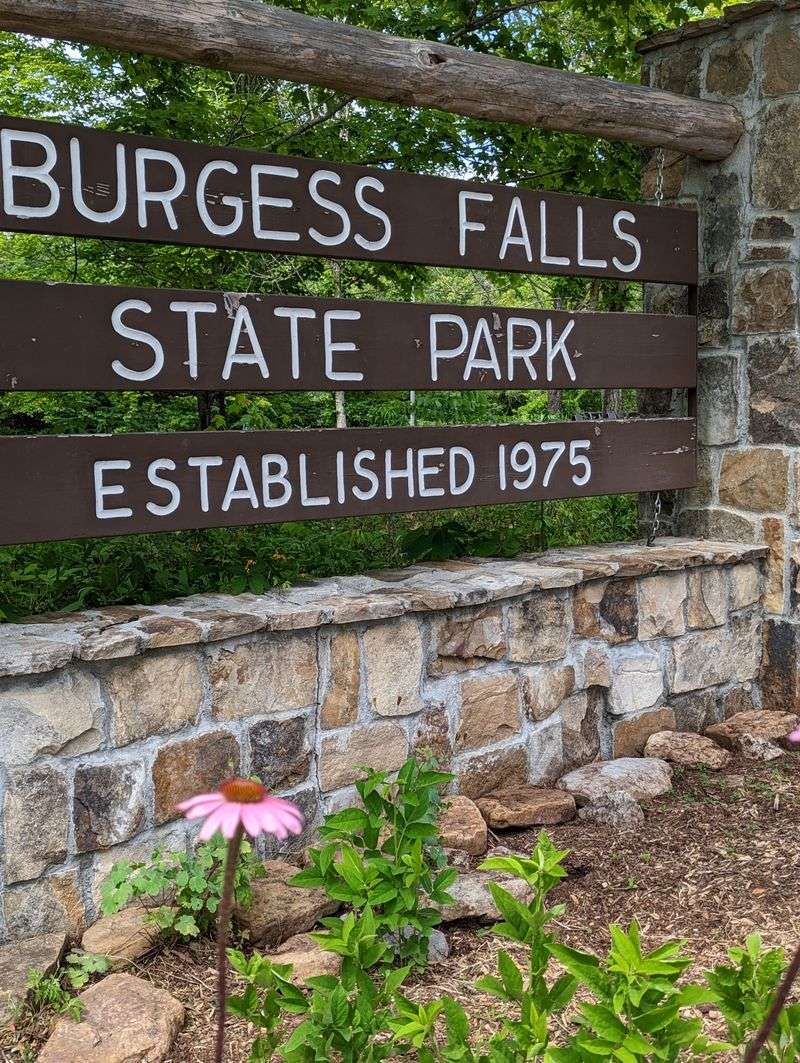
Planning a visit rewards you with more time on the overlooks and less time wondering what comes next. Parking fills on fair weekends, so earlier starts leave room for a leisurely pace.
Restrooms and kiosks cluster near trailheads, keeping logistics tidy.
Footwear with grip pays off on damp days, and a light layer helps near the mist. Water bottles stay handy because the trail invites an extra detour.
Cameras travel well here, but pockets for the quiet moments matter just as much.
Cell service can be patchy, which turns into a small gift once you accept it. Offline maps and a patient sense of direction handle the rest.
Courtesy on narrow sections keeps the day smooth for everyone.
After a few hours, the park’s rhythm gets into your steps and conversations. Leaving feels deliberate rather than abrupt, as if the visit had a proper closing.
That feeling stays with you longer than any snapshot.