
This Secret New York Town In The Adirondack Mountains Is Missed By Most Summer Visitors
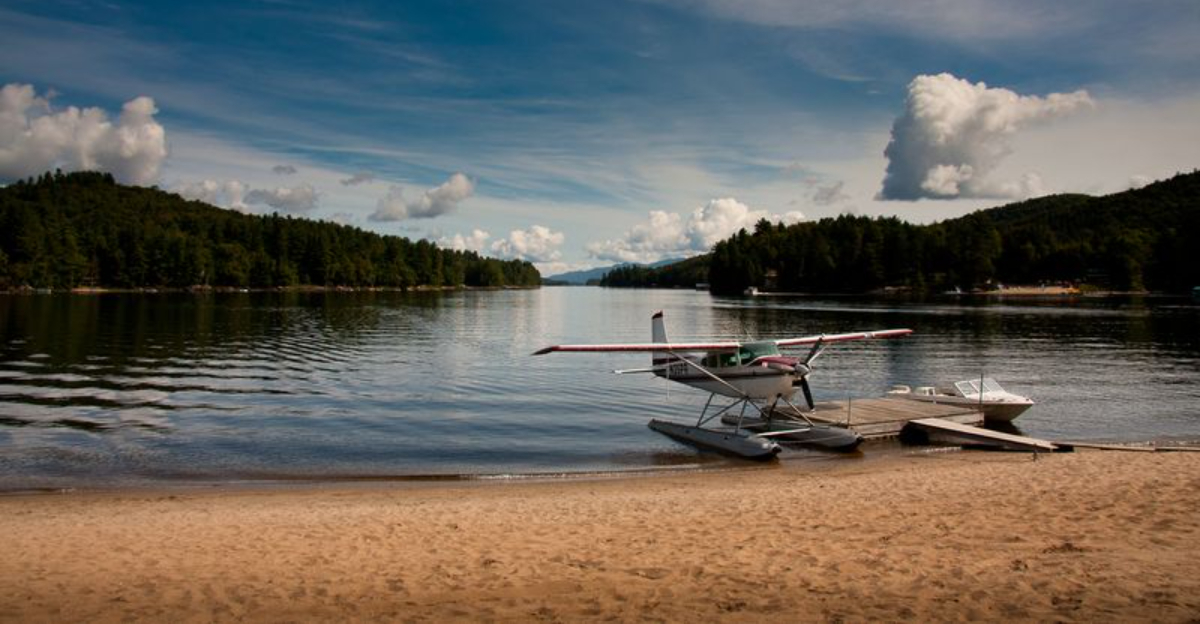
A fourteen-mile stretch of glassy water carves through the Adirondack Mountains in New York, and most summer crowds drive straight past it.
Wooden boats were invented right here, light enough to carry on one shoulder through deep wilderness.
Mist lifts off the water most mornings, and paddlers glide past coves where herons wait for breakfast.
A waterfall tumbles over dark rock steps from the parking lot, and seaplanes lift off the water on clear mornings.
Mountain towns crowd this part of the country, yet this one still feels wonderfully overlooked. A general store here grows an actual tree through its roof.
Curious where those wooden boats first hit the water? A trip through this corner of New York deserves real time on the calendar.
A Fourteen Mile Ribbon Of Water At The Center Of Everything
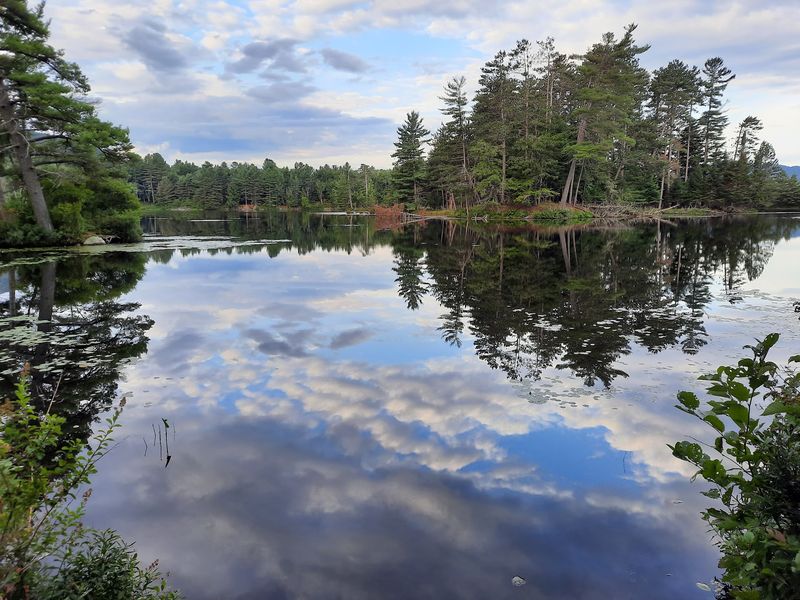
The lake is not really a lake at all. It is the Raquette River, spread wide across a valley floor in the Adirondacks.
That river keeps flowing north toward the St. Lawrence, which gives Long Lake its unusual long and narrow shape. Fourteen miles of water, and more than half the shoreline sits inside the New York State Forest Preserve.
Protection like that changes what a visitor sees. Instead of wall-to-wall docks and lawns, there are stretches of pine, spruce, and rock that look much as they always have.
Paddlers use the water as a highway. Motorboats share it too, though the far ends stay noticeably quieter.
Morning is the magic window here. Mist lifts off the surface, the water goes glassy, and sound carries a long way across it.
The town itself is easy to find in Long Lake, NY 12847, right where the bridge crosses the narrows. Park once and most of the good stuff sits within walking distance.
Anyone chasing calm water and open sky will understand the appeal within about five minutes of arriving.
The Birthplace Of The Adirondack Guideboat
Long before kayaks existed, locals needed a boat that could carry gear, glide fast, and be lifted onto one shoulder. They built it here.
Long Lake is recognized as the birthplace of the Adirondack guideboat, a slim wooden craft with ribs cut from spruce roots. Guides rowed clients, supplies, and fish across these waters in them for generations.
Permanent settlement in the area traces back to roughly 1833, and the town was formally incorporated in 1837. Early years were lean, and residents often juggled several civic jobs at once because there simply were not enough people to go around.
That scrappy history still shapes the town’s personality. Self-reliance shows up in the way things are built, fixed, and kept running.
Visitors sometimes spot a guideboat on the water, oars flashing in a rhythm that has barely changed in a century.
It is a small detail, but it explains a lot about why this corner of the Adirondacks feels different.
Craftsmanship here was never decorative. It was survival, and it floated beautifully.
Swim, Paddle, Cast, Repeat
Water dominates the summer schedule, and nobody complains.
Sandy beach access makes swimming simple, and the Adirondack water stays refreshingly cool even in July. Kids tend to stay in far longer than the adults do.
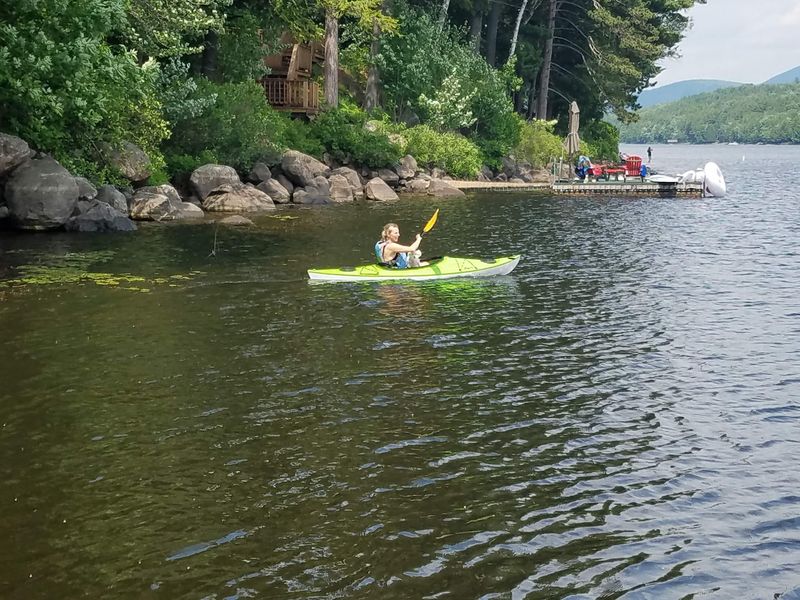
Paddling is the headline activity. Canoes, kayaks, and stand-up paddleboards all work well on Long Lake, and the length of the water means a route for every energy level.
Rentals and launch spots sit near the town center, which keeps logistics easy for first-timers.
Fishing holds steady as a local tradition. Early mornings and evenings usually reward patience more than midday sun does.
Campers get a real treat. Lean-tos and primitive campsites line portions of the shoreline, reachable mostly by boat, and they turn a day trip into a proper overnight adventure.
Those sites are first-come in most cases, so flexibility matters during peak weeks.
Wind can pick up across open stretches, so paddlers should check conditions and hug the shore when the surface turns choppy.
Pack a dry bag, a hat, and more snacks than seem necessary.
Buttermilk Falls Rewards Almost No Effort
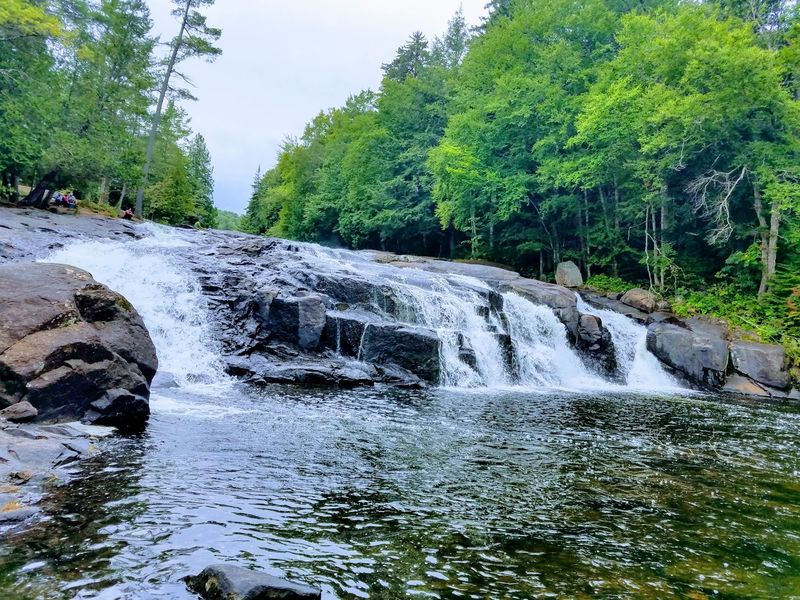
Some waterfalls demand a sweaty four-hour climb. Buttermilk Falls does not.
A short walk from the parking area near Long Lake leads to a wide cascade tumbling over ledges of dark rock. The sound arrives before the view does.
Picnickers love the spot because flat rocks sit close to the water and the shade stays generous. Photographers show up for the same reason.
Footing gets slick near the edges, especially after rain, so sturdy shoes beat flip-flops every time. Kids should stay within arm’s reach.
The falls sit on the Raquette River, the same water that widens into the lake itself, which ties the whole landscape together neatly.
Mornings are usually the calmest time to visit. Weekend afternoons bring more cars to the small lot.
Beyond the falls, hiking around the region ranges from flat lakeside strolls to routes that open toward the High Peaks Wilderness. Trail conditions vary by season, so checking recent reports is smart.
Few places in New York deliver this much scenery for so few steps.
Seaplanes Turn The Adirondacks Into A Map
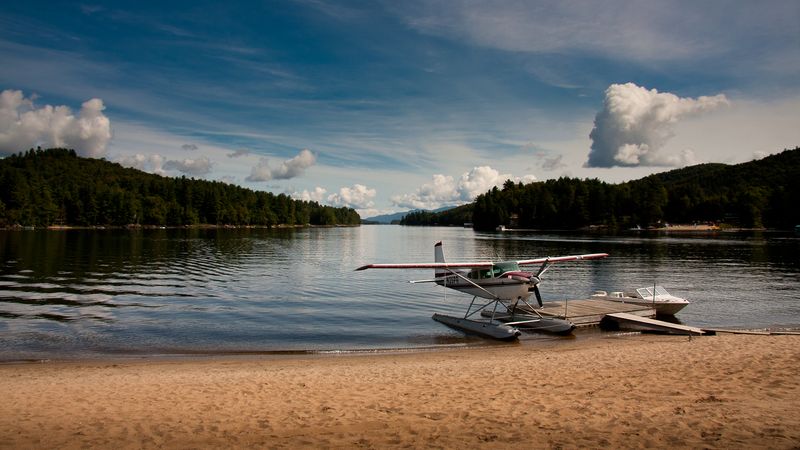
Look up on a clear morning and a floatplane will likely be climbing off the water.
Seaplane tours operate from Long Lake, and they change how the region reads. Ponds, rivers, and ridgelines that felt endless from ground level suddenly connect into one enormous green puzzle.
Flights are short, and the takeoff itself is half the fun. Water spray, engine roar, then a smooth lift into quiet air.
Autumn brings the most dramatic color, though summer offers deep green forest and sharp blue water that photograph beautifully.
Weather rules everything. Wind and low cloud can delay or cancel flights, so building a flexible window into the trip helps.
Booking ahead during busy stretches is wise, since capacity is limited by aircraft size.
The dock area is worth a visit even without a ticket. Watching planes land on the lake is free entertainment, and the pilots handle it with casual precision.
Few experiences explain the scale of the Adirondack Park this quickly.
Motion-sensitive travelers should eat light beforehand.
A General Store With A Tree Inside It
Yes, there is a tree growing right through the middle of the building.
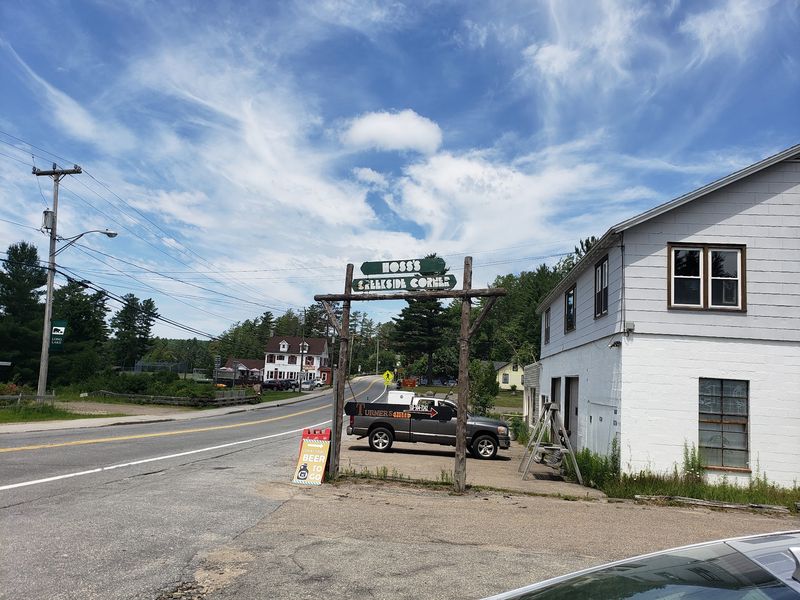
Hoss’s Country Corner has anchored the town for more than five decades, and it functions as store, meeting spot, and unofficial visitor center rolled into one. Locals grab supplies.
Travelers wander the aisles longer than planned.
Shelves hold clothing, books, camping gear, local goods, and the sort of odds and ends that campgrounds always seem to require at inconvenient hours.
The wooden floors creak in a satisfying way. The staff answer questions about trails and water conditions without making anyone feel like a tourist.
Stores like this used to be everywhere in the Adirondacks. Most are gone, which makes this one feel important rather than merely charming.
Souvenir hunters do well here, particularly anyone after something made regionally instead of imported.
It also serves as a useful landmark when giving directions around town, since almost everyone knows where it stands.
Stop in even if nothing is needed. Something always ends up in the basket anyway.
Gilded Age Camps Hiding In The Woods
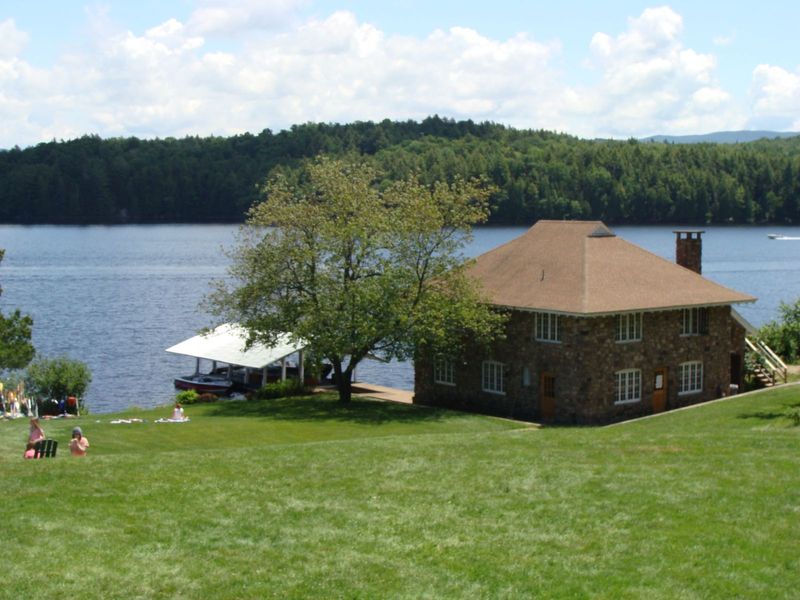
Wealthy families once treated this wilderness as a private retreat, and they built accordingly.
The Great Camps of the Adirondacks went up during the Gilded Age, combining log construction with surprising luxury. Great Camp Sagamore, a National Historic Landmark near the Long Lake region, once belonged to the Vanderbilt family.
Today it operates as a retreat and educational center, and guided tours walk visitors through the buildings and the era that produced them.
Architecture fans notice the details first. Bark siding, massive stone fireplaces, and rustic woodwork that took enormous skill to assemble.
Tour availability shifts by season, so confirming ahead avoids a wasted drive.
What sticks with most visitors is the contrast. Extravagant living, dropped into deep forest, reachable only by long carriage rides at the time.
These camps shaped how people imagine the Adirondacks even now, from lodge design to the whole idea of a rustic getaway.
Pair a tour with a lake afternoon and the day balances nicely between history and fresh air.
The woods keep their secrets well.
Small Town Culture With Music On The Beach
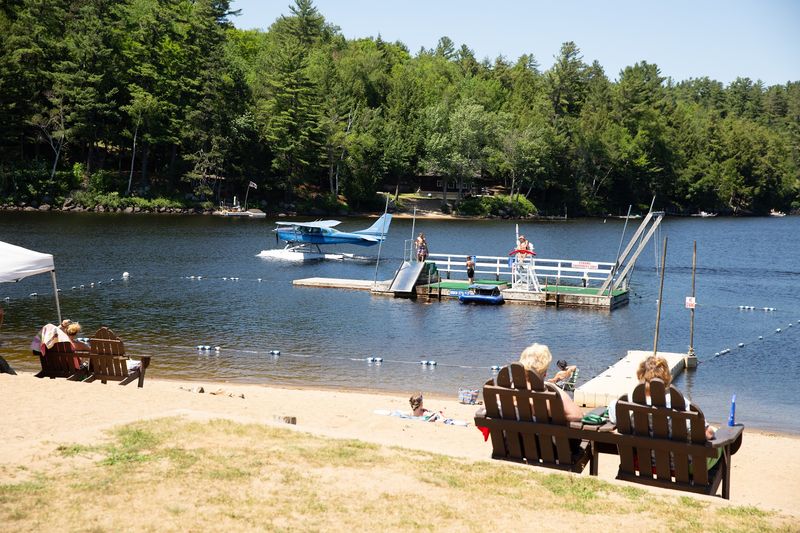
Summer evenings here come with a soundtrack.
Live music plays at the town beach in Long Lake during the warm months, and families spread blankets on the sand while the sun drops behind the ridges. Nobody dresses up.
Nobody needs to.
A farmers market brings local vendors together with fresh produce and handmade goods, and it doubles as a place to hear what is happening around town.
Shops and small eateries stock regional specialties and craft items, which supports the makers who actually live in the area.
Community events tend to be modest in scale and generous in spirit. Visitors get folded into the crowd quickly.
Schedules change year to year, so checking current listings before arriving is the practical move.
Bringing a folding chair is smart. Bug spray is smarter, especially in early summer.
Culture in this part of New York is not curated for tourists. It simply happens, and outsiders are welcome to pull up a seat.
That informality is exactly why people return.
Landmarks That Give The Town Its Face
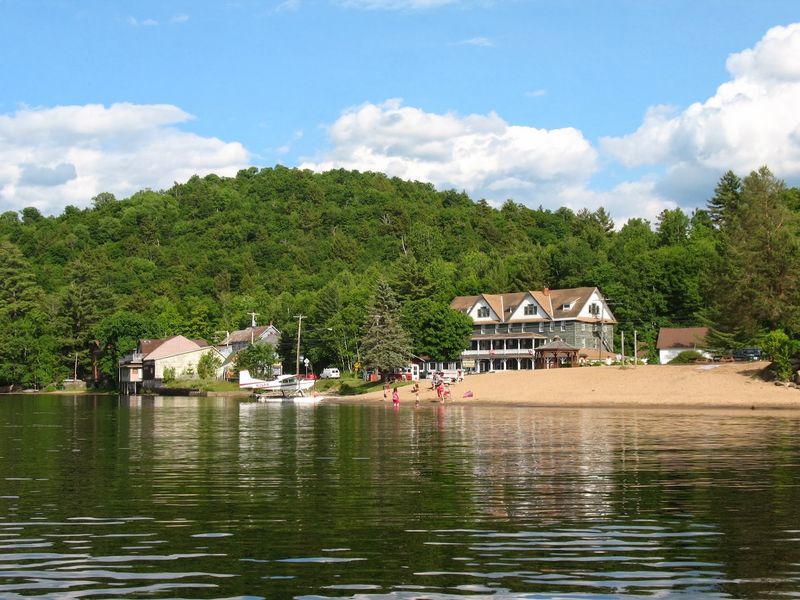
Two buildings do most of the heavy lifting for the town’s identity.
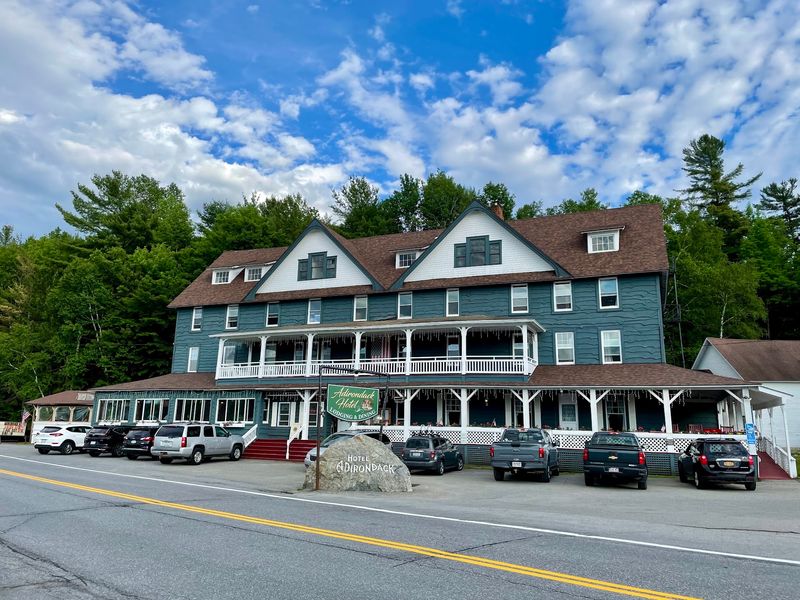
The Adirondack Hotel stands at the center of Long Lake, originally constructed in the 1850s and facing the public beach directly. Its porch has watched a lot of history roll past.
Down the road, a mid-century neon sign for Motel Long Lake and Cottages glows with retro personality. Photographers stop for it constantly, especially at dusk.
Signs like that vanished from most American highways decades ago, which makes this survivor unexpectedly moving.
Between them sits the bridge over the narrows, a natural spot for lake views without leaving pavement.
Walking the short main stretch takes only minutes, but the mix of old hotel, neon, and water gives the town a strong visual signature.
Golden hour flatters everything here. Early evening light hits the hotel front and the lake at the same time.
Small towns often blur together. This one leaves a distinct picture in the memory, and the buildings deserve much of the credit.
Winter And Fall Keep The Place Busy
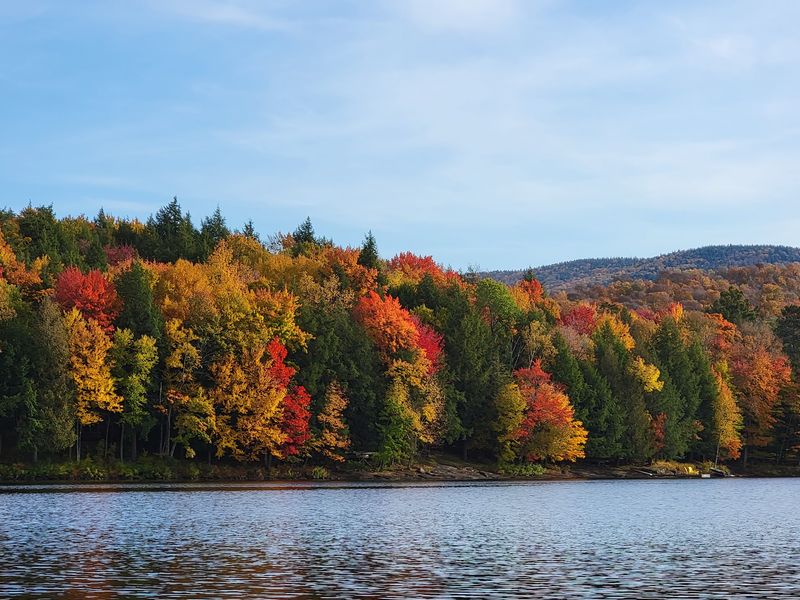
Closing the guidebook after Labor Day would be a mistake.
Autumn lights the hillsides around Long Lake with color, and hiking or a scenic flight during peak foliage ranks among the best experiences the region offers. Crowds stay manageable compared to more famous leaf-peeping routes.
Winter flips the landscape entirely. Snowmobiling, snowshoeing, and cross-country skiing take over once the snow settles in.
The Mt. Sabattis Recreation Area adds ice skating and sledding, which keeps families entertained without any lift tickets involved.
Conditions depend heavily on snowfall, so checking current reports before driving up is essential.
Spring brings mud, black flies, and high water, though it also brings solitude for those who plan around it.
Lodging tends to be easier to secure outside July and August, and rates often reflect that.
Layers matter year-round in the Adirondacks. Mountain weather shifts fast, and a warm afternoon can turn chilly by dinner.
Four seasons, one small town, and a completely different mood in each of them.
Museums And Detours Just Down The Road
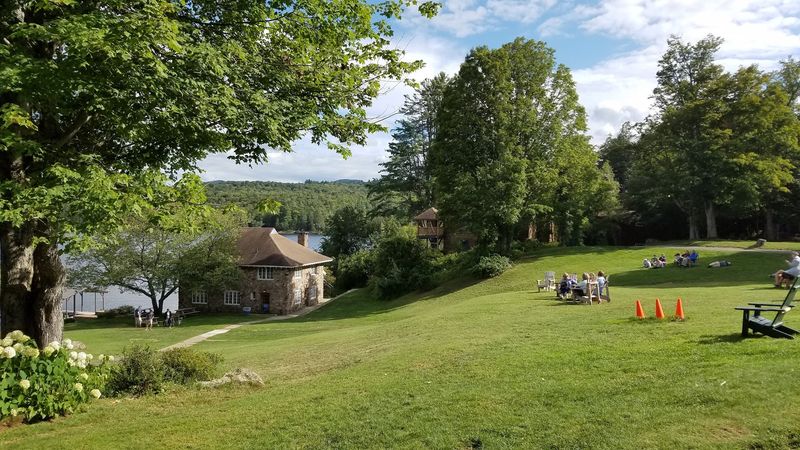
Rainy days have a plan B, and it is a good one.
The Adirondack Experience, The Museum on Blue Mountain Lake, sits only minutes from Long Lake. Exhibits cover regional history, boats, logging, and daily mountain life through hands-on displays.
It is large enough to fill several hours, and the lake views from the grounds are a bonus.
A little farther out, The Wild Center in Tupper Lake focuses on the natural science of the Adirondacks, with an elevated walkway among the treetops.
Both make easy day trips from town, which is one advantage of Long Lake’s central position inside the park.
Driving distances in the Adirondacks look shorter on a map than they feel on winding roads, so allow extra time.
The Roosevelt-Marcy Scenic Byway passes through the area and turns the drive itself into part of the outing.
Fuel up when the chance appears. Services thin out between towns across this stretch of New York.
Together, these stops round out a trip that already has plenty going for it.