
This Short Hike In Tennessee Is A Refreshing Way To Get Outside This May
May in Tennessee is something special. The air is warm, the trees are fully green, and the waterfalls are running at their absolute best.
If you have been looking for a reason to lace up your hiking boots and get outside this month, Tennessee just handed you a perfect one. A short, accessible trail in the Smoky Mountains leads to a waterfall so beautiful and so refreshingly cool that hikers consistently say it feels like the best decision they made all week.
Not too long. Not too difficult.
Just the right amount of effort for a completely spectacular reward.
The Trail That Starts Right Behind The Visitor Center
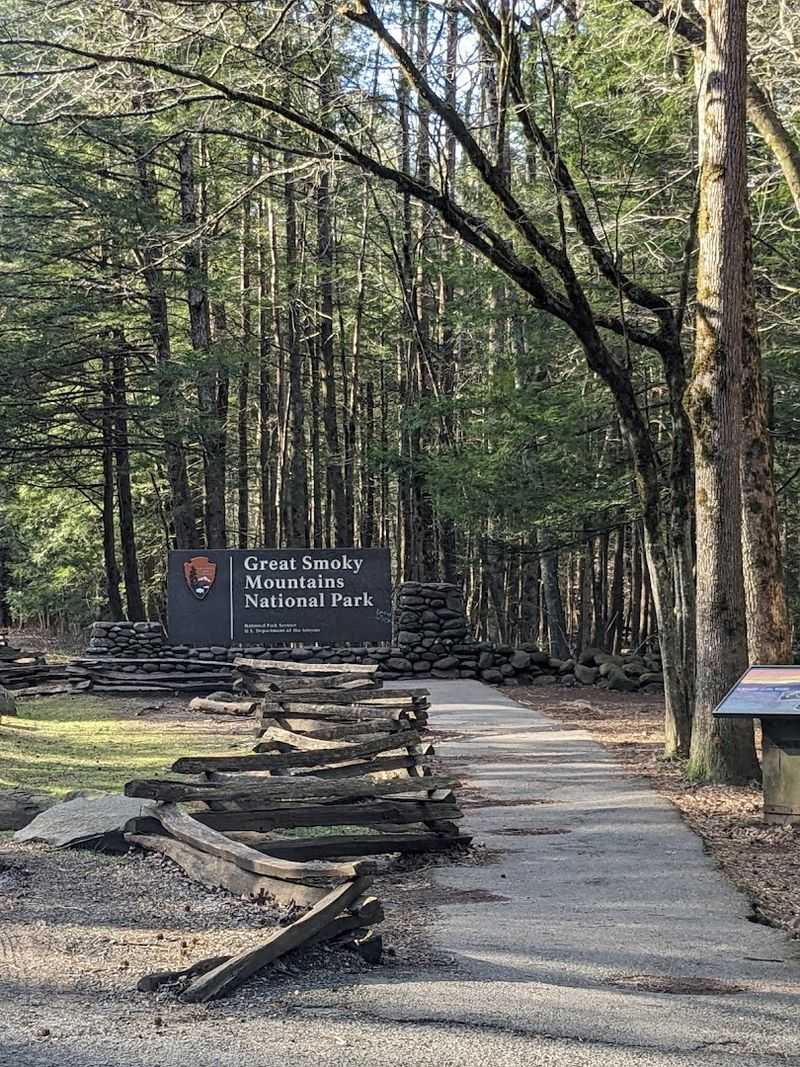
Few hikes begin with such convenience. This one starts directly behind the Sugarlands Visitor Center in Gatlinburg, TN 37738, making it one of the most accessible entry points in the entire national park.
You park, you walk, and the forest greets you almost immediately.
The visitor center itself is worth a few minutes of your time before you set out. Staff are knowledgeable, maps are available, and the restrooms are clean and well-maintained.
If you have never been to the Smokies before, this is an ideal place to orient yourself before stepping onto the trail.
The path begins behind the building and transitions quickly from pavement to packed dirt. Within moments, the noise of the parking lot fades and the steady rhythm of Fighting Creek takes over.
Trees line both sides, their branches forming a canopy that keeps the trail cool even when May temperatures start to climb. The whole experience unfolds gradually, rewarding those who pay attention to small details rather than rushing straight to the waterfall.
How Long Is The Hike To Cataract Falls

One of the most practical questions any hiker asks before choosing a trail is how long it actually takes. The roundtrip distance to Cataract Falls runs approximately 0.75 to 1.1 miles, depending on where you begin your walk.
Starting directly from the Cove Mountain Trailhead keeps things compact, while beginning on the Fighting Creek Nature Trail from the Sugarlands Visitor Center adds a bit of pleasant distance.
AllTrails rates the hike as easy, and that classification holds up in real life. Most visitors complete the roundtrip in under an hour, including time spent at the falls.
Families with young children often take longer, which is perfectly fine given how much there is to observe along the way.
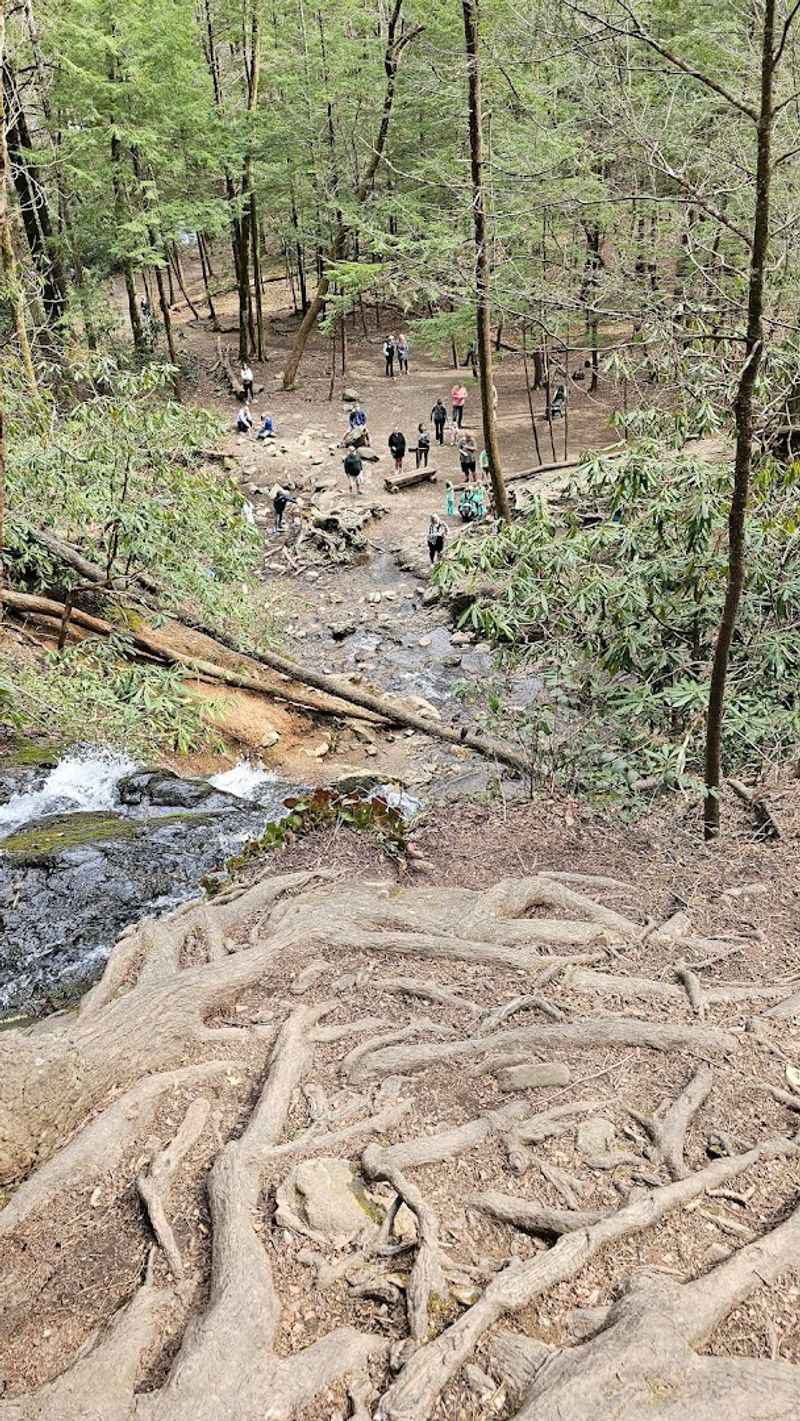
Elevation changes are minimal throughout the route, which makes the trail approachable for people of varying fitness levels. The surface is primarily packed dirt and crushed stone, with some exposed tree roots that require a bit of attention underfoot.
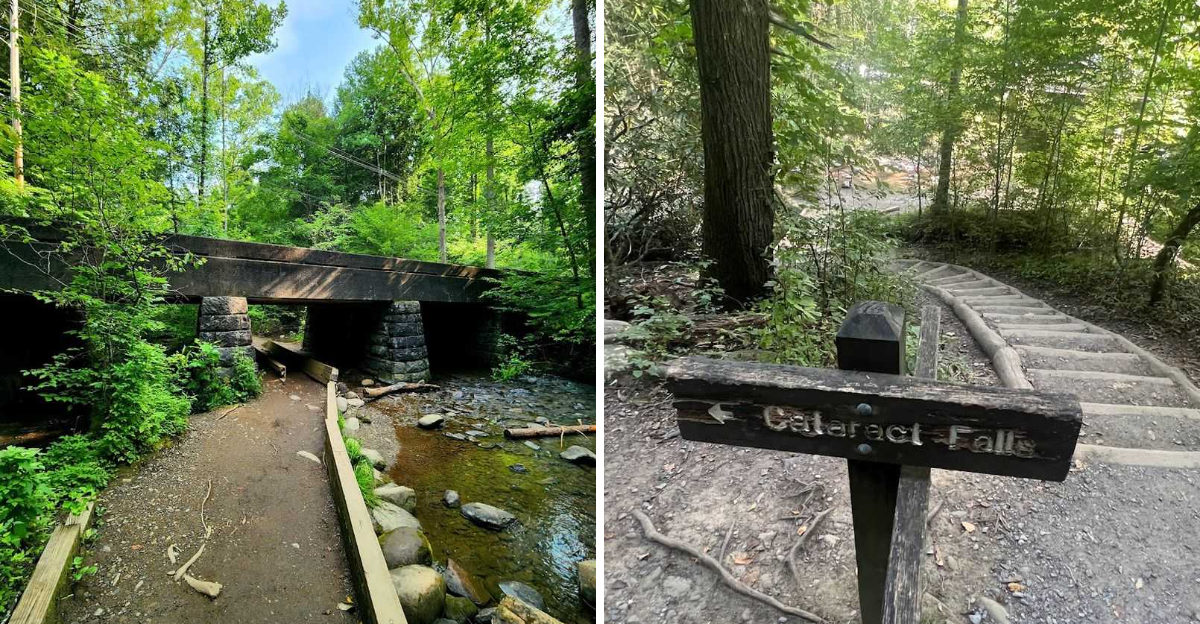
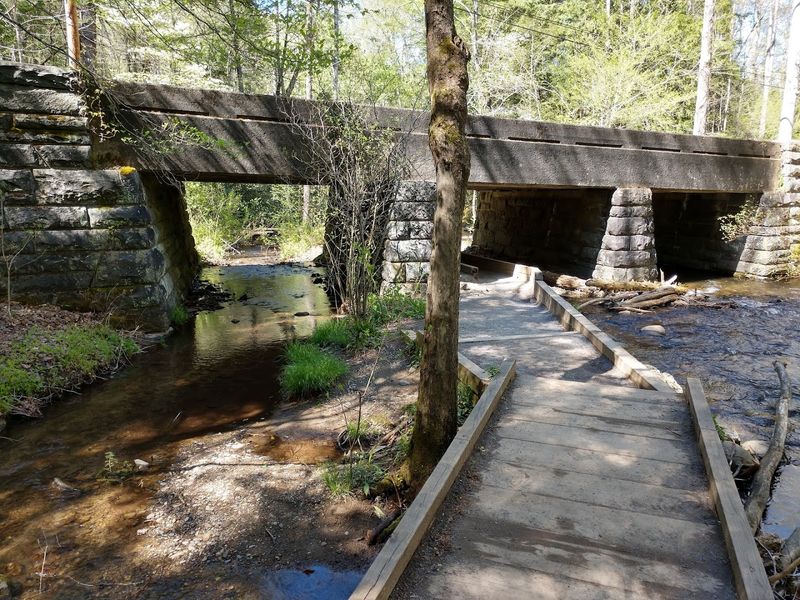
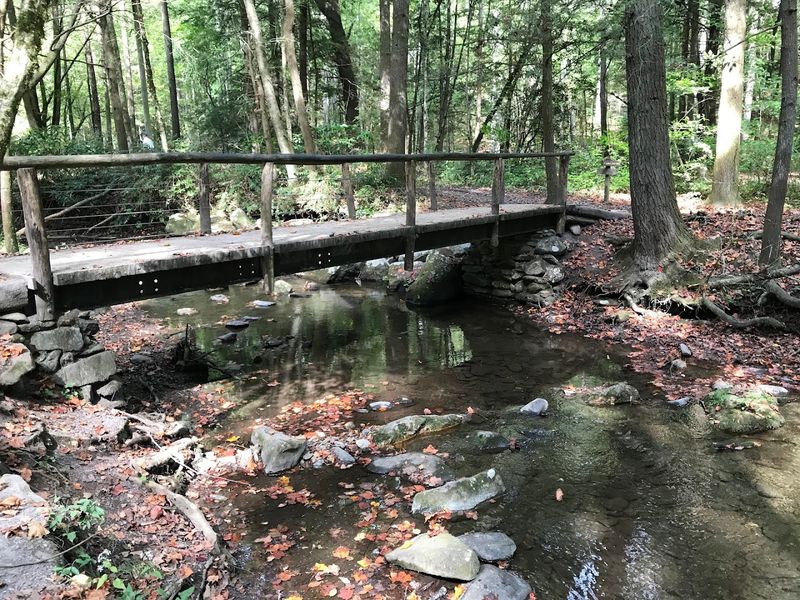
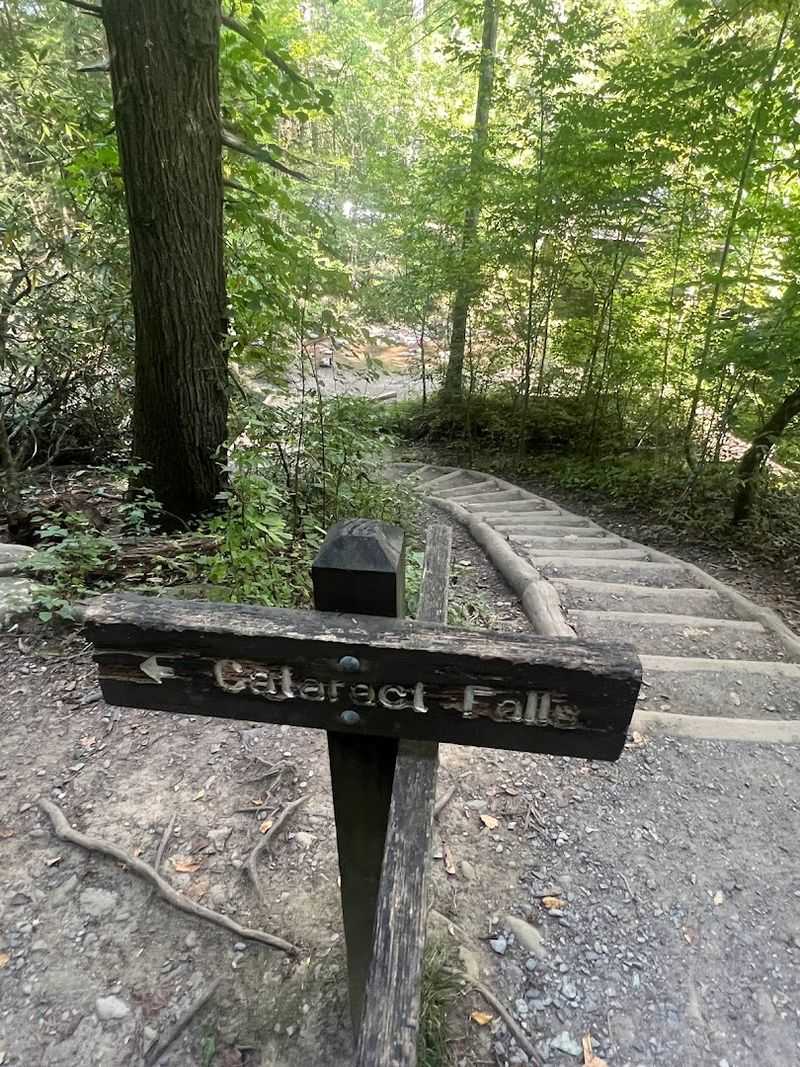
A small set of stairs and a section passing under a stone bridge add mild interest to what is otherwise a flat and forgiving walk. For a May morning in the Smokies, the length feels just right.
What Makes May The Best Month To Visit

Timing matters more than most people realize when planning a hike in the Smokies. May sits at a particularly favorable intersection of weather, water flow, and trail conditions.
Spring rainfall keeps the creeks full and the waterfall running at a satisfying pace, while temperatures remain mild enough for a comfortable walk without the oppressive humidity that July and August bring.
The forest in May is visually generous. Wildflowers are still present along the trail edges, the canopy has leafed out fully, and the creek alongside the path reflects the light in a way that feels almost deliberate.
Photographers tend to appreciate this month more than any other for trail work in the Smokies.
Bird activity peaks in May as well, so hikers who slow their pace and listen carefully are often rewarded with sounds that compete with the creek for attention. The combination of full foliage, active wildlife, and strong waterfall flow makes this month an especially rewarding time to visit Cataract Falls on Cove Mountain Trail.
Arriving early in the morning, around 7:30 or 8:00 a.m., gives you the best chance of experiencing the trail before the crowds arrive and the parking lot fills.
The Waterfall Itself And What To Expect

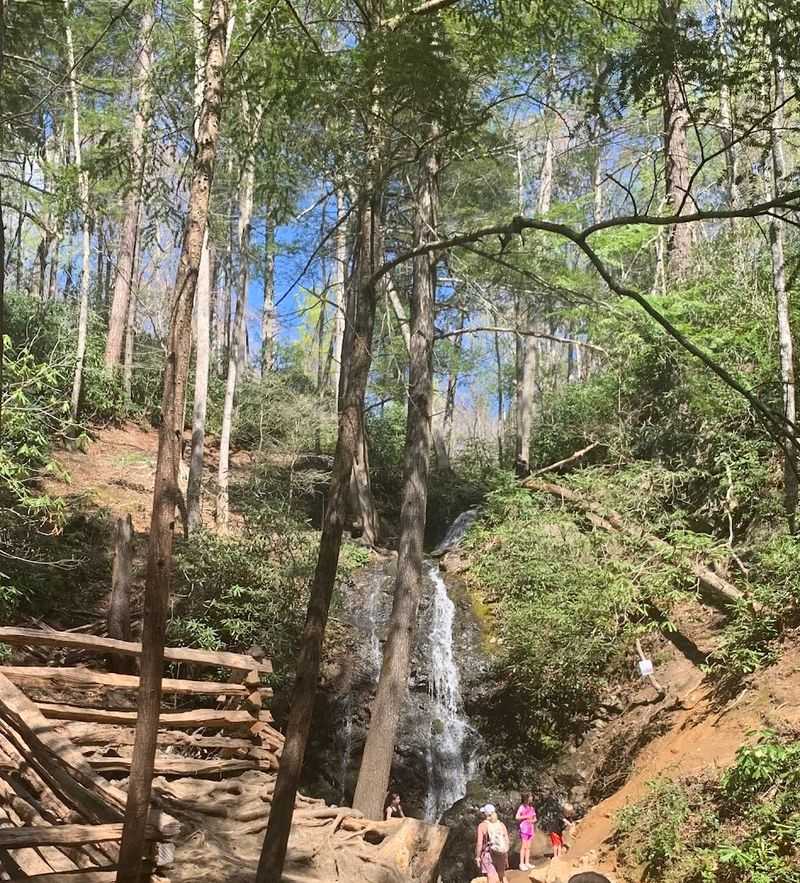
Standing at roughly 25 feet tall, Cataract Falls is not the kind of waterfall that appears on dramatic travel posters. What it offers instead is something more personal and immediate.
The scale is human-sized, meaning you can stand close enough to feel the mist without feeling overwhelmed, and the sound it produces is satisfying without being thunderous.
After significant rainfall, the flow increases considerably and the falls take on a more forceful character. Visiting in May, when spring precipitation is still common, improves the odds of seeing Cataract Falls at its most expressive.
Several reviewers have noted that the experience differs noticeably depending on recent weather, so checking forecasts a day or two before your visit is a practical habit.
The area around the base of the falls has been thoughtfully managed. Barriers prevent visitors from climbing the rocks directly, which protects both the natural surface and the people who might otherwise attempt it.
The viewing area still offers excellent angles for photographs, and the surrounding greenery frames the falls in a way that makes even a modest waterfall look composed and worth the walk. Children especially seem drawn to the energy of the falling water.
Families And Young Children On This Trail
A trail that works for a two-year-old and a seventy-year-old in the same afternoon is a rare thing. The Cataract Falls trail earns that distinction honestly.
Multiple visitor reviews confirm that children as young as two have completed the walk without difficulty, and the flat terrain means adults do not spend the hike carrying tired kids back to the trailhead.
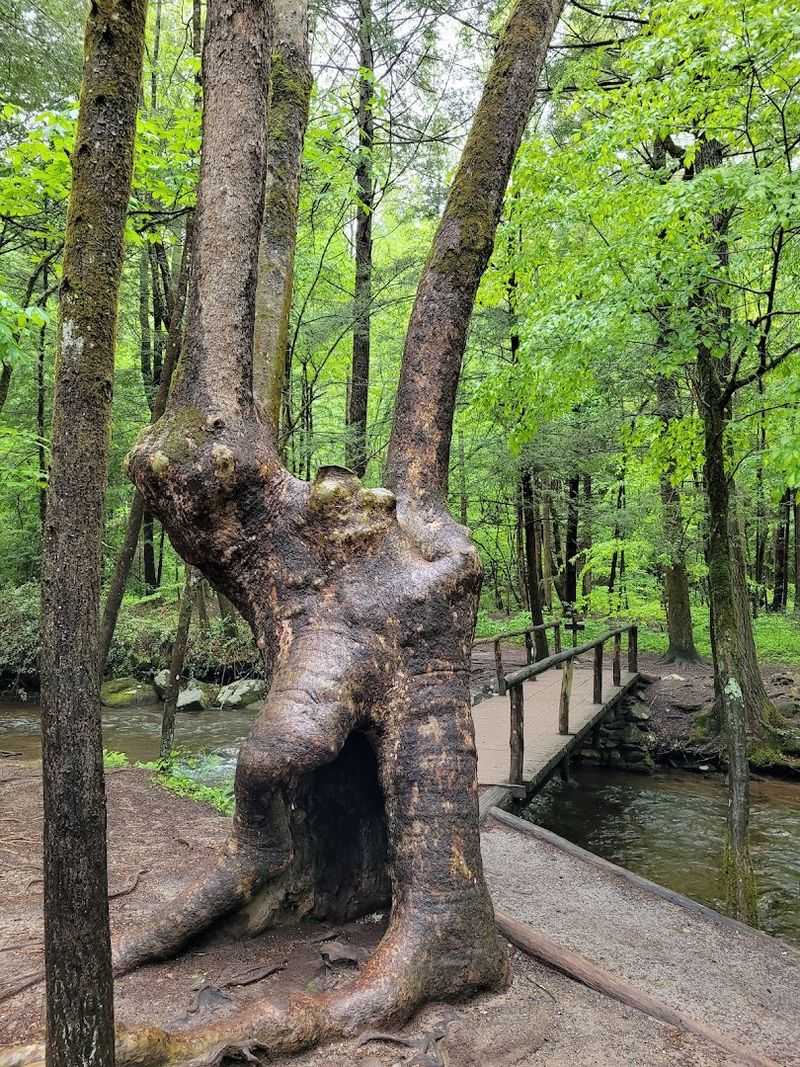
Fighting Creek runs alongside a portion of the trail, and children find it nearly impossible to resist. Families regularly report that their kids hopped in and out of the water throughout the walk, turning a short hike into a two-hour adventure.
The creek is shallow in most spots and moves at a gentle pace that feels safe for supervised play.
The trail also features small educational signs identifying tree species along the route, which gives curious kids something to read and remember. Wildlife sightings are common, including garter snakes, birds, and the occasional deer.
One reviewer mentioned a bear sighting nearby, which is a reminder to stay alert and keep a respectful distance from any wildlife encountered. The trail is well-maintained and clearly marked, so even first-time hikers with children can navigate it confidently without a guide.
Accessibility Options Along The Route
Accessibility in national parks has improved considerably over the years, and the Cataract Falls route reflects that progress. An ADA-designated path to the falls measures approximately 0.7 miles and is paved with cement and asphalt, designed specifically for wheelchair users and strollers.
The route takes roughly 20 minutes to complete at a comfortable pace and avoids the sections with roots and stairs found on the primary trail.
The Sugarlands Visitor Center offers something particularly thoughtful for visitors with mobility challenges. Free checkouts of GRIT Freedom Chairs, which are all-terrain wheelchairs, are available for use on a half-mile side route to Cataract Falls.
This program removes a barrier that would otherwise prevent many people from experiencing the falls entirely, and it reflects a genuine commitment to inclusive outdoor recreation.
Standard strollers can manage portions of the trail but may encounter difficulty on sections with tree roots or the small staircase. Parents with infants in standard strollers may find the ADA route more practical.
For families planning around mobility needs, contacting the Sugarlands Visitor Center at 865-436-1200 before arrival can help clarify current trail conditions and equipment availability, ensuring the visit goes smoothly from the first step to the last.
Parking, Passes, And Practical Logistics
Logistics can make or break a hiking trip, and the Cataract Falls experience is straightforward once you understand the basics. Any vehicle parked for more than 15 minutes within Great Smoky Mountains National Park requires a parking pass.
A daily pass costs five dollars and can be purchased at the visitor center or online before your arrival. It is a small fee for access to one of the most visited national parks in the country.
The parking area near the Sugarlands Visitor Center fills quickly, especially on weekends and holidays. Visitors who arrive after 9:00 a.m. on a busy day may find themselves circling or waiting.
The consistent advice from experienced hikers is to arrive before 8:00 a.m. if you want a straightforward parking experience and a quieter trail. Weekday mornings offer the calmest conditions overall.
The visitor center provides clean restrooms, park information, and a small gift shop, all of which are useful before or after the hike. Planning your visit around these practical details reduces friction and lets you focus on the actual experience of the trail.
Purchasing your parking pass online the evening before is a small step that saves time and eliminates one decision from a morning that should feel unhurried and enjoyable.
Wildlife And Safety Awareness On The Trail
The Great Smoky Mountains are home to a thriving black bear population, and the area around Cataract Falls on Cove Mountain Trail is no exception. Trails are occasionally closed when bears are active nearby, so checking trail status on the National Park Service website before heading out is a reasonable precaution.
Bears in the Smokies are wild animals and should always be observed from a safe distance of at least 50 yards.
One reviewer mentioned that a fellow hiker showed them photos of a bear that had passed through just five minutes before they arrived. That kind of proximity is not unusual in this park, and it adds a layer of alertness that experienced hikers consider part of the experience rather than a reason for alarm.
Making noise while walking and staying aware of your surroundings are simple practices that reduce unexpected encounters.
Beyond bears, visitors should carry water, wear sunscreen, and apply bug spray appropriate for late spring conditions. Ticks are active in May and tend to favor the low vegetation along creek-side trails.
Informing someone of your hiking plans before you leave is a basic safety habit worth maintaining. The trail itself is safe and well-traveled, but preparation always improves the quality of any outdoor outing.
The No-Dogs Policy And What Pet Owners Should Know
Pet owners planning a trip to Cataract Falls should know one important rule before loading the car. Dogs are not permitted on the Cataract Falls trail or on the Cove Mountain Trail.
This policy applies throughout most of the Great Smoky Mountains National Park trail system, with only two exceptions: the Gatlinburg Trail and the Oconaluftee River Trail allow leashed dogs. Arriving with a dog and discovering the restriction at the trailhead is a frustrating experience that a quick check beforehand prevents entirely.
The reasoning behind the policy involves wildlife protection. Dogs, even well-behaved ones, introduce scents and sounds that disturb the natural behavior of animals along the trail.
Bears, deer, and smaller wildlife all respond to the presence of dogs in ways that can be disruptive to the ecosystem and potentially dangerous for the pet owner.
Several reviewers have expressed disappointment about this policy, and the feeling is understandable. For those who want to hike with their dogs in the Gatlinburg area, the Gatlinburg Trail offers a paved, dog-friendly route along the Little Pigeon River that is also easy and scenic.
Planning around the pet policy rather than against it ensures everyone, including the dog, has a better day outdoors in the Smokies.
Why This Hike Stays With You Long After You Leave
Some hikes are memorable because of their difficulty. Others stay with you because of the way they make you feel while you are on them.
The Cataract Falls hike belongs to the second category. The combination of a manageable distance, a creek that runs beside you for much of the walk, and a waterfall at the end creates a complete sensory experience that does not require physical endurance to access.
Visitors frequently describe the trail as calming. The sound of Fighting Creek, the filtered light through the tree canopy, and the absence of steep terrain all contribute to a pace that encourages genuine observation rather than focused effort.
People who rarely hike often report that this trail changed their perception of what outdoor recreation can feel like.
Located on Cove Mountain Trail in Gatlinburg, TN 37738, this short walk represents exactly the kind of accessible nature experience that the national park system was designed to provide. Returning visitors come back not because the falls are the tallest or the trail the most challenging, but because the whole experience holds together in a way that is quietly satisfying.
May, with its full foliage and strong water flow, is the ideal time to find out what that satisfaction feels like for yourself.