
This Short Massachusetts Hike Leads To A Stunning White Peace Pagoda And Zen Garden
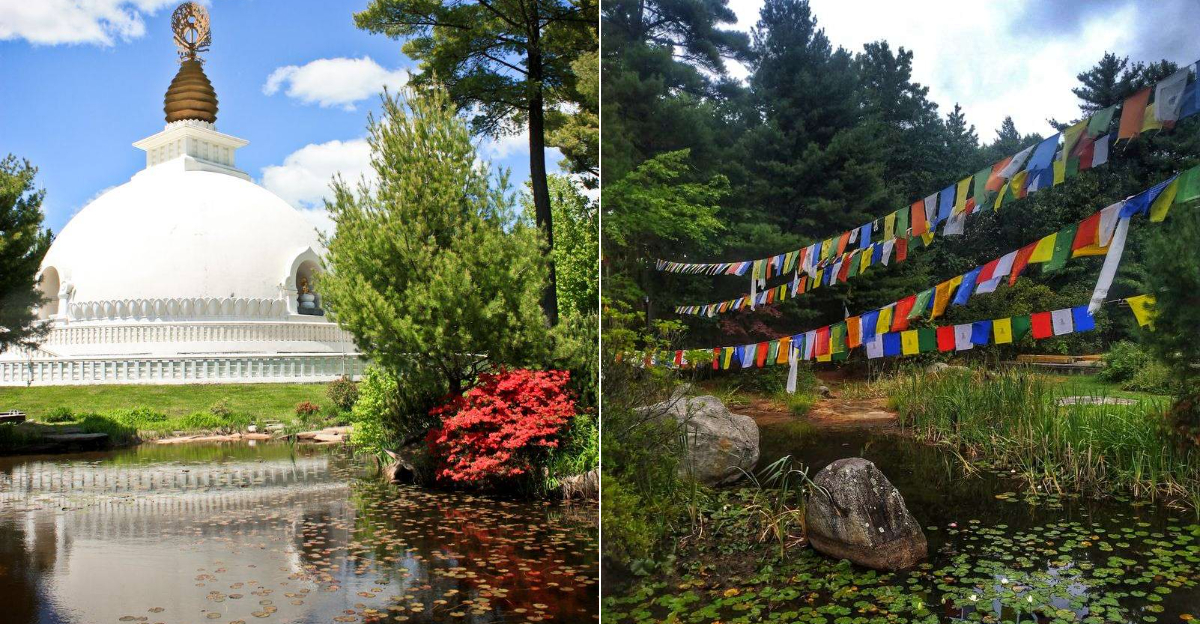
A white dome rises above the Massachusetts trees, giving this short hike an unexpected finish. The walk takes little time, but reaching the top opens the door to a peaceful place worth exploring.
Prayer flags flutter overhead, a reflecting pool catches the light, and a stone garden offers plenty of quiet corners to wander. Look closer and you may spot colorful fish in the water, statues among the trees, and broad views stretching toward the valley.
There is enough here to keep curious travelers happily exploring without turning the visit into an all-day trek. Comfortable shoes are all you really need for the uphill path.
Save some time for photos, linger beside the water, and enjoy the fresh air before heading back down. For a Massachusetts day trip, this is an easy way to add something unusual, beautiful, and genuinely calming to the itinerary.
A White Dome Above Trees
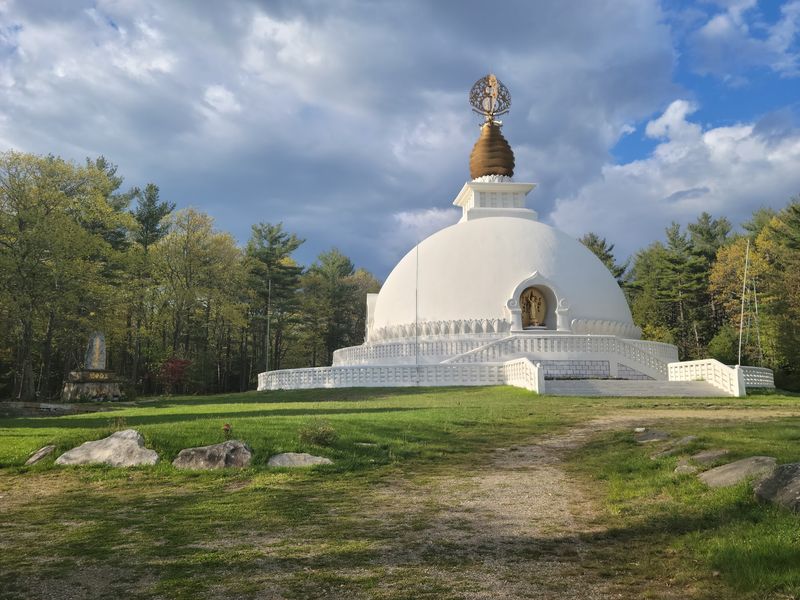
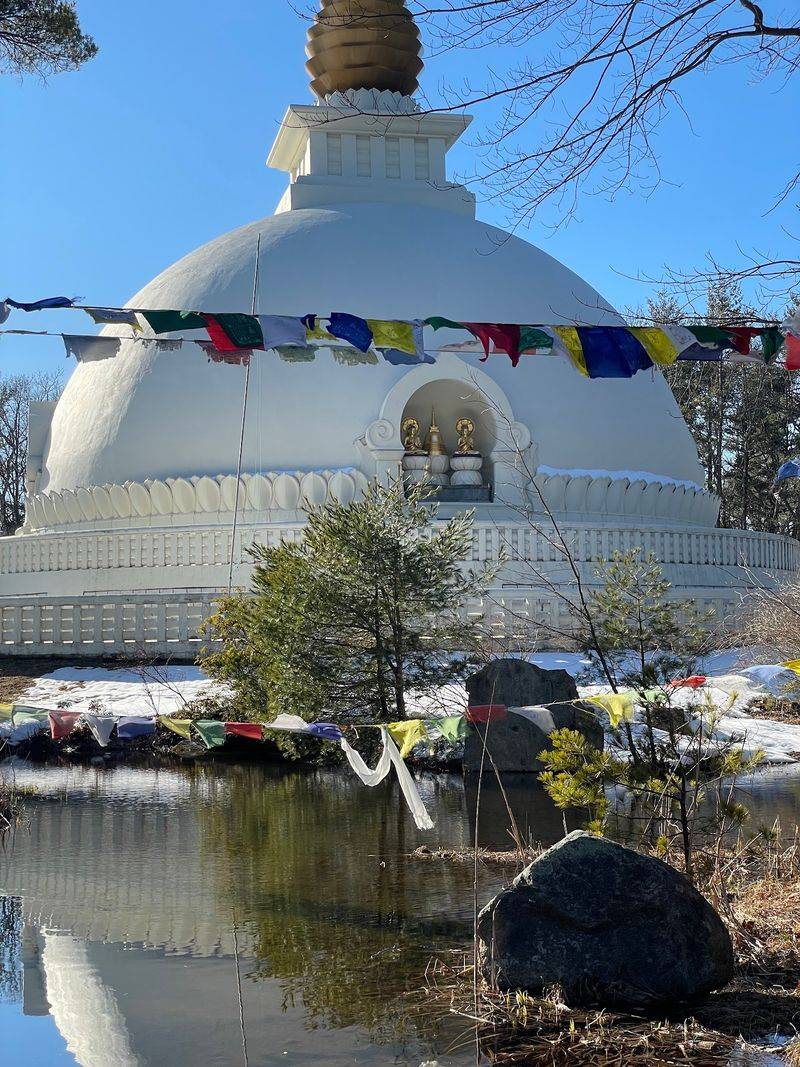
The New England Peace Pagoda sits on a wooded hilltop in Leverett, Massachusetts, and it stops people mid-sentence. The white dome rises roughly 100 feet into the air.
Its shape copies a 2nd-century B.C. stupa from Sanchi, India.
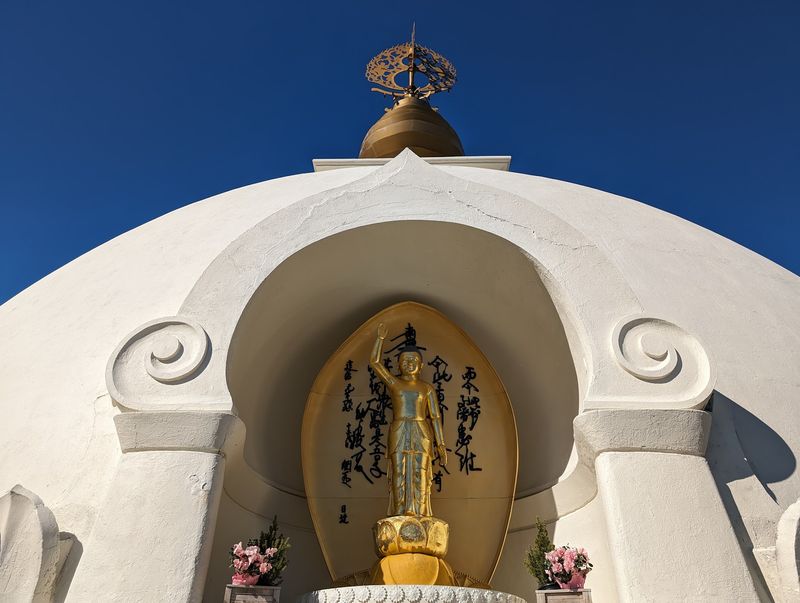
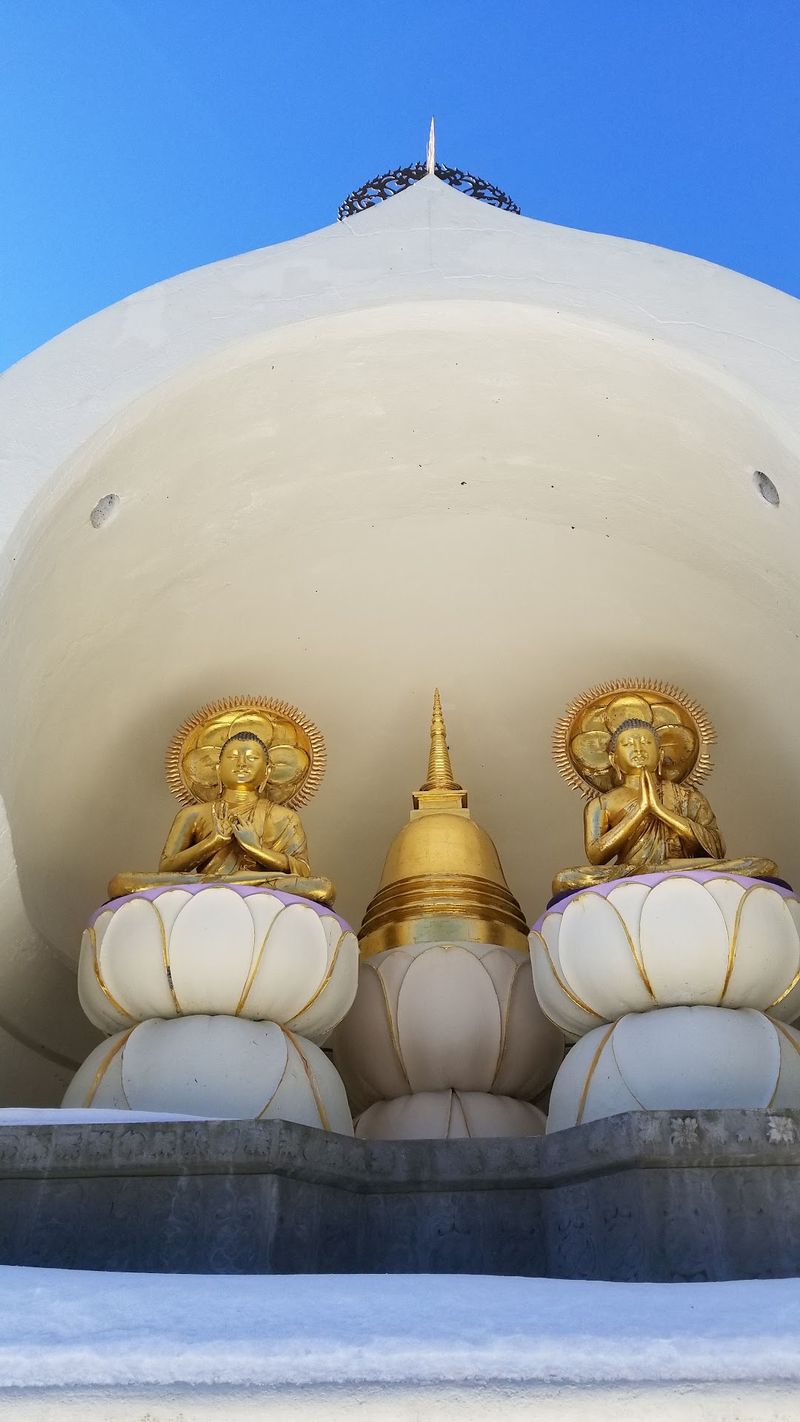
Walk the winding balcony that circles the base. You will pass carved Buddha statues made by Sri Lankan artisans, each one placed to face a different direction.
Here is a detail that surprises visitors: the inside of the dome is permanently sealed. There is no door to walk through, no staircase to climb.
What matters is the outside, and the slow loop people make around it.
Monks and nuns often walk that same circle, quietly, day after day. You are welcome to join them or simply watch.
Have you ever seen a building meant purely for peace, with nothing to sell and nothing to enter?
The white surface catches light in odd, lovely ways. Early morning turns it soft pink.
Midday makes it almost blinding against a deep blue Massachusetts sky. Late afternoon wraps it in gold.
Photographers love the contrast between the pale dome and the surrounding forest. Autumn is especially dramatic, when red and orange leaves frame the structure.
Give yourself time here. Rushing past this dome would be a genuine waste of a special trip.
The Easy Uphill Walk
Good news for anyone who dislikes serious hiking: this trail is short. From the lower parking lot, the gravel road climbs about a third of a mile to the top.
Most people finish it in under ten minutes.
The full out-and-back route measures roughly one mile if you wander the grounds a bit.
It is uphill, though. Kids sometimes complain halfway.
Bring water on hot days and take your time, because there is no prize for speed here.
Along the way, keep your eyes open. Stacked zen stones appear beside the path, balanced by earlier visitors.
Near the base you will find a statue of Buddha’s mother with a small child, and further up, a Buddha seated beneath a protective serpent.
Can you spot every statue before you reach the top?
For those with physical limitations, accessible parking sits closer to the monument. During larger public events, a free shuttle helps people who cannot manage the climb comfortably.
The gravel surface stays fairly smooth, but sturdy sneakers beat sandals. Spring mud and winter ice both show up in this part of Massachusetts.
What makes the walk special is the reveal. Trees block the view almost the whole way.
Then the path bends, the canopy opens, and the white dome simply appears.
Raking Stones In Silence
Ever wanted to try something meditative without signing up for a class? The stone garden here hands you a rake and lets you figure it out.
Visitors are welcome to draw patterns in the gravel. Straight lines, curves, circles around the boulders.
There is no wrong answer.
Something odd happens while you rake. Your shoulders drop.
Your breathing slows. The scratching sound of the rake becomes the loudest thing around, and suddenly twenty minutes have passed.
Large stones sit inside and around the garden, and people often perch on them to sit quietly. One tourist described arriving with a group of nine and instantly dropping to whispers because someone was already meditating on a rock.
That is the unspoken rule up here. Voices stay low.
Phones stay silent.
Would you rather rake the gravel yourself or watch the patterns someone else left behind?
Kids often love this part, and it teaches them something quietly. Careful movement.
Patience. The idea that making something temporary can still matter.
Plenty of meditation spots exist beyond the garden too, scattered across the Massachusetts hilltop. Benches, flat rocks, shaded corners under trees.
Come on a weekday morning if you want the space nearly to yourself. Weekend afternoons bring more foot traffic, though the atmosphere stays remarkably calm regardless.
Pond Full Of Goldfish
Frogs. Goldfish.
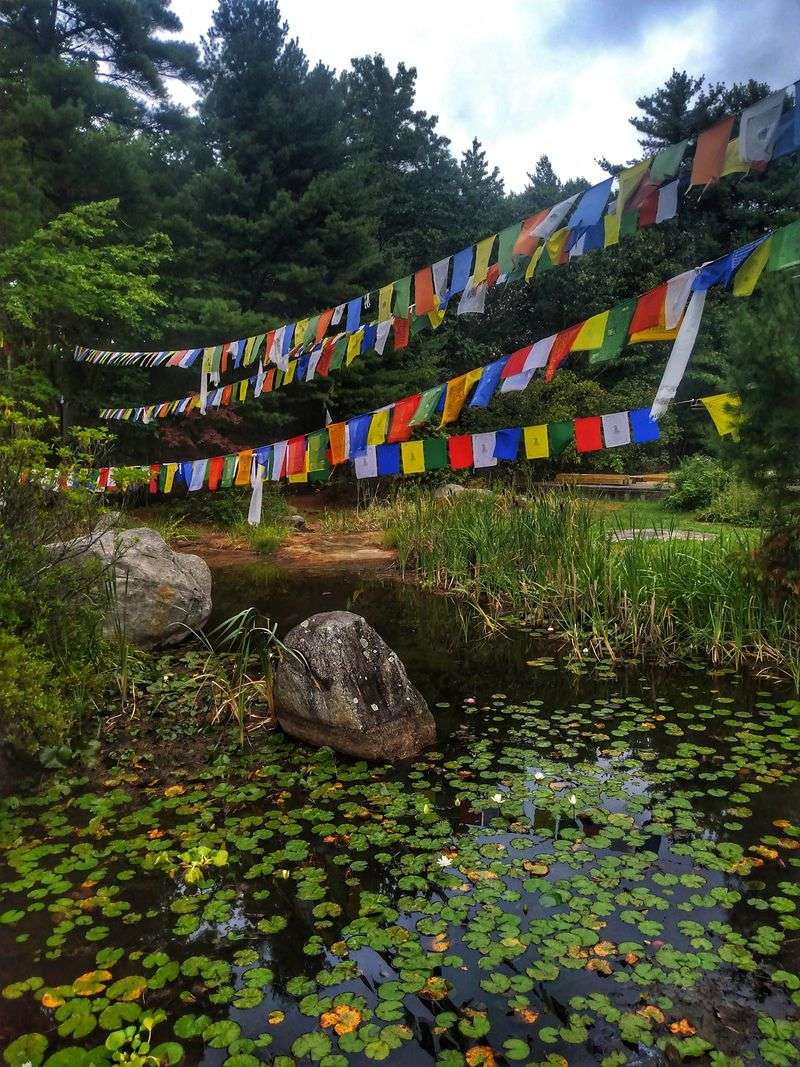
Lily pads floating like green coins. The pond near the pagoda is small, but people end up standing beside it far longer than they planned.
On still days, the water throws back a mirror image of the white dome and the strings of prayer flags above it. Photographers chase that reflection constantly.
Lean over the edge and the fish drift toward you, flashes of orange and gold moving under the surface. Children tend to lose their minds over this, in the best possible way.
The frogs are harder to find. They hide among the lily pads and go quiet when footsteps approach.
Sit still for a minute and they start croaking again.
How long can you stay perfectly still before the pond forgets you are there?
A short trail circles the water, and benches sit nearby for anyone who wants to linger. Bring a book.
Bring a sketchpad. Or bring nothing at all.
Seasons change the scene completely. Summer means thick green pads and busy insects.
Autumn drops red leaves across the surface. Winter freezes everything into glass.
Regular Massachusetts visitors say the grounds improve every year, with gardens looking better and paths staying tidier. The pond is proof of that ongoing care, quietly tended and always worth a stop.
Ribbons Tied To Branches
One tree on the property looks like it got dressed up for a party. Ribbons hang from its branches.
Small toys dangle beside handwritten notes. Hair clips, bracelets, and tiny trinkets sway in the breeze.
People call it the prayer tree, and it grows a little every season as visitors add their own offerings.
Reading the notes feels almost too personal, so most folks just glance and move on. Some are wishes.
Some are messages for people who are gone. Some are just doodles from kids.
If you want to leave something, bring a ribbon or a small keepsake from home. Nothing expensive.
The value is in the gesture, not the object.
What would you tie to a branch if you knew strangers might read it?
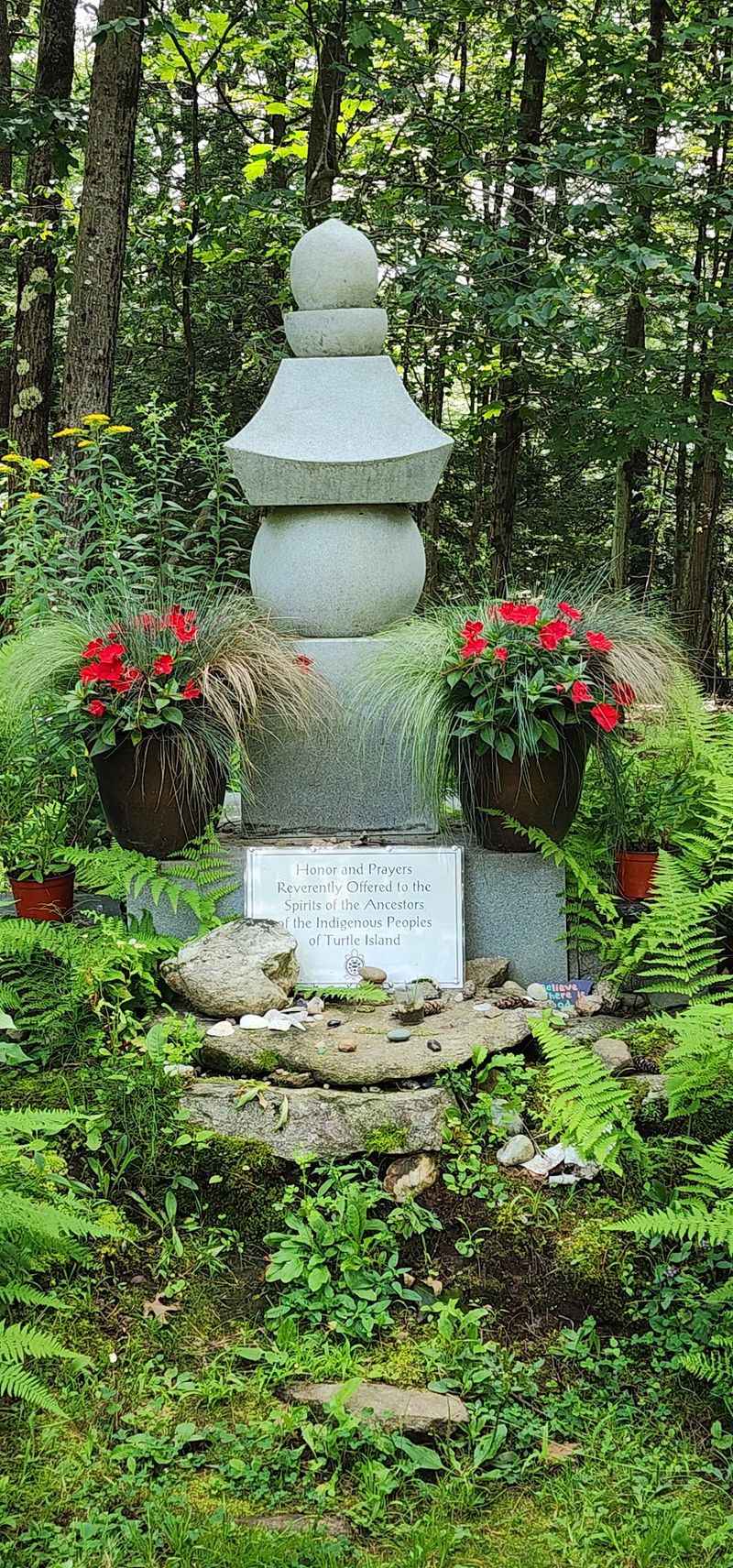
Nearby, at the edge of the forest, sits an altar with a sign honoring the ancestors of the Indigenous peoples of Turtle Island. It is a quiet acknowledgment of the land itself, and worth pausing beside.
Prayer flags flutter across other parts of the grounds too, in red, blue, yellow, green, and white. Wind pushes them constantly, and the sound becomes part of the place.
Small details like these turn a Massachusetts hilltop into something layered, human, and genuinely moving.
Golden Hall Beside Pagoda
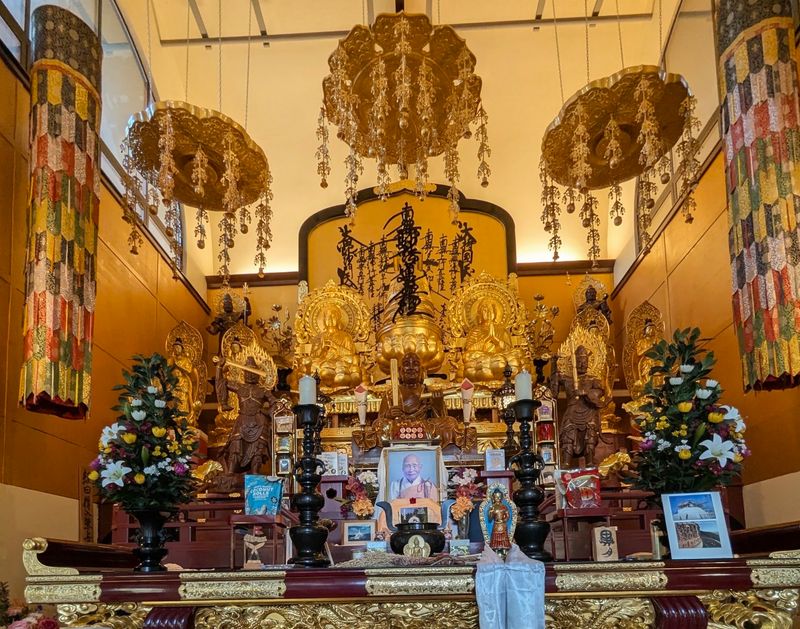
Just steps from the dome stands a temple, and its inside is a complete change of mood. Ornate columns.
Golden chandeliers. Colorful paintings covering the walls.
Golden Buddha statues sit surrounded by carefully arranged food offerings. After the plain white exterior of the pagoda, all that color hits like a burst of music.
The current temple opened in 2011. The original wooden one burned down back in 1987, and the community rebuilt.
Visitors sometimes find origami paper cranes inside, symbols of peace that you may take with you. Small, folded, weightless, and surprisingly meaningful once you get home.
Monks hold prayer ceremonies here, and they live on site. Chanting and drumming can start as early as 5 a.m., long before most tourists arrive.
Have you ever heard a drum echo across a quiet hillside at sunrise?
If monks are present, they are usually happy to talk. Ask a question.
They tend to be warm, thoughtful, and knowledgeable about why this place exists.
Remove shoes if signs ask you to, keep your voice down, and always check before photographing inside. Basic respect goes a long way.
Plans are moving forward for a community center with housing, a kitchen, and an assembly hall, built with sustainable materials and renewable energy. Massachusetts visitors get to watch it grow.
Built By A Thousand Hands
Here is the part of the story most people miss. Nearly 1,000 volunteers built this pagoda, and they came from many different faiths.
The work took about a year and a half.
Nobody was paid. The land itself was donated to the Nipponzan Myohoji order.
Completed in the mid-1980s, it became the first Nipponzan-Myōhōji Peace Pagoda built in the United States.
The idea traces back to Buddhist monk Nichidatsu Fujii, who began building peace pagodas around the world after the devastation of Hiroshima and Nagasaki, promoting peace and rejecting nuclear warfare.
Not everyone welcomed the project at first. Some neighbors pushed back hard when plans were announced.
Today that tension has faded, and the site is woven into the community. Locals visit.
Schools visit. People of every belief system visit.
Does knowing that a thousand strangers built this by hand change how you look at it?
The monks also stay active beyond the hilltop, organizing walks for peace and for immigrant communities. Their annual Walk For A New Spring crosses parts of Massachusetts, and visitors can join.
History here is not locked behind glass. It keeps walking, literally, down Massachusetts roads every year.
Best Times To Arrive
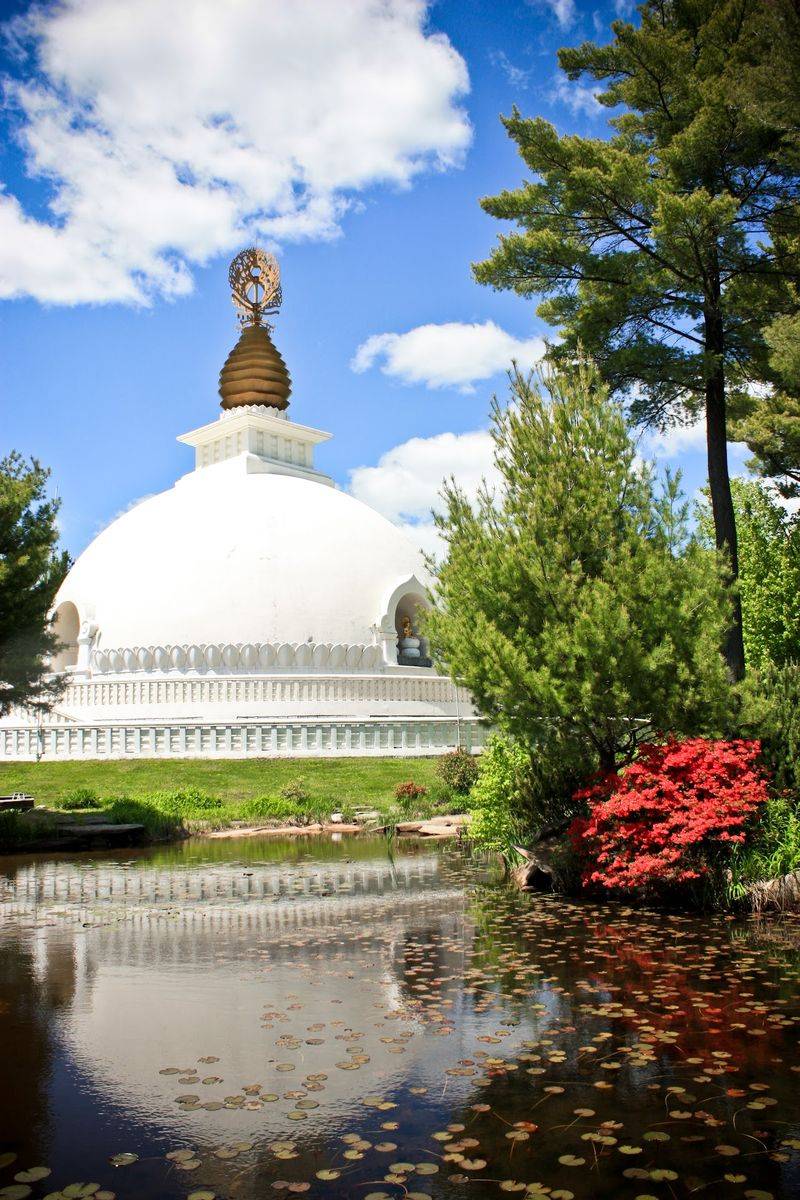
Timing changes everything here. Show up in late autumn or winter, after the leaves fall, and the hilltop opens up toward the Pioneer Valley and the Mount Holyoke Range.
Some people have spotted the pagoda from miles away, a tiny white dot on the horizon, before ever visiting.
Late summer and early fall bring the fullest gardens. One frequent visitor makes the trip every year around that time just to see how the grounds have improved.
Sunrise is magical if you can manage it. The gates open then, and you might catch drumming drifting across the hill.
Sunset at 100 Cave Hill Rd, Leverett, MA 01054, closes the day, and the light on the white dome turns warm and syrupy.
Which version of this place would you rather see first, misty morning or golden evening?
Pair the stop with a scenic drive through the surrounding Massachusetts countryside. The roads leading here are half the fun, winding past farms and forest.
Bring quiet with you and leave the hurry in the car. Massachusetts has plenty of loud attractions.
Choose this one for the opposite reason.