
This Small New Hampshire Town Is Actually One Of America’s Happiest Places
A bronze statue with arms flung wide welcomes every visitor here. That gesture alone tells you everything about this happy corner of New Hampshire.
The whole town runs on one simple motto, and honestly, you feel it the moment you arrive.
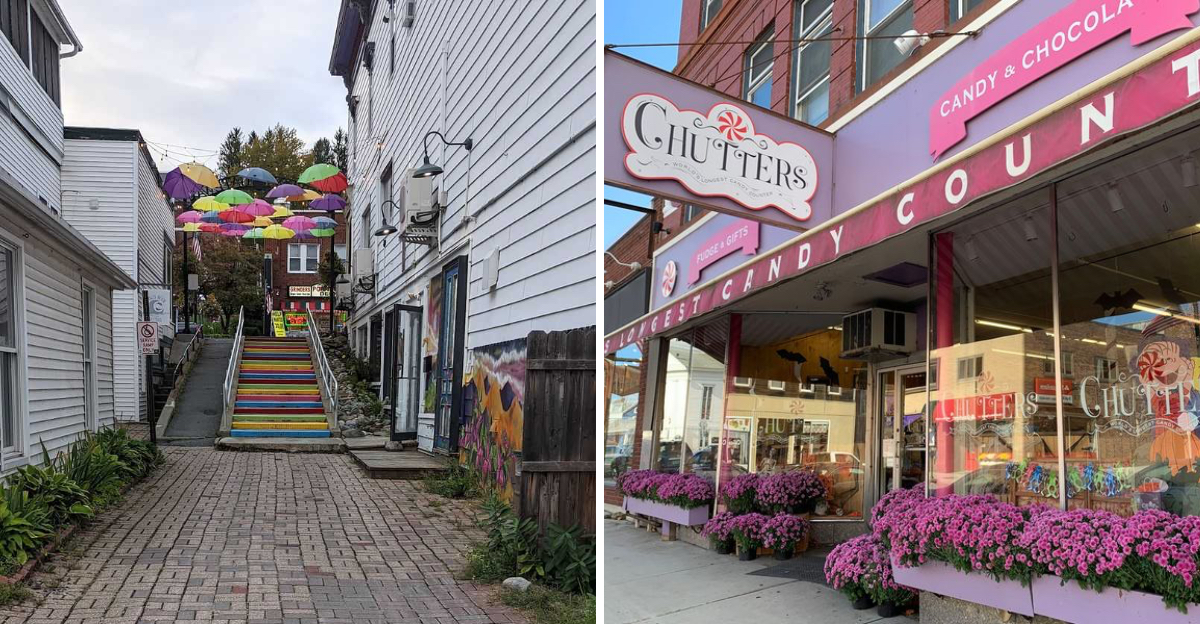
Storefronts stay full, and neighbors greet strangers like old friends. A candy counter longer than a football field practically demands a detour.
Rivers cut right through downtown, and mountains rise just beyond the rooftops. A covered bridge frames views most postcards would envy.
Winter brings skiing, summer brings concerts on the lawn, and somehow every season feels like a celebration.
New Hampshire rarely packs this much charm into one small footprint. Ready to see why happiness looks so good on a map?
The Be Glad Motto And Its Storybook Origin
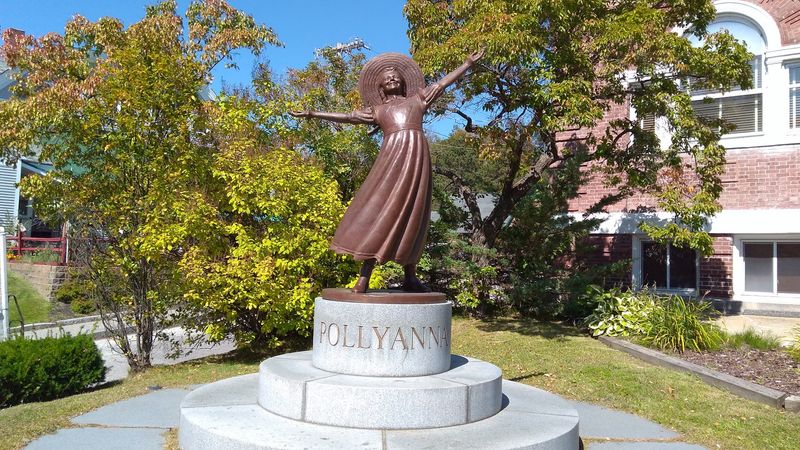
A statue of a fictional girl helped shape an entire town’s personality. Outside the Littleton Public Library stands a bronze figure of Pollyanna, arms flung wide in welcome.
The character came from hometown author Eleanor H. Porter, and her relentless optimism became the town’s unofficial creed.
The motto is simple. Be Glad.
Locals treat it as more than a marketing line. It shows up in how strangers get greeted on the sidewalk and how neighbors show up for community events.
Recognition followed. Littleton has appeared on lists of the top ten small towns in America, and it received the first NH Profile Community Award for honoring New Hampshire’s independent character.
Visitors often photograph the statue first, then spend the rest of the day noticing the same cheer everywhere else. The library sits right in the heart of town, easy to reach on foot.
You will find Littleton in Grafton County, New Hampshire, mailing address New Hampshire 03561, right at the northern edge of the White Mountains.
Small gesture, big ripple effect. That bronze grin sets the tone before the trip even starts.
Main Street Where Every Storefront Seems Full
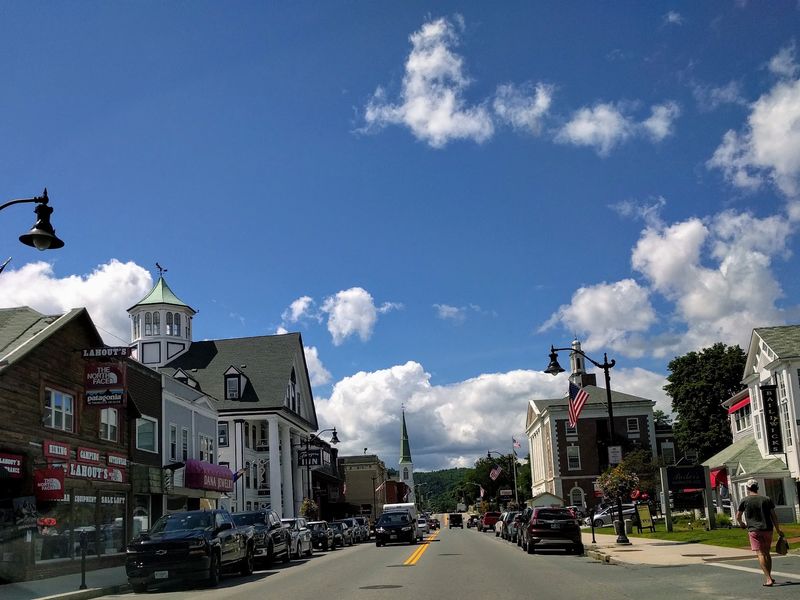
Empty storefronts are rare here, and that says plenty. Littleton’s Main Street runs as the town’s beating center, lined with brick buildings from its railroad-era boom.
Independent shops fill nearly every space. Boutiques, galleries, a toy and book shop, a music store, an herb shop, and restaurants share the same walkable stretch.
The architecture rewards slow walking. Cornices, tall windows, and old signage hint at the prosperity that arrived with the railroad in the 1850s.
Two spots draw the biggest crowds. Chutters claims the world’s longest candy counter at 112 feet, a wall of glass jars that makes choosing genuinely difficult.
Over on Union Street, Lahout’s Summit Shop holds the title of America’s oldest ski shop. Generations of skiers have geared up there.
Parking sits close by, and the whole downtown can be covered on foot in an afternoon. Wear comfortable shoes and leave room in the bag for candy.
A low storefront vacancy rate is not the most romantic statistic. It is, however, the clearest proof that this small downtown is thriving.
A Candy Counter That Stretches 112 Feet
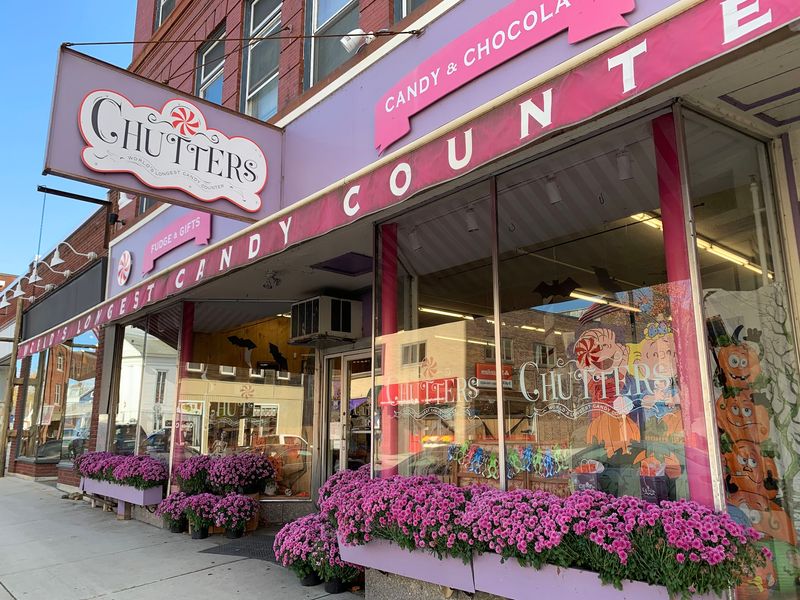
Sugar has a headquarters, and it happens to sit on Main Street. Chutters holds the record for the world’s longest candy counter, stretching an impressive 112 feet.
Glass jars run the entire length. Gummies, chocolates, retro sweets, and hard candies fill row after row, and the color alone stops people mid-step.
Kids treat the place like a treasure hunt. Adults usually rediscover something they had not tasted since grade school.
Bags and scoops make the process simple. Grab, fill, pay, and try not to feel guilty about the total.
Timing helps. Weekend afternoons during foliage season get busy, so a weekday morning visit means shorter lines and more elbow room at the counter.
The shop also serves as an easy landmark when navigating downtown. People give directions using it constantly.
Fun detail worth knowing. The record-length counter has become one of the most photographed things in northern New Hampshire, which is saying something in mountain country.
Come hungry for nostalgia, and maybe skip dessert afterward. The candy counter already covered that part of the day.
River Views From A Covered Pedestrian Bridge
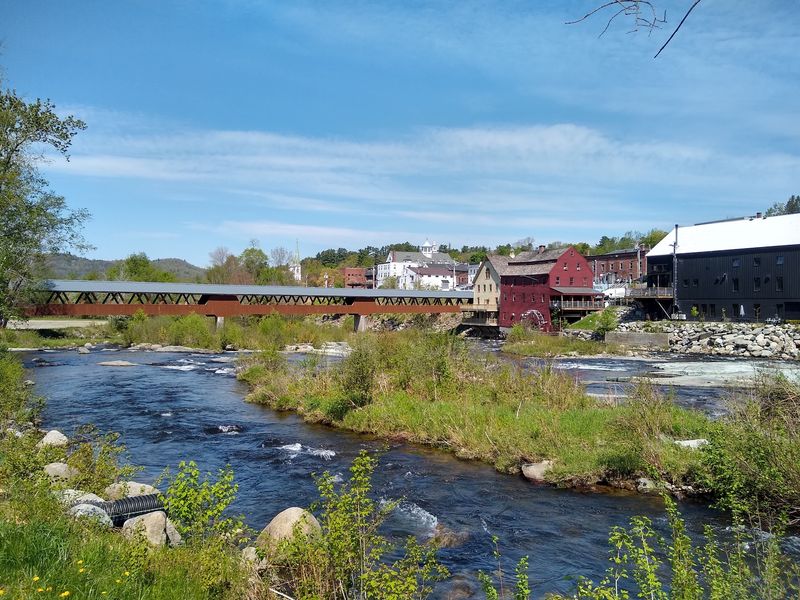
Water runs right through the middle of town. The Ammonoosuc River curves past downtown, tumbling over rocks loud enough to hear from the sidewalk.
Crossing it is half the fun. The Riverwalk Covered Bridge carries walkers over the current, offering framed views up and down the valley.
Harmony Park sits along the Riverwalk. Concerts and community gatherings happen on the grass, and benches make an easy spot to rest.
The River District, revitalized back in 2012, connects the waterfront to the shops above. It turned a working riverbank into a place people actually linger.
Anglers know these waters well. Brown and rainbow trout draw fly fishers through the warmer months.
Paddlers get their turn too. Calmer stretches suit kayaks and canoes, though conditions change with rainfall and season, so checking locally is wise.
Photographers should try early morning. Mist often hangs over the water while the town is still waking up.
Short walk, big payoff. Few small towns hand visitors a river, a covered bridge, and a park within the same few hundred steps.
Trails, Peaks, And Panoramic Payoffs
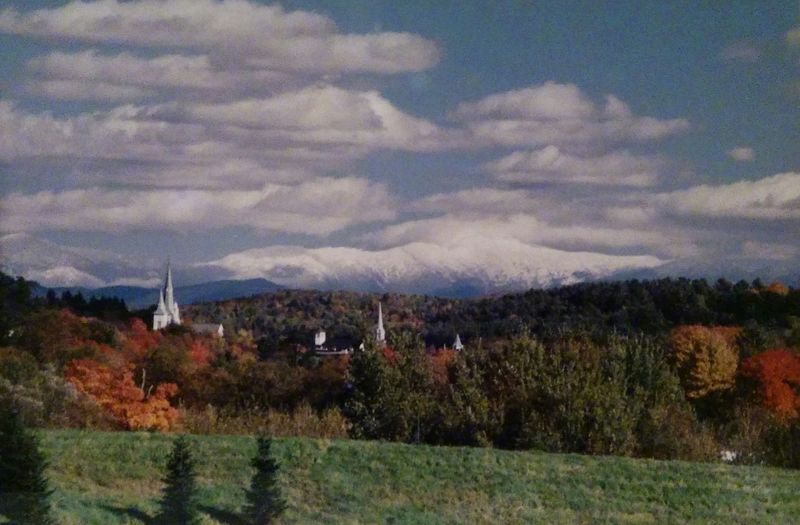
Mountains sit practically at the doorstep. Littleton works as a year-round base for exploring the White Mountains, with trails suiting almost every fitness level.
Kilburn Crags is the local favorite. The moderate climb opens onto wide views of the Ammonoosuc River Valley and the Presidential Range beyond.
Families lean toward gentler ground. The Dells and Remich Park offer easy nature trails, while Pine Hill Trails loop through woods scattered with glacial erratics, those enormous boulders left behind by ice.
Cyclists have their own network. PRKR Mountain Trails cover roughly 22 miles of hand-built singletrack, open year-round and groomed for fat biking once snow arrives.
The Ammonoosuc Rail Trail follows an old rail corridor toward neighboring towns. Flat, scenic, and friendly to casual riders.
Pack layers regardless of season. Mountain weather shifts quickly, and conditions on higher ground can differ sharply from town.
Trailheads sit close to downtown, so a morning hike and an afternoon of shopping fit into one day.
Boots on, phone charged for photos. The valley views earn every step of the climb.
Snow Season And The Slopes Nearby
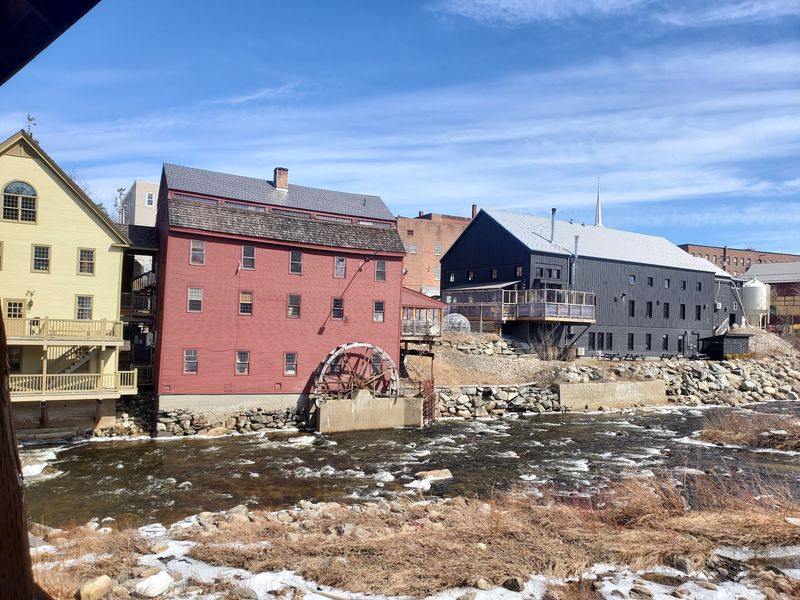
Winter does not slow this town down. Snow arrives, and the whole region shifts into skiing, snowshoeing, cross-country skiing, fat biking, and snowmobiling mode.
Big mountains sit within reach. Cannon Mountain, Bretton Woods, and Loon Mountain all draw skiers and snowboarders from across New England.
Locals also keep a hometown option. Mt.
Eustis Ski Area offers a smaller, low-key hill that suits beginners and families.
Cold is part of the deal. January typically brings average lows near 8 degrees Fahrenheit, so serious layers matter more than fashion.
Downtown becomes the warming hut. Cafes and shops fill with rosy-cheeked visitors peeling off mittens after a day outside.
Trail conditions vary with each storm, and grooming schedules change, so checking current reports before heading out saves disappointment.
Snowmobile corridors link the area to a wider trail network across northern New Hampshire. Riders treat the town as a fuel-and-food stop.
Short daylight hours mean planning ahead. Start early, finish with something hot, and let the snowbanks do the rest of the scenery work.
Railroad Roots And Nineteenth Century Stories
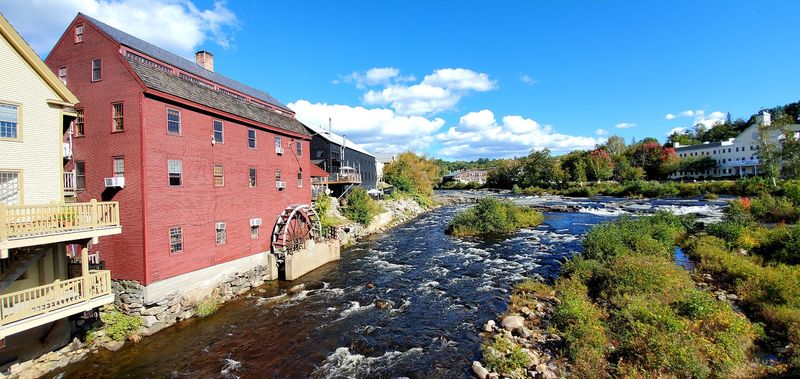
History here starts with moving water. Settlers arrived in the 1760s along the Ammonoosuc River, and the town was officially incorporated in 1784.
Rivers powered everything early on. Mills processed wood and grain, and later factories turned out shoes, gloves, and harnesses.
Then came the tracks. Railroad expansion in 1853 made the town a regional rail terminus, and prosperity built much of the Main Street architecture still standing today.
Photography played a role too. The Kilburn brothers ran a pioneering stereoscopic image business here between 1867 and 1909, sending views around the world.
Thayer’s Inn dates to 1850 and is described as the oldest continuously operated hotel in the White Mountains of New Hampshire. Its columned front is hard to miss.
The First Congregational Church holds historic stained glass windows installed between 1901 and 1902.
For deeper context, the Littleton Historical Society Museum keeps exhibits and artifacts covering these chapters.
Coin collectors get a nod as well. Littleton Coin Company started as a mail-order operation back in 1945 and grew into a well-known name.
Opera House Nights And Sidewalk Art
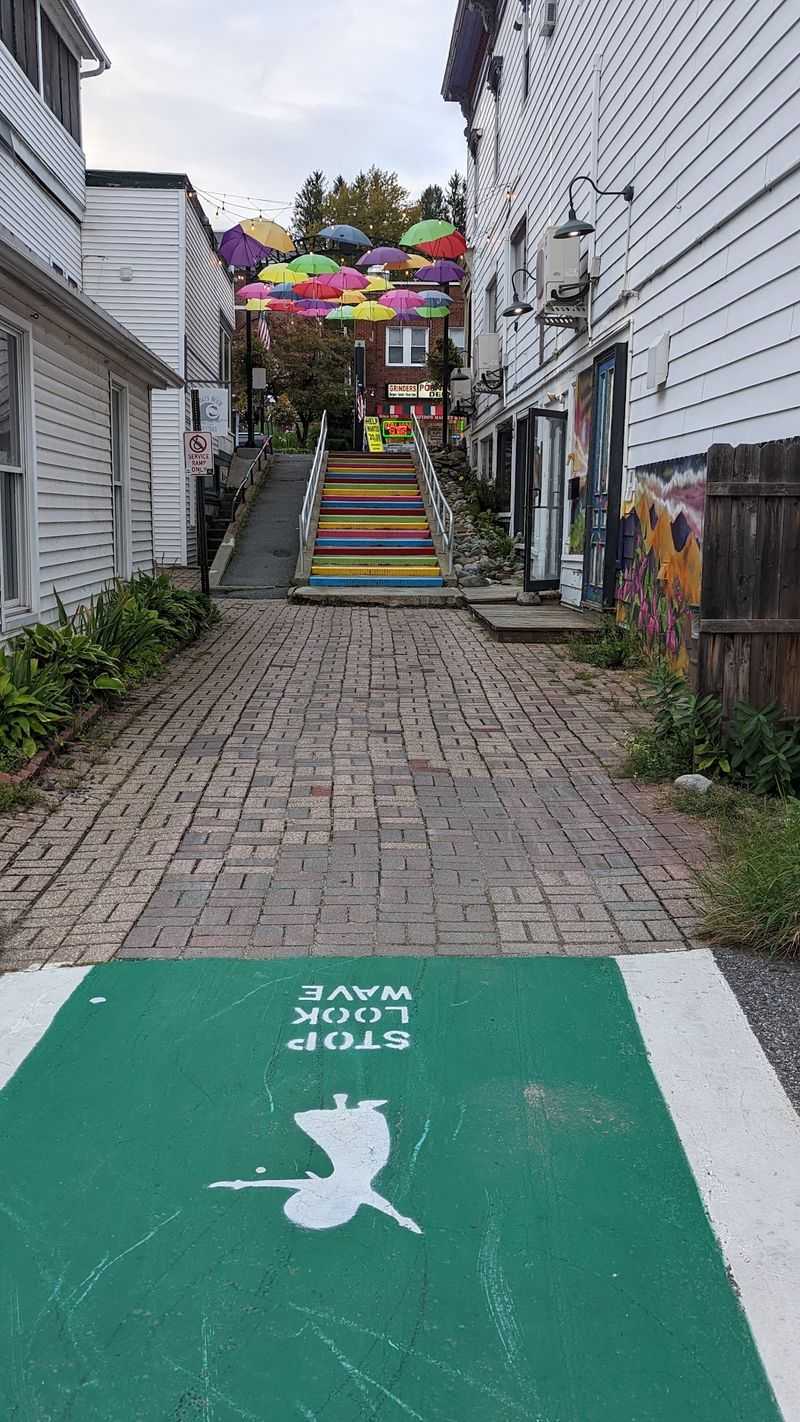
Culture punches above its weight in a town this size. The historic Littleton Opera House hosts live theater, music, and movie screenings throughout the year.
Art spills outdoors too. Beyond the Pollyanna statue, sculptures of General Grant and Joan of Arc turn up around town.
The Littleton Studio School operates as a community arts center, giving locals and visitors space to make things rather than only look at them.
Summer streets get lively. First Fridays bring music and art downtown during the warm months, and Concerts at Remich Park pull families onto the lawn.
Food doubles as a social event. The Third Thursday Food Fest and free community cookouts give everyone a reason to gather.
Seasonal traditions anchor the calendar. Independence Day festivities, the Gathering of the Jack O’ Lanterns, and the Christmas Parade mark the turning year.
The annual Littleton Art Show remains a highlight for artists and browsers alike.
AAA Travel Magazine once named the town among its coziest. Spend one evening on Main Street and that label starts making sense.
Diners, Cafes, And Comfort Food Classics
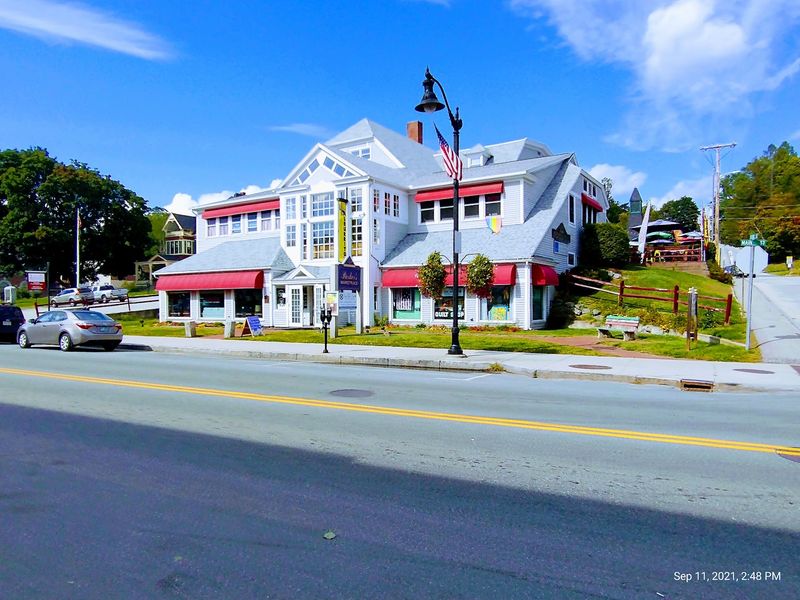
Breakfast has serious staying power in this town. The Littleton Diner and The Coffee Pot Restaurant have fed locals for generations and still draw morning lines.
Main Street and the River District hold the rest. Cozy cafes, family-run restaurants, and casual spots cover most cravings without requiring reservations weeks ahead.
New England comfort food shows up often. Think hearty plates, maple touches, and seasonal produce when farmers market days roll around.
Coffee culture is alive and well. Several spots make a good base for planning the day’s hike or thawing out after one.
Portions tend toward generous, so ordering three courses may be optimistic.
Peak foliage weekends fill dining rooms fast. Eating slightly early or late usually solves the wait.
The weekly farmers market brings local growers and makers together, and it doubles as a chance to chat with residents.
Food here is not about trends. It is about places that have quietly gotten it right for decades, served by people who remember regulars by name.
Hungry travelers rarely leave this town disappointed, or particularly hungry.
Quiet Corners Most Visitors Miss
Skip the obvious stops for an hour and the town opens up differently. The Dells Conservation Area offers quiet walking trails through woods and along a scenic pond.
Birdwatchers do well there, especially in spring and summer when the canopy fills with song.
The Littleton Historical Museum sits in a former carriage barn, with rotating exhibits that feel personal rather than polished.
Community spaces welcome outsiders too. The Littleton Community Center runs storytelling evenings, workshops, and assorted groups across the year.
The Loading Dock serves as another gathering spot for events and activities, and schedules shift by season.
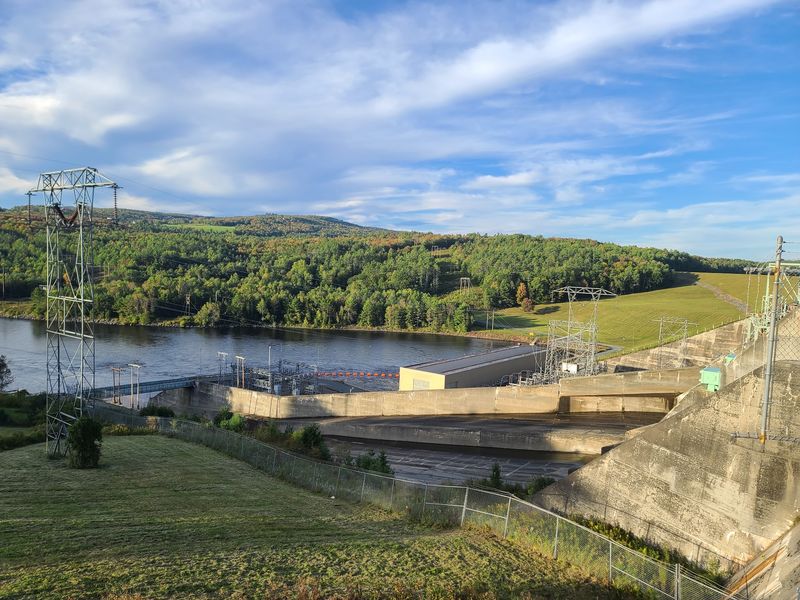
Water lovers should look toward Moore Dam Lake, described as the largest undeveloped body of water in New Hampshire. Paddling there feels remarkably uncrowded.
Checking local listings before arriving helps, since programming changes and not everything runs year-round.
These smaller places explain why the town keeps landing on happiest-town lists. Contentment shows up in ordinary spaces, not just headline attractions.
Wander past the main drag. The best souvenir might be a quiet trail, a pond, and no one else around.