
This State Park In Massachusetts Has Views Almost Too Beautiful To Believe
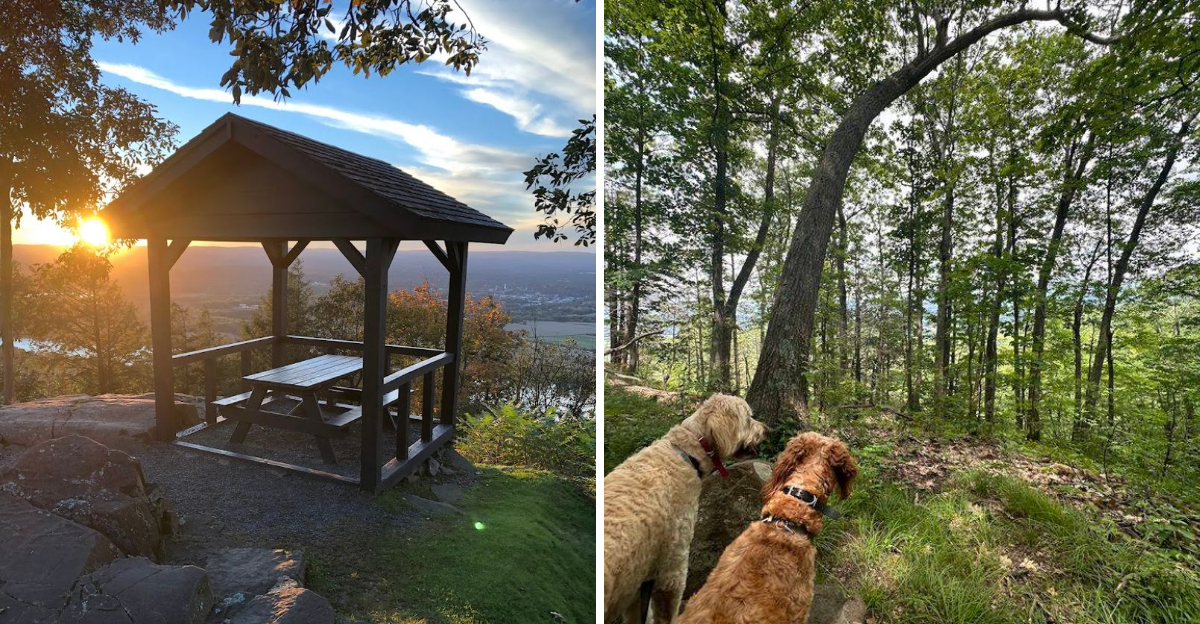
Some views make people stop talking for a second. Massachusetts saves one of those moments for a high ridge where the land drops away and the whole valley seems to open at once.
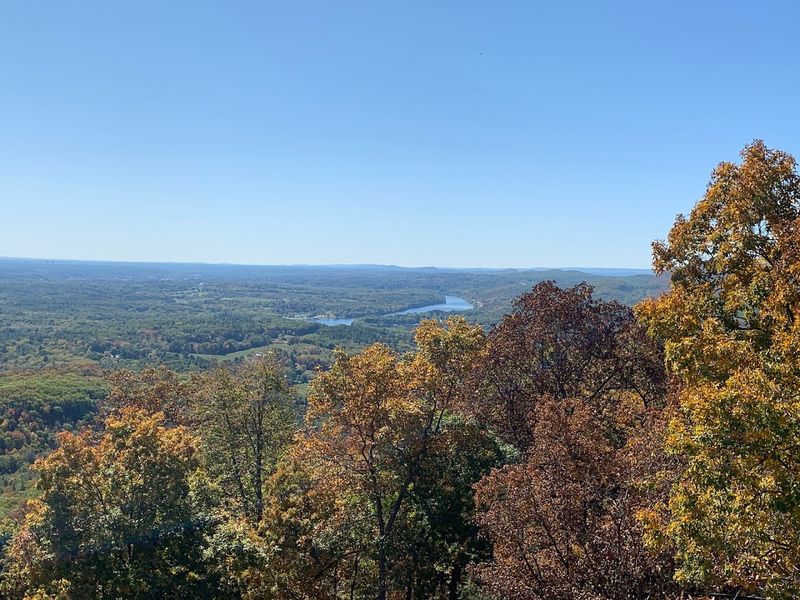
The river bends below like a silver ribbon. Farms, towns, trees, and distant hills stretch out in every direction.
It feels peaceful, but also a little dramatic, like the scenery decided to show off without warning. The best part is how simple the visit can be.
You can hike up, drive close to the top, or take your time along wooded paths before the big reveal. Every season brings a different mood, but summer gives the place a bright, open feeling that is hard to beat.
For anyone who loves big views without a complicated trip, this Massachusetts state park makes the ordinary afternoon feel much larger.
The Summit Views That Stretch Across Four States
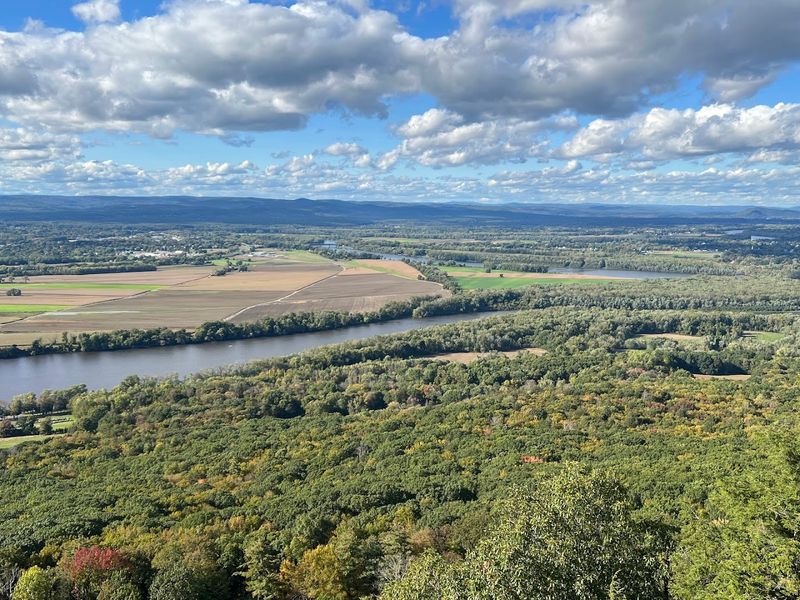
Standing at the top of Mount Holyoke on a clear afternoon feels less like seeing a painting that refuses to stay still. The Connecticut River curves through the valley far below, catching light in a way that makes it look almost silver.
On days with exceptional visibility, the horizon reveals mountain ridges from up to four states at once.
The summit sits at 878 feet, which is modest by mountain standards, but the open exposure of the peak means nothing blocks your sightline.
You can see the Springfield skyline to the south, the UMass Amherst campus to the north, and farmland spreading in every direction. The elevation feels earned, especially after a trail hike.
Fall brings the most dramatic transformation. The canopy below turns shades of amber, rust, and deep crimson, and the whole valley looks like it has been set gently on fire.
Spring and summer offer their own rewards, with flowering mountain laurel and fresh green hills rolling toward the horizon.
The Historic Summit House And Its Storied Past
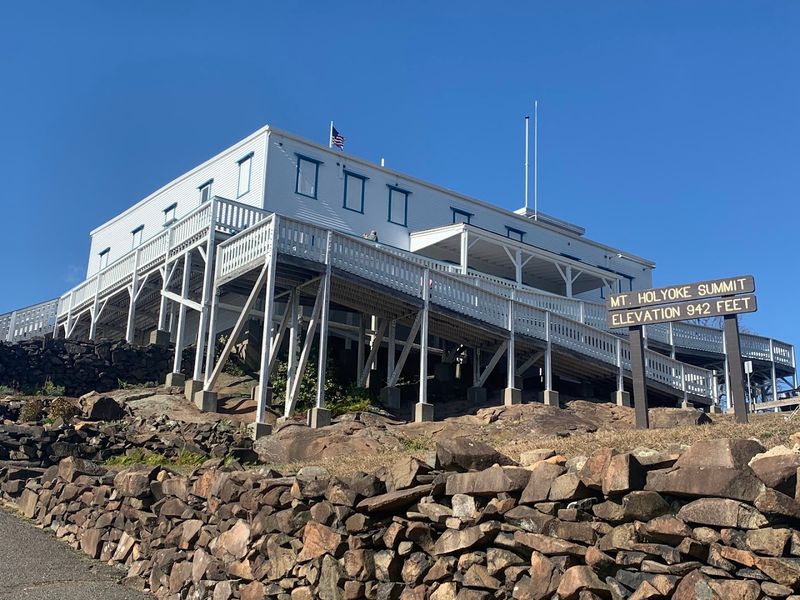
There is something quietly remarkable about reaching a mountain summit and finding a 19th-century hotel waiting for you at the top.
The Summit House, also known historically as the Prospect House, once operated as a full resort destination during an era when wealthy travelers made the journey by carriage and later by rail.
The building has survived more than a century of New England winters.
Today it functions as a visitor center and operates for tours and programs on weekends and holidays between Memorial Day and Columbus Day. The wrap-around deck on the western side frames the Connecticut River Valley like a living postcard.
Rangers stationed inside share stories about the building’s history with the kind of detail that makes the past feel genuinely close.
The structure itself is worth studying. Original architectural details remain visible throughout, and the interior gives visitors a real sense of how mountain tourism looked in the 1800s.
Tour guides tend to keep their presentations engaging without dragging on, leaving room for questions.
For anyone with an interest in American history alongside natural beauty, the Summit House adds a dimension to the visit that a simple overlook never could.
Thomas Cole Painted This Exact Landscape In 1836
Few American landscapes carry the kind of artistic legacy that Mount Holyoke holds. In 1836, Thomas Cole stood at this summit and produced what many art historians consider one of the defining masterpieces of the Hudson River School.
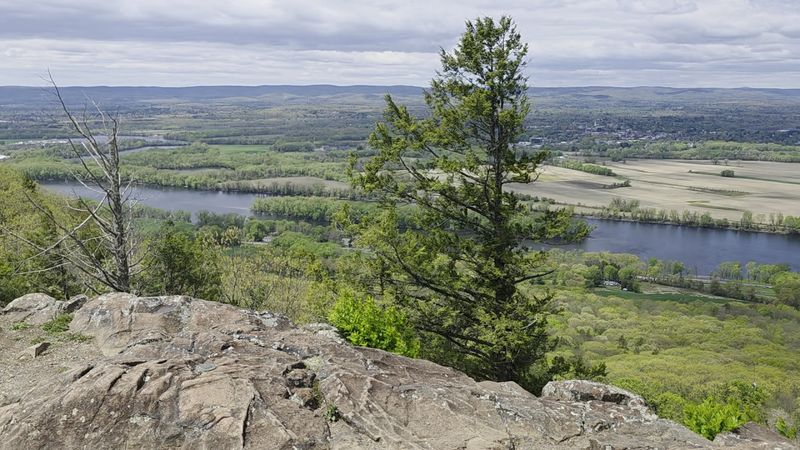
The painting, formally titled View from Mount Holyoke, Northampton, Massachusetts, after a Thunderstorm, captures the famous Oxbow bend of the Connecticut River in extraordinary detail.
That same Oxbow remains visible today from the summit of Skinner State Park. Standing at the overlook and recognizing the curve of the river from a nearly two-century-old canvas is a quietly powerful experience.
The landscape has changed in small ways, but the essential geography Cole recorded is still present and still breathtaking.
Cole’s painting now lives in the collection of the Metropolitan Museum of Art in New York City, which speaks to how seriously the art world has regarded this particular view.
Visiting the actual location gives the painting a context that no museum wall can replicate.
For travelers who appreciate the intersection of art and geography, this detail transforms a hike into something with real cultural weight. The view was worth painting then, and it remains worth the climb today.
Over 40 Miles Of Hiking Trails Through The Holyoke Range
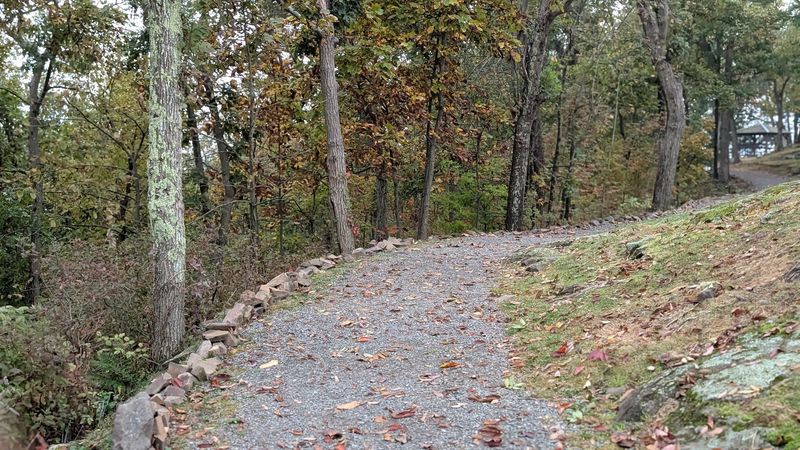
Forty miles of trail is a generous number for any state park, and Skinner makes good use of every one of them.
The Holyoke Range trails vary considerably in character, moving from relatively flat woodland paths near the base to steep and rocky ascents that demand attention and a reasonable level of fitness.
No two trails feel quite the same, which keeps repeat visitors returning with fresh routes to explore.
The Metropolitan (MM) Trail is a popular choice for hikers seeking a direct summit approach. It runs steep in sections but rewards the effort quickly.
Dry Brook Trail and Lithia Springs Trail offer a gentler experience for those who prefer a longer, more gradual walk through the forest interior. Connecting multiple trails allows for loops that range from a casual hour to a full half-day outing.
Trail maps are available at the main parking area free of charge, which is genuinely useful given that cell signal becomes unreliable in certain sections of the range. Picking up a physical map before heading out is a practical habit worth adopting here.
The trails are well-marked overall, but the terrain in places demands focus. Good footwear and a bottle of water will make the difference between a pleasant hike and an uncomfortable one.
Hawk Watching In Spring And Fall Along The Ridge
The Holyoke Range acts as a natural funnel for migrating raptors, and Skinner State Park benefits directly from that geography.
Spring and fall bring reliable hawk migration along the ridge, with broad-winged hawks, sharp-shinned hawks, and Cooper’s hawks appearing in numbers that reward patience and a decent pair of binoculars.
The exposed summit areas provide unobstructed sightlines in multiple directions.
Broad-winged hawk migration peaks in mid-September, when kettles of birds spiral upward on thermal columns before streaming south in loose, impressive formations. On the right September afternoon, the numbers can be striking.
Spring migration runs a bit quieter but still offers consistent raptor activity for observers willing to spend time at the overlooks.
Hawk watching here requires no special equipment beyond binoculars and comfortable clothing suited to the ridge winds, which run cooler than the valley below.
The activity pairs naturally with hiking, since moving between overlook points along the range gives observers different angles on the sky.
For visitors who have never watched a hawk migration before, the experience tends to produce the kind of quiet enthusiasm that turns a casual nature walk into a genuine interest.
The ridge at Skinner is one of the more underappreciated raptor watching spots in the region.
Mountain Laurel Season Transforms The Park Each June
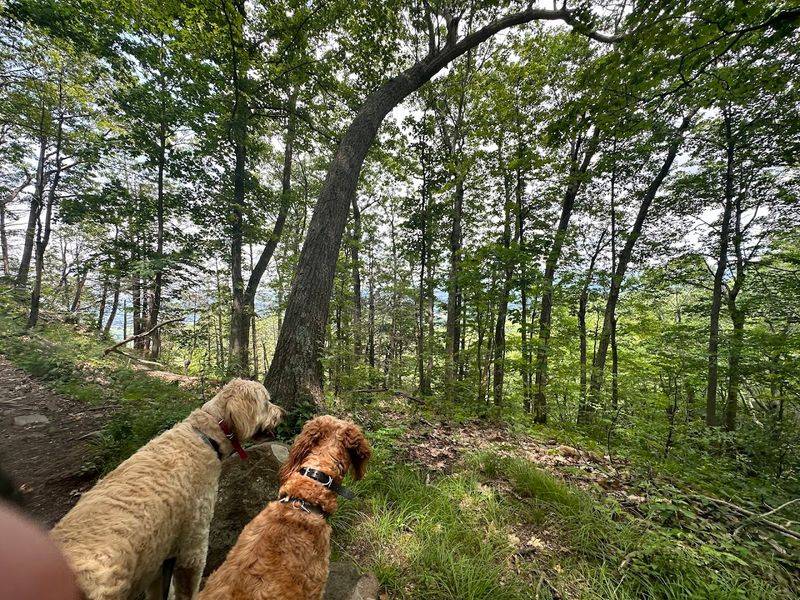
June at Skinner State Park arrives with a quiet spectacle that most visitors overlook in favor of the fall season.
Mountain laurel blooms across the Holyoke Range in clusters of pink and white flowers that line the trail edges and forest understory. The effect is surprisingly lush for a plant that grows in such thin, rocky soil.
Peak bloom generally falls in the second and third weeks of June, though timing shifts slightly depending on the year’s temperatures.
The flowers appear along many of the lower and mid-elevation trails, making them accessible to hikers of most ability levels.
The contrast between the dark green laurel foliage and the pale blossoms gives the forest a layered, almost structured appearance.
Visiting during laurel season also means the trails carry lighter foot traffic than they do in October, which makes for a more contemplative experience. The summit views remain just as wide and just as rewarding as any other time of year.
Combining the flower-lined trails with the panoramic overlooks above creates a visit that engages the senses at every elevation from the trailhead to the peak.
Picnic Areas With Views That Make Lunch Feel Like A Luxury
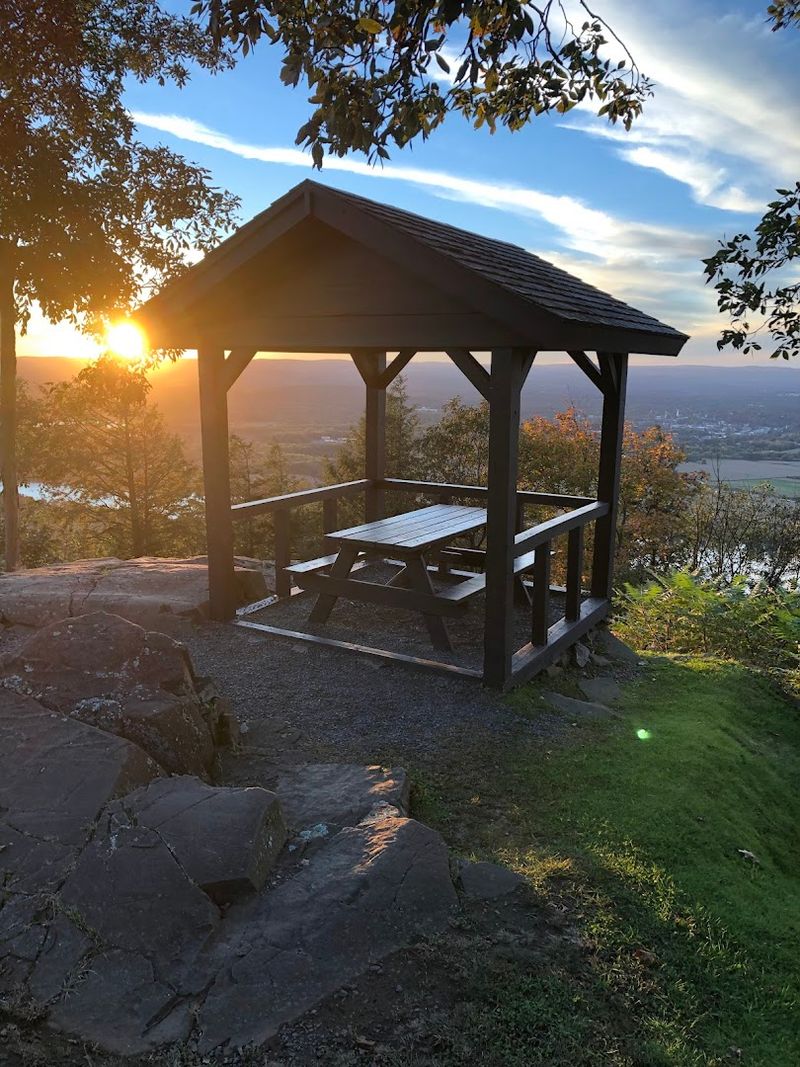
Twenty picnic sites spread across Skinner State Park, and many of them sit at positions that would make a restaurant owner envious.
Eating lunch while looking out over the Connecticut River Valley below is one of those simple pleasures that costs nothing but a packed cooler and a short drive.
The sites near the summit area in particular offer sightlines that stretch well beyond what most picnic tables in the world can claim.
The park maintains these areas in solid condition. Benches and tables are kept clean, and the surrounding grounds are well-groomed without feeling overly manicured.
Families with young children tend to appreciate the combination of open space and accessible views that does not require a strenuous hike to reach.
Calling ahead to confirm picnic area rules and availability during peak season is worth the few minutes it takes. The park phone number is available through the official Massachusetts DCR website.
Arriving early on busy summer and fall weekends secures the better sites before they fill.
Skinner State Park at 10 Skinner State Park Rd in Hadley is open daily from 9 AM to 4 PM, making it a practical full-morning outing with time to spare.
Driving To The Summit Is An Option Worth Knowing About
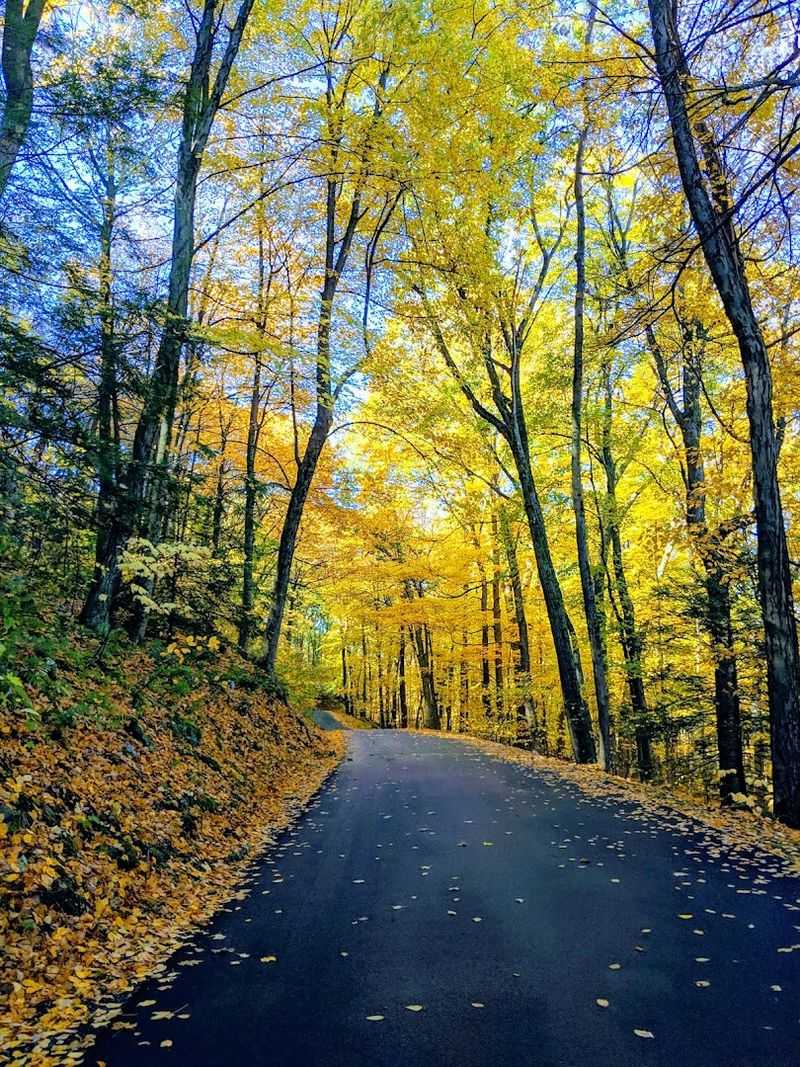
Not every visitor arrives at Skinner State Park ready for a steep trail ascent, and the park accommodates that reality with a paved auto road that runs to the summit from April through November.
The road winds upward through the forest canopy, and the views that appear as it opens toward the top give drivers a genuine preview of what the summit delivers. It is a legitimate option, not a compromise.
During peak visitation periods, park staff manage the number of vehicles allowed on the road at one time to prevent overcrowding at the summit. A parking fee applies at the top during those busy windows.
The system works smoothly in practice, and the wait, if any, tends to be short.
Visitors who arrive by car still have access to the Summit House deck, the overlooks, and the short walking paths around the peak.
Hikers who prefer to earn their views on foot have the option of ascending by trail and descending via the road, or vice versa, which provides a pleasant change of terrain on the return trip.
The road itself is well-maintained and navigable for standard passenger vehicles.
For families with older adults, visitors with mobility considerations, or anyone who simply wants to prioritize the view over the workout, the auto road makes Skinner accessible without diminishing the experience.