
This Stunning Georgia Lagoon Stayed Hidden Even From Longtime Locals
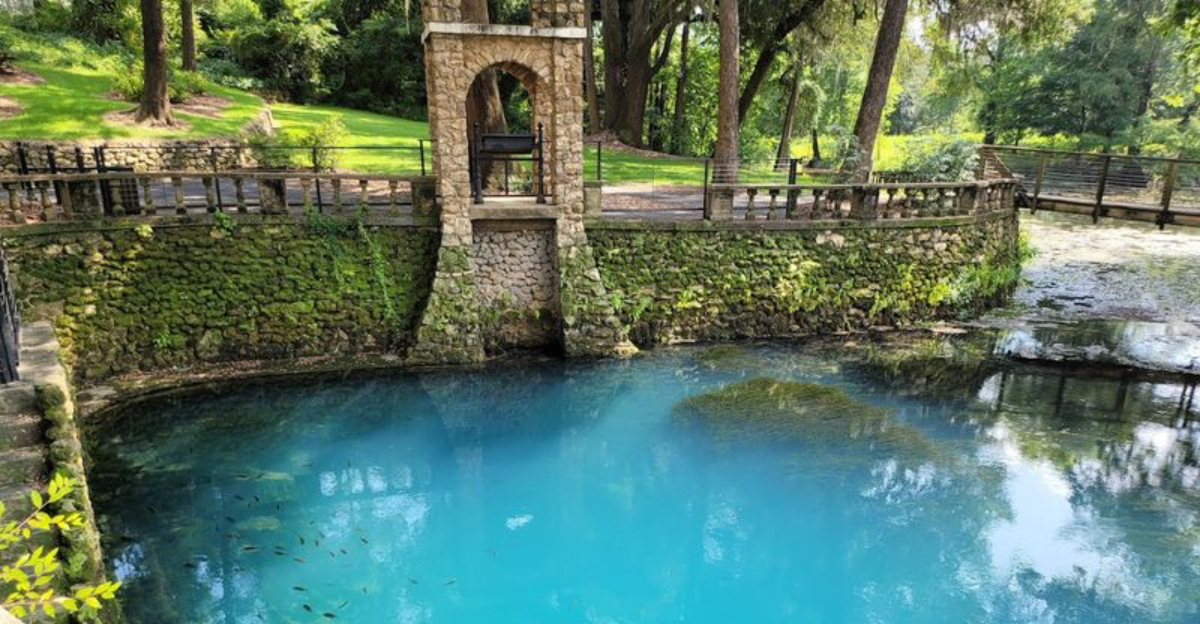
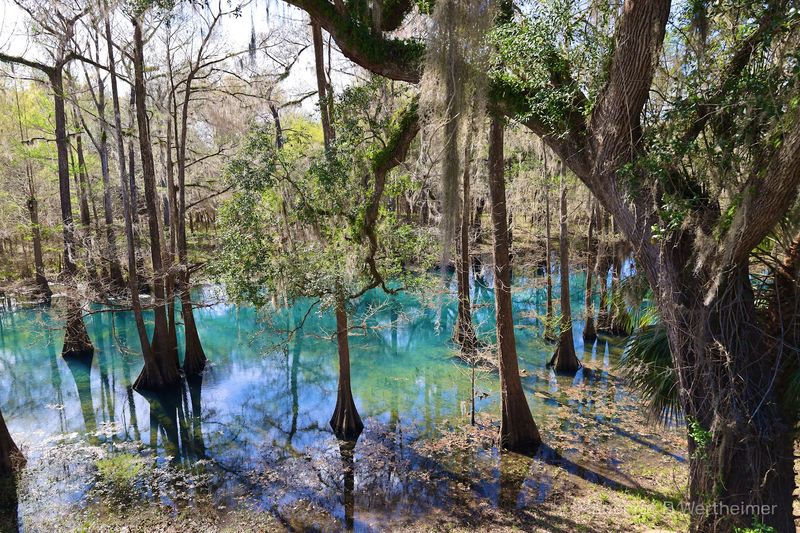
A lagoon this electric blue almost doesn’t look real, and it comes with a wild story. Georgia holds a swirl of turquoise water inside cypress shade, and it is stunning enough to stop every conversation cold.
Sunlight scatters into deep cobalt and turquoise with every passing cloud. Longtime locals barely talked about this place for years, and an entire world of caves sits right beneath the water.
Old resort ruins still frame the entrance, and fish glide past without the slightest hint of fear. Georgia rarely makes much noise about a scene like this, but the fuss makes sense the second you see it.
Keep it in mind for your next slow weekend escape, because it truly deserves to be seen at least once.
The Blue That Stops You Cold
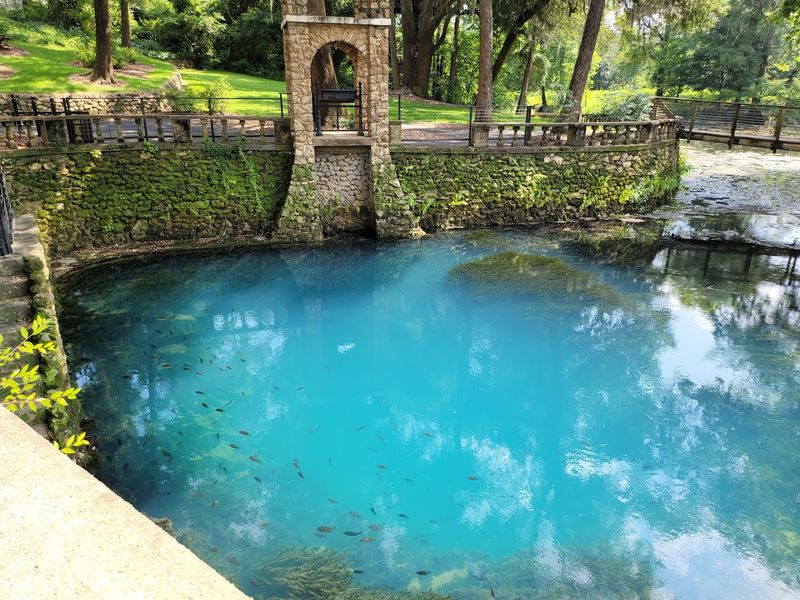
Blue this vivid does not look real at first glance. The spring at Radium Springs Garden pumps an astonishing volume of crystal-clear water from deep underground, giving the lagoon its signature electric hue that photographs almost look edited.
Georgia is home to many natural wonders, and this spring ranks among the most striking. The water stays at a steady 68 degrees year-round, fed by a vast underground cave system beneath the surface.
That constant temperature keeps the water remarkably clear even on overcast days.
Standing at the edge of the spring, visitors can spot fish moving through the depths below with ease. The transparency is almost disorienting.
Sunlight hits the surface and scatters into shades of turquoise and cobalt that shift depending on the angle. For anyone who has never seen a Florida spring but wonders what the fuss is about, this spot delivers a very convincing answer without crossing the state line.
Georgia’s Largest Natural Spring And Its Deep Roots
Long before resort brochures and tourism campaigns, the Muscogee people recognized something special here. They called the spring “Skywater,” a name that captures the color and spirit of the place far better than any modern marketing could.
European settlers later simplified it to “Blue Spring,” which was accurate if unimaginative. The spring eventually earned its current identity when trace elements discovered in the water led to the name Radium Springs, tying the site to early 20th-century fascination with natural minerals.
Located at 2501 Radium Springs Rd, Albany, GA 31705, the spring feeds directly into the Flint River, making it ecologically significant well beyond its visual appeal. It holds the distinction of being Georgia’s largest natural spring, a fact that surprises most first-time visitors.
The underground cave system driving that flow stretches far beneath the surface, channeling water that has traveled through limestone for centuries before surfacing here in southwest Georgia.
When This Spot Was The Talk Of The South
Picture a jazz-age crowd arriving by train, dressed for an evening at one of the South’s most fashionable destinations. That was the reality at Radium Springs in its prime, when the site operated as a full-scale luxury resort drawing visitors from across the region.
The Radium Springs Club opened in 1927 and quickly became the kind of place people planned their summers around. A grand social hall, hotel accommodations, bathhouses, and a championship golf course made it a complete retreat.
The supposedly therapeutic properties of the spring water added an extra selling point that fit perfectly with the era’s enthusiasm for mineral cures.
The Great Depression brought the curtain down on that golden chapter by 1939. What followed was a long, slow decline that included a damaging fire in 1982 and catastrophic flooding from Tropical Storm Alberto in 1994.
A second major flood in 1998 sealed the building’s fate, and the structure was demolished in 2003.
What Hides Beneath The Surface
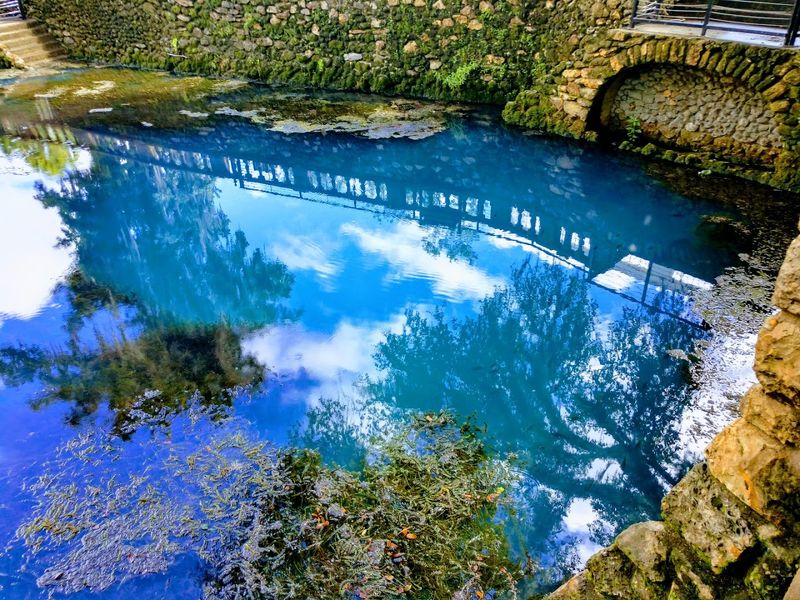
The spring does not just look mysterious. It actually is.
Below the shimmering surface lies an extensive network of underwater caves that has fascinated and challenged explorers for generations. The passages have names like Fat Man’s Misery, Mermaid’s Tunnel, Hall of Giants, and Neptune’s Trident.
Cave divers have documented these formations, but access is tightly restricted. The system is notoriously complex and has claimed the lives of experienced divers over the years.
Permits are rare, and only highly skilled cave divers are considered for entry. For the vast majority of visitors, the caves remain a story told on informational placards rather than a personal experience.
That restriction does not diminish the intrigue. If anything, knowing that something vast and largely unexplored sits directly beneath your feet adds a layer of wonder to every visit.
The spring keeps its secrets well. Visitors can watch the water pulse and bubble from above, sensing the power of whatever lies beneath without ever needing to go down themselves.
The Wildlife That Calls This Lagoon Home
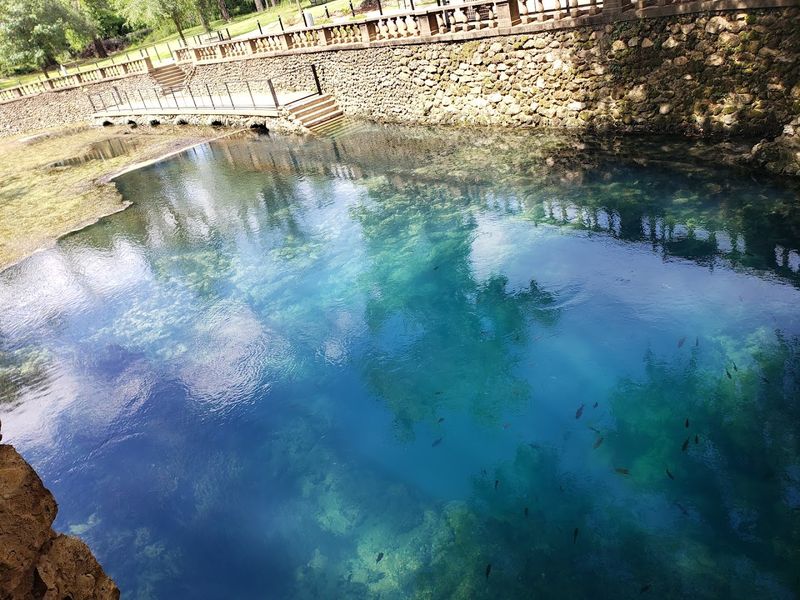
Fish do not hide here. The water is too clear for that.
Visitors standing at the edge of the spring can watch large fish cruise the depths with the casual confidence of creatures that know they are safe from fishing lines.
The rare Gulf striped bass has been spotted in the spring, drawn by the cool, oxygen-rich water that the underground system delivers year-round. Turtles are equally common, often seen basking on rocks or paddling slowly near the surface.
Ducks and geese also frequent the area, adding movement and sound to an already lively scene.
The surrounding vegetation supports this ecosystem from above. Native plants and trees create a canopy that shelters the spring and provides habitat for birds that birdwatchers appreciate spotting.
Interpretive signs throughout the park explain the ecological connections between the spring, the surrounding garden, and the Flint River beyond. The whole site functions as a living classroom, and the wildlife is the most engaging instructor on the property.
Ruins That Tell A Story Better Than Any Museum
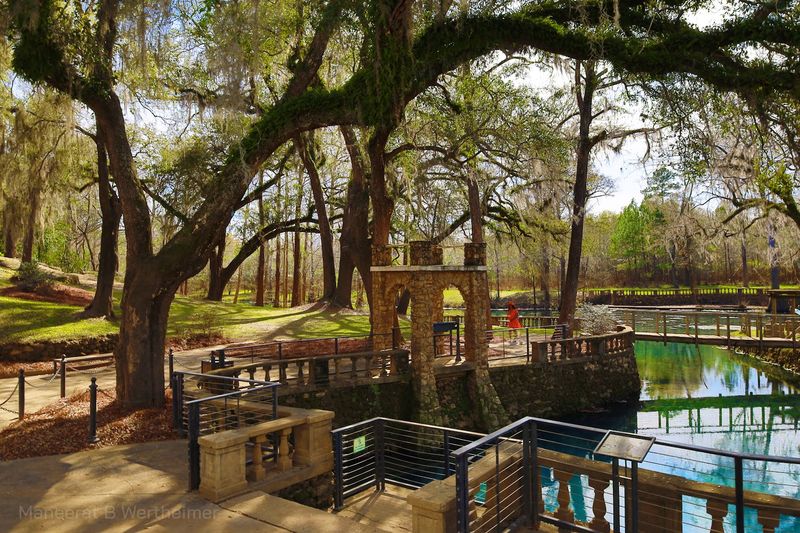
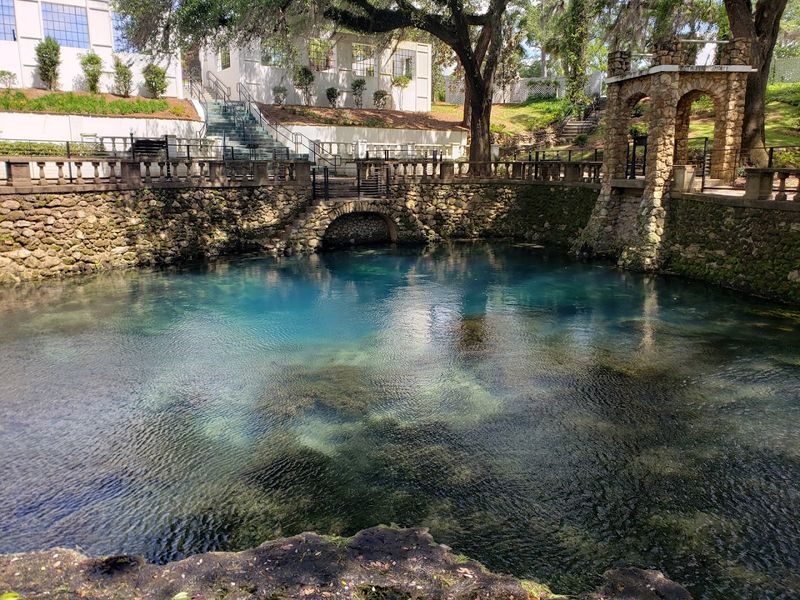
Old walls have a way of speaking when you slow down enough to listen. The remains of the 1920s social hall at Radium Springs Garden now form the architectural backbone of the park entrance, and the preserved stonework carries unmistakable dignity.
Portions of the original structure were carefully incorporated into the redesigned park rather than cleared away entirely. That decision was a good one.
The contrast between the weathered historic stone and the manicured garden paths around it creates a visual narrative that no sign or placard could replicate on its own.
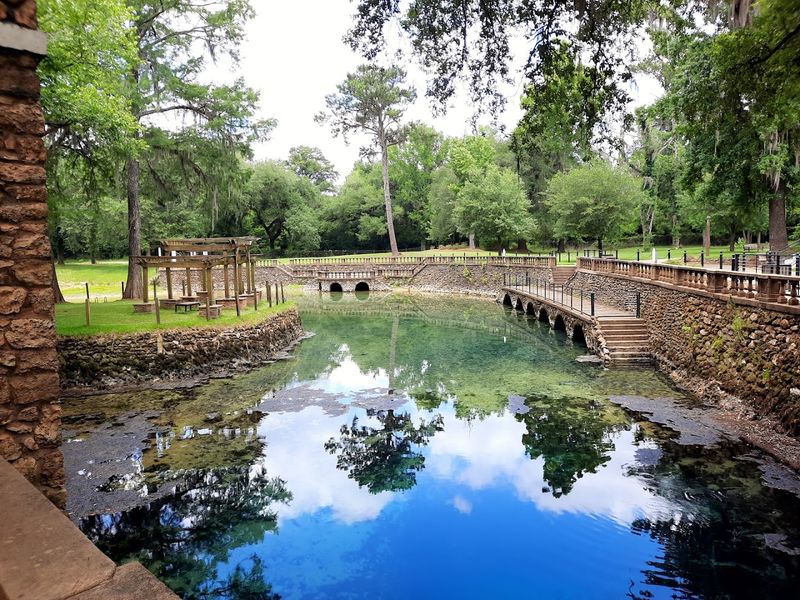
Gazebos now occupy spots where resort guests once gathered. Restored terraces offer views of the spring that the visitors would have recognized instantly.
Informational boards fill in the timeline between the resort’s glamorous opening and its eventual end. Walking through this section of the park feels like reading a chapter of Georgia history that most textbooks skip entirely, told in stone and water rather than words.
How The Community Brought It Back
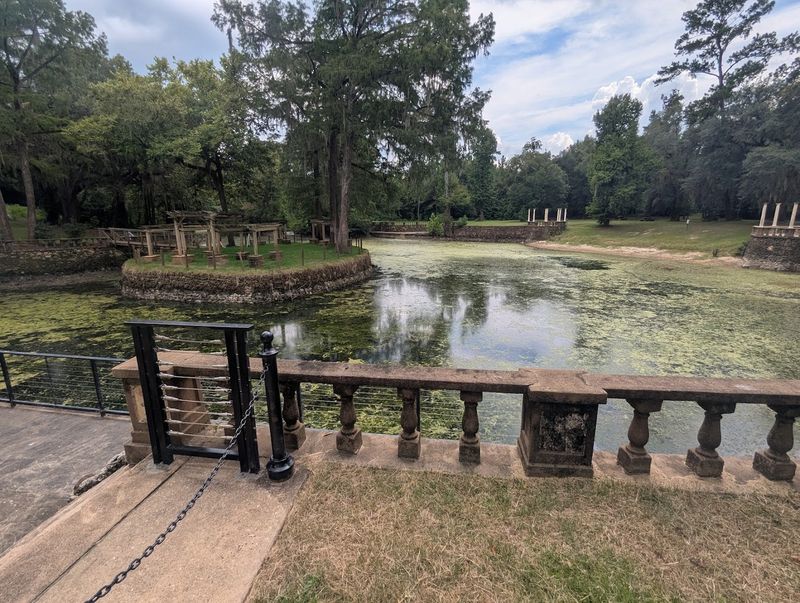
After floods, fire, and decades of decline, many historic sites simply disappear. Radium Springs did not go quietly, and the community refused to let it.
Local and state efforts combined to acquire the property and fund a revitalization project that resulted in the park reopening in 2010.
The transformation was deliberate and thoughtful. Rather than trying to recreate the resort, planners converted the site into an ecological and environmental park with botanical gardens at its core.
Walking trails replaced the old place footprint. Observation points were positioned to frame the spring’s best angles.
The emphasis shifted from entertainment to appreciation.
That shift suits the place well. Radium Springs Garden now serves as a community anchor in a way the resort never could.
Families picnic on the grass. Photographers linger at the water’s edge.
Locals who grew up hearing stories about the old resort now bring their own children to walk the same ground. Georgia preserved something real here, and the result is a park that earns its visitors’ loyalty.
The Atmosphere That Slows Everyone Down
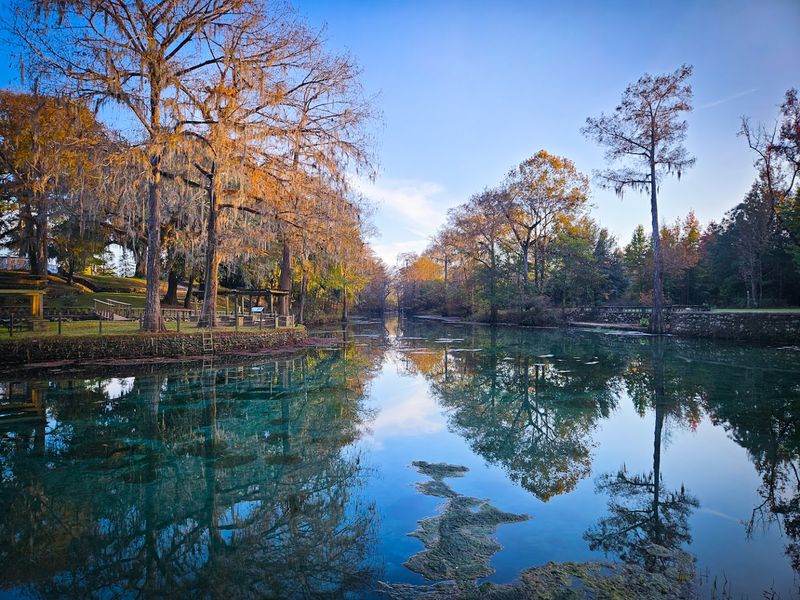
Calm is not just a feature here. It is the whole point.
Cypress trees draped in moss line the pathways, and the sound of flowing water replaces whatever noise followed visitors in from the road. The transition happens fast.
Sunlight filters through the canopy in shifting patterns that change throughout the day, making the same spot look different depending on the hour. Benches positioned throughout the garden invite visitors to stop moving and simply observe.
That invitation is rarely declined. The spring acts as a focal point that anchors the whole experience, drawing eyes back repeatedly even as visitors explore the surrounding paths.
The park draws a quiet crowd. Couples walk slowly.
Solo visitors read on the grass. Families spread out near the picnic areas without feeling crowded.
The atmosphere is less curated than a botanical garden and more organic than a city park. It occupies a comfortable middle ground that feels accidental but is clearly the result of careful planning by people who understood what made the place worth saving.
Free To Visit And Easy To Reach
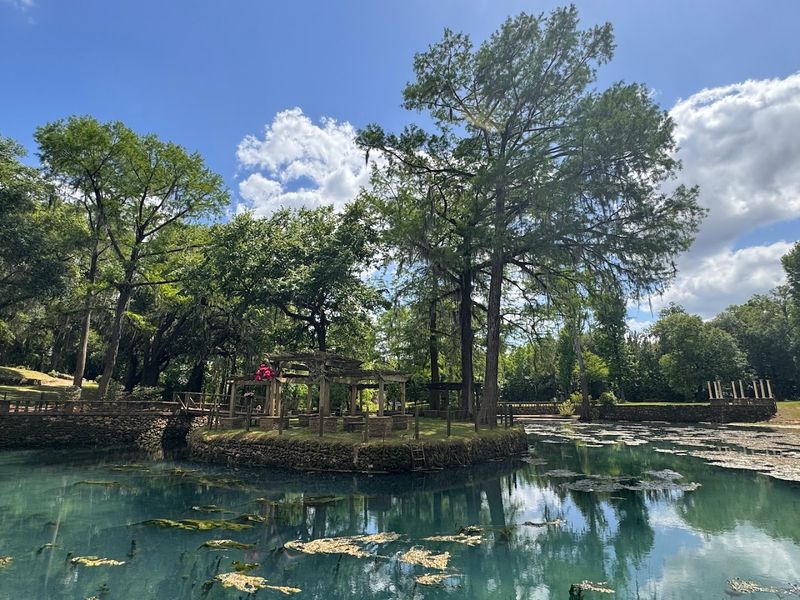
Free admission to a site this historically rich and visually striking is genuinely surprising. No gate fee, no parking charge, no reservation required.
Radium Springs Garden simply opens its paths and invites whoever shows up to explore at their own pace.
The park sits roughly ten minutes south of Albany, Georgia, making it an easy detour for anyone passing through the region. The drive down Radium Springs Road offers views of pecan orchards and cotton fields that set an appropriately Southern tone before the lagoon even comes into view.
Parking is available directly on site with room for a comfortable number of vehicles.
Clean restrooms are available, which matters more than it sounds on a long road trip. The wide, well-maintained sidewalks make the main area accessible for most visitors.
For those who want more than a stroll, adjacent Overlook Park adds fitness equipment, a walking trail, and a trailhead connecting to bike paths on the old golf course. The whole experience costs nothing but time.
Conservation Challenges Facing The Spring
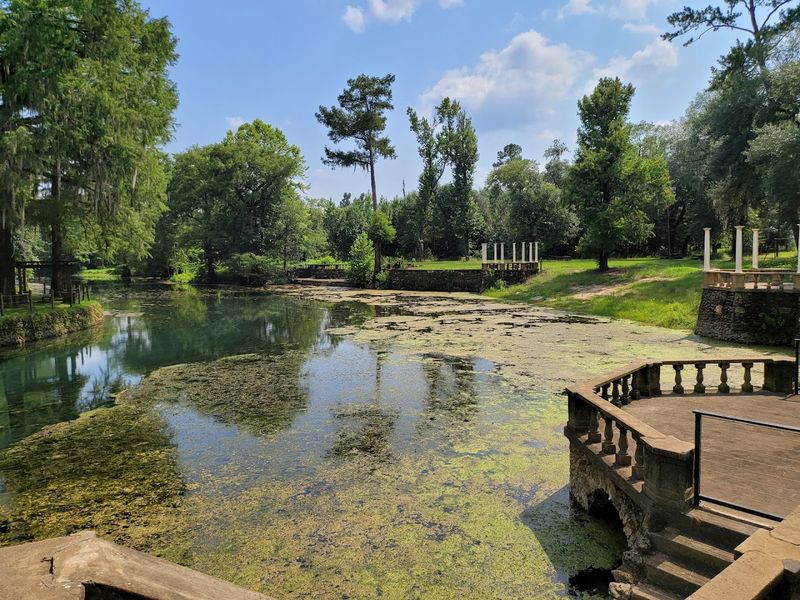
Beauty this striking comes with responsibilities. The spring’s water level is not guaranteed.
Drought conditions and agricultural withdrawals from the Floridan Aquifer can reduce the flow significantly, and some visitors have arrived to find the lagoon far less impressive than the photographs suggested.
Swimming has been permanently prohibited in the spring. That restriction protects the fragile ecology of the water and keeps visitors away from the dangers posed by the underground cave system below.
Fishing is also not permitted in the main spring area, though a stocked pond nearby offers that option in a controlled setting.
Local authorities are actively working on water management solutions to stabilize the spring’s flow over the long term. Trash traps installed in nearby streams aim to protect the broader Flint River watershed.
These efforts reflect a serious commitment to keeping the site healthy for future visitors. The spring has survived floods, fire, and neglect before.
With proper stewardship, Georgia’s largest natural spring has every reason to thrive well into the future.
What To Expect On The Trails
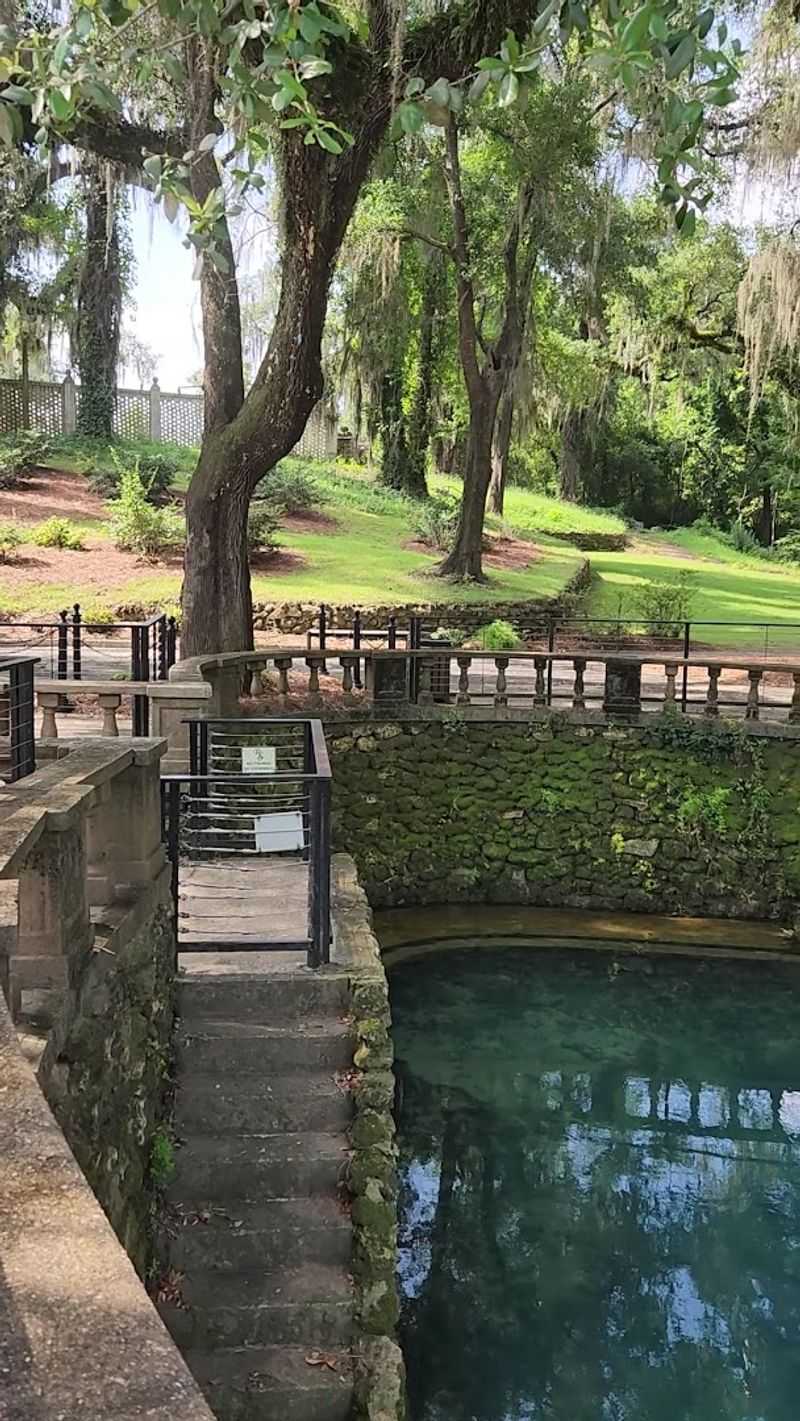
Wide sidewalks make the main loop at Radium Springs Garden approachable for almost everyone. The paths are clean, clearly marked, and wide enough that two strollers pass each other without drama.
That accessibility matters for a park serving such a broad mix of visitors.
Interpretive signs appear at regular intervals along the route, covering everything from the spring’s geology to the resort’s history and the site’s ecological significance. Reading them all adds a surprising amount of depth to what might otherwise feel like a simple nature walk.
The signs are well-written and pitched at a level that works for both curious adults and attentive kids.
Beyond the main spring area, trails extend into shadier sections of the garden where the canopy thickens and the noise from the road fades entirely. Photographers tend to linger in these quieter zones, where the interplay of light and shadow through the trees creates compositions that reward patience.
Bringing comfortable shoes and bug spray during warmer months makes the experience considerably more pleasant, as several visitors have noted.
Why This Place Rewards A Second Visit
First-time visitors often leave planning their return before they reach the parking lot. The spring changes character depending on rainfall, season, and time of day, which means no two visits look exactly alike.
That variability is part of the appeal.
The water runs most impressively after periods of adequate rainfall when the aquifer is full and the flow is strong. The blue deepens, the surface reflects the surrounding trees more vividly, and the whole lagoon earns every superlative attached to it.
During drier stretches, the spring still holds interest, but managing expectations before the visit helps.
Regular visitors to this corner of Georgia tend to treat the park as a reliable reset button. The combination of history, ecology, and sheer visual impact makes it a rare destination that works for a quick twenty-minute stop and an extended afternoon equally well.
Radium Springs Garden asks nothing of its visitors except their attention, and in return it offers one of the most quietly remarkable natural scenes in the entire state.