
This Stunning Maine Coastal Trail Is One Most Tourists Walk Right Past, But It Deserves More Attention

Skip the hurry and give the ocean a little room to impress you. In Maine, this trail turns a quick roadside stop into a fresh-air adventure with waves, cliffs, and plenty of wow moments.
The best part is how quickly the scenery pulls you in. Who would not want a walk where the Atlantic keeps popping up beside the path like it planned the whole surprise?
Early visitors get the biggest reward. The trail feels calmer, the rocks look sharper in the morning light, and every viewpoint gives you another reason to pause.
This is your excuse to stretch your legs and make the day feel bigger. Maine has a way of making a short hike feel like a tiny vacation you will talk about later.
The Trail That Surprises Everyone

There is something almost sneaky about the Ocean Path Trail. Cars zip past it on the Park Loop Road every single day, and most people behind the wheel have no idea what they are missing just a few steps away.
The trail begins at the Sand Beach parking lot in Bar Harbor, ME 04609, right inside Acadia National Park. From the very first steps, the Atlantic Ocean opens up beside you in a way that no car window ever could.
The path stretches 2.2 miles one way, making it a 4.4-mile out-and-back trip in total. That might sound like a lot, but the terrain is mostly flat and well-maintained, so it feels more like a scenic stroll than a serious workout.
What makes this trail stand out is how much variety it packs into one walk. You get sandy beach, smooth granite ledges, sea caves, towering cliffs, and wild rosebushes all in the same outing.
Have you ever walked somewhere and immediately started planning your return trip? Ocean Path has that effect on almost everyone who tries it.
The Starting Point That Sets The Mood
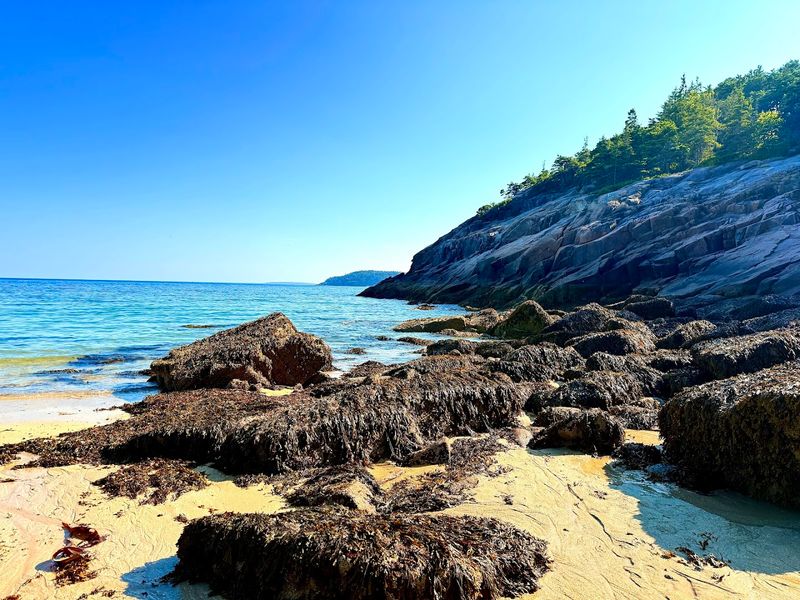
Not many hiking trails begin with a beach that looks like it belongs on a postcard. Sand Beach is one of the few sandy beaches in all of Acadia National Park, and it serves as the official starting point for the Ocean Path Trail.
The beach sits in a natural cove, protected on both sides by granite headlands. The water is famously cold, even in the height of summer, but that does not stop people from wading in up to their ankles and grinning like kids.
Arriving early here is a smart move. Visitors who show up around 7am report having the beach almost entirely to themselves, with the morning light painting the rocks in warm gold tones that photographers absolutely love.
Parking at Sand Beach fills up fast, especially on summer weekends. The free Island Explorer shuttle is a genuinely useful option that takes the stress out of finding a spot and drops you right at the trailhead.
Restrooms are available at the parking lot, which is a small but important detail when you are about to spend a couple of hours walking. Could there be a better way to start a trail than with your feet in the sand and the whole Atlantic stretched out in front of you?
Probably not.
Where The Ocean Puts On A Show
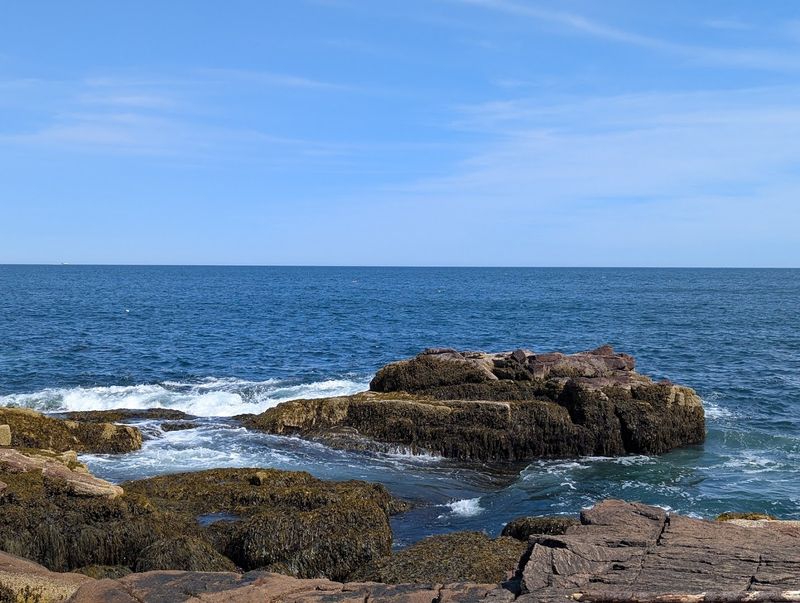
About 0.7 miles from Sand Beach, the trail delivers one of its most talked-about moments. Thunder Hole is a narrow sea cave carved into the granite shore, and when conditions are right, it roars.
Waves funnel into the cave and compress the air inside, releasing a booming sound that you can hear before you even see it. The spray can shoot up to 40 feet into the air on the right day, soaking anyone standing close enough to feel it.
The magic window for the best show is roughly two hours before high tide. Checking the tide schedule before you visit is one of the most useful pieces of advice any experienced hiker will give you.
A calm sea on a low-tide day means Thunder Hole stays quiet, and that would be a shame to miss.
The viewing platform makes it easy and safe to watch the action, but plenty of visitors also scramble onto the nearby rocks for a closer look. Just watch your footing, especially if the rocks are wet.
Thunder Hole is also one of the most photographed spots on the entire trail. Is there a better souvenir than a photo of a wave exploding out of a granite cave?
The answer is almost certainly no, and your social media followers will agree.
Monument Cove And The Pink Granite
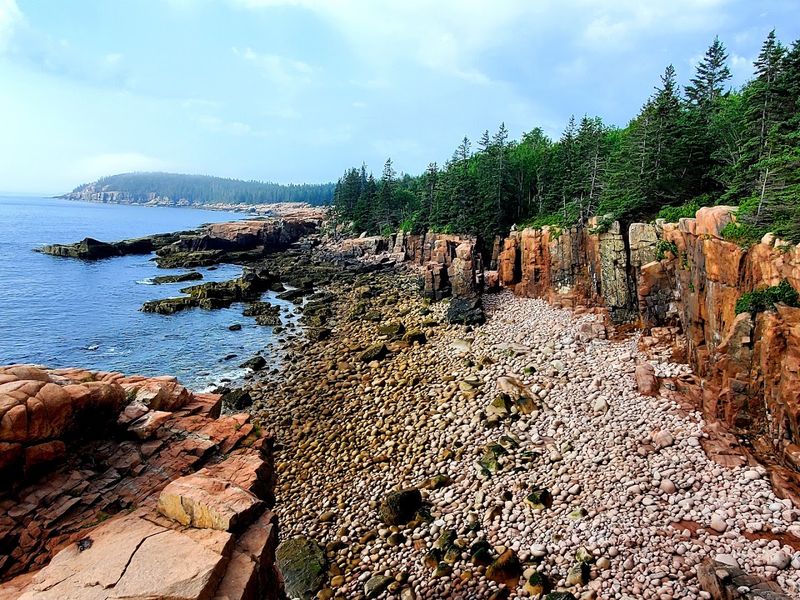
Just past Thunder Hole, the trail reveals a quieter spot that many walkers rush right past. Monument Cove is a small, tucked-away inlet with a cobblestone beach and a striking collection of pink granite pillars rising straight out of the water.
The pink granite is not just pretty. It is one of the defining geological features of Mount Desert Island, formed hundreds of millions of years ago and then shaped by glaciers and ocean waves into the dramatic forms you see today.
The cove has a completely different feel from the busier parts of the trail. The cobblestones clatter softly underfoot, the granite pillars cast long shadows in the afternoon sun, and the whole place feels like a natural sculpture garden that nobody commissioned.
This is one of the spots where visitors who explore the side paths off the main trail find their reward. The main path stays higher up, but a short scramble down brings you right to the water’s edge and a perspective that few other hikers bother to find.
Photography here rewards patience. The light shifts dramatically throughout the day, and the reflections in the shallow tide pools around the base of the granite pillars can turn a simple snapshot into something genuinely stunning.
Have you ever stood in a place that looks too beautiful to be real? Monument Cove earns that reaction regularly.
The Dramatic Finale
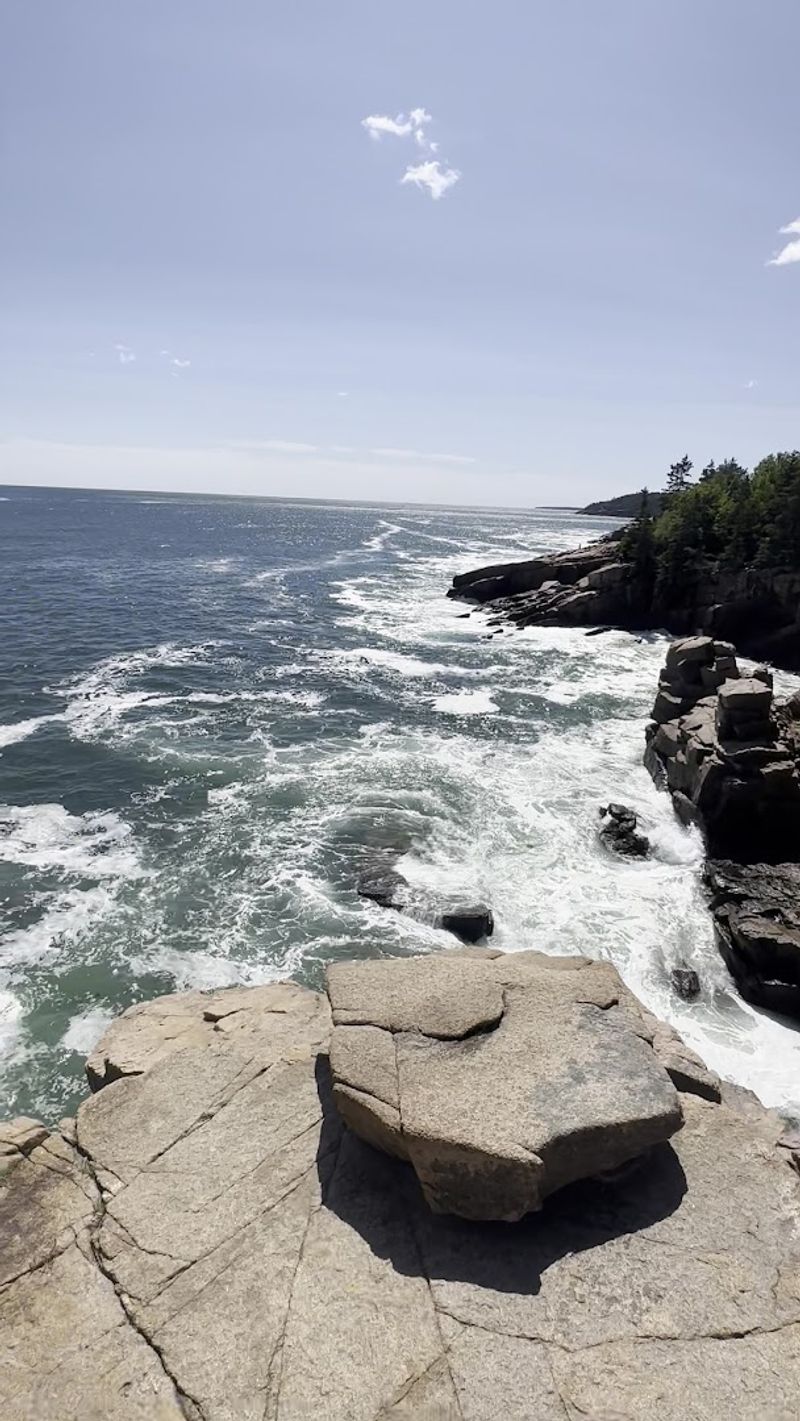
The further south you walk on Ocean Path, the wilder everything gets. By the time you reach Otter Cliffs, the trail has transformed into something that feels genuinely raw and powerful.
These cliffs drop straight down more than 110 feet into the Atlantic Ocean. They stretch about 500 feet wide, and the view from the top is one of those sights that genuinely makes your brain pause for a moment to process what it is seeing.
Otter Cliffs are also famous among rock climbers. The sheer granite face attracts climbers from across the country, and watching someone scale those walls with the open ocean below them is a spectacle all on its own.
The trail gets a bit more rugged in this section. There are some boulders to navigate and a few staircases that keep things interesting.
The effort is minimal compared to most hikes, but it gives the walk a satisfying sense of adventure that the flatter northern section does not quite deliver.
Reaching Otter Cliffs feels like arriving at the payoff of a great story. The crowd thins out noticeably here, the views stretch farther, and the sound of the ocean is louder and more insistent.
If you only had time for one scenic stop on this entire trail, would you really want it to be anywhere other than standing on the edge of a 110-foot granite cliff above the Atlantic?
The Quiet End Of The Line
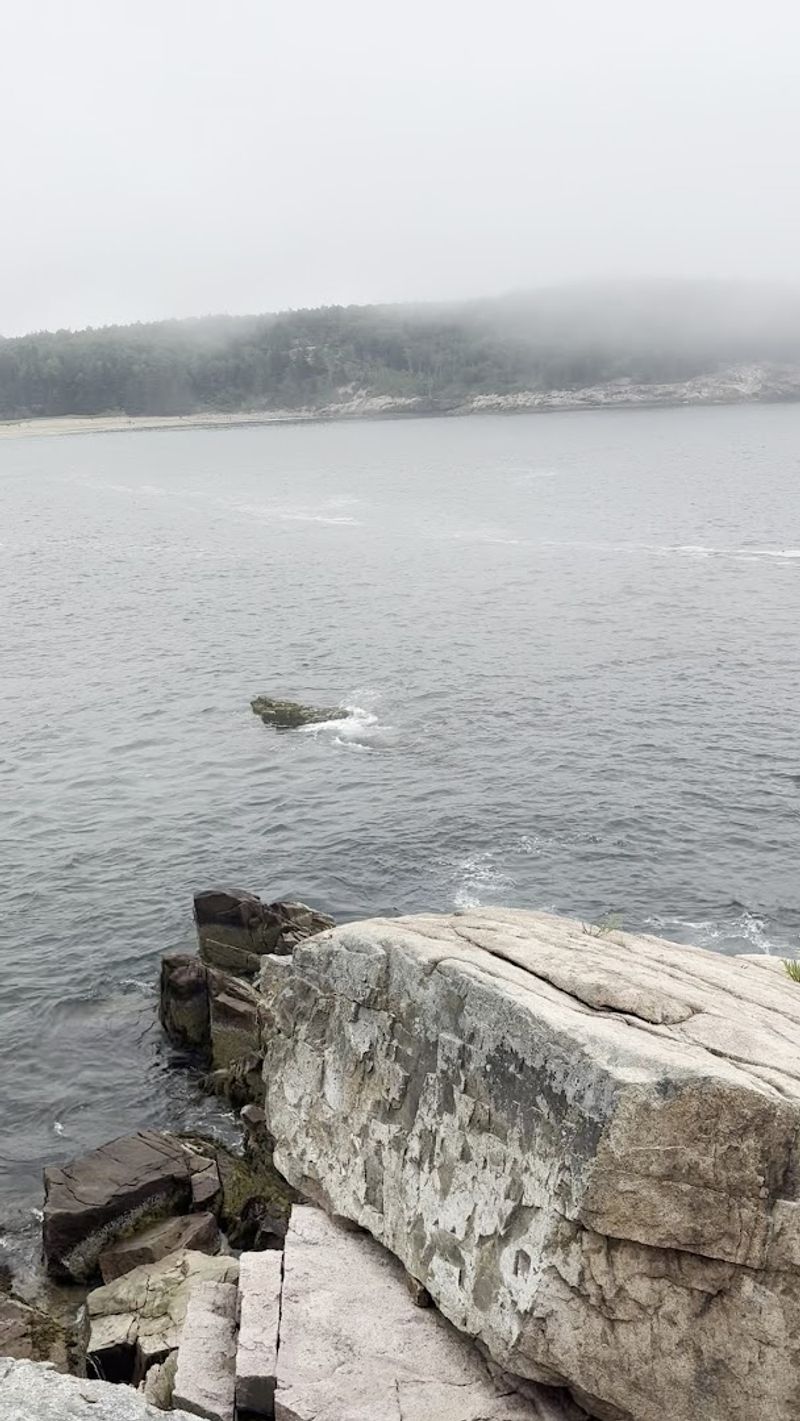
At the southern end of Ocean Path, the trail finishes at Otter Point, and the change in atmosphere is immediately noticeable. The crowds that filled the northern section of the trail have largely disappeared by this point.
Otter Point is a broad, open stretch of granite ledges that slopes gently into the ocean. It is the kind of place where people sit for a long time without realizing how long they have been there.
The sound of the waves, the smell of the sea, and the sheer openness of the horizon all work together to slow everything down.
Tide pools form naturally in the hollows and cracks of the granite here. Peer into one and you might spot sea urchins, periwinkles, small crabs, or anemones going about their business in miniature worlds.
There is a parking lot at Otter Point, which means you could also start your hike from this end and walk north toward Sand Beach if you prefer. Some visitors even arrange a one-way trip, having someone pick them up here after walking the full 2.2 miles from the other trailhead.
The quieter energy at Otter Point makes it a favorite for people who love coastal scenery without the shoulder-to-shoulder experience of more crowded spots. What is the value of finding a peaceful moment at the edge of the Atlantic after a morning of great hiking?
Priceless, honestly.
The Best Time To Visit

Timing your visit to Ocean Path can make the difference between a peaceful, magical experience and a slow shuffle through a crowd of fellow tourists. The trail is genuinely popular, and peak summer days can feel extremely busy, especially between Sand Beach and Thunder Hole.
Early mornings are the clear winner for crowd-free hiking. Visitors who start walking around 7am consistently report having long stretches of the trail almost entirely to themselves.
The light is softer, the air is cooler, and the experience feels more personal.
September is widely considered one of the best months to visit Acadia National Park. The summer rush fades, the temperatures stay comfortable for hiking, and the foliage along the trail begins to show hints of autumn color that add a completely different kind of beauty to the coastal scenery.
The Island Explorer shuttle runs seasonally and stops at Sand Beach, Thunder Hole, and Otter Point. Using it eliminates the parking headache entirely, which is a significant relief during July and August when every lot fills up before 9am.
An Acadia National Park entrance fee applies.
Practical Tips That Make Your Visit Better

A little preparation goes a long way on Ocean Path, and a few practical details can turn a good visit into a great one. The trail itself is well-marked and easy to follow, but the surrounding logistics deserve some attention before you go.
Wear comfortable walking shoes with good grip. The first section of the trail from Sand Beach to Thunder Hole is smooth concrete and packed gravel, but the terrain gets rockier past that point.
Wet rocks near the ocean can be slippery, so solid footwear matters more than style here.
Cell service along the trail is minimal to nonexistent in many spots. Downloading an offline trail map through an app like AllTrails before you leave, or picking up a waterproof Acadia paper map, keeps you oriented without needing a signal.
Dogs are welcome on the trail but must stay on a leash. The path sees heavy foot traffic, so keeping your dog close is both a courtesy and a safety measure around the rocky coastal edges.
The spur trails branching off from the main path are worth every extra minute they take. Many of them lead to rocky outcrops with views that the main trail simply cannot match, and they are often quieter because most walkers stick to the obvious route.
Ready to plan your trip? The Ocean Path Trailhead at Sand Beach parking lot in Bar Harbor, ME 04609 is your starting point for one of the finest coastal walks in all of New England.