
This Tennessee Diving Spot Feels Like An Underwater Adventure In The Mountains
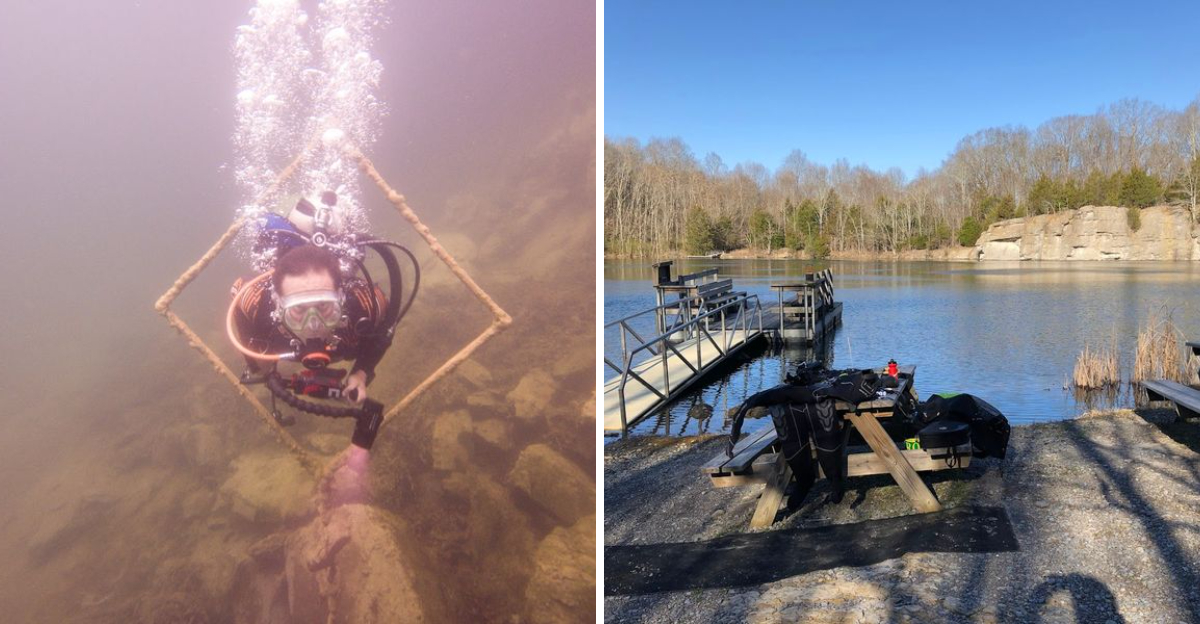
Most mountain days start with hiking shoes, overlook photos, and a snack packed somewhere near the bottom of a bag.
This Tennessee trip asks for something different. A mask. A tank. A steady breath before slipping beneath the surface.
Above the water, the scene feels quiet and familiar, with trees, hills, and that peaceful mountain air people chase on weekend escapes. Below it, everything changes.
Clear water opens into an underwater course filled with rocky shapes, curious fish, and the strange thrill of moving through a world most visitors never pause long enough to see.
That contrast is what makes the place so memorable. It feels calm, a little mysterious, and just unusual enough to stay with you after the gear is packed away.
A day here proves the mountains do not always need a trail to feel adventurous.
A Quarry Lake With A Surprising Past
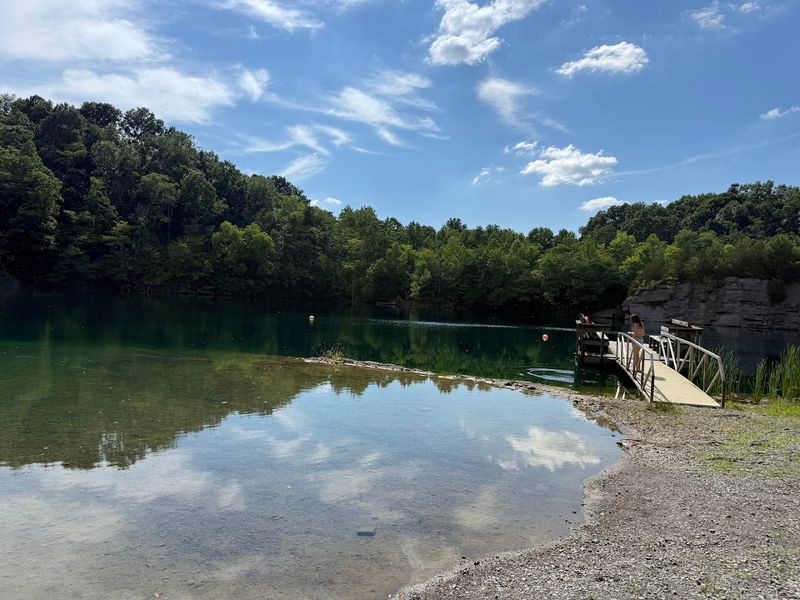
Before it became one of Tennessee’s most talked-about dive destinations, this lake was purely industrial.
The quarry was originally operated by the McMinn County Highway Department in the early 1960s, producing crushed limestone for road construction.
When the rock ran out, the pit filled with water from three natural springs, and a very different chapter began.
Rick and Stacy Low purchased the property in 1996 and gave it a name that blended their own surname with a nod to Scotland’s famous loch legend.
Since the summer of 2014, new management has continued improving both the on-site experience and the resort’s online presence.
The site sits within the forested hills of East Tennessee, which adds a scenic and surprisingly peaceful backdrop to the whole operation. The surrounding vegetation does more than look appealing.
It actively filters runoff into the lake, which helps maintain the water clarity that divers depend on.
A past built on limestone production has, quite fittingly, become a foundation for underwater exploration.
Water Clarity That Actually Delivers
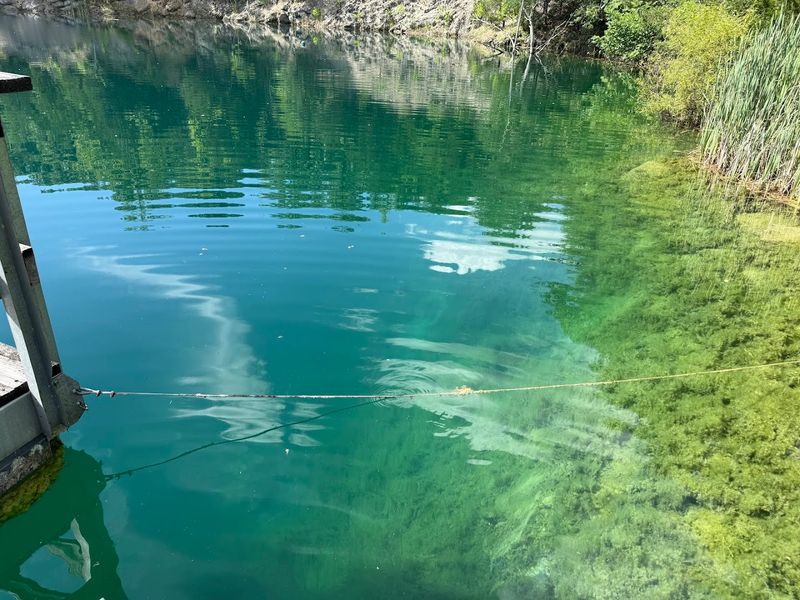
Freshwater diving often gets dismissed because visibility tends to disappoint. Murky conditions can turn an underwater excursion into a frustrating exercise in squinting.
Loch Low-Minn breaks that assumption with average visibility reaching around 35 feet, which is genuinely impressive for an inland quarry lake.
Three natural springs feed into the lake continuously, keeping the water refreshed and relatively clear throughout the season.
The surrounding woodland vegetation filters surface runoff before it reaches the water, reducing the sediment and organic debris that typically cloud freshwater sites.
Water temperatures add another layer of interest to the experience. From late spring through early autumn, surface temperatures range between roughly 68 and 80 degrees Fahrenheit.
Around the 30-foot mark, a sharp thermocline drops conditions into the low 60s, which catches some divers off guard the first time.
The quarry reaches just over 80 feet at its deepest central point, so those who push deeper will find progressively cooler water.
For divers accustomed to the Caribbean, the temperature shift is noticeable.
For those who appreciate a bit of physical challenge alongside their sightseeing, that thermocline crossing becomes one of the more memorable moments of the day at 116 Co Rd 420, Athens, TN 37303.
Statues, A Loch Ness Replica, And A Toilet
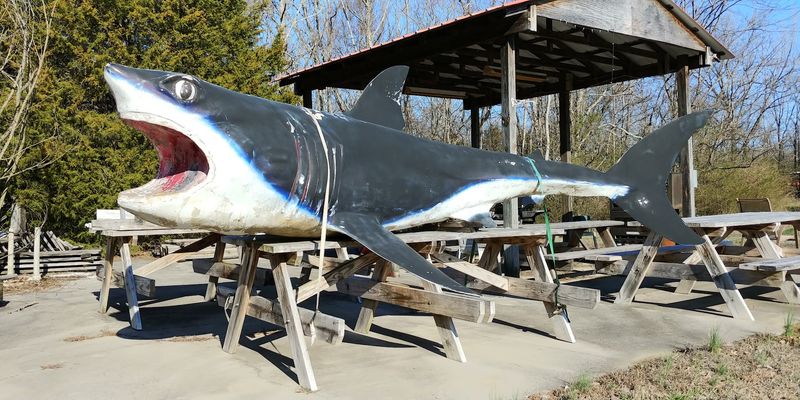
Not every dive destination leans into its sense of humor, but Loch Low-Minn does so with full commitment.
Scattered across the quarry floor is an eclectic collection of submerged objects that range from decorative to downright absurd.
Statues appear at various depths, some partially covered in algae, others still surprisingly intact.
A replica of the Loch Ness monster sits somewhere beneath the surface, a playful nod to the resort’s Scottish-inspired name.
Then there is the toilet, which appears without any apparent explanation and somehow fits perfectly within the general spirit of the place.
Divers have nicknamed certain underwater landmarks, with a submerged shark figure called Sharkie reportedly positioned due southwest of the docks near the far side of the quarry.
A printed map of underwater points of interest is available to help divers plan their route before entering the water.
This turns the dive into something closer to a scavenger hunt than a passive float.
The combination of whimsy and genuine discovery makes the experience appealing to a broad range of divers, from newly certified beginners to seasoned divers who simply enjoy a site with real personality and a bit of irreverence.
Sunken Vehicles That Redefine Underwater Sightseeing
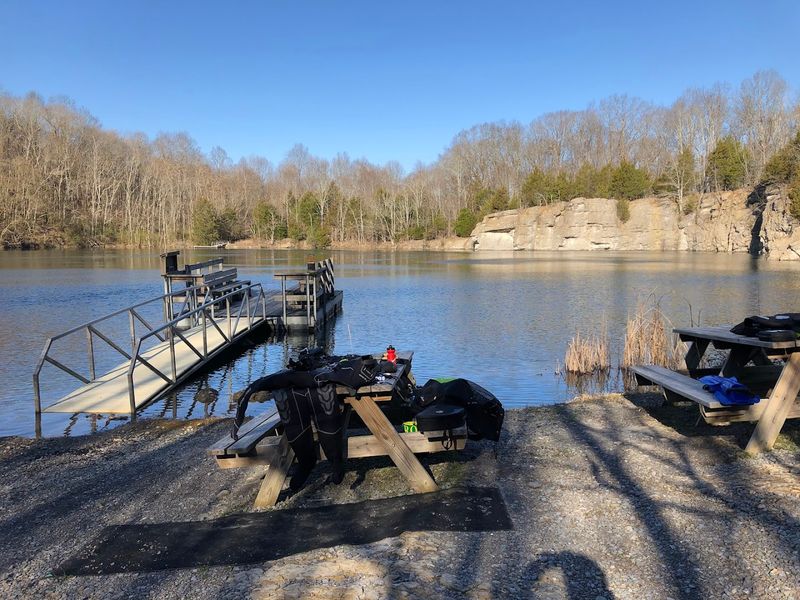
Somewhere between 20 and 70 feet below the surface of Loch Low-Minn, vehicles rest on the quarry floor in various states of slow transformation.
Two 1940s firetrucks sit among the most striking examples, their aged frames now serving as artificial reef structures for local fish and curious divers.
A school bus rests at depth, its windows open to passing bluegills and bass. Various cars, trucks, and boats round out the underwater fleet, ranging in size and condition.
A 19-foot sailboat with its sails still raised stands as one of the more visually arresting sights, an object that clearly belonged to a completely different world now permanently repositioned at the bottom of a Tennessee quarry.
The variety of submerged vehicles means that no single dive covers everything. Return visits reward divers who take time to explore different sections of the lake floor.
Each vehicle carries its own quiet character, shaped by years of submersion and the gradual growth of aquatic life around it.
For divers who appreciate exploration over repetition, this rotating cast of sunken metal keeps the experience from ever feeling routine or predictable, even after multiple visits.
The Ancient Residents Of The Deep
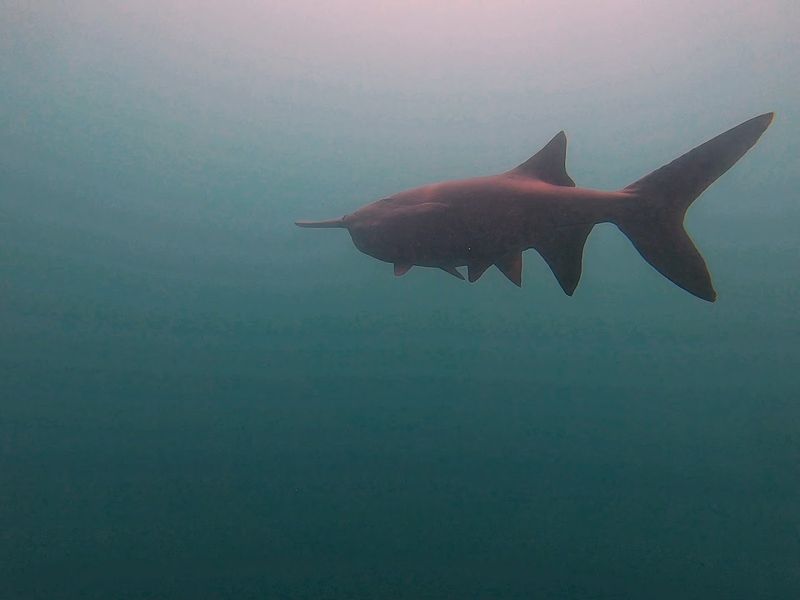
Paddlefish are genuinely prehistoric-looking creatures.
Their long, paddle-shaped rostrums and smooth, scaleless bodies make them look like something that swam out of the Cretaceous period and simply forgot to leave.
Encountering one in the wild, especially underwater, tends to produce an involuntary pause from even experienced divers.
Loch Low-Minn is home to at least two paddlefish, and spotting them has become one of the site’s signature experiences.
They move through the water column with a calm, unhurried quality that makes them feel genuinely ancient.
Divers who have encountered them describe the sighting as one of the most memorable moments of their time at the quarry, often surpassing the novelty of the sunken vehicles and statues.
Bluegills, bass, and catfish also populate the lake in healthy numbers, providing plenty of aquatic life between the larger landmarks. The paddlefish, though, carry a different weight.
There is something about sharing water with a species that has existed largely unchanged for millions of years that puts the whole dive in perspective.
A quarry in the mountains of East Tennessee turns out to be a surprisingly fitting home for creatures that have always preferred quiet, unhurried waters.
Training Platforms And Dive Certification Opportunities
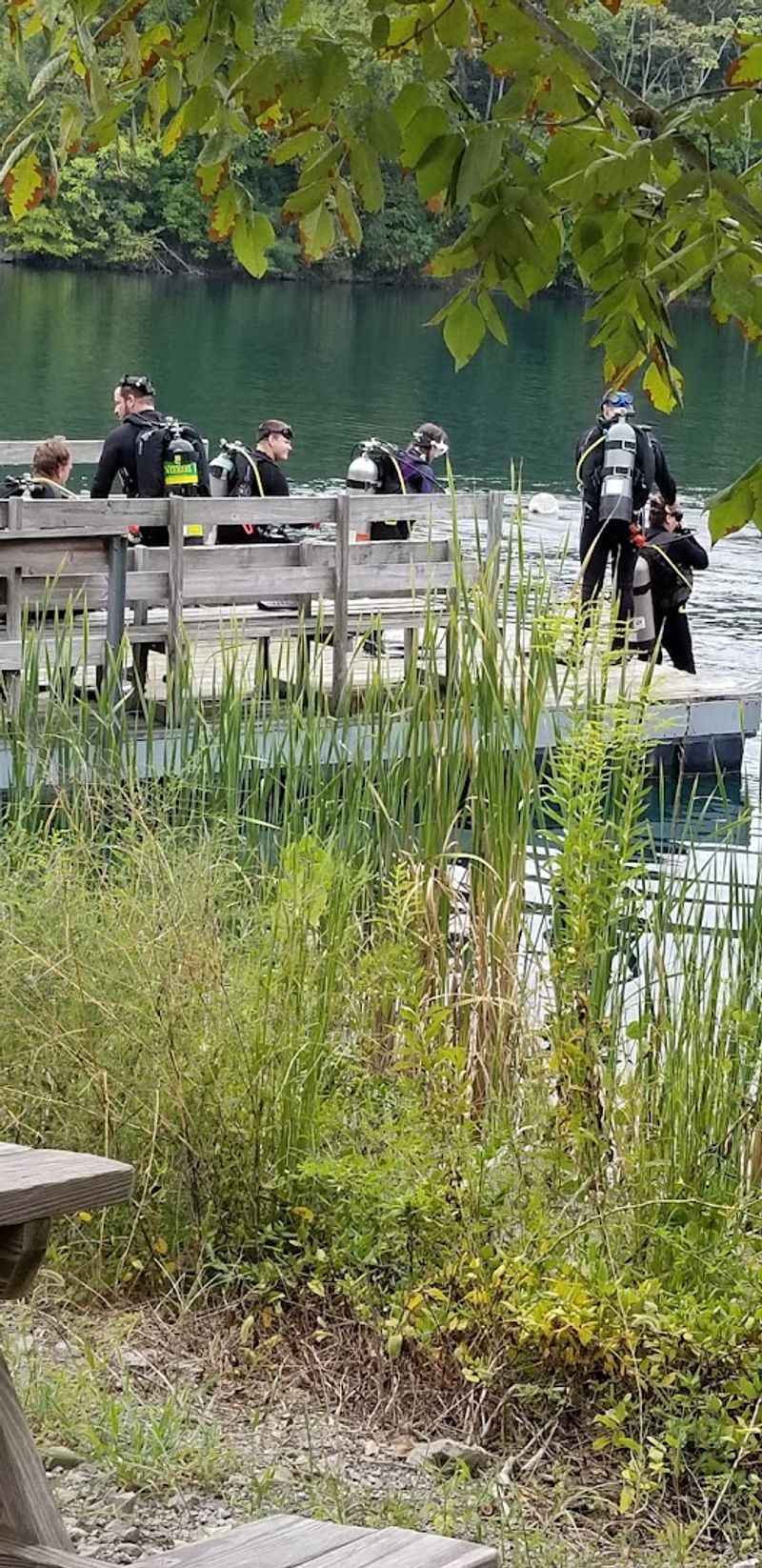
Loch Low-Minn functions as more than a recreational dive destination.
Eight underwater training platforms are positioned at various depths throughout the quarry, making it a practical and well-equipped site for open-water certification dives.
Multiple dive schools and instructors bring student groups to the site regularly throughout the operating season.
The platforms provide stable, flat surfaces where students can practice buoyancy control, mask clearing, regulator recovery, and other foundational skills without fighting current or navigating complex terrain.
A large-diameter concrete tube also runs through part of the quarry floor, giving divers a confined-space navigation challenge that builds confidence in a controlled environment.
The staff at the resort assists with gear transport to the water’s edge, which is a practical detail that matters more than it might seem after a long drive with a full set of equipment.
Tank refills are available on-site, removing one of the logistical headaches that can complicate a full day of diving.
For newly certified divers, the combination of clear water, interesting scenery, and structured training infrastructure makes the site a supportive environment to build skills and confidence.
Surface Amenities That Make The Day Comfortable
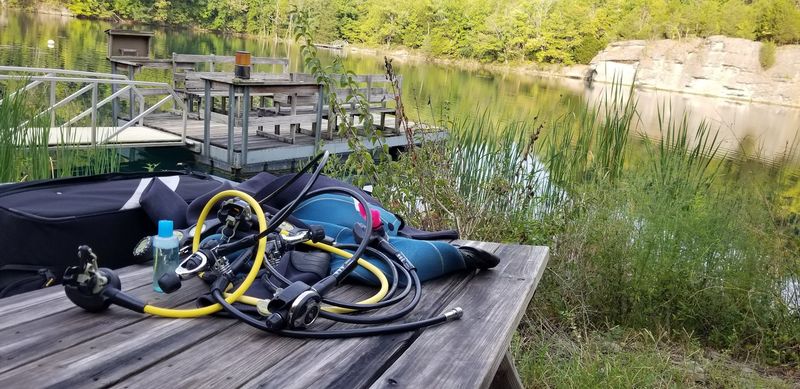
A dive site’s appeal does not begin and end underwater. The surface experience shapes the whole day, and Loch Low-Minn has invested in making that part of the visit work smoothly.
Custom-built tables give divers a dedicated space to assemble and organize their gear before entering the water, reducing the usual scramble that happens at less organized sites.
A second dock was added to accommodate multiple diving groups simultaneously, which prevents the crowding that can make popular sites feel rushed or chaotic.
A beach area and a wooden deck with benches give divers a comfortable place to rest between dives, review their notes, or simply take in the forested hillside surrounding the quarry.
Camping cabins and tent camping are available for divers who want to extend their stay beyond a single day, which makes sense given how much there is to explore at depth.
The resort operates for day diving on weekends from 9 AM to 6 PM, generally from May through October, with the gate closing at 4 PM.
Prior arrangements can be made for weekday access.
For anyone planning a full weekend of diving, the on-site accommodations turn a day trip into a genuinely immersive mountain diving retreat.
The Seasonal Experience And What To Expect
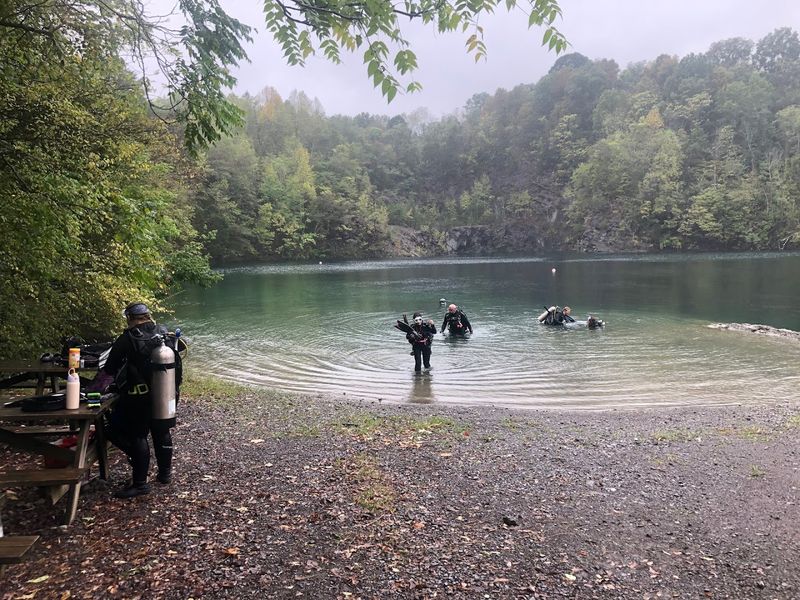
The operating season at Loch Low-Minn runs from May through October, and each month within that window offers a slightly different experience.
Early season diving in May and June brings cooler water temperatures throughout the water column, which suits divers in drysuits or thicker wetsuits.
By late summer, the upper 30 feet warm to a comfortable range that makes recreational diving genuinely pleasant.
October holds a particular appeal. The surrounding East Tennessee hills shift into fall color, and the air temperature often stays mild enough for comfortable surface intervals.
Water temperatures at shallower depths remain reasonable into the month, though the thermocline deepens the chill below 30 feet.
The combination of autumn foliage and active diving makes late-season visits memorable for reasons that go beyond what happens underwater.
Weather events can affect visibility temporarily, as any surface disturbance or heavy rainfall introduces sediment into the water column. Visiting shortly after significant storms is worth avoiding if possible.
The three natural springs that feed the lake help restore clarity relatively quickly, but patience pays off.
Calling ahead or checking conditions before making the drive is always a sensible step, particularly for divers traveling from outside the immediate area around Athens, Tennessee.
Why This Mountain Quarry Earns Its Place On A Diver’s List
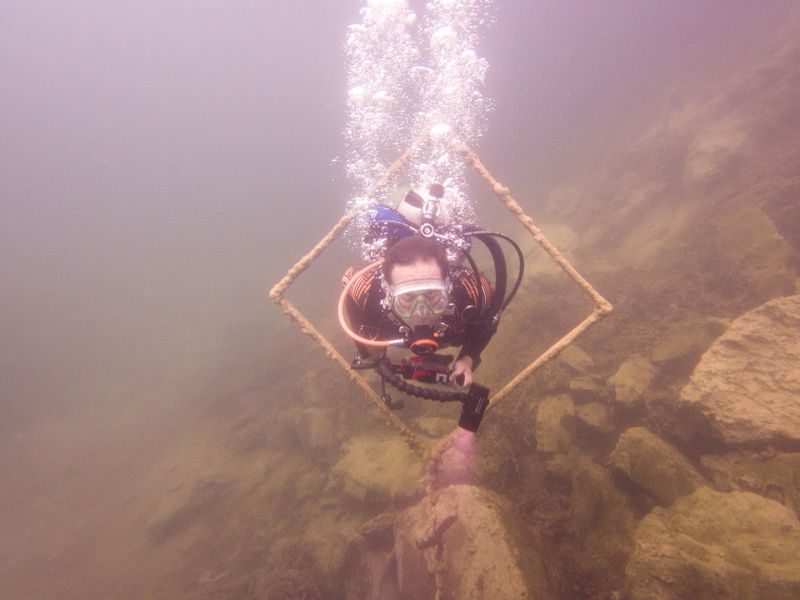
There is a particular kind of satisfaction that comes from discovering a dive site that exceeds expectations by simply being itself.
Loch Low-Minn does not try to imitate a coral reef or manufacture drama it does not possess.
What it offers instead is a coherent, well-maintained, and genuinely interesting environment that rewards curiosity at every depth.
The combination of sunken vehicles, unusual statues, living paddlefish, clear spring-fed water, and a staff that treats visiting divers with practical care and genuine friendliness creates something that feels complete rather than improvised.
The quarry’s depth of just over 80 feet provides enough range for divers at multiple certification levels to find meaningful experiences without feeling either overwhelmed or bored.
For divers based in Chattanooga, Knoxville, or anywhere within a few hours of Athens, the site offers a reliable and engaging option for skills practice, certification dives, or recreational exploration.
It is the kind of place that earns repeat visits not through novelty alone but through the consistent quality of the experience it delivers.
A limestone quarry in the mountains of East Tennessee has quietly become one of the more distinctive dive destinations in the entire southeastern United States.