
This Tennessee Hike Leads To A Cave Entrance 100 Feet Wide And 80 Feet High
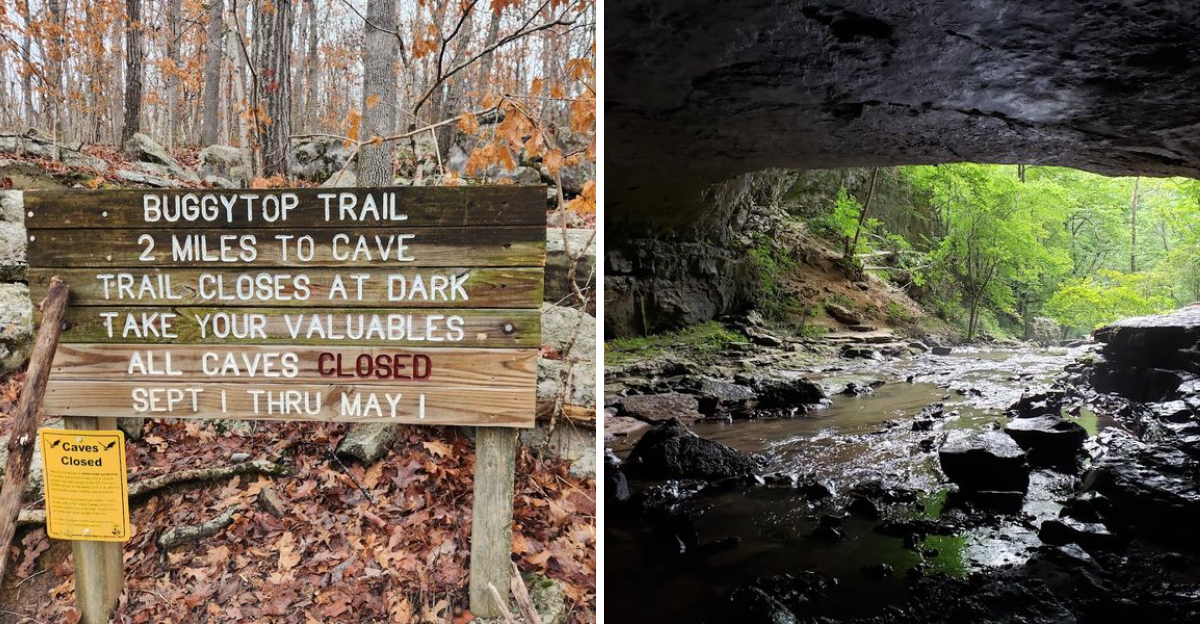
Some hikes end with a nice view. This one ends with a hole in the earth big enough to swallow a house.
Tennessee is home to a trail that winds through quiet woods, crosses a few creeks, and tests your legs on rocky, uneven ground. Then the trees open up and the real payoff appears.
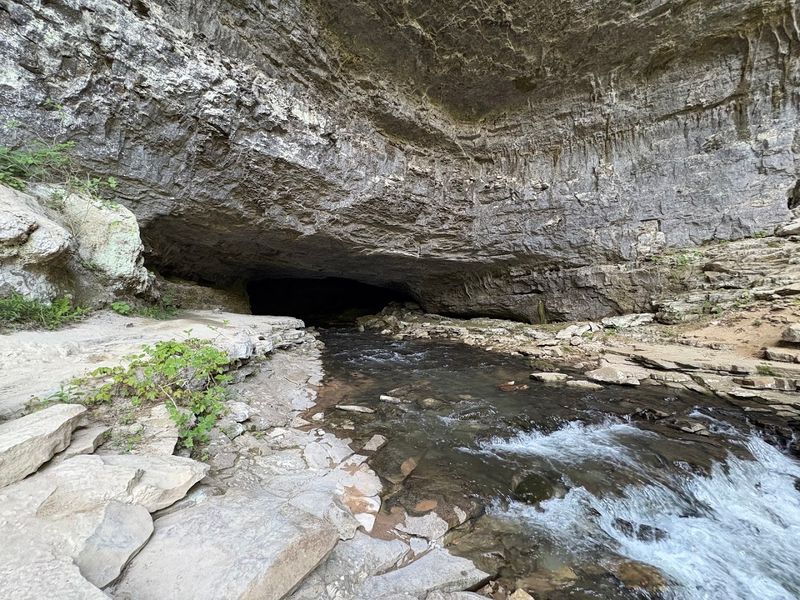
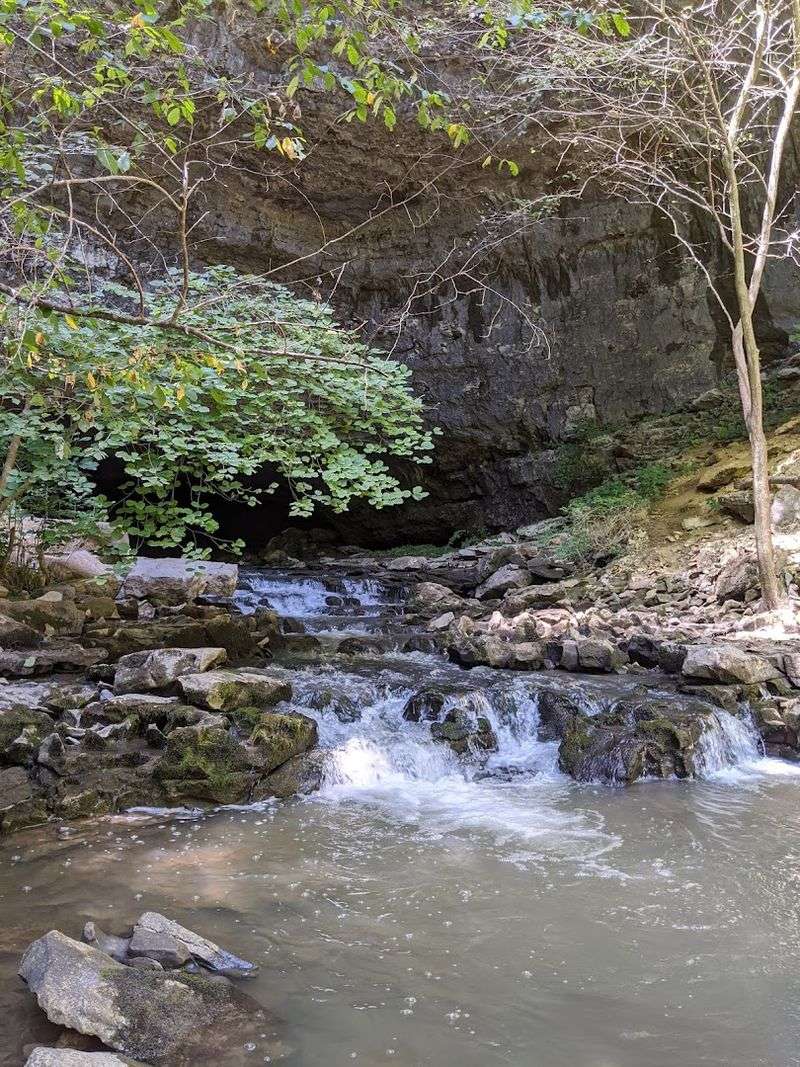
A massive cave mouth stretches 100 feet wide and rises 80 feet high, carved into the hillside like nature got a little dramatic. Cool air drifts out even on warm afternoons, carrying the smell of damp stone.
Hikers often stop and just stare for a minute before stepping closer. The scale is hard to process until you stand right there next to it.
This is not a quick stroll to a small overlook. It’s a proper trek with a payoff that feels bigger than expected, and it might be one of the most impressive natural sights Tennessee has to offer.
The Carter Natural Area Gateway
Franklin County, Tennessee holds a surprising amount of geological character for a region that rarely makes the top of travel lists.
The Carter Natural Area, which forms a core section of the recently established Head of the Crow State Park, serves as the formal entry point to one of the state’s most dramatic natural features.
The trailhead at Buggytop Cave Trailhead, Sherwood, TN 37376, sits just off Tennessee Highway 56, roughly seven miles south of Sewanee.
A gravel parking area greets those arriving for the hike, modest in size but functional. There are no facilities here, which sets the tone early.
This is a place where the land takes precedence over convenience.
The Carter Natural Area encompasses a diverse mix of hardwood forest, limestone bluffs, and creek corridors that shift in character as the trail progresses. Each segment of the approach reveals something different, from canopy coverage to exposed rock faces.
The area is open 24 hours, making early morning starts entirely possible for those who prefer solitude on the trail. Arriving before midday on weekends is a practical choice, as the trailhead can fill up quickly during warmer months.
Tracing The Path To The Chasm
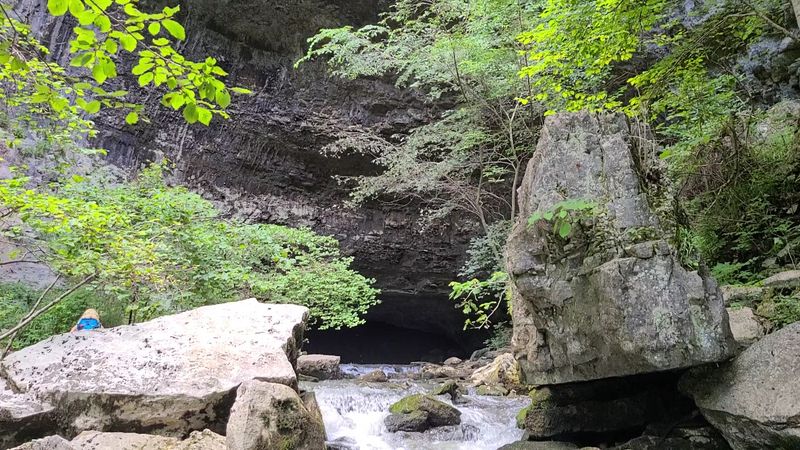
The trail to Buggytop Cave covers approximately two miles one way, and it earns its moderate-to-difficult classification honestly.
The first mile moves at a reasonable pace, guiding hikers along a ridge with manageable elevation changes and good tree cover. After that, the terrain shifts its attitude considerably.
The descent toward the cave involves some steep, rocky sections where footing demands full attention. Tree roots cross the path frequently, and after rain the trail can become genuinely slippery.
Ankle-supporting hiking boots are not a suggestion here. They are a practical requirement for anyone planning to complete the route comfortably and safely.
Round trip, the hike runs close to four and a half miles depending on the path taken, and most groups allow two to three hours for the hiking portion alone. Adding time for the cave exploration extends that comfortably.
The elevation change sits around 380 feet, concentrated mostly in the final stretch toward the cave entrance. The return climb back out is consistently described as the more demanding half of the journey.
Pacing yourself on the way down preserves energy for the uphill return, which catches many hikers off guard after the excitement of reaching the cave.
A River’s Ancient Passage
Water tells the story of Buggytop Cave better than any geological summary could.
Lost Cove Creek travels across the surface of the landscape until it reaches a point called the Big Sink, where it vanishes entirely into the earth.
That underground journey reshapes the creek’s identity completely.
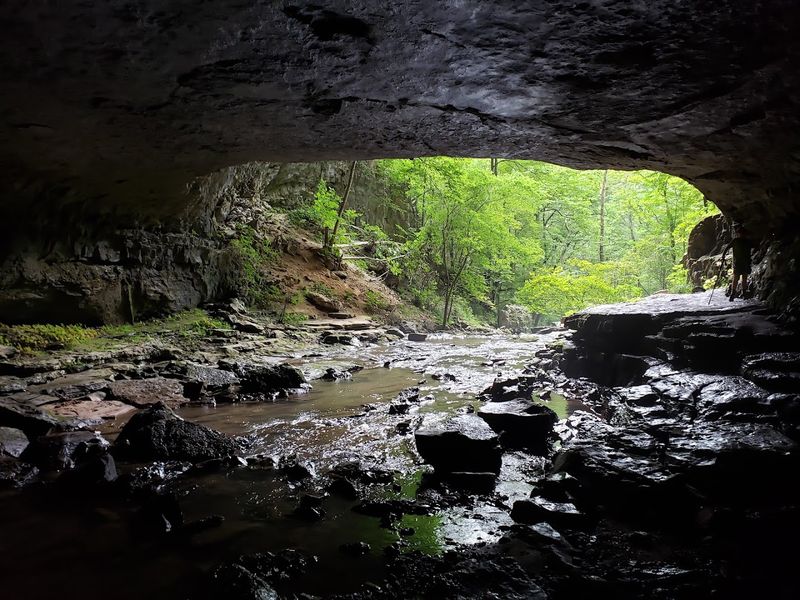
When the water re-emerges from the cave’s wide mouth, it carries a new name: Crow Creek. From there, it continues its course toward the Tennessee River, completing a passage that has been repeating itself for thousands of years.
The sound of that rushing water reaches hikers well before the cave comes into view, building anticipation during the final approach.
This hydrological phenomenon, known as a karst system, is the geological engine behind the cave’s formation.
Slightly acidic water dissolves limestone over immense stretches of time, carving passages, chambers, and eventually the colossal entrance that stands today.
The process is ongoing, meaning the cave is still being shaped by the same forces that created it.
Standing at the entrance while listening to the creek move through the darkness below is one of those rare moments where geological time and human time briefly occupy the same space.
The Grandeur Of The Entrance Revealed
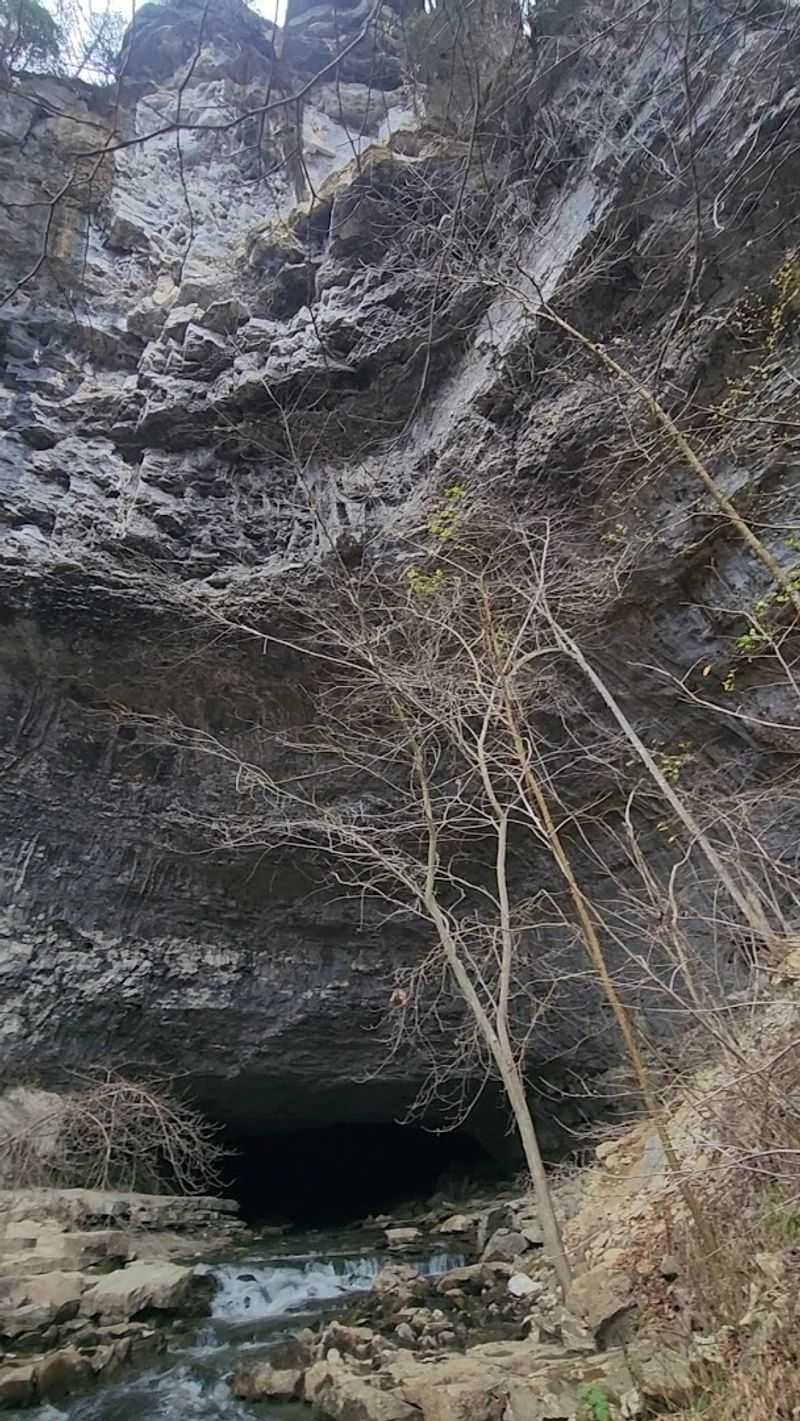
Nothing on the trail prepares you for the actual scale of the entrance.
After two miles of forest, ridgeline, and rocky descent, the path delivers you to the base of a 150-foot limestone bluff, and there it is: an opening in the rock measuring 100 feet across and 80 feet high.
The proportions are genuinely disorienting at first glance.
Early pioneers reportedly thought the shape of the entrance resembled the curved top of a horse-drawn buggy. That observation gave the cave its name, which has stuck through generations of local use.
The alternative name, Lost Cove Cave, references the creek that runs through it, but Buggytop carries more personality and tends to be the name people remember.
The cave sits at the base of the bluff like a wide, dark threshold, framed by moss-covered rock and the sound of moving water.
The sheer width of the opening means natural light penetrates a considerable distance inside, illuminating the first chambers without any artificial help.
Standing at the entrance and looking inward, the scale of what water and time have accomplished over millennia becomes something more than a fact. It becomes an experience that resists easy description.
A Realm Of Cool Air And Deep Time
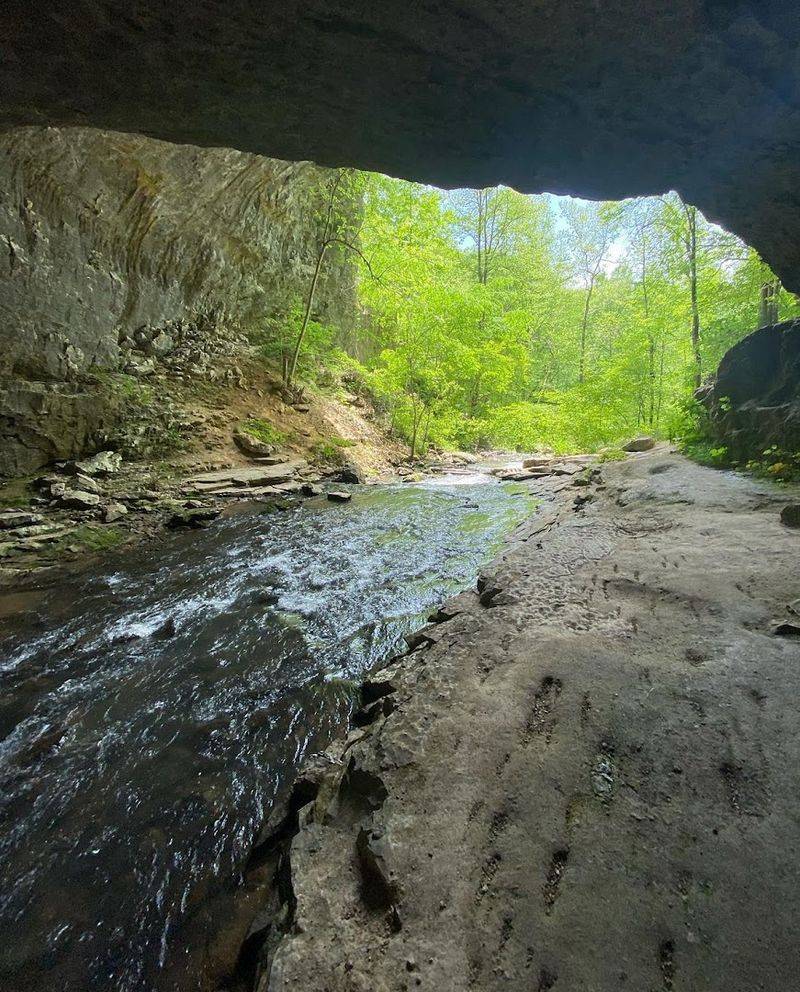
On a warm Tennessee afternoon, the cave announces itself through temperature before sight.
A steady, cool draft flows outward from the entrance, dropping the ambient air noticeably even from a distance.
In July and August, that natural air conditioning becomes one of the most welcome sensations a hiker can experience after a sweaty descent through humid woodland.
The cave interior maintains a consistent temperature year-round, hovering in the mid-50s Fahrenheit regardless of what the weather is doing outside. That thermal stability is a byproduct of the cave’s depth and the volume of air it holds within its passages.
It also means that appropriate layering matters even during summer hikes, particularly for those planning to spend extended time inside.
Beyond the physical comfort, the cool air carries a subtle quality that is harder to articulate. It smells of wet limestone and deep earth, a scent that has no equivalent above ground.
The passages within extend far beyond what the entrance suggests, and geological formations continue to develop in the dark recesses where light never reaches.
Spending time near the entrance gives a modest impression of that interior world, one that rewards patience and curiosity in equal measure.
Safeguarding Subterranean Wonders
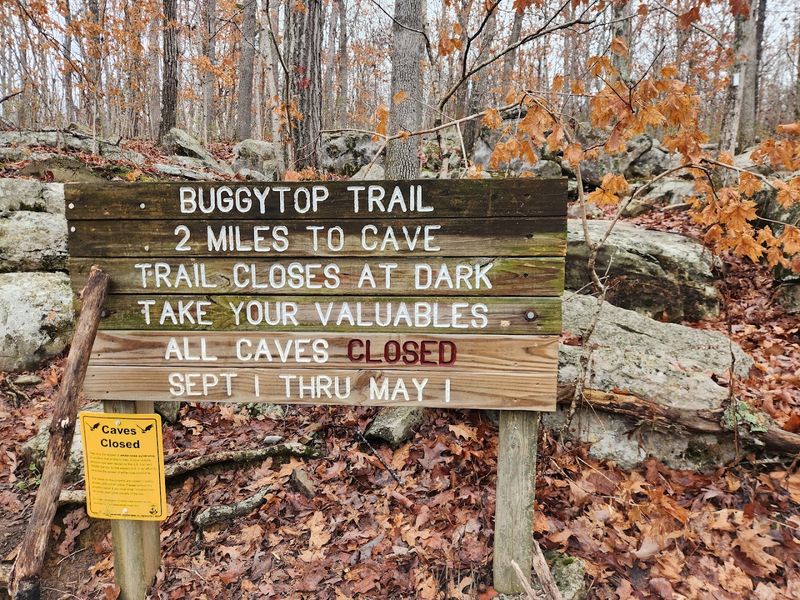
Access to the interior of Buggytop Cave operates under a structured permit system designed to protect the cave environment from overuse.
Between May 1 and August 31 each year, entry beyond the cave’s daylight zone requires a free permit obtained in advance through the Tennessee State Parks website.
The permit process is straightforward and costs nothing, but it does require planning ahead. Groups are limited in size to reduce impact on the cave’s delicate ecosystem.
All hikers and cavers must exit both the cave and the trail before sunset, making start time an important consideration when planning the outing.
Proper gear is non-negotiable for anyone venturing deeper inside. A helmet protects against low ceilings and loose rock.
A headlamp with spare batteries provides reliable, hands-free light in total darkness. Sturdy, closed-toe shoes with good grip handle the wet, uneven cave floor effectively.
Bringing extra layers addresses the temperature drop experienced deeper in the passages.
The cave is a wild space without guides or handrails, so preparation replaces the infrastructure that managed tourist caves provide.
Treating it with the seriousness it deserves makes the experience both safer and more rewarding for everyone who follows.
Respect For Ancient Inhabitants
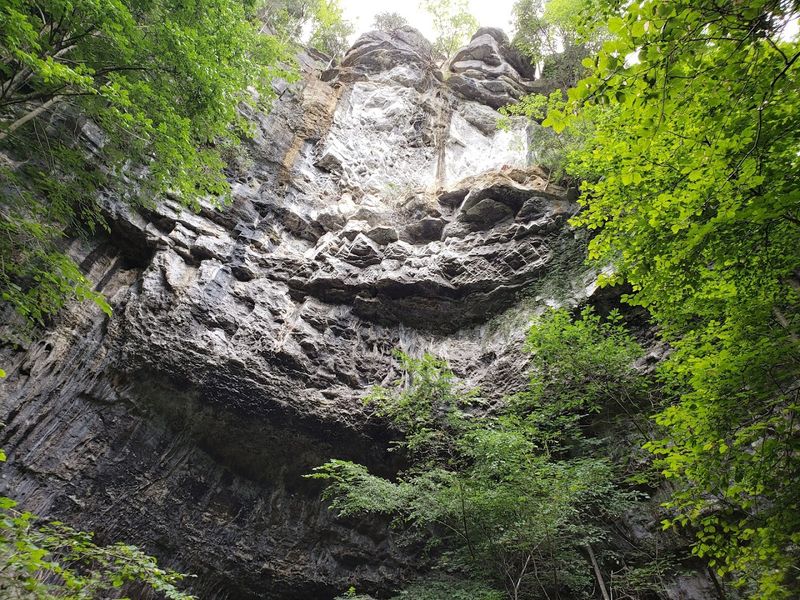
Buggytop Cave supports a living ecosystem that has developed over centuries without human interference.
Several bat species use the cave as a roosting habitat, and their presence makes the cave not just a geological feature but an active wildlife sanctuary.
The cave also hosts rare salamander species adapted to the low-light, high-moisture conditions of the interior passages.
White-Nose Syndrome, a fungal disease devastating to bat populations across North America, has made biosecurity protocols at caves like this one genuinely important.
Cavers are asked to decontaminate gear used in other caves before bringing it into Buggytop, and clothing worn in affected cave systems should be thoroughly cleaned.
These precautions are not bureaucratic formalities. They directly affect the survival of bat colonies that have no other natural defense against the disease.
Moths congregate near the entrance in notable numbers, particularly during warmer months, drawn by the cave’s microclimatic conditions. Spiders are common throughout the accessible areas.
The cave’s biodiversity is not dramatic in the way large mammals are, but it is genuine and fragile.
Keeping a respectful distance from any formations or creatures encountered inside ensures that the ecosystem remains intact for the geological and biological processes that depend on stability over time.
Companionship In Exploration
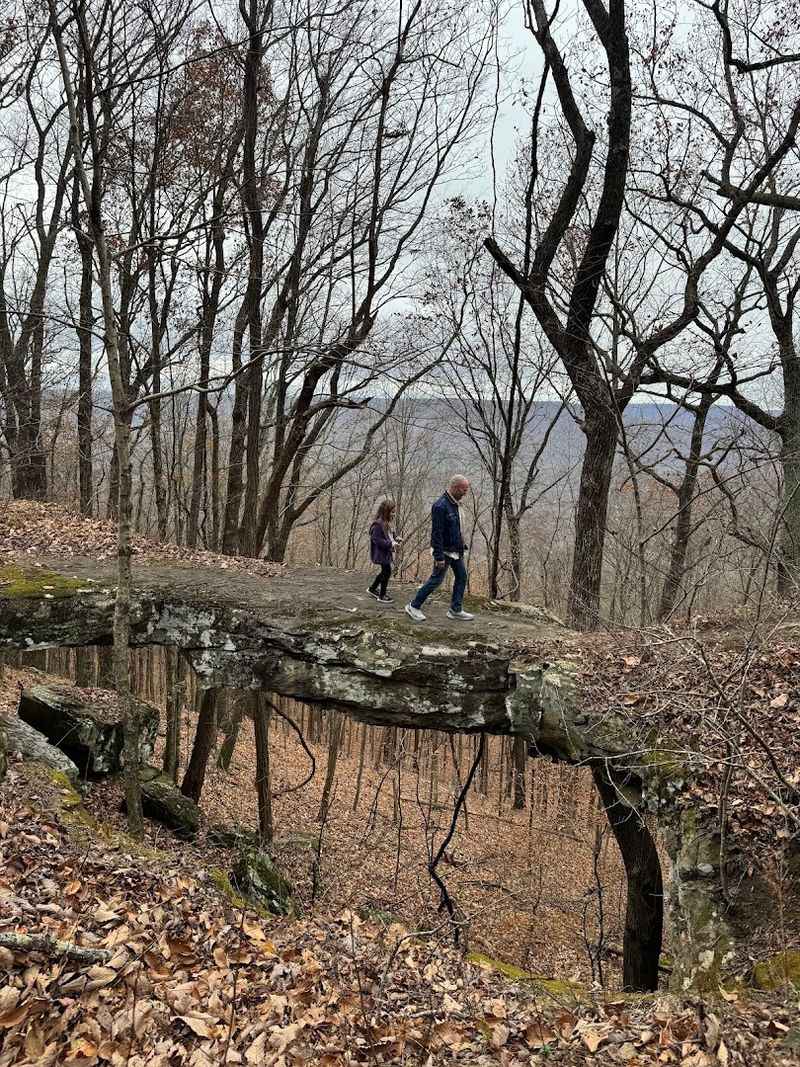
Solo caving inside Buggytop is strongly discouraged, and for practical reasons that go beyond general caution.
The cave floor is wet, uneven, and occasionally requires hands-on navigation over rocks and through low passages.
An injury in that environment without anyone nearby to assist creates a genuinely serious situation, particularly given the absence of cell service in the area.
Groups heading inside should number at least three people, a standard caving safety guideline that ensures someone can go for help while another stays with an injured party. Group sizes are also capped to minimize disturbance to the cave’s wildlife and formations.
Coordinating a group before arrival, rather than gathering people spontaneously at the trailhead, makes the logistics considerably smoother.
The social dimension of the experience adds something to the overall memory of the day.
Navigating the trail together and moving through the cave passages as a coordinated group creates a shared experience that individual outdoor pursuits rarely replicate.
Dogs are permitted on the trail itself, though cave entry with animals is not appropriate given the sensitive ecosystem inside. The trail section offers enough scenery and terrain variety to make the round trip worthwhile even without cave access.
Echoes Of Early Cultures
Lost Cove Cave carries a human history that extends well beyond the era of modern hiking trails and state park designations.
Archaeological evidence found within and around the cave documents use by cultures from the Woodland and Mississippian periods, spanning roughly 500 BCE through the 16th century CE.
Artifacts recovered from the site suggest the cave and its surrounding landscape held significance beyond simple shelter.
The Woodland period peoples were semi-nomadic, using natural landmarks as gathering points and ceremonial locations.
The Mississippian culture that followed built more complex societies with agricultural foundations and trade networks that stretched across much of eastern North America.
Finding evidence of both groups in a single location speaks to the cave’s enduring draw across very different cultural periods.
Standing at the entrance with that history in mind changes the experience in a subtle but meaningful way. The cave was not discovered by the people who named it Buggytop.
It was already known, already used, already woven into the lives of communities that flourished and transformed over centuries.
That continuity of human presence, from ancient cultures to contemporary hikers following a marked trail off Tennessee Highway 56, gives the place a depth that its geology alone cannot fully account for.