
This Tennessee Roadside Attraction Is So Bizarre You Have To See It To Believe It
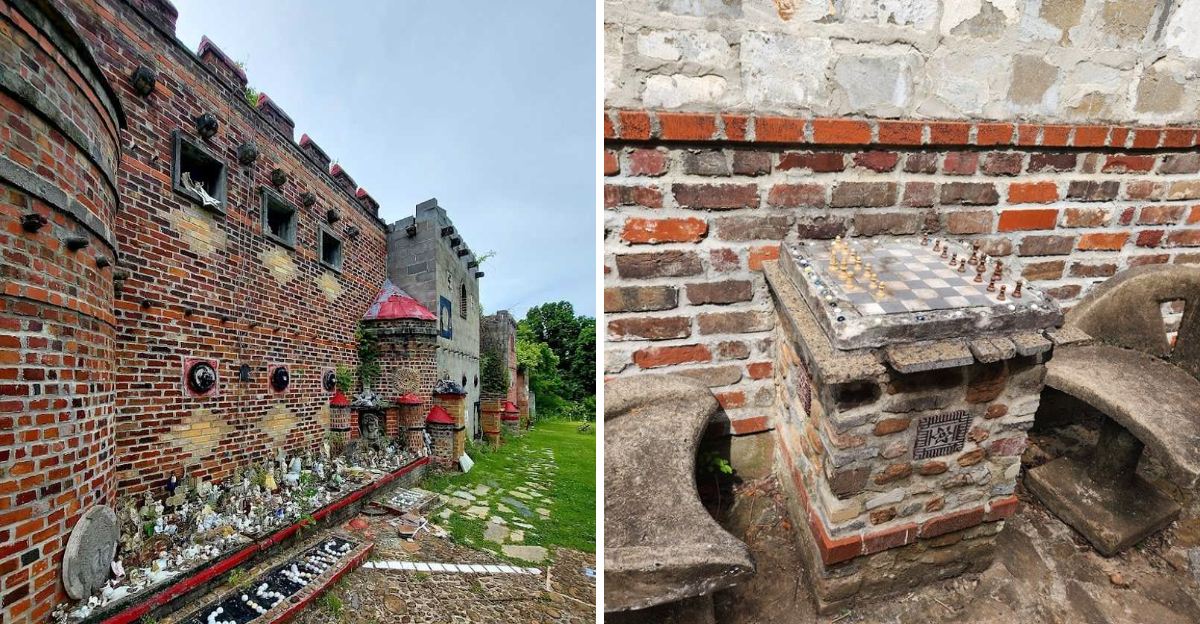
Some roadside attractions make you slow down. This one makes you stare, blink, and wonder how one person’s imagination got this far.
Tennessee has scenic drives, small-town stops, and polished landmarks, but this place plays by its own rules.
Stone walls, castle-like shapes, odd details, and handmade touches all come together in a way that feels part fantasy project, part folk-art landmark, and part beautiful mystery.
Nothing about it feels ordinary.
That is the whole appeal. It does not look polished or predictable, and it does not need to.
The charm comes from the strangeness, the scale, and the sense that every corner has a story behind it.
Anyone who loves offbeat places, unusual photo stops, and attractions with real personality will understand why this Tennessee roadside wonder makes such a memorable detour.
The Man Behind The Castle And His Remarkable Story
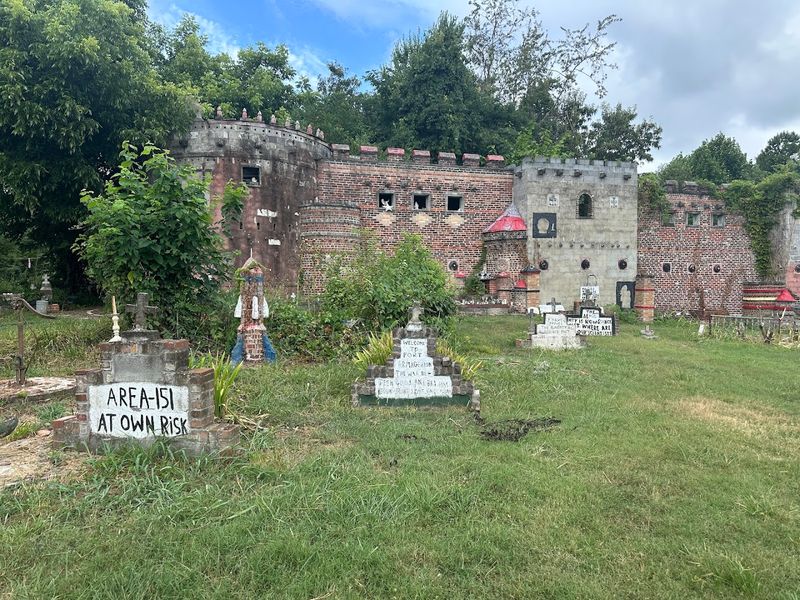
Floyd “Junior” Banks Jr. started building his castle around 1993, and the story behind that decision is as layered as the walls he raised. He began with a lighthearted goal: attract attention, be king of his own domain.
Over time, that motivation shifted entirely into something far more serious and personal.
Banks came to see the project as a spiritual calling. He describes the castle as a gift to God, a physical expression of his faith and his desire to share a message with anyone willing to listen.
Decades of labor, often alone, went into every stone and carving.
Visitors who meet him often describe the experience as memorable. He appears without warning, steps out of the property, and begins talking with an ease that feels both genuine and unusual.
His health has slowed him down in recent years, but his commitment to the place remains clear. Reviewers consistently call him kind, fascinating, and deeply sincere.
A few suggest bringing groceries as a gesture of goodwill, since getting out has become difficult for him. Meeting Junior is, for many, the most unforgettable part of the entire visit.
Recycled Materials And The Art Of Building With Almost Nothing
Most buildings start with a blueprint and a budget.
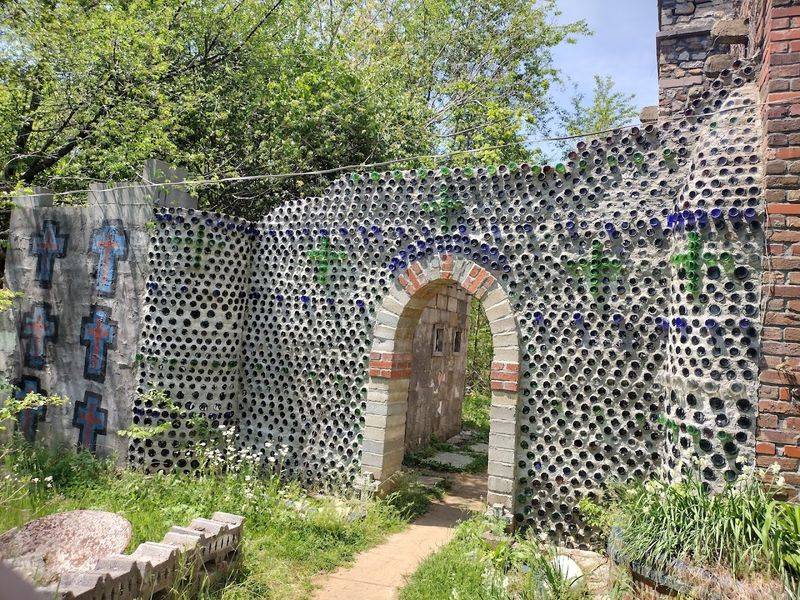
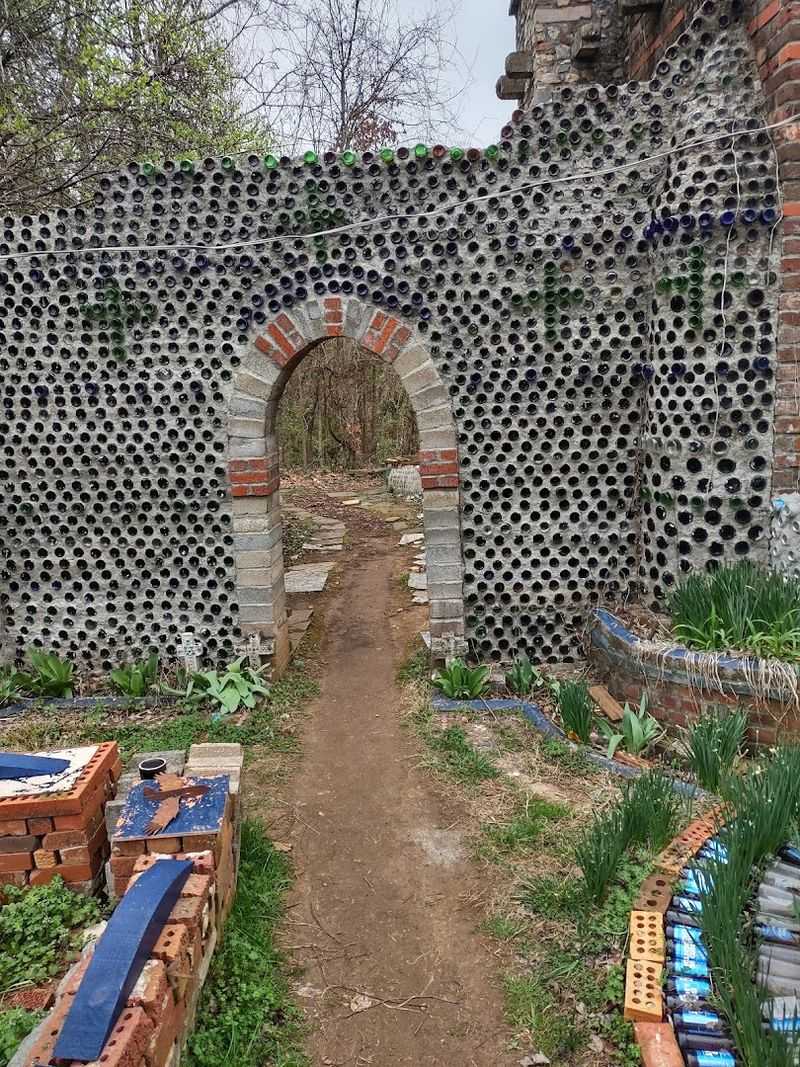
Greenback Castle started with salvaged railroad tracks, old bottles, golf balls, marbles, cinder blocks, bricks, and whatever else Banks could gather without spending much.
His estimated total material cost sits around $2,000, which is almost impossible to believe when you see the scale of the structure.
The walls incorporate thousands of found objects pressed into concrete, creating a surface that rewards close inspection. Banks estimates he used roughly 10,000 marbles alone.
The texture across the exterior reads like a visual record of everything discarded and reborn through his hands.
There is a raw, unfinished quality to the construction that feels intentional rather than neglectful. Banks carves artwork directly into concrete using a nail, working from visions he says appear within the walls themselves.
He traces what he sees, turning raw material into imagery that ranges from Christian iconography to symbols drawn from other traditions. The process is slow, personal, and entirely self-directed.
No contractor, no crew, no formal training. Just one man and a nail, working across three decades of mornings and afternoons in East Tennessee.
Towers, Turrets, And A 25-Foot Wall That Surprises Everyone
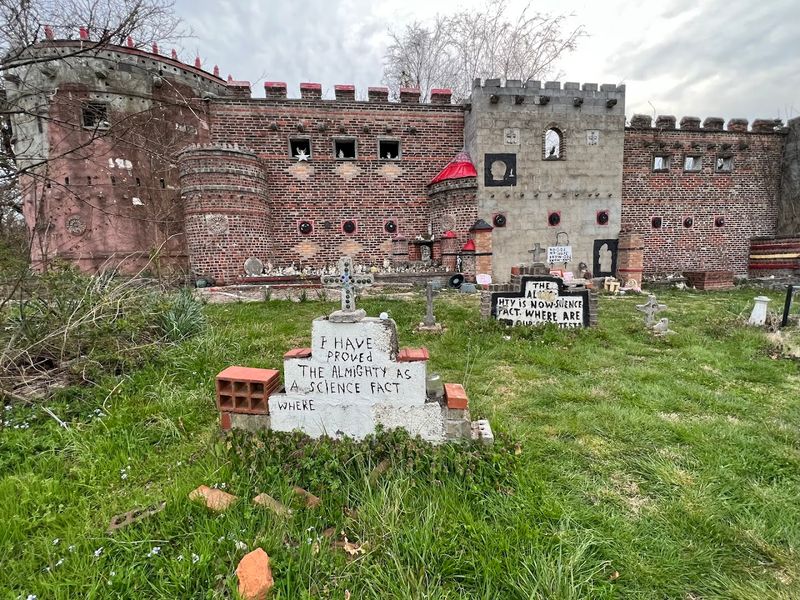
Driving down Lee Shirley Road, past modest homes and grassy patches, nothing signals what is about to appear. Then the wall rises.
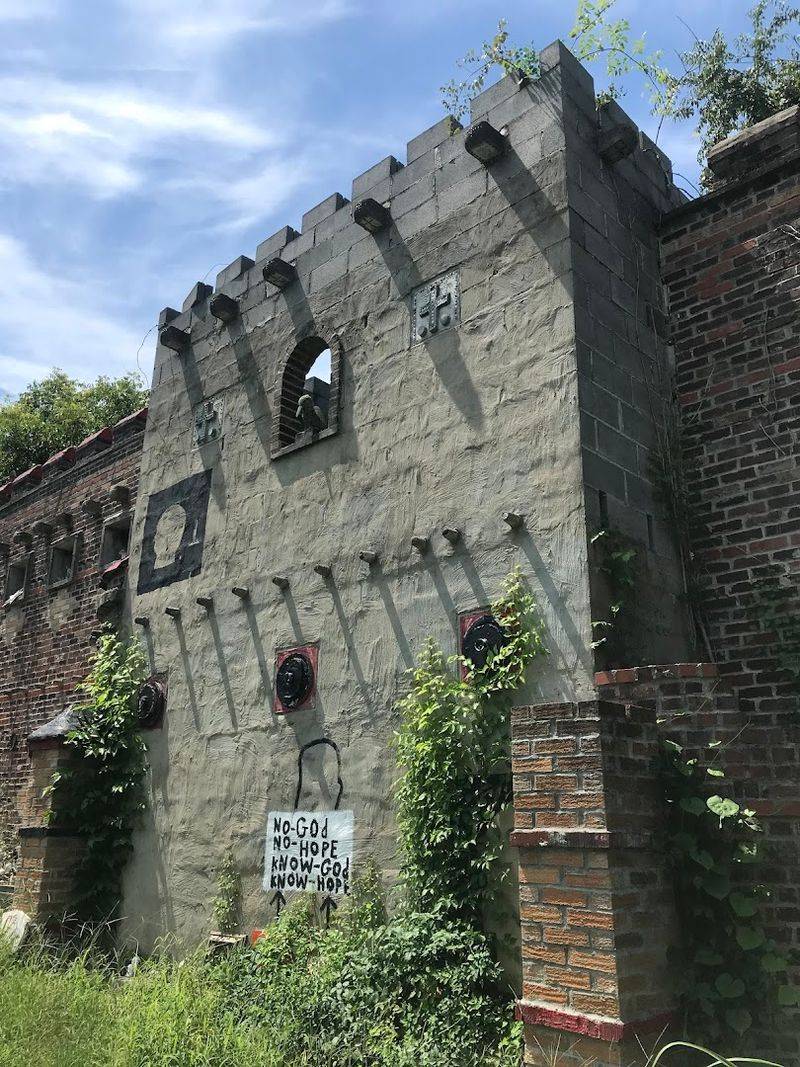
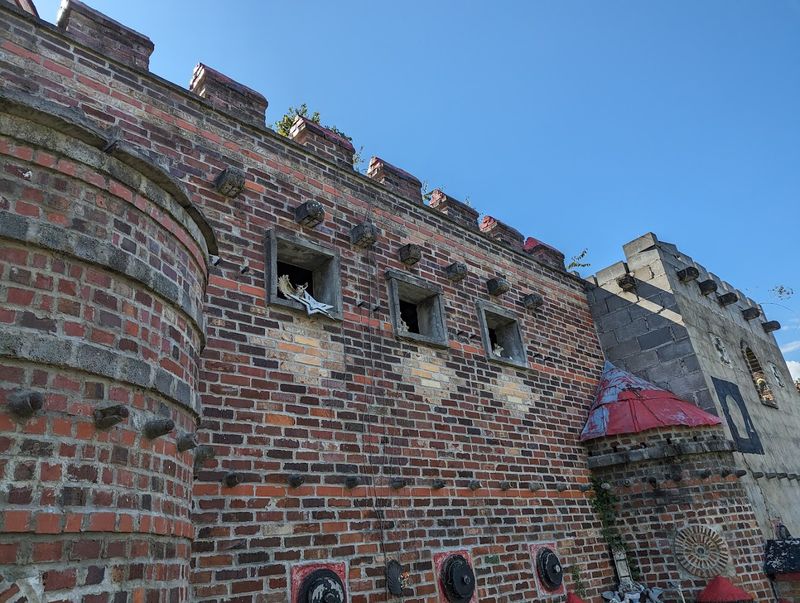
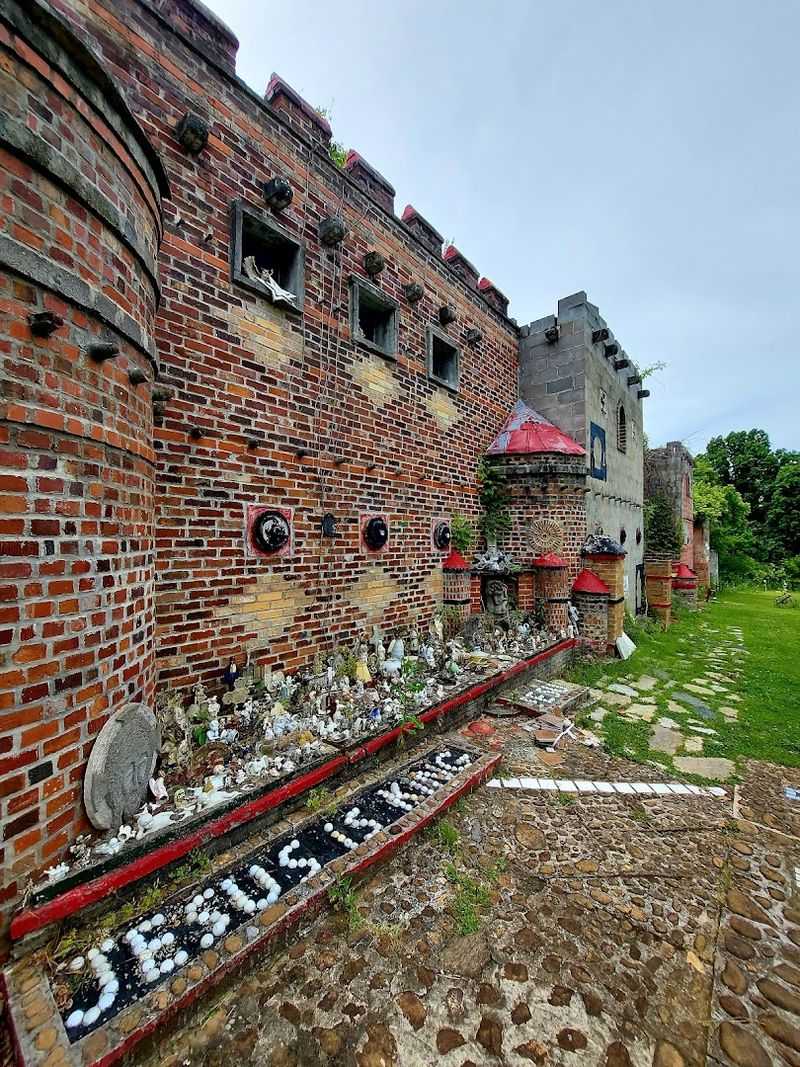
At 25 feet high, the exterior boundary of Greenback Castle is jarring in the best possible way, a medieval silhouette planted firmly in the Tennessee countryside.
The towers and turrets give the structure a castle-like profile that photographs well and impresses even more in person. Reviewers repeatedly note that the place is far larger than it looks from the road.
Once you pass through the entrance, the scale becomes clear and the sense of exploration kicks in immediately.
The design does not follow any single architectural tradition.
It borrows from medieval European forms while incorporating the improvised logic of someone who built entirely by instinct and vision.
The result is something that feels both ancient and entirely original. Some visitors describe it as theatrical.
Others find it quietly imposing.
Either way, that 25-foot wall makes a statement and it sets the tone for everything that follows throughout the rest of the property at 250 Lee Shirley Rd, Maryville, TN 37801.
Narrow Passages, Low Doorways, And A Maze That Keeps Going
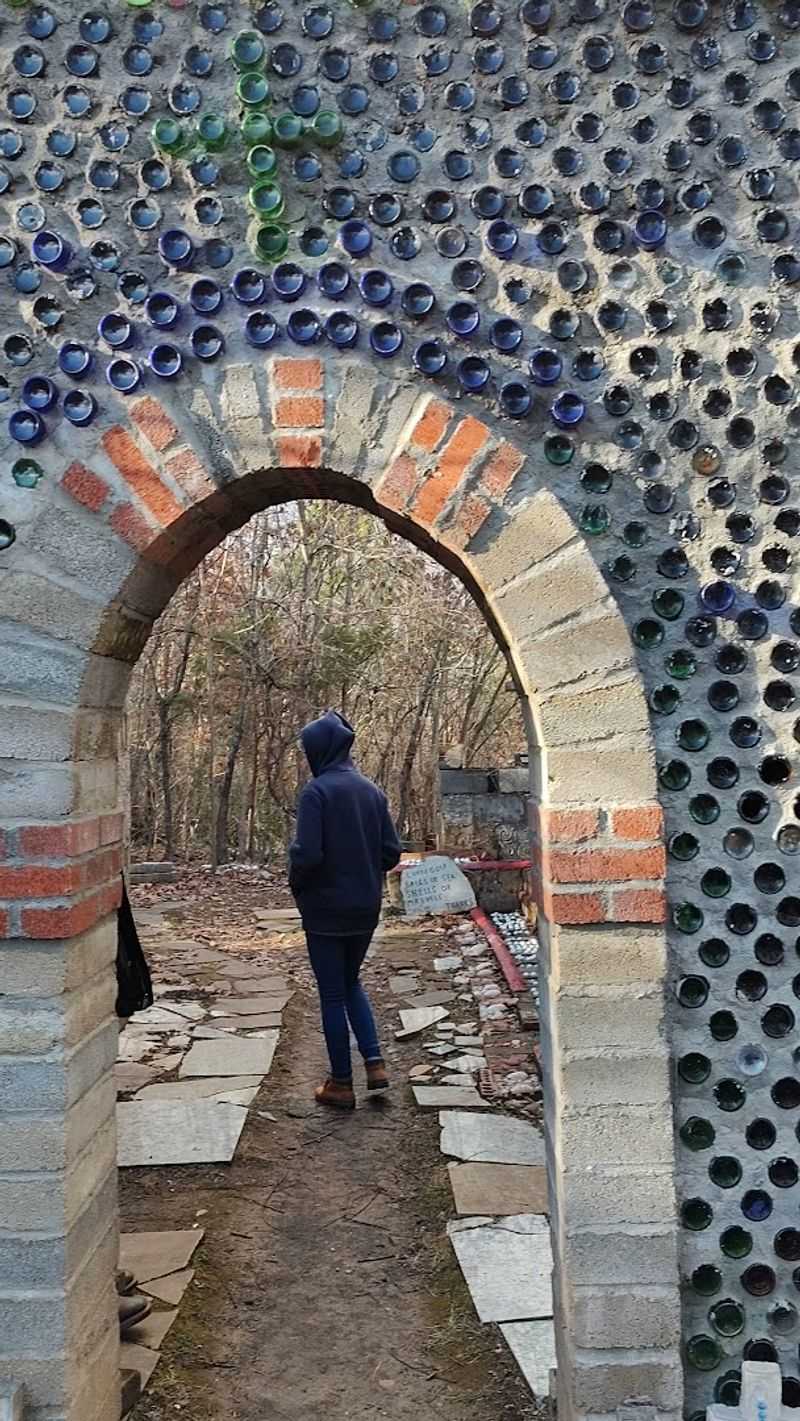
The interior of Greenback Castle is a maze of narrow passages, low doorways, and winding staircases that seem to multiply the longer you explore. Visitors often expect a simple walk-through and end up spending far more time than planned.
The low doorways require most adults to duck, which adds a physical awkwardness that heightens the sense of entering another world. The passages twist and branch in ways that feel unplanned, because they largely were.
Banks built as the vision guided him, not according to any pre-drawn floor plan.
Some areas feel open and curious. Others feel close and shadowed in a way that unsettles certain visitors while delighting others.
Reviewers with a taste for exploration consistently rate the interior experience highly, noting that new details appear on every visit. Those sensitive to tight spaces or uneven ground should move carefully.
The footing is irregular in spots, and some passages lead into areas that feel genuinely remote from the entrance.
The castle rewards patience and a willingness to slow down, look closely, and follow each turn without knowing exactly where it leads.
Religious Symbols, Egyptian Gods, And Doomsday Warnings All In One Place
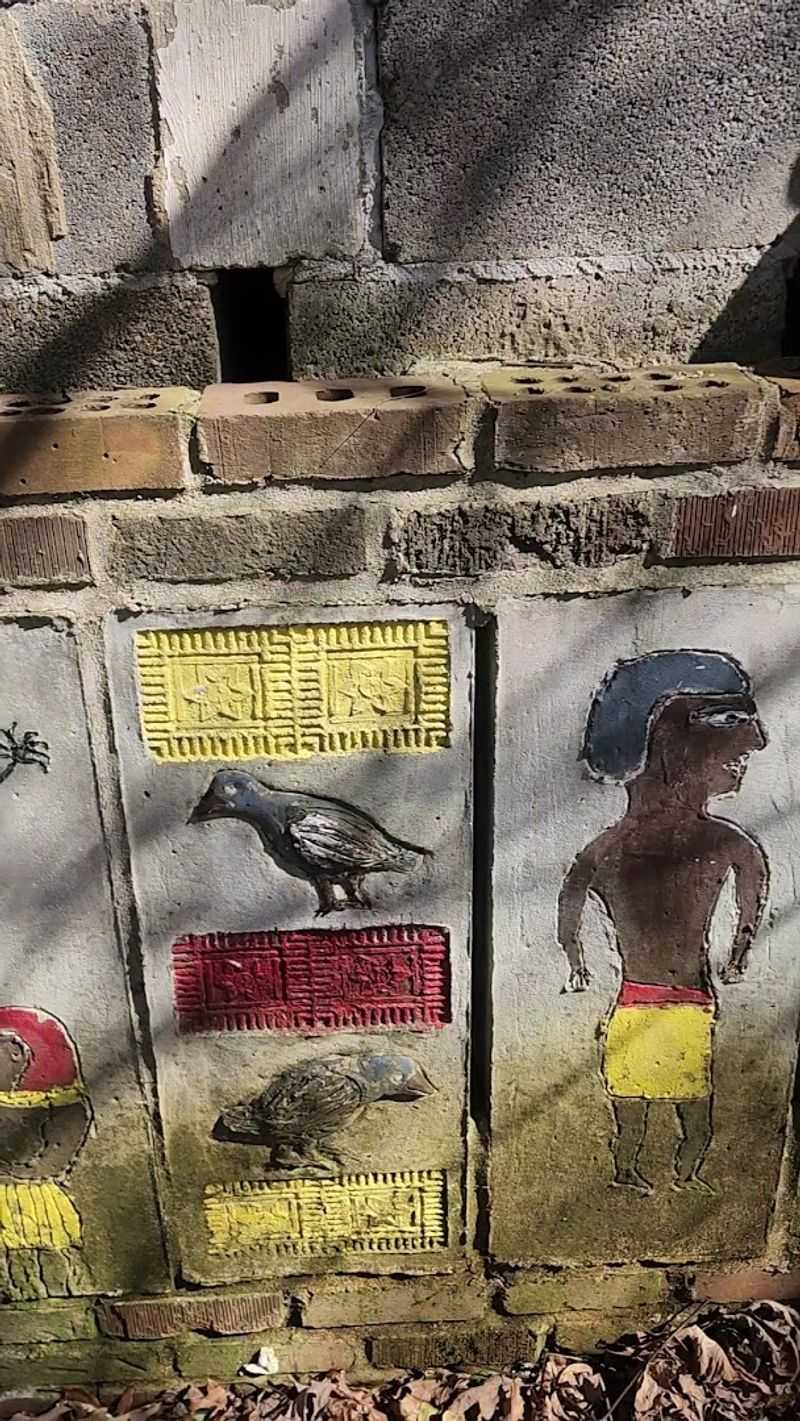
Few spaces in the American South contain Christian crosses, Native American shrines, and Egyptian god imagery all within a short walk of each other.
Greenback Castle holds all of that and more, layered across walls, corridors, and open areas without obvious order or hierarchy.
Banks has described his work as a message to the world, a warning that time is running short. That urgency appears throughout the property in carved text, symbolic imagery, and arrangements that carry clear apocalyptic weight.
Visitors expecting simple folk art find something considerably more complex and, at times, confrontational.
The mixing of traditions reads as sincere rather than decorative. Banks does not appear to be making aesthetic choices for their own sake.
Each symbol seems to carry meaning for him, even when the logic connecting them is not immediately clear to outside observers. Some visitors find the combination fascinating and thought-provoking.
Others find it disorienting or unsettling. A few describe a genuine emotional reaction that they struggle to explain afterward.
The castle does not offer a tidy interpretation. It simply presents Banks’s vision in full, and leaves each visitor to make of it what they will.
The Throne Room, The Chessboard, And Rooms That Defy Explanation
Among the most talked-about spaces inside the castle is the throne room, a chamber that carries the full weight of Banks’s self-made kingdom aesthetic.
The throne sits as a centerpiece, rough-hewn and deliberate, communicating authority in a space that belongs entirely to its creator’s imagination.
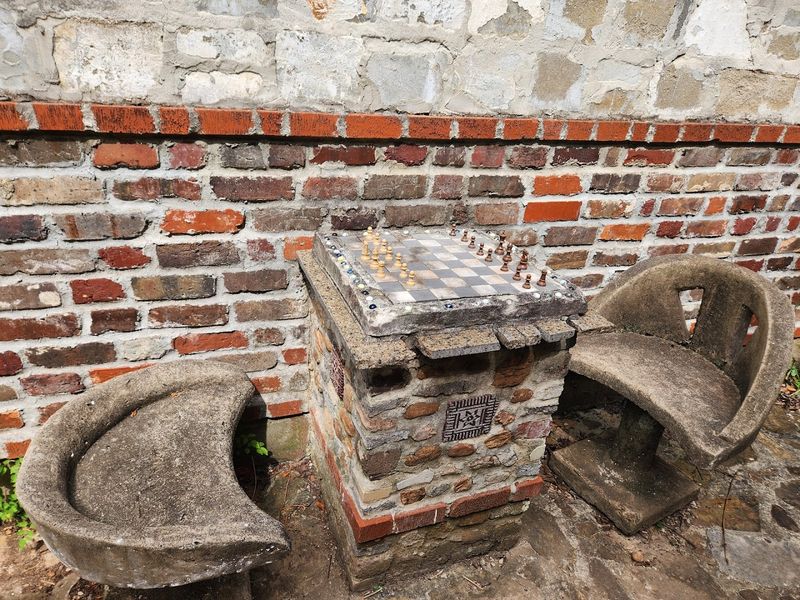
Nearby, a game room features a marble chessboard that visitors consistently mention as one of the more unexpected details in the entire property.
The contrast between a functional game surface and the surrounding atmosphere of religious intensity is striking and oddly charming.
It suggests a personality that contains both gravity and playfulness in equal measure.
Other rooms resist easy description. The enclosed space known informally as the torture chamber contains mannequins arranged in ways that unsettle most visitors.
A pet cemetery honors stray dogs that Banks took in over the years, adding a layer of tenderness to a space that otherwise leans toward the eerie. Each room feels like a chapter in a story that only Banks fully understands.
Walking through them in sequence produces a cumulative effect that reviewers describe as unforgettable, bizarre, and occasionally moving in ways they did not anticipate before arriving.
The Haunted Reputation That Follows The Castle Everywhere
Rumors of paranormal activity around Greenback Castle have circulated for years.
Visitors report an unsettling sensation of being watched, even when no one else is visibly present on the property.
Some claim to have seen likenesses of deceased family members appear in the walls, which Banks himself has spoken about without apparent alarm.
The most persistent piece of local lore holds that no one has ever successfully spent an entire night inside the castle.
Whether that claim is literal or simply reflects the atmosphere of the place, it has taken on a life of its own among those who seek out unusual destinations.
The combination of religious intensity, found-object imagery, and the physical isolation of the site creates conditions that the imagination fills readily.
Reviewers who describe themselves as skeptical still use words like “creepy” and “unsettling” after visiting.
The mold visible and detectable in some enclosed rooms adds a sensory dimension that reinforces the atmosphere. None of this appears to discourage visitors.
If anything, the haunted reputation functions as an additional draw for those who want their roadside attractions to carry genuine weight and not just visual novelty.
Free Admission And The Culture Of Visiting On Your Own Terms
Greenback Castle is open every day of the week from 7 AM to 8 PM, and admission costs nothing. That combination is increasingly rare for a destination with this much to offer, and it reflects Banks’s genuine desire to share his work rather than profit from it.
Donations are welcomed and appreciated, and many visitors choose to leave something behind.
Parking is informal, on the grass in front of the property, which sets the tone for a visit that operates entirely outside conventional tourism infrastructure. There are no ticket booths, no gift shops, no guided tour packages.
Banks himself sometimes appears and walks visitors through the space, but his availability depends on his health and energy on any given day.
Signs at the entrance make clear that visitors enter at their own risk. The ground is uneven in places, some passages are tight, and the overall structure is unfinished.
Reviewers suggest wearing long pants to guard against ticks in the overgrown areas, and keeping children and pets close. The experience rewards visitors who come prepared for something raw and genuine rather than polished and managed.
It is the kind of place that gives back exactly as much as you bring to it.
Outsider Art, Folk Vision, And What Makes Greenback Castle Culturally Significant
Greenback Castle belongs to a tradition of self-taught, visionary environments that scholars and art enthusiasts refer to as outsider art or folk art environments. Comparable sites include Paradise Gardens in Summerville, Georgia, and the Watts Towers in Los Angeles.
These places share a common thread: one person, one consuming vision, and years of labor that produce something no institution could have planned or funded.
What makes Banks’s work culturally significant is not just its scale or its strangeness. It is the completeness of the commitment.
He sold properties he owned to fund the construction. He has spent decades on a project that earns him no income and demands everything he has.
That level of dedication produces art that carries a different kind of authority than work made for galleries or commissions.
Visitors who approach the castle through this lens tend to leave with a deeper appreciation than those who arrive expecting a conventional attraction. The rough edges, the unfinished sections, and the idiosyncratic symbolism are not flaws.
They are the record of a life spent in service to a vision. Greenback Castle is, by any honest measure, one of the most authentic creative environments in Tennessee.
Planning Your Visit And What To Expect When You Arrive
Getting to Greenback Castle requires a short drive down a dirt road off the main route, which surprises first-time visitors who are not expecting the transition from pavement to gravel.
The address is 250 Lee Shirley Rd, Maryville, TN 37801, approximately 45 minutes south of Knoxville.
Following directions to the end of the lane brings you directly to the property.
The site is pet-friendly and has been visited by families, though reviewers generally suggest using judgment about bringing very young children given the uneven terrain and some of the more intense imagery inside. Sturdy footwear is a practical choice.
The back portion of the property is wooded, and the grass in some areas grows long enough to harbor ticks during warmer months.
A Facebook page under the name Fortress of Faith provides additional context and occasional updates about the site. The castle holds a 4.3-star rating across more than 600 Google reviews, which reflects a genuinely positive consensus from a wide range of visitors.
Most agree that the experience is unlike anything else in the region.
A small donation left for Banks goes a long way toward supporting both the man and the mission he has devoted his life to completing.