
This Thrilling Summer Festival In Nevada Delivers Fun For The Whole Family
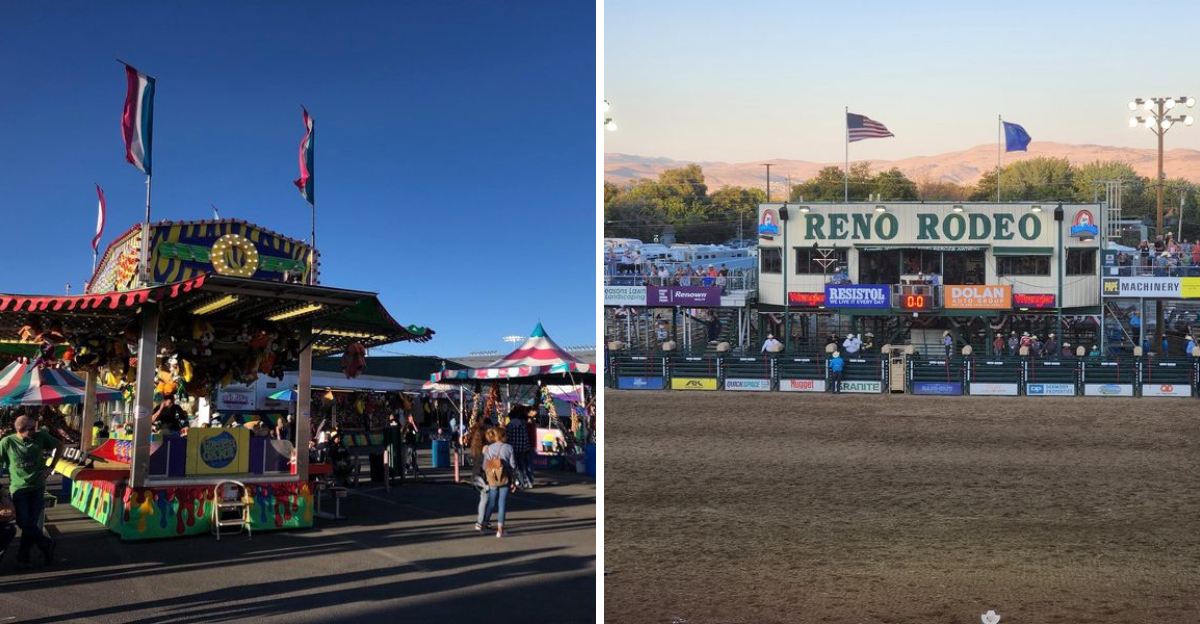
Ten days of dust, bulls, and cotton candy are about to take over Nevada. Cowboys chase eight seconds like it’s the whole world.
A sheep launches a fearless six-year-old into the air while the crowd roars anyway. Barrel racers streak past in a blur of speed and nerve.
Carnival lights spin against a Nevada sky while funnel cake grease drips onto sticky fingers. One corner of the grounds holds a sculpture made entirely of butter, shaped like an animal nobody expected.
Volunteers who have done this for decades still light up like rookies every June. Denim outnumbers everything else for ten straight days, and nobody minds.
Fireworks crack the night open as a thousand phones lift at once. Curious what a whole city dressed as cowboys looks like?
A Century Of Cowboy History In One Arena
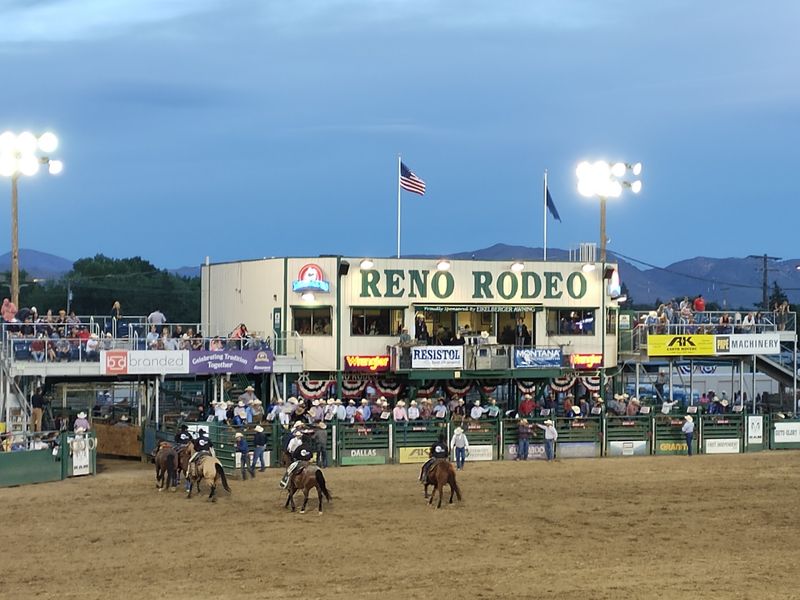
1919. That is when this rodeo first kicked up dust, and it has barely paused since.
The event grew straight out of Nevada’s ranching country, where roping and riding were daily work rather than entertainment. Cattle outfits needed skilled hands, and those hands liked to compete.
Over a century later, the Reno Rodeo still runs on that same spirit. It earned a place in the ProRodeo Hall of Fame in 2008, which says plenty about its standing among western events.
Everything happens at the Reno-Sparks Livestock Events Center, also called the Nevada State Fairgrounds, at 1350 N Wells Ave, Reno, NV 89512. The grounds sit just north of downtown Reno, close to hotels, shops, and restaurants.
Old-timers volunteer year after year, and past association presidents often hold court in their own booth on the grounds. Ask a question there and expect a long, colorful answer.
History here is not behind glass. It gallops past at full speed, wearing chaps.
Ten Days Of Professional Competition
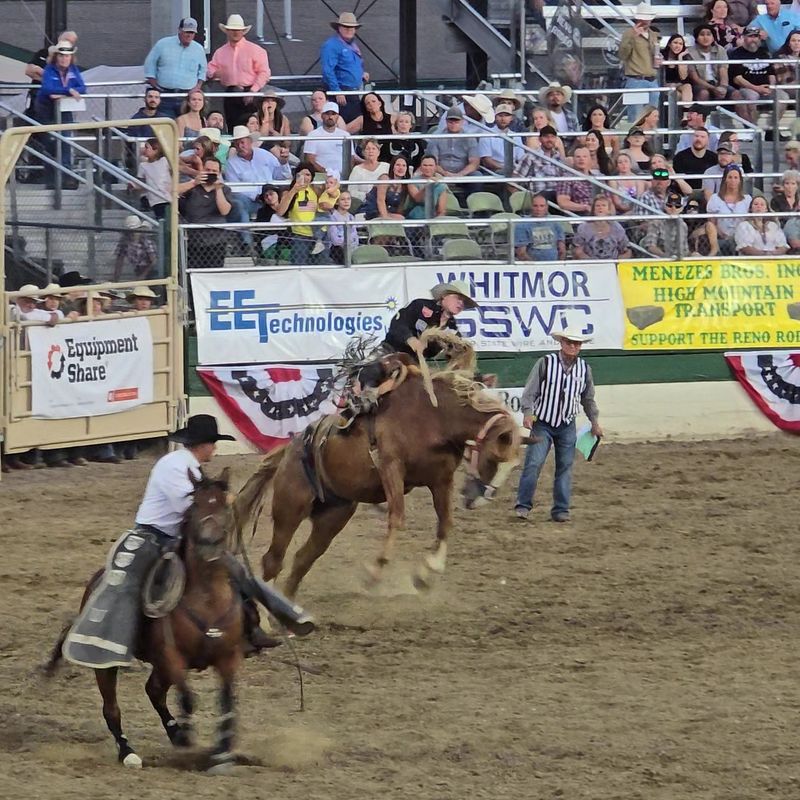
Eight seconds sounds short until a bull decides otherwise.
The Reno Rodeo carries sanctioning from the Professional Rodeo Cowboys Association, which means the competitors are the real deal. Riders travel in from across the country and beyond, chasing points and one of the larger purses on the circuit.
The lineup covers bull riding, bareback riding, saddle bronc riding, steer wrestling, tie-down roping, team roping and barrel racing. Breakaway roping, an all-women event, has joined the schedule too.
Ten days of performances means plenty of chances to catch a favorite event. Barrel racing draws gasps for its precision, while bull riding brings the crowd to its feet.
Athleticism goes both ways in the arena. The horses train for years, and their footwork is often the most impressive thing in sight.
Veterinarians stay on-site throughout, and animal care sits high on the association’s priority list.
Fans who follow rodeo closely tend to arrive early. The warm-up areas are half the show.
Carnival Rides And Cotton Candy Chaos
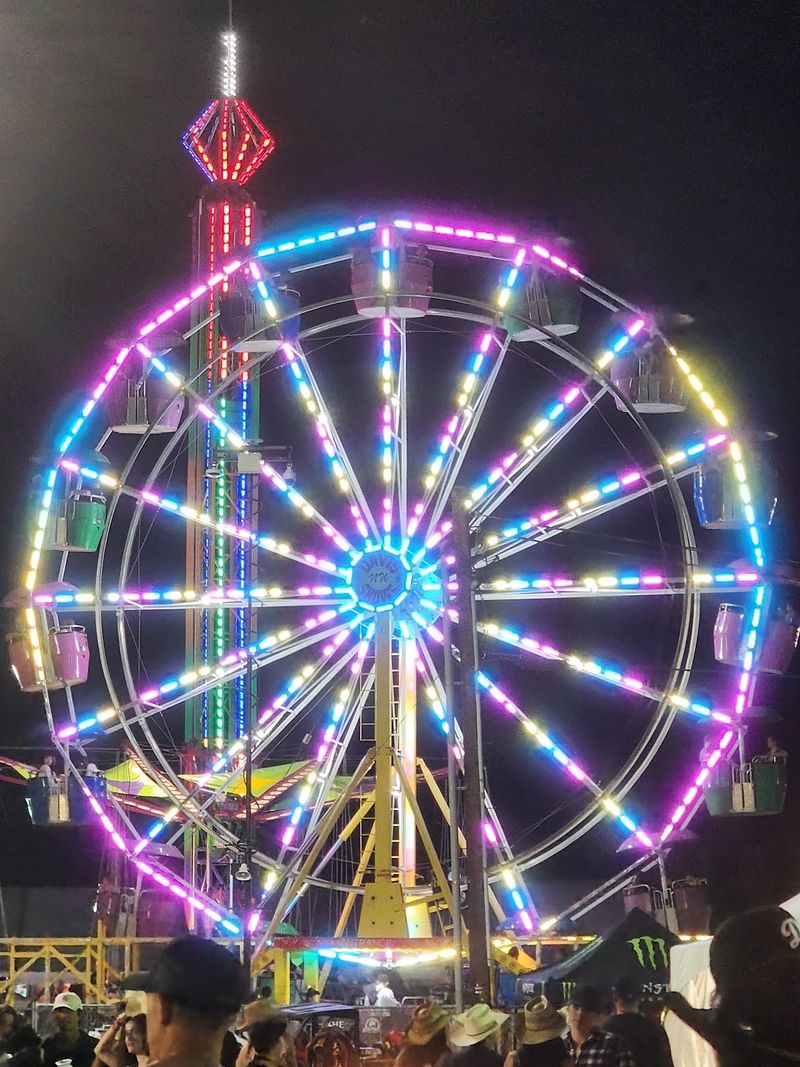
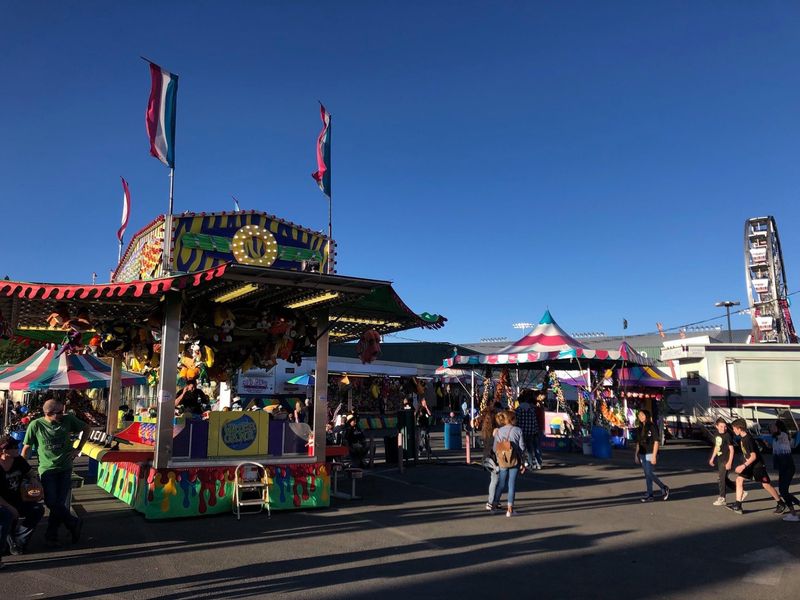
Spinning lights, screaming teenagers, the smell of hot sugar. The midway earns its own admission price.
A full carnival sets up alongside the arena, packed with rides for every nerve level. Little ones get gentle spinners while older kids line up for the rides that flip stomachs.
Game booths line the walkways, and the stuffed animal prizes are as oversized as ever. Somebody always leaves carrying a bear taller than a toddler.
Food vendors handle the rest. Funnel cake, barbecue, kettle corn and shaved ice keep the lines busy from afternoon straight through the fireworks.
Reviewers mention the carnival more than almost anything else, which tells you how much of the experience happens outside the grandstands.
Smart families split the day. Ride first, eat second, then head for seats before the grand entry.
Shade can be limited during hot Nevada afternoons, so hats and water bottles pay off. Evening brings cooler air and better lights anyway.
The midway hums long after the last chute swings open.
Mutton Busting And Other Pint-Sized Glory
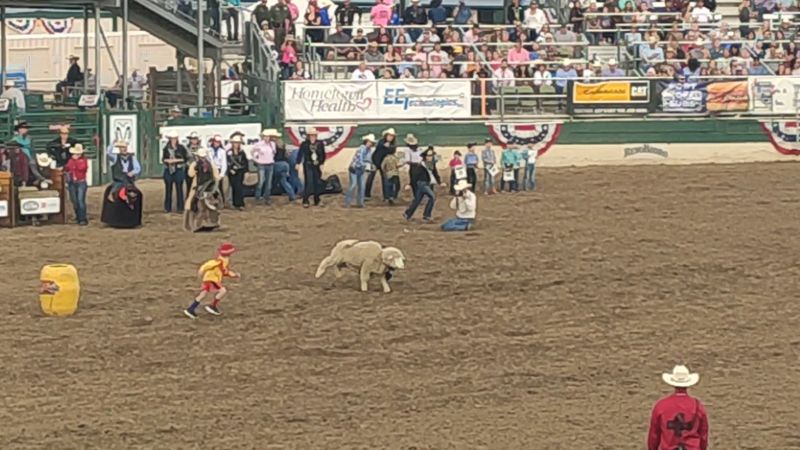
Nothing empties a phone battery faster than mutton busting.
Young riders climb aboard a sheep, grab a fistful of wool and hang on for as long as gravity allows. Usually that is about two seconds.
Helmets and vests come standard, and the landing is soft dirt. The crowd roars either way, win or tumble.
Kids’ Day adds even more hands-on fun. Activities have included milking a cow, short horseback rides, face painting and a petting zoo full of patient animals.
Interactive exhibits scattered around the grounds explain ranch life in ways children actually remember. Touching a saddle beats reading about one.
Parents get a break too, since most of these activities run in shaded or fenced areas with volunteers keeping watch.
The Special Kids’ Rodeo, introduced in 1983, pairs children with special needs alongside rodeo competitors for a morning built entirely around them. Volunteers frequently call it the highlight of their year.
Small riders, giant memories. That combination keeps families coming back.
The Cattle Drive That Rolls Into Town
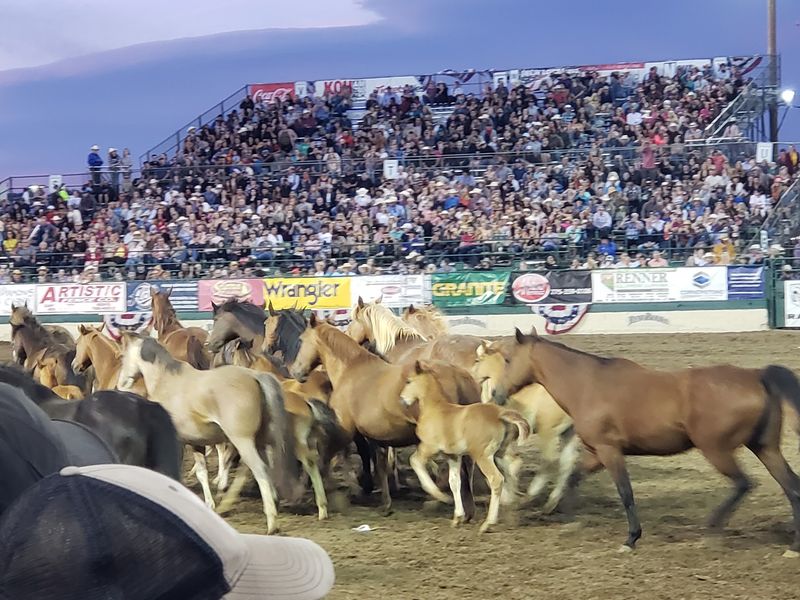
Real steers. Real horses.
Real miles of high desert.
The Reno Rodeo Cattle Drive moves a herd from Doyle, California, north into Reno over several days. Riders sign up well ahead, and the ride is no theme park version of ranch work.
Dust, sagebrush and long hours in the saddle come with the territory. Participants camp along the route and eat meals cooked outdoors.
The finish is the fun part for spectators. The herd makes a grand entrance into the city, announcing that rodeo week has officially arrived.
Crowds gather to watch cattle move through streets that usually carry traffic. Cameras come out.
Kids point.
It is one of the traditions that separates this event from a standard arena competition. Not many festivals begin with a multi-day trail ride.
Anyone hoping to join should plan far in advance, since spots are limited and riding experience matters.
Watching the arrival costs nothing but a good spot on the sidewalk and a little patience.
Butter, Bulls And A Sculpture Worth Staring At
Over 800 pounds of butter shaped into a life-size animal. Yes, really.
The butter sculpture sits in the western marketplace and honors Nevada’s dairy farmers. Visitors stop, stare, then immediately reach for their cameras.
Sculptors work in chilled conditions, and the finished animal shows surprising detail down to the muscle lines. It is easily one of the strangest and most charming attractions on the grounds.
The marketplace around it deserves browsing time. Vendors sell hats, boots, belt buckles, tack, jewelry and western decor from makers across the country.
Shoppers who need a proper hat can usually find someone willing to shape the brim on the spot. That is worth the trip alone.
Lines can grow long during peak afternoon hours, so mornings tend to be calmer for serious shopping.
Booths change from year to year, which keeps repeat visitors curious.
Between the dairy tribute and the leather goods, the marketplace proves this festival celebrates more than eight-second rides.
Bring a bag. Something will follow you home.
Themed Nights That Change The Mood
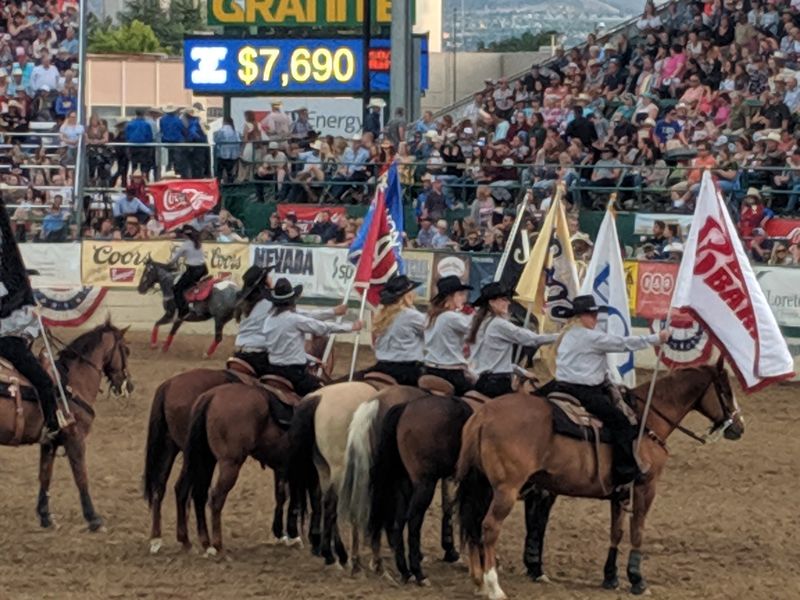
Pink hats one night, flags the next.
The schedule includes themed performances that give each evening its own personality. Family Night, Tough Enough to Wear Pink Night and Patriot Night are among the recurring favorites.
Pink night raises awareness for breast cancer, and the grandstands turn into a sea of rose-colored shirts. Even the toughest competitors join in.
Patriot Night leans into military tribute, with flags, salutes and a crowd that goes quiet at exactly the right moment.
Family Night usually offers the most kid-friendly pacing and atmosphere, making it a smart pick for first-timers with young children.
Checking which theme lands on which date helps families choose the performance that fits them best. Tickets often move quickly for the popular nights.
Live music and dancing continue after the arena empties, with entertainment tents like the Branding Room keeping the energy going.
Fans without arena seats can still catch nightly viewing parties on the grounds.
Each evening feels a little different, which is exactly the point.
Fireworks Over The Grandstands
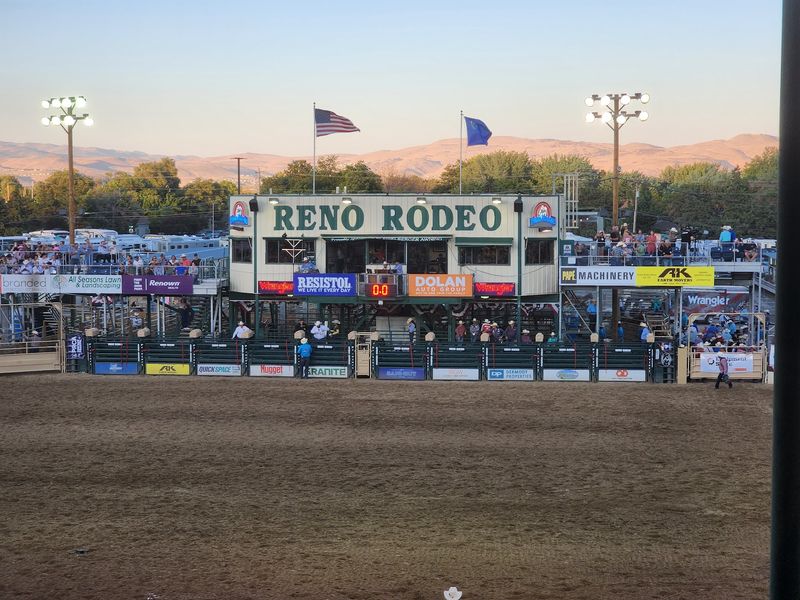
Boom. Then a thousand phones lift at once.
Nightly fireworks cap the performances, launching color over the arena and the surrounding fairgrounds. The show pairs perfectly with the last notes of the announcer’s sign-off.
Horses and livestock are moved and managed with care ahead of the display, part of the event’s broader attention to animal welfare.
Families with small children often stake out a spot with a clear sky view rather than fighting the exit crowd. Blankets help.
Reno sits in high desert country, so summer nights cool off fast once the sun drops. A light jacket makes the fireworks far more comfortable.
The desert air keeps the sky clear, which means the bursts read sharp against the darkness.
Parking lots empty slowly after the finale, so patience beats frustration. Some visitors linger at the food vendors until traffic thins.
Ten nights, ten shows. Missing one is not the end of the world.
Still, the first one always lands hardest.
Nearly A Thousand Volunteers Keep It Running
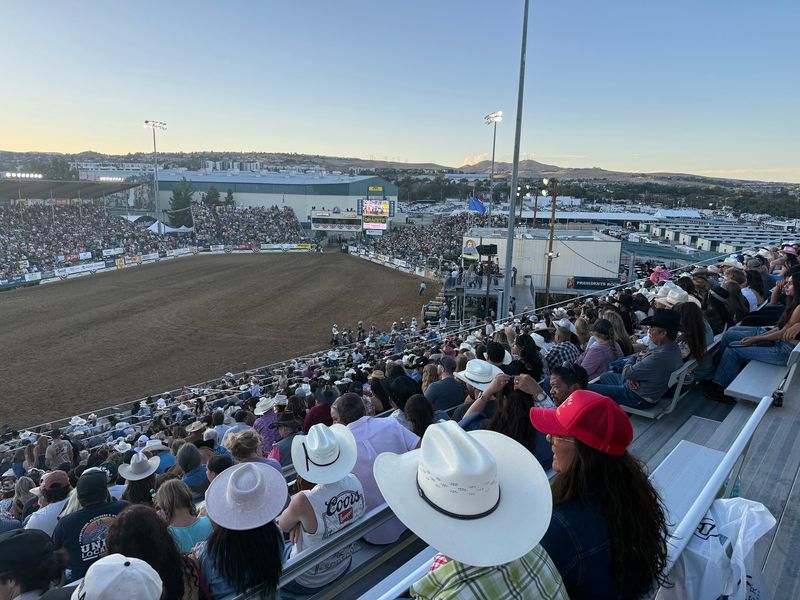
Who actually runs this thing? Neighbors, mostly.
The Reno Rodeo Association operates as a non-profit and leans on close to a thousand volunteers each year. They sell tickets, guide traffic, staff gates and answer endless questions.
Visitors notice. Reviews repeatedly mention friendly staff and how smoothly the whole operation moves despite enormous crowds.
Committees handle everything from livestock logistics to hospitality, and many members serve for decades. Some families have volunteered across three generations.
That community ownership shows up in small ways. Directions get given with a smile, and lost tickets often get sorted out with a single phone call.
The Reno Rodeo Foundation channels proceeds back into the region through scholarships, youth programs and community grants. A Denim Drive collects clothing for children in difficult circumstances.
Economically, rodeo week fills hotels, restaurants and shops throughout the Reno and Sparks area.
So buying a ticket does more than secure a seat. It funds a whole lot of local good.
Dressing Western Is Practically The Law
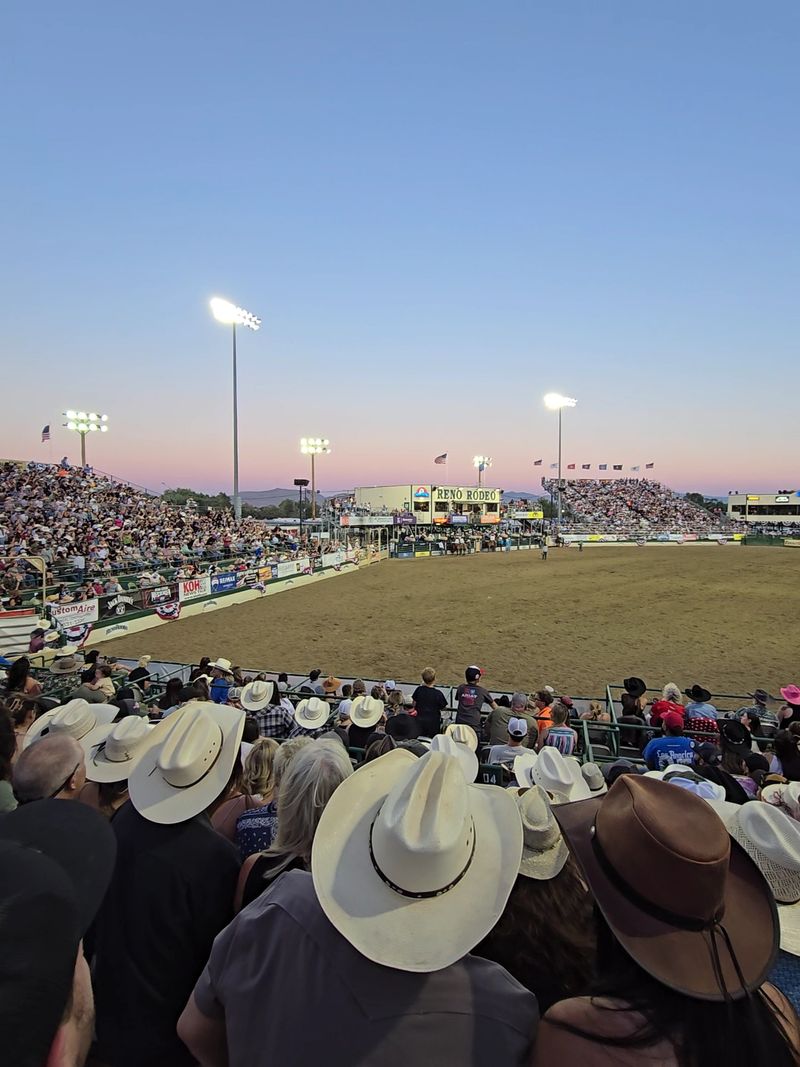
Denim outnumbers everything else during rodeo week.
The city leans hard into the theme, hanging western decorations and banners across storefronts and streets. Even people who never touch a saddle pull on boots.
Historically, a playful Go Western rule existed, enforced by the Junior Chamber of Commerce. Anyone caught without western attire could be jokingly arrested and hauled before a mock kangaroo court.
The tradition is remembered fondly, and the dress-up spirit clearly survived. Hats sell fast at local shops in June.
Practically speaking, boots handle arena dirt better than sneakers. A wide brim beats a baseball cap under Nevada sun.
Kids get into it enthusiastically, and small cowboy hats are everywhere on the midway.
Nobody will turn a visitor away for wearing shorts, of course. Comfort still matters most on hot afternoons.
But joining the costume makes the whole experience more fun, and photos come out better.
Ten days a year, the entire city agrees to play cowboy together. Might as well play along.
Tickets, Seats And Smart Planning
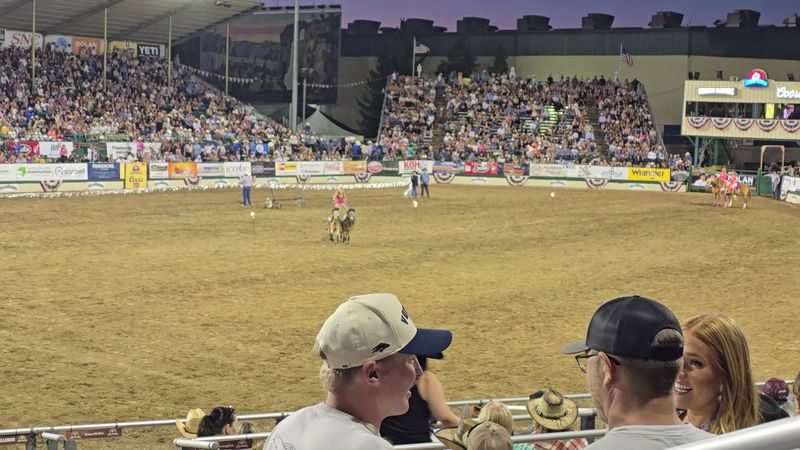
Sell-outs happen. Plan accordingly.
Repeat visitors consistently advise buying tickets early, sometimes very early, especially for weekend performances and marquee nights. Popular events disappear quickly.
Seat location matters more than many first-timers expect. Some sections offer limited legroom or partially blocked sightlines, so studying the seating chart before purchasing is worth the effort.
Accessible seating is available, and reviewers have mentioned the handicap section positively.
Parking on the grounds fills up, and payment methods can vary, so checking details ahead avoids surprises at the gate. Rideshare drops off nearby and skips the lot entirely.
Arriving early gives time for the marketplace, the carnival and a walk around the barns before the arena action starts.
Special events like the Xtreme Bulls competition and a kick-off concert take place before the main run of performances, and they sell separately.
Bringing sunscreen, a refillable water bottle and cash-friendly backup plans smooths out the day.
A little preparation turns a hectic outing into an easy one.
Why June In Reno Belongs On The Calendar
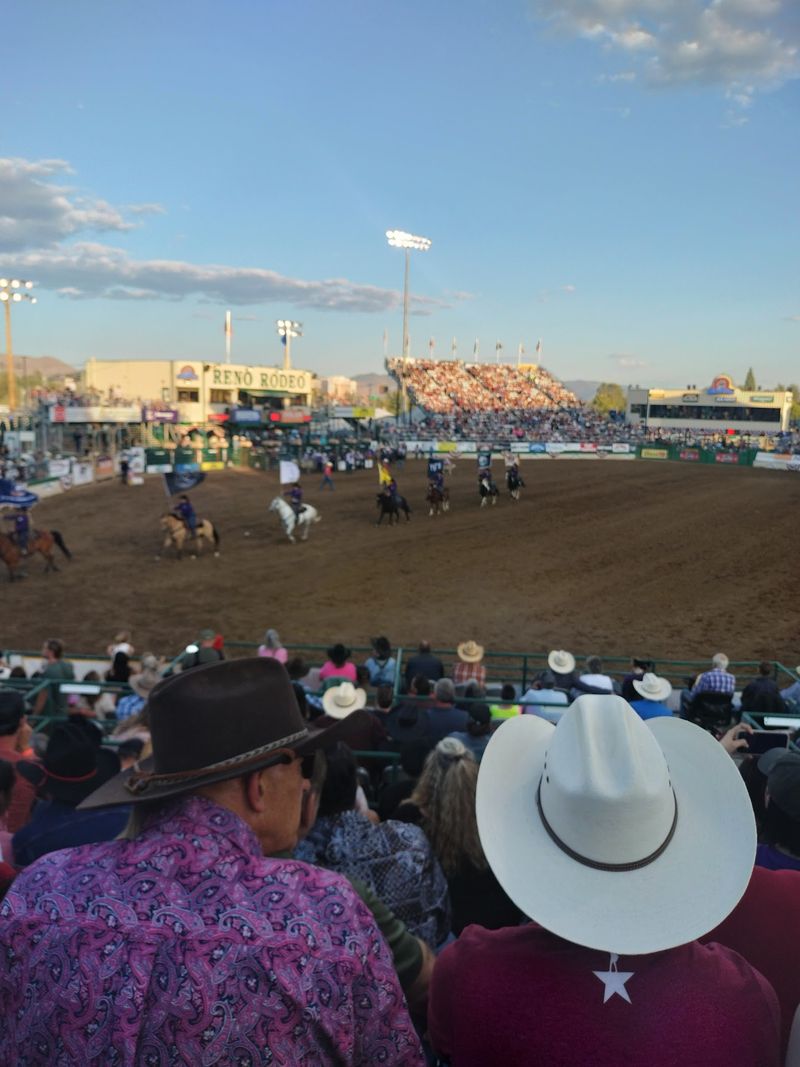
Ten days. One city.
Full cowboy takeover.
June brings warm afternoons and cool evenings to northern Nevada, which suits an outdoor festival perfectly. Mornings work well for the marketplace and hands-on exhibits.
Downtown hotels sit close to the fairgrounds, making the rodeo an easy add-on for anyone already visiting the Reno-Tahoe region.
Lake Tahoe waits less than an hour away, so a rodeo night and a mountain day fit neatly into one trip.
The atmosphere is what people remember most. Announcers crack jokes, crowds cheer strangers, and volunteers seem genuinely glad you showed up.
First-timers frequently arrive curious and leave planning next year’s visit. That pattern shows up again and again in visitor comments.
Bring good walking shoes, an appetite for barbecue and tolerance for a little dust on your jeans.
Nevada has plenty of summer events, but few combine professional sport, carnival lights, livestock and small-town warmth this successfully.
The chutes open every June. The rest is up to you.