
This Underrated Alabama State Park Is A Hidden Paradise For Hiking Camping And Wildlife Viewing
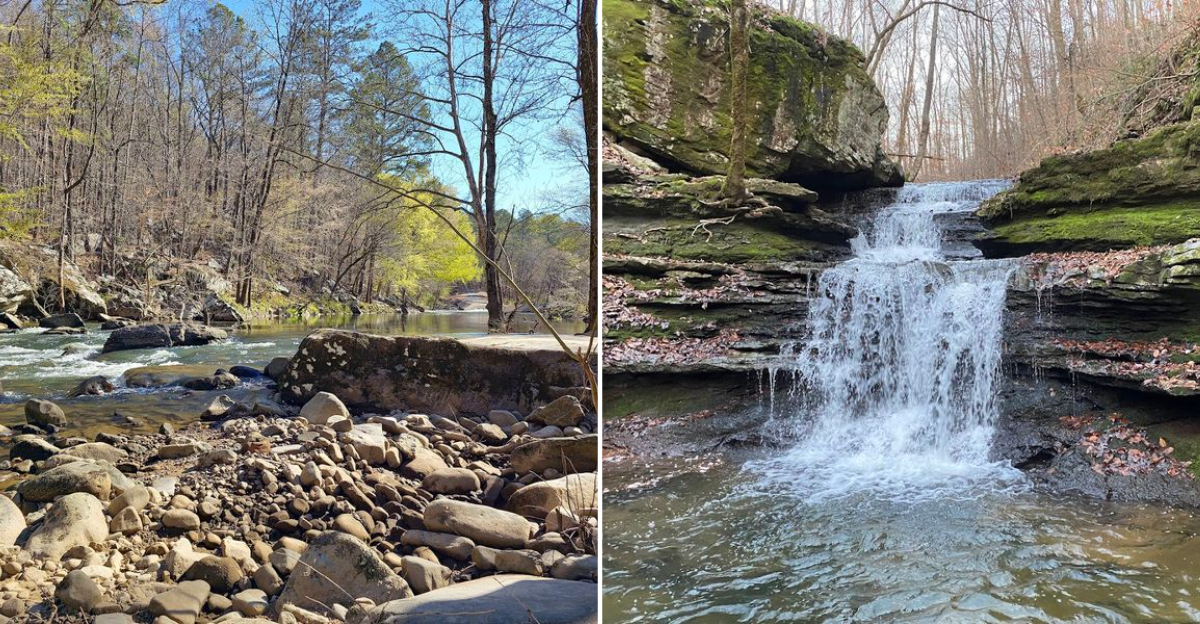
Most travelers pass straight through Alabama, looking for bigger destinations. Meanwhile, this quiet state park keeps unfolding one trail, campsite, and lookout at a time for the visitors who actually slow down enough to notice it.
Mornings start with mist between the trees and birdsong carrying through the woods before the hiking paths fully wake. By afternoon, campers settle into shaded sites while deer move through the brush as if they belong to a slower rhythm of life entirely.
Nothing here competes for attention.
The lakes stay calm, the trails stretch for miles without feeling crowded, and even the wildlife seems comfortable letting the day move slowly. Hours slip away easily, somewhere between a scenic overlook and the decision to stay another night.
That is often how underrated places earn their reputation.
Scenic Hiking Paths Through Diverse Terrain
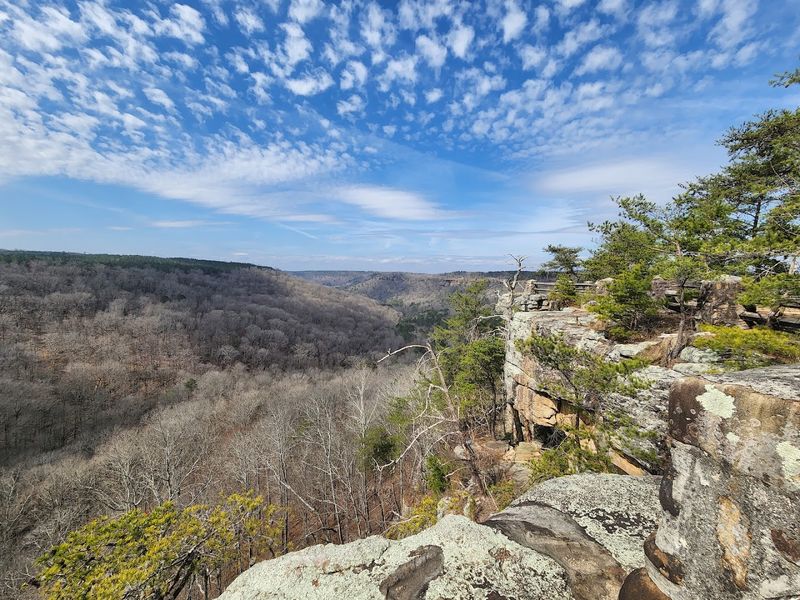
Over 15 miles of trails wind through Buck’s Pocket State Park. Each trail offers something different.
You will not get bored out here.
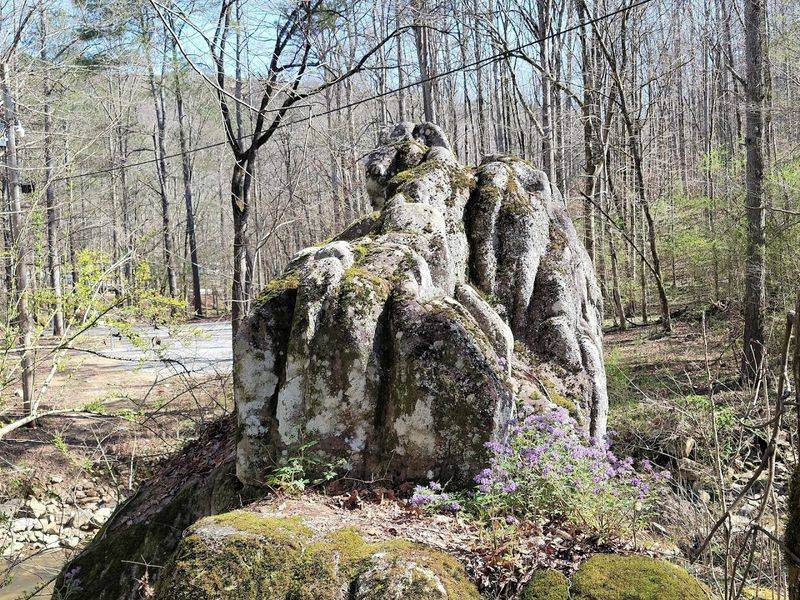
The Point Rock Trail is the crown jewel. Hikers climb roughly 800 feet through ancient rock formations.
Those formations are estimated to be 200 to 250 million years old.
At the top, panoramic views stretch across the canyon below. Bald eagles sometimes soar past the overlook.
That moment alone makes the climb worth every step.
The Indian House Trail is shorter and equally fascinating. Ancient rock overhangs once sheltered Native Americans along this path.
History literally surrounds you on this walk.
The Primitive Campground Trail leads toward the lake. It is a solid choice for anyone who wants a casual stroll.
Fishing access makes this trail extra useful.
Some trails offer glimpses of waterfalls and views toward Lake Guntersville. The terrain shifts from flat creek beds to steep ridgelines.
Every hike here feels like a new adventure.
Plan your visit at 393 Co Rd 174, Grove Oak, AL 35975. The park is open year-round and always worth the drive.
Campground Features And Amenities For Comfort
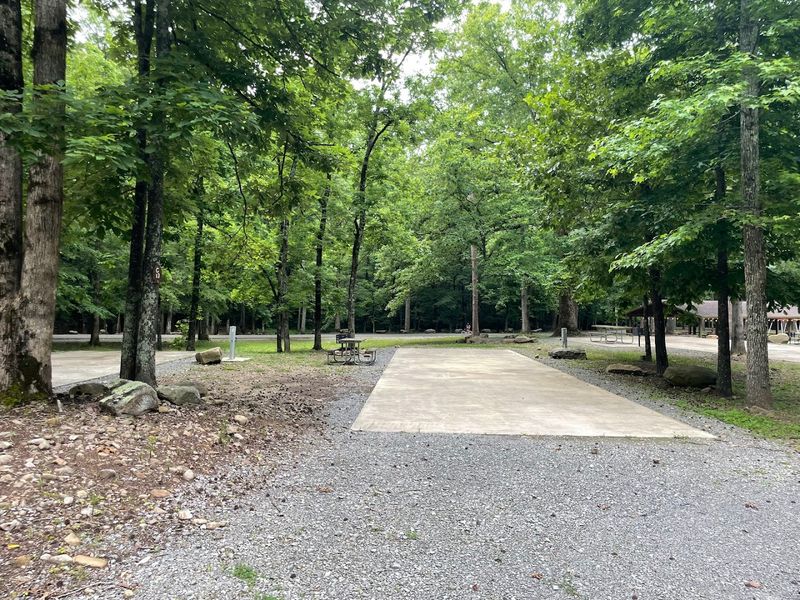
The campground at Buck’s Pocket got a full renovation, and it shows. Everything feels fresh, clean, and well-organized.
Comfort is clearly a priority here.
There are 23 RV campsites available for reservation. Thirteen sites offer full hookups with water, power, and sewer.
Four of those are convenient pull-through sites.
Every RV site features a spacious 16-by-60-foot concrete pad. Each spot also includes a picnic table, fire pit, and charcoal grill.
You arrive, and everything is already set up for you.
Ten sites have water and power only. For tent campers, 11 primitive sites sit in the interior of the campground.
Those spots feel genuinely secluded and peaceful.
High-speed Wi-Fi is available in the main campground area. There are clean bathhouses and a separate ADA-compliant facility.
A pavilion is also available to rent for group gatherings.
A dump station serves RV visitors on their way out. One ADA-accessible campsite is available without a sewer hookup.
Reservations can be made online, by phone, or in person.
Peak season runs from March 1 through October 31. A two-night minimum stay is required during that window.
Holiday weekends like Memorial Day and Labor Day require a three-night minimum.
Local Wildlife Species To Spot In Natural Habitats
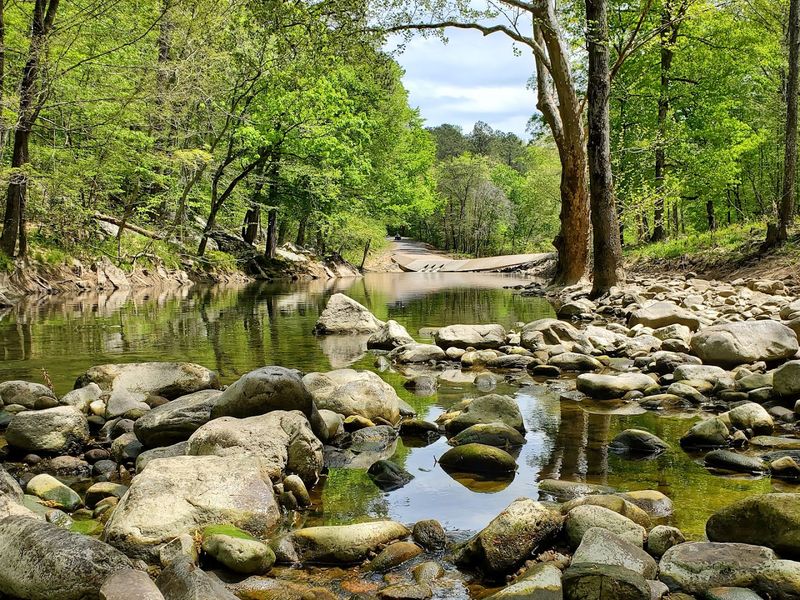
Wildlife sightings happen regularly at Buck’s Pocket. The park’s name itself is tied to local legends about large deer populations.
That history adds a fun layer to every walk.
Deer, foxes, and raccoons roam the park freely. Spotting them near the tree line at dusk is common.
Bring binoculars and patience for the best results.
Birdwatching is a serious draw here. Great Blue Herons and Great Egrets frequent the water areas.
Red-eyed Vireos, Wood Thrushes, and Scarlet Tanagers also appear regularly.
Bald eagles nest on the forested slopes above South Sauty Creek. Observers downstream from Morgan’s Cove have reported sightings.
Early mornings offer the highest chance of spotting them in flight.
Morgan’s Cove, located seven miles downstream on Lake Guntersville, is an excellent birdwatching location. Belted Kingfishers are frequently seen there.
The cove also attracts migratory waterfowl during seasonal movements.
The park’s thick hardwood forests create ideal shelter for many species. Dramatic bluffs and clear creeks add to the habitat diversity.
Wildlife thrives here because the landscape stays largely undisturbed.
Spring brings the most active wildlife behavior. Animals are more visible and vocal during that season.
Plan a morning visit for the best wildlife viewing experience.
Flora And Fauna Unique To The Surrounding Environment
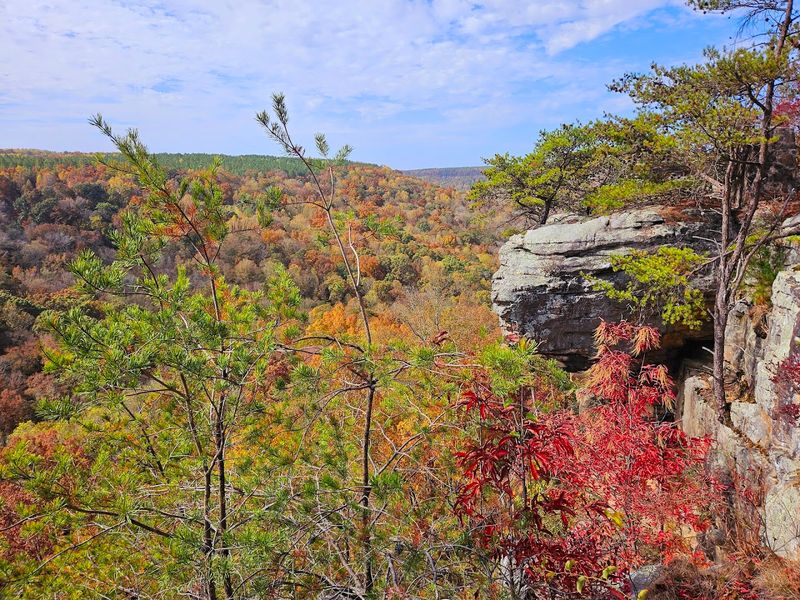
Buck’s Pocket sits in the Appalachian foothills, and the plant life reflects that rich geography. Ancient geological formations dating back 200 to 250 million years shape the soil and terrain.
That history influences every species growing here.
Thick hardwood forests dominate the landscape. Oak, hickory, and maple trees create a dense canopy.
In autumn, those trees explode into brilliant oranges and reds.
Spring wildflowers are a major seasonal attraction. Trilliums, wild geraniums, and woodland phlox appear along the trails.
The canyon floor becomes especially colorful during April and May.
Rock overhangs and bluffs support specialized plant communities. Mosses, ferns, and lichens cling to shaded cliff faces.
These micro-habitats support species rarely found elsewhere in the region.
South Sauty Creek and its tributaries feed riparian zones. Willows and river birches line the creek banks.
Those areas attract insects, which in turn attract birds and small mammals.
The park spans DeKalb, Jackson, and Marshall counties. That geographic spread means the flora varies noticeably across the property.
Different elevations and soil types encourage surprising botanical diversity.
Fall foliage at Buck’s Pocket draws visitors specifically for the color show. The canyon framing makes the autumn display especially dramatic.
Honestly, the views during peak leaf season are hard to match anywhere in Alabama.
Essential Gear And Preparation Tips For Visitors
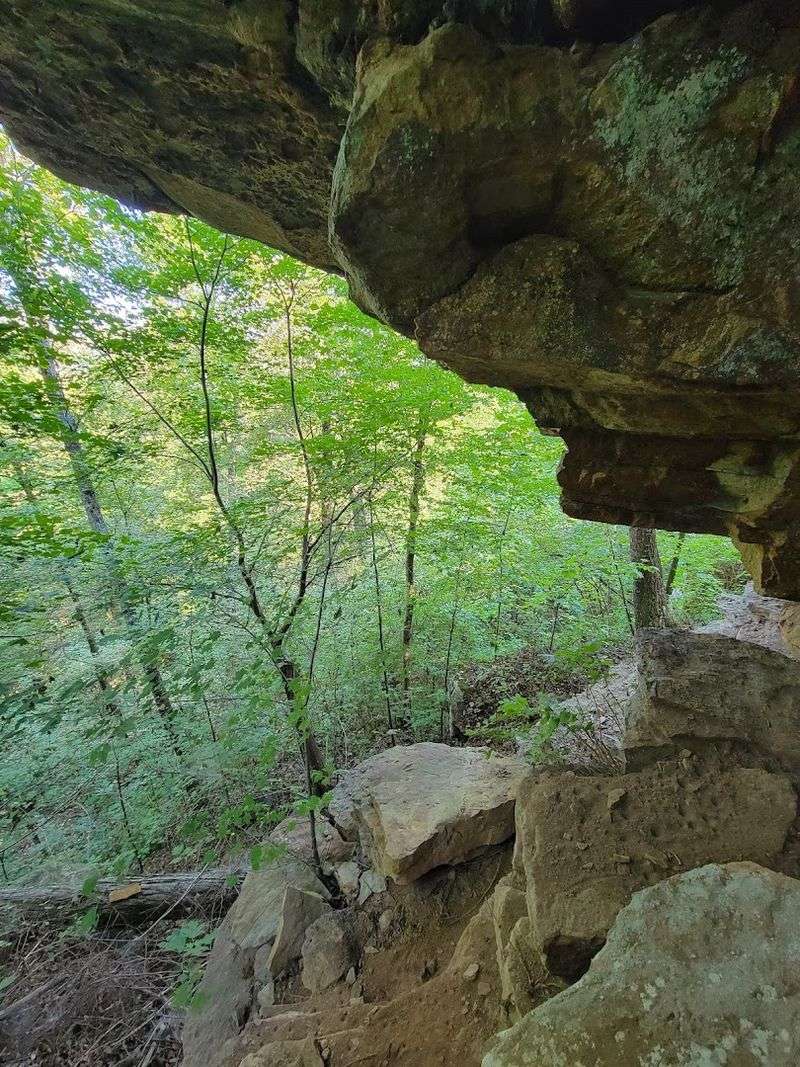
Preparing well before heading to Buck’s Pocket makes a real difference. The nearest stores are roughly 30 minutes away.
Stock up on supplies before you start the descent into the canyon.
Good hiking boots are non-negotiable on these trails. The Point Rock Trail gets steep and rocky in sections.
Ankle support will save you a lot of grief on the climb.
Bring plenty of water for any hike over two miles. The terrain is demanding, especially in summer heat.
Hydration packs work better than single water bottles on longer routes.
Cell service is unreliable or nonexistent inside the park. Download offline maps before you arrive.
The park does offer Wi-Fi in the main campground area if you need connectivity.
The road into the park is steep, narrow, and full of sharp switchbacks. Larger vehicles should approach with caution and at low speed.
Smaller rigs and passenger cars handle the descent much more easily.
Bug spray and sunscreen are essential from spring through fall. Ticks are active in the underbrush along many trails.
Check yourself thoroughly after any hike through dense vegetation.
Arriving early on weekends helps you snag the best parking spots near trailheads.
Conservation Efforts Supporting Park Ecosystems
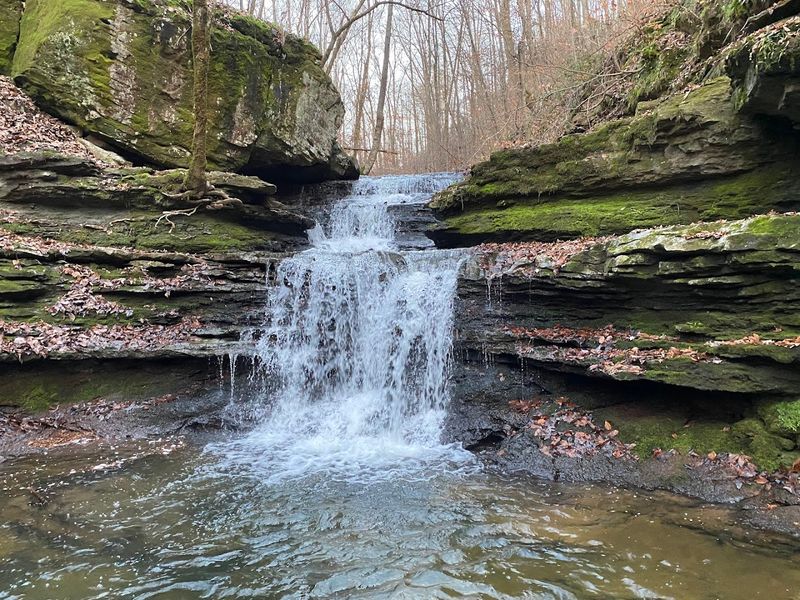
Buck’s Pocket State Park reopened in June 2021 after significant renovations. That overhaul was not just about comfort.
It included improvements designed to protect the natural environment long-term.
The park spans over 2,000 acres across three counties. Managing that much land requires ongoing conservation work.
Trail maintenance, erosion control, and habitat monitoring are all part of regular operations.
The OHV trail system was the first of its kind in Alabama State Parks. It is temporarily closed due to saturated ground conditions and downed trees.
That closure reflects responsible land stewardship rather than neglect.
Bald eagle nesting sites above South Sauty Creek receive special attention. Protecting those nesting areas helps sustain a population that was once endangered.
Visitors are encouraged to observe from a respectful distance.
South Sauty Creek and its connected waterways are monitored for water quality. Clean water supports the fish populations that make the park a fishing destination.
Healthy creek systems also benefit the surrounding wildlife habitat.
Primitive campsites and backcountry access require phone reservations. That system helps the park manage foot traffic in sensitive interior areas.
Limiting impact in those zones keeps them wild and intact.
Rappelling is permitted strictly by permit only. A beginner class is even offered for those interested.
Controlling access to cliff areas protects both visitors and the fragile rock face ecosystems.
Fishing Spots And Water Activities Options
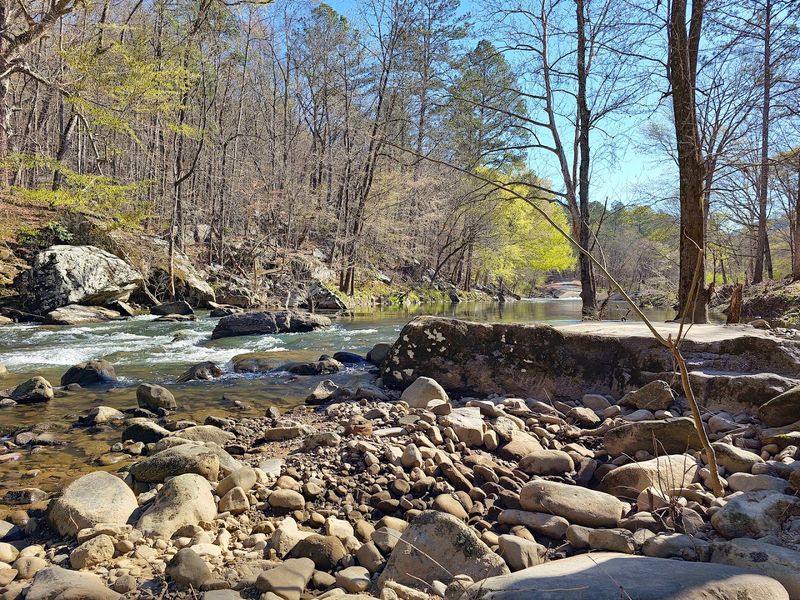
Fishing is one of the most popular activities at Buck’s Pocket. South Sauty Creek runs through the park and offers solid access for anglers.
The coves within the park are well known for bass fishing.
Morgan’s Cove sits seven miles downstream on Lake Guntersville. It is a prime fishing location with easy water access.
Bass are the main target, but other species are present too.
The Primitive Campground Trail leads directly to the lake. That trail makes it easy to carry gear from your campsite to the water.
No long detours required.
Morgan’s Cove also has a launch point for small boats. Getting on the water opens up a wider range of fishing spots.
The cove stays relatively calm, which makes it approachable for beginners.
Birdwatching and fishing often overlap at the water’s edge. Belted Kingfishers and Great Blue Herons frequent the same spots anglers prefer.
Watching them work the water is free entertainment between bites.
The creek level inside the park varies by season. Heavy rains from January through March often bring the creek to life.
During drier months, the creek bed may be low or completely dry.
Always check current water conditions before planning a fishing trip. The park office can provide up-to-date information on creek and lake levels.
Calling ahead saves disappointment on dry-season visits.
Night Sky Observations And Astronomy Opportunities
Buck’s Pocket sits far from major city lights. That remoteness creates exceptional conditions for stargazing.
On a clear night, the sky here is genuinely stunning.
Campers have reported hearing nothing but wind through the trees and distant owl calls after dark. That level of quiet makes nighttime at the park feel almost surreal.
The absence of noise enhances the whole sky-watching experience.
The canyon geography actually works in your favor at night. The bluffs block ambient light from nearby roads.
That natural shielding helps preserve dark sky conditions in the lower campground areas.
The Milky Way is visible on moonless nights during summer months. July and August offer some of the best viewing windows.
Bring a blanket and a reclining chair for the full experience.
Cell service is minimal inside the park. That means fewer screen distractions pulling your attention away from the sky.
It is one of the rare places where losing signal feels like a gift.
A basic telescope or even a quality pair of binoculars enhances the experience significantly. Planets, star clusters, and even occasional meteor showers are all visible.
No astronomy background is required to enjoy it.
Owls are active after dark and add an unexpected soundtrack to your stargazing session. Hoot owls have been heard calling across the campground on quiet evenings.
The park delivers a full sensory experience long after the sun goes down.