
This Underrated City Park In Massachusetts Is Almost Too Pretty To Be Real
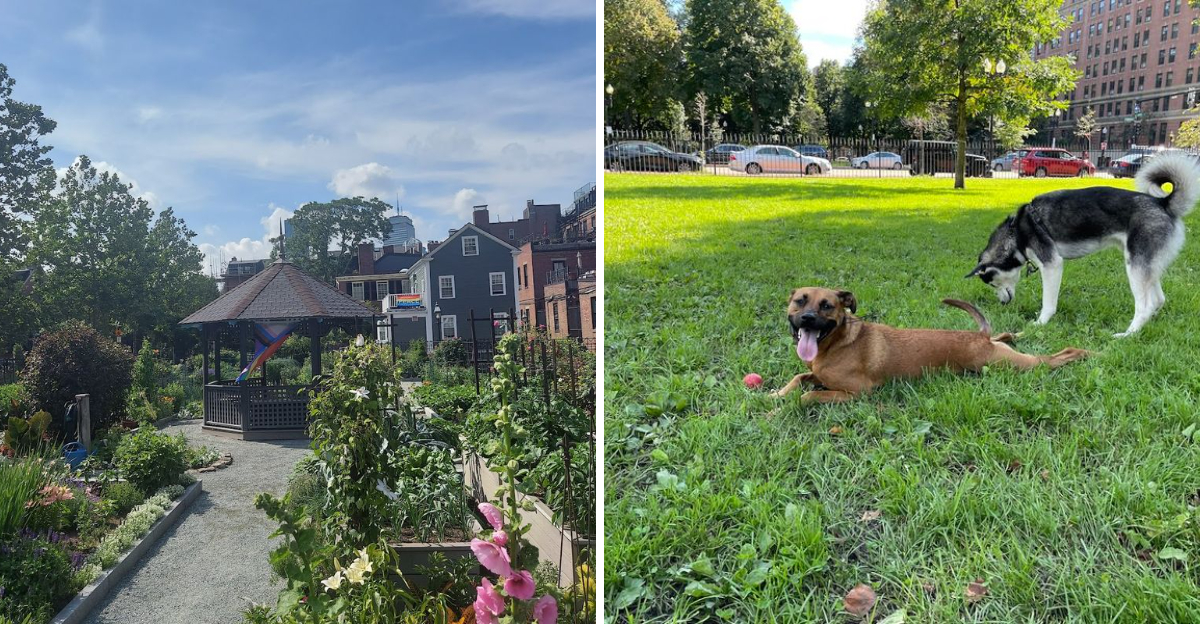
Massachusetts parks do not get enough credit. Everyone rushes to the Cape, the mountains, the famous trails, and completely overlooks what’s sitting right in the middle of the city.
But there’s one park in this state that stops people in their tracks the moment they see it. Manicured paths.
Gorgeous fountains. Towering trees that have been standing longer than most buildings nearby.
It looks like something a production designer dreamed up for a period film, not a public park you can walk into for free on a Tuesday afternoon. Locals know it.
Visitors almost never do. And that gap is honestly baffling once you lay eyes on the place.
Spring turns it into something else entirely, all blooms and green and soft light filtering through the canopy. Massachusetts has been sitting on this one for a long time.
It’s time people started paying attention.
A Park With A Past
Long before Boston’s South End became the walkable, restaurant-lined neighborhood it is today, city planners were already imagining something beautiful for its residents.
This park was originally conceived in 1801 by architect Charles Bulfinch as part of a single, grander residential park called Columbia Square.
It officially opened in 1855, making it one of the older public green spaces in the city. Its twin, Franklin Square, opened just across Washington Street in 1849.
The two parks were always meant to complement each other, and standing at either one, you can still feel that original intention.
What is remarkable is how much of the mid-19th-century character remains intact. The diagonal pathways, the central fountain, the mature tree canopy – these are not recent additions.
Improvement plans were later developed by the Olmsted Brothers in 1913, adding a layer of professional landscape thinking to the park’s design.
After a period of neglect, a revitalization effort launched in 1979 brought new fences, fountains, benches, and plantings back to life.
Walking through the park today feels like reading a very old book that someone had the good sense to preserve.
The Iron Fence And What It Says About The Place
© Blackstone Square
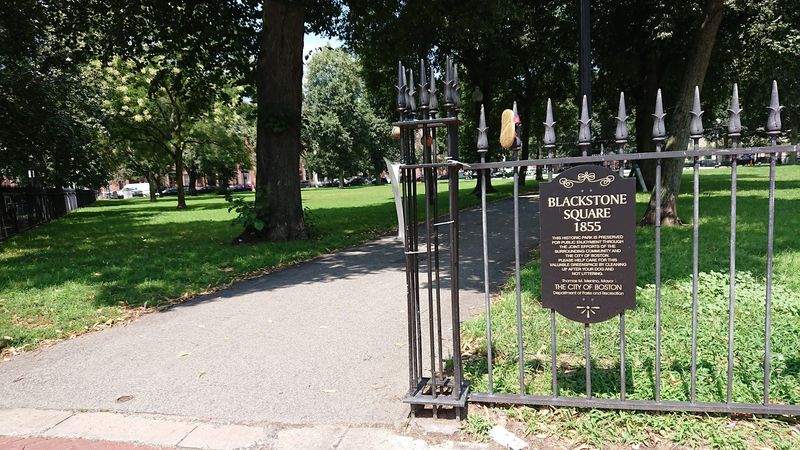
First impressions matter, and the iron fence surrounding Blackstone Square sets a tone before you even get inside.
Each finial along the fence is shaped like a tulip, a detail so specific and deliberate that it tells you this park was never meant to be ordinary.
Entrances are placed at the corners of the park, with an additional entry point at the intersection of Pembroke Street and Shawmut Avenue.
The fence does more than mark a boundary. It frames the park like a picture frame around a painting, giving the green interior a sense of enclosure and intention.
You feel the shift the moment you pass through one of those corner gates – the street noise softens, the pace slows, and the air seems to carry a different quality entirely.
Details like these are what separate a well-designed park from a forgettable one.
The tulip finials are not merely decorative; they reflect a civic pride that was built into the park from the very beginning.
That commitment to craft is one of the quiet reasons Blackstone Square continues to earn the admiration of everyone who finds it at 1535 Washington St, Boston, MA 02118.
The Central Fountain That Earns Every Photograph
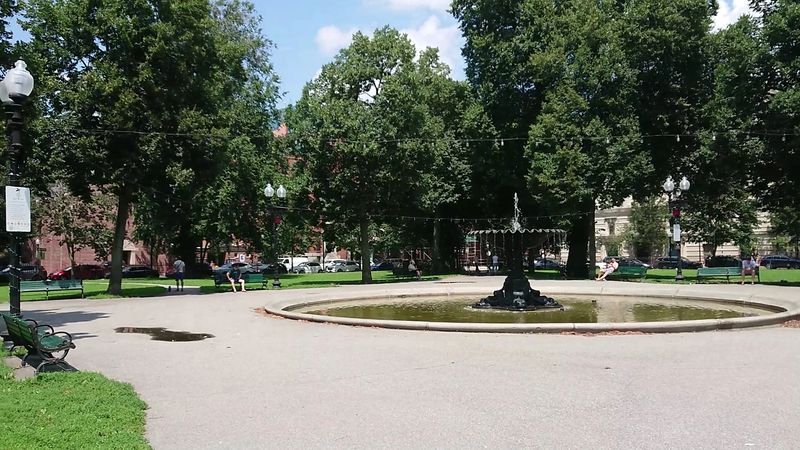
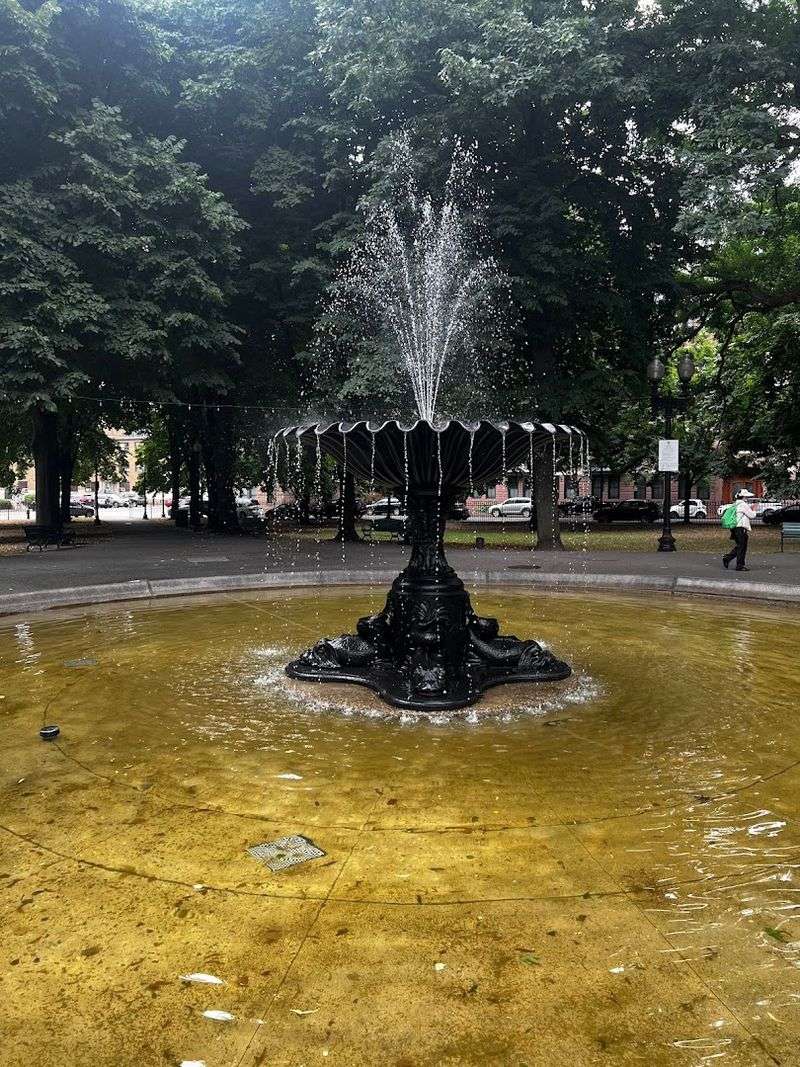
At the heart of Blackstone Square stands a cast-iron fountain that looks like it arrived from a different era entirely, because it did. Four stylized fish support an ornate pedestal, which in turn holds a large seashell-shaped bowl.
The craftsmanship is the kind you rarely see in modern public spaces, where utility tends to win over artistry.
On warm afternoons, the fountain becomes the natural gathering point of the park. Dogs wade in, children stare, and adults stop to take photos they will probably never delete.
The sound of moving water in an urban setting has a way of resetting your mood, and this fountain delivers that effect reliably.
Some visitors have noted in their reviews that dogs occasionally play in the fountain, which has drawn mixed reactions from the community. Still, the fountain itself remains the visual anchor of the park, the feature most people remember long after they have left.
It is the kind of public art installation that does not announce itself loudly but stays with you quietly.
If you visit Blackstone Square and do not spend at least a few minutes watching the light move across that seashell bowl, you have missed one of its best moments.
Sugar Maples, Silver Lindens, And The Trees That Define The Atmosphere
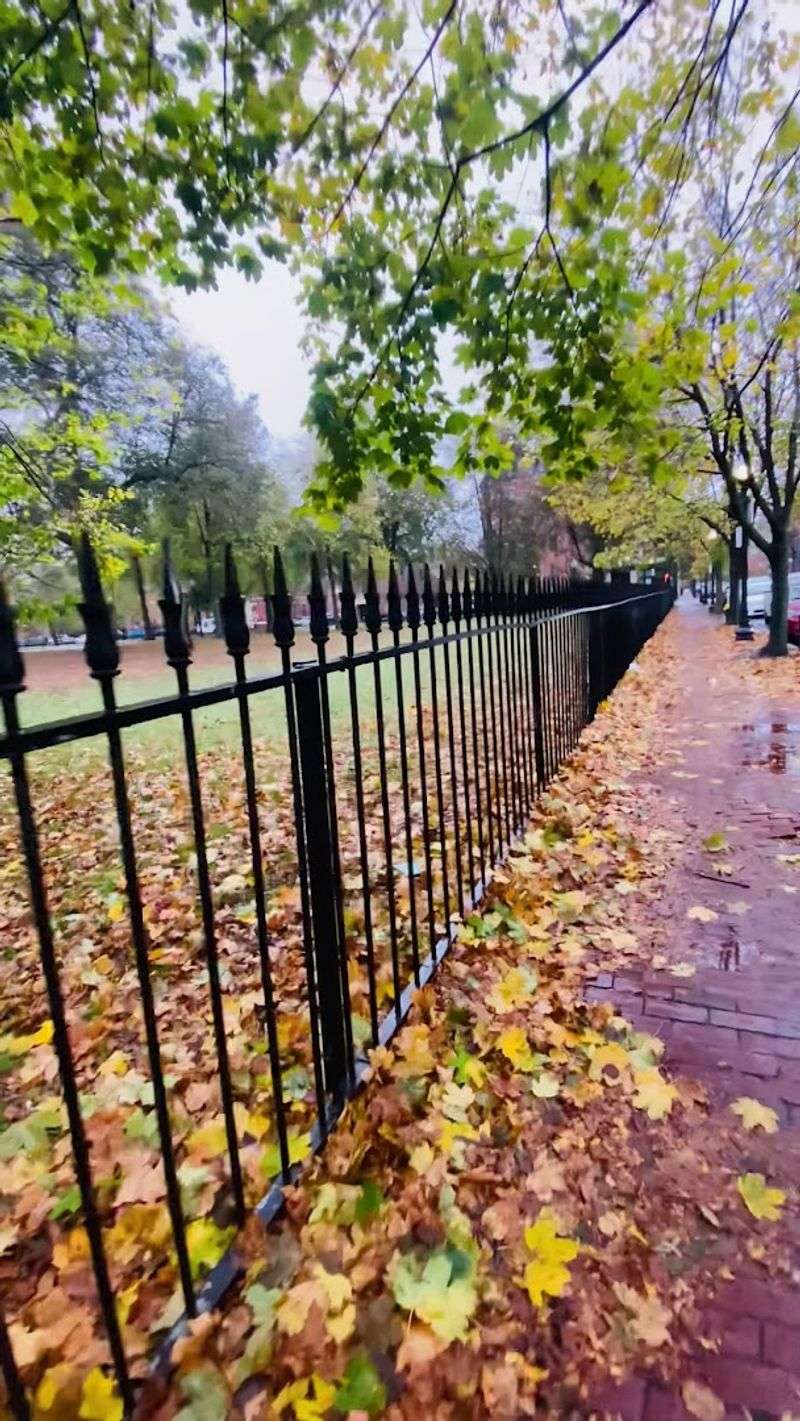
A park is only as good as its trees, and Blackstone Square has exceptional ones.
Sugar Maples line the perimeter, their broad canopies creating a natural border between the park and the surrounding streets.
Silver Lindens follow the walkways, offering shade that makes a summer afternoon stroll genuinely pleasant rather than something you endure.
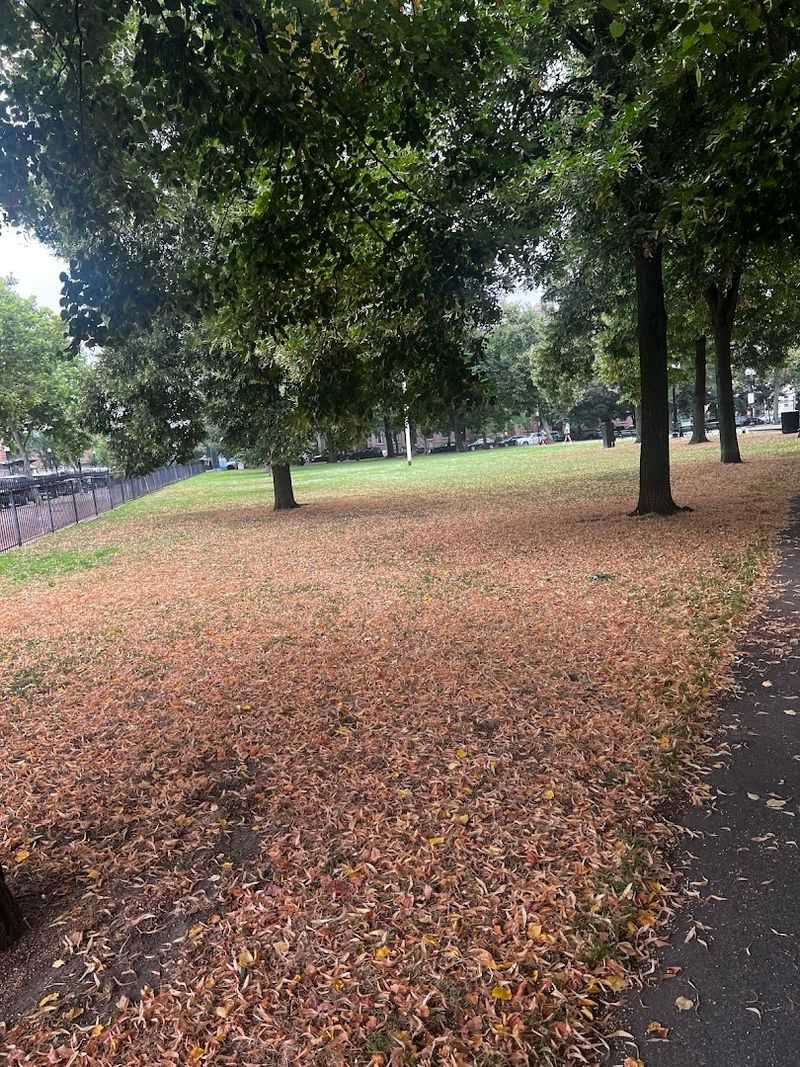
In autumn, the Sugar Maples shift into shades of amber and deep red, transforming the park into the kind of scene that makes people stop and genuinely reconsider their plans for the afternoon.
One Spanish-language review from a visitor simply noted that the park should look beautiful in autumn – an observation that understates what actually happens here when the season turns.
The tree selection was not accidental. Both species were chosen for their scale, their seasonal interest, and their ability to create a layered canopy that feels generous rather than sparse.
Walking beneath the Silver Lindens on a warm day, with their slightly silvery leaves catching the breeze, is one of those small pleasures that city life occasionally offers without warning.
The trees at Blackstone Square are old enough to have stories, and patient enough to keep them.
Morning Yoga, Tai Chi, And The Park As A Living Room
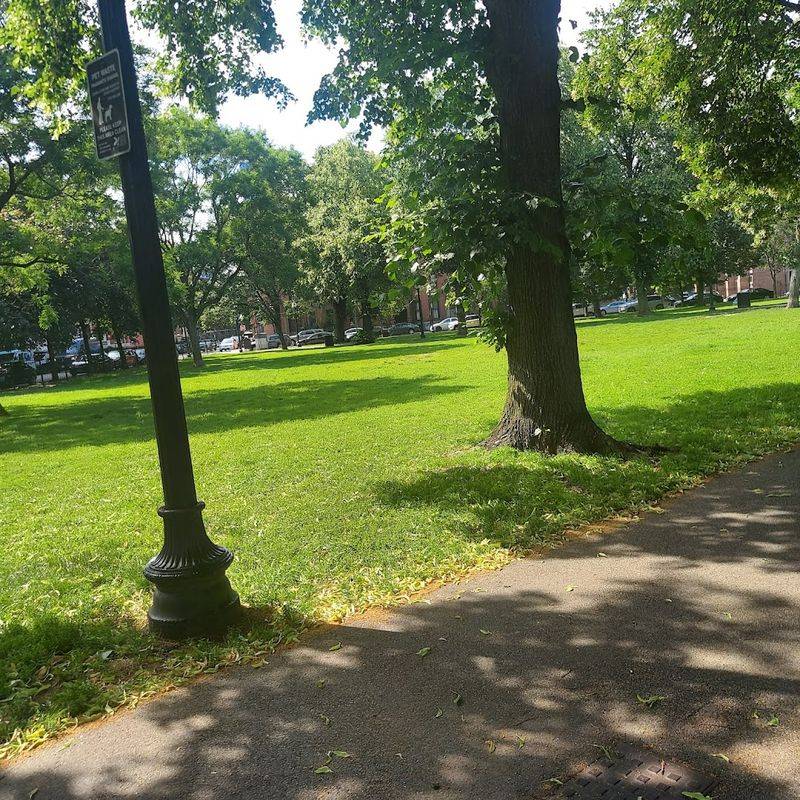
Not every park earns the right to be called a community living room. Blackstone Square has earned that title through years of consistent, organic use by the people who live nearby.
On any given morning, you might find a yoga class unfolding on the open lawn, or a small group practicing Tai Chi with the kind of focused calm that early hours seem to encourage.
Free outdoor yoga classes have been held here on occasion, drawing residents who might not otherwise spend time in a public green space.
The park’s open layout makes it adaptable.
There is enough room for movement without the feeling of crowding, and the mature tree line provides a natural backdrop that no studio can replicate.
One visitor described the park as an open space for yoga, book reading, bench conversations, children playing, and the occasional picnic, all happening simultaneously without friction. That kind of harmonious, layered use is not easy to achieve in a 2.4-acre space.
It speaks to something in the park’s design that allows different groups to share it without claiming it. Blackstone Square operates daily from 6 AM to 11:30 PM, leaving plenty of room for both early risers and evening wanderers.
The Playground Corner And Why Families Keep Returning
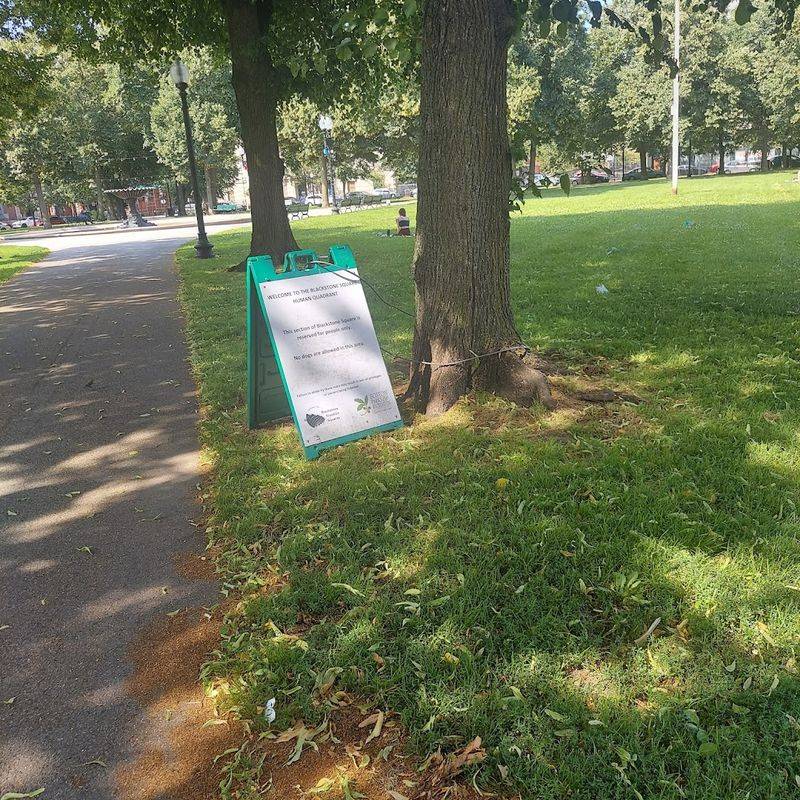
Located in the northeast corner of the park, the playground at Blackstone Square is a quiet but meaningful feature that keeps families returning throughout the year.
It is not the largest playground in Boston, but its placement within a historically designed green space gives it a character that newer, purpose-built facilities often lack.
Parents who bring their children here tend to stay longer than they planned.
The combination of play equipment, open lawn, shaded benches, and the visual interest of the fountain creates a layered experience that keeps both children and adults engaged.
There is always something to look at, something to do, and somewhere comfortable to sit.
The park’s mixed-use nature means that children grow up seeing adults reading, exercising, and socializing in a shared public space.
A few reviews have pointed out that some children are nervous around the dogs that frequent the park, which is worth keeping in mind during peak morning and evening hours.
Overall, the playground corner adds a warm, family-oriented dimension to a park that already offers more than most visitors expect from a city green space of its size.
Dogs, Owners, And The Unofficial Culture Of The Park
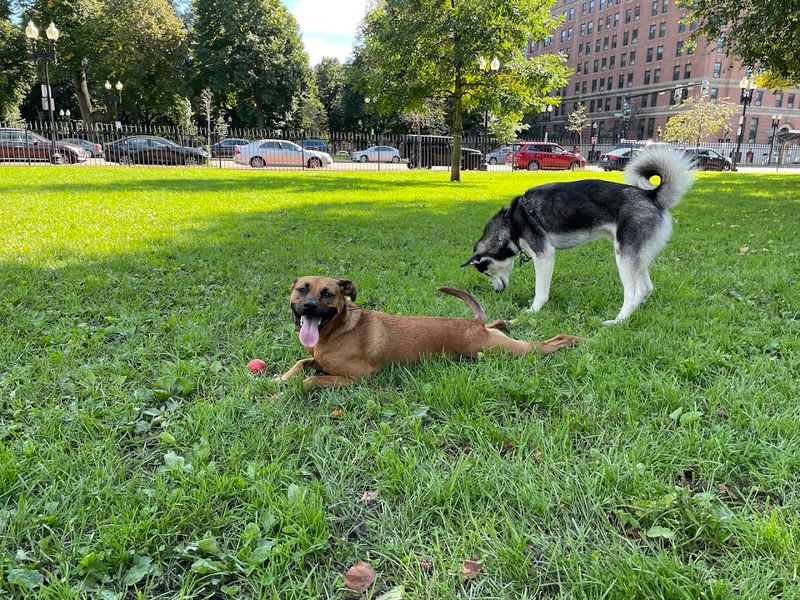
Ask anyone who visits Blackstone Square regularly, and the topic of dogs will come up within the first minute.
The park has developed a strong, informal culture around dog owners who gather during morning and evening hours, letting their animals socialize on the open lawns.
At peak times, it is not unusual to count twenty or more dogs moving freely across the grass.
This has created a genuinely warm community atmosphere, with owners exchanging recommendations, and forming low-key friendships that urban life rarely makes room for.
One reviewer described watching dogs play together as something that made them feel better about their day.
The off-leash culture is not without its complications. Some visitors, particularly those with children who are nervous around dogs, have found the experience less relaxing than expected.
The Boston Parks and Recreation Department occasionally sends staff to remind owners of leash regulations, which has prompted its own community debate. Still, the dog culture at Blackstone Square is now woven into the park’s identity.
It adds spontaneity and warmth to what might otherwise be a purely aesthetic experience. The park holds a 4.7-star rating on Google Maps, and the dogs deserve partial credit.
The Puerto Rican Memorial And The Stories The Park Holds
Public parks are rarely just green spaces. They carry memory, tribute, and community identity in ways that streets and buildings cannot.
Blackstone Square is no exception.
Within the park stands a commemorative statue dedicated to Puerto Rican soldiers, a monument that reflects the deep cultural roots of the South End neighborhood.
One visitor specifically sought out the park to see this memorial, noting that the South End has long been a part of Boston’s broader urban community history.
The statue serves as a reminder that public space has always been about more than recreation – it is also about recognition and belonging.
The South End neighborhood itself has a layered cultural history, shaped over decades by immigrant communities, artists, and longtime residents.
Blackstone Square sits at the center of that history, absorbing it quietly.
Standing near the memorial on a calm afternoon, you get a sense that this park has witnessed more than most people realize. That kind of depth is not something a landscape architect can install.
It accumulates, slowly, through years of honest human presence.
Protected By Law: What Makes This Park Legally Unique
Not every city park has legal protection written into state law. Blackstone Square does.
The park is maintained under the Land and Water Conservation Fund of the National Park Service and operates under Article 97 of the Massachusetts State Constitution.
This specifically protects its natural, scenic, historic, and aesthetic qualities from being altered or diminished.
This legal framework is one of the reasons the park has retained so much of its original character despite the pressures of urban development.
Article 97 protections are not easy to override, and that has been enormously beneficial for a park that might otherwise have been quietly downsized or repurposed over the decades.
For the average visitor, this information might seem abstract, but it has very practical consequences. The fountain stays.
The iron fence stays. The tree canopy stays.
The open lawns stay. What you see when you walk through the corner entrance is not the result of luck or indifference but of deliberate legal preservation.
That is a relatively rare thing in a city that has been continuously rebuilt and reimagined for centuries. Knowing this adds a layer of appreciation to even a casual afternoon visit.
Evening At Blackstone Square
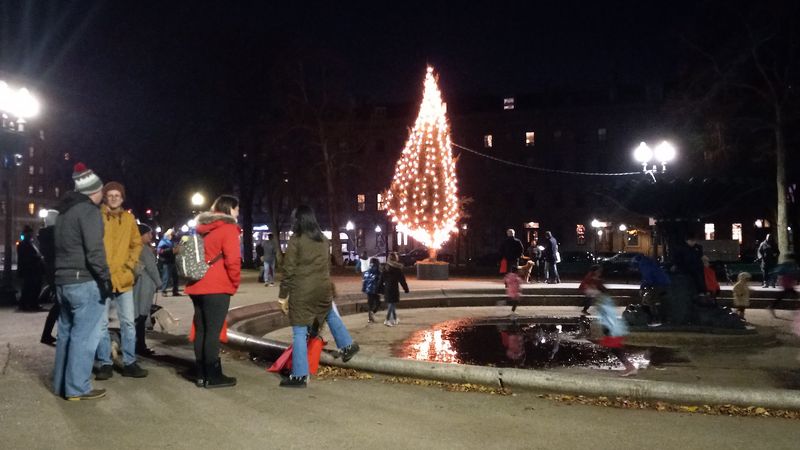
There is a particular quality to Blackstone Square in the final hour of daylight that is difficult to describe without sounding excessive. The light falls differently through the Silver Lindens at that hour, and the fountain catches it in ways that look almost deliberate.
The benches fill gradually with people who have no particular agenda – couples, solo readers, neighbors sharing takeout containers.
One regular visitor described sitting on a bench in the early evening with her husband, snacking and listening to music through earphones, as one of her consistent pleasures.
That image captures something real about what the park offers at dusk: a low-stakes, high-quality version of city life that requires nothing of you except your presence.
The park stays open until 11:30 PM every night of the week, which means the evening hours are fully accessible to anyone whose day runs long.
As the streetlights along Washington Street begin to flicker on and the fountain sound blends with the distant hum of the South End, Blackstone Square becomes something that is hard to leave.
It is the kind of place that makes you grateful for the people who had the foresight to protect it, and for the city that has kept it open all these years.