
This Underrated New York Nature Trail Has Waterfalls, Hidden Caves, And A Peaceful Forest Walk Most People Don’t Know About
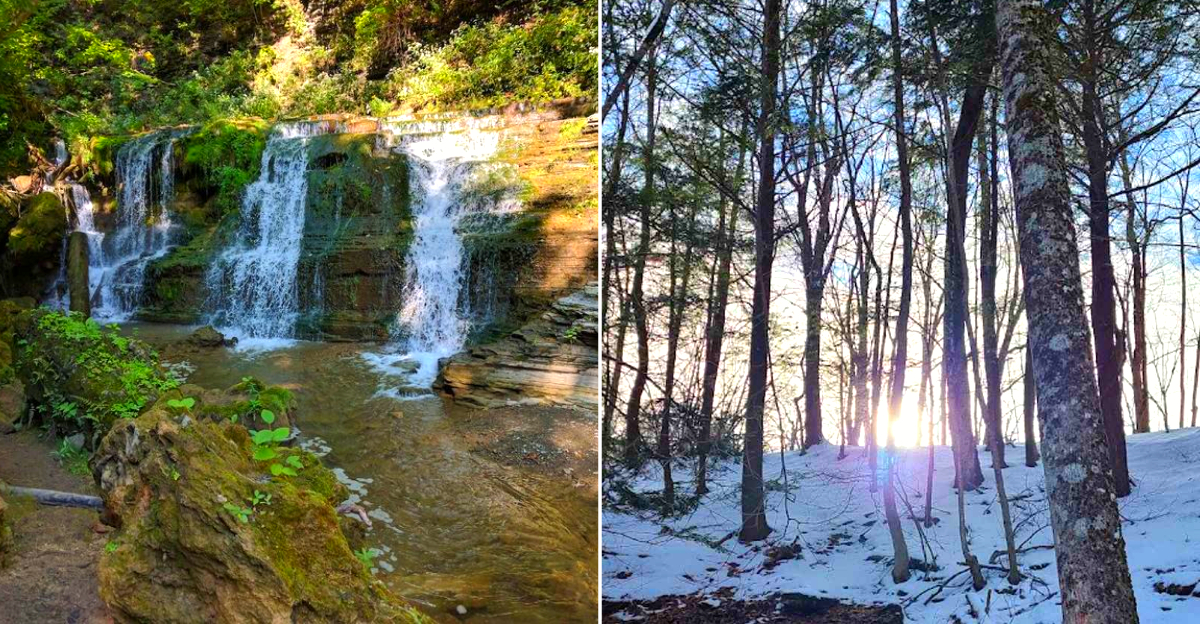
The trail doesn’t make a big first impression. A simple entrance, a quiet start, and nothing that hints at what’s ahead.
This New York path keeps its best features out of sight, which is exactly why so many people pass it by.
Give it a little time and the landscape begins to shift. Waterfalls come into view, caves appear where you don’t expect them, and the forest settles into a calm, steady rhythm.
The walk stays manageable, but the scenery keeps changing just enough to hold your attention. It feels secluded without being remote, and that balance is what makes it so easy to enjoy once you find it.
A Forest That Feels Like It Has Been Waiting For You
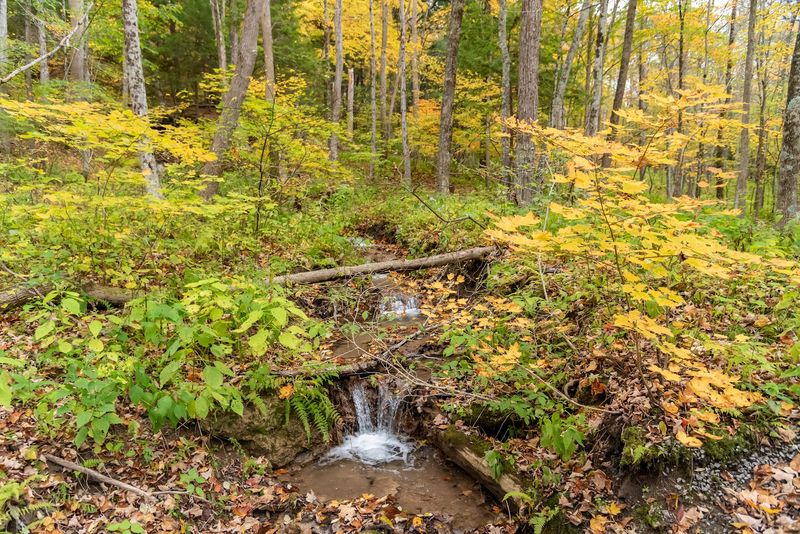
Not every forest announces itself with fanfare, and that restraint is part of what makes this one so appealing. The Owen D Young Nature Trail begins with a tree canopy that closes overhead almost immediately, creating the kind of natural corridor that slows your pace without any instruction.
Birch, maple, and oak trees line the path in generous numbers, their root systems threading through the soil in patterns that look almost deliberate.
The forest floor here carries a particular richness during autumn, when fallen leaves create a soft, rustling carpet underfoot. Seasonal wildflowers appear in spring, adding small bursts of color along the trail edges that feel like unexpected gifts.
The air carries a clean, earthy quality that is hard to replicate anywhere outside a healthy woodland ecosystem.
Wildlife sightings are common enough to keep your eyes moving without ever feeling like a nature documentary. Deer, songbirds, and the occasional red squirrel make appearances that feel natural rather than staged.
The trail itself is well-maintained and clearly marked, making navigation straightforward even for first-time visitors. Fun fact: forests like this one actively reduce stress hormones in the human body, a process researchers call forest bathing.
Where The Trail Begins And What To Expect When You Arrive
The Owen D Young Nature Trail is located near Van Hornesville in Herkimer County, New York, associated with the Owen D Young Central School at 2316 NY-80. The trailhead is accessible without any complicated navigation, and parking is reasonably straightforward for a destination of this character.
Arriving early on a weekend morning gives you the best chance of having the trail largely to yourself.
The trail is considered moderate in difficulty, which means it suits a broad range of hikers from curious beginners to seasoned walkers looking for a relaxed outing. The terrain shifts gradually as you move deeper into the trail, offering enough variety to keep the experience engaging without demanding technical skill.
Proper footwear with good ankle support is recommended, particularly after rainfall when certain sections can become slippery.
Bringing water and a light snack is always a sensible idea, even for shorter hikes. The trail does not have commercial facilities nearby, so preparation matters more than it might on a heavily developed route.
Cell service can be inconsistent in this area, which honestly adds to the experience rather than detracting from it. A printed trail map or downloaded offline version will serve you well here.
The Waterfall That Makes The Whole Trip Worth Planning
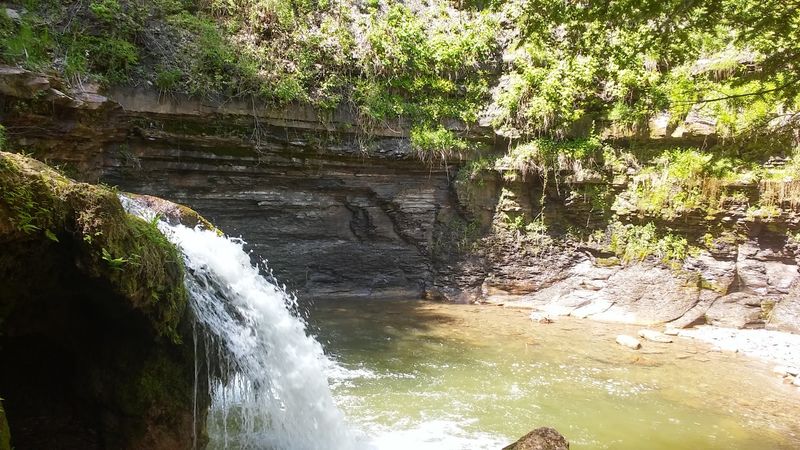
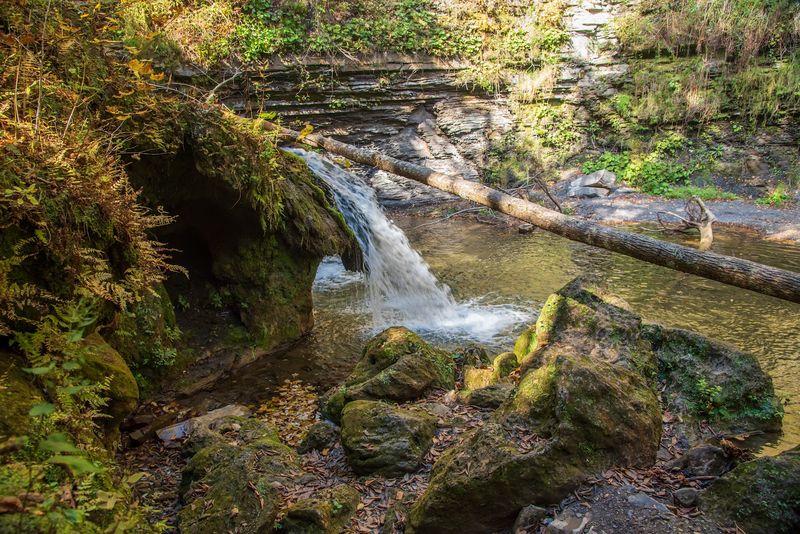
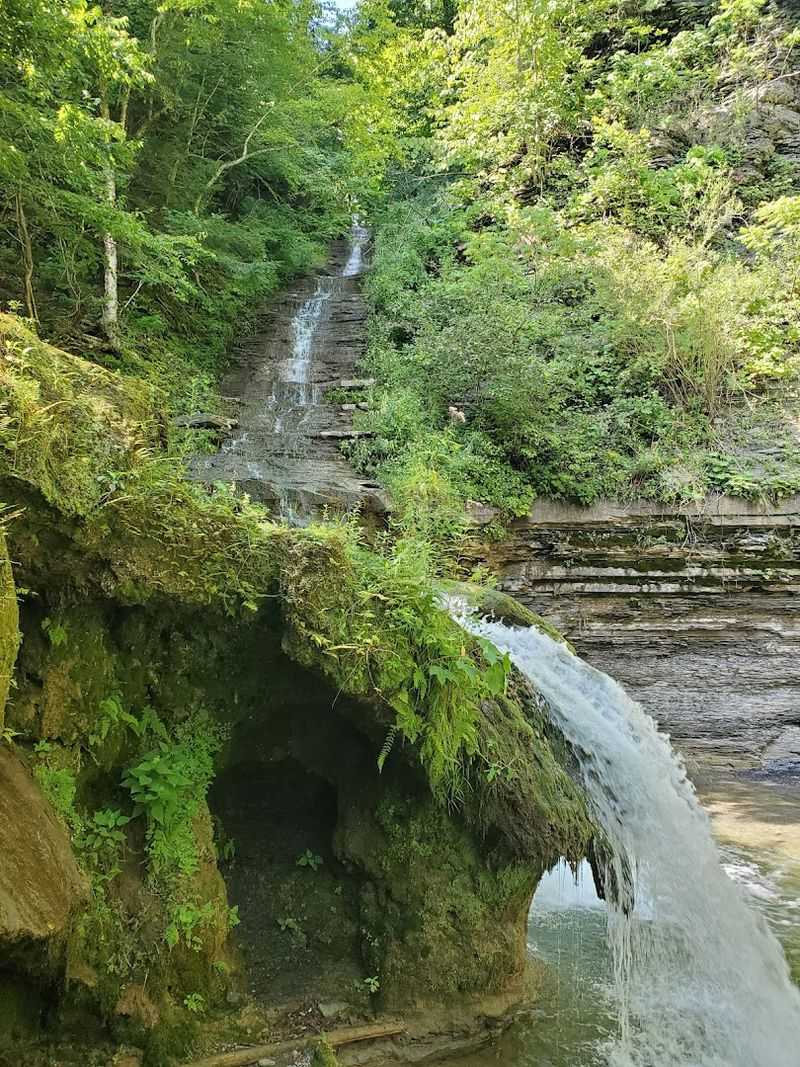
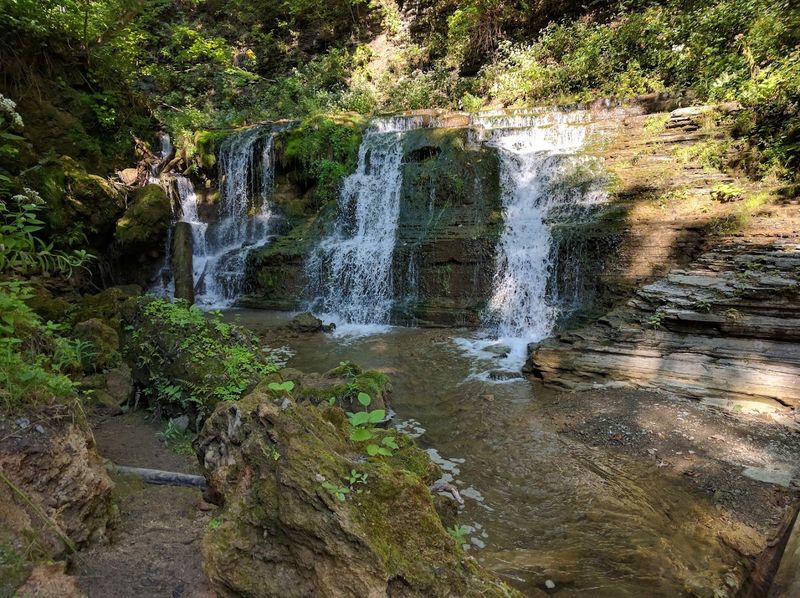
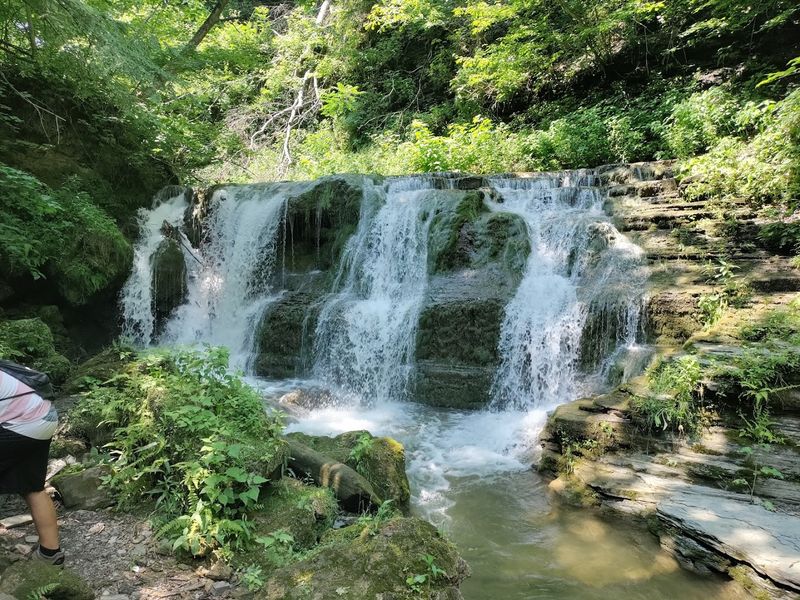
There is something about discovering a waterfall at the end of a forest walk that feels genuinely satisfying, and the waterfall along the Owen D Young Nature Trail delivers that feeling without requiring an exhausting effort to reach it. The falls are modest in scale but striking in character, tumbling over layered rock formations that have been shaped by centuries of water movement.
The sound of the water reaches you before the view does, which builds a pleasant sense of anticipation as you approach.
The surrounding rock face stays perpetually damp, supporting a collection of mosses and ferns that add texture and color to the scene. Standing near the base of the falls, you notice a fine mist that cools the air noticeably, making this spot particularly welcome during warm summer months.
The pool at the base is shallow and clear, reflecting the tree canopy above in a way that photographers tend to appreciate immediately.
Visiting after a period of rainfall increases the volume and energy of the falls considerably, giving the scene a more dramatic quality. Spring snowmelt also produces an impressive flow that rewards those willing to hike in cooler temperatures.
The waterfall area provides a natural resting point where most hikers pause, sit on nearby rocks, and simply absorb the surroundings without feeling the need to rush onward.
Hidden Caves Along The Trail That Geology Made And Time Forgot
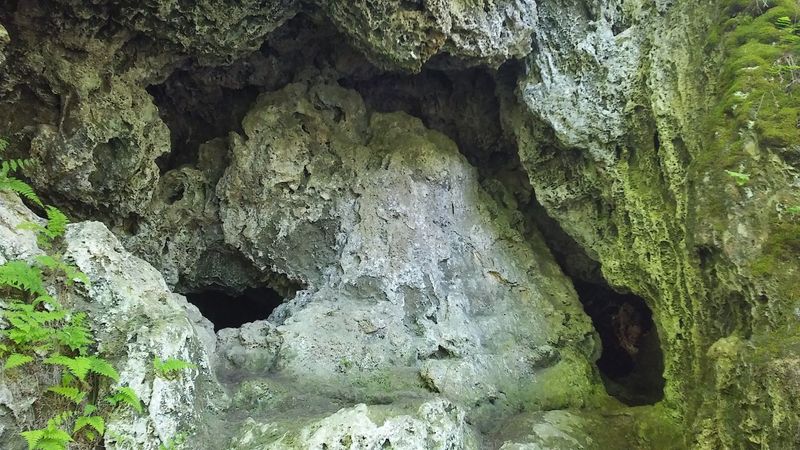
The cave formations along the Owen D Young Nature Trail are among its most talked-about features among the small community of hikers who know this trail well.
These are not caverns requiring headlamps and guided tours, but rather natural rock overhangs and shallow cave-like recesses carved by erosion and glacial activity over thousands of years.
Each formation has its own personality, shaped by the specific geology of the Herkimer County landscape.
Running your hand along the cool stone interior of one of these recesses gives you an immediate sense of geological time that no museum exhibit can fully replicate. The rock surfaces often display layered striations that tell a quiet story of ancient pressure and movement beneath what is now a peaceful forest floor.
Lichen patterns on the cave walls add visual interest that rewards slower, more attentive observation.
Children tend to find these formations particularly captivating, and families with curious young hikers will find that the cave sections generate genuine excitement without any manufactured drama. The natural formations also provide shelter during unexpected rain showers, which makes them practically useful as well as visually interesting.
Keep your eyes open as you walk, because some of the smaller recesses sit slightly off the main path and are easy to miss if you move too quickly.
Why Herkimer County Deserves More Attention From Outdoor Enthusiasts
Herkimer County occupies a central position in upstate New York that gives it access to a remarkable variety of natural landscapes without the congestion that tends to accompany more famous destinations in the state.
The county sits within the broader Mohawk Valley region, a stretch of land with deep historical roots and natural features that have been shaped by glacial activity, river systems, and centuries of ecological succession.
Most visitors pass through on their way to somewhere else, which is genuinely their loss.
The region is perhaps best known for Herkimer Diamonds, the double-terminated quartz crystals found in local dolostone formations that have attracted collectors for generations. Beyond that geological curiosity, the county offers forests, wetlands, and river corridors that support a diverse range of plant and animal communities.
The Owen D Young Nature Trail fits naturally into this broader landscape of understated outdoor opportunity.
Local communities in Herkimer County maintain a quiet pride in their natural surroundings that feels earned rather than marketed. Visiting the trail connects you not just to a specific patch of woodland but to a regional character that values quietness, practicality, and genuine engagement with the outdoors.
That combination is harder to find than most people realize, and worth traveling some distance to experience.
Wildlife Watching Opportunities That Reward Patient Observers
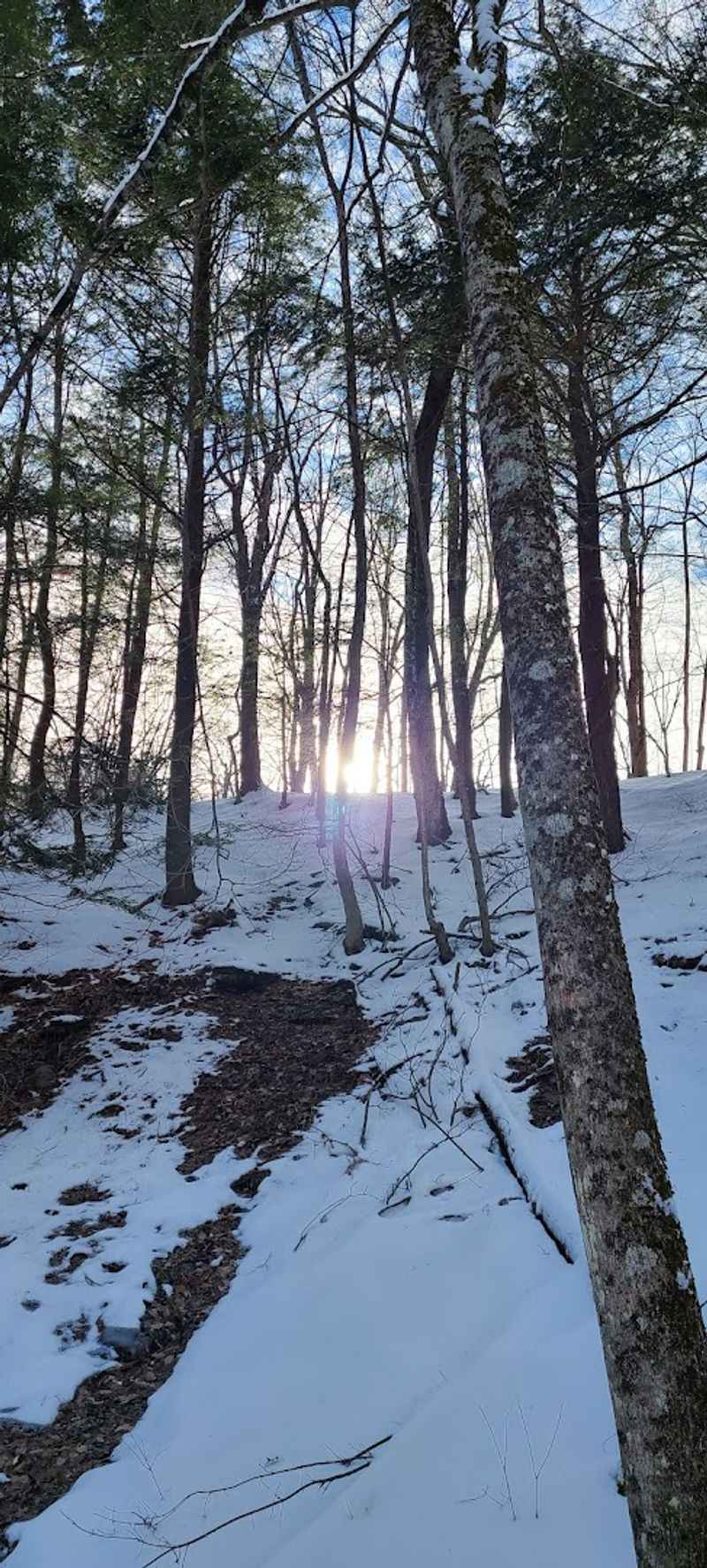
The Owen D Young Nature Trail sits within a forest ecosystem that supports a healthy and varied wildlife community, and observant hikers are regularly rewarded with sightings that add genuine depth to the walking experience.
White-tailed deer are among the most commonly spotted animals, particularly in the early morning and late afternoon hours when they move more freely through the tree line.
Moving quietly and avoiding sudden sounds increases your chances of extended observation considerably.
Bird activity along the trail is consistent throughout the warmer months, with species including woodpeckers, warblers, thrushes, and various raptors making regular appearances. The forest edge zones near the cave formations tend to be particularly active for bird sightings, as these transitional areas support a wider range of species than deep interior forest alone.
A small pair of binoculars adds almost no weight to your pack and transforms casual bird awareness into something more engaged and specific.
Smaller mammals including chipmunks, red squirrels, and the occasional Eastern cottontail appear frequently enough to keep younger hikers entertained and curious.
Amphibians such as salamanders and wood frogs inhabit the damper sections near the waterfall, and spotting one requires only the willingness to look carefully at the ground near wet rocks.
The trail essentially functions as a long, linear wildlife observation station for those who treat it that way.
Photography Tips For Capturing The Trail At Its Most Compelling
The Owen D Young Nature Trail offers a range of photographic subjects that suit different styles and equipment levels, from smartphone snapshots to deliberate long-exposure waterfall photography.
The waterfall section is the most technically interesting location on the trail, particularly for those who enjoy using slower shutter speeds to render moving water as a smooth, silky flow against sharp rock and foliage detail.
A small tripod or a steady surface makes a significant difference in achieving that effect.
Golden hour light in the early morning filters through the tree canopy at angles that create natural depth and warmth across the forest floor, which is a difficult quality to replicate at midday when overhead light tends to flatten the scene.
The cave formations photograph well with a combination of ambient natural light and careful positioning to capture texture and shadow without losing detail in the darker interior sections.
Wide-angle lenses or the equivalent smartphone setting help convey the scale of the rock faces.
Autumn provides the most immediately striking photographic palette, but spring offers a subtler and arguably more interesting palette of fresh greens, pale wildflower tones, and high-contrast bare branches still emerging from winter.
Wet conditions after rain actually improve many forest photographs by intensifying colors and adding reflective surfaces to rocks and roots.
Patience is the most useful tool any photographer brings to a trail like this one.
Why This Trail Belongs On Your List Of New York Outdoor Experiences
There is a growing awareness among outdoor enthusiasts that the most satisfying hiking experiences often exist at a scale and pace that famous trails simply cannot offer.
The Owen D Young Nature Trail in Herkimer County represents exactly that kind of experience: a place where the natural features are genuine, the crowds are minimal, and the overall atmosphere rewards engagement rather than rushing toward a summit or a selfie station.
Trails like this one tend to develop loyal followings among people who value quality over recognition.
The combination of a waterfall, cave formations, and a forest walk of real character gives this trail a variety that many longer and more celebrated routes fail to deliver. Each feature complements the others rather than competing for attention, creating a coherent outdoor experience that feels complete rather than assembled.
For families, solo hikers, or couples looking for a day that feels genuinely restorative, this trail checks the relevant boxes without demanding excessive effort or expense.
New York State has an abundance of natural beauty that extends far beyond the Adirondacks and the Catskills, and Herkimer County is among the regions that benefit most from that underappreciated depth.
The Owen D Young Nature Trail is a fine reason to point your car toward Van Hornesville and spend a few hours in a forest that has been quietly doing its best work for a very long time.