
This Underrated Park In New York Is Almost Too Beautiful To Be A Real Place
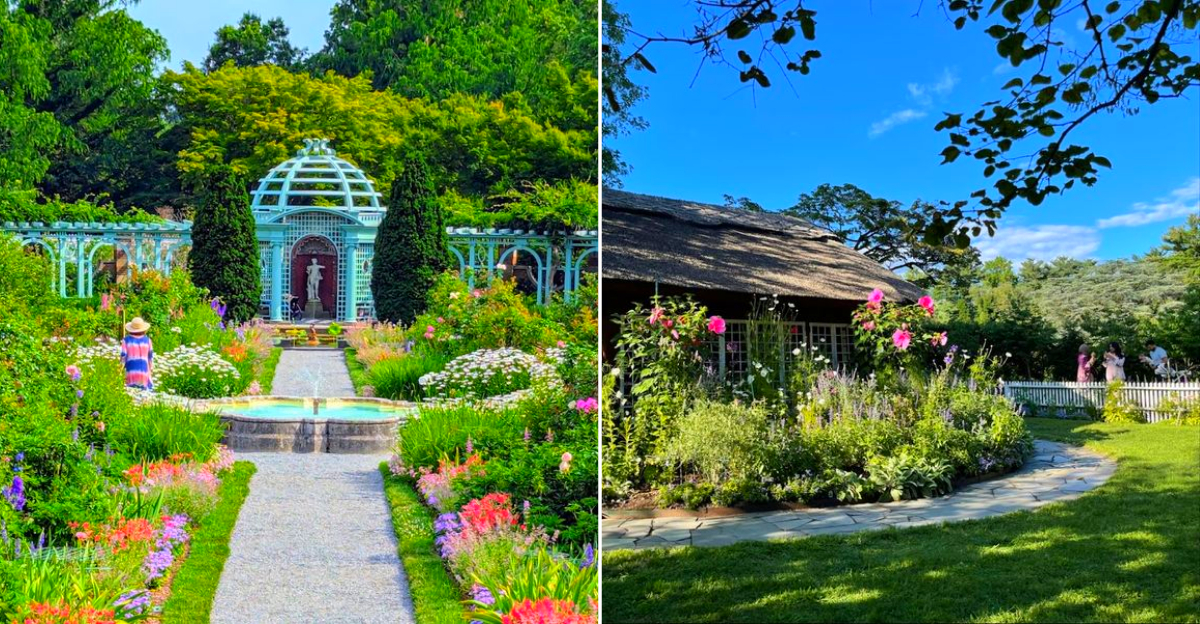
Right in the middle of New York’s busy streets, there are places where the noise fades, the pace slows down, and the scenery suddenly feels almost unreal. This underrated city park and botanical garden is one of those rare spots.
Step through the entrance and the surroundings quickly shift from concrete and traffic to winding paths, peaceful water views, and greenery that feels miles away from the city.
Locals come here to walk, or simply enjoy a quiet moment outdoors. With its dramatic landscape, unexpected viewpoints, and surprisingly tranquil atmosphere, the park feels more like a hidden escape than an urban green space.
Spend a little time here and it becomes clear why many visitors say this New York park looks almost too beautiful to be a real place.
A Garden Estate That Defies Every Expectation
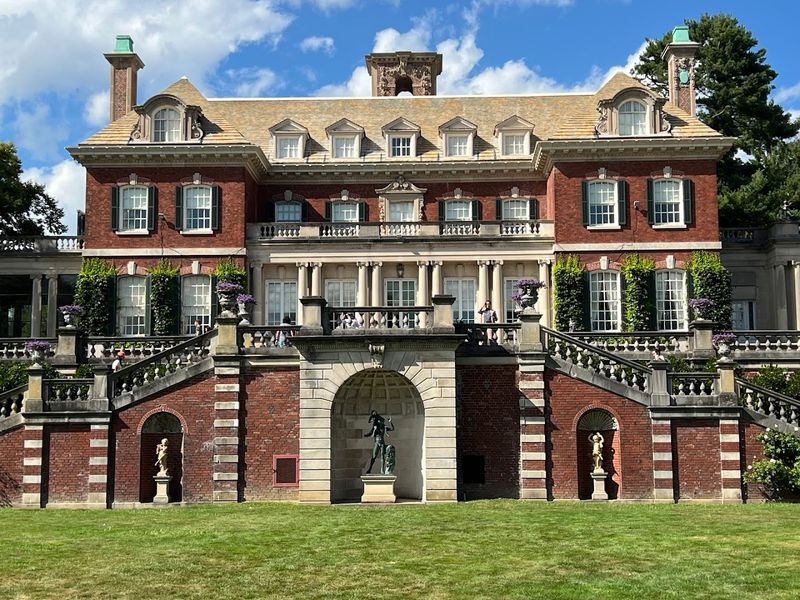
Not every remarkable place announces itself loudly. Old Westbury Gardens earns its reputation the quiet way, through sheer beauty that builds gradually as you walk deeper into its grounds.
The estate spans 200 acres of meticulously preserved landscape on Long Island, sitting at 60 Post Rd, Old Westbury, NY 11568. From the moment you pass through the entrance, the atmosphere shifts noticeably.
The hum of suburban life fades, replaced by birdsong and the soft rustle of old-growth trees overhead.
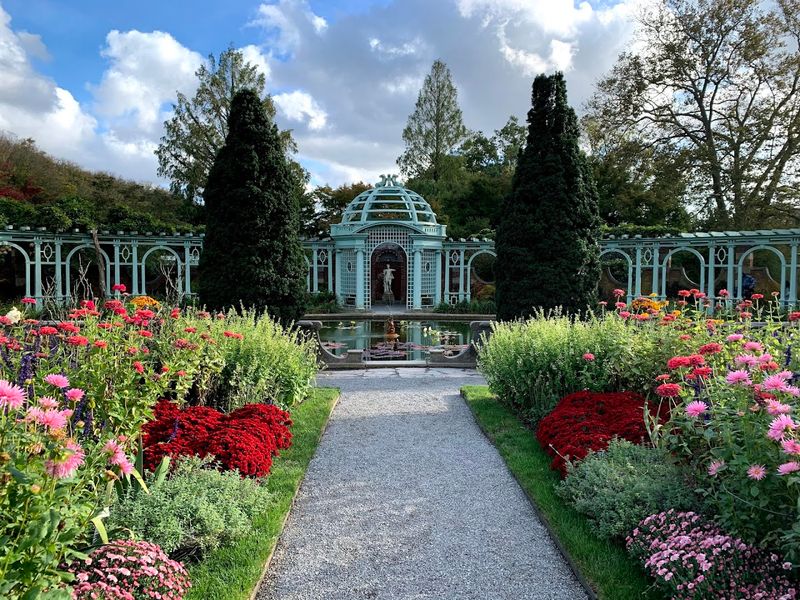
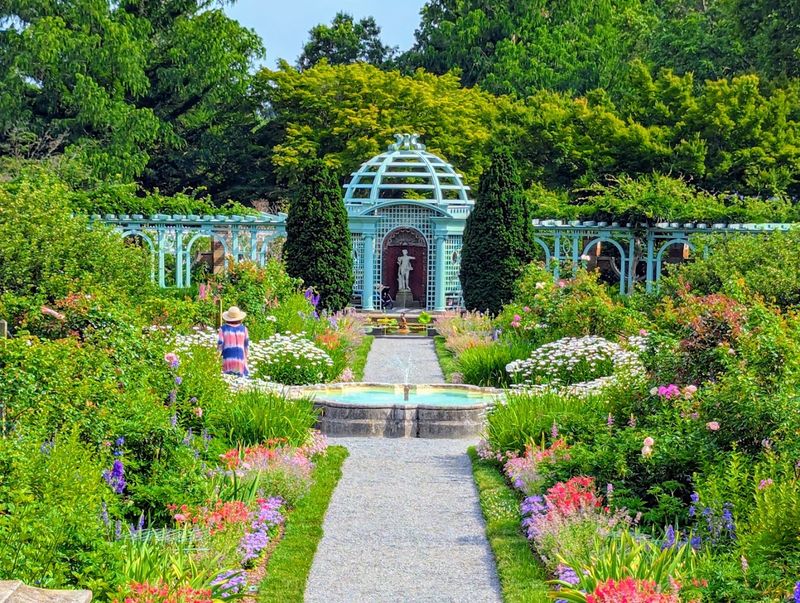
Formal garden beds give way to winding woodland paths, open meadows, and still water reflecting the sky. Each section of the property has its own distinct character, so no two walks ever feel identical.
The estate earns a 4.7-star rating from thousands of visitors, and that number holds steady because the experience genuinely delivers on every promise the setting makes.
Families spread out on the lawns, photographers linger near the fountains, and couples find quiet corners beneath ancient beeches. The grounds reward patience and curiosity in equal measure, offering something new to every visitor who takes the time to wander without a fixed agenda.
The Phipps Family Legacy And Westbury House
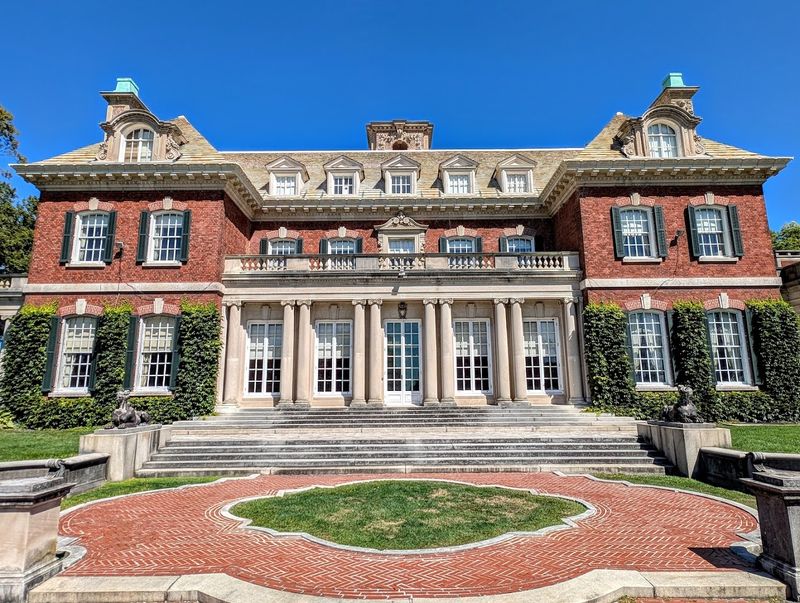
Built between 1903 and 1906, Westbury House was constructed as a wedding gift from John Shaffer Phipps to his bride Margarita. The Phipps family fortune was built alongside Andrew Carnegie, and that wealth is evident in every room of the 23-room mansion.
The Charles II style manor survived an era when most neighboring estates on Long Island were demolished, subdivided, or simply forgotten.
Peggie Phipps Boegner, daughter of the original owners, preserved the property as a public trust in 1959, ensuring that future generations could walk its halls and wander its grounds freely.
Inside, the mansion holds English antiques, hand-painted wallpaper, and an entire dining room transported piece by piece from the family’s Manhattan residence. Paintings by John Singer Sargent and Sir Joshua Reynolds hang on walls that once hosted American aristocracy during the height of the Gilded Age.
Guided tours run regularly and are led by knowledgeable, passionate docents who bring the history to life with genuine enthusiasm.
The experience inside the house adds extraordinary depth to what might otherwise feel like a simple garden visit, turning an afternoon stroll into a genuinely layered encounter with American history.
The Lilac Walk And Seasonal Blooms Worth Planning Around
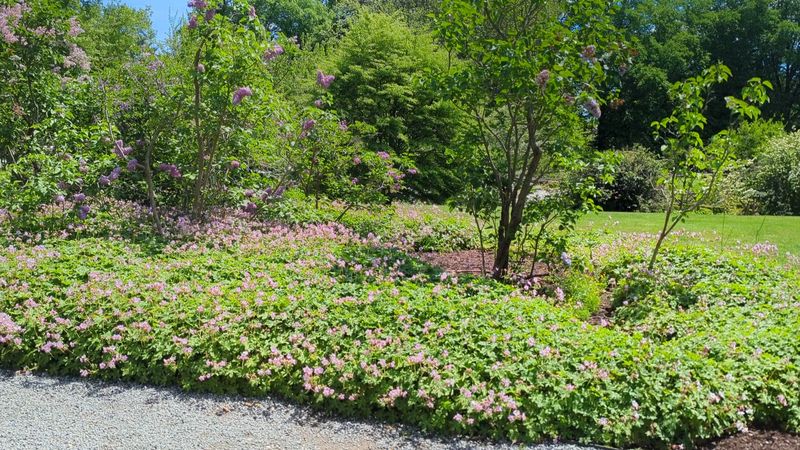
Spring at Old Westbury Gardens is a sensory event that draws visitors from across the region, and the Lilac Walk is the undisputed centerpiece of that seasonal transformation.
Over 250 varieties of lilac bloom along a dedicated garden path, filling the air with fragrance that carries well beyond the immediate surroundings.
The blooms arrive in waves of white and violet, shifting in intensity as the season progresses. Planning a visit around peak lilac season rewards visitors with one of the most visually arresting garden experiences available anywhere in the New York area.
The color combinations are genuinely striking against the backdrop of the older trees lining the path.
Beyond the lilacs, the estate transitions beautifully through every season from April through October. The rose garden bursts with color and fragrance in summer, drawing admirers who spend considerable time simply moving from bloom to bloom.
Autumn brings its own drama, with foliage that transforms the grounds into something entirely different from the spring palette.
Each seasonal visit reveals a fresh version of the same landscape, which explains why so many people return year after year rather than treating Old Westbury Gardens as a single-visit destination. The gardens genuinely change, and each change is worth seeing.
The Lake Trail And The Temple Of Love
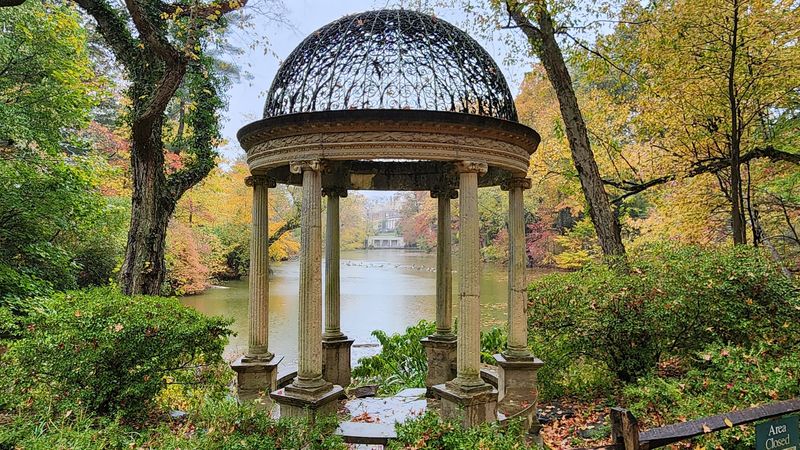
At the edge of the estate’s lake stands one of its most photographed and quietly celebrated features: the Temple of Love. Built in a neoclassical style and crowned by an intricate wrought iron dome, the structure sits at the water’s edge with a composed elegance that photographs struggle to fully capture.
Local legend holds that couples who share a kiss beneath the temple’s canopy are promised lifelong devotion. Whether or not you subscribe to that particular tradition, the setting delivers something undeniably affecting.
The temple reflects in still water, framed by old-growth trees that have been growing here for well over a century.
The lake trail that winds around the water offers one of the most peaceful walks on the entire property. Swans move across the surface with unhurried grace, and the light shifts constantly across the water depending on the time of day and season.
Goldfish are visible near the pond’s edge, and benches positioned along the trail invite visitors to sit and absorb the surroundings rather than simply pass through them.
Children particularly love this section of the grounds, responding to the wildlife and open water with the kind of unguarded excitement that reminds adults why places like this matter so much.
Hollywood Has Been Coming Here For Decades
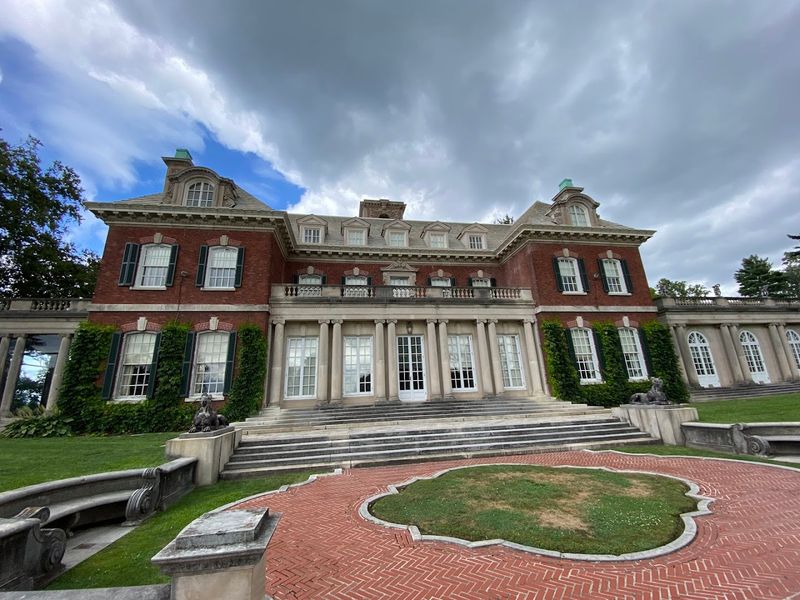
Old Westbury Gardens has appeared in some of the most visually demanding films ever produced in America, and the reasons are not difficult to understand.
The estate’s combination of authentic architecture, preserved gardens, and unhurried atmosphere provides a backdrop that no studio set can convincingly replicate.
Films including Love Story, North by Northwest, The Great Gatsby, and The Age of Innocence were all shot here at various points across several decades. Each production was drawn by the same quality: a landscape and building that carry genuine historical weight rather than manufactured period detail.
Cinematographers and directors return to Old Westbury Gardens because authenticity reads differently on screen than reproduction does.
The worn stone paths, the aged brickwork, the particular way light moves through trees that have been standing for over a century, all of it contributes to a visual credibility that production designers spend enormous budgets trying to approximate elsewhere.
For visitors who arrive knowing this history, walking the grounds carries an additional layer of recognition. A path near the mansion or a view across the formal garden suddenly connects to a scene stored somewhere in memory from a film watched years ago.
That doubling of experience, real place meeting cinematic memory, adds a genuinely unusual dimension to an already exceptional visit.
Secrets Of The Service Wing Tour
Most historic house tours focus on the rooms where wealthy families entertained guests and displayed their possessions. The Secrets of the Service Wing tour at Old Westbury Gardens takes a more interesting approach, turning attention toward the people who actually kept the estate running.
The tour moves through the butler’s pantry, the silverware safe, and the linen cupboards, which still hold original fabric imported from Ireland.
The cellar is included as well, and the entire experience is guided by docents who bring considerable knowledge and genuine warmth to the subject matter.
Understanding how a household of this scale operated during the Gilded Age requires seeing the working spaces alongside the formal rooms. The service wing reveals the logistical complexity behind what appeared effortless to guests arriving for dinner or a weekend stay.
A full live-in staff managed tennis courts, polo fields, a working farm, and every domestic need of the Phipps family simultaneously.
This tour requires advance ticket purchase and is not offered every day, so planning ahead is genuinely necessary rather than merely recommended. For anyone with an interest in social history or the mechanics of grand domestic life, the service wing tour is the most rewarding single experience the estate currently offers to the public.
Cafe In The Woods And The Art Of A Proper Lunch Stop
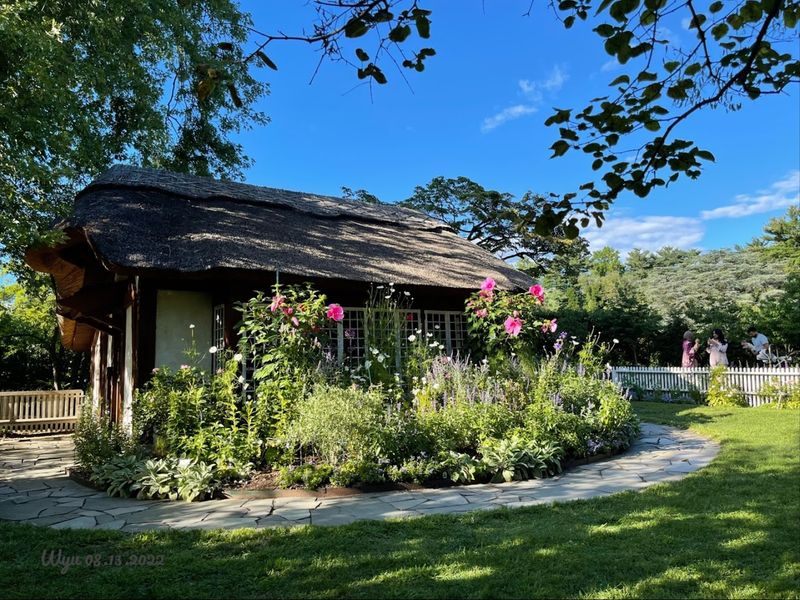
Spending a full afternoon at Old Westbury Gardens works best when you factor in a proper pause, and the Cafe in the Woods provides exactly that kind of grounded, unhurried midday stop.
Located conveniently near the parking area, the cafe offers a food selection that consistently surprises visitors who arrive expecting something basic.
The menu leans toward fresh, satisfying options that hold up well for people who have been walking for a few hours. Sandwiches, salads, and hot food options have all drawn genuine praise from visitors who describe the quality as well above what you might reasonably expect from an estate cafe.
Eating outdoors beneath the surrounding trees adds considerably to the experience. The setting turns a simple lunch into something that feels appropriately matched to the overall atmosphere of the property.
There is something quietly satisfying about sitting in a woodland cafe after wandering through formal gardens and a century-old mansion.
Families with children particularly appreciate having a reliable food option on site, as the grounds are large enough that leaving to find lunch elsewhere would interrupt the rhythm of the day significantly.
Bringing a picnic is also fully welcome, and many visitors spread out on the lawns to eat surrounded by the gardens in full seasonal color.
Planning Your Visit And Making The Most Of The Day
Old Westbury Gardens is open seasonally from April through October, operating Wednesday through Monday from 10 AM to 6 PM, with Tuesdays reserved as a closed day.
Buying tickets in advance online is strongly recommended, as it removes any uncertainty about availability and speeds up the arrival process considerably.
Parking on site is free, though it is located on grass, so visitors should arrive wearing footwear appropriate for uneven ground.
Members of certain Long Island libraries, including the Elmont Memorial Library, can access free passes for entry, making the estate surprisingly accessible for local families who might not otherwise consider a visit.
Arriving around midday allows time to tour the mansion, walk the lake trail, visit the walled garden, and still catch the Lilac Walk or the rose garden before the light begins to soften in the late afternoon.
The estate is large enough that a single visit rarely covers everything, which is part of why repeat visits feel natural rather than redundant.
Comfortable walking shoes, a light layer for the woodland sections, and a willingness to move slowly are the only real requirements for a satisfying day here.
Old Westbury Gardens rewards the visitor who arrives without a rigid schedule and leaves only when the grounds have had their full say.