
This Unexpected Sculpture Garden In Kansas Feels Straight Out Of Imagination
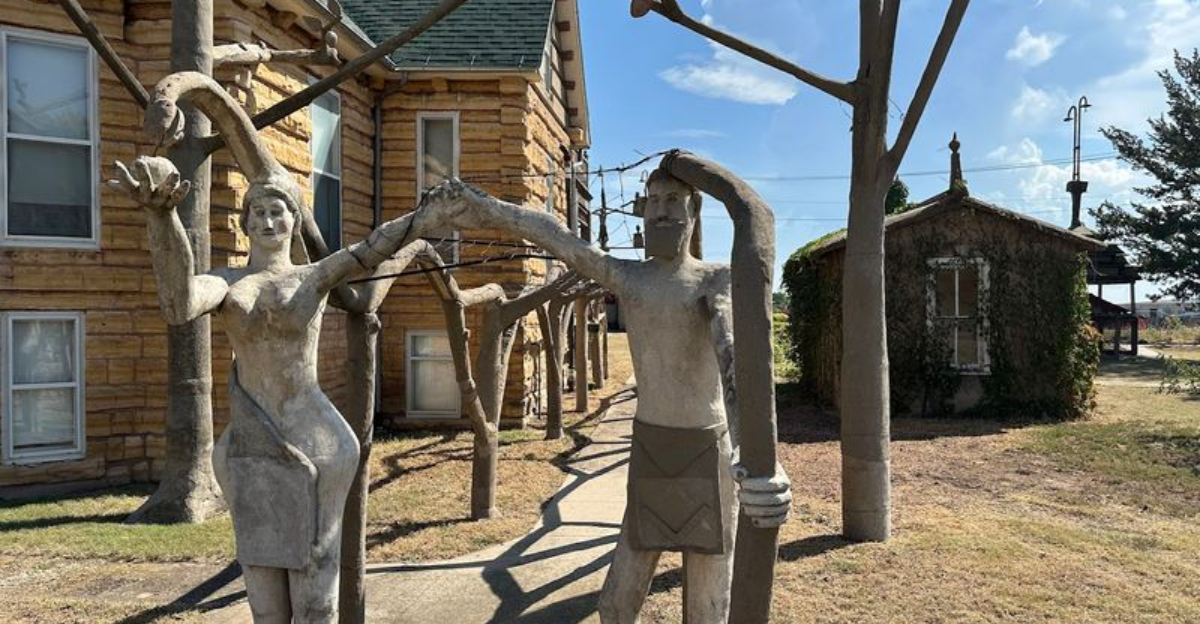
A 64-year-old man looked at a plot of land in Kansas and thought, I will build the Garden of Eden here. Then he did.
That is not a metaphor. That is not an exaggeration.
That is just what happened, and somehow it is only the beginning of the story. What he left behind is not the kind of thing you can prepare for.
Concrete sculptures spill across the property, with biblical scenes tangled with political commentary. All of it was built by hand over decades by a man who had absolutely no intention of being forgotten.
Kansas does not get enough credit for the strange and the wonderful. This place is proof that the most unexpected things are sometimes hiding in the most unexpected places, waiting for someone curious enough to stop.
History Of Sculpture Gardens In Kansas
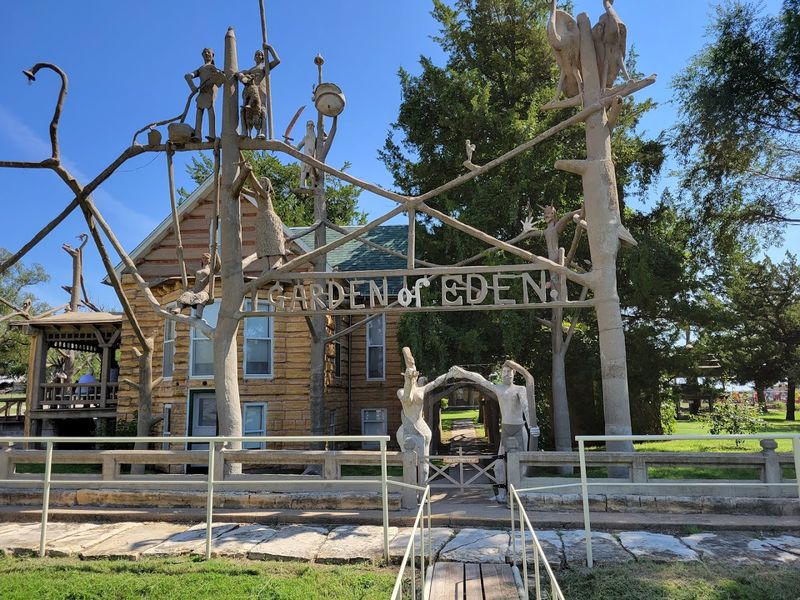
Kansas has a long, surprising history when it comes to outdoor art, and Dinsmoor’s Garden of Eden is the crown jewel of that story. Samuel Perry Dinsmoor was a retired schoolteacher and Civil War veteran when he started building his masterpiece in 1907.
Most people his age were slowing down. Dinsmoor was just getting started.
He spent 22 years constructing over 150 sculptures across his property. The work reflects his Populist political beliefs and his personal interpretation of biblical stories.
It was never meant to be subtle.
Before Dinsmoor, Kansas did not have a strong tradition of large-scale folk art environments. He essentially created a new category of attraction for the state.
Today, the site draws over 10,000 visitors every year to a town most maps barely bother to label. His legacy turned Lucas into an unlikely destination for art lovers, road-trippers, and history buffs.
The Garden of Eden is now listed on the National Register of Historic Places, cementing its status as one of the most remarkable artistic achievements in the entire Midwest. Find this spot at 305 E 2nd St, Lucas, KS 67648.
Techniques Used In Outdoor Sculpture Art
Dinsmoor did not go to art school. He figured things out as he went, and the results are genuinely jaw-dropping.
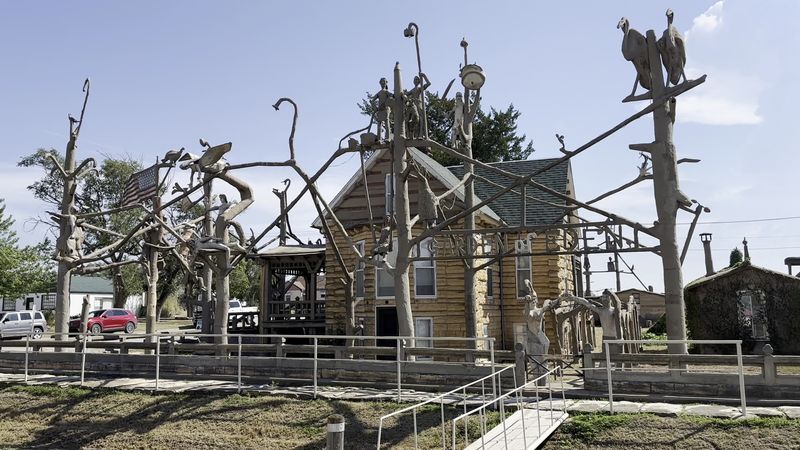
His primary technique involved hand-shaping Portland cement, which was a fairly new material when he began building in 1907. He worked without molds for most pieces, sculpting figures freehand over armatures made of wire and stone.
Some of his concrete sculptures reach three stories tall, nearly 40 feet into the Kansas sky. That is not beginner stuff.
Each figure required careful planning for weight distribution, especially since Kansas weather is not exactly gentle on outdoor structures.
He also played with visual tricks in his construction. The cabin home looks like a traditional log structure, but the logs are actually shaped limestone, creating a trompe l oeil illusion that still fools visitors today.
No two windows or doors on the cabin share the same size, which adds to the disorienting, dreamlike quality of the whole property.
Dinsmoor also wired electric lighting into the sculptures, including an All-Seeing Eye designed to wink at passing trains. For a self-taught artist working in rural Kansas, his technical creativity was extraordinary.
Popular Materials For Creating Sculptures
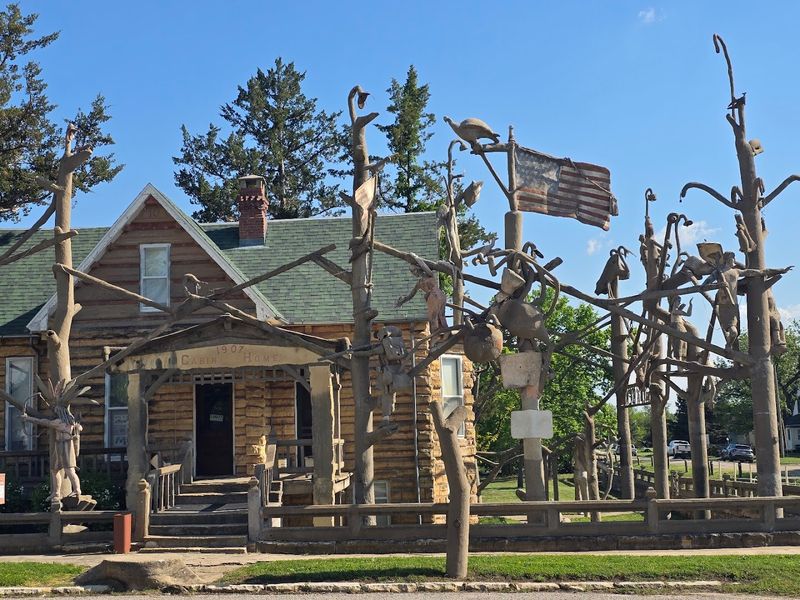
Dinsmoor worked with what the land gave him, and Kansas gave him Post Rock limestone in abundance. This regional stone, formed from ancient sea beds, became the backbone of his cabin home.
He quarried it locally and shaped it to mimic wooden logs, which is why the house looks rustic from a distance but feels like solid rock up close.
The sculptures themselves are primarily Portland cement, a material Dinsmoor embraced early and used in massive quantities. He reportedly used 113 tons of cement across the entire property over his 22 years of building.
That number is hard to wrap your head around until you see how many figures are crammed into one yard.
He added color sparingly but deliberately. A red stain marks Abel’s blood in the biblical scenes, and some female figures wear red-stained skirts.
These small pops of color make certain sculptures feel almost alive against the grey cement. The combination of limestone and concrete gave Dinsmoor a durable, affordable palette that suited both his budget and his ambitions.
Choosing local materials also rooted the work deeply in the Kansas landscape, making it feel like it grew right out of the ground.
The Role Of Nature In Sculpture Displays
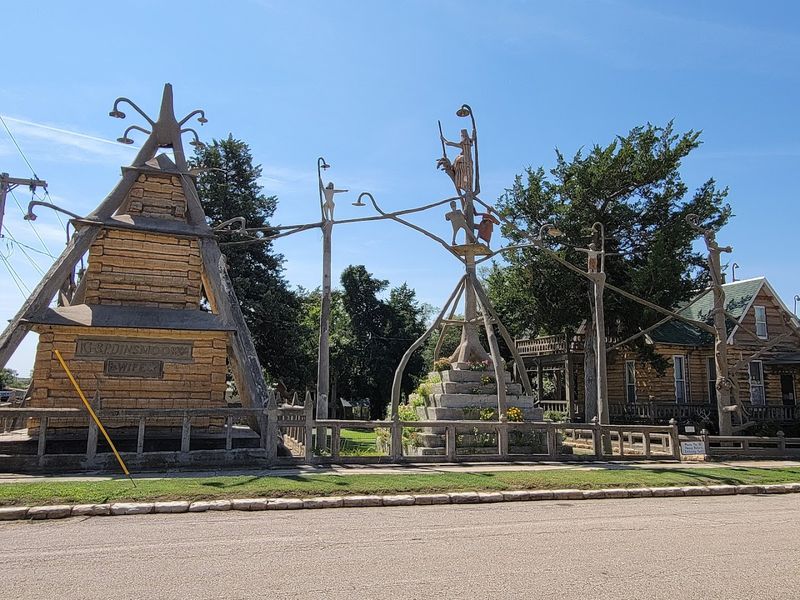
Nature is not a backdrop at the Garden of Eden. It is an active participant in how the sculptures look and feel at any given moment.
The wide-open Kansas sky does something interesting to concrete figures. Under the bright midday sun, the textures pop.
Under overcast skies, the whole yard shifts into something more brooding and strange.
Dinsmoor understood this instinctively. He positioned his tallest figures to be visible from multiple angles and from a distance.
The three-story sculptures interact with the horizon in a way that makes them feel larger than they actually are. Kansas flatness, usually considered a drawback, becomes an asset here.
Wind and light also animate the space in unexpected ways. Shadows from surrounding trees shift across the figures throughout the day, creating the illusion of movement.
Visiting at different times of day genuinely feels like seeing a different installation each time. The outdoor setting also means the sculptures exist in real weather, real seasons, and real time alongside visitors.
No museum walls are separating the art from the world. You stand next to these towering concrete figures in the actual Kansas air, and that physical closeness makes the experience hit differently than any indoor gallery ever could.
How Sculpture Gardens Influence Local Culture
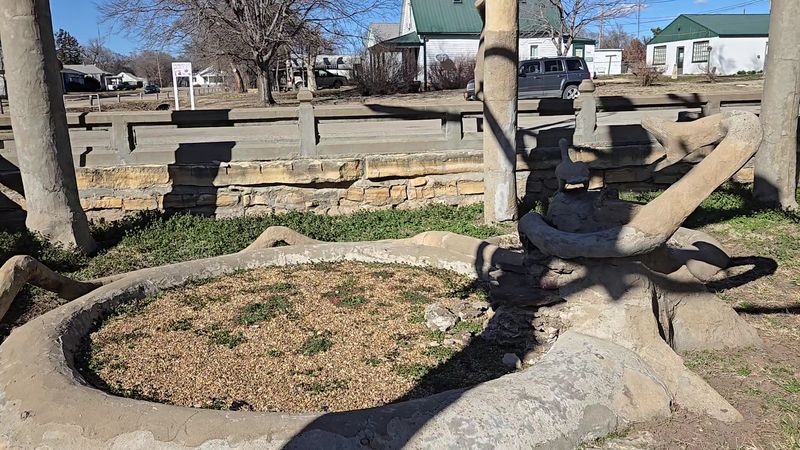
Lucas, Kansas, has fewer than 500 residents, but it punches well above its weight in the art world, and Dinsmoor is the reason why. His Garden of Eden essentially turned this tiny prairie town into a magnet for grassroots artists.
Over time, other folk art installations appeared nearby, and Lucas developed a reputation as an outsider art hub unlike anything else in the region.
The cultural ripple effect is real and visible. Local businesses, community events, and even the town’s identity have been shaped by the presence of the Garden of Eden.
Visitors who come to Dinsmoor often discover the surrounding art scene and end up staying longer than planned.
The Friends of S. P.
Dinsmoor’s Garden of Eden now stewards the site and works to keep the artistic energy of Lucas alive. The Kohler Foundation completed a major restoration in 2012, bringing national attention back to the property.
Schools, artists, and historians regularly visit to study what one determined person can do to transform a community. Dinsmoor never set out to change a town.
He just built what he believed in. The cultural transformation of Lucas happened naturally around his vision, and it continues to grow decades later.
Seasonal Changes And Their Impact On Sculptures
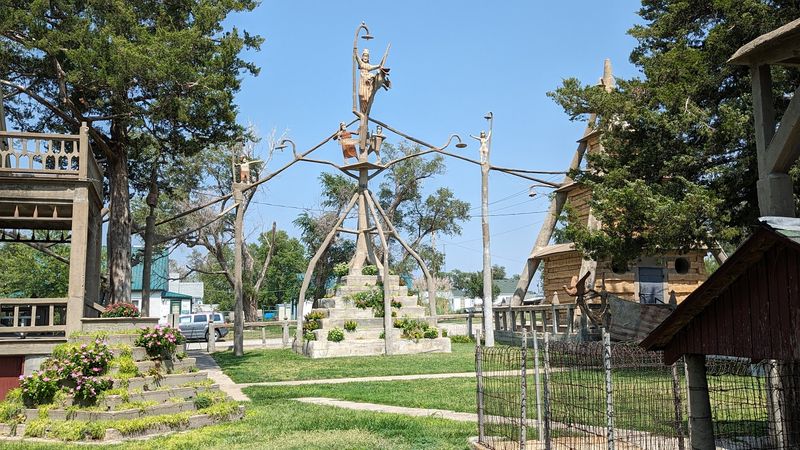
Kansas weather is not mild, and the Garden of Eden experiences all of it. Summer brings blazing heat that makes the grey cement almost glow.
Winter strips the surrounding trees bare, which actually opens up sightlines to sculptures that get partially hidden by foliage in warmer months. Each season genuinely changes what you notice first when you walk the grounds.
Spring and fall bring softer light that is flattering to the textured surfaces of the concrete figures. Photographers especially love visiting during these transitional months.
The sculptures take on different moods depending on whether the Kansas sun is harsh or gentle.
The seasonal schedule also affects access. The site offers guided tours on a seasonal schedule, with hours running from 11 AM to 4 PM.
The exterior sculptures are always visible, even outside of tour hours, which means you can see the yard in any season and any weather. Winter visits have a particular eeriness to them.
Concrete figures standing in frost and grey skies create an atmosphere that summer crowds simply cannot replicate.
If you want the Garden of Eden to feel like a genuine encounter with something otherworldly, visit on a cold, quiet weekday in late November and see what happens to your sense of imagination.
Preservation Challenges In Outdoor Sculpture Art
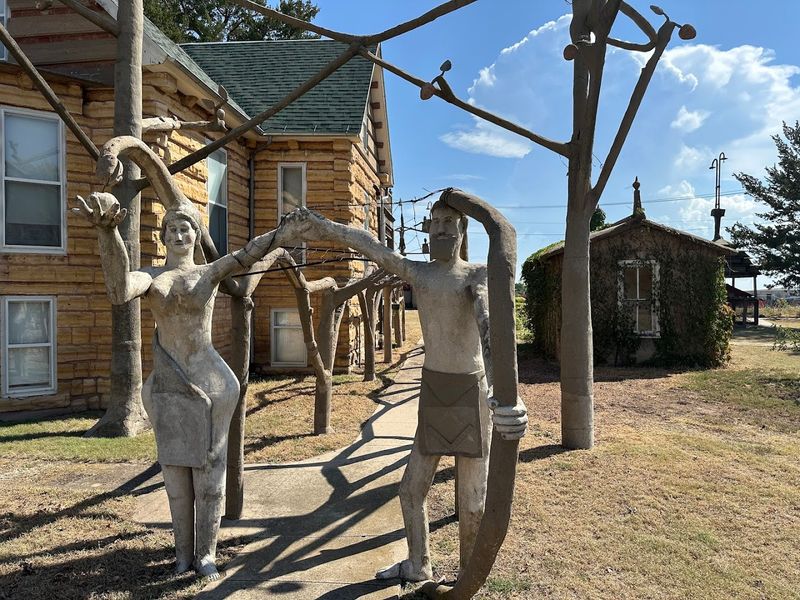
Keeping 113 tons of hand-shaped cement intact across more than a century is not a simple task. Outdoor sculptures face constant assault from moisture, temperature swings, biological growth, and plain old gravity.
Kansas freezes in winter and bakes in summer, which creates a brutal cycle of expansion and contraction inside the concrete. Over time, cracks form, surfaces erode, and structural integrity becomes a serious concern.
The Kohler Foundation stepped in with an intensive restoration effort completed in 2012. Conservators worked carefully to stabilize figures without altering Dinsmoor’s original forms or finishes.
The goal was preservation, not renovation. That distinction matters enormously when dealing with outsider art.
The challenge with folk art preservation is that the artist often used unconventional methods and materials. Dinsmoor improvised constantly, which means restorers cannot always apply standard conservation techniques.
Every sculpture presents its own puzzle. The Friends of S.
P. Dinsmoor’s Garden of Eden now manage ongoing maintenance to keep the site stable.
Listing on the National Register of Historic Places provides some protection and access to resources. Still, outdoor sculpture preservation is expensive, labor-intensive, and never truly finished.
The work of keeping the Garden of Eden standing is as ongoing as the work Dinsmoor himself put into building it over his remarkable 22-year construction run.
Events And Workshops For Sculpture Enthusiasts
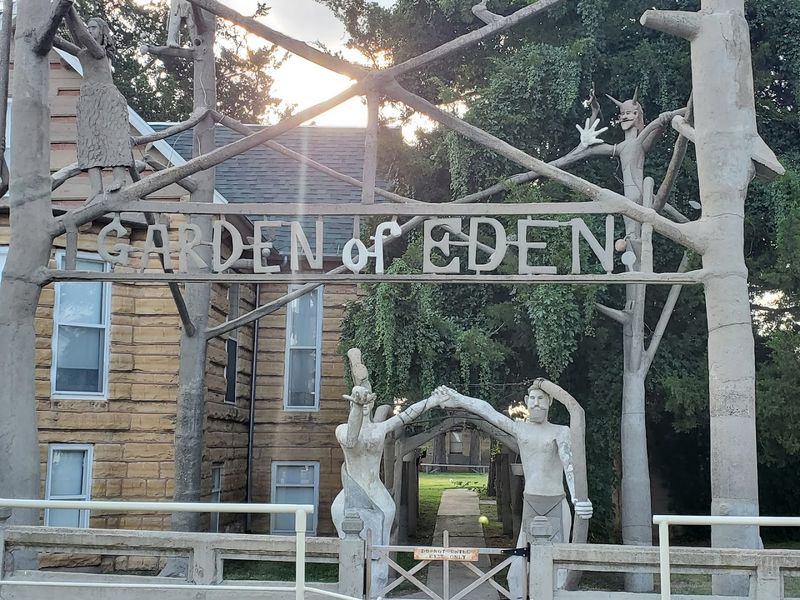
The Garden of Eden is not just a static display you walk past. It is an active cultural site that draws enthusiasts, students, and curious travelers into real conversations about art, history, and craft.
Guided tours run daily from 11 AM to 4 PM throughout the season, and they are genuinely educational rather than just a walk around the yard.
Tour guides share the stories behind individual sculptures, explain Dinsmoor’s Populist politics, and bring context to pieces that might otherwise seem random. The tours also include access to the cabin interior and, notably, Dinsmoor’s mausoleum.
He is interred on-site in a glass-lidded coffin, visible to visitors. That is not something you forget quickly.
Lucas itself has become a gathering point for folk art enthusiasts, partly because of the Garden of Eden’s reputation. The town hosts art-related events that draw visitors interested in grassroots creativity.
A small gift shop on the property offers guidebooks, postcards, and other items for those who want to take a piece of the experience home.
For anyone interested in learning more about sculpture as a medium or folk art as a movement, a visit here combined with the guided tour offers a compact and memorable art education experience.
It stands out as one of the most engaging opportunities of its kind in the American Midwest.