
This Unreal Washington Lake Has Some Of The Bluest Water You’ll Ever See
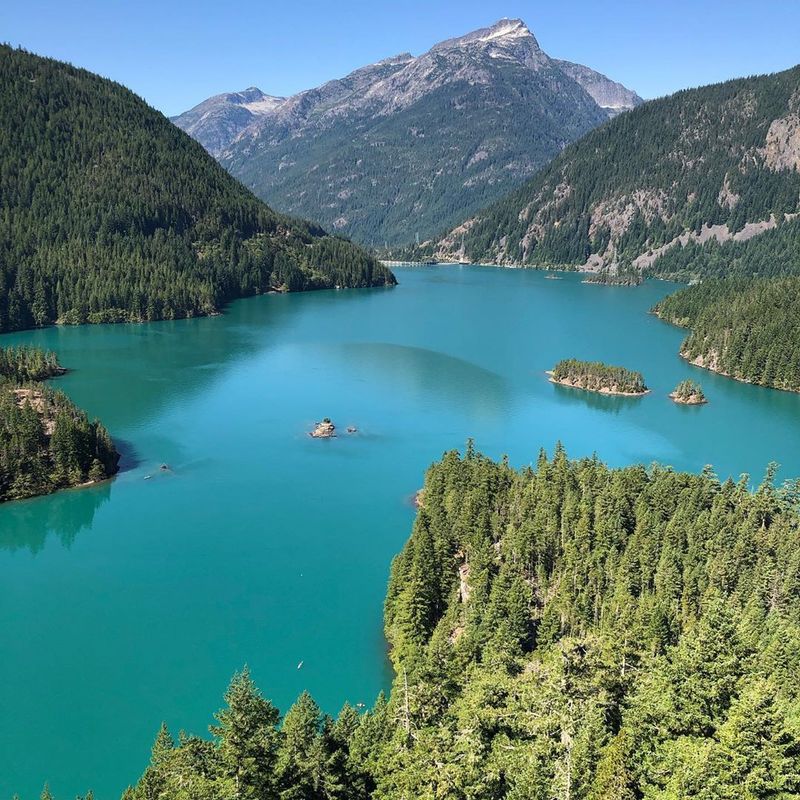
A mountain road winds through towering evergreens before opening onto water in the brightest turquoise imaginable. The color is so striking that the first glance often comes with a double take and a quick reach for the camera.
Could a roadside stop in Washington really be worth planning an entire trip around? Park, walk a few steps, and suddenly there is a glowing shoreline backed by snow-dusted peaks and dense fir trees.
The water shifts with the sunlight, moving from pale mint to rich jewel tones as the day goes on. Families, photographers, riders, and road trippers all gather at the same railing, and nobody seems in a hurry to leave.
Easy trails and kayaking make it tempting to stay longer, while a nearby campground turns a quick stop into a weekend escape.
Water That Looks Digitally Enhanced
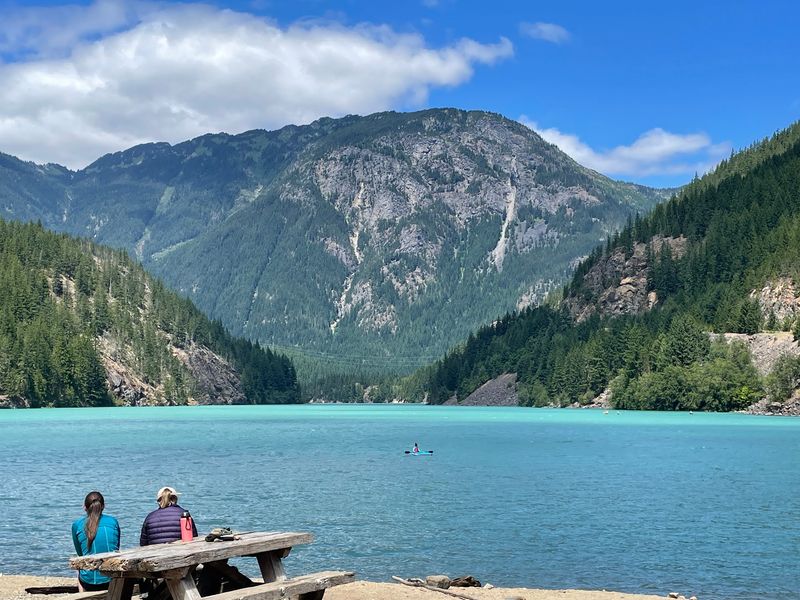
Diablo Lake breaks brains a little. Visitors arrive expecting a nice mountain lake and instead find water the color of melted turquoise stone.
The secret is something called glacial flour. Glaciers above the lake grind slowly against solid rock, crushing it into powder finer than sand.
Meltwater carries that powder down into the reservoir, where it floats instead of sinking. Sunlight hits those tiny particles and bounces back mostly blue and green, which is why the surface glows.
Color changes throughout the season, too. July through September brings the strongest melt, and that is when the teal reaches its loudest volume.
Cloudy days soften everything into a dreamy silver-green, which some travelers actually prefer. Sunny days around midday to late afternoon deliver the postcard version.
One tip worth remembering: once the sun slips behind the western ridges, the brilliance fades fast. Late evening visits still feel peaceful, but the famous glow dims.
Water clarity is another surprise. You cannot see far down into it, because those suspended particles block the view.
The trade-off is that unforgettable color.
Photographers often bring a polarizing filter to cut glare and pull out extra depth in the blues.
Would you believe a lake could look this bright without any filters or editing tricks?
Plenty of Washington scenery impresses. Very little of it makes people say the word wow out loud, twice, within thirty seconds.
The Overlook Requires Almost No Effort
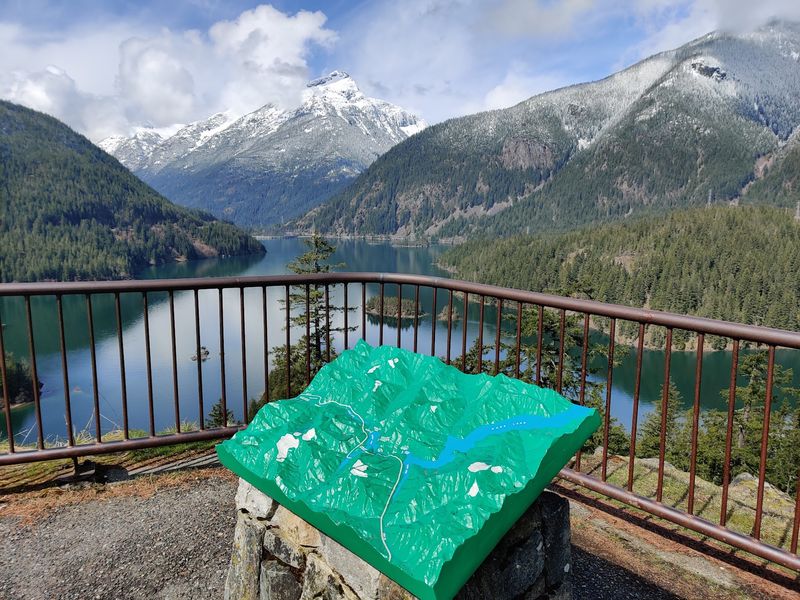
Here is the rare travel win: the most jaw-dropping view in the area sits about twenty steps from a parking spot.
The Diablo Lake Vista Point pulls right off the highway. No hiking boots.
No sweaty climb. No trail map needed.
Parking is free and generous, though summer weekends fill up. During peak hours you may circle for a few minutes waiting for someone to leave.
Restrooms sit on site, which matters a lot on a long mountain drive. Picnic tables and shaded benches give you a reason to linger instead of snapping one photo and leaving.
Grandparents love this stop. So do families with toddlers, travelers with mobility limits, and anyone who spent the morning driving.
Bring a jacket even in July. The overlook sits high, the wind whips across the water, and cold air rolls off nearby snowfields.
Visitors in shorts often regret it within ten minutes.
Pack a lunch, too. Restaurant options nearby are slim, so a cooler in the trunk turns the pullout into a proper picnic spot with a million-dollar backdrop.
What would you eat if your lunch table faced water like that?
Give yourself thirty minutes minimum. Most people plan five and stay an hour, watching the light shift across the peaks and arguing about which shade of blue is winning.
A Dam With Big History
Long before tourists showed up with phone cameras, engineers showed up with concrete.
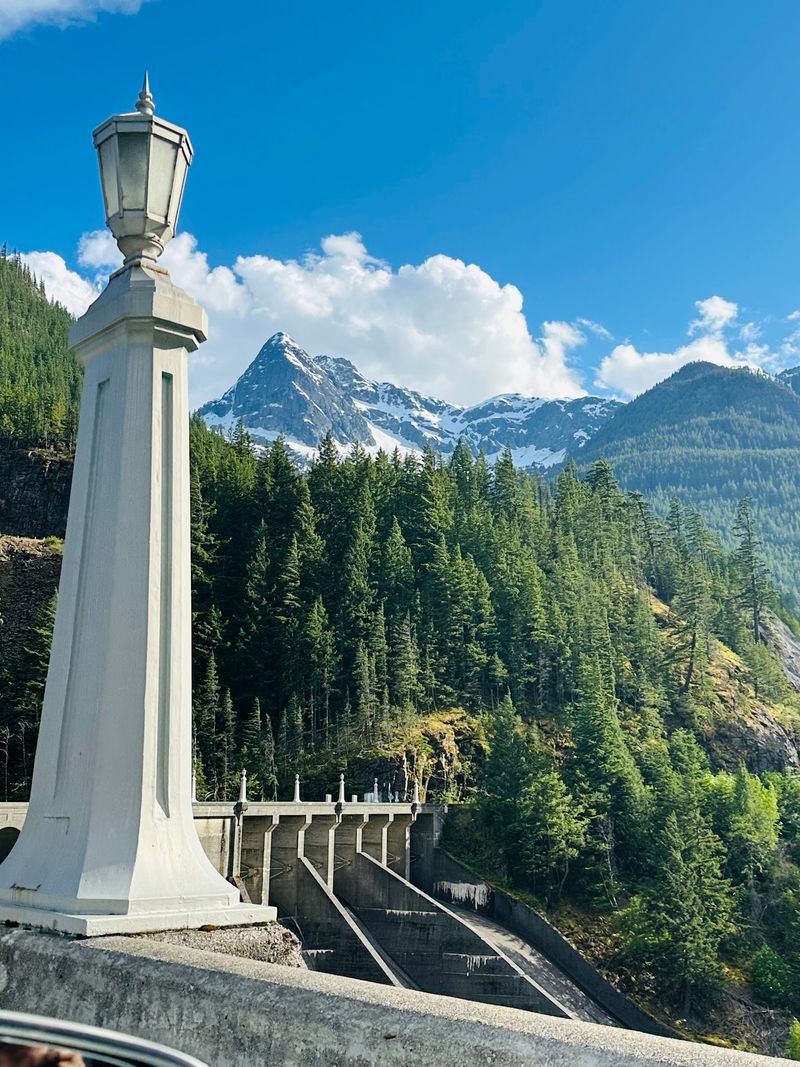
The lake exists because of Diablo Dam, built in the late 1920s and finished in the early 1930s across the Skagit River. For a stretch of time, it held the title of tallest dam on the planet.
Think about that. A structure in the Washington backcountry once topped the entire world.
The whole setup belongs to the Skagit River Hydroelectric Project, run by Seattle City Light. Power generated up here has helped light homes in the Seattle area for generations.
The lake sits between two siblings, Ross Lake upstream and Gorge Lake downstream, all strung along the same river at roughly 1,201 feet above sea level.
Driving across the dam is a small thrill in itself. Steep canyon walls squeeze in on both sides, and the water below looks impossibly bright against gray concrete.
History buffs enjoy imagining crews hauling materials into this remote canyon almost a century ago, without modern highways or equipment.
Does knowing a lake is man-made make it less magical, or more?
Most visitors vote more. The color comes from glaciers, the shape comes from human ambition, and the combination is something Washington pulls off better than almost anywhere else in the country.
Paddling Across Liquid Turquoise
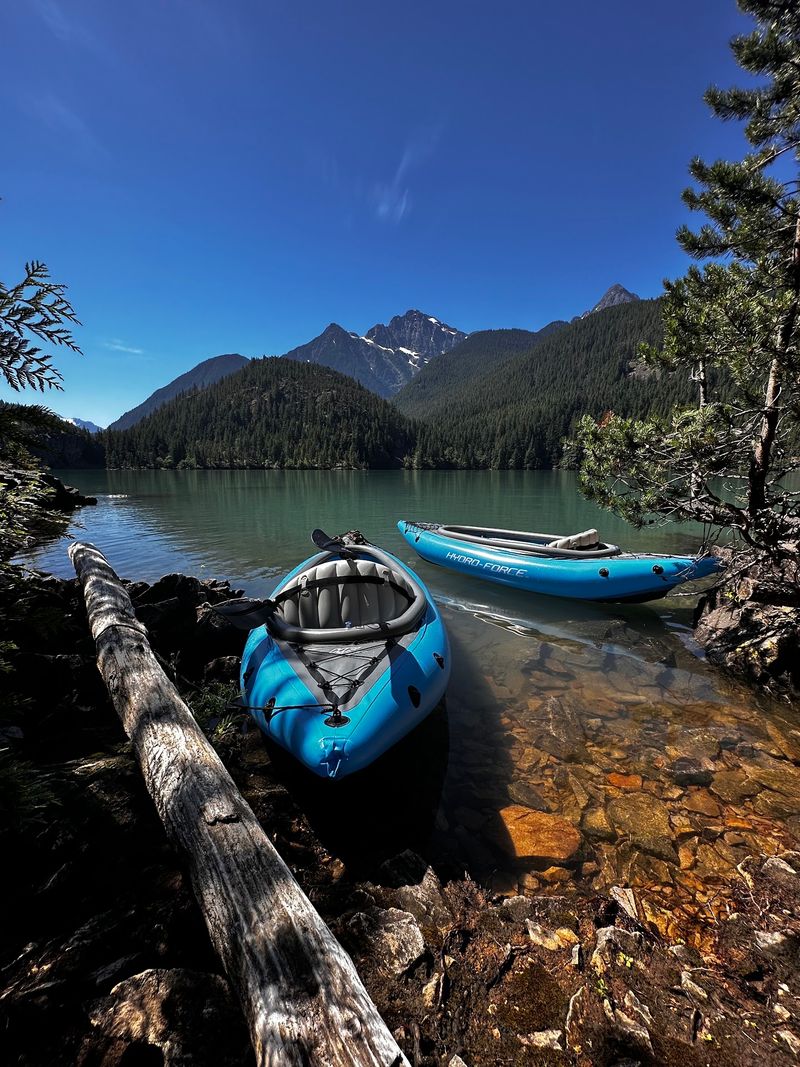
Floating on that color is a completely different experience than looking down at it.
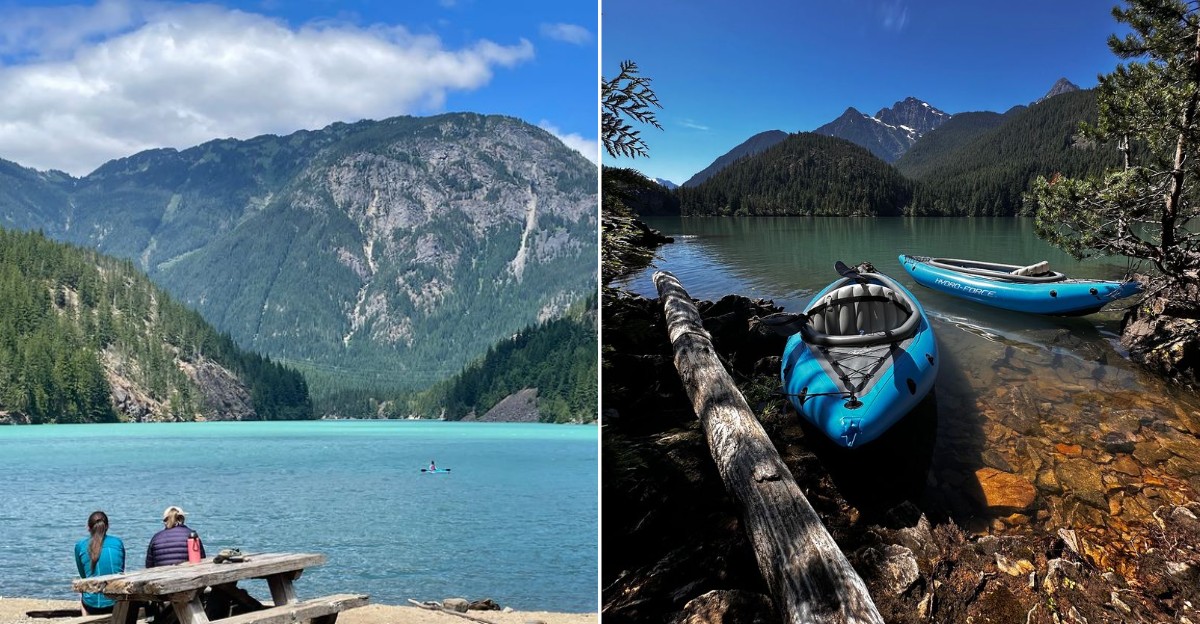
Kayakers and canoers launch onto the lake all summer, gliding past cliff walls and small waterfalls that tumble straight into the water. Paddles slice through what looks like liquid gemstone.
Fair warning: this water stays seriously cold. Glacier melt does not care that the calendar says August.
Dress for the temperature, not the sunshine, and keep a dry layer stashed in a waterproof bag.
There are no kayak rentals sitting at the shoreline, so bring your own boat or arrange gear before you arrive in the area.
Boat tours run during summer months, departing from the North Cascades Institute Environmental Learning Center. That center also offers walking paths, educational programs, and a gift shop.
Guided trips work well for anyone nervous about cold water or unfamiliar with mountain reservoirs.
Wind picks up in the afternoon, funneling through the canyon. Morning paddles tend to be calmer, and the reflections of the peaks on glassy water are worth the early alarm.
Anglers cast here too. Rainbow trout, coastal cutthroat, brook trout, and bull trout all live in these waters.
Ever paddled across something that looks like it belongs on a tropical postcard, while snow sits on the mountains above you?
Washington makes that odd combination possible.
Trails With Serious Payoff
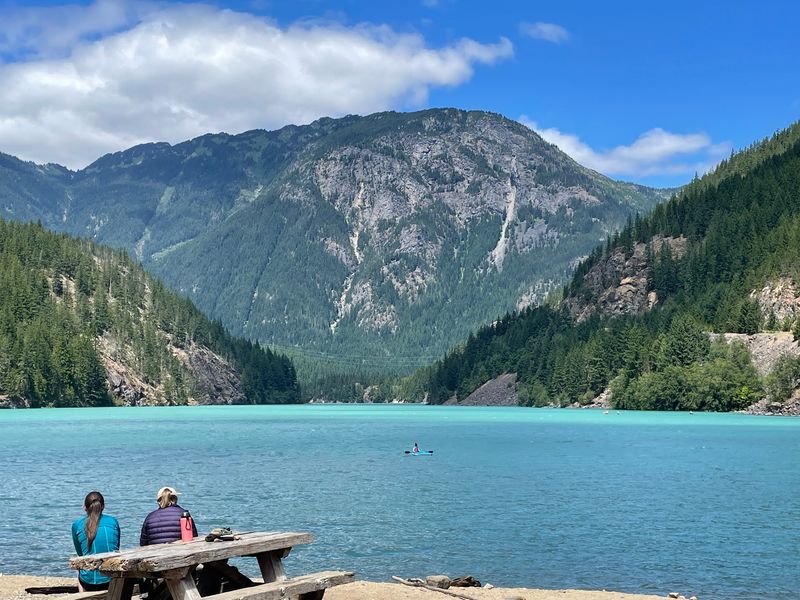
Walking earns you angles the parking lot cannot deliver.
Thunder Knob Trail is the crowd favorite for good reason. Roughly 3.6 miles round trip, moderate effort, about two hours, and it ends with a wide open view over the whole basin.
Families handle it well. Kids get a real sense of accomplishment when that blue water finally appears through the trees.
For a longer outing, the Diablo Lake Trail traces the shoreline area and passes waterfalls along the way. Quieter, greener, and shady on hot afternoons.
Craving a challenge? Pyramid Lake Trail climbs hard and rewards the effort with big mountain scenery and burning calves.
Trail conditions shift with the seasons. Snow lingers at higher elevations well into early summer, so check current reports before setting out.
Bring more water than you think you need, plus snacks. Cell service in the immediate area is spotty at best, so download maps ahead of time and tell someone your plan.
Bug spray helps in midsummer. Layers help always, since mountain weather flips moods quickly.
Which sounds better to you, an easy ridge walk or a lung-burning climb with bragging rights?
Either way, hiking here connects you to the wilder side of the North Cascades, where the scenery keeps unfolding around every switchback and the silence between footsteps feels earned.
Sleeping Under Cascade Stars
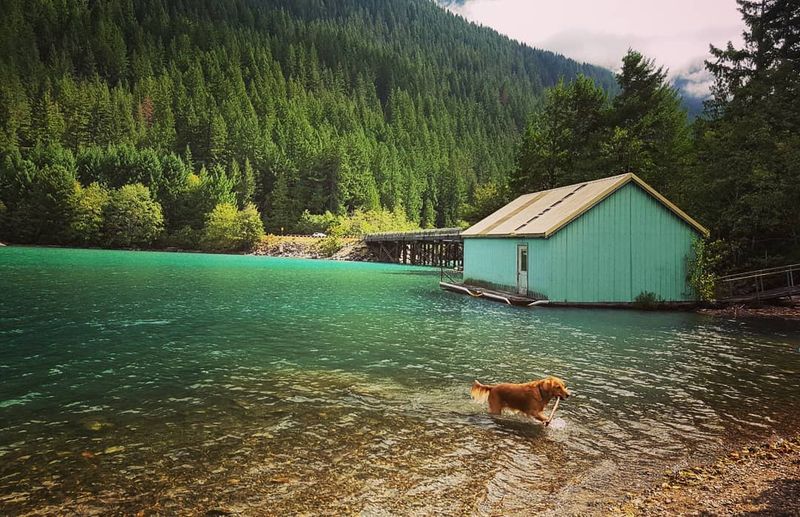
Day trips are great. Waking up here is better.
Colonial Creek Campground sits close to the water with drive-in sites, meaning you can unload gear without hauling it a mile through the woods.
A fishing pier and boat launch make morning adventures easy. Coffee, cold air, and turquoise water before breakfast is a strong combination.
Nights get chilly. Even in midsummer, temperatures dip once the sun disappears behind those ridges, so pack a warm sleeping bag and an extra blanket.
Star watching up here is spectacular. Very little light pollution reaches this stretch of Washington, and the Milky Way often shows up in full detail.
Reservations matter during peak season. Sites fill quickly once the highway opens for summer, and showing up on a Friday hoping for luck rarely works out.
Bring everything you need. Grocery stores are far away, restaurants are scarce, and forgetting matches or a can opener turns dinner into a puzzle.
Food storage rules exist for a reason. Wildlife lives here, and keeping a clean camp protects both animals and campers.
Some hikers report that the campground makes a perfect base for tackling Thunder Knob in the morning and paddling in the afternoon.
Could you handle one night without a phone signal in exchange for a sky full of stars?
The Drive Steals The Show
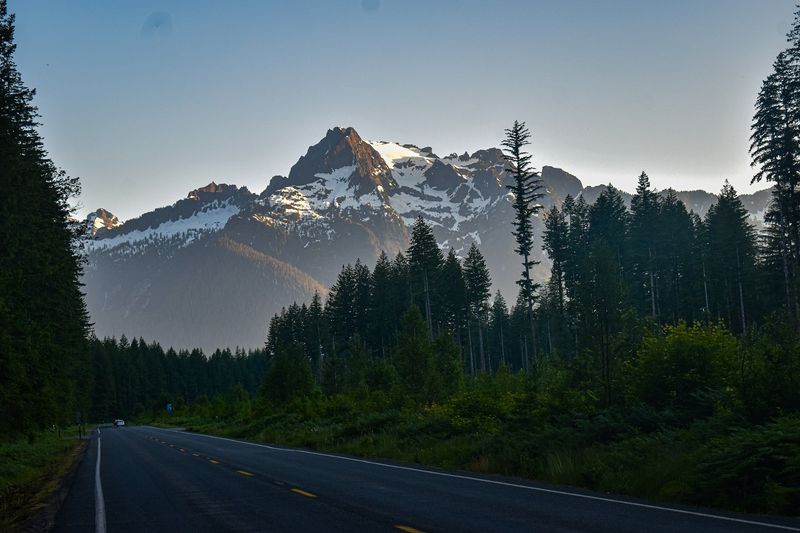
Getting there is half the fun, and that is not an exaggeration.
State Route 20, better known as the North Cascades Highway, threads through some of the most dramatic terrain in the state. Jagged peaks, hanging glaciers, deep green valleys, one after another.
Motorcycle riders rank this route among the finest in Washington. Convertible drivers agree.
The road closes each winter under heavy snow, usually reopening in spring. Planning a trip between June and mid-October gives you the best odds of clear access.
Newhalem and Marblemount sit to the west, Winthrop to the east. Services run roughly thirty minutes to an hour away, so top off your gas tank before the mountain stretch.
Charging stations exist in some small towns along the way, but do not count on finding one when the battery gets low.
Pullouts appear constantly. Take them.
Waterfalls, river views, and mountain panoramas hide around nearly every curve.
Build in extra time. A drive that maps say takes two hours can easily stretch to four once you start stopping.
Coming from Seattle, expect somewhere around two to two and a half hours of driving.
What is your ideal road trip playlist for a highway lined with glaciers?
Honestly, you might forget to press play. The scenery does enough talking on its own.
Plan Smart, Leave Amazed
A little planning turns a good visit into a great one.
The lake carries the mailing area of Washington 98283, along State Route 20 in the North Cascades, and reaching the overlook means simply following the highway to the marked vista point pullout.
Seasonal access rules everything. Snow closes the highway in winter, so confirm road status before packing the car, and check current hours and conditions for the campground, boat tours, and learning center since those shift year to year.
Sunny days between July and September deliver the boldest color. Midday to late afternoon is the sweet spot.
Dress in layers regardless of season. Wind off the water surprises people constantly, and a warm hat in August is not silly here.
Pack food, water, and a paper map. Limited cell coverage means your phone may go quiet for stretches.
Arrive early on weekends to snag parking without waiting. Weekdays feel noticeably calmer.
This area belongs to North Cascades National Park, nicknamed the American Alps, with more than 300 glaciers spread across the range. Treat it gently, pack out trash, and stay on marked paths.
Couples have proposed at that railing. Families return every single summer.
Photographers keep chasing the light.
So when are you finally booking that Washington road trip?
The water is waiting, and it really does look that blue.