
Time Travel to the Jet Age: The TWA Hotel at JFK International Airport
By Eileen Ogintz
Ready for a little time travel? Let’s go back to 1962. The jet age is underway.
John Fitzgerald Kennedy was president. John Glenn orbited the earth three times. The Beatles released their debut single “Love Me Do,” and Dr. No, the first James Bond movie, premiered.
And in May 1962, after years of work, the TWA terminal opened at New York’s Idlewild Airport (now JFK International). It was architect Eero Saarinen’s landmark TWA Flight Center, with sweeping rooftops and tube-like walkways that signified the new age of jet travel.
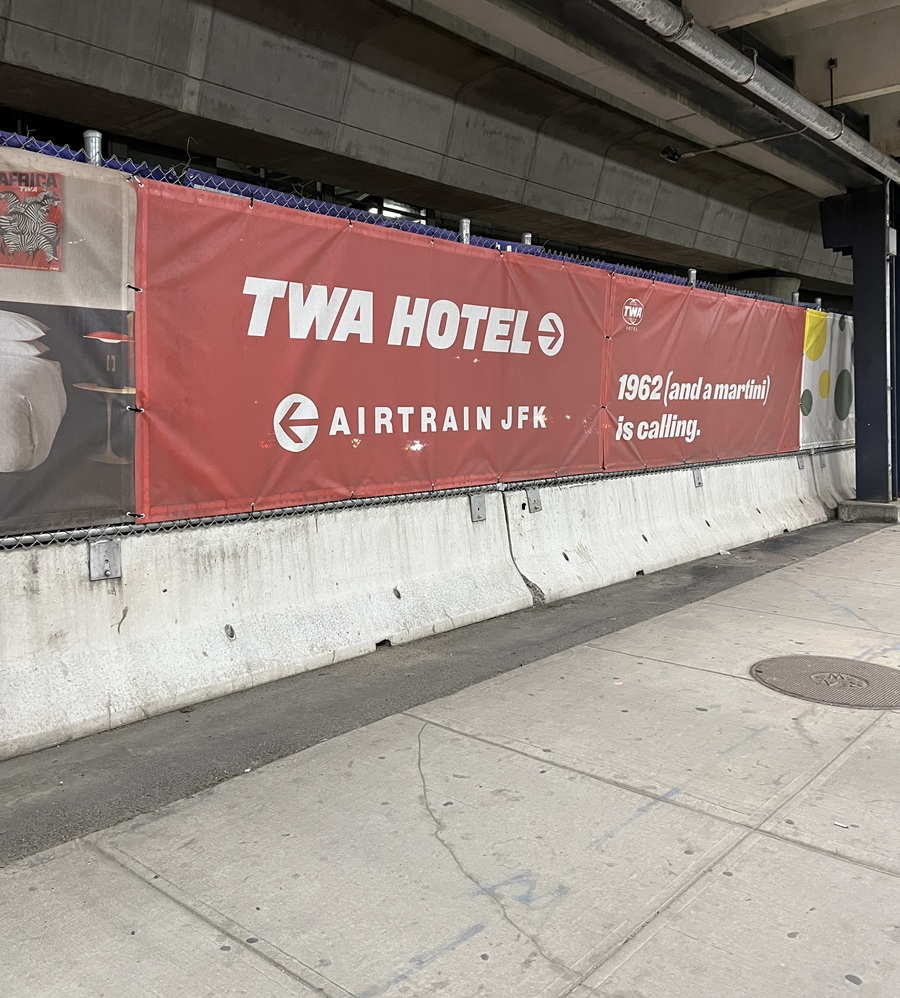
Today, you can time travel back to 1962 when you stay at the 512-room TWA Hotel adjacent to Jet Blue’s Terminal 5. This is the only on-airport, Air-Train accessible hotel at JFK and certainly one of the most unique airport hotels anywhere in the world.

The 1962 terminal building was empty for nearly two decades after TWA went bankrupt and was acquired by American Airlines in 2001. The original terminal building was restored and two-wings were built, opening with great fanfare in 2019.
The hotel uses the head house of the TWA Flight Center that was designed by Saarinen (see his drafting table at one exhibit). The building was made a New York City designated landmark in 1994 and added to the National Register of Historic Places in 2005. The site was developed by MCR Hotels, one of the largest hotel owners in the country.
Considering terrible traffic around JFK, especially with a $19 billion transformation project now underway, an overnight stay here is not only fun but convenient and stress free. Other hotels are miles away. We didn’t even need to go outside to get on our early-morning Jet Blue flight in Terminal 5 after our stay.
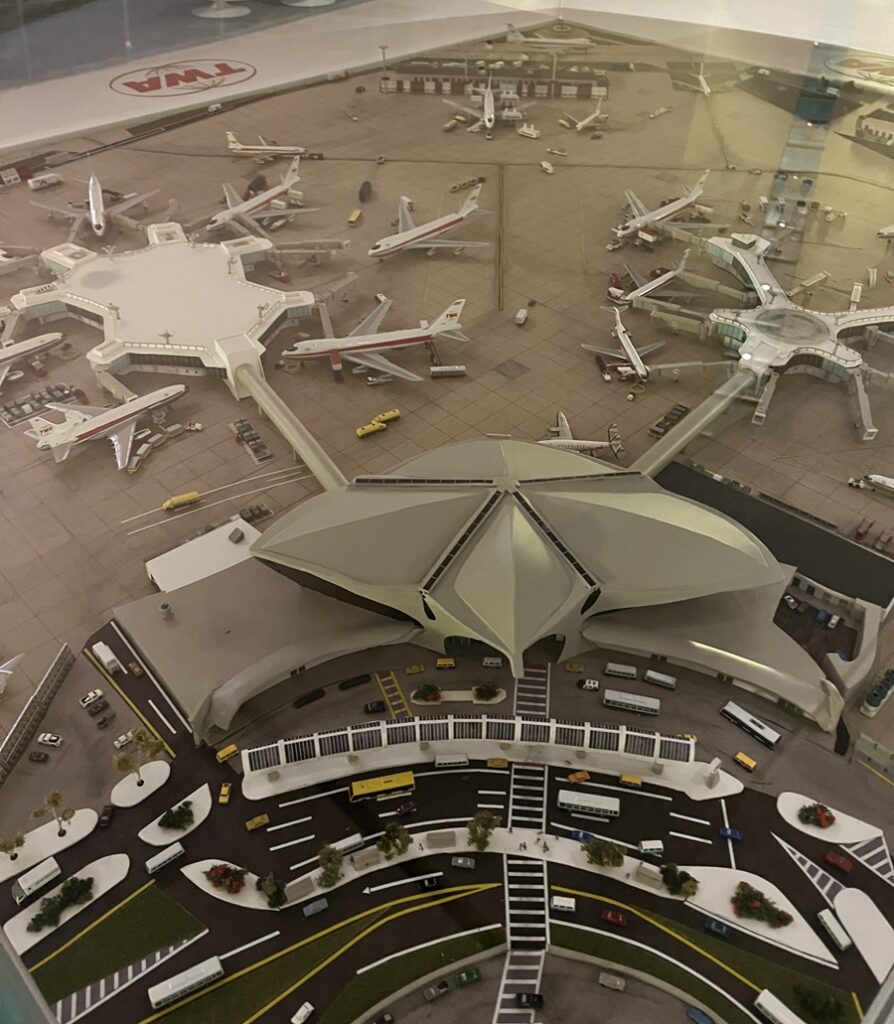
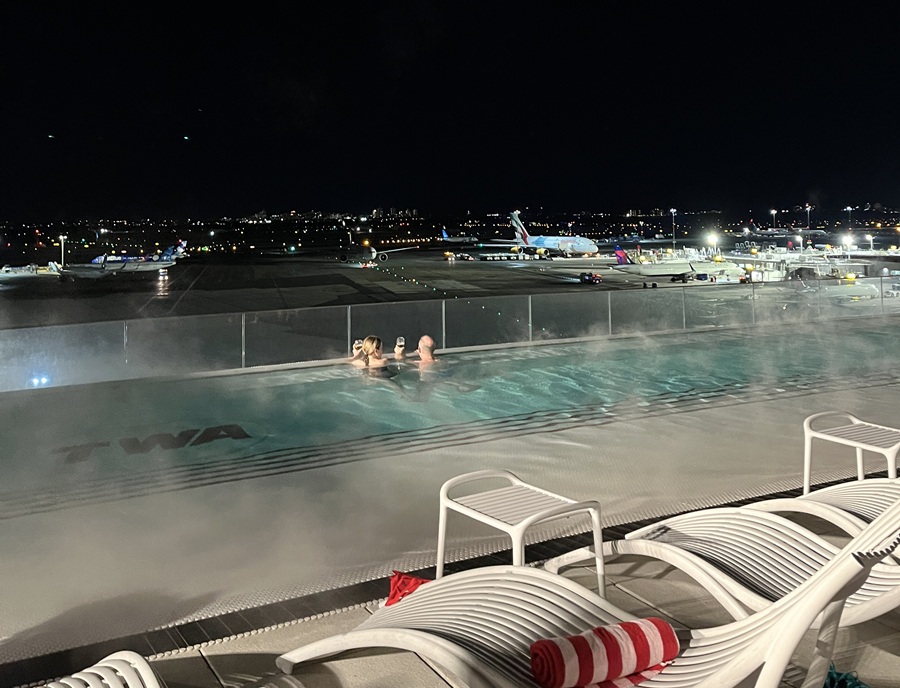
There is a rooftop heated pool, the chance to play Twister, the iconic 60-era floor game, a 10-000 square foot fitness center, museum exhibits to tell TWA’s history, and even flight attendants’ uniforms.
The Paris Café by celebrity chef Jean-Georges overlooks the JFK runways (Great burgers!). The Café includes the entire footprint of the terminal’s original Paris Café and Lisbon Lounge. Vongerichten has explained that as an avid traveler, he was excited to recreate a restaurant in such an iconic space. It’s open for breakfast, lunch and dinner. The menu includes everything from crispy calamari to chopped salads, pizzas, risotto, fish and chips, and roasted cauliflower. When choosing the menu, the restaurant team researched TWA in-flight menus from back in the day—a far cry from the pretzels we get today!
I loved all of the historic travel posters in the hotel, originally designed to encourage people to fly—whether to ski in the Rockies or the Alps or visit European capitals. Also check out the photos of celebrities of the era posing in front of airplanes (everyone from Marilyn Monroe to the Beatles to Lassie (and have fun explaining to the kids who they were.)

Take note that in those days people actually did dress up to fly, as Sean Duffy, the Secretary of Transportation, wishes we would do again. I didn’t see any evidence of that this recent trip with kids in holiday PJs and parents in comfortable workout clothes and sweat pants.
What’s with the pencils? The hotel rooms, with their mid-century design, feature touches including rotary dial phones, 1962 Life Magazines, and a cup full of American-made pencils from the Musgrave Pencil Company. Typically, in 1962, Musgrave pencils were paired with subscription cards in issues of Look, the popular weekly, which made it likely travelers were coming through the terminal with Musgrave pencils.
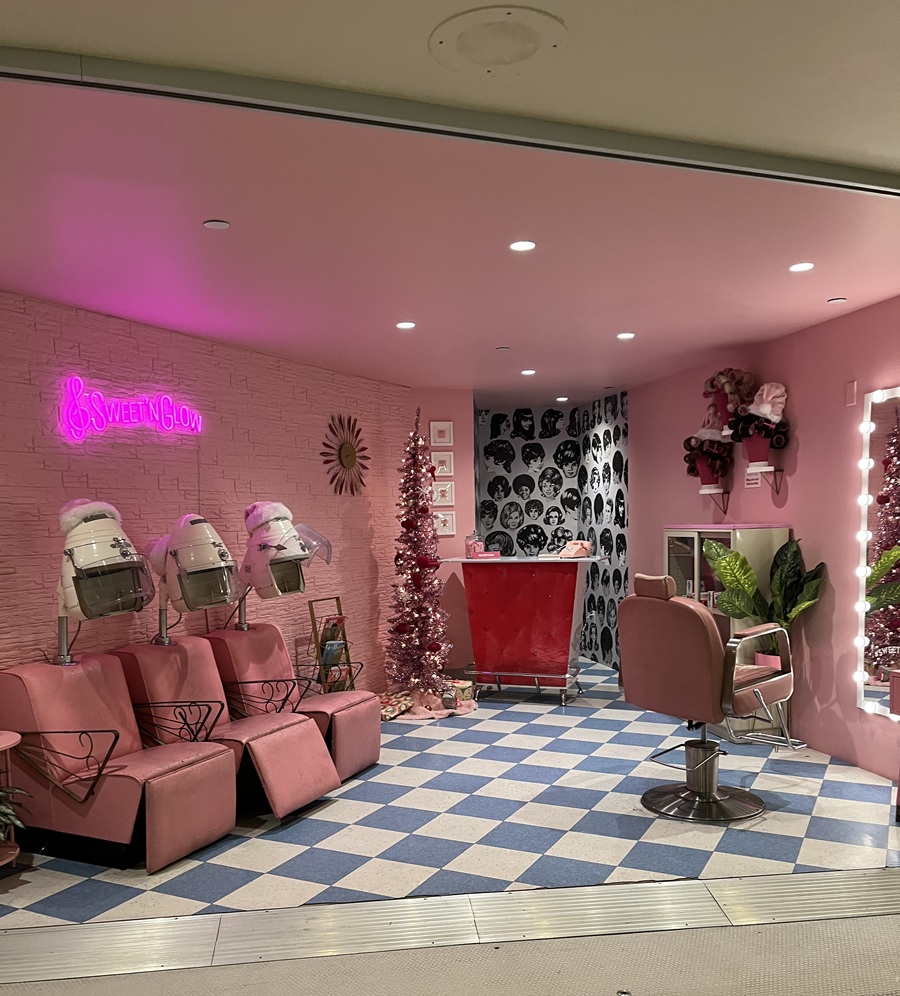
Take a seat in the Sweet ‘N Glow Salon under a pink beehive hair dryer and flip through vintage women’s magazines. Check out the retro wig collection!
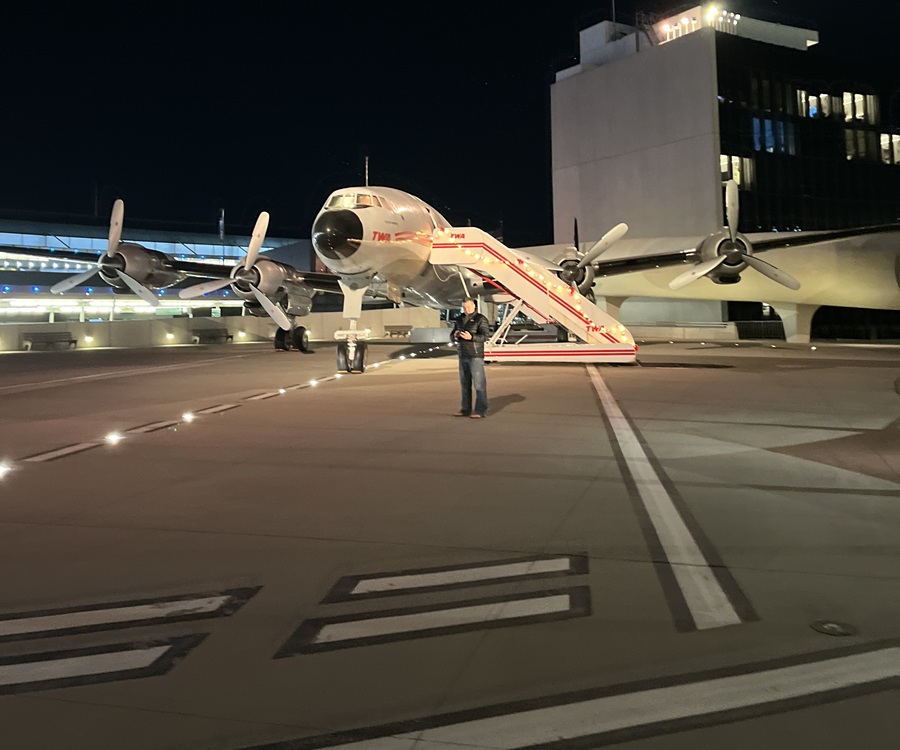
Step out on the TWA Hotel tarmac and board a 1958 Lockheed Constellation airplane affectionally called “Connie,” that is now a cocktail lounge. Seats are a lot roomier and more comfortable than in today’ s coach sections.

“Connie” served as an Alaskan bush plane after retiring from TWA and was restored complete with the plane murals that originally hung in the cabin, the original navigation system, and a rope—what was the original emergency device. Connie’s fuselage was towed through Times Square, where her eight-story billboard hung in the 1950s, on her way to her new home.
She was famous for breaking the era’s transcontinental speed record on a flight from Burbank to NYC in 1946 and also served as Air Force One for President Dwight D. Eisenhower. How about Connie’s martini—Vodka is my Co-Pilot–or a Control Tower Sour? Youngsters visiting when we were there recently were thrilled with their Shirley Temples.
On check in, kids are encouraged to complete a scavenger hunt by looking down at the custom manhole covers with images of people, places and things that tell the story of the TWA hotel.
Q. Who commissioned the Constellation airplane? (Howard Hughes, the owner of TWA.)
Q. What is the famous symbol of NY that was depicted on a TWA poster for the city? (The Statue of Liberty, of course.)
We shouldn’t get too carried away with the nostalgia about the good old Jet Age. After all, air crashes were more common back then. And airplane cabins were clouded with cigarette smoke.
But at least for one night in a busy journey, a stay at a place like the TWA Hotel is wonderful.