
Trekking in Vietnam: making the best of it when travel plans go awry
By Eileen Ogintz
The next time your travel plans go awry, remind yourself that your plan B might turn out to be a better experience, certainly more memorable.
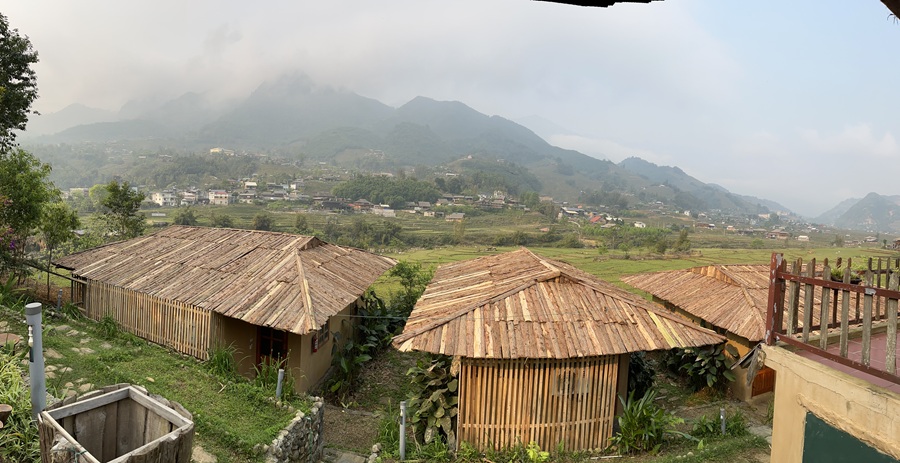
That’s what happened to me on our G Adventures trip in the Sapa region of North Vietnam, famous for its terraced rice fields and tiny villages. Sapa is home to minority groups including the Hmong, known for their distinctive handicrafts and dress. There are 54 ethnic groups in Vietnam.
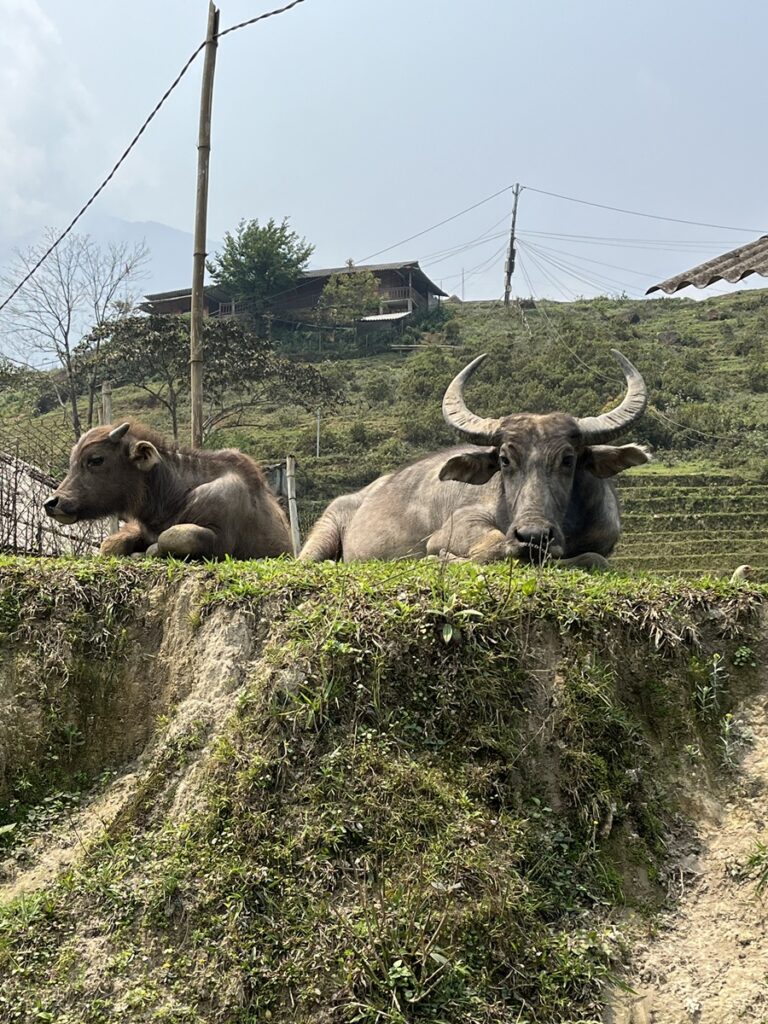
The idea was to hike about six miles, taking in the fabulous views of the rice fields, the water buffalo lazing, and the villages. Local women follow trying to sell us their crafts.
But I underestimated the difficulty of the trek—the steep up and downs—and how my much-operated-on artificial knee would handle the challenge. I’ve had eight surgeries in 3-plus years since my “routine” knee replacement went awry with an infection, re-infection, re-replacement, and other complications. This winter, when I finally worked up the courage to ski again, I probably overestimated my staying power.
The Sapa trek proved that to be the case. After less than a mile of traversing the steep, winding, and rocky trail, dodging motorbikes carrying passengers or loads of goods, I realized I couldn’t finish the 80 percent of the trek that remained.
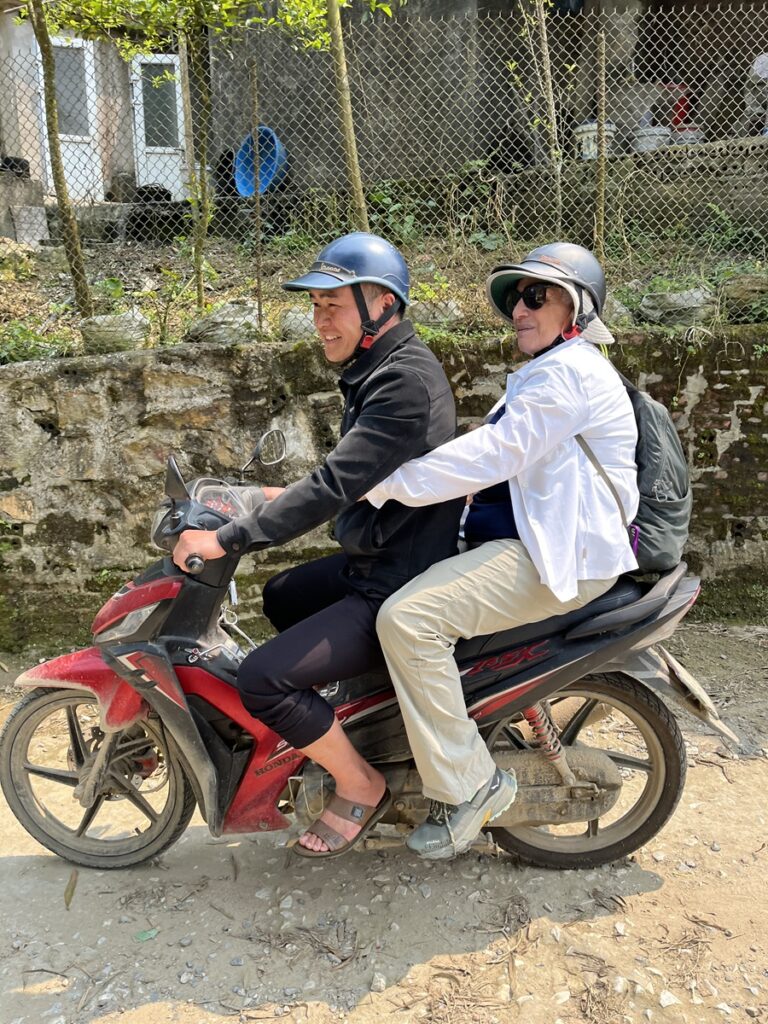
No worries our tour leader Rocky said. He arranged for a local from one of the villages to give me a ride on the back of his motorbike to our lunch stop. His wife, who was selling her handicrafts, waited with me and I learned a bit about her village life.
After lunch, I got another and even-more hair-raising ride through more mud and rocks than trail to our next stop, a unique women’s enterprise, the Muong Hoa Cooperative. The shop showcases and sells work produced by 100 women—batik, embroidered clothes, wall hangings, pillow covers and more. Because I and a friend who also opted for a ride got there so much earlier than the rest of our trekking group, we had a chance to learn all about the cooperative and the efforts to help local women do better than just following tourists, annoying many of them.
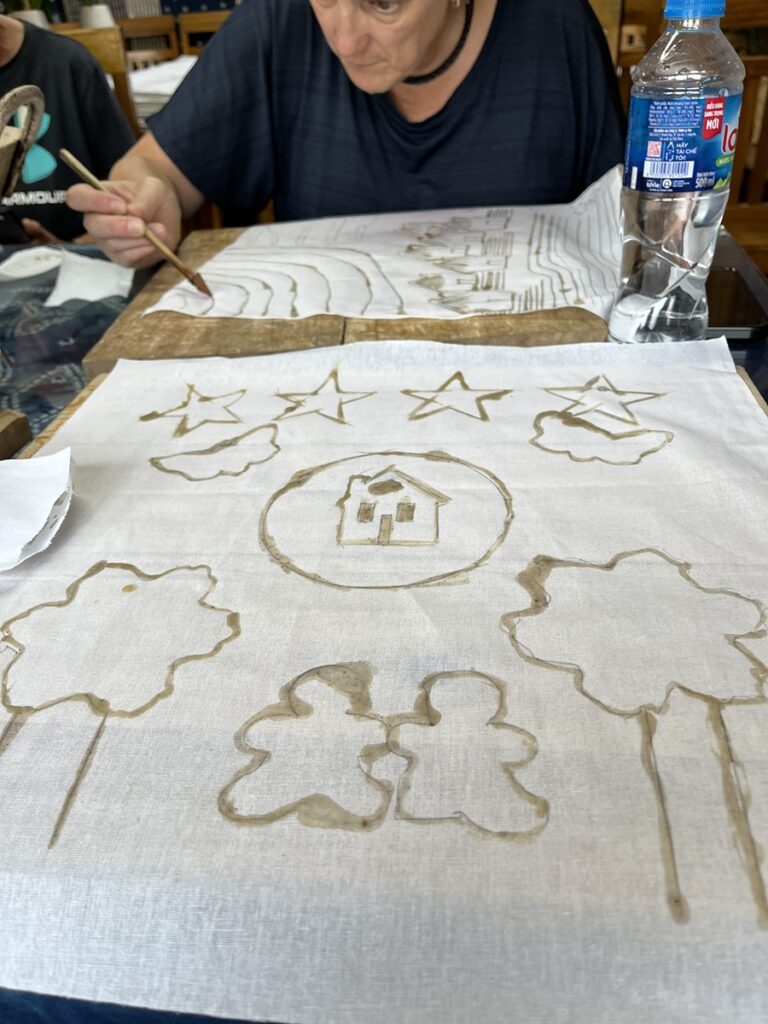
G Adventures is a Canadian company known for affordable adventures that give back to the local communities by hiring local guides and bringing guests to places like this cooperative. When the group arrives, we were given the chance to make a batik—a lot harder than it looks as it requires first a sketch on a square of linen cloth, then the application of hot beeswax with a special copper pen and repeated dunking in a vat of blue indigo. I kept thinking how my effort looked akin to that of a preschooler.
Certainly, we got an appreciation of how difficult it is to create these beautiful crafts and how important tourism is to these villages. Most of the men work in restaurants and bars catering to tourists or as local guides, explains Ma Thi Si, whose aunt started this cooperative some eight years ago. “We are lucky that we have tourists every season,” she said. “And we can improve our English talking to them.” English is key to getting a job in the tourism sector.
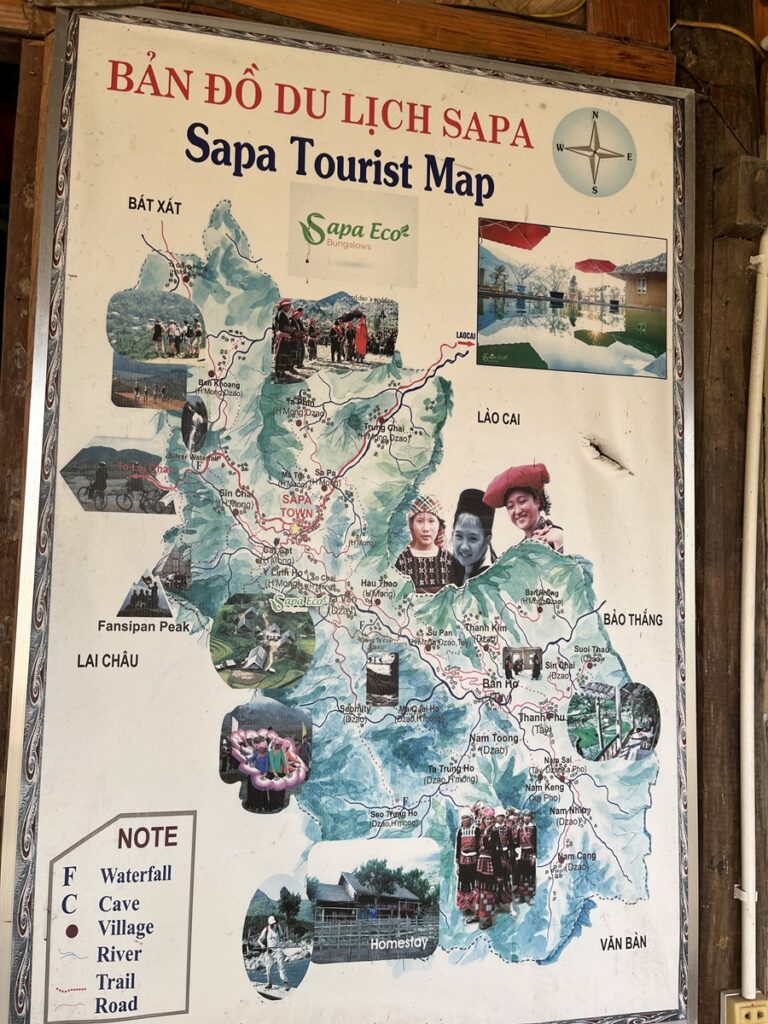
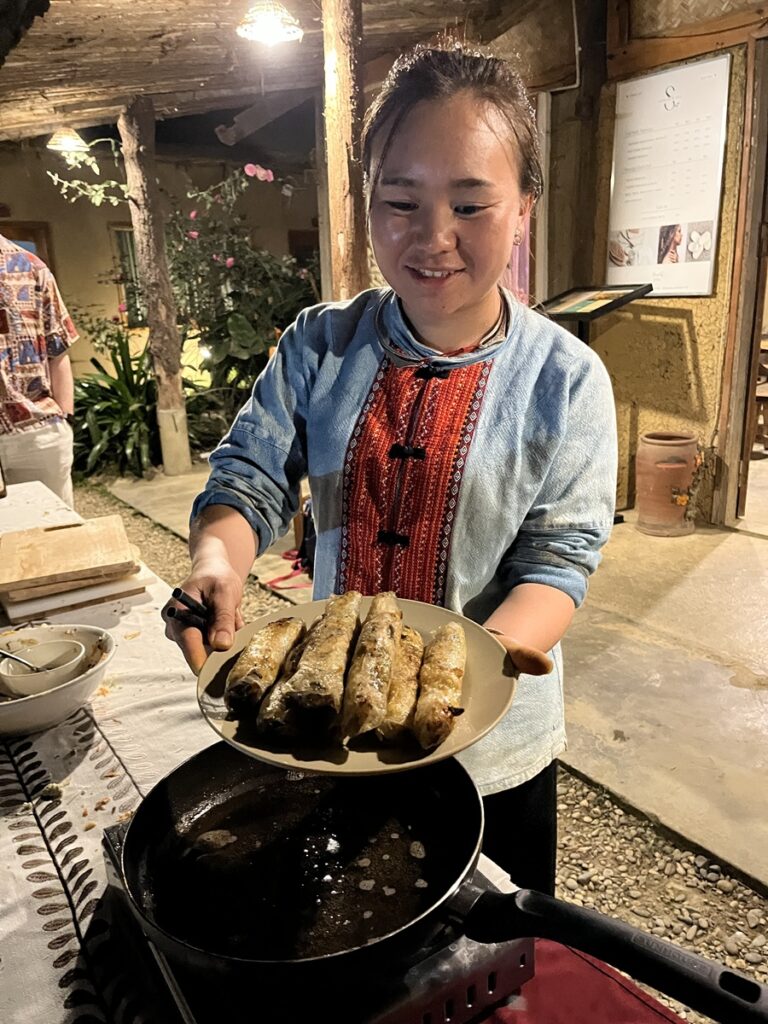
G Adventures attracts like-minded adventurers who are more interested in the experience than creature comforts. We were ensconced in a “Homestay” that is like a basic inn overlooking the rice fields (Sapa Eco Homestay). The beds are comfortable, the water is hot, and the food is great. The first night, we got a lesson in making papaya salad and spring rolls. But this isn’t luxurious by any means.
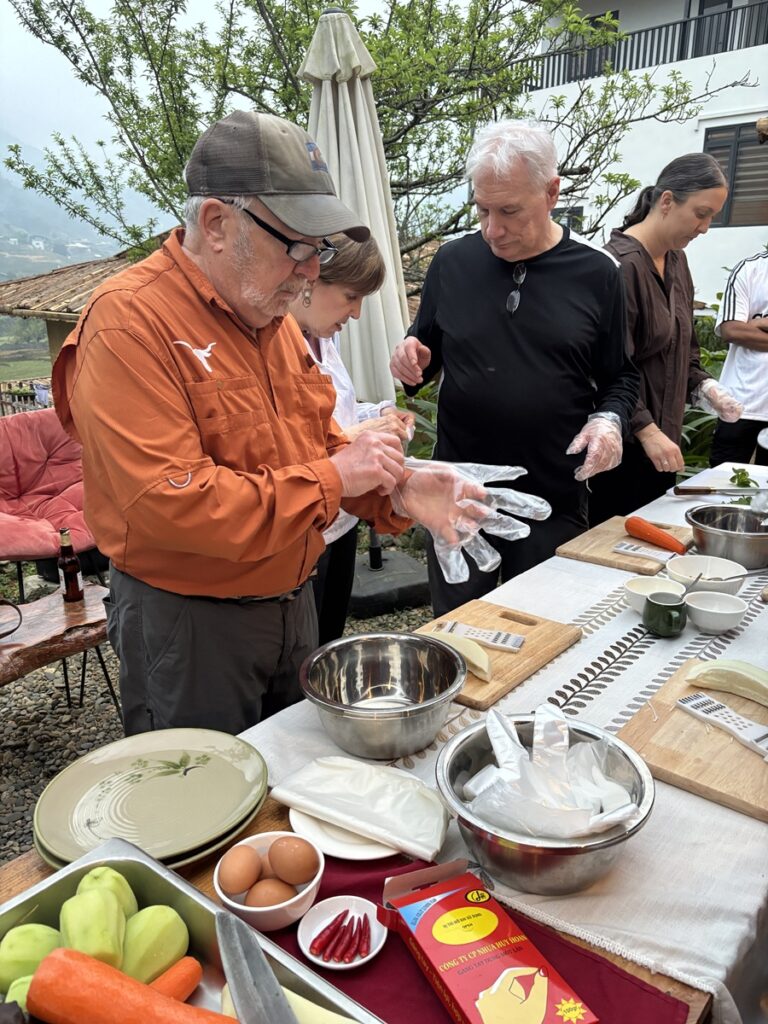
Our group ranges from 30-somethings to 70-somethings and come from around the world—Australia, New Zealand, the UK, and the US. Louis Haines and Molly Sutton are on their honeymoon, G Adventures recommended by her parents. There are also singles as well as couples. By the first night, the group melds well.
“We aren’t tour people,” said Mallory Englehart, here with her husband from Oakland, CA. “But we don’t speak the language, and we wanted to get the most out of being here.”
“So far, so great,” said her husband Eric.
“The places you go on a G adventure aren’t the place you will see people posting about on social media. I like that,” said Tarryn Thom, one of the Australians who has just completed a G Adventures trip in South Vietnam. “The people who choose this are like minded and understand the importance of responsible travel and working with the local communities.”
“This is the best holiday…we’re loving it,” agreed Marian Hammond, in her seventies and here with her longtime partner Robin Graham from New Zealand. Like others, the company was recommended by friends they trusted.
Having a guide makes all the difference, Robyn Graham added. “You can just ask the guide your questions…It’s great.”
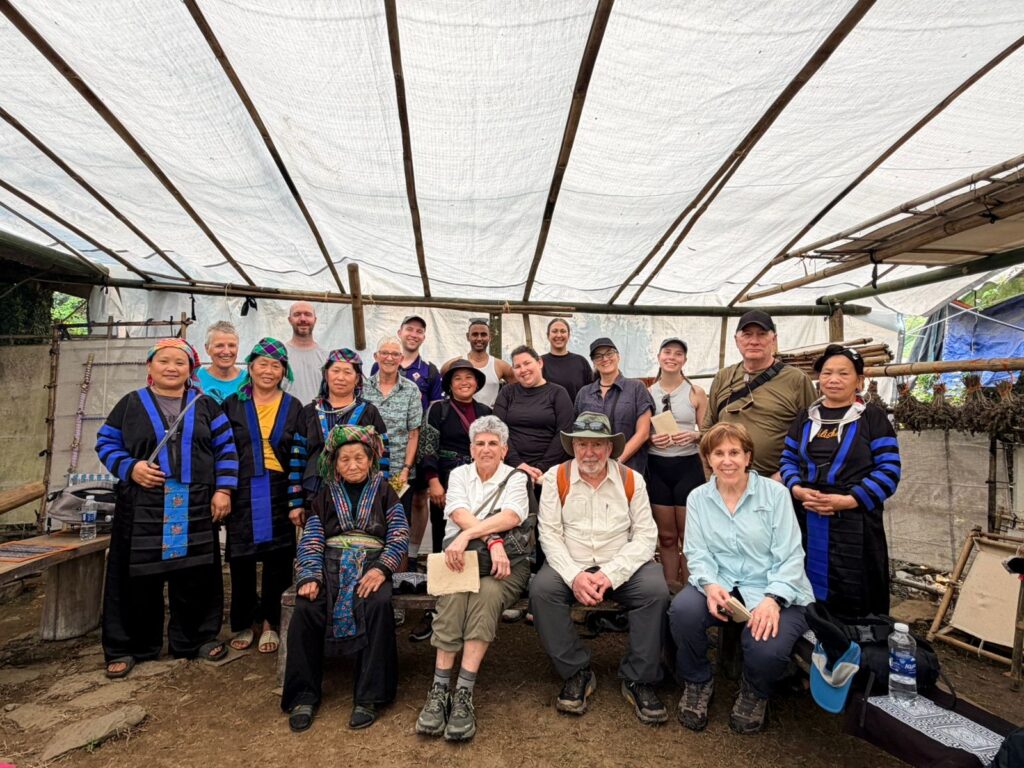
And your Chief Experience Officer, AKA tour leader, manages all the details, from collecting the tips for the local guides to in my case, arranging a lift (albeit one that was a hair-raising adventure) on the back of a motor bike, to giving us insight into what we are seeing and who we are meeting. “I love my job,” Rocky (Mai Van Thach) told us. “I get to meet new people and share what I know.”
Another day, another trek in an even more remote part of Sapa, about an hour drive from where we are staying, almost to the Chinese and Laotian borders.
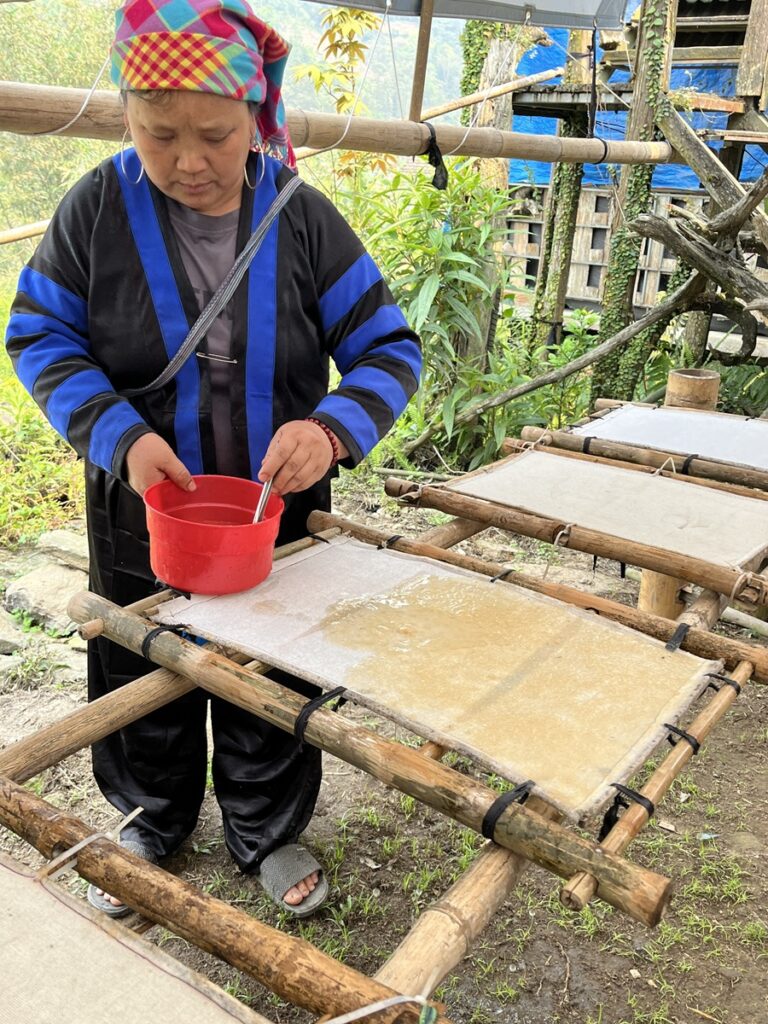
After lunch, several exceedingly friendly elderly white Hmong ladies teach us the traditional way to make paper from bamboo. Like making Batik, when we tried ourselves, we saw how difficult the craft is. Today, the paper is used in ceremonies like for the new year.
We are so impressed by our local guides — today Hau Thi Si who lives in one of these small villages and shows the group her house, newly built and impressive compared to many others in the area. Her dog warily greeted our group, apparently out of concern for intruders. We passed her husband and two teen-aged children returning from school on a motorbike, as well as stopped to greet her father-in-law and two young nephews who were tending a rice paddy.