
8 Utah Lakes So Clear And Quiet They Feel Like A Secret Worth Protecting
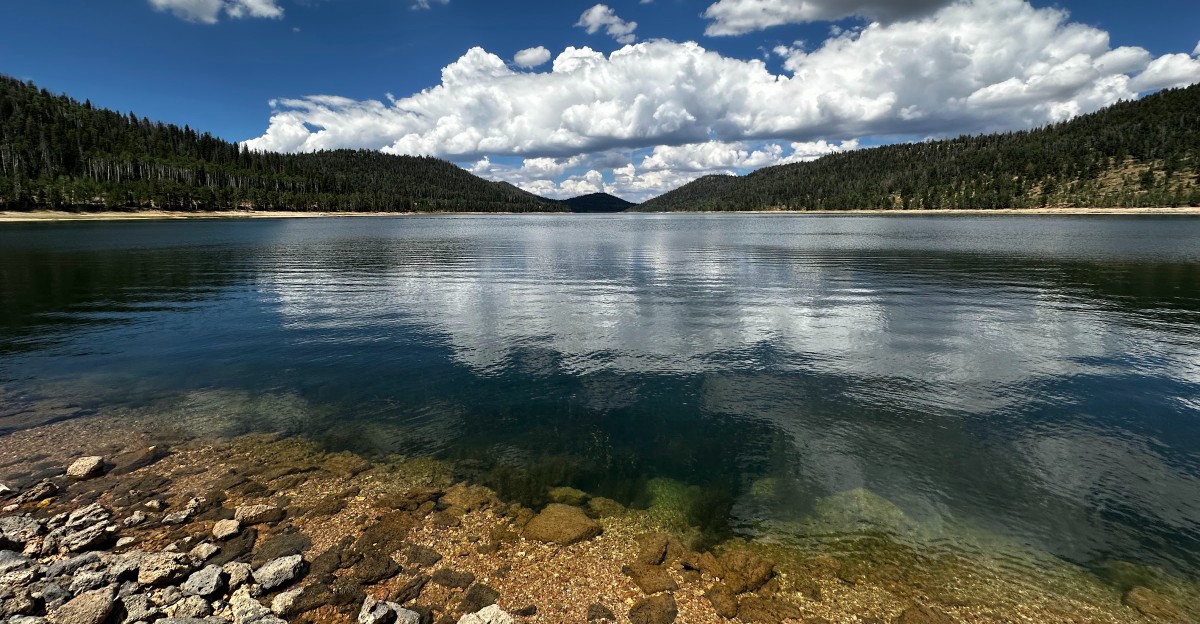
Some water is so clear you can count the pebbles from shore. Utah hides more of it than most people expect.
Snowmelt fills these lakes, and pine forests keep them cool. Have you ever heard a lake so quiet that a jumping fish sounds loud?
A few sit at the end of an easy boardwalk or a gentle trail. Others protect a city’s drinking water, so the shores stay wild and clean.
Where else can a short walk feel this far from everything? You might spot a moose in the marsh or salmon flashing red in autumn.
Wildflowers, sinkholes, and cliffs for jumping all show up too. Isn’t that the kind of summer day worth planning around?
These eight lakes in Utah deserve a gentle touch and a little respect.
Meta description
These clear, quiet lakes in Utah reward visitors with wildflowers, gentle trails, and calm water that feels like a secret. Plan a peaceful escape soon.
1. Cecret Lake
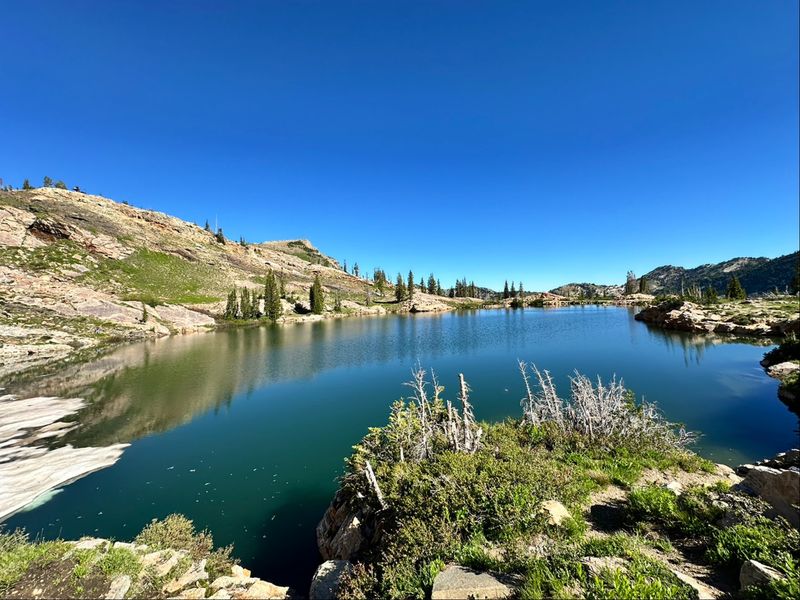
Cecret Lake carries its odd spelling like a badge of honor. An early miner’s misspelling stuck, and the name is pronounced Secret Lake.
Many Utahns call it the clearest lake in the state. It sits near Alta at about 9,875 feet, cradled by rocky cliffs with views toward Devil’s Castle.
The hike starts at the Albion Basin Campground trailhead and runs less than a mile. It’s a gentle climb, so it works for families and casual walkers.
Late July through early September brings the wildflowers. The meadows of Albion Basin fill with color, so give yourself extra time for photos.
Moose are known to wander the marshy areas near the trailhead. Hikers also spot deer, marmots, and birds along the way.
Here’s the rule to remember. Swimming isn’t allowed, because the lake is a source of Salt Lake City’s drinking water.
Dogs are not allowed in Little Cottonwood Canyon either. The canyon is protected watershed, so leave pets at home.
Why does the water look so clean? Those strict rules play a big part in keeping it that way.
The season is short too. The trail opens for about two months in summer, usually when Alta opens the gate.
Road access and parking carry a fee, so plan ahead. Arriving early also gives you a better shot at a calm shoreline.
Bring a snack and find a flat rock by the water. A quiet lunch with those cliffs reflected in the lake is hard to beat.
Address: Albion Basin Campground, Alta, UT 84092
2. Silver Lake
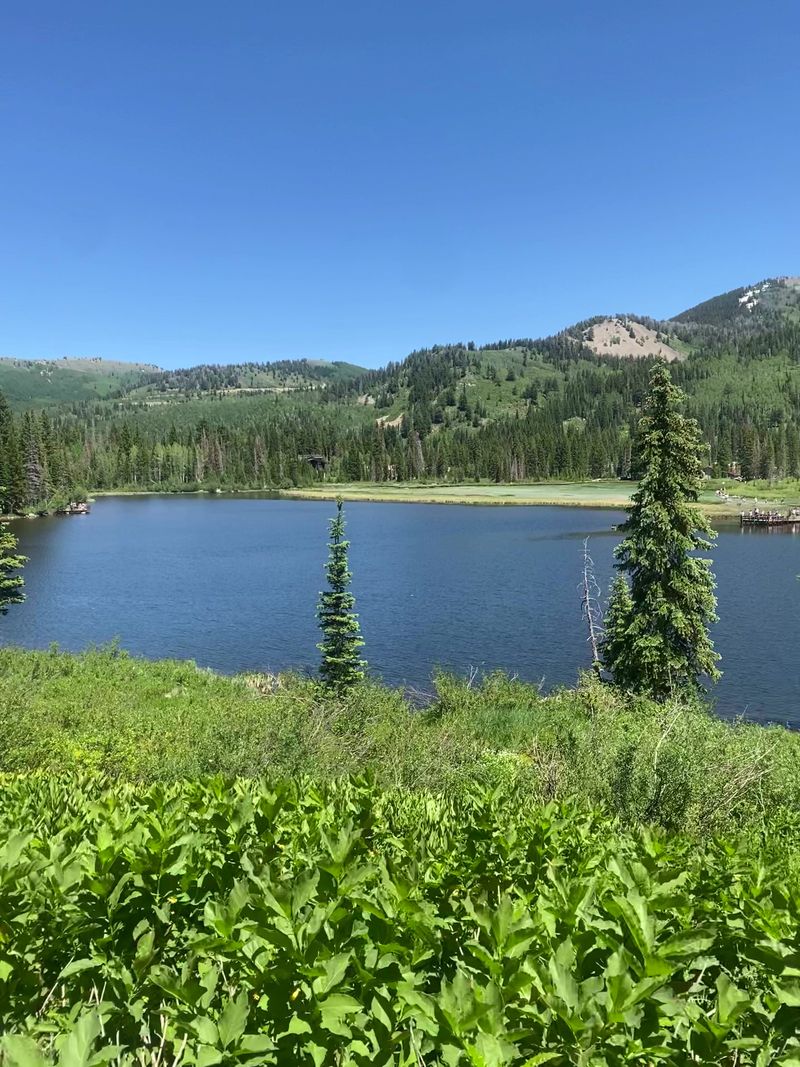
Not every quiet lake requires a long hike. Silver Lake sits at the top of Big Cottonwood Canyon in Brighton, about 14 miles up the canyon road.
A loop of roughly one mile circles the water. About half of it is boardwalk, and the rest is a firm dirt and gravel path.
The route is ADA accessible and nearly flat. Strollers and wheelchairs can handle most of it, which makes this a great pick for mixed groups.
The boardwalk protects the wetlands along the shore, so stay on it the whole way. Interpretive signs explain the watershed and the wildlife that lives here.
The lake sits at the base of Brighton’s ski slopes. Those same slopes look completely different once the snow melts and the meadows turn green.
Speaking of wildlife, keep watch for ducks, beavers, and moose. If a moose shows up, give it plenty of space and enjoy the view from a distance.
Fishing platforms line the loop, and picnic tables make a lunch stop easy. Wildflowers brighten the meadows in summer, and fall brings colorful leaves.
Like Cecret Lake, Silver Lake sits inside Salt Lake City’s watershed. Swimming isn’t allowed, and dogs can’t come along either.
The Silver Lake Visitor Center sits at the trailhead with restrooms and a drinking fountain. Parking fills quickly, so an early start is your friend.
Want a longer outing? Trails to Lake Solitude and Twin Lakes branch off from the same loop.
Looking for a short walk with big mountain views? This lake delivers both in about half an hour.
Address: Silver Lake, Brighton, UT 84121
3. Causey Reservoir
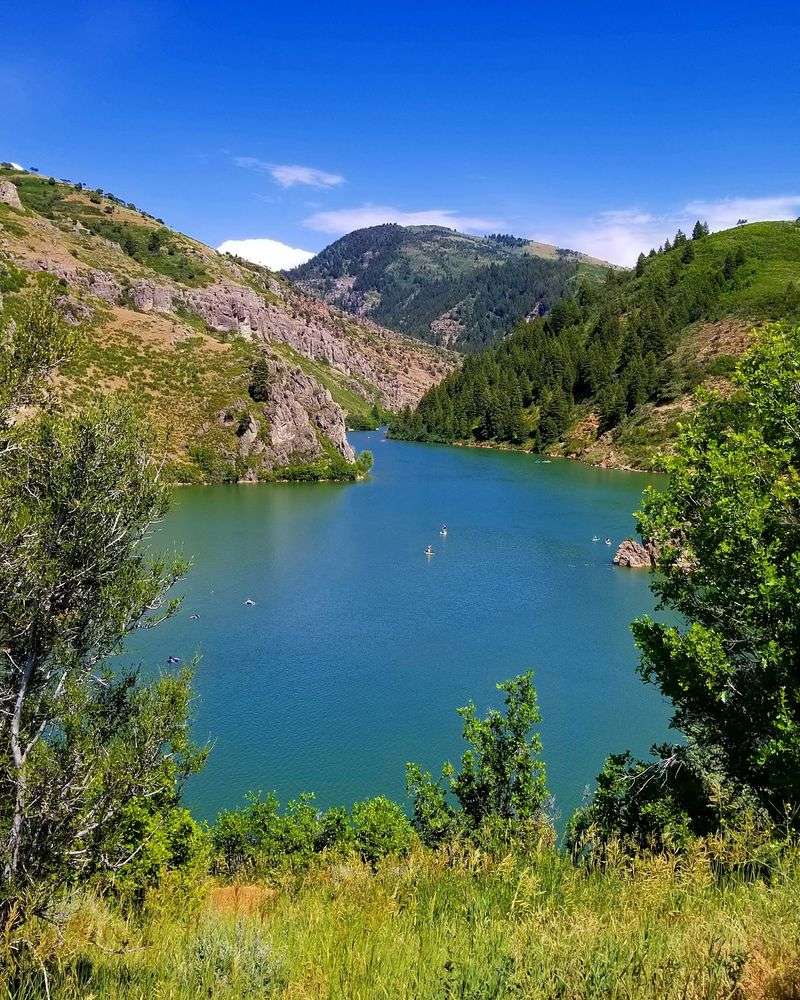
Ever wish a lake would simply turn the volume down? Causey does it with a strict no-motorboat rule, so the water stays free of wake.
That calm makes it a fine spot for kayaking, canoeing, paddleboarding, swimming, and fishing. Life jackets are required for everyone on the water.
The reservoir covers 142 acres at 5,700 feet in the Uinta-Wasatch-Cache National Forest. It sits about 15 miles northeast of Ogden, just off State Route 39.
Snowmelt feeds it, and the emerald-green water stays cool through summer. Three fingers branch off the main body.
The north arm shows red rock, while the south and east arms are known for cliff jumping. Know your limits and check the water depth before you leap.
Fish fans will like the trout and Kokanee salmon. In September, thousands of Kokanee run up the tributaries in their bright red spawning colors.
Dogs are welcome too, as long as they stay on a leash. Some visitors even try spear fishing here.
Check before you go, because construction runs from May 2026 through December 2027. Expect flaggers, one-lane stretches, and road or trailhead closures that shift as the work moves along.
Restrooms are available at the Skull Crack Trailhead on the south end, but construction closures can affect access, so check ahead. Forest Service and UDOT updates are the best places to look before you leave home.
Weekday mornings tend to be the calmest time to paddle. Cell service is spotty, so consider it a built-in break from your phone.
Address: Skull Crack Canyon Road, Huntsville, UT 84317
4. Fish Lake
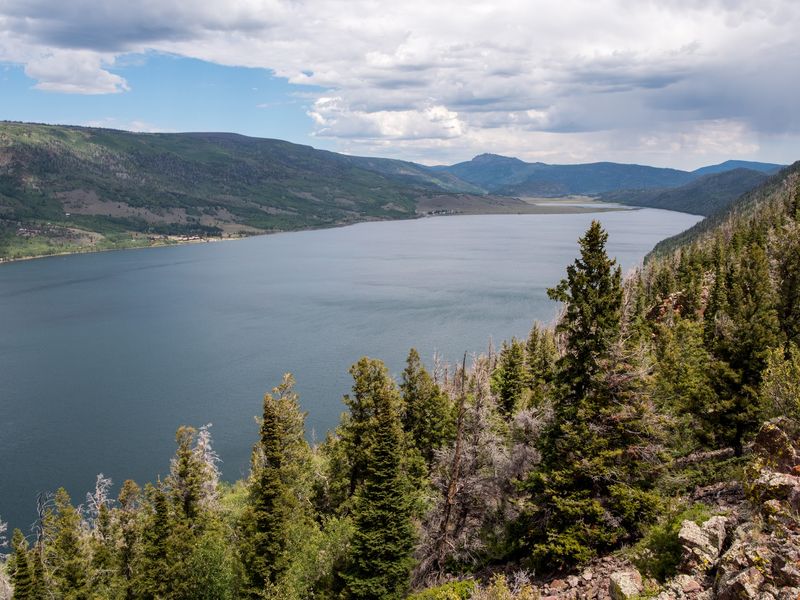
With a name like Fish Lake, the plot is not hard to guess. Anglers fish from boats and from shore, and the lake holds perch near the edge.
Deeper water brings Kokanee salmon, splake, and lake trout. That’s a lot of variety for one mountain lake in Utah.
This is also Utah’s largest natural mountain lake. It covers about 2,500 acres and sits at more than 8,800 feet in Fishlake National Forest.
The water is described as crystal clear and chilly. Mountains and trees surround it, which keeps the mood quiet and peaceful.
Staying overnight is easy. The area has campgrounds, picnic areas, and cabins, plus boat rentals if you didn’t bring your own.
Boondockers will find plenty of areas to park and camp as well. Hikers can stretch their legs on the Lakeshore Trail and other nearby paths.
Have you ever walked through a single living organism? Pando, a massive quaking aspen clone, grows about a mile southwest of the lake along Utah Route 25.
Its grove covers 106 acres, and every trunk shares one root system. A stroll through those aspens makes a perfect side trip.
Come in mid to late fall, and you can watch spawning salmon from the boardwalk at Twin Creeks. Just give the fish their space.
Bring a jacket, even in summer, since the water earns that chilly label. A slow morning here might start with coffee at the shore and end with a fishing line in the water.
It’s a simple plan, and it works.
Address: Fish Lake, Utah
5. Moon Lake
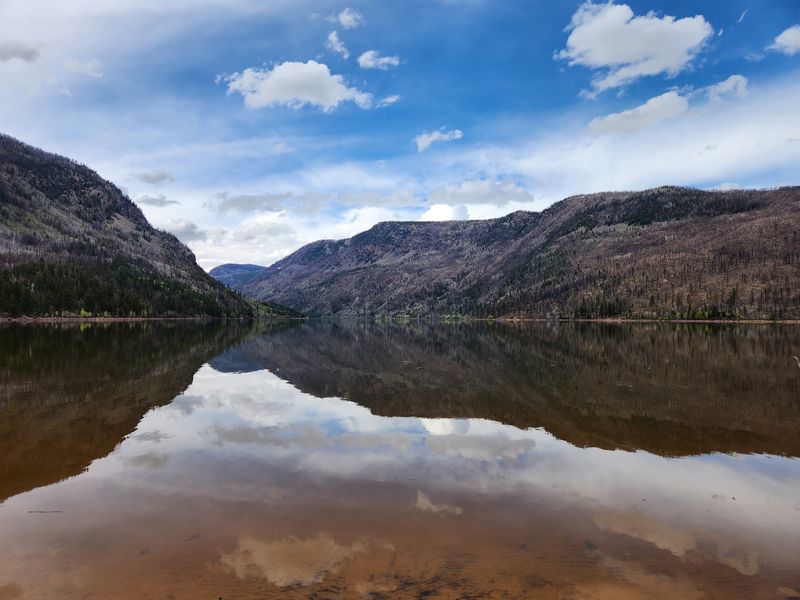
A lake named Moon Lake had better be calm, and this one lives up to the billing. Visitors describe the water as clean, clear, and tranquil, and the shoreline has soft sand.
You’ll find it in Ashley National Forest, on the south slope of the Uinta Mountains. The lake stretches about two miles and sits near 8,100 feet, with 13,000-foot peaks in the distance.
That puts you in big mountain country, with plenty of space to hear yourself think. Lodgepole pine, aspen, and Douglas fir add shade away from the water.
Camping is a big part of the story here. Most sites at Moon Lake Campground have lake views, and deer roam through the campground, so keep your eyes open when you step out of the tent.
Bring your own water, since the Forest Service can’t supply it at the campground for the 2026 season. ATVs aren’t allowed in the campground or the surrounding area, which helps keep things peaceful.
Moon Lake Resort sits next door, which is handy if you like having an option nearby. It rents small boats and sells groceries, bait, firewood, and fishing gear.
Anglers get their share of the fun too. Rainbow and cutthroat trout, Kokanee salmon, and splake all swim here.
Hikers can start the Lake Fork Trail or the Brown Duck Mountain Loop right from the area. Both lead into the High Uintas Wilderness, where backcountry lakes wait.
Would you rather ride? Flying J Outfitters offers horseback trips from the Lake Fork trailhead.
Pack a camp chair and settle in for a slow afternoon by the shore.
Address: Moon Lake, Utah
6. Tony Grove Lake
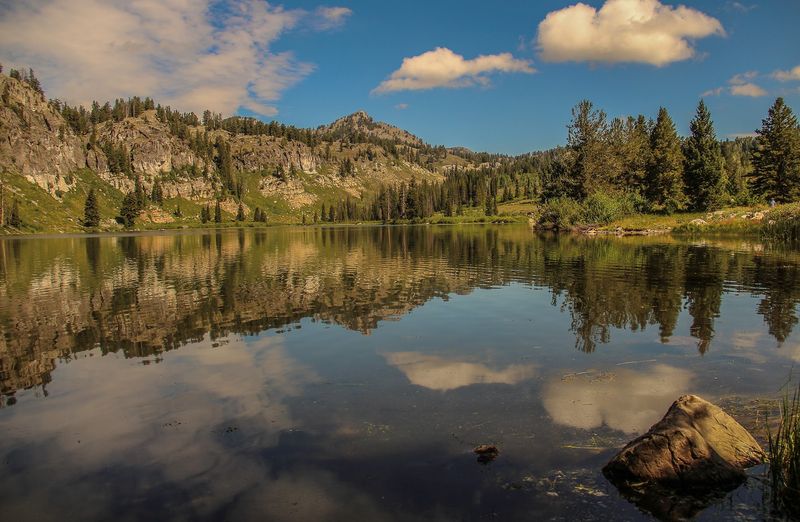
Pristine is the word that keeps showing up for Tony Grove Lake, and it fits. Pines fringe the shore, and seasonal wildflowers add color.
You’ll find it off the Logan Canyon National Scenic Byway, about 19 miles east of Logan. A paved road climbs roughly seven miles to the lake at about 8,050 feet.
Glaciers shaped the basin long ago, and an earthen dam built in the 1930s added to the lake’s size. Rocky cliffs rise above the far shore.
July and August bring the big wildflower show. Look for geraniums, paintbrush, columbines, and lupines in the meadows north of the trailhead.
A self-guided nature trail loops around the lake for about 1.2 miles. Interpretive signs along the way cover the area’s history, plants, and wildlife.
Hiking trails branch out from the parking area too. The popular White Pine Lake Trail heads into the Mount Naomi Wilderness, and another route climbs toward Naomi Peak.
On the water, kayaking and paddleboarding are popular, and fishing is a draw as well. The lake feels quiet and peaceful, especially early in the day.
Tony Grove Campground sits on the hillside above the lake, shaded by spruce, white pine, and aspen. Picnic tables and bathrooms make a lunch stop simple.
A day use fee applies per vehicle, so have a pass or payment ready. Summer weekends get busy, so a weekday visit feels calmer.
Isn’t it nice when a short drive leads to big views? Bring a camera for the wildflowers.
Utah has bigger lakes, but few feel this tidy and calm.
Address: Tony Grove Lake, Utah 84333
7. Panguitch Lake
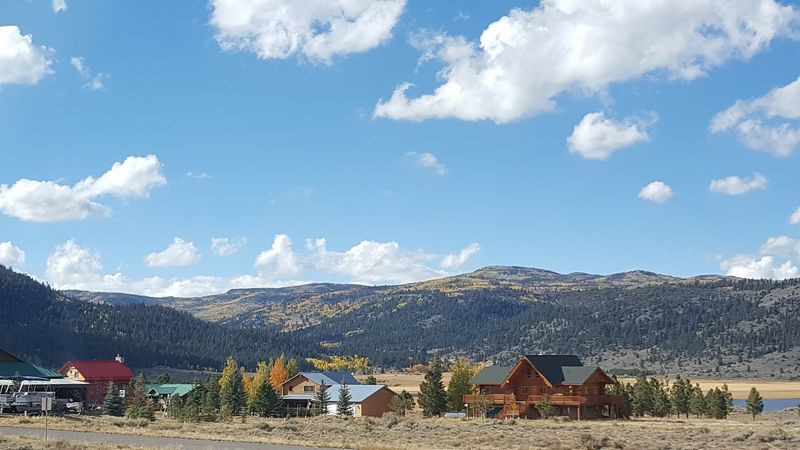
Size matters when you want room to roam, and Panguitch Lake covers about 1,248 acres. It’s a recreational reservoir backed by mountains and forests in Garfield County.
The name comes from a Paiute word meaning big fish. Native people fished here long before the first dam went in.
That dam, and later work on it, grew the lake from its original 777 acres. Today the shoreline stretches about 10 miles through Dixie National Forest.
The lake sits around 8,200 feet, so summer days stay cooler than the valleys below. Bring layers for the evenings.
The water is described as clean, and the setting is peaceful. Boating is popular, and fishing earns plenty of praise.
Winter has its own plan here, since ice fishing is part of the lake’s appeal. That makes it more than a summer stop.
Three campgrounds sit close to the lake, and they are well kept, with one described as pristine. If tents aren’t your thing, cabins are available to rent.
Boat rentals are also on hand, so you can get on the water without hauling your own. Nearby trails welcome hikers and mountain bikers.
Are national parks on your list too? The lake sits close to three of them, plus Cedar Breaks National Monument.
Think of it as a lake with options. You can fish at dawn, nap in the afternoon, and still get back to a cabin before dark.
That’s a good day in Utah.
Address: Panguitch Lake, Utah 84759
8. Navajo Lake
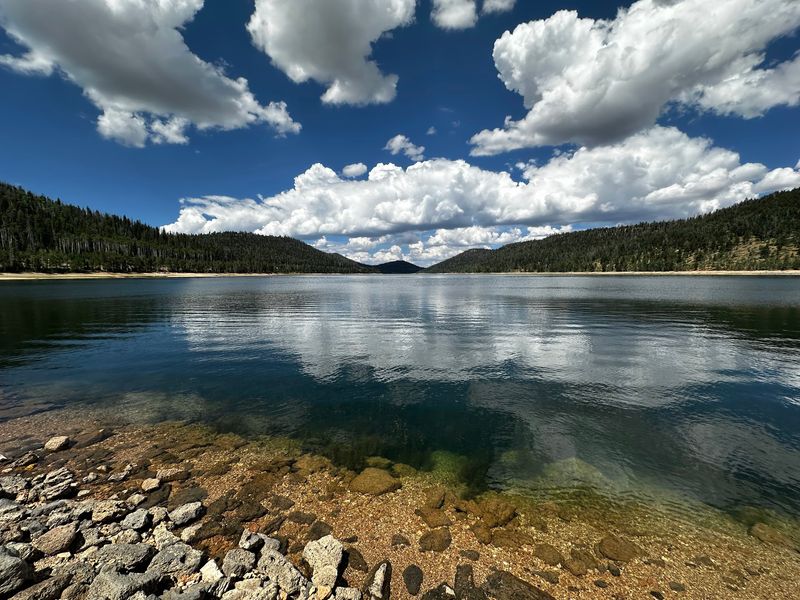
Navajo Lake has a trick hidden under its surface. Water drains out through sinkholes into a lava tube about two miles long, then spills from a cliff as Cascade Falls.
The lake formed when an ancient lava flow blocked the east side of the valley. Without a dike built in the 1930s, much of the water would slip away into that sinkhole.
That dike now splits the lake and keeps the water level steady. It’s also a favorite spot for anglers who want to cast into deeper water from shore.
You’ll find it in Dixie National Forest on the Markagunt Plateau, at roughly 9,000 feet. Even in late spring, the air can feel cold up here.
The Paiute people called it Cloud Lake. Stand on the shore on a misty morning, and you’ll understand why.
Visitors describe the water as clean and the mood as far less crowded than bigger lakes in the region. You can drive right up to the shore and pick your spot.
Canoeing, kayaking, and fishing are all popular. Navajo Lake Lodge rents boats and cabins near the boat ramp on the south shore.
Three national forest campgrounds sit in the lake basin. Navajo Lake Campground offers tent and RV sites, and the Virgin River Rim Trail starts nearby.
Want a short hike with a big payoff? The Cascade Falls trail runs less than a mile to the spot where lake water bursts from the rock and drops about 100 feet.
Fall turns the aspens gold, which makes autumn a lovely time to visit.
Address: Navajo Lake, Utah 84762