
Washington’s Massive Farm Destination For Homemade Ice Cream And Incredible Mountain Scenery
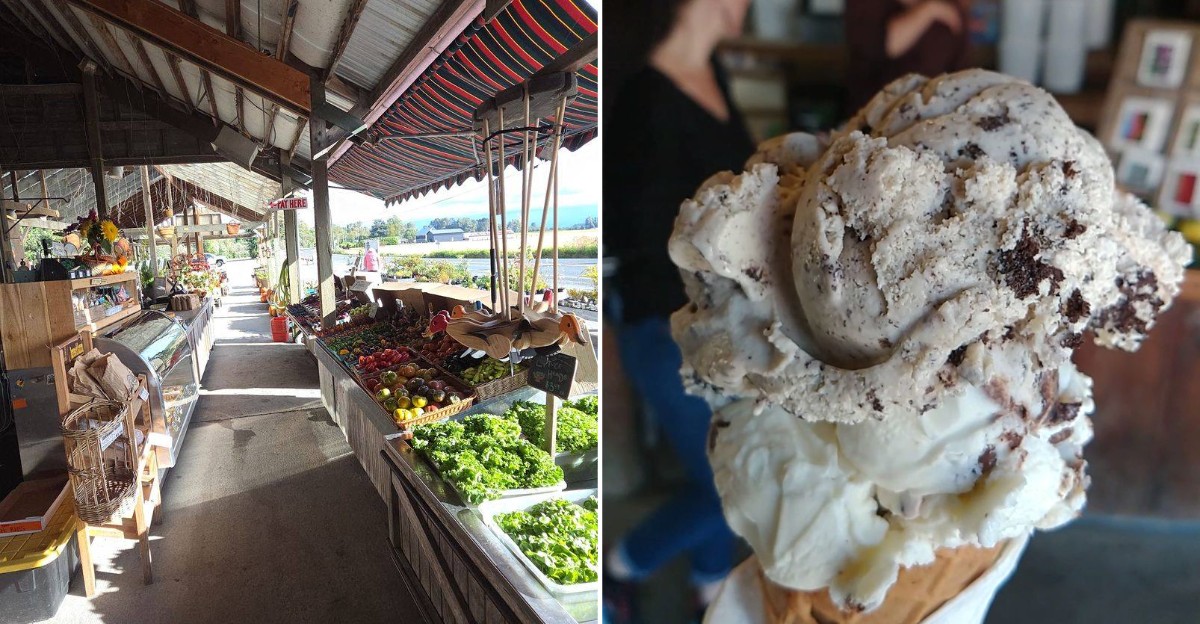
There’s a wide variety of flavors here, more than enough to satisfy even the pickiest of taste buds. This Washington farm brings homemade ice cream together with incredible mountain scenery in one destination.
Regulars order the same flavor every visit, trusting the recipe to taste exactly like it did the last time. Nothing about the process has changed since the farm first started making it.
Portions stay generous, never treated as an afterthought next to the setting itself. Mountain views stretch out beyond the farm, adding scenery most ice cream stops simply can’t offer.
Visitors often linger longer than planned, taking in the view before finishing their cone. This farm proved that sometimes the best dessert comes with an unforgettable backdrop.
A Hearty Welcome To Fir Island
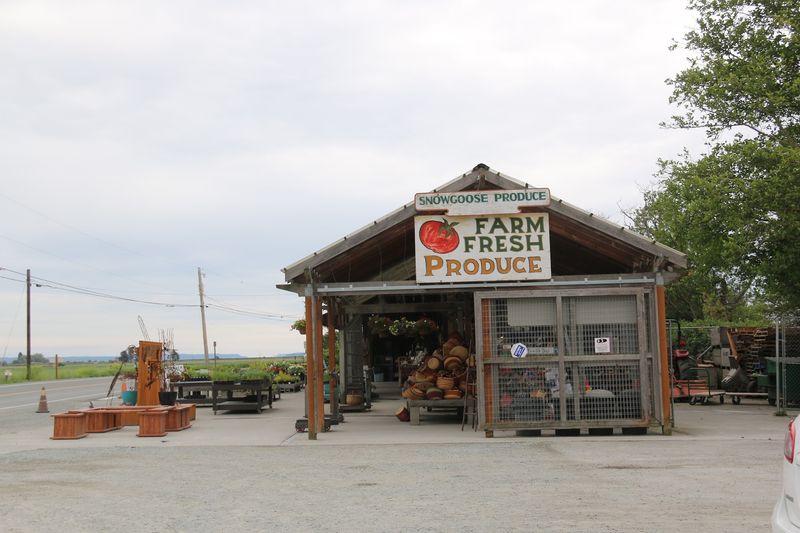
Fir Island sits between two arms of the Skagit River, which means the drive out here is all farmland, sky, and the occasional tractor holding up traffic. The market appears almost out of nowhere, a low open-air building surrounded by fields.
Parking fills fast on weekends, especially in spring. That is the first clue that something good is happening inside.
Run as a seasonal, family operation, the market typically opens in March and closes up for winter in early October. Those months line up perfectly with tulip season, berry season, and peak Skagit Valley produce.
The setup is refreshingly simple. There are no fancy dining rooms or hostess stands, just tables of vegetables, coolers of seafood, shelves of local goods, and a very busy ice cream counter at one end.
People treat it as a stop rather than a destination meal, though plenty of visitors linger far longer than planned. It works equally well as a grocery run, a snack break, or a scenic detour on the way to La Conner.
Hours run daily starting at 8:30 in the morning, with slightly later closing times on weekends. Bring a cooler if you plan to buy seafood, because the drive home will be tempting.
You can find it at 15170 Fir Island Rd, Mount Vernon, WA 98273.
The Story Of A Family Dream
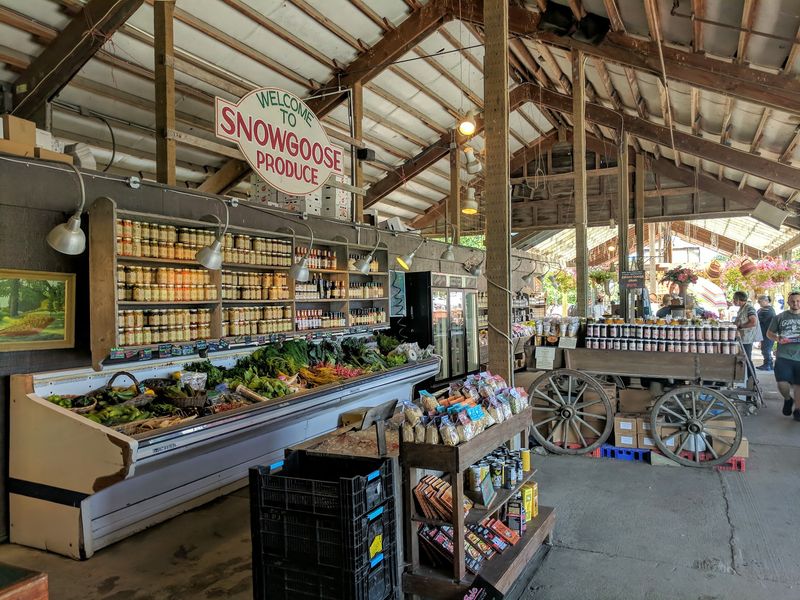
Back in the spring of 1984, Mike and Mary-Louise Rust turned a barn on Fir Island into a small market built around organic and sustainable food. That idea was fairly unusual at the time, especially in a farming community where most produce went straight to wholesale buyers.
They wanted a place where neighbors could buy ingredients grown a few miles away. The concept caught on quickly.
Four decades later, the market is still in the family. Their youngest son, Vico, and his wife, Erika, now run the operation and keep the original mission intact.
What started as a modest produce stand grew into a full country market with seafood counters, a bakery selection, plants, and the ice cream operation that eventually stole the spotlight.
The growth happened gradually rather than through some big renovation. Bits and pieces were added over the years, which explains why the layout feels charmingly patched together rather than designed by a committee.
Longtime Skagit residents have watched generations of families pass through the same doors. Kids who came for cones in the eighties now bring their own children.
Fun fact worth knowing: the name comes straight from the birds that blanket the surrounding fields every winter, not from anything sold inside the building.
Legendary Ice Cream Indulgences
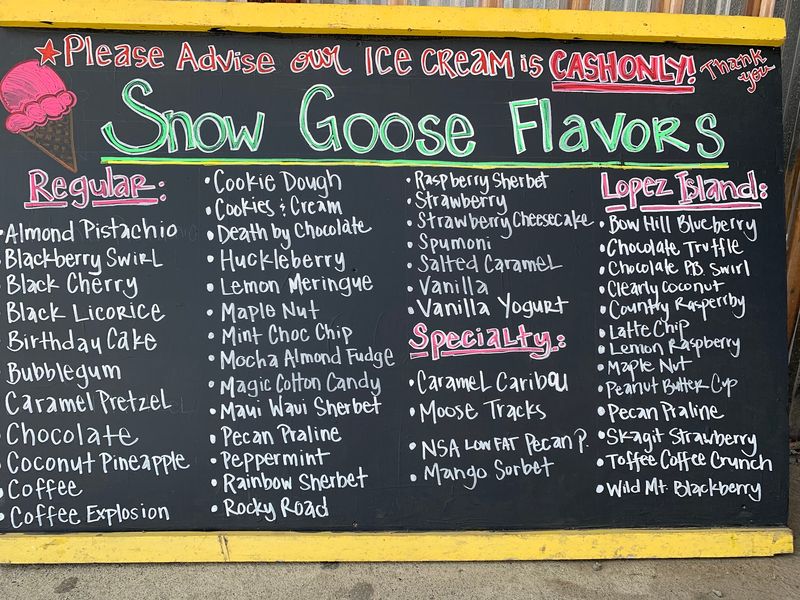
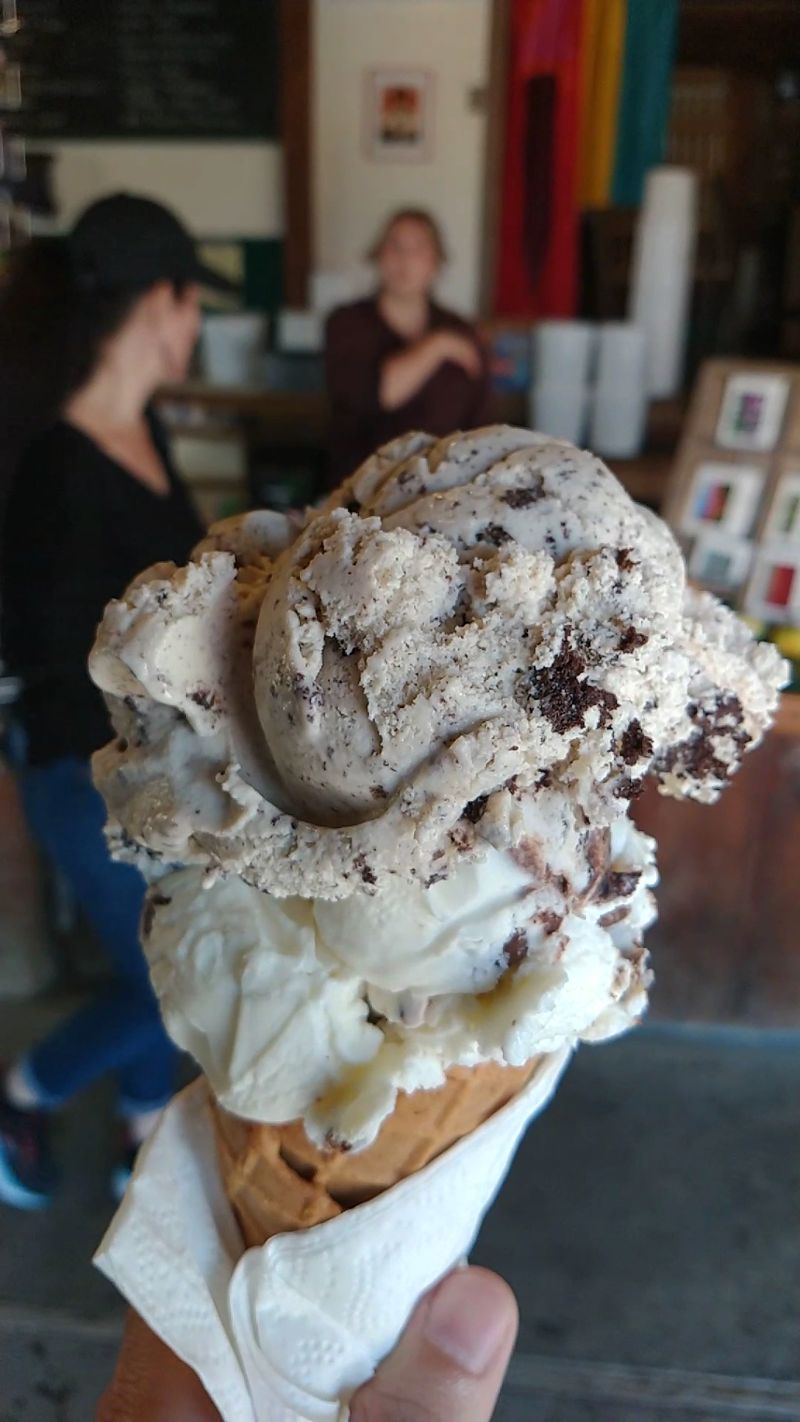
The ice cream here carries an official nickname: immodest cones. That is not marketing exaggeration; it is a warning label.
A single scoop often lands closer to what most shops would call a double, sometimes a triple. First-timers frequently underestimate the situation and end up eating fast to keep up with gravity.
Roughly 48 to 50 flavors rotate through the counter daily, sourced from creameries including Lopez Island Creamery and Cascade Glacier. Choices lean local, with options like Bow Hill Blueberry and Skagit Strawberry sitting alongside Caramel Pretzel and other unexpected picks.
Dairy-free eaters get real options too, usually around half a dozen flavors, which is more than most places bother offering.
Waffle cones are made on site throughout the day. The smell alone does most of the advertising, drifting out toward the parking lot and quietly ruining anyone’s plan to just grab vegetables and leave.
Lines are part of the experience, particularly on sunny weekends and during tulip season. Waits can stretch long enough that seasoned visitors shop for produce first, then get in line.
Ordering a split lets you try two flavors, though the portion still lands firmly in the enormous category. Sharing is a completely respectable strategy here, and nobody will judge you for it.
A Haven For Migratory Wonders
Every October, something remarkable starts happening in the fields around the market. Tens of thousands of snow geese arrive from Wrangel Island in the Russian Arctic and settle into the Skagit River delta for the winter.
They stay through roughly April, feeding on leftover crop fields and grasslands.
From the road, a flock at rest looks like snow that fell in one oddly shaped patch. Then something spooks them, and the entire field lifts into the air at once with a roar of wings.
Photographers park along Fir Island roads for hours waiting for exactly that moment. Trumpeter swans and various raptors often join the winter lineup, making the area a serious birding destination.
Because the market closes for the season in early October and reopens in March, the overlap between geese and ice cream is smaller than you might expect. Late fall and early spring offer the best odds of catching both.
Geese have been spotted in the field directly across the street, which makes for an unusually good view from the parking area.
If birds are the main goal, nearby Fir Island Farm Reserve has a viewing area and short trail. Bring binoculars and something warm, because delta wind in January does not mess around.
Views Of Majestic Peaks
Flat farmland has one big advantage: nothing blocks the view. On clear days around Fir Island, Mount Baker rises above the fields like a giant white cone someone dropped on the horizon.
The contrast between green delta farmland and a 10,781-foot volcano never really stops being impressive.
Cascade foothills stretch along the eastern side of the valley, and the Olympics sometimes show up to the southwest when haze cooperates. Skagit weather being what it is, a fully clear day feels like winning a small prize.
Morning light tends to be the most reliable, before afternoon clouds roll in off the water. Spring and early fall usually deliver the crispest visibility.
Standing outside the market with a cone while looking at a snow-capped volcano is a very Washington experience. It is the kind of scene that makes visitors from flatter states start scrolling real estate listings.
Picnic tables outside give you a spot to sit and take it in without fighting for a view.
Anyone continuing east can chase the mountain further along the Mount Baker Highway. Heading west instead leads toward La Conner and the water, which is its own reward on a bright afternoon.
From Farm Fields To Your Table
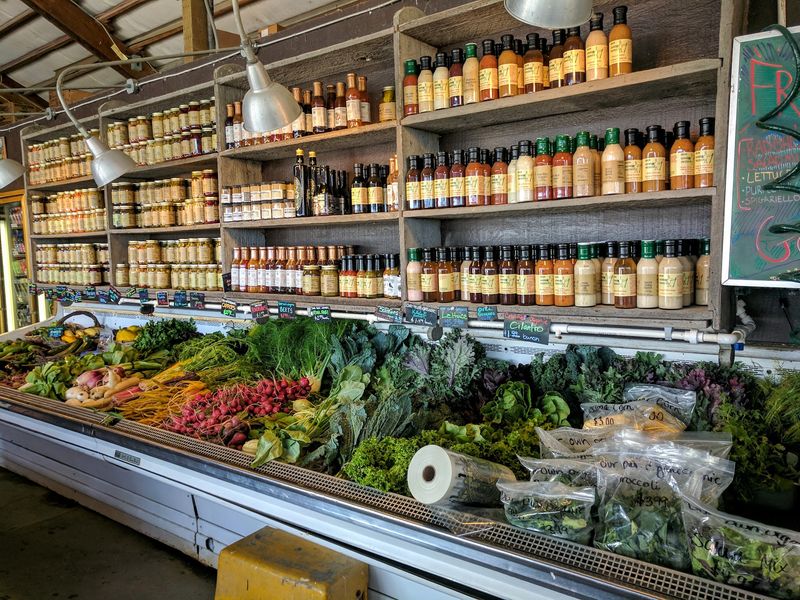
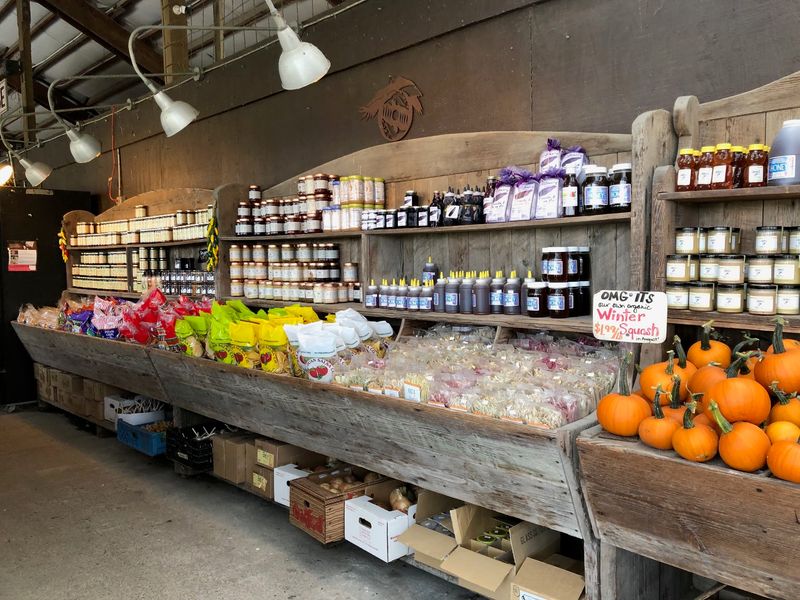
Ice cream may get the attention, but the produce tables are the reason the place exists. Organically grown vegetables and local fruit fill the displays, changing constantly as Skagit crops come in.
Strawberries in June, corn and peaches in late summer, squash and apples as things cool down.
Seafood is a genuine highlight and surprises a lot of first-time visitors. Coolers hold Dungeness crab, wild sockeye salmon, oysters, and smoked salmon, some fresh and some already cooked and ready to eat.
Staff have been known to assemble a full picnic spread for people heading toward the water.
Shelves inside carry artisanal cheeses, homemade jams, sauces, popcorn, cookies, and freshly baked bread. The jam selection alone can eat up ten minutes of decision-making, with flavors like plum butter and apricot butter drawing repeat customers.
Plants and garden starts sit outside during the growing season, along with flowers and local art pieces. Yard art, planter boxes, and pottery show up too, which makes gift shopping unexpectedly easy.
Bringing a cooler is smart if seafood is on your list. Cash has historically been useful here, though card payment is now accepted at the ice cream counter as well.
An Inviting Atmosphere
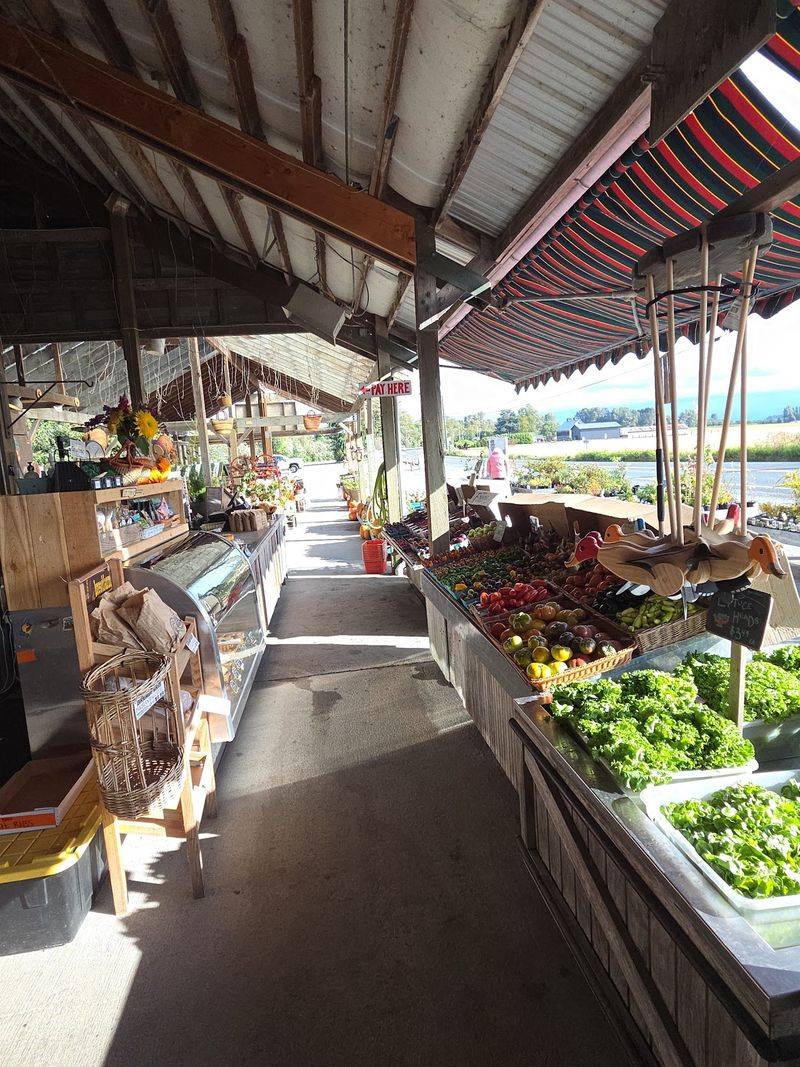
Look up, and there is a fishing boat hanging overhead. Woven baskets, nets, and assorted nautical odds and ends fill the rafters, giving the whole building the feel of a barn that got carried away decorating itself.
Nothing about it looks planned, which is exactly the charm.
The space is open-air, so breezes move through freely, and the temperature outside is basically the temperature inside. On warm afternoons that feels great, and on chilly March mornings a jacket earns its keep.
Picnic tables sit outside, giving families a place to park themselves while cones melt at alarming speed.
Crowds build fast on sunny days. Lines snake past the produce tables, and people chat while they wait, comparing flavor choices and debating whether a double scoop is realistic.
Staff move quickly and stay friendly even when the counter is slammed.
A flower path winds along part of the property, worth a short walk while someone else holds your place in line. Kids tend to gravitate toward the plants and yard art.
Everything about the setup encourages hanging around a little longer than planned. Plenty of folks arrive for a five-minute stop and leave an hour later carrying bags.
A Destination For All Seasons
April turns this corner of Washington into a color explosion. The Skagit Valley Tulip Festival brings enormous crowds, and the market becomes a natural stop for anyone driving between bloom fields.
Fresh flowers, tulip souvenirs, and garden starts fill the space during those weeks.
Summer shifts the focus to berries, stone fruit, and corn, plus peak ice cream demand. Warm evenings and long daylight make it the busiest stretch of the year for the cone counter.
Early fall brings apples, squash, and the last weeks before the market closes for winter.
Because the season typically runs March through early October, timing matters. Showing up in January means an empty parking lot and a lot of geese, which honestly is not the worst outcome.
Repeat visitors treat each trip as a slightly different experience. What is stacked on the tables in May looks nothing like what appears in September.
Weekday mornings offer the shortest lines by a wide margin. Weekend afternoons during tulip season are the opposite end of that scale, so patience helps.
Pairing a stop here with La Conner, the tulip fields, or a birding drive makes for an easy full day. The valley rewards people who take the slow road.