
Why Everyone’s Talking About This Utah Desert Town For A Quiet Getaway

Moab sits tucked into the red rock desert of eastern Utah, a small town that has somehow become the subject of quiet conversation among travelers seeking refuge from noise and haste.
People are drawn here not only for the famous arches and canyons but for something harder to name, a sense of stillness that survives even as visitors arrive.
The landscape feels vast and unhurried, and the town itself moves at a rhythm that invites you to slow down and breathe.
A Red-Rock Oasis Where Solitude Still Exists Beyond the Crowds
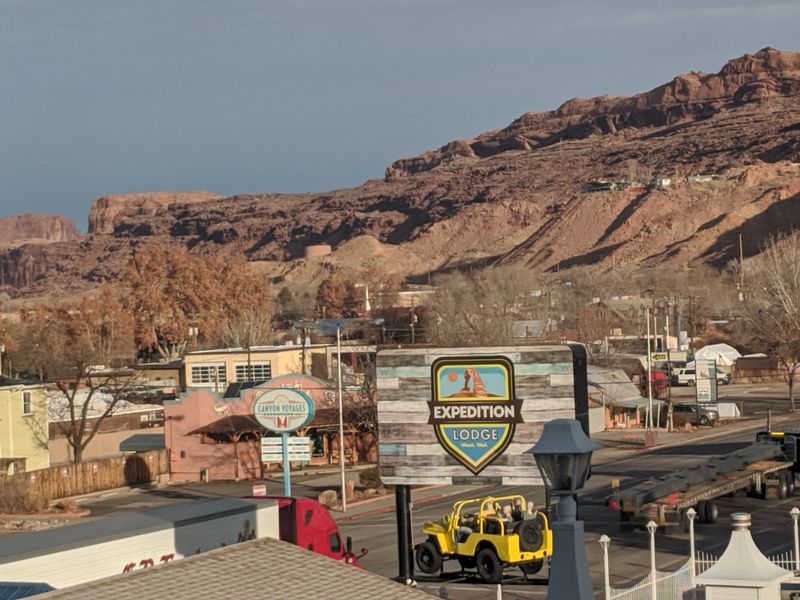
Moab occupies a peculiar position in the American travel landscape, famous enough to draw thousands yet spacious enough to absorb them without losing its character.
Beyond the main corridors, the desert opens into silence. Trails branch off into less-traveled territory where footprints are rare and the only sound comes from wind moving through juniper.
The town itself remains modest, its downtown compact and unpretentious.
You can walk its length in minutes and still find corners that feel untouched by the rush elsewhere, offering a balance between access and isolation that few destinations manage to maintain.
Sunrise at Arches National Park Reveals a Quieter, Softer Moab
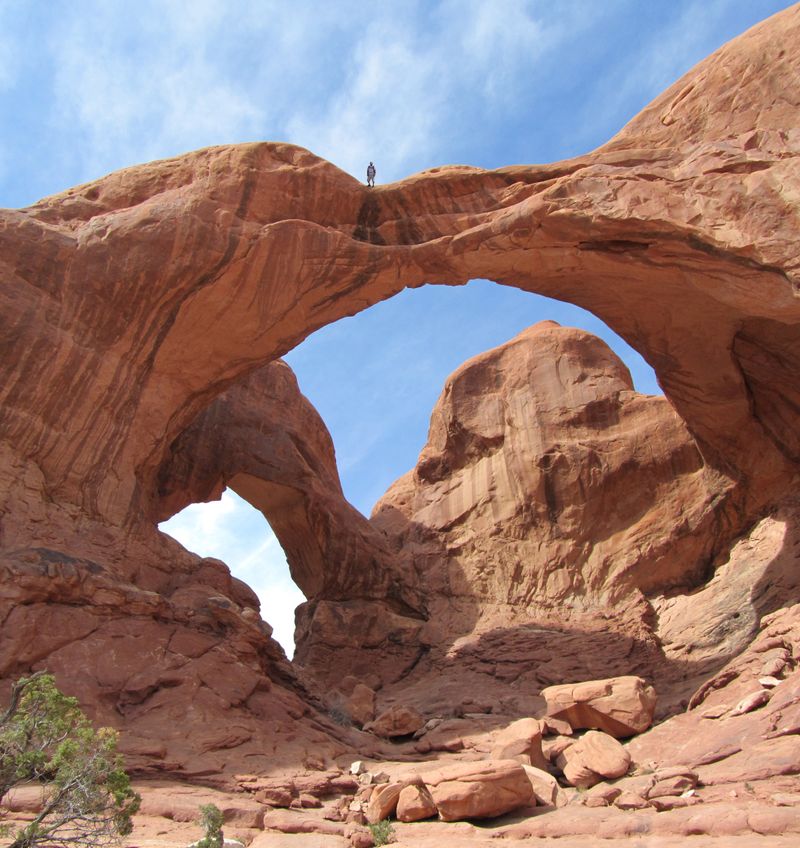
Arriving at Arches before dawn means entering a different park entirely, one where silence holds and the light moves slowly across stone.
The famous formations stand in shadow at first, then gradually warm as the sun climbs, their colors shifting from gray to gold to deep orange.
Few people are present at this hour, and the experience feels intimate rather than performative.
The park entrance lies just minutes north of Moab along Highway 191, making early access straightforward.
By mid-morning the crowds return, but those first hours belong to anyone willing to rise early and meet the desert on its own terms.
Hidden Canyons Provide Miles of Secluded Hiking Away From Popular Spots
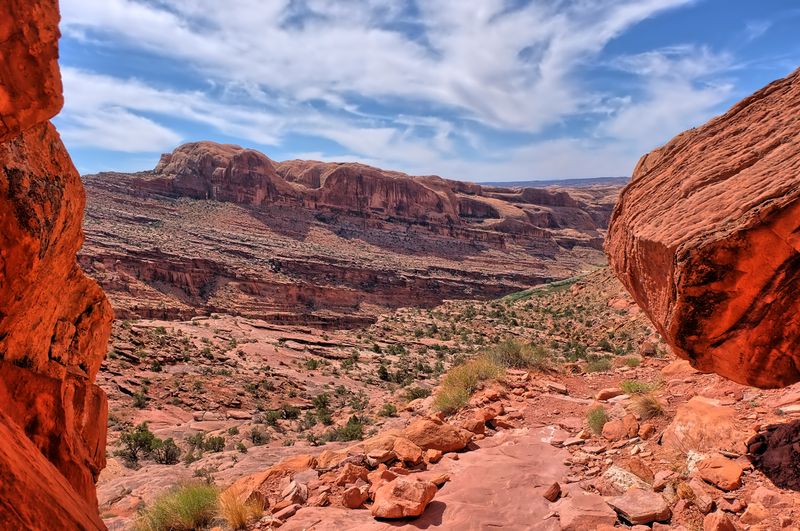
While the marquee trails draw attention, Moab’s backcountry holds dozens of slot canyons and washes that see only occasional visitors.
These routes require more navigation and a willingness to explore without signage, but they reward patience with genuine solitude.
The rock narrows around you, walls rising high and close, and the world shrinks to a ribbon of sky overhead.
Local outfitters can suggest lesser-known routes, and topographic maps reveal options that guidebooks often overlook.
The terrain demands respect and preparation, but for those seeking quiet, these hidden drainages offer exactly what the crowded viewpoints cannot.
Scenic Byways Offer Calm, Scenic Drives Through Towering Red Rock
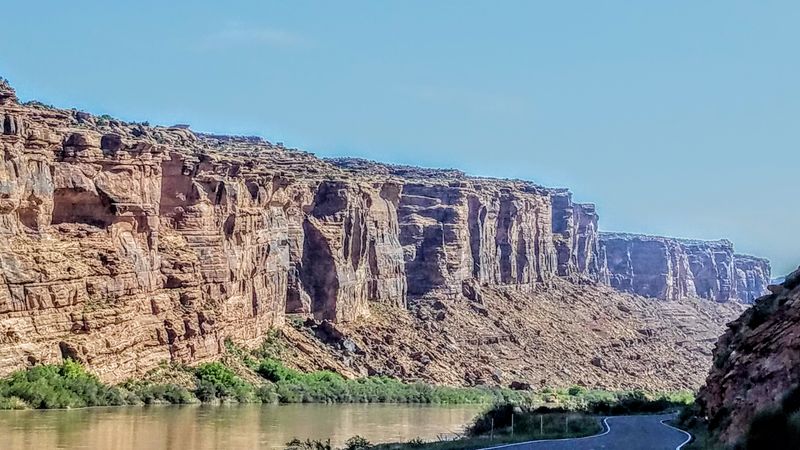
Highway 128 follows the Colorado River northeast from Moab, winding beneath massive cliffs that rise abruptly from the water’s edge.
The drive is unhurried, the road narrow and curving, with pullouts every few miles where you can stop and simply watch the river move.
Traffic thins quickly once you leave town, and the landscape unfolds without interruption.
Another route, the Potash Road heading southwest, passes through rock formations and old mining sites before reaching the edge of Canyonlands.
Both roads offer contemplative driving, the kind where you feel no need to rush and every bend presents something worth noticing.
The Colorado River Becomes a Peaceful Escape at Dawn or Dusk
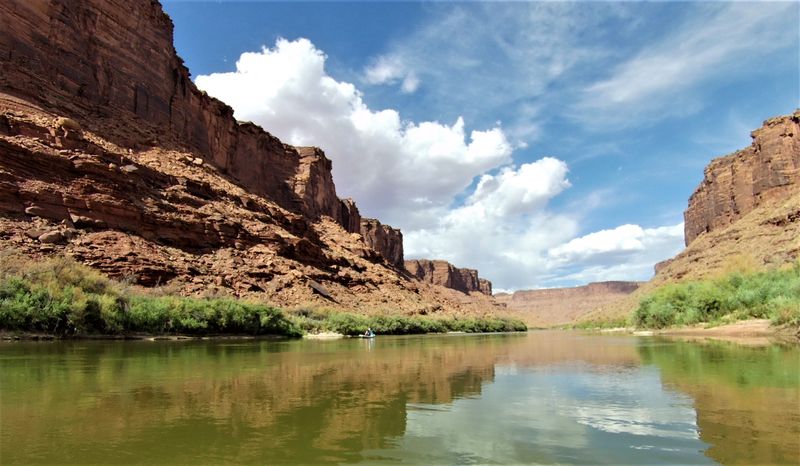
The river runs through Moab with a steady, unhurried current, its surface reflecting the cliffs that flank it on both sides.
Early morning and late evening transform the water into something almost meditative, the light soft and the air cool.
Kayakers and paddleboarders drift quietly downstream, and even those watching from shore feel the pull of the river’s calm rhythm.
Several access points along Highway 128 allow easy entry, and guided float trips often depart before sunrise to catch the best light.
The experience is less about adventure than about presence, about moving slowly through a landscape that demands nothing but attention.
Moab’s Dark Skies Turn Nighttime Into a Quiet, Star-Filled Retreat
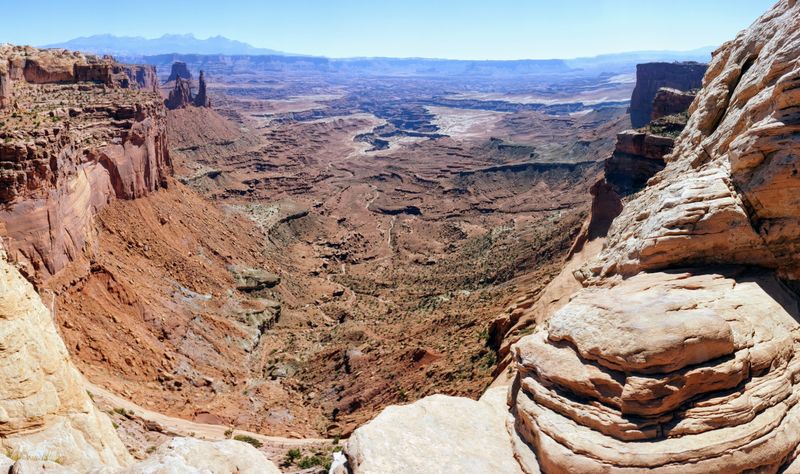
Once the sun sets, Moab’s desert surroundings reveal another dimension entirely.
The lack of significant light pollution means the Milky Way stretches visibly overhead, dense and luminous, and constellations appear with a clarity that urban dwellers rarely encounter.
The silence of the desert at night amplifies the experience, making stargazing feel both humbling and restorative.
Several campsites and overlooks outside town offer unobstructed views, and local astronomy groups occasionally host viewing events.
The night sky here is not a backdrop but a presence, vast and close, reminding you how small and quiet the world can feel.
Local Cafes and Desert Lodges Cultivate a Slow-Paced Community Feel
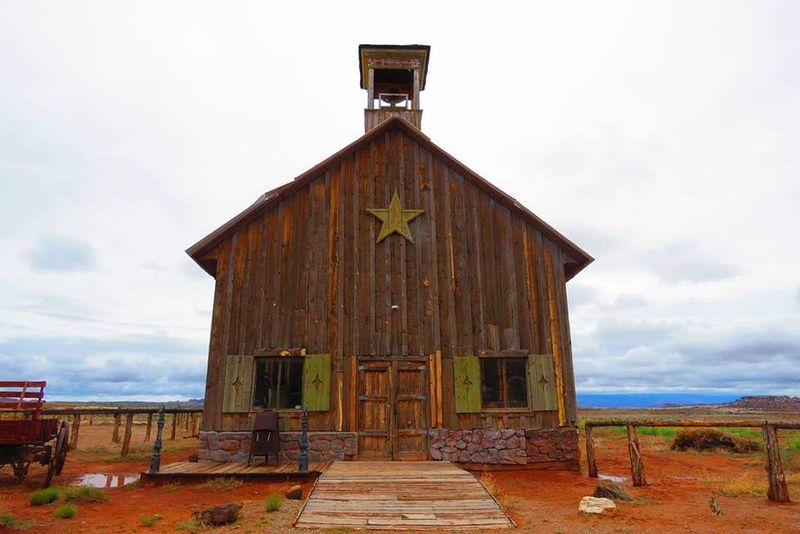
Moab’s downtown holds a handful of cafes where locals gather in the mornings, the pace unhurried and the conversation familiar.
These are not tourist traps but genuine gathering places, where the coffee is strong and the atmosphere unpretentious.
The lodges scattered outside town tend toward simplicity, favoring location and quiet over luxury, and many are run by people who have lived here for decades.
Staying in one of these smaller properties means encountering Moab as a community rather than a destination, a place where people live year-round and understand the rhythms of the desert in ways that guidebooks cannot convey.
Nearby Canyonlands Offers Vast Silence and Spectacular Overlooks
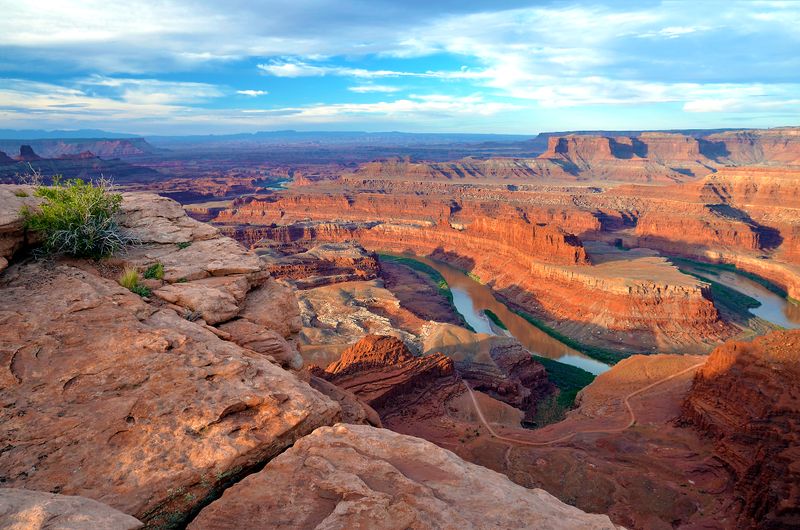
Canyonlands National Park lies southwest of Moab, a sprawling expanse of mesas and canyons carved by the Green and Colorado rivers over millennia.
The scale is difficult to grasp from photographs; standing at overlooks like Grand View Point or Green River Overlook, you confront distances that seem to stretch beyond comprehension.
The silence here is profound, broken only by occasional gusts of wind.
The park receives far fewer visitors than Arches, and its size means solitude is easier to find.
The Island in the Sky district is closest to Moab, accessible via Highway 313, and offers some of the most dramatic vistas in the Southwest.
Off-Season Travel Reveals the Peaceful Desert Town Locals Know and Love
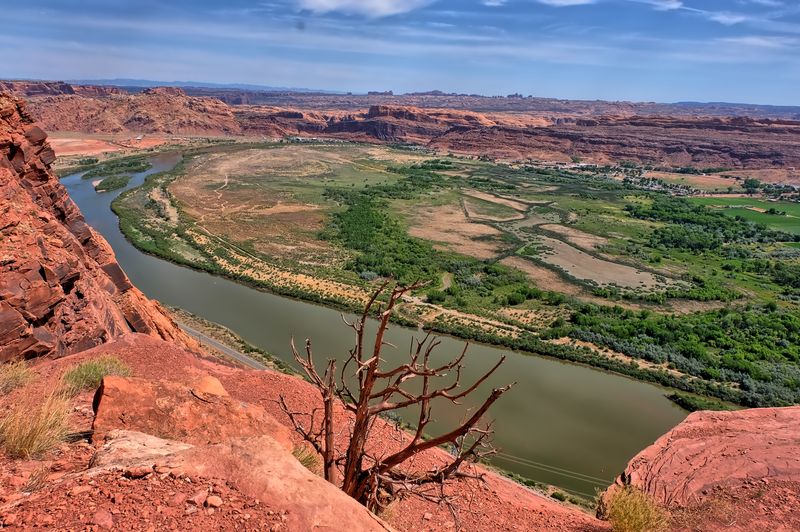
Visiting Moab in late fall or early spring means encountering a town at its most authentic.
The crowds thin considerably, restaurants and shops operate on local schedules, and the desert takes on a different character—cooler, quieter, more forgiving.
The light changes too, softer and less harsh, casting long shadows that emphasize the contours of the landscape.
Temperatures during these months are comfortable for hiking, and lodging rates drop noticeably.
The town feels less like a tourist hub and more like a small community surrounded by wilderness, a place where the desert’s natural rhythms reassert themselves and visitors are welcomed rather than simply processed.
Native American Rock Art Offers a Glimpse Into Ancient Desert Life
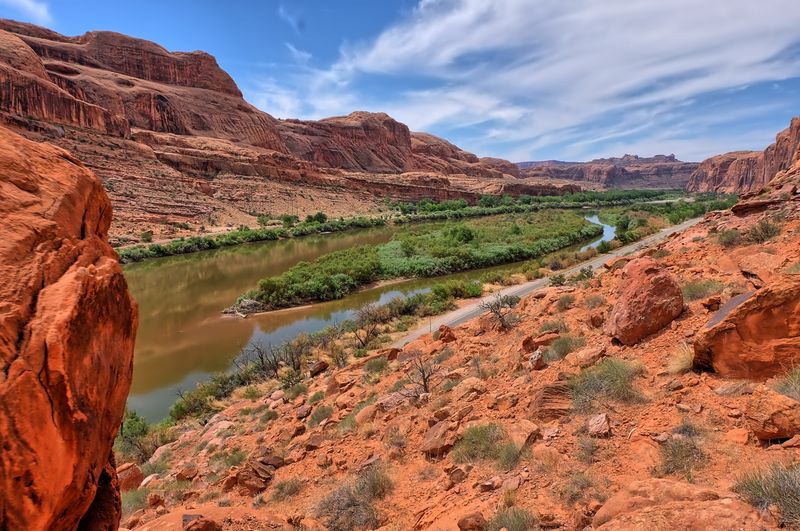
Scattered throughout the canyons around Moab are petroglyphs and pictographs left by ancestral Puebloan and Fremont cultures, some dating back more than a thousand years.
These images—figures, animals, geometric patterns—appear on cliff faces and alcove walls, often in locations that require effort to reach.
Standing before them, you sense the continuity of human presence in this landscape, a reminder that people have sought meaning and shelter here for centuries.
Sites like the Courthouse Wash panel near Arches and the Potash Road petroglyphs are accessible and well-preserved.
Visiting them requires quiet attention and respect, qualities the desert naturally encourages.
The Museum of Moab Preserves Regional History and Natural Wonders
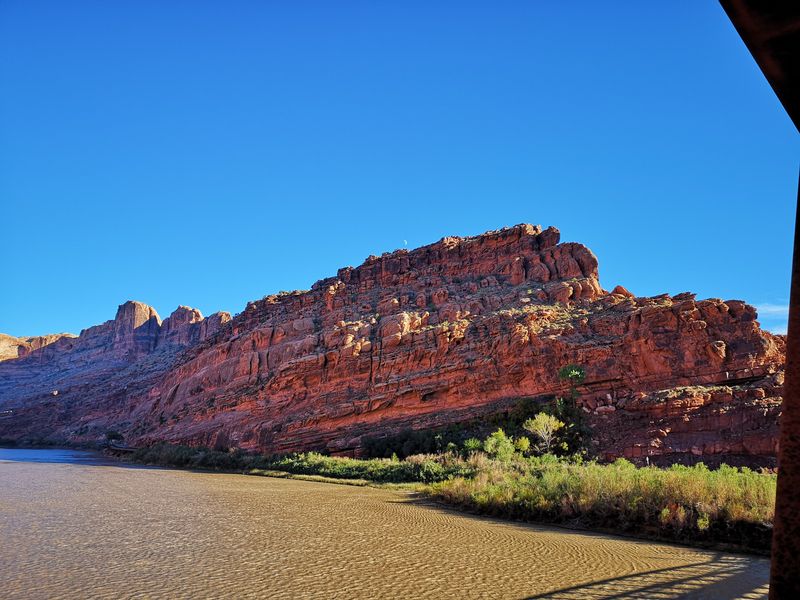
Located at 118 East Center Street in downtown Moab, this small museum houses collections that span geology, paleontology, and human history.
Displays include dinosaur fossils unearthed from nearby formations, artifacts from indigenous cultures, and exhibits on the uranium mining boom that shaped the town’s modern economy.
The presentation is straightforward and informative, without unnecessary embellishment.
The museum operates on a modest scale, but its curation reflects genuine care for the region’s layered past.
It provides context that enriches time spent in the surrounding landscape, connecting what you see outside with the forces and lives that shaped it over deep time.