
Why This Alabama Beach Remains Hidden From The Tourist Crowds And Even Some Locals
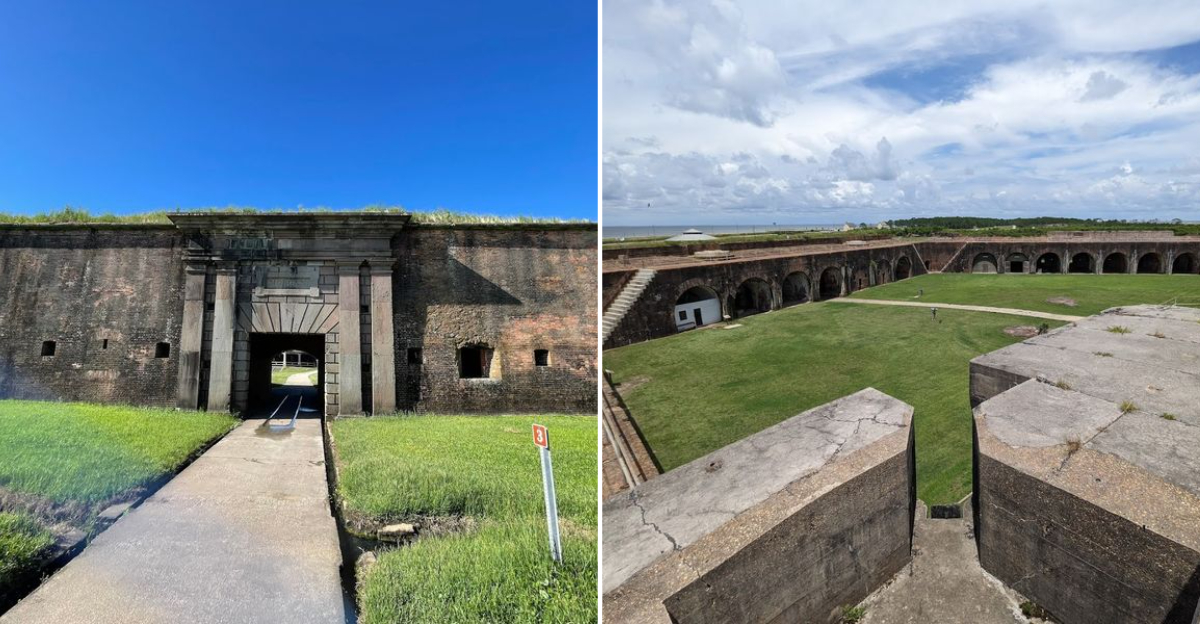
Alabama has a coastline shorter than most people realize. That makes the beaches worth finding feel even more valuable once you get there.
This one has stayed off the main circuit long enough to preserve what popular beaches stopped offering years ago. No vendors, no chairs stacked ten rows deep, and no noise competing with the water.
Getting here requires more intention than pulling into the nearest public access point. That extra effort is exactly what keeps it looking the way it does.
Alabama beach culture concentrates around the same handful of well known spots. The overflow never quite reaches this one.
Locals who know about it tend to stay quiet for obvious reasons. The ones who have talked have done so carefully and selectively.
The beach rewards the search with clean sand, open water, and a stillness that more trafficked stretches of this coastline simply cannot offer anymore.
Unique Coastal Habitat Preserving Local Wildlife
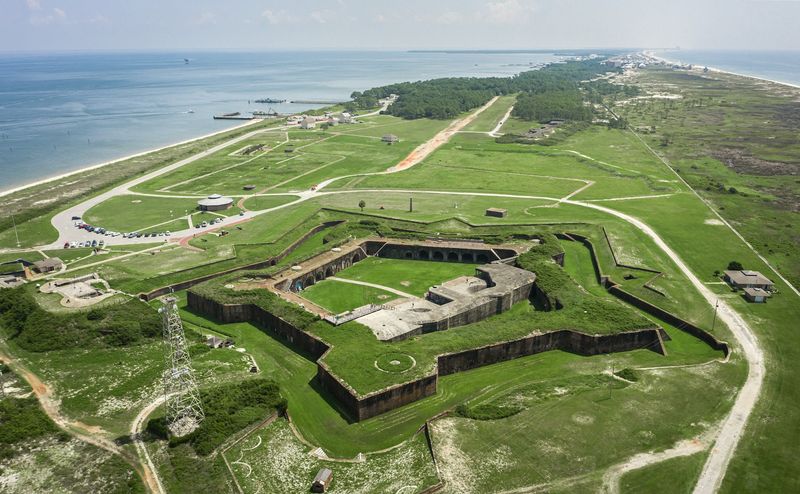
This fort sits on a narrow barrier peninsula where the Gulf of Mexico meets Mobile Bay. That combination creates a rare coastal environment you just do not find everywhere.
Two very different water systems share one thin strip of land.
The peninsula supports native plant species like sea oats and coastal grasses that anchor the shoreline. These plants are not just pretty.
They hold the sand in place and provide shelter for small animals and insects.
The nearby Bon Secour National Wildlife Refuge covers over 7,157 acres right along this same stretch of coast. That is a massive protected zone sitting practically next door.
Endangered species like the Alabama Beach Mouse live here, and sea turtles nest along these shores every year.
Because so much of the peninsula remains undeveloped, wildlife actually thrives here. You are not sharing the beach with a hotel tower blocking the sunset.
You are sharing it with pelicans, herons, and the occasional dolphin cruising the bay.
The habitat here is fragile but well-protected. Visitors who respect the land get to experience something genuinely rare.
It is the kind of coastal environment that urban beach towns traded away years ago for parking lots and gift shops.
Find this unique spot at 110 AL-180, Gulf Shores, AL 36542. The drive alone, along Highway 180, sets the mood perfectly before you even arrive.
Historical Importance Shaping Beach Environment

Completed in 1834, Fort Morgan is a star-shaped masonry fort that has watched over Mobile Bay for nearly two centuries. History did not just happen near this beach.
History literally shaped it.
The fort played a major role in the Battle of Mobile Bay in 1864. Admiral Farragut gave his famous order here.
The fort was the reason that the battle mattered at all.
Over the decades that followed, the military continued using the fort well into the twentieth century. Artillery batteries were added over time.
Each era left something behind in the brick and stone.
That long history influenced how the surrounding land was managed. Because the fort required open sightlines and buffer zones, development stayed away.
Less development meant more nature survived.
Walking through the fort grounds today, you can see how the land was deliberately kept clear. The open fields and unobstructed shoreline are not accidental.
They are a direct result of military planning from generations ago.
The museum on site is small but packed with artifacts, maps, and stories covering everything from the 1800s through the 1940s. It connects the dots between the history and the landscape in a way that actually makes sense.
Understanding why this beach looks the way it does starts with understanding what happened here. The fort did not just protect the coast.
It preserved it.
Limited Access Paths Keeping Crowds Away
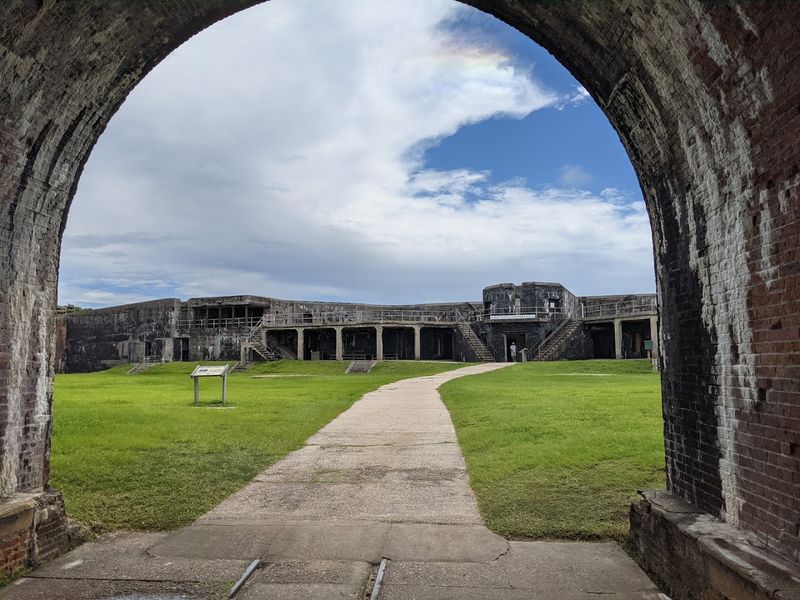
Getting to Fort Morgan requires commitment. There is exactly one road in and one road out.
Highway 180, also called Fort Morgan Road, runs 22 miles from Gulf Shores to the tip of the peninsula. No shortcuts exist.
That single road acts like a natural filter. Casual tourists who want quick beach access turn back early.
The people who make the full drive actually want to be there. That changes the whole vibe of the place.
Along the way, you pass through stretches of undeveloped land, wildlife refuge zones, and quiet residential neighborhoods. There are no flashy signs pulling you into strip malls.
The scenery itself tells you what kind of place you are heading toward.
The ferry from Dauphin Island offers an alternative entry point across the bay. But that adds planning and timing to the trip.
Most people do not bother, which keeps the crowd numbers low year-round.
Even during peak summer season, Fort Morgan sees roughly 70 percent fewer visitors than the main Gulf Shores strip. That is not a small difference.
That is a completely different beach experience.
The limited access is honestly one of the best features. You will not fight for parking.
You will not wait in line at the beach entrance. The inconvenience of the drive is exactly what makes the destination feel so worth it when you finally get there.
Conservation Efforts Protecting Natural Beauty
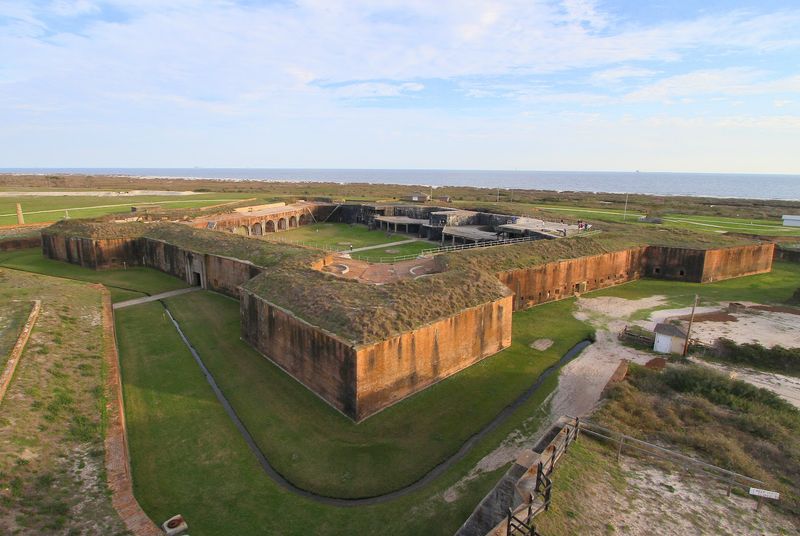
Conservation at Fort Morgan is not just a sign on a fence. It is an active, ongoing effort involving multiple agencies working to keep this peninsula intact.
The results are visible everywhere you look.
The Bon Secour National Wildlife Refuge, which borders the Fort Morgan area, operates under strict federal protection rules. Nesting areas for sea turtles are marked and monitored every season.
Volunteers patrol the beaches during nesting months to protect eggs from disturbance.
The Alabama Beach Mouse is one of the rarest species in the country. Its habitat overlaps directly with the Fort Morgan shoreline.
Conservation programs here focus heavily on maintaining the dune structures these mice depend on for survival.
Migratory birds pass through the peninsula in huge numbers each spring and fall. The protected vegetation corridors give them safe resting spots during long flights.
Without those corridors, the birds would have nowhere to land.
State management of the historic site also includes landscape preservation. The grounds around the fort are maintained without heavy landscaping or commercial intrusion.
Native plants are allowed to grow naturally in most areas.
All of these efforts combine to keep Fort Morgan looking the way nature intended. It is refreshing to visit a coastal area where the priority is clearly the environment rather than maximizing visitor numbers.
Conservation here has a real, visible impact on what you experience when you arrive.
Exclusive Bird Watching Opportunities Available
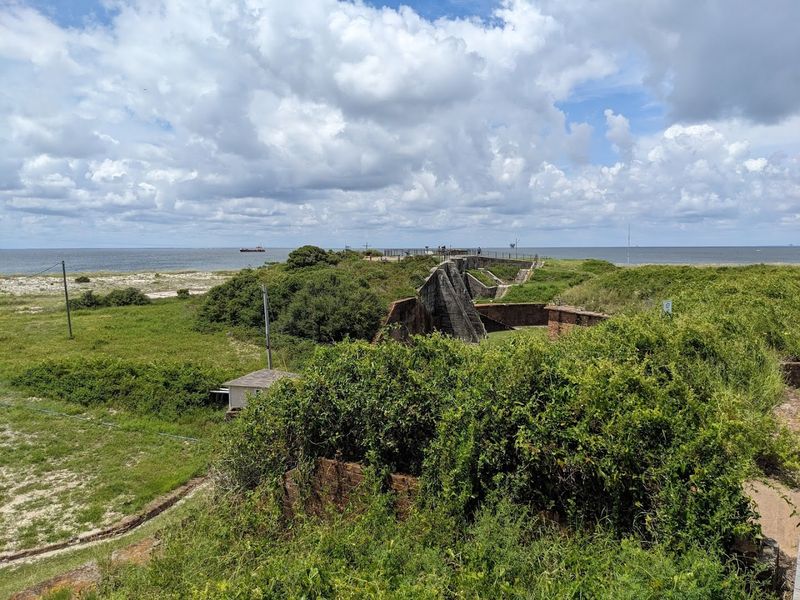
Fort Morgan is a serious bird-watching destination. That is not an exaggeration.
The peninsula sits directly in the path of the Central and Mississippi flyways, two major migratory bird routes across North America.
During spring and fall migrations, the trees and shrubs along the peninsula fill up with exhausted songbirds that have just crossed the Gulf of Mexico. They land by the thousands.
Warblers, tanagers, orioles, and buntings all stop here to rest and refuel.
Shorebirds work the beach edges all year long. Sanderlings chase waves.
Willets probe the wet sand. Oystercatchers hammer at shells along the rocky points near the fort.
It is genuinely entertaining to watch.
Pelicans are a constant presence around the pier and boat launch area. They cruise low over the water and dive with surprising accuracy.
Watching them fish is one of those free, endlessly entertaining shows that never gets old.
The Bon Secour National Wildlife Refuge maintains dedicated birding trails just minutes from the fort. These trails wind through coastal scrub and wetland edges where species diversity peaks during migration season.
Binoculars are all you really need.
Most crowded beach destinations have birds, too, but you rarely notice them over the noise. At Fort Morgan, the quiet makes bird watching feel natural and effortless.
You are not seeking the birds out. They simply appear around you as you explore the grounds.
Tide Patterns Influencing Beach Accessibility
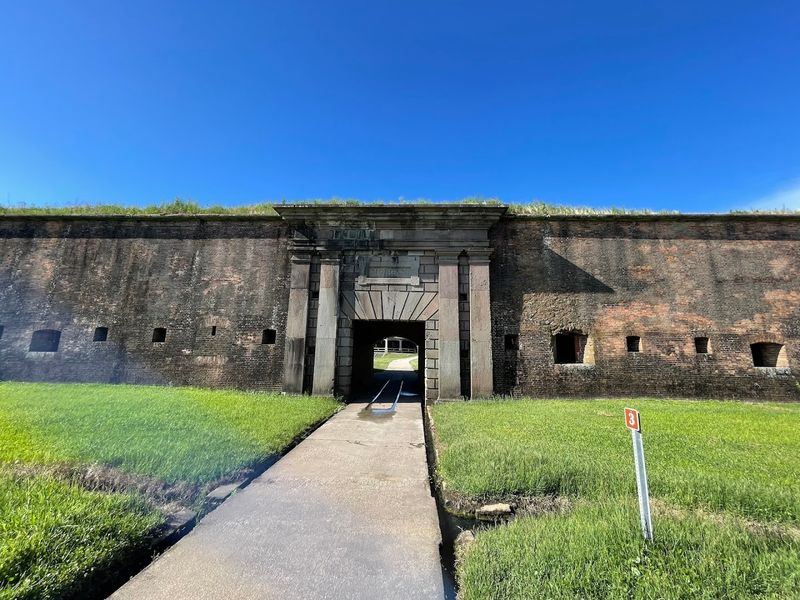
The tides at Fort Morgan behave differently from those at most Gulf Coast beaches. The peninsula location, where the Gulf meets Mobile Bay, creates a mixed tidal pattern that shifts beach conditions throughout the day.
Timing your visit actually matters here.
At low tide, wide sandbars emerge along the bay side of the peninsula. These shallow flats attract wading birds and make for easy, flat walking.
Kids love exploring the exposed areas because interesting things wash up constantly.
The Gulf side sees calmer wave action than beaches further east. The barrier peninsula geography shelters parts of the shoreline from strong swells.
That makes swimming more relaxed and wading safer for younger visitors.
Tidal shifts also affect fishing conditions dramatically. Where the salt water of the Gulf meets the fresher bay water, fish congregate in predictable patterns.
Anglers who understand the tides here consistently catch more than those who just show up randomly.
The pier near the fort entrance is a prime spot for watching the tidal flow move through the bay entrance. Ships and boats navigate the channel nearby.
Dolphins often follow the current through the same passage, making the pier a reliable dolphin-watching spot.
Understanding the tides here is not complicated, but it does require a little planning. Check the tide chart before you go.
Arriving at low tide on the bay side or mid-tide on the Gulf side gives you the most accessible and interesting beach experience possible.
Undisturbed Sand Dunes Supporting Ecosystems
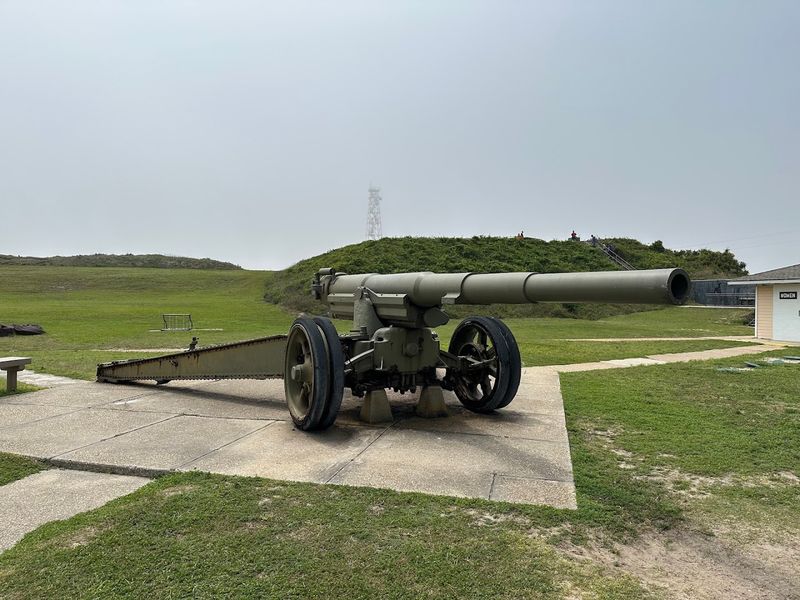
Dunes at Fort Morgan are not decorative. They are working ecosystems that protect the peninsula from erosion and storm surge.
Without them, the whole barrier island system would look completely different.
Sea oats dominate the dune faces here. Their deep root systems lock sand in place during wind events and minor storms.
Removing or trampling sea oats is actually illegal in Alabama. The plants are important to coastal stability.
Behind the primary dunes, a secondary zone of coastal scrub develops. Yaupon holly, wax myrtle, and live oak create dense thickets.
These shrubs provide critical nesting and foraging habitat for dozens of bird and small mammal species.
The Alabama Beach Mouse depends on these intact dune systems for survival. It burrows into the dune face and forages in the scrub zone at night.
Developed beaches have largely eliminated this habitat, which is why the species is endangered.
At Fort Morgan, the dunes remain largely undisturbed because development pressure stayed low. No one built a hotel on top of them.
No parking lots paved over the scrub. The dunes just kept doing what dunes do.
Walking past these dune systems gives you a real sense of what Gulf Coast beaches looked like before mass development arrived. It is not a museum recreation.
It is the actual thing, still functioning, still supporting life, still doing its job exactly as it has for thousands of years.
Quiet Recreational Activities Enhancing Experience
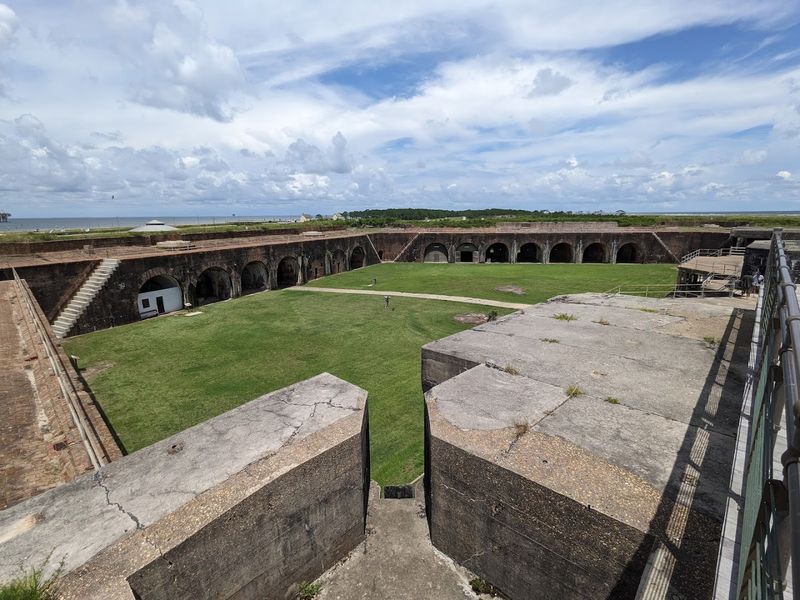
Fort Morgan is not a party beach. It is a place where the recreation matches the environment.
Quiet, unhurried, and genuinely enjoyable without needing a crowd to make it fun.
Fishing from the pier is a favorite activity. The mix of bay and Gulf water creates productive conditions for redfish, flounder, and speckled trout.
You do not need a boat. Just a rod, some bait, and patience.
Walking the beach here is a completely different experience from walking a packed tourist strip. You can actually hear the waves.
You can stop and watch a pelican land without anyone bumping into you. Driftwood and shells collect along the shoreline in impressive quantities.
The self-guided fort tour is a solid two-hour activity on its own. Climbing the staircases, peering through cannon ports, and standing on the ramparts with a view of Mobile Bay is genuinely memorable.
The museum adds context without overwhelming you.
Biking along the peninsula road is popular with visitors staying nearby. The flat terrain and light traffic make it accessible for most fitness levels.
The scenery changes constantly as you move between Gulf views and bay views.
Photography opportunities here are plentiful and unpredictable in the best way. Dolphins appear without warning.
Birds land in perfect light. The fort walls glow at golden hour.
None of it requires special equipment or skill. You just have to show up and pay attention.