
Why This Illinois Village Is Loved By Locals But Overlooked By Tourists
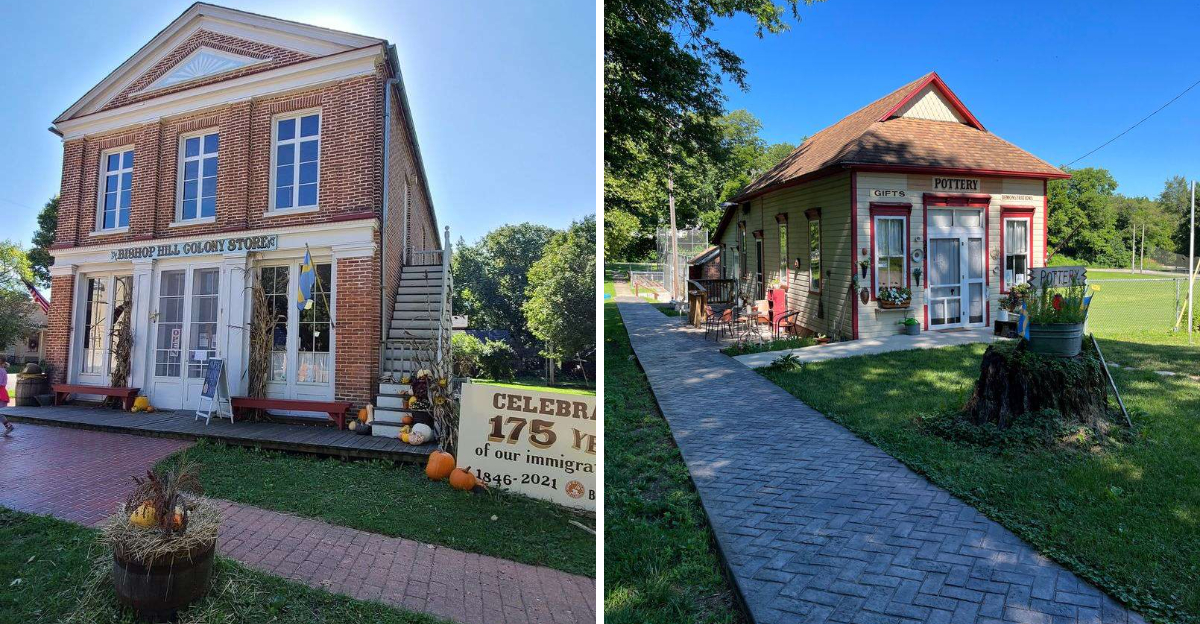
Set in rural Henry County, Bishop Hill is a tiny Illinois village that locals treasure even as most travelers pass it by.
This 19th-century Swedish settlement feels like stepping into a time capsule, where historic brick buildings and quiet prairie landscapes preserve stories of communal living and immigrant hopes.
With just over 100 residents and a pace of life slower than a Sunday afternoon, Bishop Hill offers a refreshing escape from the hustle of modern tourism hotspots.
A 19th-Century Swedish Utopian Settlement Frozen In Time

Back in 1846, a group of Swedish immigrants led by Eric Janson arrived in Illinois with big dreams of creating a perfect society.
They built Bishop Hill as a communal colony where everyone shared everything—land, labor, and even profits.
The experiment lasted about fifteen years before dissolving, but the village they created remains remarkably intact today.
Walking these streets feels like wandering through a living museum where history hasn’t been polished for Instagram.
Historic Brick Buildings That Tell The Story Of Early Illinois Life

The colonists didn’t mess around when it came to construction—they fired their own bricks and built structures meant to last centuries.
The Colony Church, Steeple Building, and Colony Store showcase Swedish craftsmanship that modern contractors would envy.
Each structure served specific communal purposes, from worship spaces to dormitories where colonists lived together.
Residents appreciate how these structures anchor their community to something bigger than themselves, a tangible connection to the hardworking pioneers who laid every brick by hand.
A National Historic Landmark Village That Few Visitors Know About

Despite earning National Historic Landmark status in 1984, Bishop Hill remains Illinois’ best-kept secret.
While Galena and Nauvoo draw crowds, this little village flies under the radar of most travel guides.
The designation recognizes Bishop Hill’s exceptional significance in representing utopian communities and Swedish immigration patterns.
The village offers all the historical richness without the commercial chaos that often follows landmark recognition.
A Close-Knit Community That Honors Its Ancestral Swedish Traditions

Swedish heritage runs deep in Bishop Hill, where many residents trace their roots back to the original colonists.
The community takes genuine pride in maintaining connections to their Scandinavian ancestry through language, food, and customs.
Every September, the village hosts Jordbruksdagarna (Agricultural Days), celebrating Swedish farming traditions with demonstrations and authentic food.
This living heritage creates bonds between neighbors who understand they’re stewards of something rare and worth preserving for future generations.
Artisan Workshops And Galleries That Keep The Colony Spirit Alive

The original colonists were skilled craftspeople who made everything from furniture to textiles by hand.
Potters, weavers, and woodworkers create beautiful pieces using traditional techniques passed down through generations.
Unlike mass-produced tourist trinkets, Bishop Hill’s artisan goods carry real craftsmanship and soul.
Wandering through galleries feels like treasure hunting—you never know what handmade wonder you’ll discover.
The colony’s communal work ethic has evolved into a thriving creative community that values quality over quantity.
A Tranquil Rural Landscape Surrounded By Prairie And Farmland

Bishop Hill sits nestled in gently rolling farmland along the South Edwards River, surrounded by the kind of wide-open prairie that once covered Illinois.
Cornfields stretch to the horizon, interrupted only by occasional farmhouses and tree lines.
The landscape hasn’t changed much since Swedish pioneers first surveyed this spot nearly two centuries ago.
Evening skies put on spectacular sunset shows without light pollution stealing the view.
This rural setting offers something increasingly rare—genuine quietude where you can actually hear yourself think and breathe air that doesn’t taste like exhaust fumes.
One Of The Few Places In The Midwest Where Communal History Still Feels Present

Most utopian experiments left behind only archaeological ruins or historical footnotes.
Bishop Hill offers something extraordinary—a complete communal village where you can still sense how the experiment functioned.
The layout reveals how colonists organized their shared life, from communal kitchens to collective workspaces.
Walking through town, locals point out where specific activities happened—here’s where they butchered hogs, there’s where women did laundry together.
Residents feel connected to that bold experiment in cooperative living, even though they now own private property.
The communal spirit hasn’t disappeared entirely—neighbors still help each other harvest and share garden produce freely.
A Cultural Hub For Folk Art, Festivals, And Handcrafted Heritage

For such a tiny village, Bishop Hill packs a surprising cultural punch throughout the year.
The annual Julmarknad (Christmas Market) transforms the village into a winter wonderland filled with Swedish treats and handmade gifts.
Summer brings concerts, craft fairs, and heritage celebrations that draw visitors from surrounding counties.
Locals participate enthusiastically, whether demonstrating traditional crafts or serving homemade Swedish delicacies.
Between festivals, several museums and galleries showcase folk art that reflects both Swedish roots and American adaptation, creating a unique cultural blend found nowhere else in Illinois.
A Gentle Pace Of Life That Keeps Tourists Away But Locals Loyal

Bishop Hill doesn’t offer amusement parks, shopping malls, or trendy restaurants—and that’s exactly why residents love it.
Life moves at a speed that lets you actually notice things: how sunlight hits old brick walls, the smell of fresh-baked bread from someone’s kitchen, neighbors chatting on front porches.
This unhurried lifestyle filters out tourists seeking constant stimulation and Instagram moments.
Locals cherish knowing their neighbors, walking everywhere, and enjoying silence that’s become rare in modern America.
Bishop Hill proves that sometimes the best places are the ones that don’t try too hard to impress.