
Why This Small Iowa Town Has Become A Haven For Nature Lovers
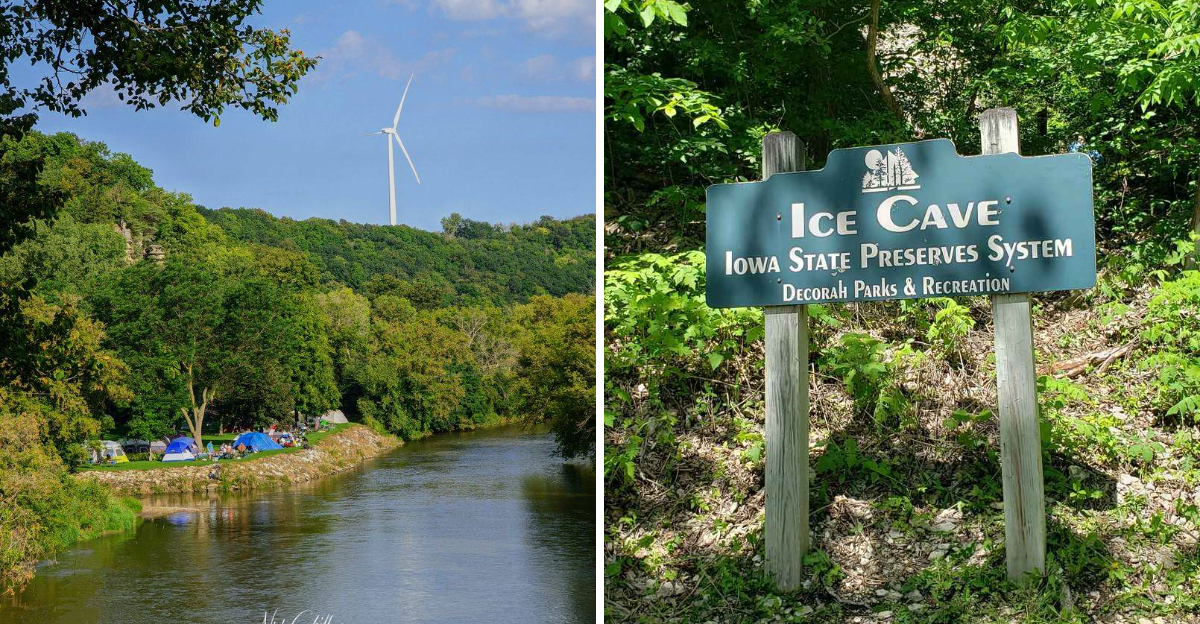
Tucked into the northeast corner of Iowa, Decorah has quietly earned its reputation as one of the Midwest’s most compelling destinations for anyone who values wild places and open air.
The town itself—population just over 7,500—sits in Winneshiek County at the heart of a landscape that defied the glaciers and retained its ancient contours.
What draws naturalists, birders, paddlers, and wanderers alike is not a single attraction but a layered ecosystem of bluffs, cold streams, hardwood forests, and seasonal drama that unfolds across four very different chapters each year.
Driftless Region Landscape
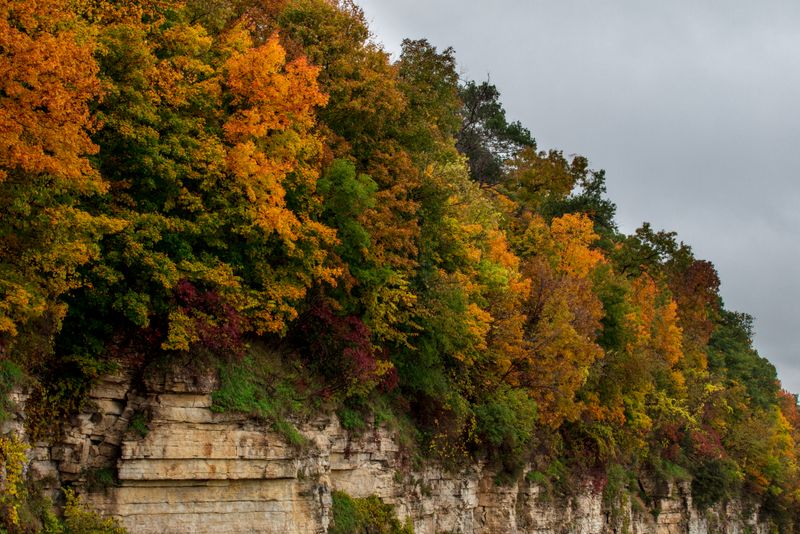
Decorah occupies a rare geological zone known as the Driftless Area, a quarter-million-acre expanse that escaped the flattening hand of glaciers during the last ice age.
What resulted is a topography more akin to Appalachia than the Great Plains—steep ridges, narrow valleys, exposed bedrock, and a drainage system that carved itself deep into ancient limestone.
This quirk of natural history gives the region a vertical drama uncommon in Iowa.
Visitors accustomed to cornfields and prairie horizons often pause when they first encounter the layered bluffs and wooded hollows around town.
The landscape invites exploration on foot, by bicycle, or from the window of a slow-moving car.
Every overlook offers a new vantage, and every season repaints the palette.
Because the land was never scoured flat, it retained a biodiversity that makes field guides necessary and binoculars standard equipment.
Rare plants, endemic insects, and migratory species all find refuge here.
For nature lovers, this geological accident feels like a quiet gift.
Limestone Bluffs And Forests
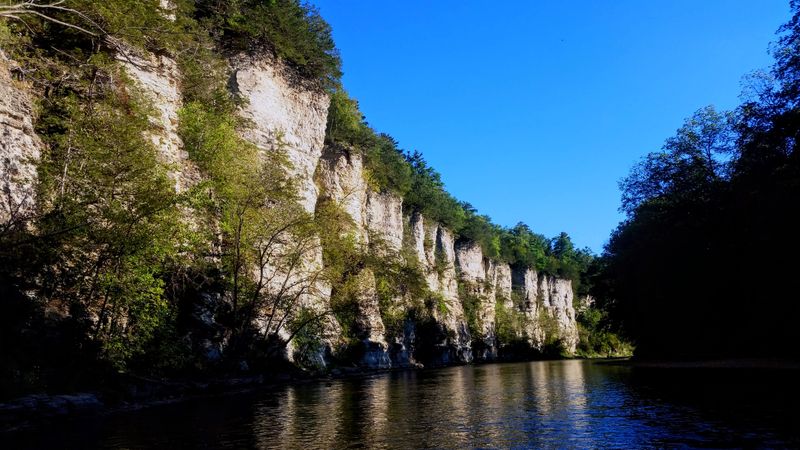
Limestone formations rise abruptly from the valley floors, their pale faces streaked with lichen and softened by centuries of weathering.
These bluffs are not mere backdrop—they define the character of the entire region and serve as anchors for the forests that cling to their slopes.
Oak, maple, basswood, and hickory thrive in the well-drained soils, creating a canopy that shifts from tender green in spring to bronze and crimson by October.
Hiking trails wind along the base of these cliffs and occasionally climb to their crests, where views stretch across miles of unbroken woodland.
The rock itself tells a story written in fossils—ancient marine life pressed into sediment when this land lay beneath a shallow sea.
Geologists and casual walkers alike find themselves drawn to the textures underfoot.
In summer, the shade beneath the canopy offers relief from the heat, and the air smells of leaf mold and damp stone.
Come winter, the bluffs catch snow along their ledges, and ice forms in curtains where water seeps through cracks.
Each season redefines the relationship between rock and forest.
Dunning’s Spring Waterfall
Just south of the Luther College campus, a short walk from the parking area leads to one of Iowa’s most photographed natural features.
Dunning’s Spring spills over a limestone ledge in a single smooth curtain, dropping into a pool edged with ferns and wild ginger.
The surrounding glen feels removed from the town despite its proximity, and the sound of falling water fills the space with a steady, meditative hum.
Locals visit year-round, and each season offers a different portrait.
In spring, runoff swells the flow and wildflowers carpet the slopes.
Summer brings families with cameras and sketchbooks, while autumn frames the falls in amber and rust.
Winter transforms the scene entirely—the waterfall freezes into sculptural columns, and icicles hang from every overhang.
The spring itself is fed by underground aquifers that filter through layers of porous rock, emerging cold and clear regardless of the weather above.
It’s a small site, easily visited in under an hour, but it rewards patience.
Sit on one of the benches and watch the light shift through the canopy.
Upper Iowa River Paddling
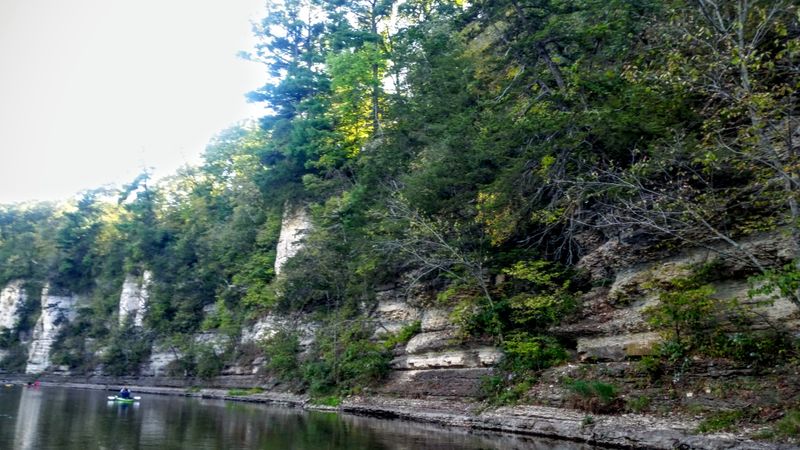
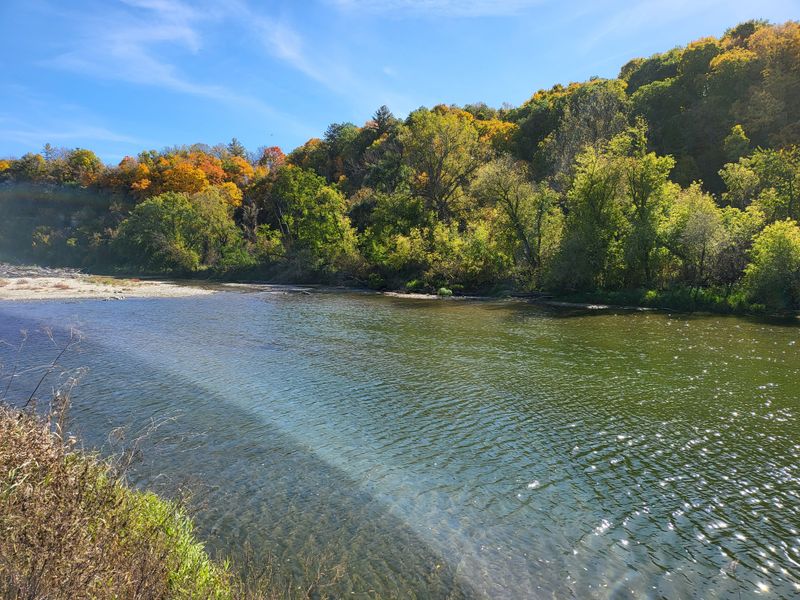
Flowing through the heart of the Driftless Area, the Upper Iowa River offers one of the finest paddling experiences in the Midwest.
The current is gentle enough for beginners but engaging enough to hold the attention of seasoned canoeists.
Limestone bluffs rise on either side, their faces dotted with caves and seeps, and the water runs clear over beds of gravel and sand.
Several outfitters in Decorah rent canoes and kayaks and provide shuttle service to and from put-in points along the river.
Trips range from a few hours to multi-day expeditions, with sandbars and gravel banks offering convenient spots to pause, swim, or set up camp.
Wildlife sightings are common—herons stalk the shallows, turtles sun on logs, and kingfishers dart upstream with sharp, rattling calls.
The river also serves as a corridor for migratory birds and a lifeline for aquatic species that depend on cold, clean water.
Paddling here is less about adrenaline and more about immersion, a slow passage through a landscape that rewards attention and stillness.
Year-Round Hiking And Biking
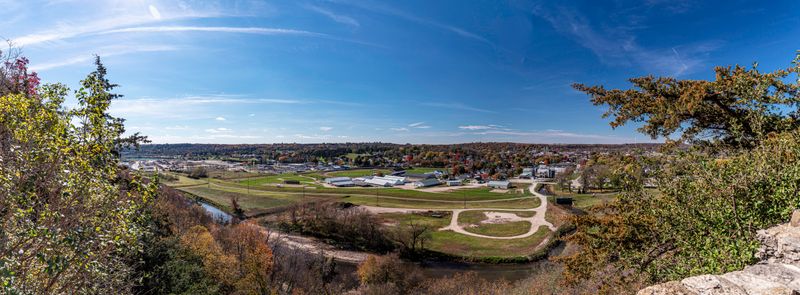
Decorah maintains an extensive network of trails that accommodate walkers, runners, and cyclists across all seasons.
The Trout Run Trail, a paved path that follows the course of Trout Run Creek, connects downtown with outlying parks and natural areas.
It’s popular with families and serves as a commuter route for students heading to Luther College.
For those seeking more rugged terrain, the Palisades Park trails climb steep ridges and offer panoramic views of the surrounding valleys.
Mountain bikers favor the singletrack routes that wind through hardwood forests and challenge riders with roots, rocks, and sudden elevation changes.
In winter, some trails are groomed for cross-country skiing, and fat-tire bikes appear on packed snow.
What makes the trail system notable is not its length—other towns boast more miles—but its integration into daily life.
Residents use the paths for exercise, transportation, and quiet reflection.
Visitors find that a morning hike or an evening ride offers the most efficient introduction to the town’s natural character and its unhurried pace.
Cold-Water Trout Streams
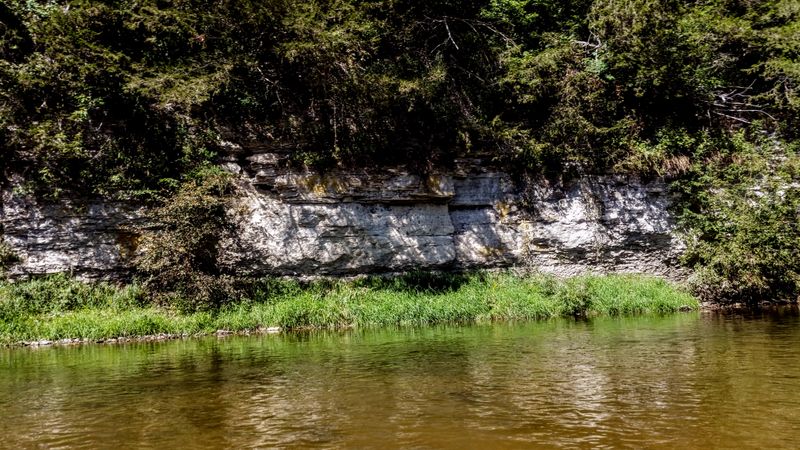
Several spring-fed streams in and around Decorah maintain temperatures cold enough to support native brook trout and stocked browns and rainbows.
These waters are small, often no wider than a two-lane road, but they run clear and swift over beds of gravel and limestone rubble.
Fly anglers wade carefully, casting to pockets behind boulders and beneath undercut banks where trout hold in the current.
Trout Run, which flows through town, is managed as a catch-and-release fishery and draws anglers from across the region.
The Iowa Department of Natural Resources stocks it regularly, and local fly shops offer guidance on hatches, patterns, and access points.
Other streams, like Canoe Creek and the South Bear, require more effort to reach but reward those willing to hike in.
Fishing here is less about trophy size and more about the setting—standing knee-deep in cold water, surrounded by forest, with the occasional rise of a trout breaking the surface.
It’s a quiet pursuit that suits the temperament of the place.
Eagle Watching Hotspot
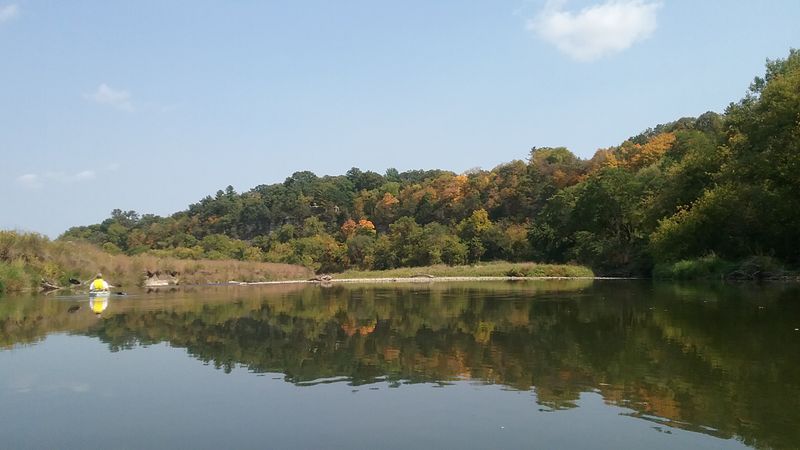
Each winter, bald eagles gather along the Upper Iowa River and other open waterways near Decorah, drawn by the availability of fish in ice-free stretches.
The Raptor Resource Project, based in town, operates a live webcam focused on a local eagle nest, and the feed has attracted millions of viewers worldwide.
What began as a conservation tool has become a cultural phenomenon, putting Decorah on the map for birders and wildlife enthusiasts.
Peak viewing occurs from late December through March, when dozens of eagles can be seen perched in riverside trees or soaring above the bluffs.
Several overlooks and pullouts along county roads offer good vantage points, and local guides lead winter eagle tours for those unfamiliar with the area.
The sight of a mature eagle, white head gleaming against gray sky, never loses its impact.
Beyond eagles, the region supports a rich raptor community—red-tailed hawks, kestrels, and the occasional peregrine falcon.
The combination of habitat, food supply, and minimal disturbance makes this a reliable spot for observing birds of prey in their element.
Protected Natural Areas
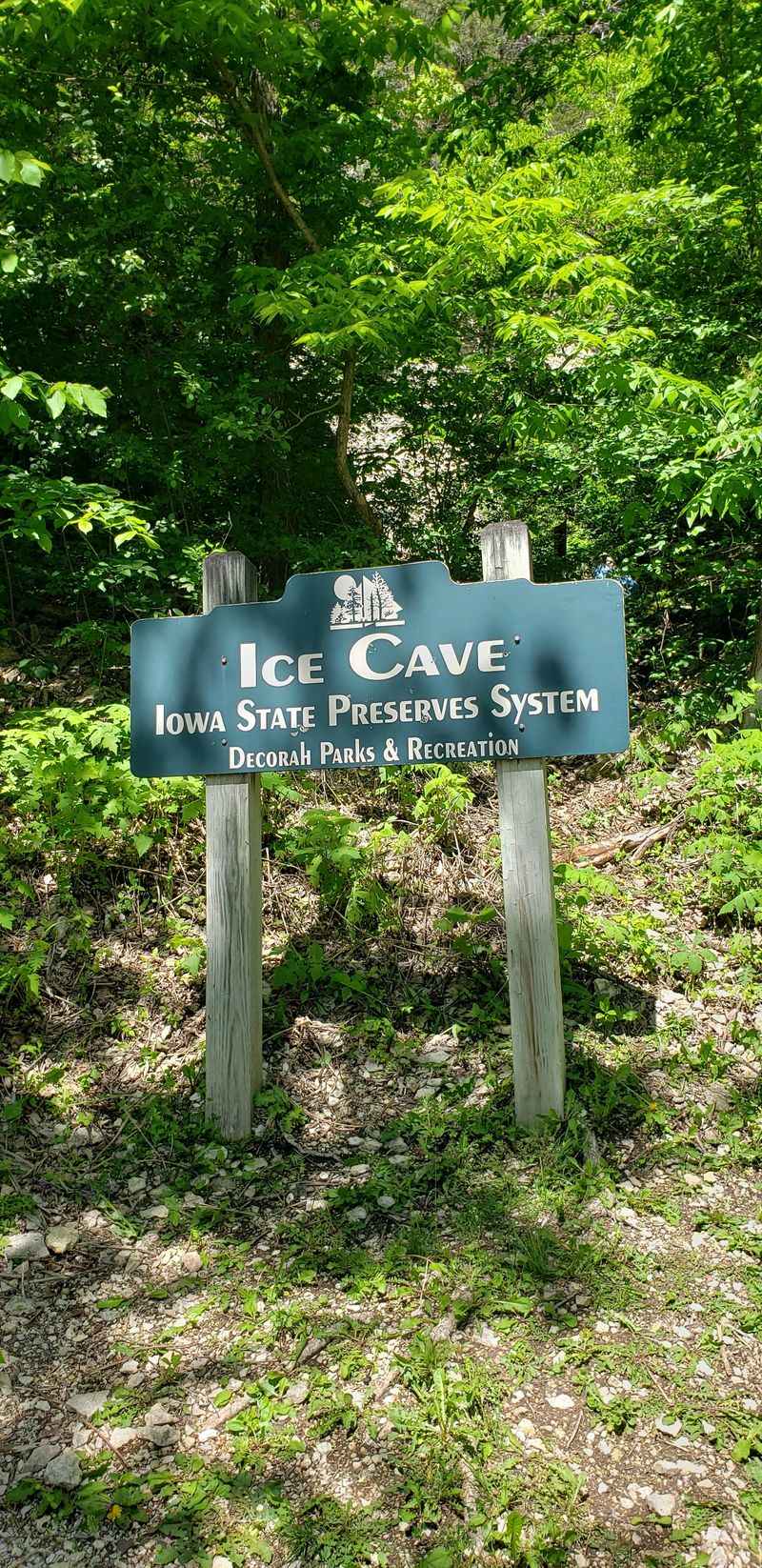
Winneshiek County is home to several protected natural areas managed by state and local agencies, each preserving a distinct slice of the Driftless ecosystem.
The Ice Cave State Preserve, for example, harbors rare algific talus slopes where cold air seeps from underground fissures, creating microclimates that support plants more commonly found hundreds of miles north.
The site is fragile, and access is limited, but its existence underscores the region’s ecological complexity.
Other preserves protect remnant prairies, wetlands, and old-growth forest stands.
The Decorah Community Prairie, located on the edge of town, offers a glimpse of what much of Iowa once looked like before European settlement.
In summer, the grasses stand shoulder-high, and monarch butterflies move from flower to flower in slow, deliberate arcs.
These protected spaces are not always large or dramatic, but they serve as anchors for biodiversity and as living laboratories for students and researchers.
They also offer quiet places to walk, think, and observe the subtle workings of natural systems.
Outdoor Lifestyle Culture
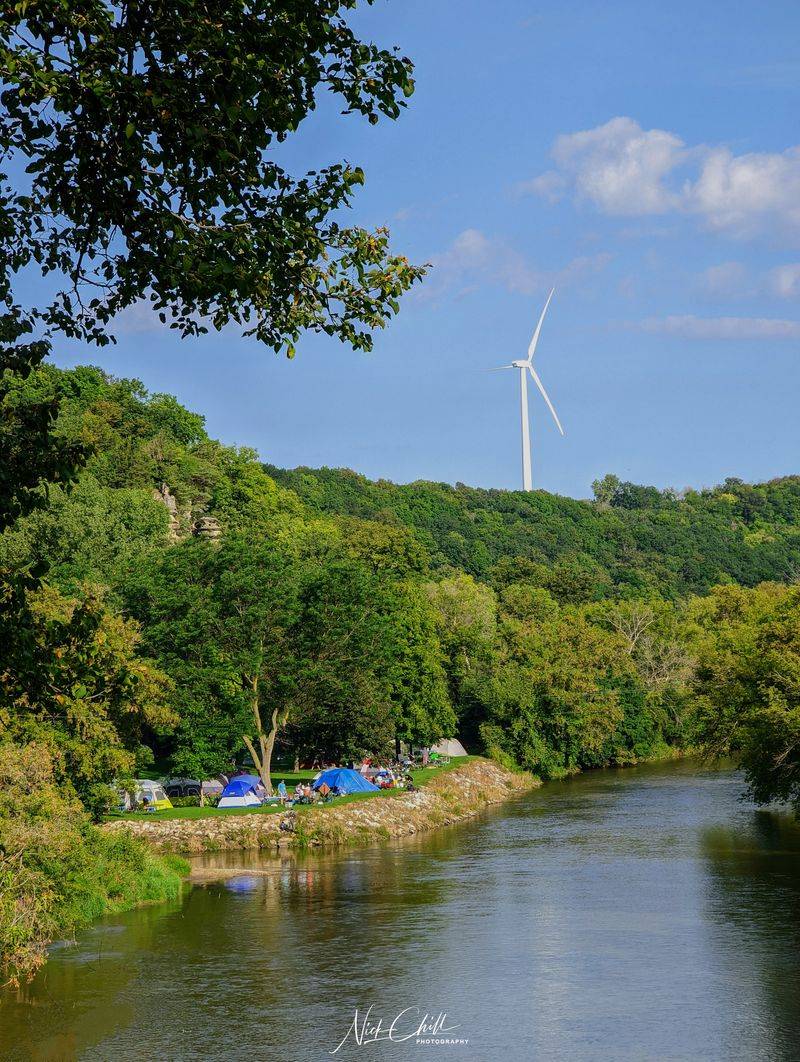
Decorah’s identity is deeply intertwined with outdoor recreation, and this is evident in the gear shops, bike racks, and trailhead parking lots that populate the town.
Local businesses cater to hikers, paddlers, and cyclists, offering rentals, repairs, and advice.
Coffee shops fill with trail runners in the morning, and evenings bring mountain bikers swapping stories over pints at the local brewery.
This culture is not performative—it’s woven into the fabric of daily life.
Families plan weekends around river trips and trail rides.
Schools incorporate outdoor education into their curricula, and community events often center on parks and natural areas.
The presence of Luther College amplifies this ethos, as students and faculty contribute to a population that values conservation and active living.
Visitors notice the difference quickly.
Conversations in grocery lines turn to trail conditions and bird sightings.
Street signs direct pedestrians to parks and preserves.
The town feels less like a destination and more like a basecamp, a place where the outdoors is not an escape but an extension of home.
Four Distinct Nature Seasons
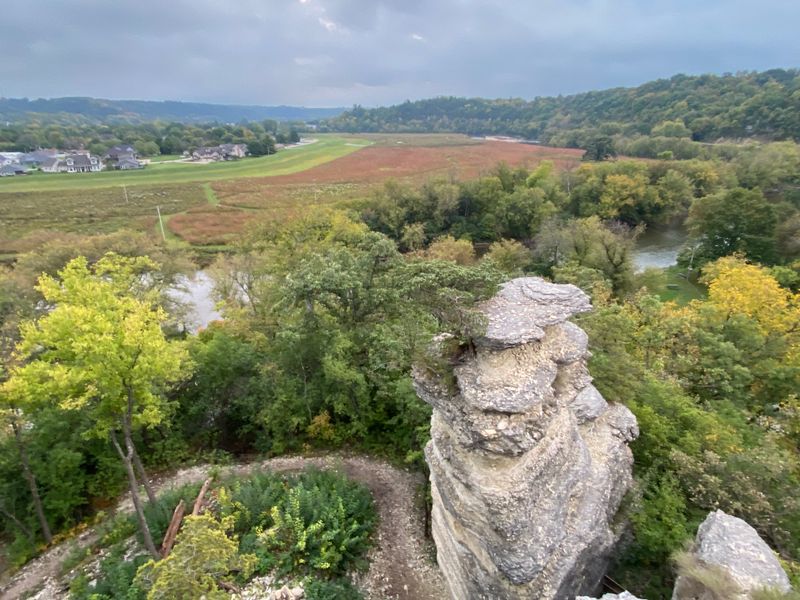
Few places in the Midwest showcase seasonal change as vividly as Decorah.
Spring arrives with wildflower blooms that carpet the forest floor—trillium, hepatica, bloodroot—before the canopy leafs out and shades them into dormancy.
Migratory songbirds return in waves, filling the woods with song.
Streams run high with snowmelt, and the air smells of wet earth and new growth.
Summer brings heat and humidity, but the forested valleys remain cooler than the surrounding plains.
Ferns unfurl in the understory, and the rivers slow to a languid pace.
Thunderstorms roll through in the afternoons, dramatic and brief.
Autumn is the season that draws the most visitors—the hardwood forests ignite in shades of gold, orange, and burgundy, and the light takes on a slanted, honeyed quality.
Winter is quieter but no less beautiful.
Snow clings to the bluffs and frosts the branches of bare trees.
Eagles arrive, and the landscape simplifies into stark contrasts of white and gray.
Each season offers a different reason to visit, and locals know better than to choose a favorite.
College Town Supporting Conservation
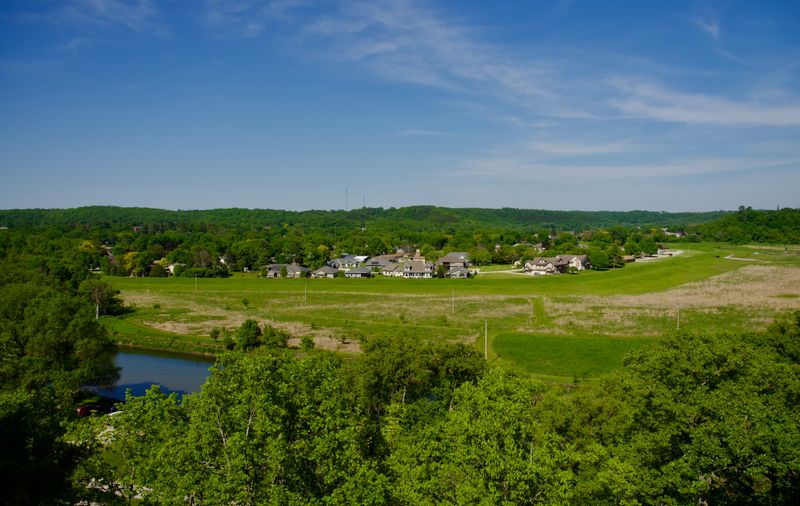
Luther College, a private liberal arts institution with an enrollment of around 2,000 students, plays a significant role in shaping Decorah’s environmental character.
The college has long emphasized sustainability and outdoor education, and its faculty includes biologists, ecologists, and geologists who study the surrounding landscape.
Students participate in research projects that monitor water quality, track wildlife populations, and assess the health of native ecosystems.
The college’s presence also supports cultural and educational programming that extends beyond campus.
Public lectures, art exhibits, and concerts draw both residents and visitors, and the institution’s commitment to conservation influences local policy and land use decisions.
Luther’s campus itself is integrated into the natural setting, with trails connecting academic buildings to the river and nearby bluffs.
This relationship between town and college creates a feedback loop—students gain hands-on experience in a rich outdoor laboratory, while the community benefits from research, advocacy, and an influx of young people committed to environmental stewardship.
It’s a partnership that strengthens both parties and deepens Decorah’s reputation as a place where nature is not just appreciated but actively protected.