
Why Tourists Never Visit This Secluded Ohio Mountain Town
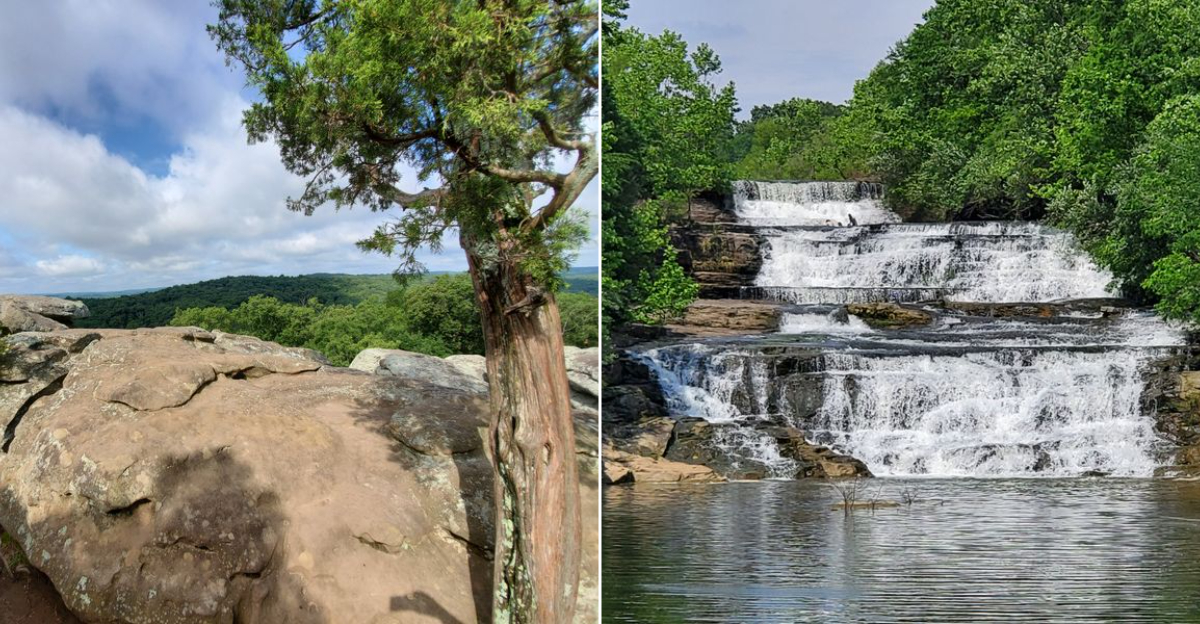
You hear Ohio and picture flat fields, then Shawnee slips in like a quiet secret tucked into the hills.
You arrive and realize the town prefers a measured whisper over a bright shout, and that restraint is exactly why it lingers in the mind.
Brick buildings hold their ground, trails drift toward forested edges, and time feels politely unhurried.
You keep walking because each block trades in small revelations rather than grand gestures, and you start to enjoy the slower heartbeat.
You stay because the hush carries stories—of labor, resilience, and renewal—that only reveal themselves to those willing to listen closely and linger a little longer.
A Main Street That Moves At The Pace Of Footsteps
Morning arrives in Shawnee with patient light, the kind that respects closed curtains and coffee steam.
Storefronts reveal themselves inch by inch, their painted glass still smudged from yesterday’s commerce and conversation.
You drift along the brick line of Main Street and notice the even rhythm of footsteps, your own blending with a town that has kept its cadence.
Signs hang with plain confidence, neither retro nor new, just true to purpose and time.
A barber pole turns at a modest speed, as if the air itself asked for quiet.
You pass a bench that seems to have known a thousand stories, and one fresh one this week.
What keeps tourists away is not a lack of charm but the absence of spectacle, a quality this street guards without apology.
You will not find a queue for anything, only a nod from someone stepping out with the morning paper.
You might pause at a corner where the hills fold close and listen for a train that no longer runs.
Later, when the day fills out, you notice how the town’s shape keeps its center small.
Every errand remains walkable, every greeting uncomplicated.
You realize the best souvenirs here are impressions carried quietly, and you leave the storefront glass as you found it, reflecting a face that looks rested.
Where The Hills Press Close And The Air Learns To Settle
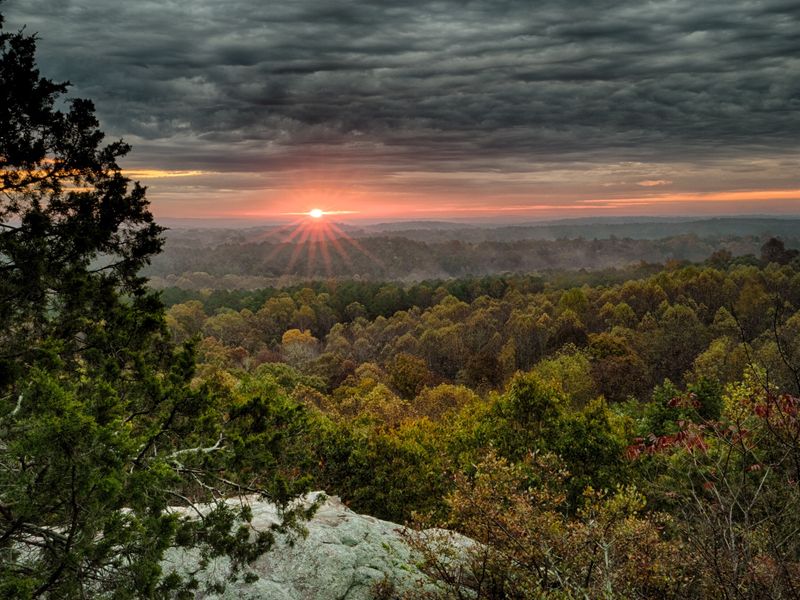
The hills approach Shawnee like patient guardians, their slopes stitched with oak and maple that do not clamor for attention.
You feel the grade underfoot as streets tilt toward the tree line, keeping errands honest and conversations unhurried.
The air quiets here, picking up a leaf scent that hangs like a simple promise.
Roads bend without rush, guiding you to views that show themselves at useful intervals.
A hawk rides a slow draft and reminds you how stillness looks from above.
You follow the curve and see a clearing that probably serves three purposes depending on the month.
Visitors who need constant spectacle often miss these hillside subtleties, and the town accepts that with a friendly shrug.
You take the slower road because the quicker one never learned the names of these folds.
The ground keeps its old paths, and your steps find them without fanfare.
By afternoon the light thins, and the trees switch to their evening grammar.
You read the slope lines like sentences that do not waste words.
When you head back toward town, the hills loosen their hold just enough to let buildings return to view, and you realize the place is framed, not hidden.
A Past Written In Brick, Iron, And Everyday Resolve
History in Shawnee does not stand behind velvet ropes, it peels through paint and presses up from brick.
You run a hand along a wall and feel small ridges where seasons have done their work.
The alley carries a draft that brings the faint scent of rust and wallpaper glue, as if the buildings breathe on their own.
Older facades show ghost signs that offer soap, coal, and a name you cannot quite parse. Iron brackets hold to their posts with quiet determination, doing the job they accepted decades ago.
You admire the plain sense of architecture that favors use over flourish.
Travelers looking for a single postcard moment might miss how these textures add up.
You tip your head and see dates pressed into stone, not staged for effect but simply present.
The result is a town that wears endurance like everyday clothing.
Evening arrives and the bricks find a deeper color, taking on the day’s last heat.
A window throws a square of warm light onto a stoop, and for a minute the street looks like a photograph you almost remember.
You keep walking because the past keeps pace beside you, never theatrical, always close at hand.
Quiet Tables, Honest Portions, And Conversations That Linger
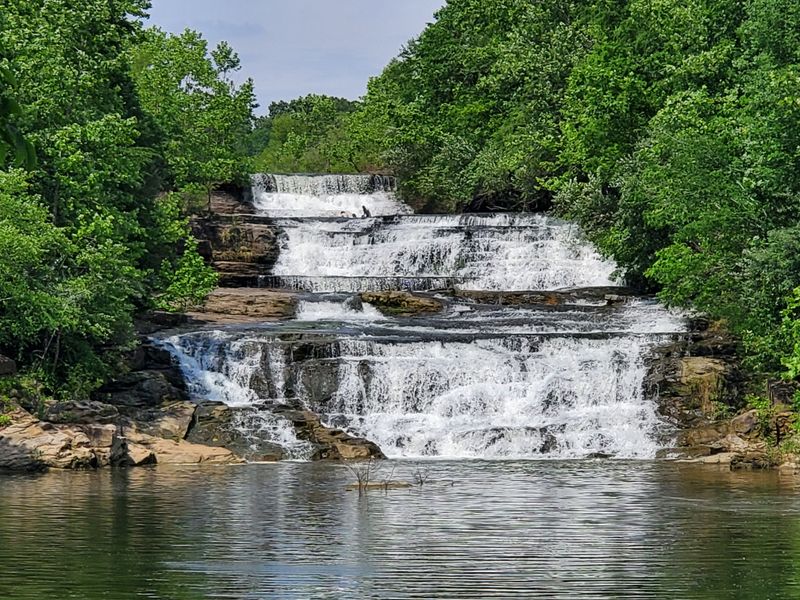
Meals in Shawnee begin with a greeting that sounds like a name you might have had once.
You sit where the chair fits and the table wobbles just enough to prove it is real.
A menu arrives without adjectives stacked like cordwood, and the coffee comes dark with a refill already implied.
Plates hold their shape, serving portions that trust your appetite rather than your camera.
You cut into something simple and find it prepared with exact attention, the kind that frees a cook from commentary.
The pie case hums with steady confidence, and you decide the best slice is probably the one chosen without debate.
Tourists chasing novelty often overlook these rooms because novelty usually wears loud shoes.
You settle in and let the hum of talk carry you, a low tide of weather, ball scores, and the price of feed.
The waitress remembers a detail you barely said aloud, and that feels like the whole point.
After the plates clear, conversation slows in a way that keeps time honest.
A clock near the register clicks, and the room seems to listen for the second hand.
You step out fuller than you expected, holding a taste you will not need to describe to anyone who has eaten well.
The Trailhead That Does Not Announce Itself
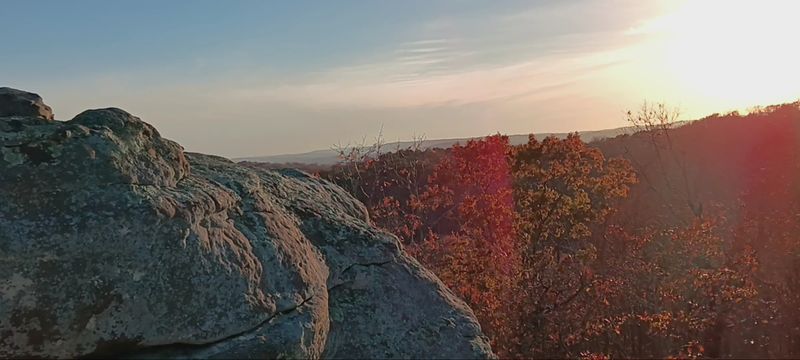
Out beyond the last trimmed lawn there is a path that resists fanfare.
You find it by noticing what is missing, a worn patch where grass surrenders and a post with no need to brag.
The first fifty yards keep you guessing, then the forest accepts your presence with a small rustle.
Roots cross like old stitches, and your steps learn the pattern without fuss.
The grade rises a touch, easing you into a rhythm that listens before it bothers to speak.
You feel the quiet as a texture rather than a sound, the way bark trades light with shade.
Tour buses rarely linger where signage is patient, and that suits this stretch.
You pause and catch the small talk of creek water slipping over stone, an eloquence that requires no translation.
A clearing opens with modest pride, granting a view stitched from hills and rooftops.
On the way back the trail keeps your confidence, repeating only what matters.
Fallen leaves mark the margins like tidy footnotes, as if the woods want your best attention.
You step onto pavement again and realize how lightly the path holds you, letting the town reclaim its edges without a fuss.
Porches That Hold The Evening Like A Well Kept Secret
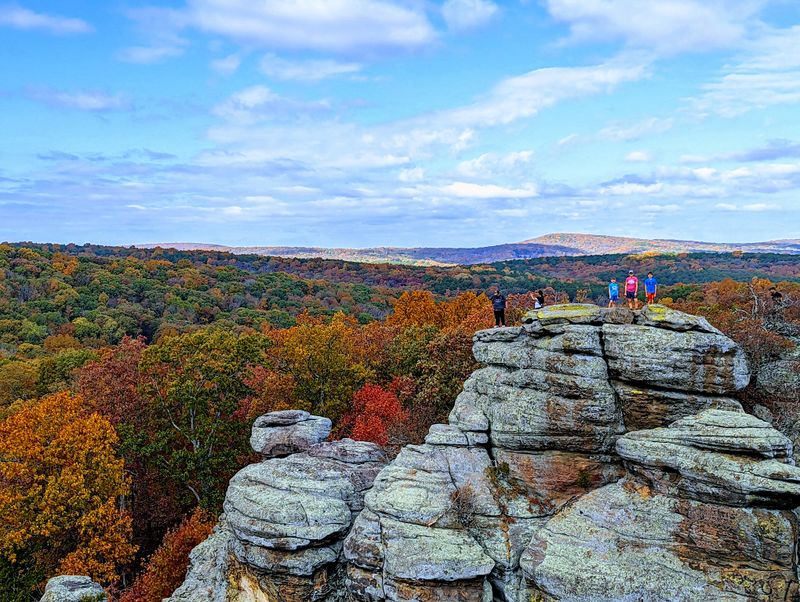
Evening in Shawnee begins on the porch, where conversation takes the shape of chairs.
A swing answers the wooden floor with a small remark, and somewhere a radio measures out the last daylight.
You sit with a glass that keeps its cool and let the air make a case for staying put.
Houses keep their distance with an old neighborly sense, each porch a small stage for weather and memory.
A cat performs a leisurely inspection of boundaries that no one bothers to enforce.
You notice the discipline of quiet, not a hush of rules but a practice of comfort.
Visitors expecting fireworks miss the slow braid of voices, cricket rhythm, and the faint clink of ice.
You listen and hear the day set itself gently into tomorrow, like a book closing without hurry.
Streetlights decide on their glow, steady and undecorated.
When you finally stand, the boards answer with a soft reply that sounds like agreement.
The steps down feel well considered, as if they know where you are headed next.
You carry the evening with you like a folded letter, private but ready to be read again.
Why The Absence Becomes The Attraction
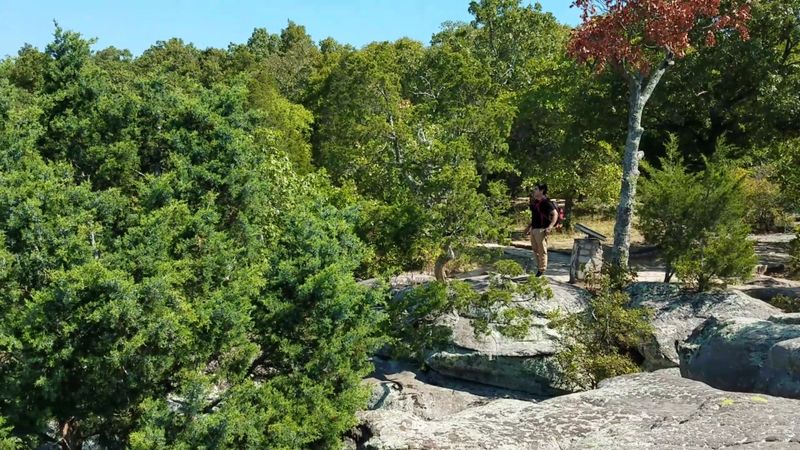
Night settles over Shawnee with the steady certainty of a town unafraid of quiet.
Storefronts dim to a thoughtful glow, and the street keeps a respectful distance from commotion.
You notice how easy it is to hear your own steps, and how welcome that sounds after a long day of noise.
There is no checklist here, only the kind of space that makes room for your attention.
A star appears where a billboard might stand in another place, and you are not asked to buy anything.
The town invites you without insisting, which is a rare sort of hospitality.
Tourists pass by because the rewards do not wave their arms, and the town seems content with that equilibrium.
You walk a little farther and find comfort in the measured light beneath a single lamp.
The hour deepens, and the hills draw close again like a curtain that understands restraint.
When you finally turn in, you realize the absence has become the attraction, a clear canvas for your better thoughts.
Morning will return without trumpets, and that feels exactly right.
You promise yourself another unhurried day, and the town agrees by saying as little as possible.