
You Haven’t Explored New York Until You’ve Hiked This Picturesque Trail With Million-Dollar Views
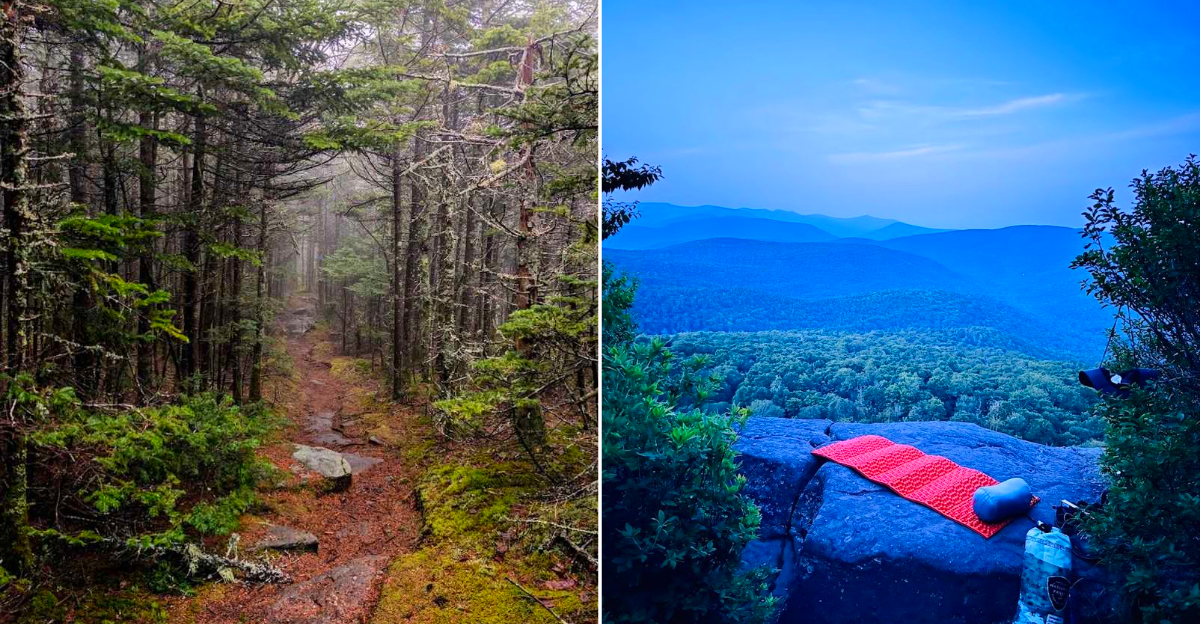
New York’s landscapes reveal a whole new side of the state once you leave the roads behind. Follow the right trail and the scenery quickly shifts into something spectacular, with forests opening to sweeping overlooks, dramatic cliffs, and views that stretch for miles across valleys and mountains.
It is the kind of hike that reminds you just how much natural beauty New York holds beyond its cities.
Along this particular trail, every turn seems to reveal another breathtaking vantage point. The path climbs steadily, rewarding hikers with wide panoramas that look like something straight out of a postcard.
Sunlight pours across the hills, distant ridges fade into soft blue layers, and the feeling of standing above it all makes the journey unforgettable. Curious which New York hike delivers these million-dollar views?
Keep reading to find out.
A View That Earns Every Step You Take
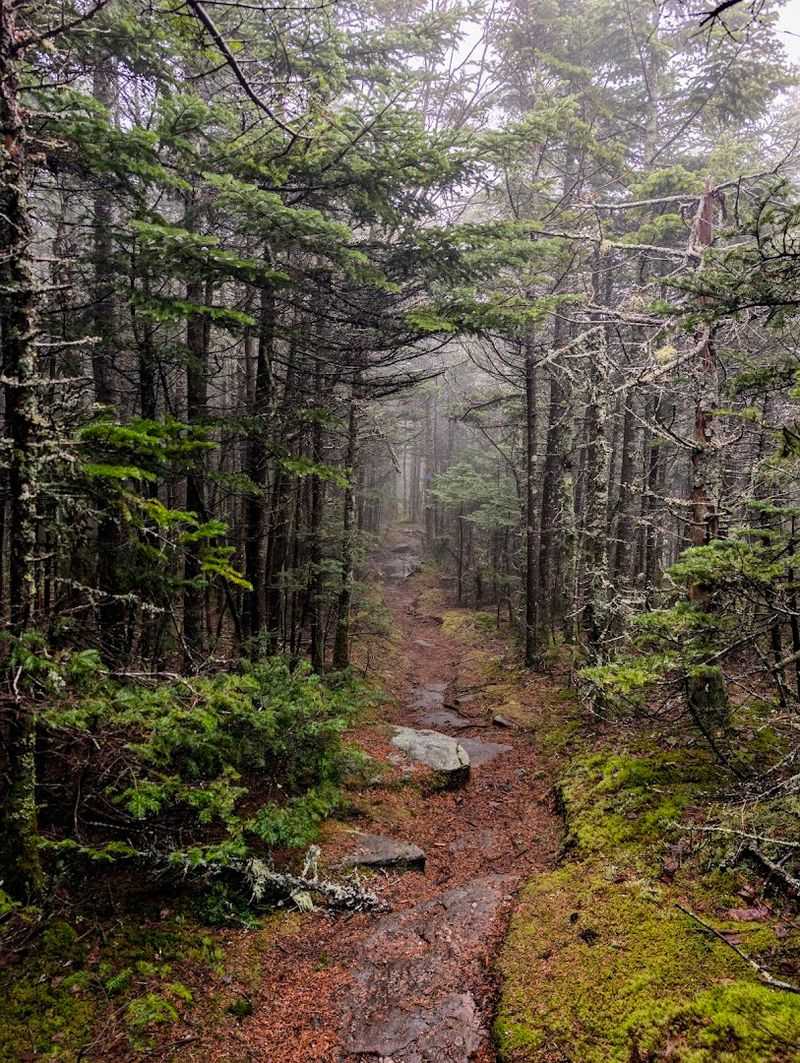
Not every trail can justify the effort it demands, but Giant Ledge Trail makes a compelling case from the very first overlook. The payoff here is not a single dramatic moment but a series of open ledges that appear one after another, each offering a slightly different angle on the same sweeping Catskill landscape.
There are roughly five to six distinct lookout points along the ledge, meaning the reward is spread generously across the final stretch of the hike rather than concentrated at one single spot.
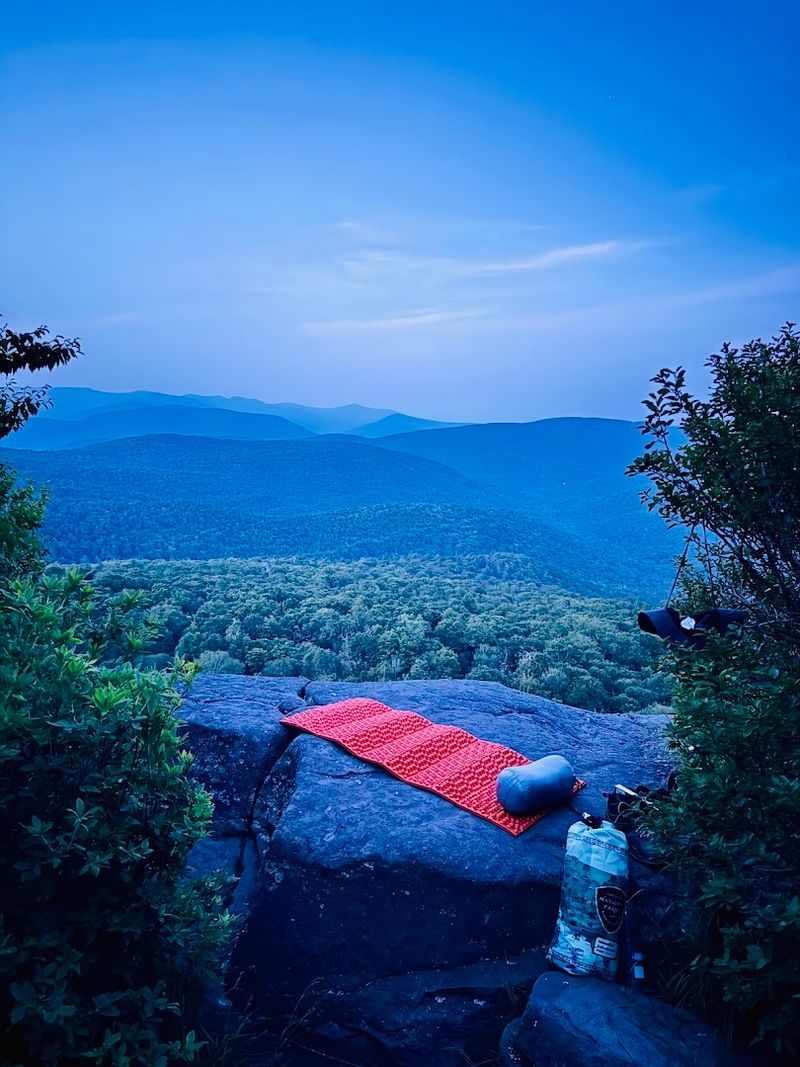
Standing at any of these overlooks, you are met with forested ridgelines rolling outward in every direction, broken only by sky. The scale of the view is genuinely hard to prepare for, especially if you have been moving through dense tree cover for most of the ascent.
Hikers who time their arrival for sunrise report that the experience borders on the extraordinary, with soft light spilling across the mountain layers in a way that feels almost choreographed.
The ledges also offer enough flat space to sit, rest, and actually absorb what you are looking at rather than simply snapping a photo and moving on. Few trails in the northeastern United States deliver this kind of sustained visual satisfaction within such a manageable distance from the trailhead.
What You Need To Know Before You Go
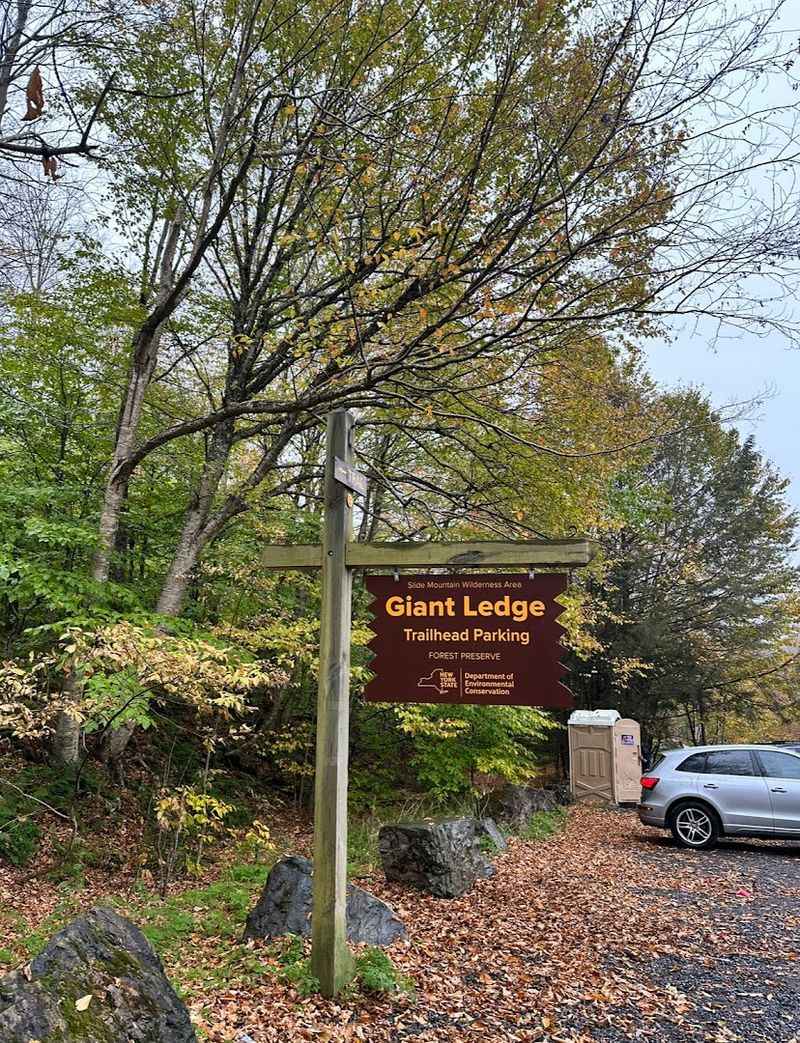
Giant Ledge Trail is located near Phoenicia, New York, and is managed by the New York State Department of Environmental Conservation. The trailhead sits along a road where parking is limited, so arriving early on weekends is a practical habit worth building before your first visit.
The trail is open twenty-four hours a day, seven days a week, making early morning and late afternoon starts entirely feasible for those who plan ahead.
The round trip distance runs approximately three to four miles depending on how far along the ledge you walk, and the elevation gain is substantial enough to keep the experience honest.
Most hikers complete the round trip in two to three hours, though the pace varies considerably based on fitness level and how long you linger at the overlooks.
The trail follows a blue-marked path maintained by the DEC, and the markers are reliable enough that navigation rarely becomes a concern.
Cell service is essentially nonexistent on the trail, so downloading an offline map before you leave is a genuinely useful step rather than optional advice. Bringing adequate water and snacks is equally important, as there are no facilities once you leave the trailhead.
The DEC website at dec.ny.gov provides current trail conditions and additional planning resources.
Rocky, Steep, And Completely Worth It
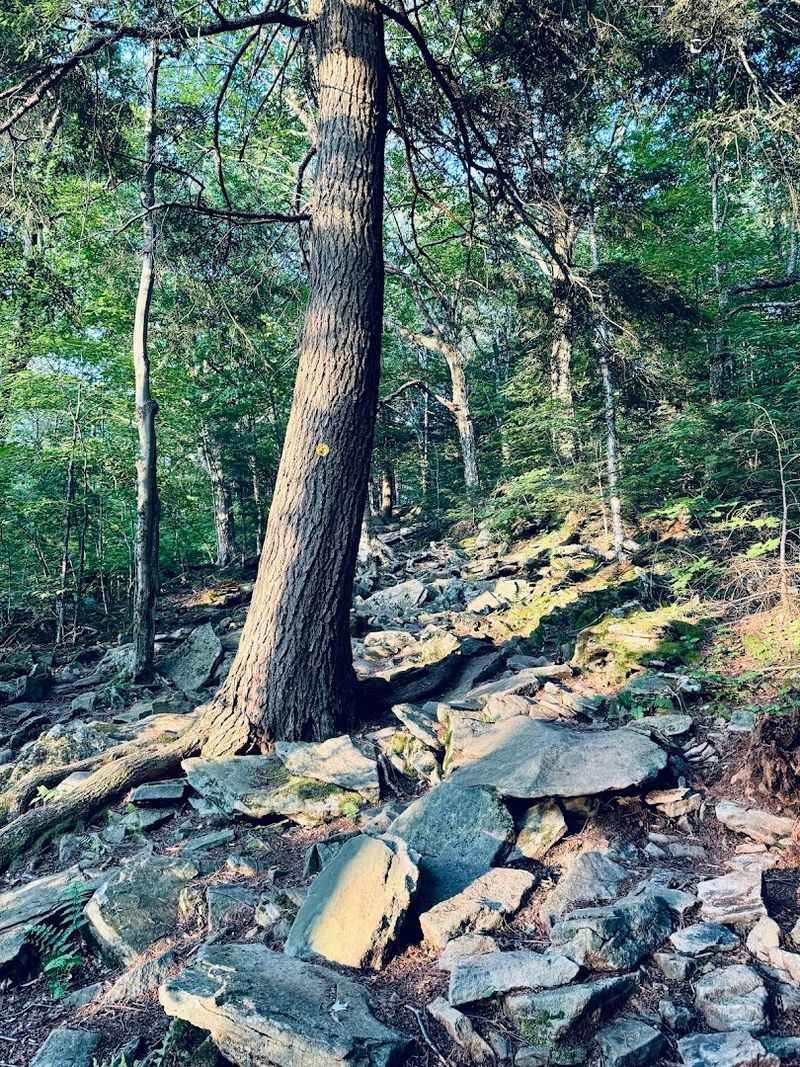
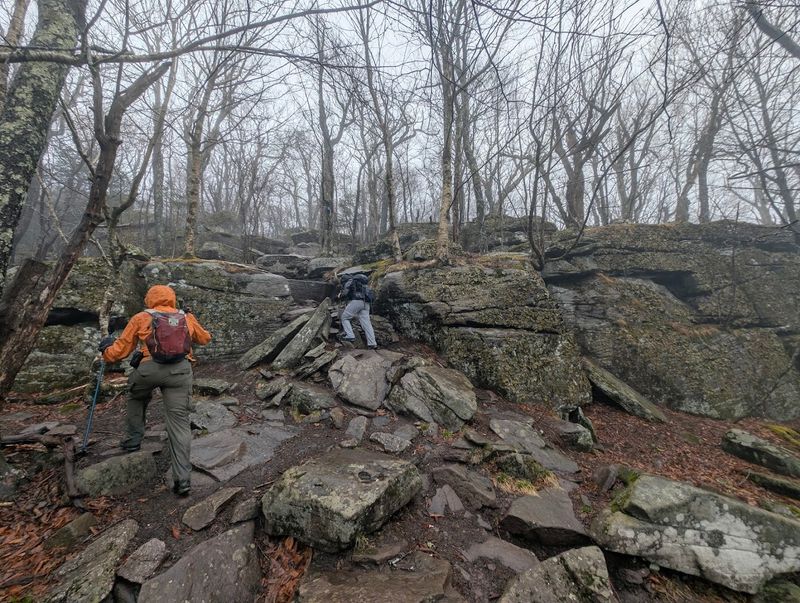
Giant Ledge Trail does not pretend to be easy, and that honesty is part of what makes it so satisfying. The ascent begins at a moderate pace before the trail shifts into a sustained rocky incline that demands attention with every step.
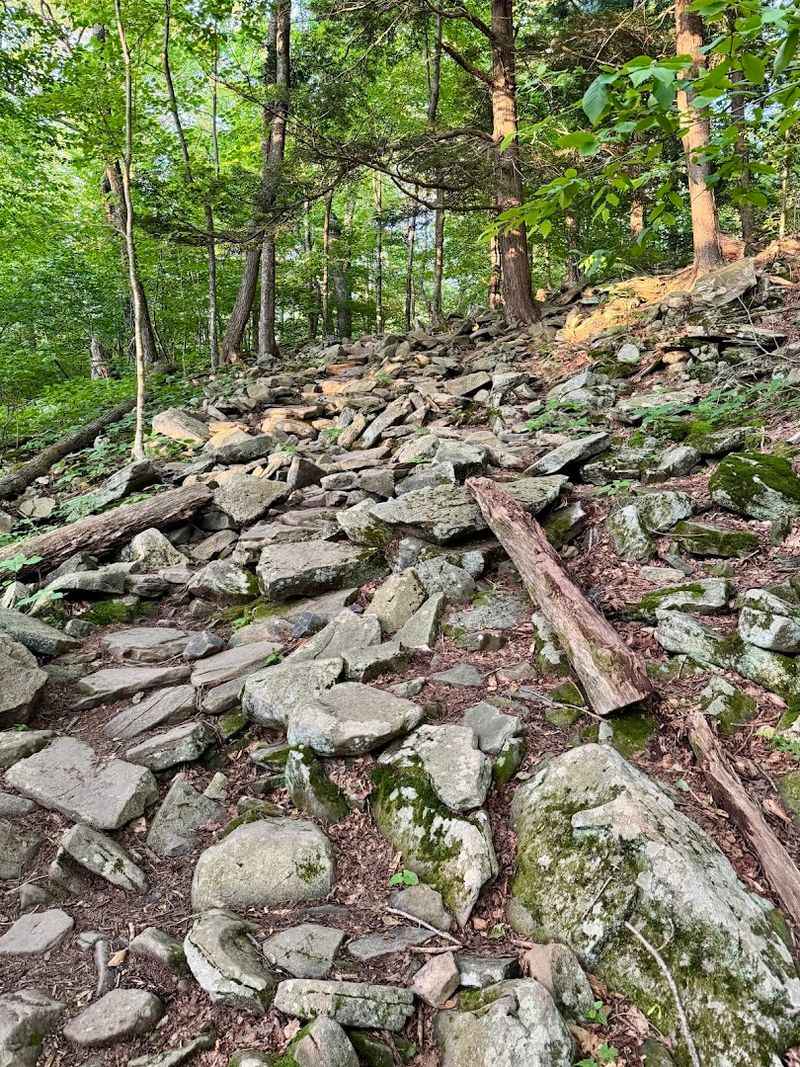
Large boulders, exposed roots, and uneven footing make up much of the upper section, and ankle support from proper hiking footwear is a practical necessity rather than a casual suggestion.
The general breakdown of the trail involves roughly 0.7 miles of rocky incline, followed by a flatter section of about 0.4 miles, and then another incline push to the first ledge viewpoint.
That rhythm gives your legs a brief moment to recover before the trail asks more of you, which makes the overall experience feel structured rather than relentless.
Rock scrambles appear in the middle section and add a layer of physical engagement that many hikers find genuinely enjoyable.
After snowfall, the trail transforms into an entirely different kind of challenge, with icy rocks and packed snow requiring careful footwork. Waterproof boots and trekking poles earn their weight in those conditions.
The descent is notably easier on the legs than the climb, though keeping your eyes on the trail at the fork on the way down is important to stay on the correct path.
Cold, Quiet, And Surprisingly Magical
Hiking Giant Ledge in winter is a different kind of experience, one that trades the warmth and color of fall for silence, snow, and a landscape that feels almost untouched. A blanket of snow across the Catskill ridgelines visible from the ledge creates a monochrome panorama that has its own quiet power.
The trail itself becomes more demanding in cold conditions, with icy patches on the rocky sections requiring deliberate footwork and a slower pace than warmer months allow.
Snowshoes and trekking poles are strongly recommended for winter visits, particularly after significant snowfall. The rocks that are merely tricky in summer become genuinely slippery when coated in ice, and the consequences of a misstep on a steep section are worth taking seriously.
Layering your clothing properly is equally critical, as temperatures at elevation drop noticeably compared to the trailhead, especially when the wind picks up across the open ledge.
The reward for making the effort in winter is a trail that feels entirely private. The crowds that gather on fall weekends essentially disappear, leaving you with the sound of wind through bare trees and an uncluttered view across a snow-covered mountain range.
Hikers who have visited in both seasons often describe the winter version as the more memorable one, precisely because of its stillness and the effort it genuinely requires.
What To Pack For A Hike That Demands Respect
Preparation separates a great hike from a miserable one on Giant Ledge Trail, and the gear you bring reflects how seriously you take the terrain. Footwear is the most consequential decision you will make before leaving home.
Hiking boots with ankle support and a grippy sole handle the rocky, root-covered trail far better than sneakers, which many hikers attempt and most regret by the halfway point. Waterproof boots are particularly valuable after rain or in colder months when the trail surface holds moisture.
Water is non-negotiable on this trail. There are no water sources along the route, and the physical demand of the ascent means you will consume more than you expect.
Carrying at least two liters per person is a reasonable baseline, with more if you plan to extend the hike toward Panther Mountain. Energy-dense snacks like nuts, dried fruit, or trail mix provide the kind of sustained fuel the climb requires without weighing your pack down unnecessarily.
A basic first aid kit, a fully charged phone with an offline map downloaded, and an extra layer of clothing round out the essentials.
Trekking poles deserve a mention here because they significantly reduce knee strain on the descent, which is longer and more repetitive than most hikers anticipate.
Packing light but smart is the philosophy the trail quietly enforces.
The Path Toward Panther Mountain
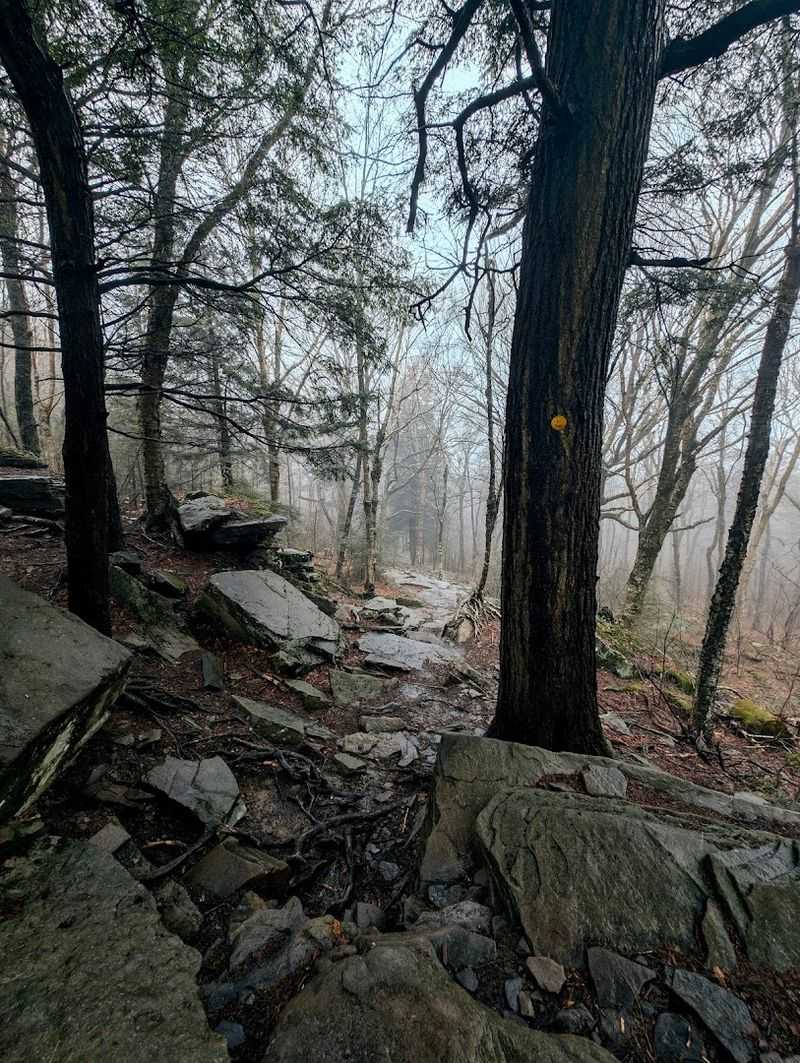
Giant Ledge is a destination in itself, but the trail does not end at the ledge for those who have energy and curiosity to spare. From the ledge, the path continues toward Panther Mountain, which sits at an elevation of 3,720 feet and represents one of the Catskills’ thirty-five high peaks.
The distance from the ledge to the Panther summit adds roughly one mile in each direction, and the elevation gain from that point is a comparatively modest five hundred feet, making it a manageable extension for hikers who arrived prepared.
The terrain between the ledge and Panther Mountain is notably easier than the initial ascent from the trailhead, which comes as a welcome shift after the rocky climb.
The path moves through mature forest with a calmer grade, and the summit of Panther offers its own set of views, though they are more enclosed by trees than the open ledge below.
Hikers who complete both peaks in a single outing describe the combined experience as one of the more satisfying half-day adventures available in the Catskills.
The trail can also be approached from the opposite direction via Woodland Valley Campground or Oliverea Road for those interested in a point-to-point experience. Planning that kind of route requires a car shuttle but rewards you with a fuller sense of the mountain’s character from multiple angles.
The Wildlife And Forest Life That Share The Trail With You
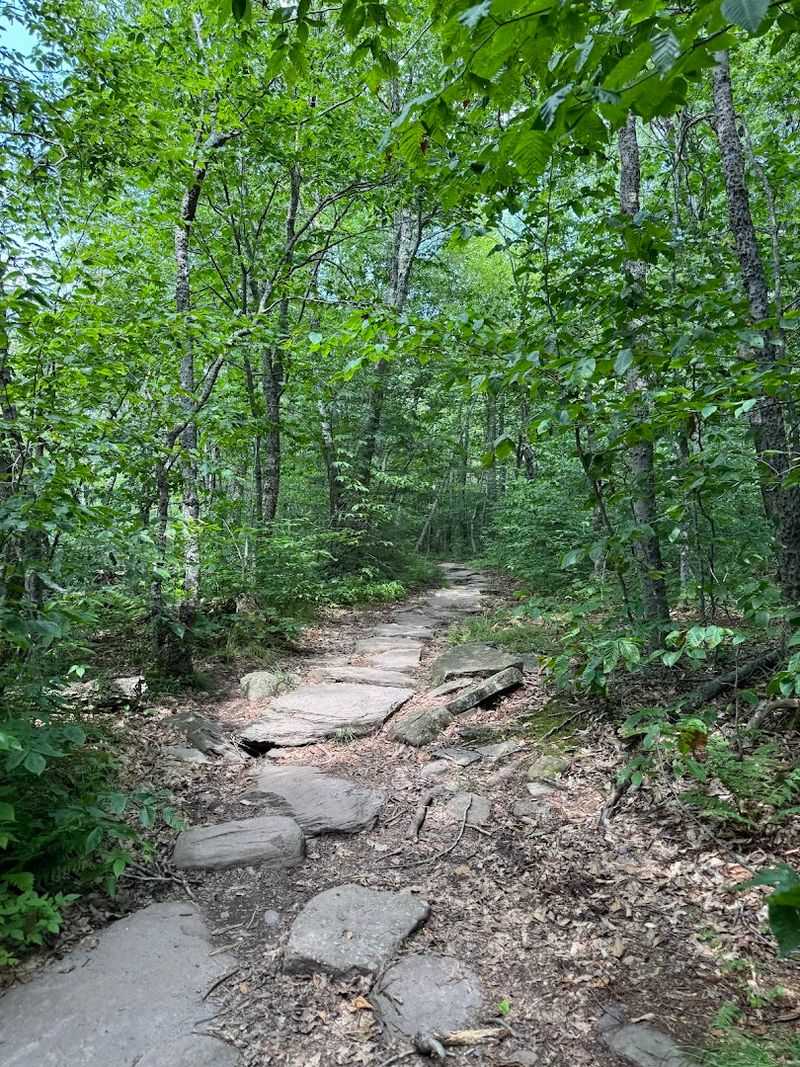
Giant Ledge Trail passes through a dense, mature Catskill forest that is far more alive than it might first appear to a hiker focused on the rocky path underfoot.
Chipmunks are the most visible and reliably entertaining residents of the trail, appearing with striking regularity near the ledge and showing little concern for human proximity.
They have clearly concluded that hikers carrying snacks represent an opportunity, and their boldness at close range is genuinely amusing.
The forest itself is a mix of hardwoods and conifers that shifts in character as you gain elevation, moving from a leafy lower canopy to a denser, more rugged upper section where the trees grow shorter and the light filters differently. Birdsong accompanies most of the ascent, with a variety of species audible even when invisible through the foliage.
Deer are occasionally spotted in the quieter morning hours, particularly in the lower sections of the trail closer to the road.
Black bears are present in the Catskill region generally, and while encounters on this specific trail are uncommon, awareness of your surroundings remains a sensible habit. Making reasonable noise on the trail and keeping food secured in your pack are standard practices that apply throughout the Catskills.
The forest rewards those who move through it with attention rather than speed.
Why Giant Ledge Trail Belongs On Your New York Hiking List
There are hundreds of trails across New York State, and a meaningful number of them offer pleasant walks through attractive scenery.
Giant Ledge Trail operates at a different level because it asks something of you before it gives anything back, and that exchange creates a connection to the place that a flat, easy path simply cannot replicate.
The physical investment of the rocky ascent makes the ledge views feel genuinely earned rather than incidentally stumbled upon.
The trail holds a 4.9-star rating from hikers who have made the trip, and that kind of consistent satisfaction across dozens of visits reflects something real about the experience rather than a single lucky day. Families with older children, solo hikers, and groups of friends all find something different in the same stretch of mountain, which speaks to the trail’s unusual range of appeal.
The Catskills as a region carry a long history of drawing people out of the city and into something more grounded, and Giant Ledge Trail sits comfortably within that tradition.
Planning a visit requires modest preparation but no special expertise, and the DEC trail system keeps the path marked and reasonably maintained throughout the year. For anyone who has been looking for a New York hike that delivers genuine reward in exchange for genuine effort, this is the trail that belongs at the top of the list.