
You’ll Never Forget Visiting This Historic Covered Bridge In New York And Grabbing Pizza Nearby
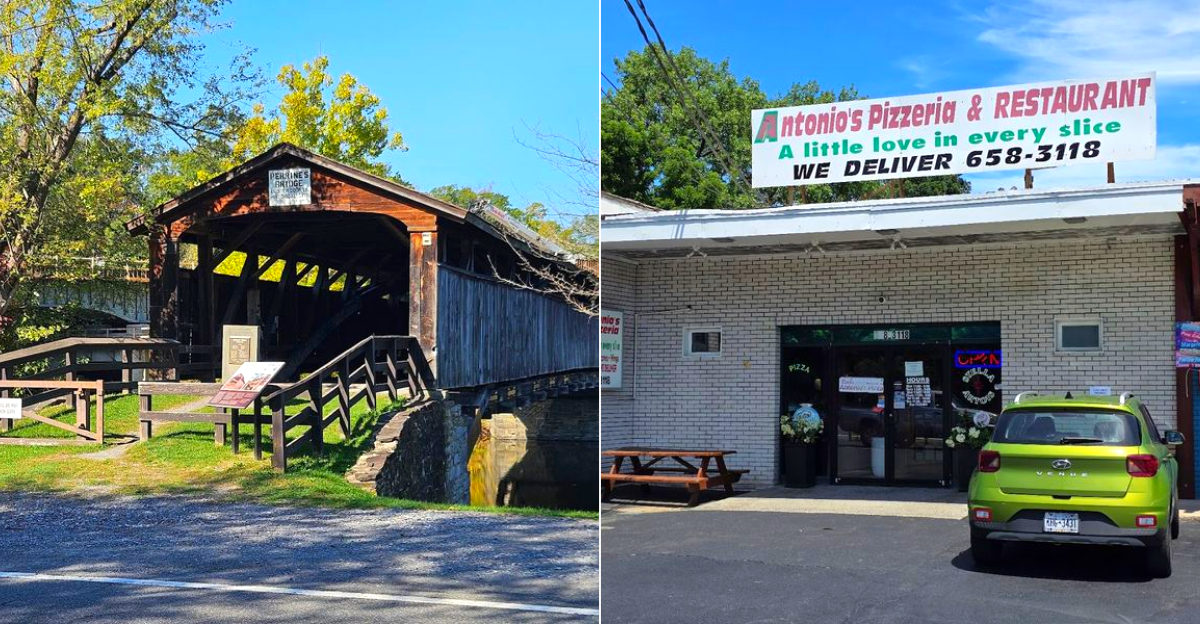
A simple stop can turn into something far more memorable in the right setting. In New York, this historic covered bridge offers exactly that kind of experience, blending quiet charm with a sense of history you can actually walk through.
The structure itself feels like a step back in time, with weathered wood, scenic surroundings, and a peaceful atmosphere that makes you slow down without thinking about it.
What makes the visit even better is what comes after. Not far away from this historic New York bridge, a local pizza spot adds the perfect finishing touch, turning a quick photo stop into a full outing worth remembering.
It is that easy mix of history, scenery, and good food that makes the whole trip stick with you long after you leave.
A Bridge That Defies The Ordinary
Some places earn their reputation quietly, without fanfare or advertising, simply by enduring. Perrine’s Covered Bridge has been doing exactly that since 1844, outlasting generations of travelers, two centuries of weather, and every trend that has swept through American architecture since the mid-1800s.
Standing 154 feet long and crossing the Wallkill River with a single graceful span, it belongs to a category of structures that most people only see in old photographs.
The Burr arch truss design used in its construction was a practical and elegant solution that American builders favored during the 19th century. This technique combined a multiple kingpost truss with a long arch, giving the bridge both strength and flexibility that helped it survive far longer than most of its contemporaries.
Engineers and woodworking enthusiasts still find the design genuinely instructive.
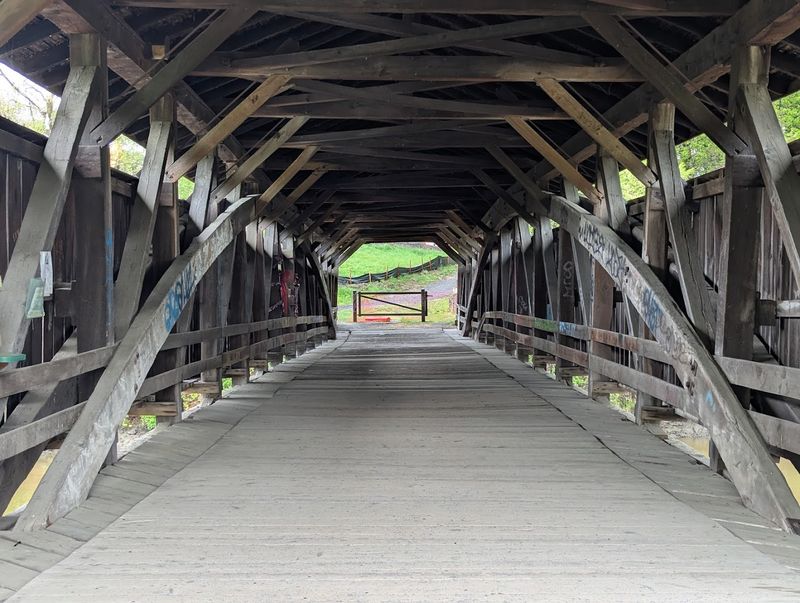
Located on NY-213 near New Paltz, the bridge sits in a setting that rewards anyone willing to slow down. A small parking area nearby makes access easy, and from the moment you step inside the wooden corridor, the atmosphere shifts noticeably.
The sounds of the river below and the filtered light through the aged timber create an experience that no photograph fully captures.
Perrine’s Covered Bridge And Its Place In New York History
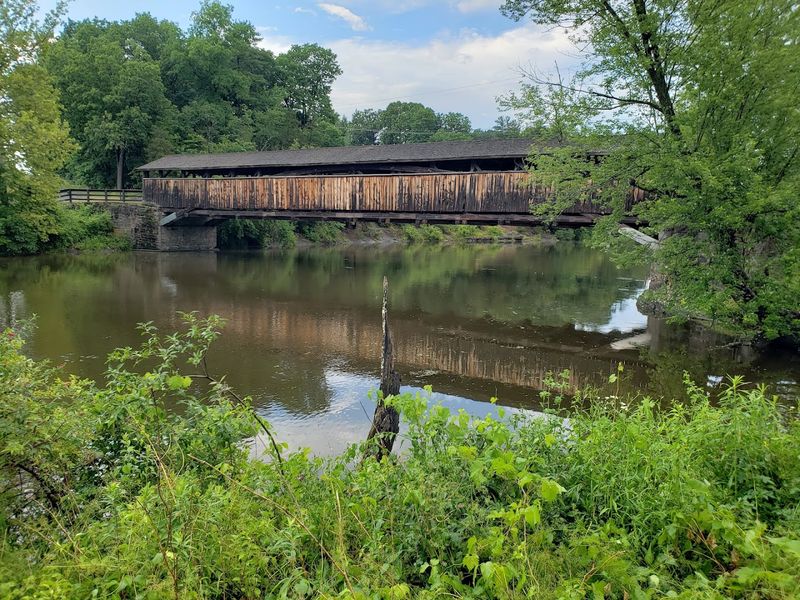
Perrine’s Covered Bridge holds the distinction of being the second-oldest covered bridge in New York State, a title that carries real weight when you consider how many structures from that era have been lost to fire, flood, or neglect.
Built in 1844, the bridge was named after James Perrine, who operated a tavern and hotel near the crossing and was a well-known figure in the local community at the time.
The bridge was rehabilitated in 1993, a restoration effort that preserved its original character while reinforcing its structural integrity for continued public access.
That balance between preservation and practicality is something historic sites often struggle to achieve, and the result here is a structure that feels authentic rather than reconstructed.
Walking across it, you get the sense that the wood remembers everything.
Situated in Rosendale in Ulster County, the bridge is also visible from the New York State Thruway between mile markers 81 and 82, which means many drivers have caught a glimpse of it without ever stopping. Those who do stop and walk across it tend to find the experience more affecting than they expected.
History has a way of becoming real when you are standing inside it.
What To Expect When You Arrive At The Bridge
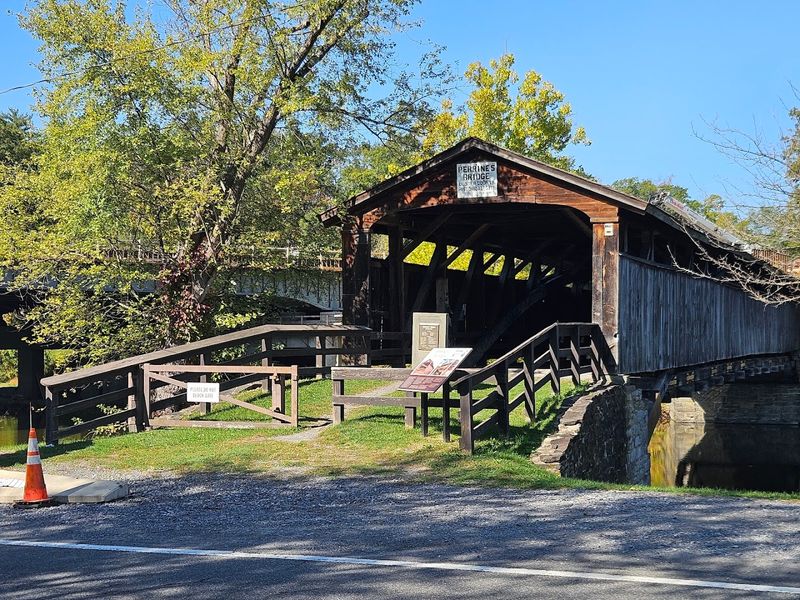
Arriving at Perrine’s Covered Bridge for the first time is a straightforward experience, and the simplicity of it is part of the appeal. A few parking spots are available close to the bridge on NY-213, and from there it is a short, easy walk to the entrance.
No admission fee is required, and the site is open every day of the year at all hours, which makes spontaneous visits entirely reasonable.
Once inside the bridge, the change in atmosphere is immediate. The wooden walls and ceiling block out the surrounding landscape and replace it with something more intimate, a corridor of aged timber that smells faintly of old wood and river air.
Looking down through the gaps in the floorboards, you can see the Wallkill River moving steadily beneath you, which adds a gentle sense of motion to an otherwise still experience.
Just up the road from the bridge, a picnic area sits at the water’s edge with benches and tables available for anyone who wants to linger. Fishing is permitted in the area as well, so families with kids often turn the visit into a longer outdoor outing.
The bridge itself is closed to vehicle traffic, meaning the walkway belongs entirely to pedestrians and the sounds they carry with them.
The Architecture That Has Kept It Standing For Nearly Two Centuries
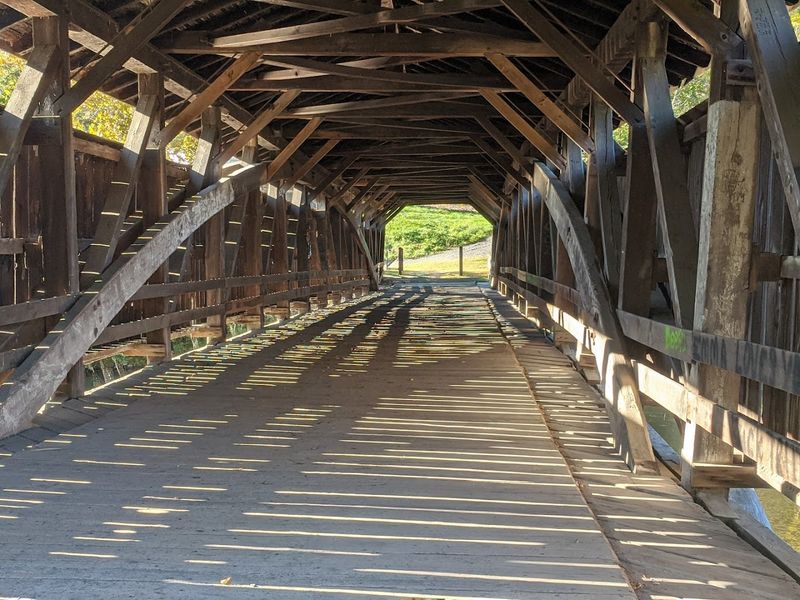
Few structural designs in American history have proven as durable and well-considered as the Burr arch truss, and Perrine’s Covered Bridge is one of the finest surviving examples of it in the northeastern United States.
Developed by Theodore Burr in the early 1800s, the design layers a continuous wooden arch beneath a multiple kingpost truss, creating a redundancy that distributes weight and resists the kind of stress that destroys simpler structures over time.
The reason covered bridges were roofed and enclosed had nothing to do with aesthetics. Protecting the wooden load-bearing elements from rain and snow extended the lifespan of these bridges dramatically, sometimes by several decades.
An uncovered wooden bridge might last ten to fifteen years, while a properly maintained covered bridge could serve a community for well over a century, as Perrine’s has proven emphatically.
At 154 feet, the single span crossing the Wallkill is a notable engineering achievement for its era. Builders in the 1840s worked without modern tools, computer modeling, or prefabricated materials, relying instead on experience, geometry, and the quality of locally sourced timber.
The fact that this bridge still stands and still welcomes visitors is a tribute to the skill and patience of the craftsmen who built it without any expectation that their work would still be admired nearly two hundred years later.
Photography Opportunities That Will Fill Your Camera Roll
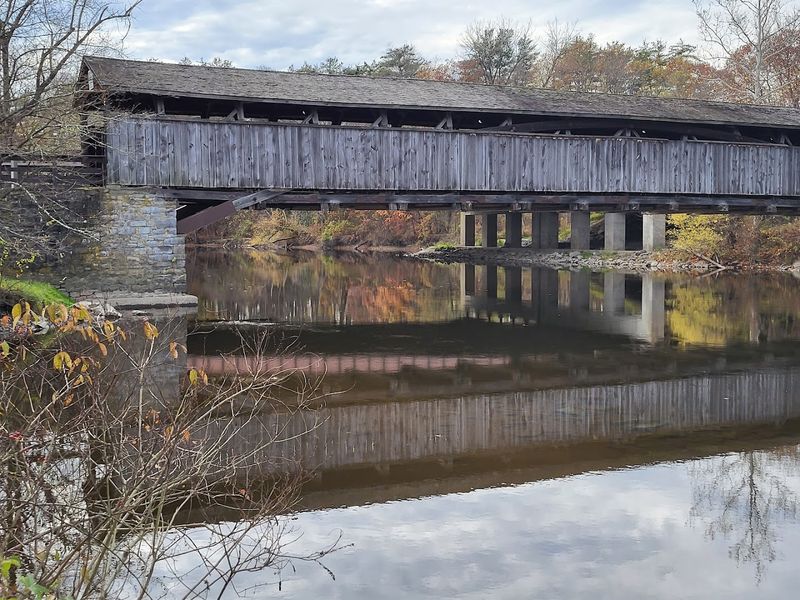
Perrine’s Covered Bridge is the kind of place that makes even casual photographers put down their phones and reach for a proper camera. The combination of aged timber, flowing water, surrounding vegetation, and open sky creates a layered composition that works from nearly every angle.
Morning light tends to fall softly across the river, while late afternoon casts longer shadows through the bridge’s open ends and along the wooden siding.
Standing inside the bridge and shooting toward either opening produces a natural frame effect, with the circular or rectangular portal of light at each end drawing the eye outward toward the river and trees beyond.
That framing technique requires almost no skill to execute and consistently produces striking results.
Visitors with any level of photography experience find the bridge cooperative in ways that more manicured tourist sites rarely are.
The surrounding area also offers complementary subjects for a full afternoon of shooting. The red steel highway bridge that crosses the Wallkill nearby on Route 32 provides an interesting contrast to the wooden covered bridge, and the river itself reflects the sky and trees in ways that reward patience.
Bringing a wide-angle lens and arriving before noon tends to yield the most versatile set of images. Did you know the bridge is also visible from the New York State Thruway, giving it a brief but memorable cameo for passing drivers?
Antonio’s Pizzeria And Why It Belongs On Your Itinerary
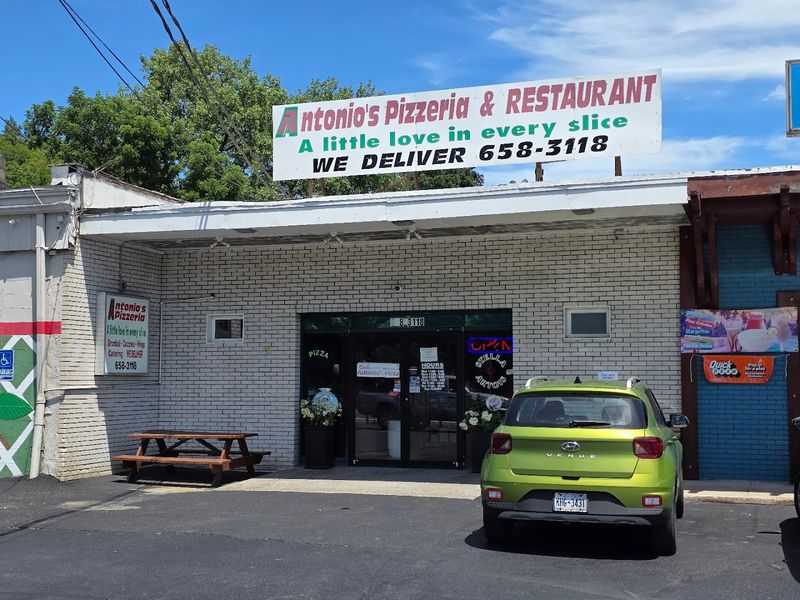
After spending time at Perrine’s Covered Bridge, the drive back through the New Paltz area naturally invites a stop for food, and Antonio’s Pizzeria has built a strong reputation as the kind of place that earns repeat visits.
Located at 1030 Bridge Plz # 2, Rosendale, NY 12472, Antonio’s offers a straightforward and satisfying menu centered on well-made pizza with quality ingredients and the kind of generous portions that make a long day of exploring feel properly rewarded.
The pizza here tends toward the classic end of the spectrum, with a crust that holds its structure without becoming stiff, and toppings applied with enough care to suggest the kitchen takes its work seriously.
For anyone who has spent a morning walking across historic bridges and taking in river views, sitting down to a hot slice in a relaxed setting feels like the natural conclusion to the outing.
Antonio’s also works well for groups and families, which makes it a practical choice after a visit to the bridge with kids or friends who have varying appetites. The atmosphere is casual and unhurried, consistent with the pace that the surrounding Hudson Valley tends to set for visitors.
Pairing a historic outdoor landmark with a reliable local restaurant is a straightforward formula, and this particular combination executes it with enough quality on both ends to make the day genuinely memorable.
Planning Your Visit To Make The Most Of The Day
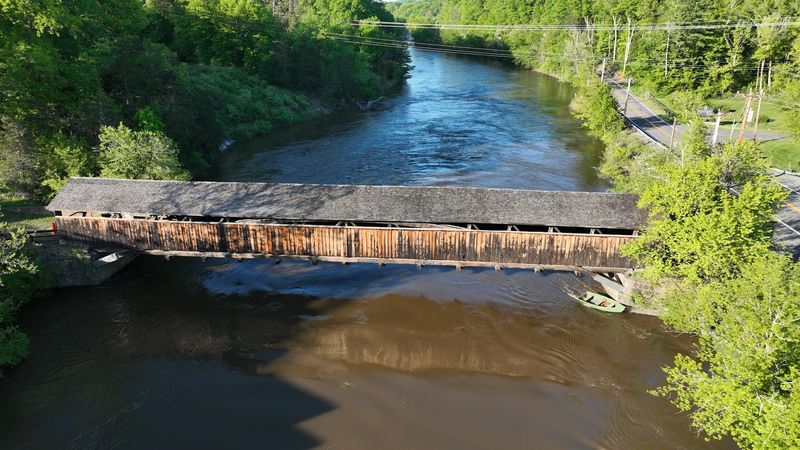
Getting to Perrine’s Covered Bridge from New Paltz is uncomplicated and takes less than ten minutes by car. Head north on Route 32 from New Paltz and turn right onto NY-213, continuing for about a third of a mile.
The bridge will appear on your left, and the small parking area is easy to spot. The address is NY-213, New Paltz, NY 12561, and the site operates around the clock every day of the week with no cost to enter.
Spring and fall tend to offer the most visually rewarding conditions. In spring, the Wallkill runs fuller and the surrounding trees carry fresh growth that softens the landscape around the bridge.
In autumn, the foliage transforms the scene entirely, and the warm colors against the weathered wood of the bridge create the kind of setting that photographers plan entire trips around.
Combining the bridge visit with a meal at Antonio’s Pizzeria makes for a well-rounded half-day outing that covers both history and appetite without requiring extensive planning.
The Hudson Valley region surrounding New Paltz also offers additional stops for those who want to extend the trip, including hiking trails, local farms, and scenic overlooks.
Keeping the pace relaxed and the expectations modest tends to produce the most satisfying results when exploring this part of New York.