
23 Towering Columns Stand In A Quiet Mississippi Field, And Walking Among Them Costs Your Family Nothing
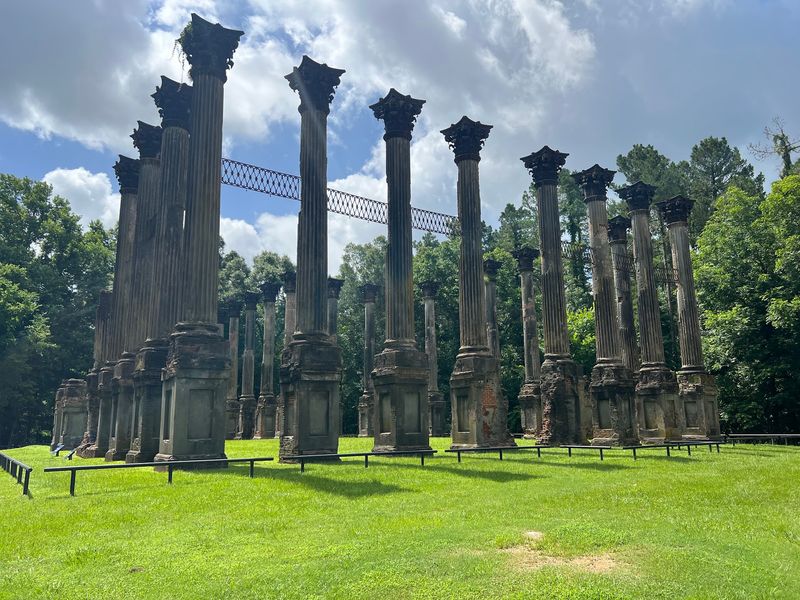
Nobody warned me that a quiet, curvy back road in Mississippi would end at a row of stone giants. One minute we were eyeing the woods and wondering where to find snacks, and the next, tall columns rose out of a grassy clearing like something from a storybook.
It cost nothing to walk around them, and the kids asked more history questions in fifteen minutes than they do all week. If you want a cheap Saturday outing that feeds curiosity, this one belongs on your list.
Stone Giants In Claiborne County
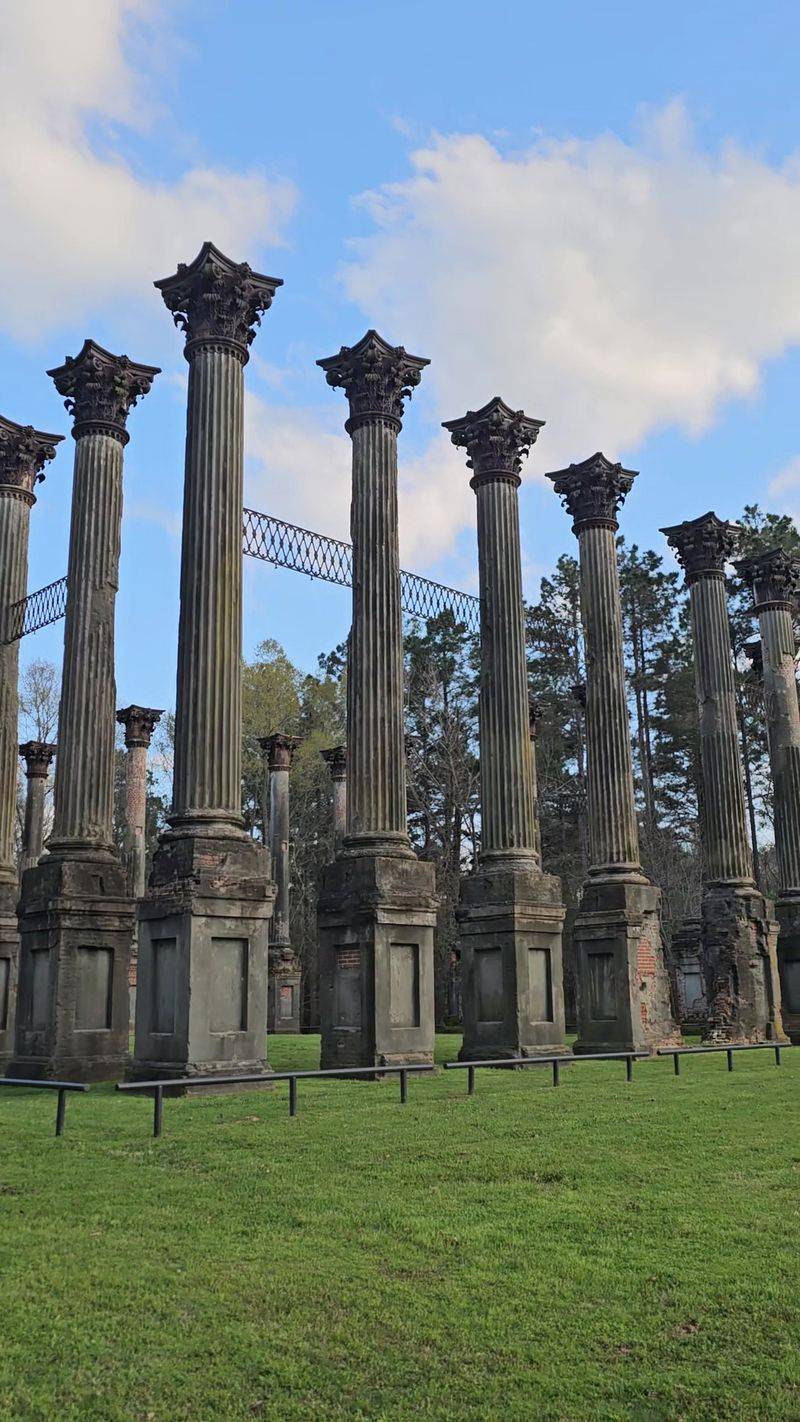
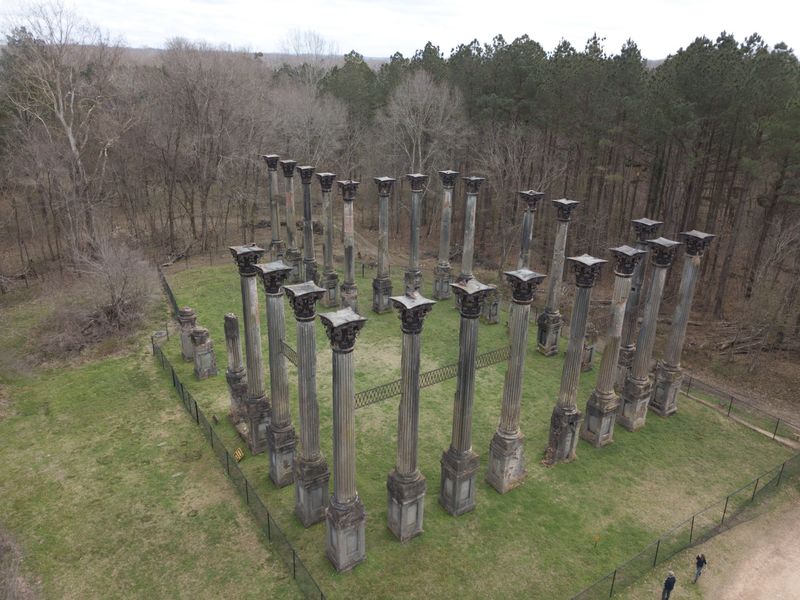
Picture a thick pine and hardwood forest in southwest Mississippi, then a sudden clearing with 23 towering columns reaching toward the sky. That surprise is the heart of the Windsor Ruins, a state historic site in rural Claiborne County, roughly 10 to 12 miles southwest of Port Gibson.
The columns are what remain of a grand plantation mansion that burned in 1890.
The site sits along Rodney Road, far from gas stations and shopping centers. Visitors often describe the approach as a long drive through the woods before the stone shapes appear all at once.
For kids, that reveal can feel a bit like finding a lost castle.
Today the ruins are cared for by the Mississippi Department of Archives and History. There is no attendant at the gate, no ticket booth, and no gift shop.
Families simply pull in, park, and walk around the columns at their own pace.
What makes the stop special is the mix of beauty and learning. The carved tops, iron pieces, and new history signs turn a short walk into a real lesson about the past, both proud and painful.
Few places in the state pack that much story into such a small, quiet patch of ground.
Cotton Fortune Behind The Mansion
Smith Coffee Daniell II was a wealthy cotton planter, and between 1859 and 1861 he built what became the largest antebellum Greek Revival mansion in Mississippi. The house rose five stories and held somewhere between 23 and 25 rooms.
It even had indoor bathrooms, a rare luxury at the time.
How did one family pay for something so huge? The answer lies in the 2,600-acre plantation around it and the work of more than 300 enslaved people.
Their labor grew the cotton, and many historians agree their hands helped build the house itself.
Kids may be surprised to learn that Daniell lived in the finished home for only a short time before he passed away. That twist often comes up in conversations at the site, and it helps children see that big houses do not always mean happy endings.
Parents can use this chapter to talk about fairness and whose stories get told. The signs on the grounds now share both sides, which makes it easier to explain gently.
A simple question like, who really did the work here, can open a thoughtful family talk on the drive home.
A House That Survived The Civil War
Here is a fact that surprises many young visitors: the Civil War did not bring this mansion down. Union troops used the house as a hospital and as an observation post, and that role is credited with keeping it standing while other homes in the region were lost.
The rooftop observatory helped explain why soldiers valued the spot. From up high, they could look out across the land toward the Mississippi River.
For a curious kid, imagining lookouts scanning the horizon from the roof can make the past feel more real than any textbook page.
Contrast that with what came later. The home made it through years of conflict, only to be lost decades afterward in a single accident.
That irony tends to stick with children, and it often prompts questions about luck, timing, and how history can turn on small moments.
Families who enjoy connecting dots can pair this stop with other Civil War sites along the nearby Natchez Trace corridor. Even without extra stops, the story here gives kids a clear example of how buildings serve different purposes as times change.
Standing below the columns, it is easy to picture the busy scene they once watched over.
The Fire Of February 1890
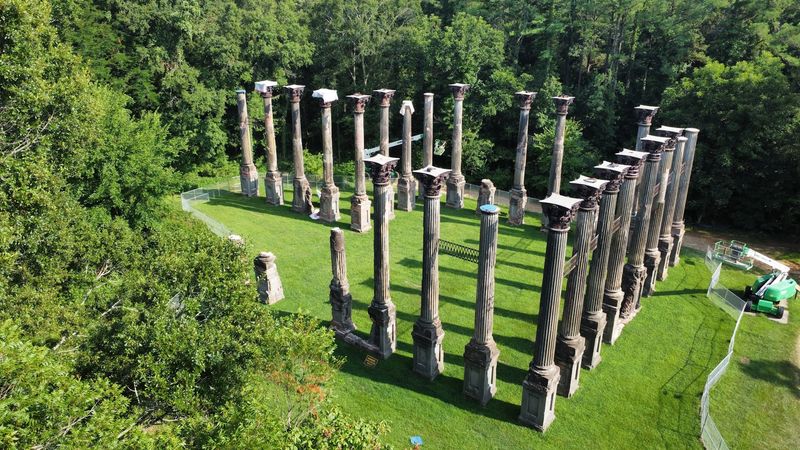
On February 17, 1890, a guest left a lighted cigar on an upper balcony. Sparks caught, and the flames spread through the entire mansion.
By the time it was over, only the tall columns and a few iron pieces remained.
Kids usually want to know how something so big could vanish so quickly. The answer makes a great safety lesson.
Wooden floors, walls, and stairs burned easily, while the brick and plaster columns held on. Pointing out which materials lasted helps children understand why the ruins look the way they do today.
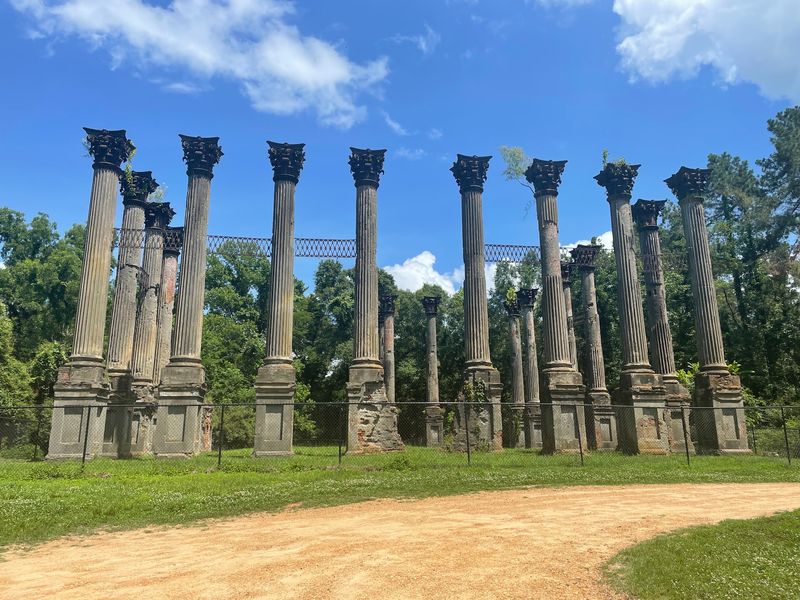
Walk the path slowly and the story becomes visible. Some columns stand whole, others are partial, and bits of balustrade still cling in places.
Visitors often say they can almost see the outline of the house when they stand back and let their eyes fill in the missing rooms.
Grandparents may enjoy sharing how fire safety has changed over the years. Smoke detectors, sprinklers, and fire departments are common now, but back then a single careless moment could erase a family home.
It is a calm, practical way to turn a sad chapter into something useful for young listeners.
Corinthian Capitals And Craftsmanship
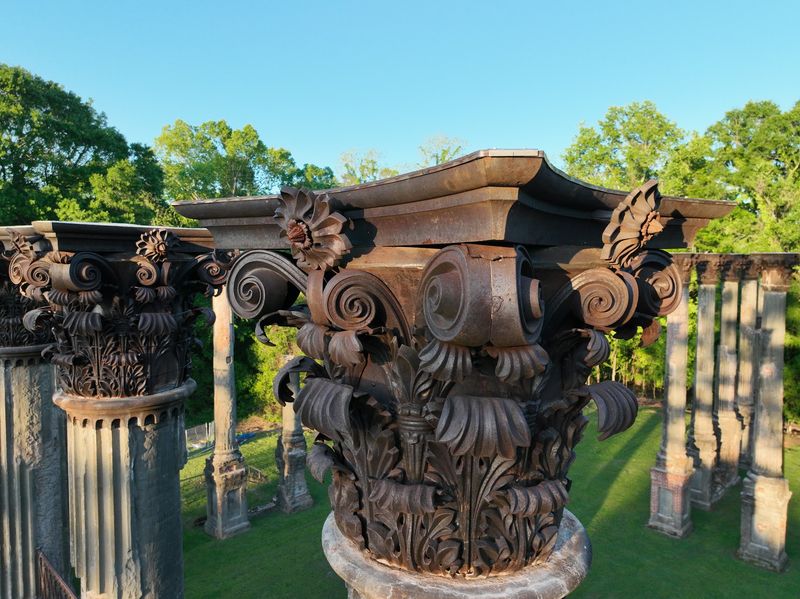
Look up. Way up.
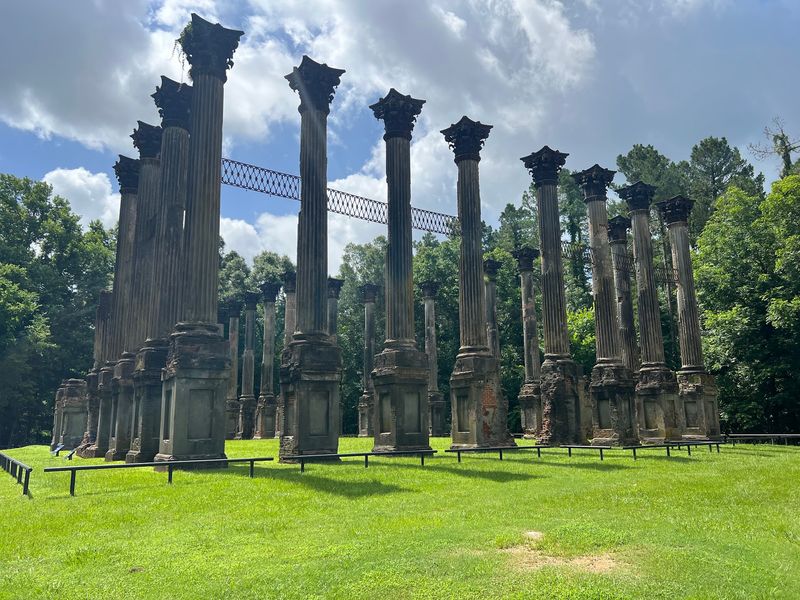
At the top of each column sits a carved capital shaped with curling leaves, a style called Corinthian that traces back to ancient Greece. Children who have studied Greek myths may light up when they realize the same design sits in the middle of the Mississippi woods.
Visitors frequently mention the craftsmanship, from the pillars themselves to the hand-worked iron. The columns were built from brick and covered in plaster, then finished with those decorative tops.
Seen together, the row creates a pattern that feels both grand and a little mysterious.
Why did builders choose this style? Greek Revival architecture was popular in the South before the Civil War, and wealthy owners wanted homes that looked like temples.
Explaining that trend gives kids an easy entry into art history.
Here is a fun activity: have each child pick a favorite column and sketch its capital in a small notebook. Some will notice cracks, others will spot missing leaves or tiny details.
The drawings make a free souvenir, and they encourage slow, careful looking instead of a quick glance and a dash back to the car.
Iron Stairs With A Second Home
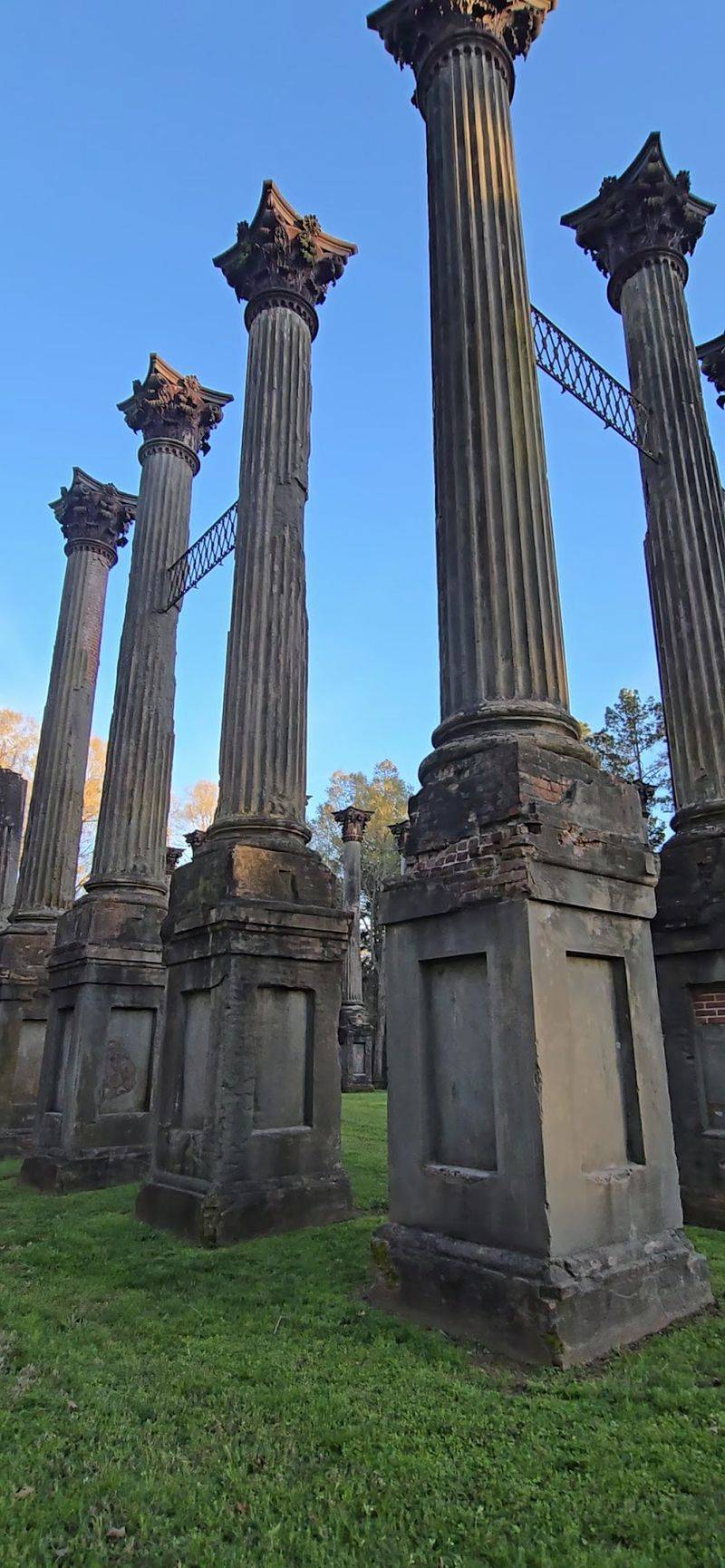
One of the original cast-iron staircases from the mansion did not stay put. It now lives at Oakland Memorial Chapel on the campus of Alcorn State University, not far from the ruins.
That means families can see a real piece of the house up close, even though the house itself is gone.
At the site, remnants of iron stairs and balustrades still hang among the columns. Kids can compare what they see in the clearing with the full staircase at the chapel.
That side-by-side view helps them imagine climbing from floor to floor inside the old mansion.
Curious about how iron survived the fire when wood did not? Metal handles heat far better than timber, so pieces of it lasted.
It is a simple science lesson hiding inside a history trip.
Planning both stops can stretch a short outing into a fuller afternoon. Visitors heading to Alcorn State or the old town of Rodney often mention the ruins as an easy add-on.
Check campus access ahead of time, since hours and visitor rules at the university may vary, and build in time for the quiet country drive between the two.
Stories On The Newer Signs
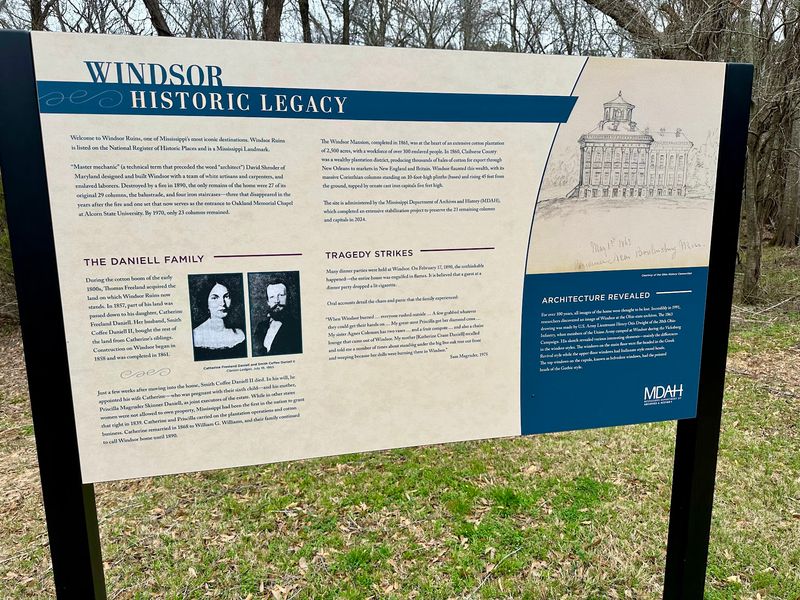
Reading stations now line the walk, and they add a lot. As part of a stabilization project finished in 2023, the state installed new signs that give broader context to the ruins.
They cover the families who owned the plantation and the enslaved people who lived and labored there.
Visitors say the placards help them understand exactly what they are looking at. Some mention reading on site, then looking up more history once they got home.
For kids, the signs work like chapters in a picture book, one stop at a time.
Older children can take turns reading aloud while younger ones hunt for matching details on the columns. Ask questions as you go.
Where would the kitchen have been? Who cooked the meals?
What might daily life have felt like for a child who was enslaved here?
Honest history can feel heavy, but the signs make it approachable for different ages. Grandparents often bring their own memories and family stories into the conversation, turning the walk into a shared lesson across three generations.
Plan for mosquitoes if you linger, since visitors recommend bug spray for anyone who stops to read every panel.
Level Trail Around The Columns
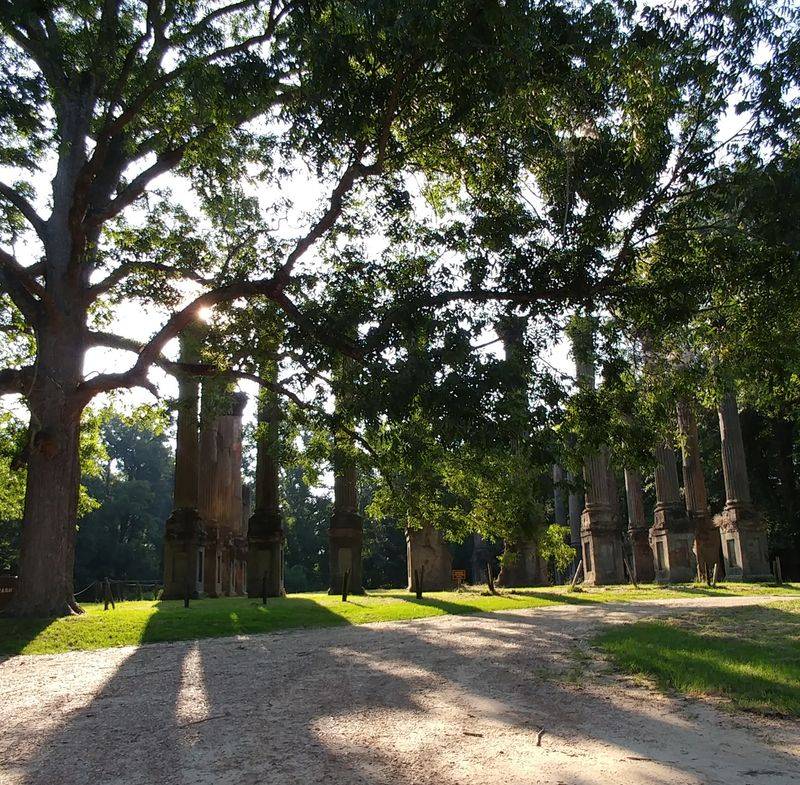
Strollers, walkers, and wheelchairs are welcome here more than ever. The 2023 project added an ADA-accessible walking trail around the perimeter of the columns.
Visitors describe the gravel path as fairly level all the way around.
A low pipe rail now keeps vehicles away from the ruins while leaving plenty of room to walk. Earlier construction fencing has been removed, according to recent visitors.
You still cannot step inside the ring of columns, since they are not stable enough, but the view from the path stays close and clear.
How long does the loop take? Many visitors say about 15 minutes covers it, though families who read every sign or draw pictures may stay longer.
That short length suits little legs and grandparents who prefer an easy pace.
Handicap parking and trash bins have also been added near the entrance. The grounds are described as clean and nicely landscaped, which makes the stroll pleasant.
For multi-generational groups, the combination of a flat path and a short distance means nobody has to sit in the car while everyone else explores. Just remind kids to stay on the trail and admire the columns from outside the rail.
Quiet Woods And Picnic Moments
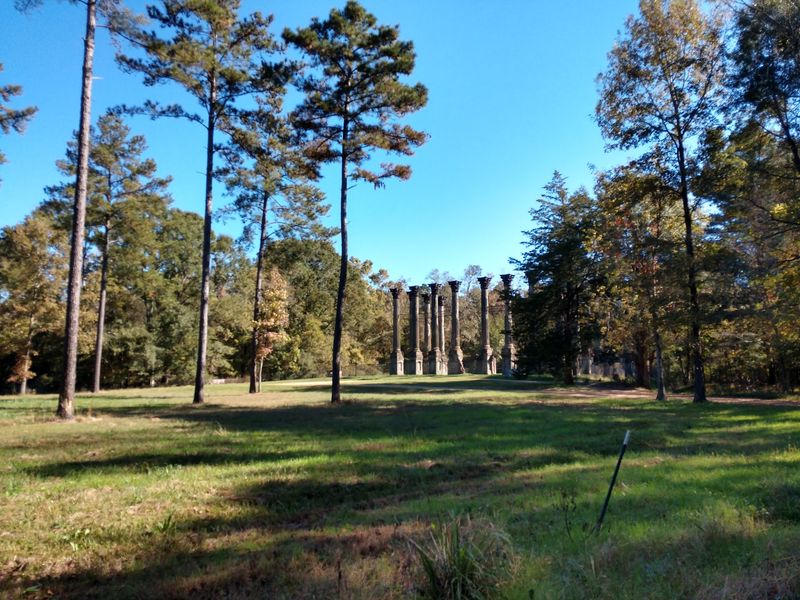
Silence greets you first. Visitors often describe the ruins as peaceful, and some mention having the whole place to themselves.
Birds, rustling leaves, and the crunch of gravel may be the only sounds you hear.
A picnic table sits on the grounds, which makes packing lunch a smart move. There is no concession stand, so sandwiches, fruit, and plenty of water turn the stop into a low-cost meal break.
A big old tree out front adds shade and a sense of age that some visitors say feels as historic as the columns.
Families in the summer months should plan around Mississippi heat. Early morning or late afternoon visits tend to feel cooler, and the site opens at 8 am.
Bring hats, sunscreen, and bug spray, since mosquitoes can be busy near the woods.
Artists and photographers enjoy the setting too. One visitor suggested it would make a lovely spot for painting outdoors.
Kids can join in with crayons or a cheap camera, capturing columns against the sky. The calm atmosphere invites everyone to slow down, which can be a welcome change from noisy playgrounds and crowded attractions.
Who Gets The Most From A Visit
History-loving kids top the list, especially those studying Mississippi in school. The site even appears on the Exploring Mississippi climbing map at the Mississippi Children’s Museum, so some children may recognize the name before they arrive.
Road trippers benefit too. If you are driving between Natchez and Vicksburg, visitors say the ruins make an easy stretch-your-legs stop.
The Natchez Trace Parkway connects near milepost 30, which helps families fold the visit into a longer day.
Grandparents and new drivers may enjoy the journey as much as the destination. One visitor described teaching a granddaughter to drive on the hilly, curvy back roads, and motorcyclists praise the winding route toward Jackson.
About 3 miles south, the historic Bethel Presbyterian Church, built in 1823, offers another peaceful stop.
Who might want to skip it? Families expecting playgrounds, snack bars, or big exhibits could find it too simple.
The appeal is quiet wonder rather than entertainment. For children with good imaginations and adults who like a story, though, the payoff often feels much bigger than the short time spent walking around the columns.
Hours, Cost, And Getting There
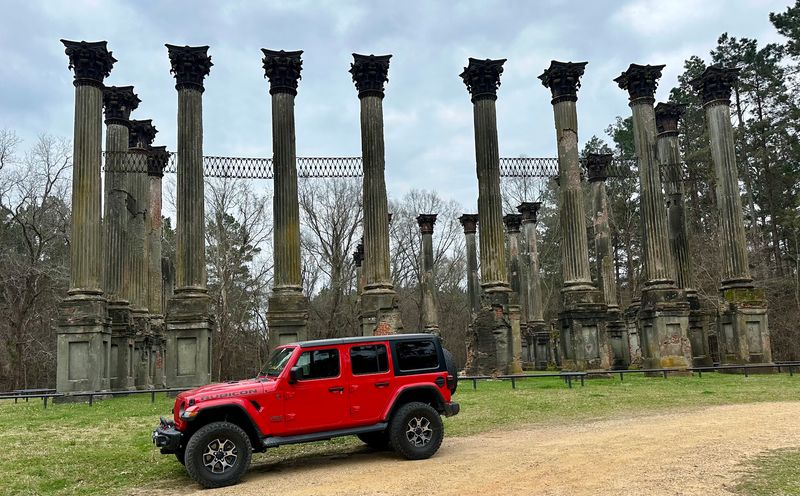
Admission is free. That single fact makes the ruins one of the easiest history outings a Mississippi family can plan.
Current listings show the site open daily from 8 am to 7:30 pm, and the state describes access as dawn to dusk.
From Jackson, the drive takes roughly 1 hour and 15 minutes. Meridian families can expect about 2 hours and 15 minutes, Hattiesburg around 3 hours, the Gulf Coast about 4 hours and 15 minutes, and Tupelo close to 5 hours and 15 minutes.
Most routes reach the site via Mississippi Highway 552, often from the Natchez Trace Parkway.
Plan ahead, because there are no restrooms on site and no stores nearby. Fill the gas tank, use facilities in Port Gibson, and pack snacks.
Dining options close to the ruins are limited, so a cooler lunch can save both time and money.
Roads in the area can flood during certain times of year. Checking local conditions before leaving may prevent a wasted trip.
Once you arrive, just drive through the gates, park, and start walking. With no attendants, families set their own schedule and pace.
Why The Columns Stay With You
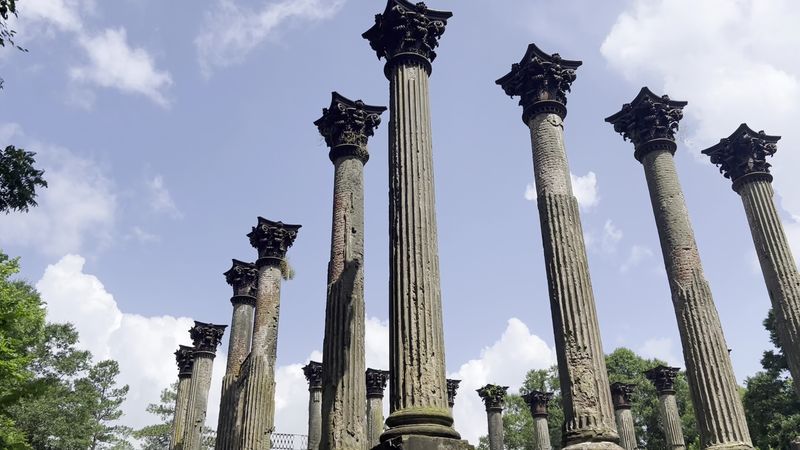
Long after the car pulls away, those columns tend to linger in young minds. Maybe it is the size, or the mystery of empty space where rooms once stood.
Either way, kids often keep asking questions for days.
Consider what the outing costs: a tank of gas, a packed lunch, and maybe a can of bug spray. In return, families get architecture, science, Civil War history, and honest lessons about slavery, all on a flat, short trail.
Few Saturday plans offer that much learning for so little money.
Visitors frequently describe the scene as breathtaking and say they cannot stop imagining how the house once looked. That sense of wonder is exactly what makes it valuable for children.
It invites them to build the mansion in their heads, then think about the people who lived and worked inside.
So if your family enjoys quiet places with big stories, pencil this one in for a cool morning. Bring a notebook, a sense of curiosity, and maybe a grandparent with tales of their own.
The columns will handle the rest, standing tall just as they have for well over a century.