
8 Abandoned Factories In Pennsylvania With Off The Record Local Lore
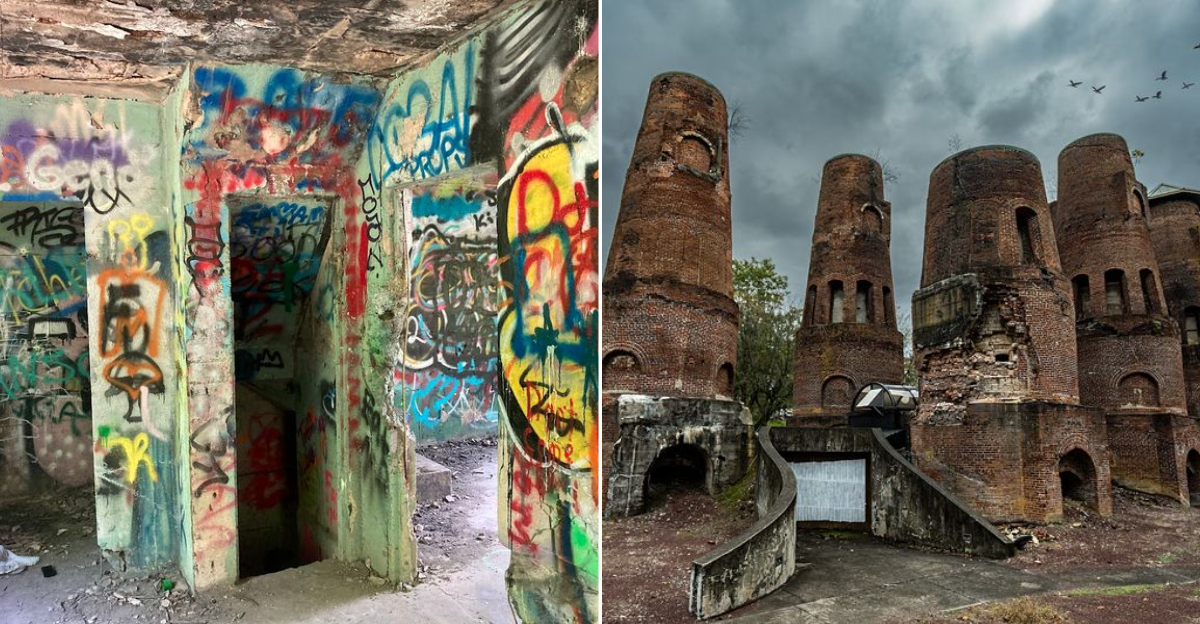
Rust has a way of whispering, doesn’t it? Pennsylvania is packed with old industrial giants that no longer roar, grind, smoke, or shake the ground beneath them.
Now they sit behind cracked brick, bent metal, broken windows, and weeds with suspiciously good climbing skills. That silence is exactly what makes them so gripping.
These were places where people worked hard, machines thundered, and entire towns moved to the rhythm of steel, paper, cement, and grit. Today, they feel like oversized time capsules with a spooky streak.
Local stories cling to them like dust on an old factory floor, mixing real history with the kind of lore that makes you pause before looking through a dark doorway.
This list digs into abandoned industrial sites with serious atmosphere, strange beauty, and enough mystery to make every rusted gate feel like the start of a story.
1. Carrie Blast Furnaces, Rivers Of Steel
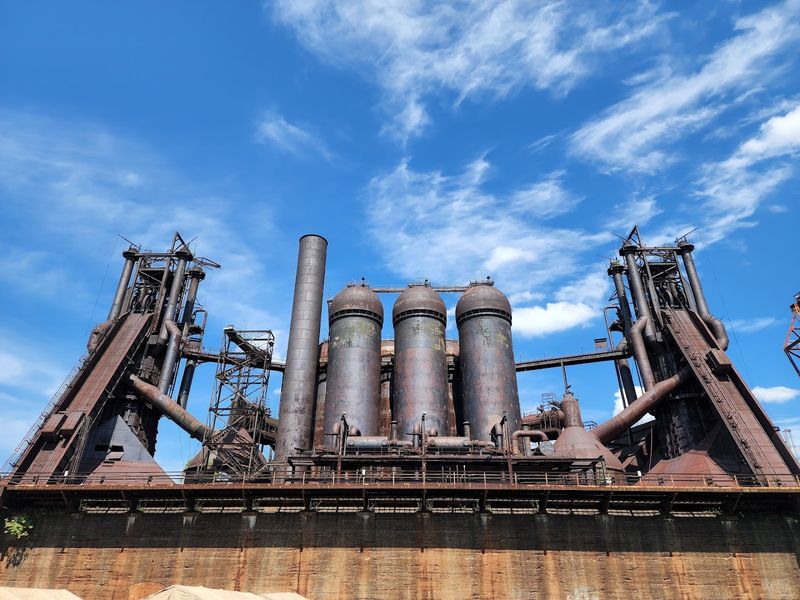
Few places in Pennsylvania carry the weight of industrial history quite like the Carrie Blast Furnaces. Rising along the Monongahela River, these massive iron-making structures operated from 1884 to 1982, feeding Pittsburgh’s steel mills for nearly a century.
As you explore this site today, the scale of the machinery is almost hard to believe. Local lore around Carrie is rich and layered. Workers who spent their lives at the furnaces reportedly left behind a powerful culture.
Former employees would return long after it closed, just to stand near the structures that had defined their lives.
Neighbors recall hearing strange sounds echoing from the furnaces at night during the years the site sat abandoned. Most chalk it up to settling metal and wind moving through the old equipment.
The site is now managed by Rivers of Steel, a nonprofit dedicated to preserving the heritage of the steel industry in the Mon Valley. Guided tours are offered, and the furnaces have even served as a dramatic backdrop for films and art installations.
You can find the site at 801 Carrie Furnace Blvd, Pittsburgh, PA 15218.
What sets Carrie apart from other abandoned sites is how much of the original equipment remains intact. Cranes, ladles, and rail lines are still in place, giving visitors a rare look at what iron production actually looked like at an industrial scale.
The preservation effort here is genuine and ongoing, making it one of the most accessible and well-maintained industrial ruins in the entire state. If you are drawn to places where history feels almost alive, this is a stop you will not forget anytime soon.
2. SteelStacks, Bethlehem Steel
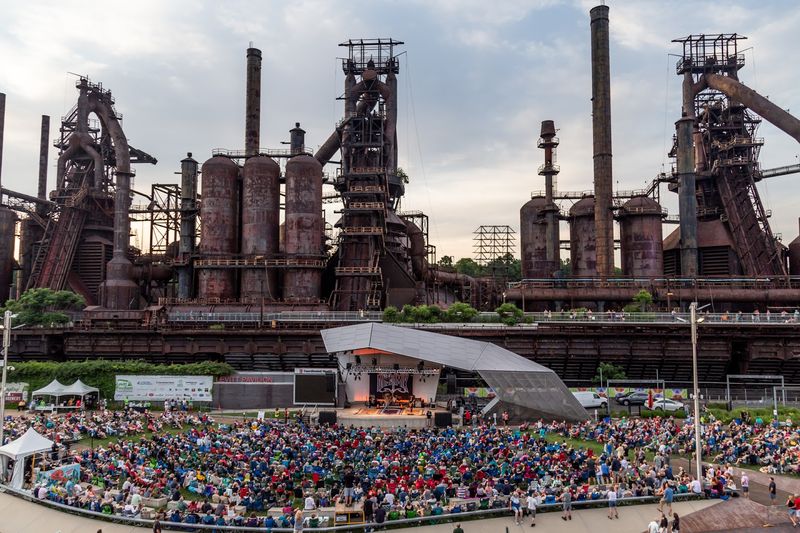
Bethlehem Steel was once one of the most powerful steel companies in the world. The blast furnaces that remain at SteelStacks in Bethlehem, Pennsylvania, stand as a testament to that era.
At its peak, this facility employed over 30,000 workers and produced steel used in famous structures like the Golden Gate Bridge and the Empire State Building. The plant shut down in 1995, leaving behind a skyline of rusted giants that you can still see from miles away.
The local stories connected to Bethlehem Steel run deep. Long-time residents talk about how the glow from the furnaces used to light up the night sky, so bright that you could read a book outside at midnight.
Some older community members still associate the smell of steel-making with home. It is a complicated kind of nostalgia for a time that was both hard and meaningful.
Today, the site at 101 Founders Way, Bethlehem, PA 18015, has been transformed into a cultural campus with a music venue and arts center. The furnaces themselves remain standing as a preserved monument.
The contrast between the old industrial ruins and the new entertainment spaces creates a visual experience unlike anything else in Pennsylvania.
You can take guided tours of the furnaces themselves, walking right up to the base of structures that once burned at thousands of degrees. The interpretive signage throughout the site does a solid job of explaining the steelmaking process in plain terms.
For anyone who wants to understand how Pennsylvania shaped American industry, SteelStacks is a powerful place to start. An afternoon here can be one of the most grounding and educational experiences in the Lehigh Valley.
3. Bayless Pulp And Paper Mill
The story of the Bayless Pulp And Paper Mill is deeply tied to one of Pennsylvania’s most somber historic events.
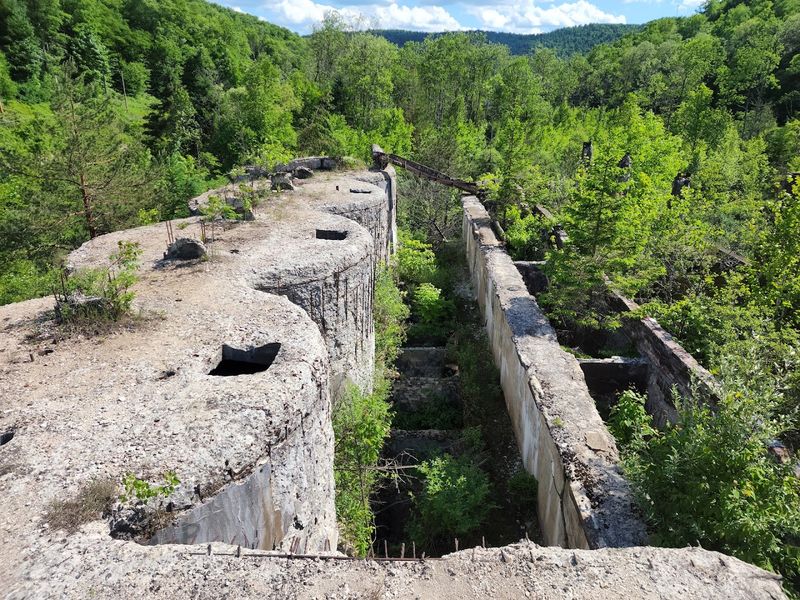
Located near the small town of Austin in Potter County, this mill was connected to a dam that failed on September 30, 1911. The flood that followed devastated much of Austin and changed the community forever.
The ruins of the mill still stand today, quiet and moss-covered along the banks of Freeman Run.
Locals in the area speak about the flood with a deep sense of respect that has been passed down through generations. Families connected to the event still gather annually to mark the anniversary, and many residents will tell you the ruins feel different from other old buildings.
There is a heaviness there, as if the landscape still carries the memory of what happened. Whether that feeling comes from history, emotion, or imagination is hard to say, but it remains meaningful to those who live nearby.
The mill ruins are accessible to the public along PA-872 near Austin. The full address is 160-170 PA-872, Austin, PA 16720.
You can walk around the stone foundations and see how nature has slowly taken back what the flood left behind.
The area is peaceful now, surrounded by forest and the sound of the creek, which makes the history feel even more surreal.
A small museum in Austin preserves flood photographs and artifacts, adding meaningful context before or after visiting the mill site.
This is more than an abandoned building. It is a place where industrial ambition, human error, and community grief came together in one defining moment, and the landscape still carries that story quietly.
4. Richmond Generating Station
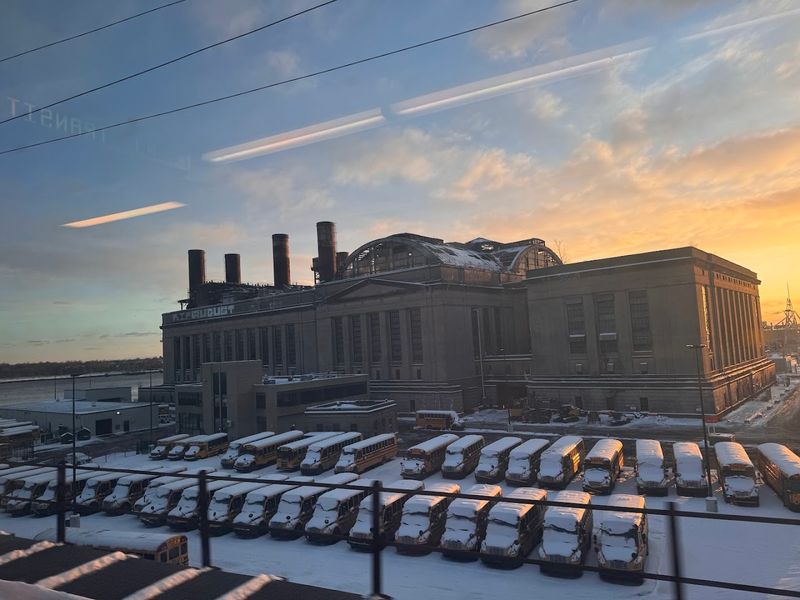
Along the Delaware River in Philadelphia stands one of the most visually striking abandoned structures in the entire state. The Richmond Generating Station was built in the early 1900s and once supplied electricity to a large portion of Philadelphia.
Its massive brick facade and enormous turbine hall made it an engineering marvel of its time. Today, the building sits largely empty, a hulking reminder of the city’s early electrical infrastructure.
Philadelphia locals have developed a complicated relationship with this building over the years. Urban explorers have documented the interior extensively, sharing photographs of the cavernous turbine room with its crumbling catwalks and flooded lower levels.
Longtime Kensington and Richmond residents have shared stories about the building being used for unofficial purposes during its abandoned years. The specifics are usually vague, which is exactly how local lore tends to work.
The station is at 4101 N Delaware Ave, Philadelphia, PA 19137. While interior access is restricted, the exterior is visible from the street and the Delaware River waterfront.
Development proposals for the site have come and gone over the years, and the building’s future remains uncertain as of this writing.
What makes Richmond Generating Station especially compelling is its sheer size. The main turbine hall is comparable in scale to a cathedral, with ceilings that rise several stories above the floor.
The brick construction has held up remarkably well after decades without regular use. That durability speaks to the quality of early twentieth-century industrial construction in Pennsylvania.
For anyone exploring Philadelphia’s industrial history, this building is hard to ignore, and the surrounding neighborhood adds even more context.
5. Bunkers Of Alvira, Pennsylvania Ordnance Works
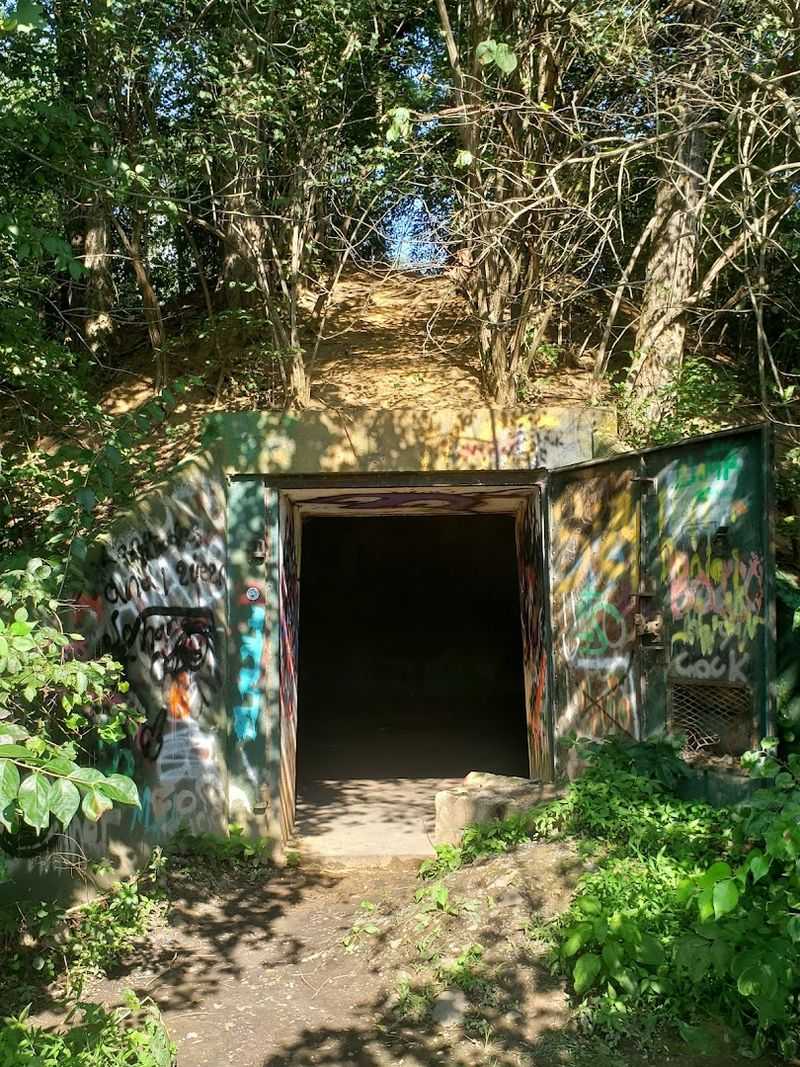
Deep in the forests of Union County, the Bunkers of Alvira are one of Pennsylvania’s most unusual and least-discussed industrial remnants. During World War II, the federal government built the Pennsylvania Ordnance Works here to manufacture TNT for the war effort.
To make room for the facility, the community of Alvira was uprooted, and residents were required to sell their homes and relocate. The factory operated briefly before the war ended, and the site was eventually converted into a game land, with the concrete bunkers left behind in the woods.
The local lore surrounding Alvira is both somber and unusual. Descendants of displaced families still speak about the loss of their community with a quiet sadness that has never fully faded.
The bunkers themselves are scattered across Pennsylvania State Game Lands 252, and you can hike to them along forest trails. The address for the general area is 1884-2198 Alvira Rd, Allenwood, PA 17810.
Some bunkers are partially collapsed, while others remain intact, their thick concrete walls showing little deterioration after decades of abandonment.
Visiting this site requires some effort since there are no paved paths or formal visitor facilities, but that remoteness is part of what makes it so compelling.
You are moving through a forest that was once a neighborhood, past wartime structures on land surrendered by displaced families. That combination of history and atmosphere makes Alvira one of the most genuinely affecting abandoned sites in Pennsylvania.
6. Concrete City
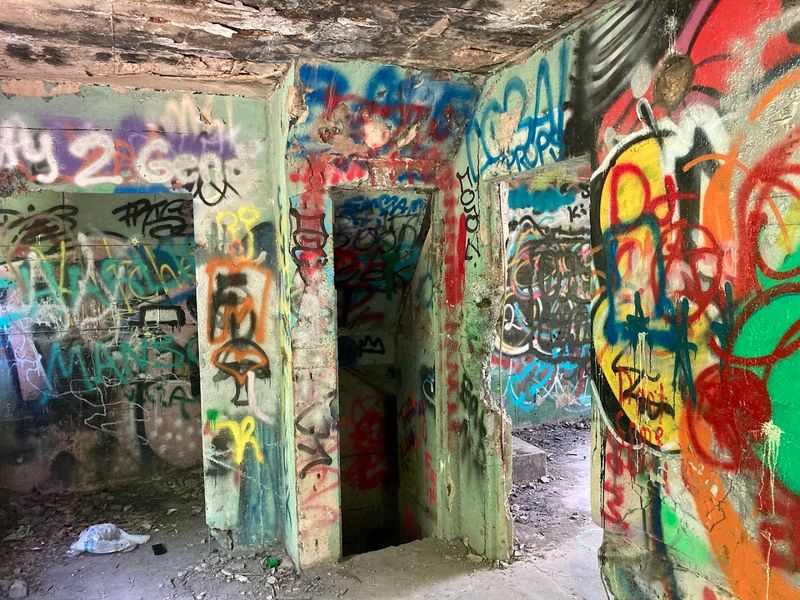
Most people who drive through Luzerne County have no idea that a ghost town made entirely of concrete is sitting in the woods near Nanticoke. Concrete City was built in 1911 by the Delaware, Lackawanna and Western Coal Company to house miners and their families.
The 20 duplex units were constructed using an early poured-concrete method, making them a novelty for their time. The company abandoned the complex just a decade later, in 1924, deciding it was cheaper to pay miners a housing allowance than to maintain the buildings.
The stories that circulate about Concrete City among locals range from straightforward history to something more atmospheric. Over the decades, the site became a gathering place for teenagers and curious residents, many with vivid childhood memories of exploring the ruins.
Some older Nanticoke residents describe the place as having an energy that is hard to put into words, a stillness that feels deliberate rather than accidental.
The site is located near Nanticoke in Luzerne County, PA, and while there is no formal street address, it is accessible via trails through the surrounding woodland. The ruins are on private land, so checking current access conditions before visiting is a good idea.
What makes Concrete City fascinating from a structural standpoint is how well the buildings have held up. Concrete is durable, and even after a century of abandonment, the walls and floors of many units are still largely intact.
You can pass through the doorways and see the outlines of rooms where families once lived, cooked, and raised children. The contrast between the sturdy construction and the absence of daily life gives the place a feeling unlike almost any other abandoned site in Pennsylvania.
7. Coplay Cement Company Kilns
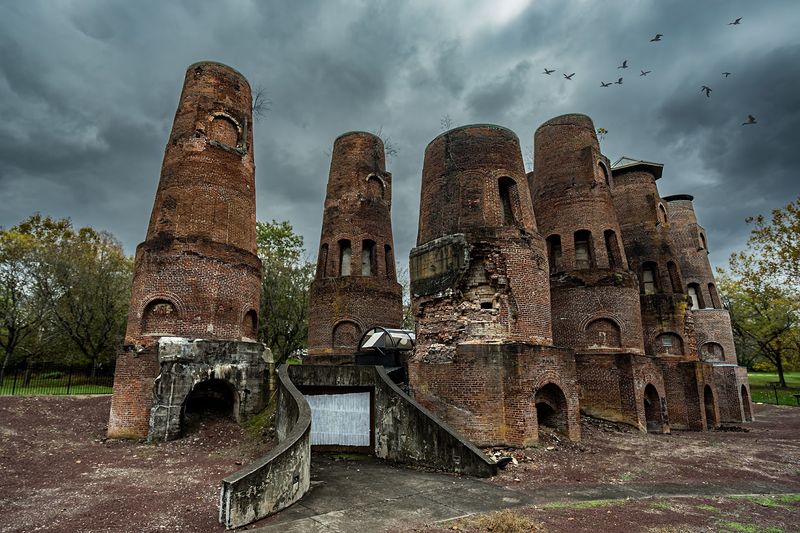
Standing like giant industrial chimneys, the nine remaining Coplay Cement Company kilns are among Pennsylvania’s most distinctive industrial ruins. Built in the 1890s, these vertical kilns were used to produce natural cement using a process that was considered cutting-edge at the time.
The Coplay facility was one of the earliest cement manufacturers in the U.S., supplying cement for construction projects across the region.
Local residents in Hokendauqua and the surrounding Lehigh Valley area have long regarded the kilns with a mix of pride and curiosity. There are informal accounts of workers who spent their entire careers at the facility, and their descendants still live in the area.
Some longtime locals say the kilns were used as informal landmarks for generations, with people giving directions based on their location long after the facility closed.
The kilns are preserved as a historic site and are open to the public. You can find them at 299 N 2nd St, Hokendauqua, PA 18052.
The site is maintained by Northampton County, with a small park surrounding the structures. You can walk around and examine the kilns up close without special equipment or a guided tour.
The engineering behind these kilns is worth understanding before you visit. Raw limestone and coal were loaded into the top of each kiln, and the heat from burning coal converted the limestone into cement clinker as it slowly descended.
The process required intense physical effort, with workers facing challenging conditions around heat, dust, and constant industrial noise.
Seeing the kilns up close gives you real appreciation for the workers, while the Lehigh Valley setting adds cement-making context.
8. Sideling Hill Tunnel, Abandoned PA Turnpike
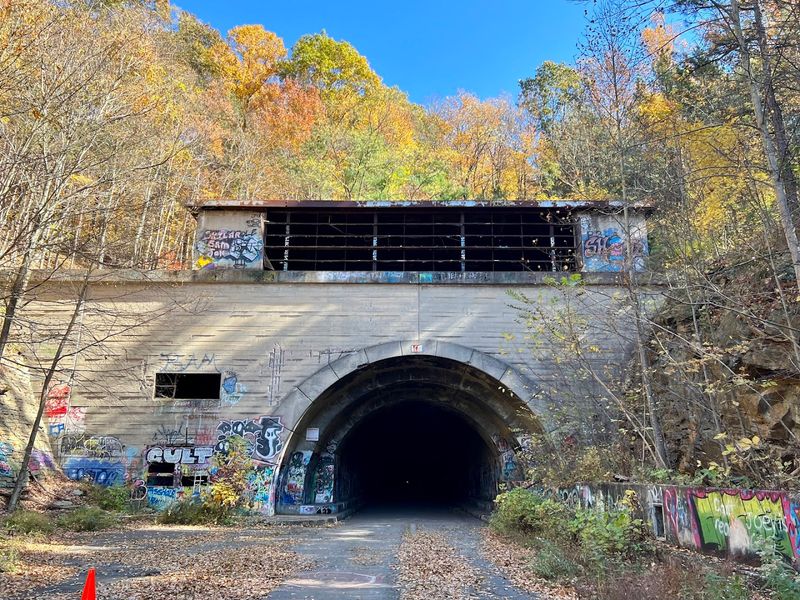
There is something undeniably eerie about a highway that goes nowhere. The abandoned section of the original Pennsylvania Turnpike, including the Sideling Hill Tunnel, stretches for about 13 miles through Fulton County.
It offers one of the most surreal walking or cycling experiences in the state.
The turnpike was one of the first limited-access highways in the United States when it opened in 1940. This section was bypassed and closed to traffic in 1968 after a new alignment was built nearby.
The Sideling Hill Tunnel is the centerpiece of the abandoned stretch, and it has accumulated a notable amount of local lore over the decades.
Residents around the area have described the tunnel as deeply unsettling to pass through. It is not because of any specific event, but because of the total darkness, dripping water, and footsteps echoing off the walls.
Some hikers report feeling a strong sense of disorientation inside the tunnel, which runs nearly a mile in length.
The site is accessible to the public as a recreational trail managed by the Abandoned Pennsylvania Turnpike, Inc. The general address for accessing the area is Abandoned Pennsylvania Tpke, Harrisonville, PA 17228.
Flashlights are essentially required for the tunnel portion, and the pavement inside is uneven in places.
What makes this site stand apart from other abandoned industrial locations is the road itself. Old lane markings are still faintly visible on the cracked asphalt, and the original guardrails line sections of the route.
You are literally walking on a piece of American highway history that has been frozen in time for over 50 years. If you appreciate the overlap between transportation history and natural reclamation, this abandoned turnpike section delivers.
It is one of the most memorable outdoor experiences Pennsylvania has to offer.