
A Unique Adventure in the Sapa Region of Vietnam
By Eileen Ogintz
Tribune Content Agency
Taking the Kids
Hau Thi Si was just 14 when she married. She cried the entire first year she was separated from her family, their small village in Vietnam and their customs.
Now in her 30s, she wants a different life for her daughter and is doing all she can to make that possible. That’s not easy living in the Sapa region of north Vietnam, famous for its steep, tiered rice paddies and tiny villages that are home to groups like the Hmong, known for their distinctive crafts and dress. It can be a challenge just to pay expenses for kids to go to high school in the nearest city.
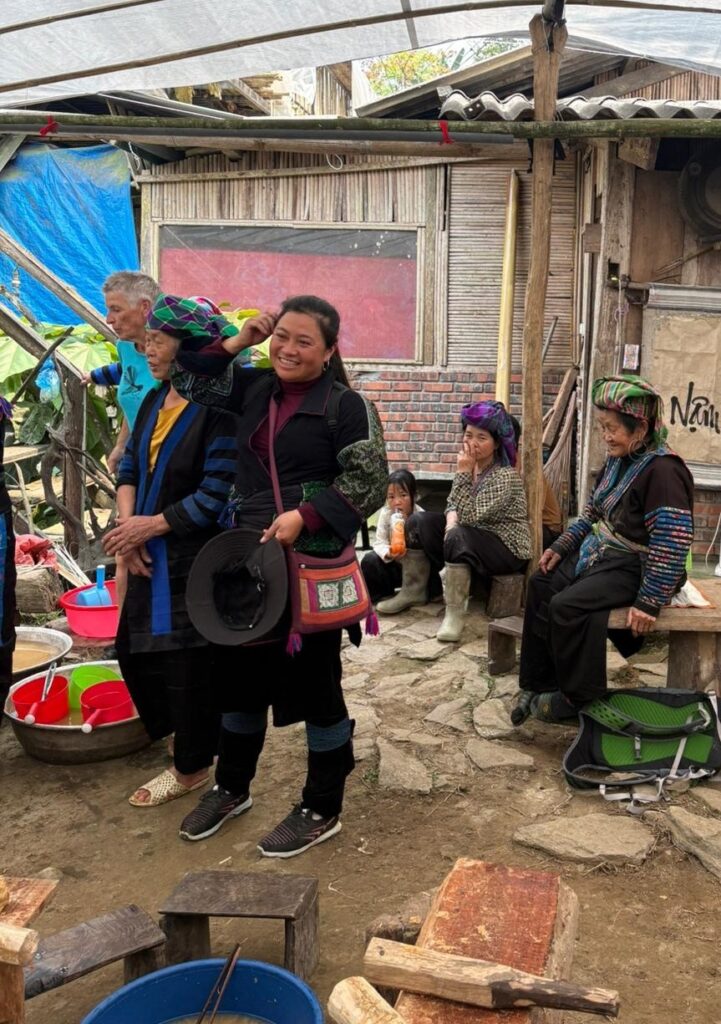
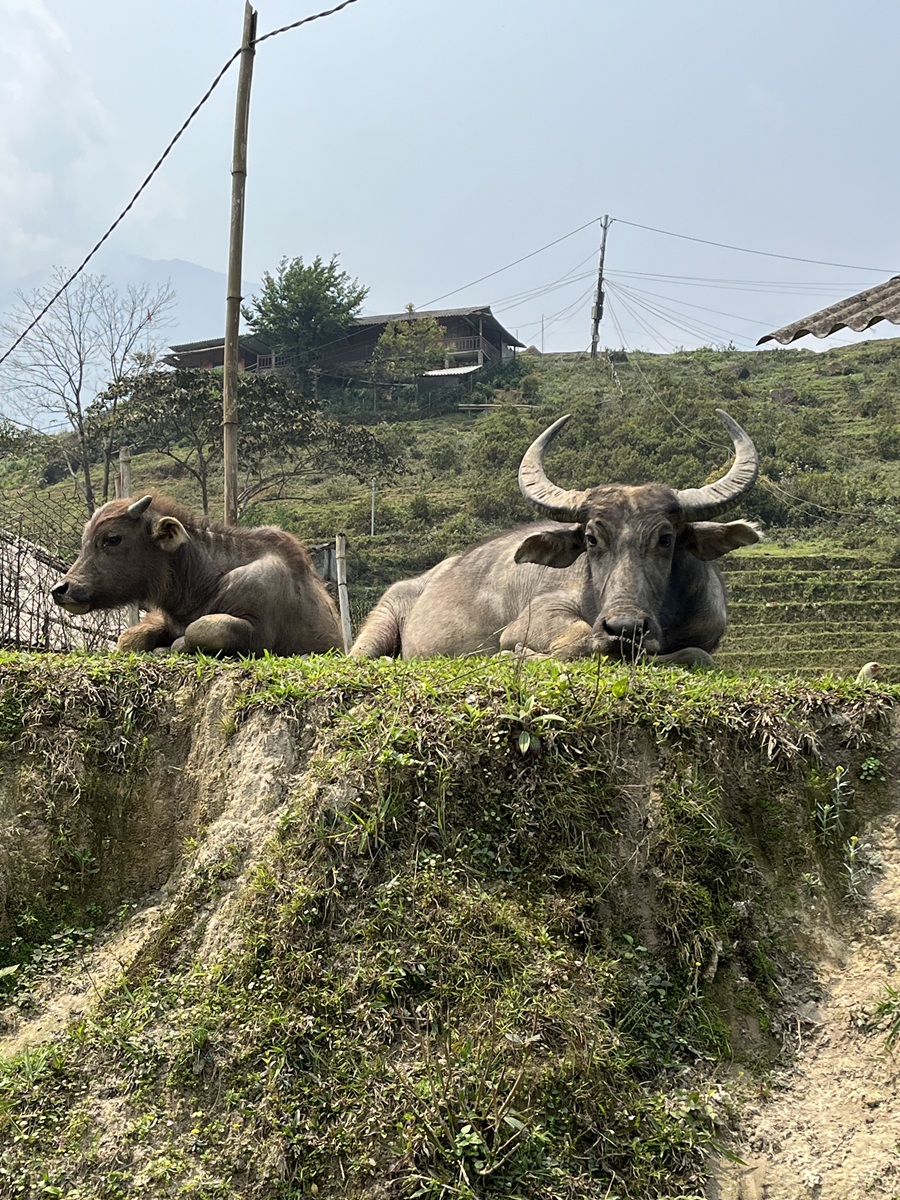
We met Si and other local moms and grandmothers courtesy of G Adventures, a Canadian company known for affordable adventures that give back to the local communities by hiring local guides and bringing guests to places they wouldn’t otherwise go. In our case, that meant hiking on narrow trails past lazing water buffalo and people working in the rice paddies, through villages comprising just a few buildings. Locals speed by on motorbikes carrying everything from young children to large bundles of wood to rice and vegetables.
We had spent our first few days in Vietnam in busy Hanoi, staying at Bespoke Trendy, a terrific boutique hotel (complimentary manicure and outstanding breakfast buffet) recommended by G Adventures so the contrast to these tiny rural villages couldn’t have been more stark.
Urban or rural, Moms around the world would relate to Si’s hope for an easier life for her children than she has experienced and the desire to show them more of the world.
Si speaks excellent English and works as a guide. She dreams of her daughter going to university, perhaps studying medicine. She dreams of travel, having never been far from her village, even to Hanoi or Ho Chi Minh City.
Where we were was not only a far cry from Hanoi, which boasts nearly as many motor bikes as people (nearly 9 million residents) but also bustling Sapa town, north Vietnam’s hiking base and home to bars, hotels, restaurants, shops selling outdoor gear, new hotel construction and massages (less than $20!) Vietnam’s tallest peak, Mt. Fansipan, draws hikers and travelers who can opt to take a cable car to the top.
In my case, when the steep terrain on our trek proved too much for my wonky knee, our affable tour leader, Rocky (Mai Van Thach) arranged with a local to take me on the back of his motorbike to our lunch stop – a hair-raising ride on the narrow trail through rocks and mud. His wife, one of many women we met who follow tourists selling their handicrafts, waited with me on the trail, talking about their life in her limited English, lamenting that her family didn’t have the funds for the room and board needed to send her older kids into the nearest city for school.
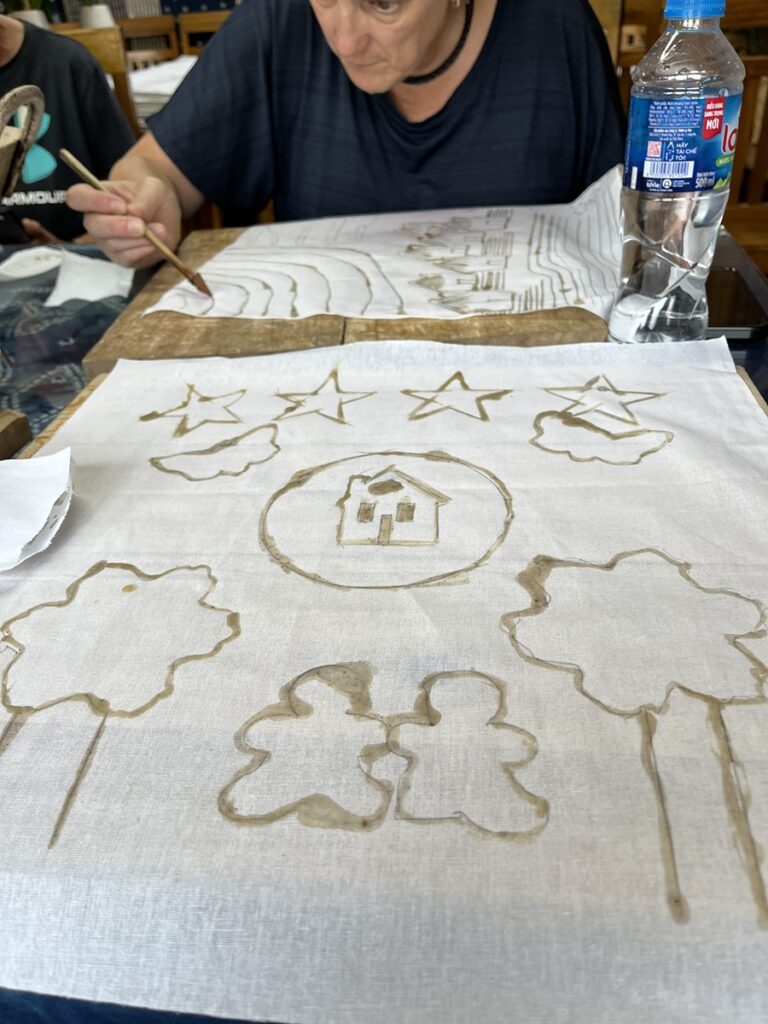
Later, G Adventures had arranged a visit to the unique Muong Hoa Cooperative. The shop showcases and sells work produced by 100 women – batik, embroidered clothes, wall hangings, pillow covers and more. It’s an effort to help local women do better than just following tourists. Some of the local women we met laughed that they didn’t like having to make the distinctive clothing with intricate embroidery for their families, necessary for celebrations, opting for simpler designs than their mothers and grandmothers.
At the Cooperative, we were given the chance to make a batik; another day there were paper-making lessons from elderly villagers in an even more remote locale close to the Laotian and Chinese border. Paper-making from bamboo, which requires soaking, washing and pounding bamboo fiber into pulp and then shaped into sheets on screens to dry in the sun, is a craft dating back centuries.
G Adventures, which creates trips in more than 100 countries, makes a point of not only hiring local guides but offering off-the-tourist-track experiences that employ villagers that travelers today appreciate.
The Canadian company offers a growing number for families, 26 tours split between regular G adventures and National Geographic Family Journeys with G Adventures. The latter go a step beyond and offer two expedition leaders trained to work with children, plus kid-centric, pre-trip support materials and resources. There are destinations in more than 20 countries, including Egypt, Portugal and Japan.
Our group of 12 ranged from 30-somethings to 70-somethings with travelers coming from around the world – Australia, New Zealand, the UK, and the US. Louis Haines and Molly Sutton were on their honeymoon; Molly’s parents recommended G Adventures. There were singles as well as couples. We met in Hanoi for the six-hour bus ride to Sapa. By the first night, we were all fast friends.
We agreed that meeting the locals, like Si, and those who taught paper making, and the chance to learn about their lives and culture (there are 54 different ethnic groups in Vietnam), was the high point of our trek. “I really enjoyed the intimacy,” said Robyn Graham, from New Zealand.
“The places you go on a G Adventure aren’t the places you will see people posting about on social media. I like that,” said Tarryn Thom, one of the Australians.
“We aren’t tour people,” added Mallory Englehart, here with her husband from Oakland, California. “But we don’t speak the language, and we wanted to get the most out of being here.”
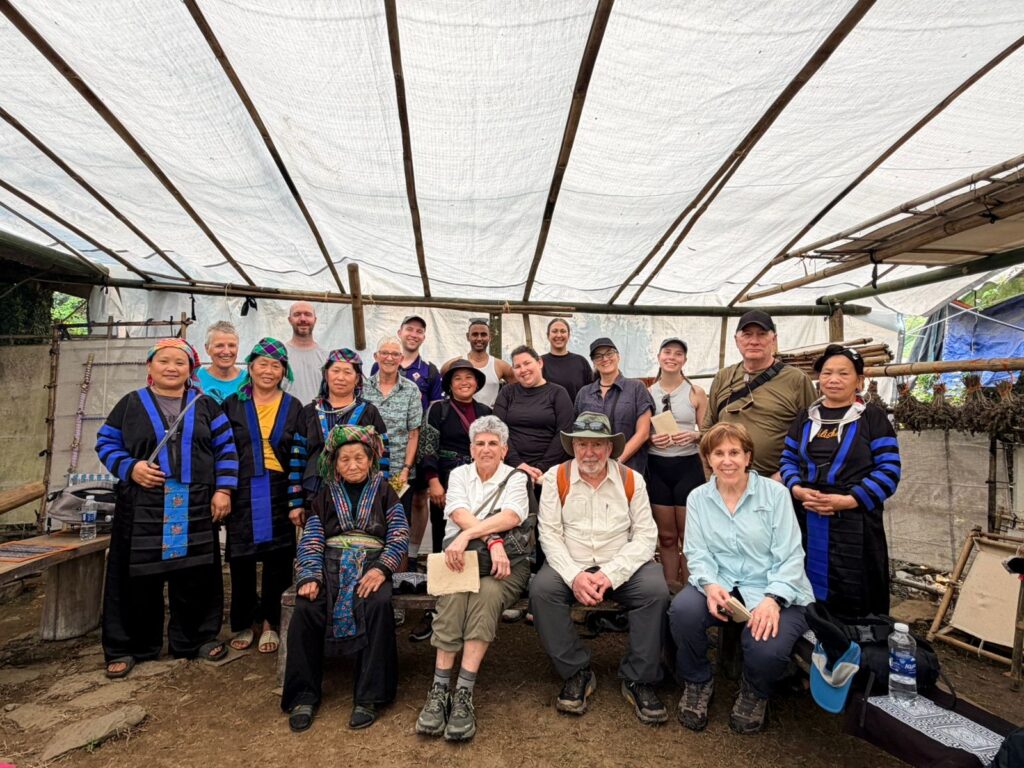
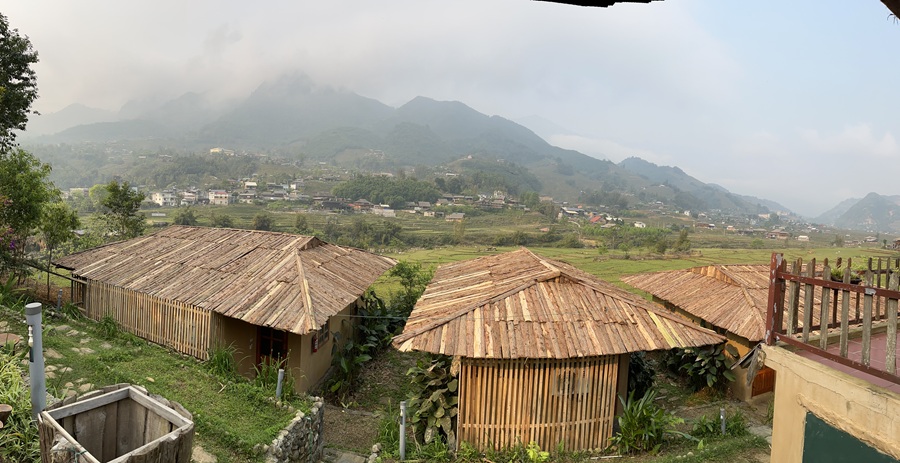
We were ensconced in a “Homestay” popular in rural Vietnam that is like a basic inn overlooking the rice fields (Sapa Eco Homestay). The beds are comfortable, the water is hot and the food is great. On the first night, we got a lesson in making papaya salad and spring rolls. But this isn’t luxurious by any means. Our four-day trip, including lodging, meals, activities and transportation was less than $500 a person. Everyone gave the trip high marks, except for the uncomfortable overnight train back to Hanoi. We agreed we would have happily paid a bit more for a train that offered a better experience.
Certainly, we got an appreciation of what life is like in these remote ethnic villages, how difficult it is to farm here, to create these beautiful crafts and how important tourism is to these villages. Most of the men work in restaurants and bars catering to tourists or as local guides, explains Ma Thi Si, whose aunt started this cooperative some eight years ago. “English is key to getting a job in the tourism sector,” she explained, “And we can improve our English by talking to them. We are lucky that we have tourists every season.”
And we were lucky to be some of those tourists. Thanks, G Adventures.
(For more Taking the Kids, visit www.takingthekids.com and also follow TakingTheKids on Twitter, Facebook and Instagram where Eileen Ogintz welcomes your questions and comments. The fourth edition of The Kid’s Guide to New York City and the third edition of The Kid’s Guide to Washington D.C. are the latest in a series of 14 books for kid travelers published by Eileen.)
©2026 Eileen Ogintz. Distributed by Tribune Content Agency, LLC.