
Few People Know This Serene Natural Preserve In Tennessee Even Exists
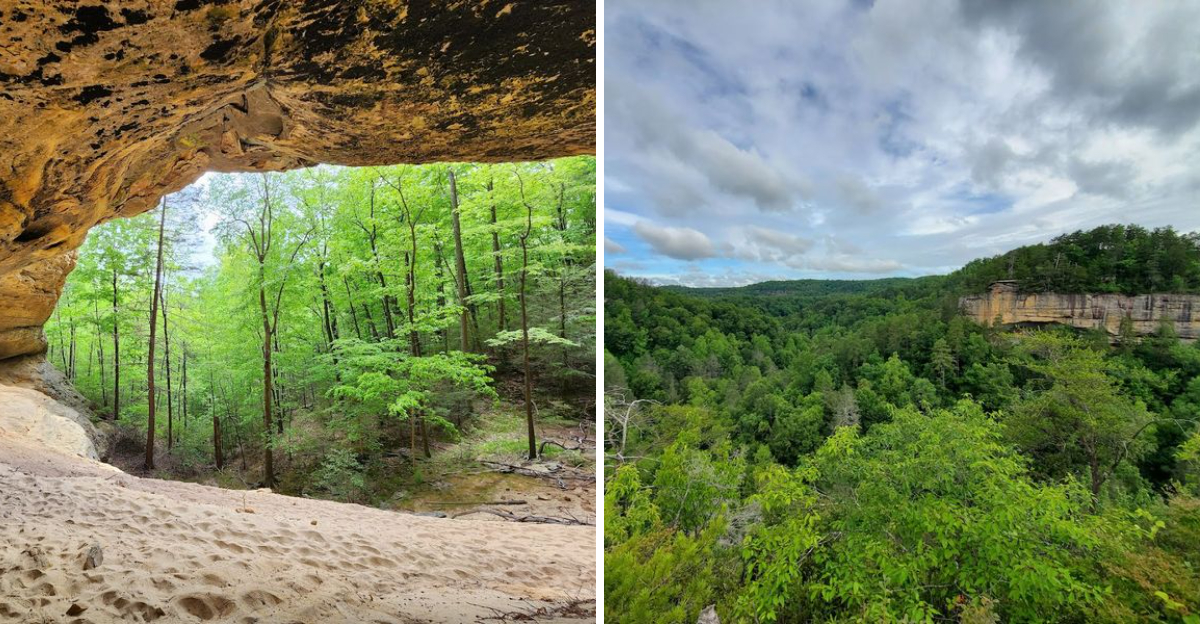
A quiet trail can change the whole mood of a day.
Tennessee is known for dramatic outdoor beauty, but this peaceful preserve offers something softer and slower. Crowds fade away here.
Noise drops. The scenery takes over with rugged canyon views, wooded paths, natural arches, and rocky overlooks that make you stop without even planning to.
It feels calm, but never boring. Every turn brings another reason to look around a little longer.
You might come for a simple walk and leave wondering how a place this lovely still flies under the radar.
For a scenic reset, a gentle adventure, or a fresh Tennessee nature spot worth adding to your plans, this serene preserve deserves a closer look.
The Trails That Reward The Curious
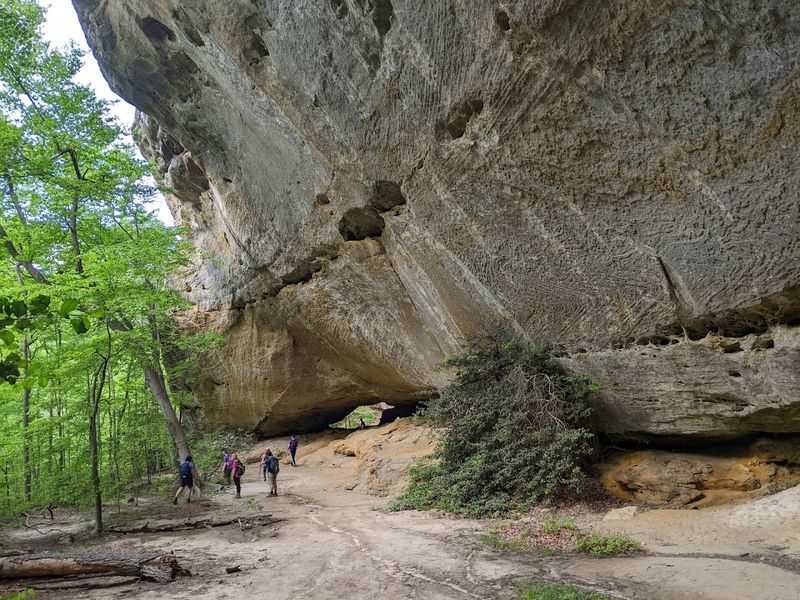
Not every trail here is a Sunday stroll.
The preserve offers several routes, including the 1.5-mile Pogue Creek Overlook Trail, the Upper Canyon Trail, and the Mesa Top Trail, each with its own personality and its own demands.
The overlook trail is relatively approachable, but the canyon descent is a different matter entirely.
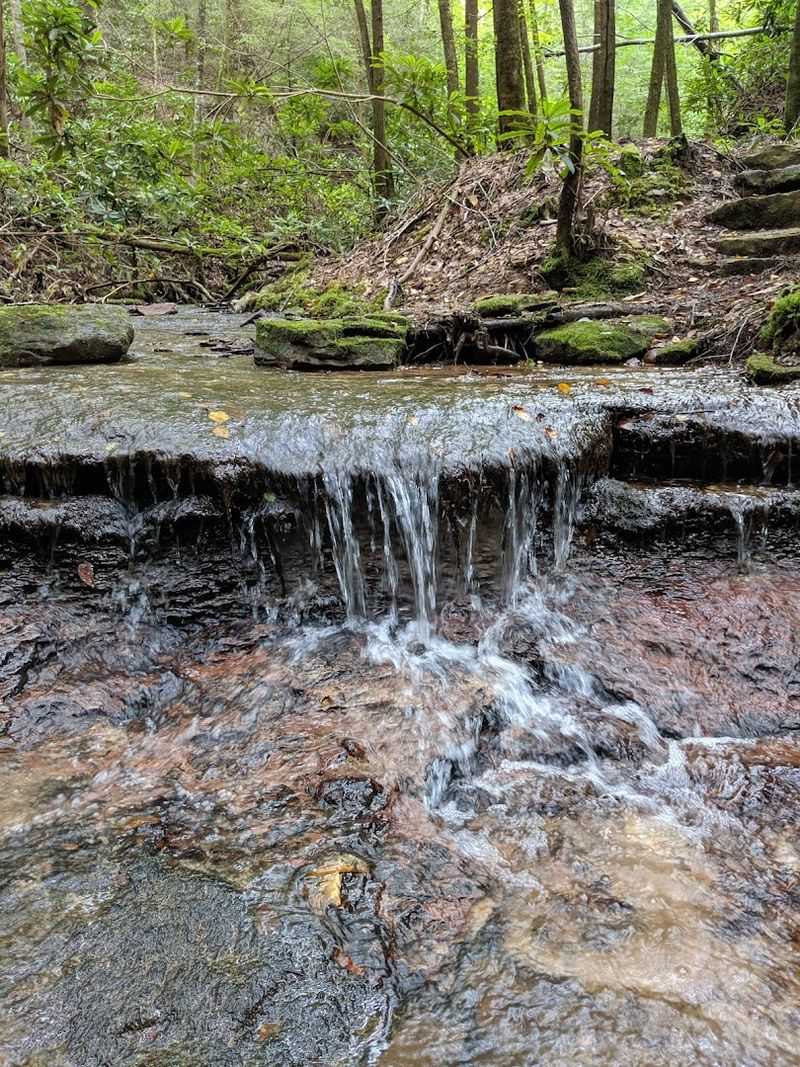
Hikers on the inner canyon route will encounter serious elevation changes, cliff faces, stream crossings, and a passage known as the fat man’s squeeze. The trail also branches toward natural arches, including the spectacular Killdeer Arch at the far end of the canyon.
Plan for at least four hours if you intend to hike in and return via the gravel road along the canyon rim. Cell service is limited throughout the area, so download maps before you arrive.
Pets are not recommended on certain sections due to vertical ladders and steep drop-offs. The terrain is demanding, but the payoff at each overlook and arch is more than sufficient justification for the effort.
A Canyon Carved By Patience And Water
Geology does not rush.
The canyon at Pogue Creek Canyon State Natural Area is proof of that slow work, shaped over millions of years by water cutting through the Cumberland Plateau’s sandstone bedrock.
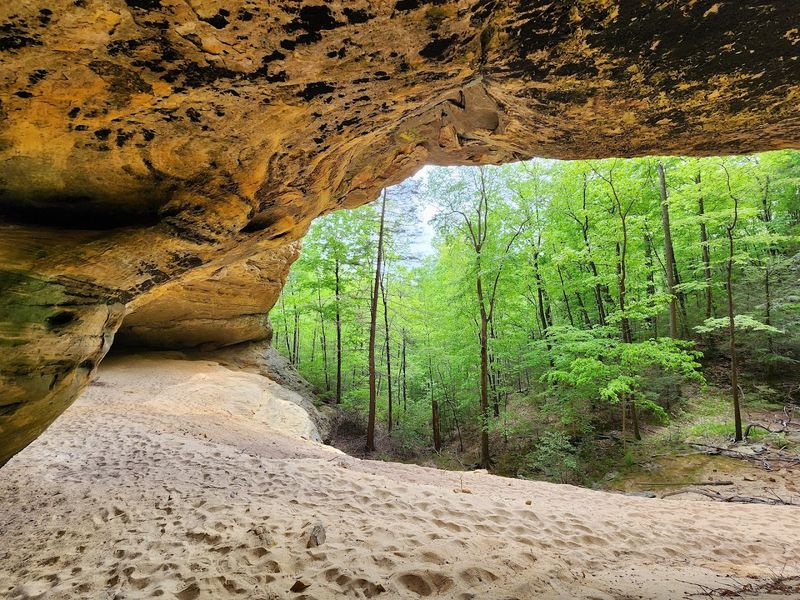
The result is a gorge of real drama, with sheer bluffs rising high above the creek floor and visible layers of reddish-orange and yellow sandstone stacked like pages in a book.
Visitors who make the descent into the canyon often describe a shift in atmosphere, cooler air, deeper shadow, and the sound of moving water replacing the ambient noise of the world above. The walls close in gradually, and the scale of the place becomes more apparent the further you go.
Located off TN-154 near Jamestown, Tennessee, this preserve was designated a Class II Natural-Scientific State Natural Area in 2006. The canyon itself is the centerpiece, and it earns that distinction with ease.
Few geological features in the state combine accessibility with this level of raw, unpolished character.
Killdeer Arch And The Stone Structures You Did Not Expect
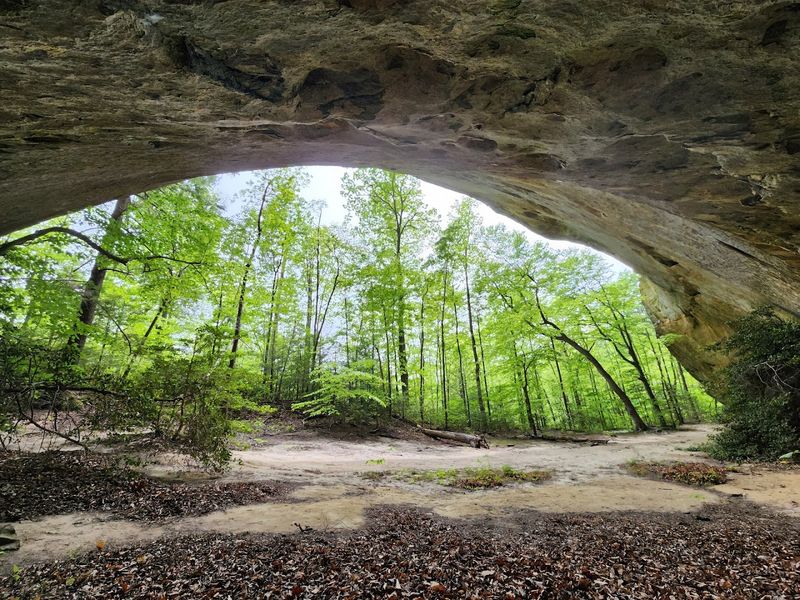
Arches are not something most people associate with Tennessee. That association belongs to Utah, to the red rock country of the American Southwest.
And yet Pogue Creek Canyon contains natural arches that would turn heads in any state, with Killdeer Arch being the most celebrated among them.
Reaching Killdeer Arch requires commitment.
It sits near the far end of the canyon trail, roughly four miles in, and the route to it involves stream crossings, narrow passages, and sustained elevation change.
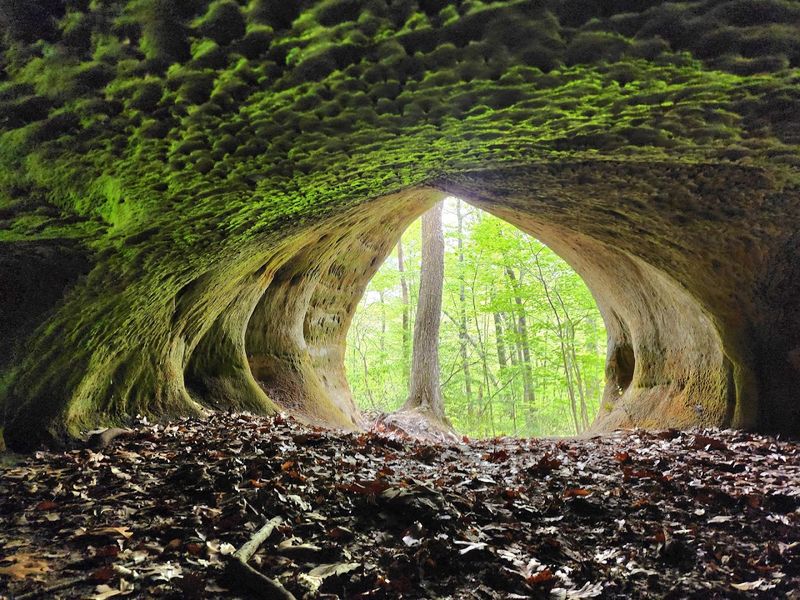
Those who arrive find a sandstone span of genuine scale, framing sky and forest in a way that feels almost architectural despite being entirely the product of erosion and time.
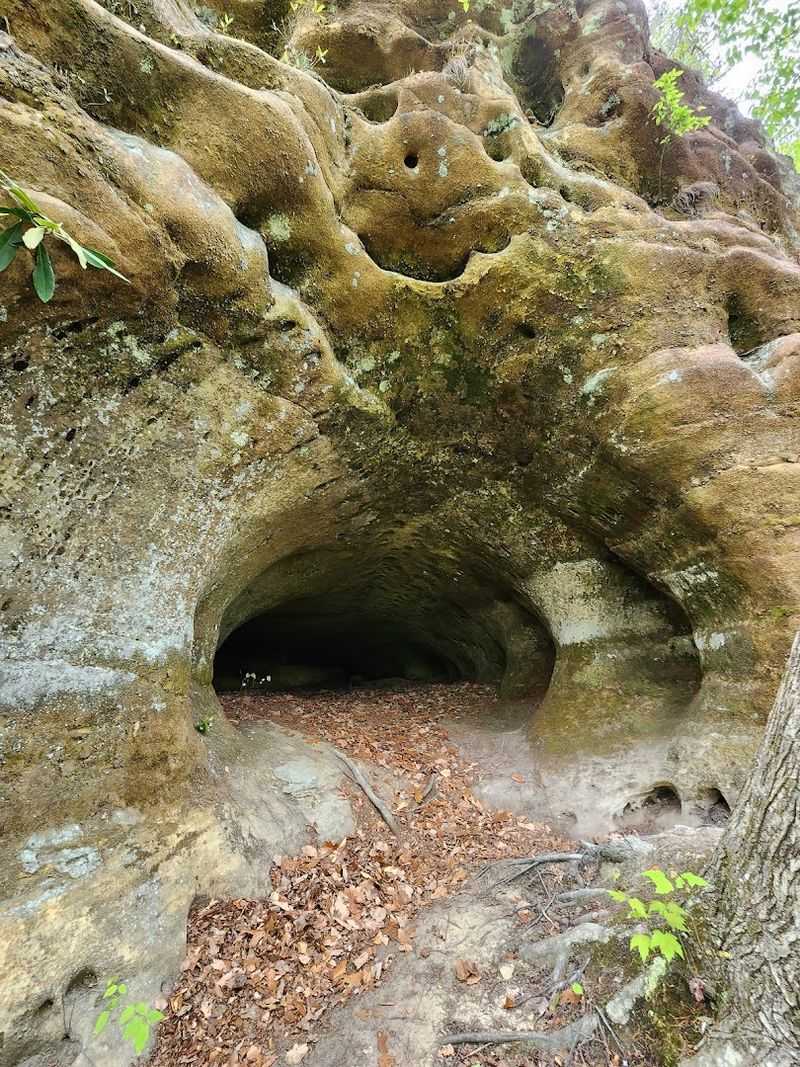
The Circle Bar Arch is another formation worth seeking out along the side branches of the trail. Rockhouses, caves, and mesas add further variety to the canyon’s stone vocabulary.
The comparison to Southwestern landscapes is not idle flattery.
The layered geology, the warm tones of the rock, and the vertical drama of the bluffs create a visual language that feels genuinely surprising in this part of the country.
Over 300 Plant Species In One Preserve
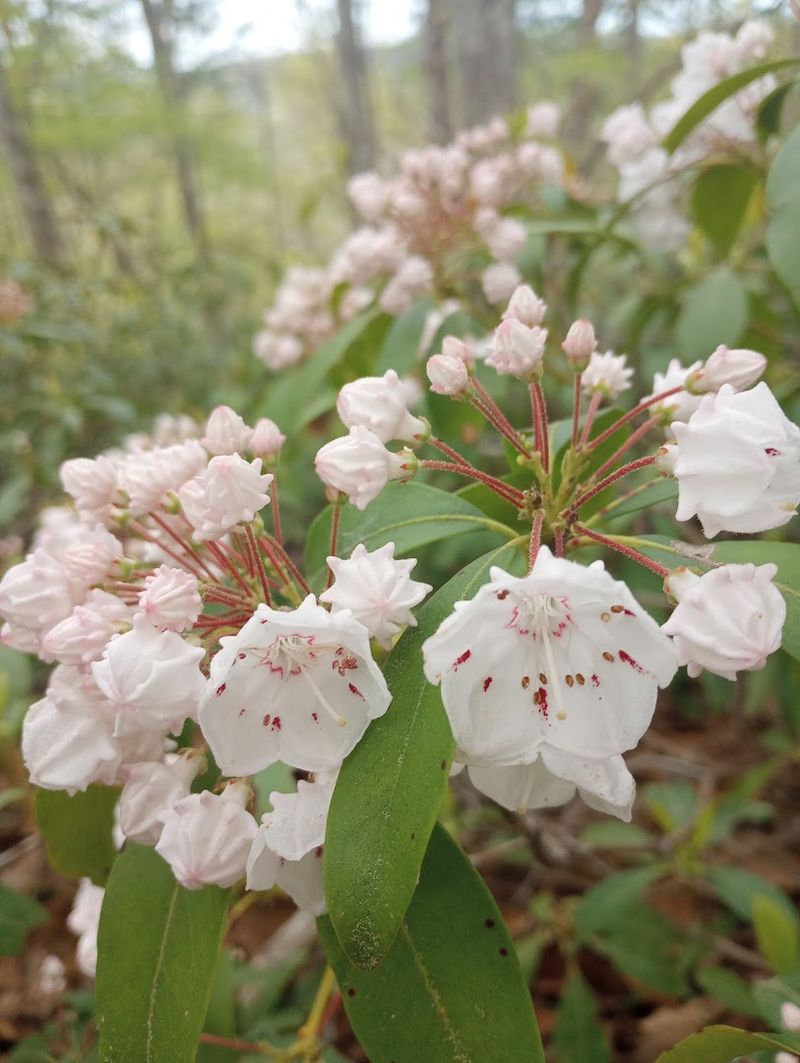
Botanists have been paying attention to Pogue Creek Canyon for good reason. The preserve has recorded more than 300 plant species within its boundaries.
The range of elevations, moisture levels, and soil types creates conditions that support plants rarely found together in one location.
Among the most significant residents is the Cumberland sandwort, a federally endangered species that was actually delisted in 2022 following successful recovery efforts. The state-listed Lucy Braun’s snakeroot also grows here, adding to the preserve’s botanical credentials.
The forest itself shifts as you move through the canyon. Eastern hemlock, magnolia, red maple, tulip poplar, beech, sycamore, oaks, and hickories all appear in the mix, creating a layered canopy that changes character with the seasons.
Fall color here is exceptional, and spring brings a progression of wildflowers along the creek banks and cliff bases. For anyone with even a passing interest in plants, this preserve operates as a living field guide to Appalachian biodiversity.
Wildlife That Calls This Canyon Home
The animal life at Pogue Creek Canyon reflects the quality of the habitat.
Bald eagles have been observed in the area, which speaks to the relative health of the ecosystem and the low level of human disturbance.
Eastern slender glass lizards and green salamanders, both species with specific habitat requirements, also make their home here.
More commonly, visitors report encounters with white-tailed deer, red foxes, and wild turkeys moving through the forest.
The birdlife is varied enough to occupy a birder for a full day, with the canyon’s mix of forest types attracting species that favor both open canopy and dense understory conditions.
The preserve’s remoteness is a significant factor in this diversity.
Development pressure was real before The Nature Conservancy acquired the land and subsequently sold it to the state of Tennessee.
That transaction, completed in the years leading up to the 2006 designation, effectively removed the canyon from the category of places that could be subdivided or cleared.
The wildlife present today is a direct beneficiary of that decision, and so is every visitor who arrives quietly and pays attention.
One Of The Darkest Night Skies In The Southeast
Light pollution has quietly erased the night sky from most of the eastern United States.
Finding a location where the Milky Way is visible, not suggested but fully present, requires either significant planning or the good fortune of knowing about places like Pogue Creek Canyon.
This preserve holds recognition from the International Dark Sky Association for having one of the darkest night skies in the southeastern United States.
The parking area off TN-154 doubles as Pickett’s Astronomy Field, a designated space for stargazing where only red lights are permitted past the perimeter.
Visitors have reported seeing the Andromeda Galaxy with the naked eye and observing the Milky Way in detail through binoculars.
Those are not typical experiences for anyone living within reach of a city.
Evening visits require no hiking, just a clear night, a comfortable chair, and patience.
A solar electric vehicle charging station is available in the parking area, a practical touch that suits the preserve’s conservation ethic. The stars here are not a bonus feature. For many visitors, the night sky is the entire reason for the trip, and it consistently delivers.
The Conservation Story Behind The Land
Before this land became a state natural area, it was at genuine risk.
Development interest was present, and without intervention, the canyon and its biological contents could have been altered permanently.
The Nature Conservancy stepped in, acquired the property, and then transferred it to the state of Tennessee.
The official designation as a Class II Natural-Scientific State Natural Area came in 2006, a classification that reflects the land’s scientific and ecological significance.
That distinction matters because it shapes how the area is managed and what activities are permitted within its boundaries.
The recovery of the Cumberland sandwort from federal endangered status by 2022 stands as one measurable outcome of that protection. Conservation success stories of that kind are rare enough to be worth noting.
The preserve now spans approximately 3,000 acres and remains one of the less-visited natural areas in the state. Fewer visitors means the canyon retains a quality of genuine wildness that more popular parks have largely lost.
What To Know Before You Go
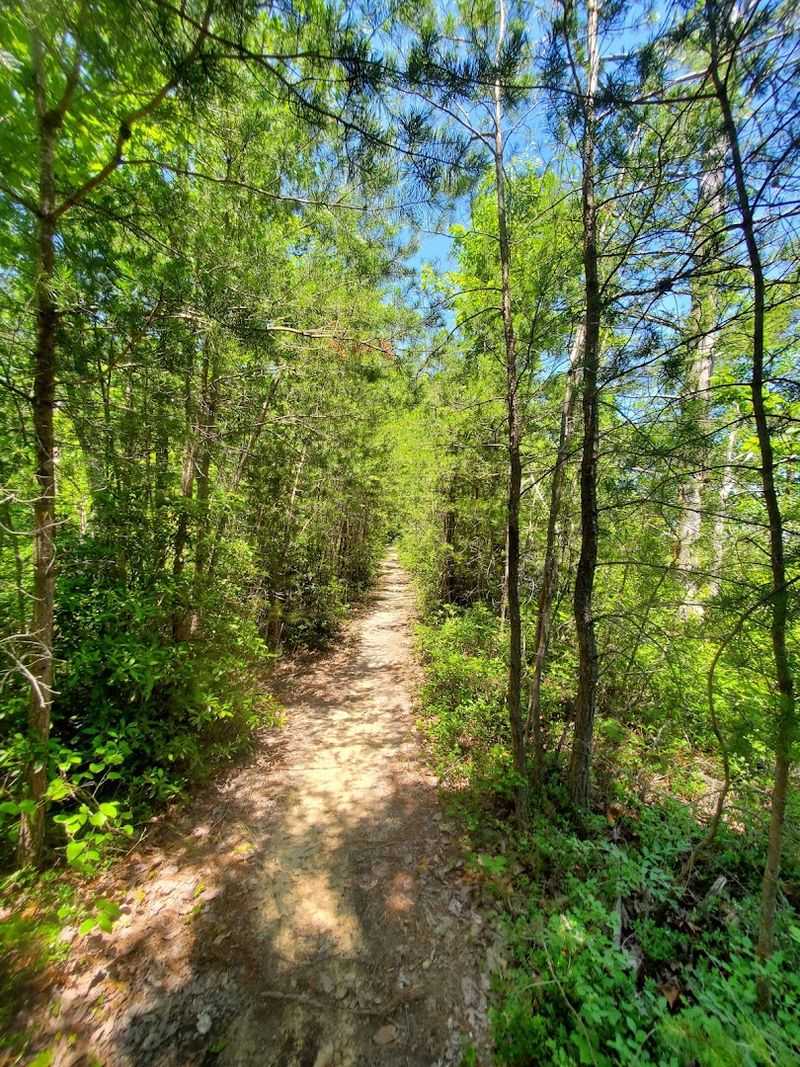
Preparation makes a real difference at Pogue Creek Canyon. The preserve is open from 8 AM to 5 PM daily, and public access is permitted from sunrise to sunset.
There are no facilities on site, meaning no restrooms, no water sources, and no food vendors. Bring everything you need before leaving the main road.
The trailhead and gravel parking area are located off TN-154 near Jamestown, Tennessee 38556. Cell service is limited throughout the area, which makes offline maps and downloaded trail guides essential rather than optional.
The preserve can be reached by calling 931-879-5821 for current conditions or additional information before your visit.
Pets are discouraged on certain trail sections due to vertical ladders and steep drop-offs, so check trail conditions specific to your planned route. Wear sturdy footwear with ankle support, especially if you plan to enter the canyon rather than stay on the overlook trail.
The terrain involves large rocks, exposed roots, stream crossings, and significant elevation change. Arriving early in the morning gives you the best chance of having the trail largely to yourself, which, in a place this quiet and this beautiful, is exactly the right way to experience it.
The Overlook That Makes The Effort Worthwhile
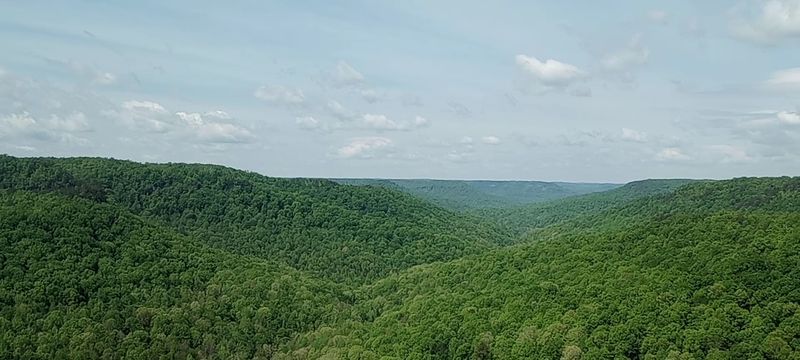
The canyon overlook at Pogue Creek is one of those viewpoints that earns silence.
Visitors who reach it for the first time tend to stop talking, at least for a moment, because the view requires a few seconds of adjustment.
The depth of the canyon below, the scale of the sandstone walls, and the unbroken forest stretching toward the horizon combine into something that photographs only partially capture.
Reaching the overlook via the 1.5-mile Pogue Creek Overlook Trail is manageable for most reasonably fit adults. The path moves through forest before opening onto the canyon rim, where the full scope of the gorge becomes visible.
Reviewers consistently describe it as a highlight of their visit, with several noting that they had the overlook entirely to themselves.
For those who continue deeper into the canyon, additional overlooks appear along the route, each offering a different angle on the same dramatic geography. The overlook at the far end of the inner canyon trail is described by experienced hikers as the most rewarding of all.
Getting there takes time and physical effort, but the canyon does not withhold its best views from those willing to work for them.
Why This Place Deserves More Attention
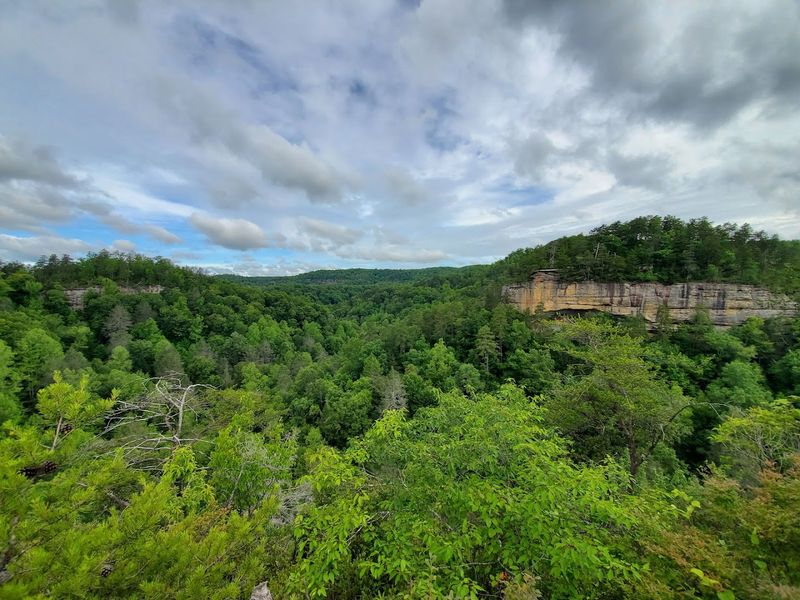
A 4.8-star rating across 143 reviews is a meaningful data point for any natural area. It suggests that the people who make the effort to visit Pogue Creek Canyon are not disappointed.
The reviews span years and describe consistent qualities: the rock formations, the solitude, the night sky, the sense that this is a place still operating on its own terms.
What is less clear is why more people do not know about it.
The preserve sits within reach of Jamestown, adjacent to Pickett State Park, and within a region of the Cumberland Plateau that contains some of the most compelling geology in the eastern US.
The combination of day hiking, geological interest, botanical diversity, wildlife, and dark sky observation in one location is genuinely unusual.
The answer may simply be that the preserve has never been promoted aggressively, and its access road does not announce itself dramatically. That quality of quiet self-containment is, for many visitors, precisely the appeal.
Places that require a little effort to find tend to reward that effort with something the heavily trafficked destinations cannot offer. It’s the reliable impression that you have arrived somewhere real, and that you have it almost entirely to yourself.