
This Ancient Mississippi Landmark Is The Kind Of Place That Lands On A 2026 Bucket List
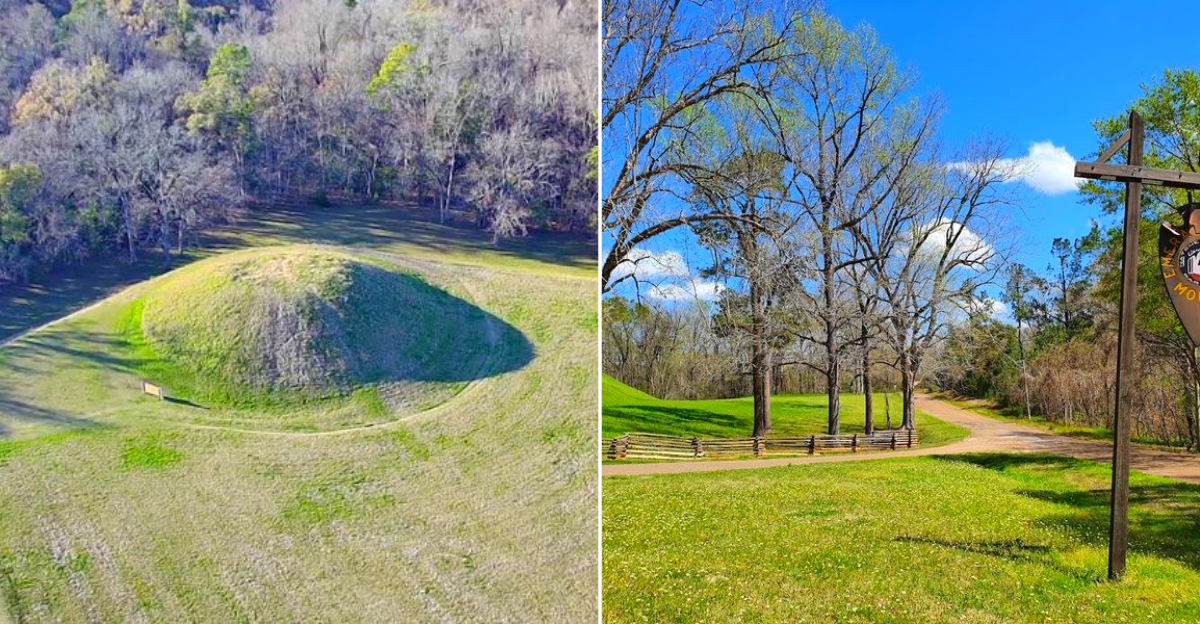
Mississippi has an attraction ancient enough it makes modern entertainment feel like it is trying entirely too hard. The kind of place that lands on a bucket list not because anyone told you to put it there but because the moment you hear about it the decision makes itself.
Real, specific, and delivering an experience that newer attractions have been unsuccessfully attempting to replicate for years. You don’t need modern trends for this one.
Just an open mind. Go in 2026 while it still feels like a discovery worth protecting.
The experience here is the kind that produces true enthusiasm rather than polite appreciation.
A Mound So Massive It Has Its Own Mounds On Top
Most landmarks announce themselves with a sign and a gift shop. What you find here announces itself with sheer, grassy scale.
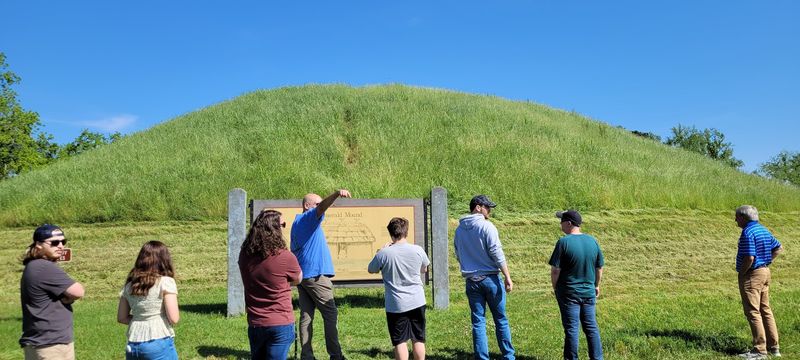
Standing at the base, you realize quickly that what looks like a rolling hill is actually one of the most remarkable feats of human construction in North America.
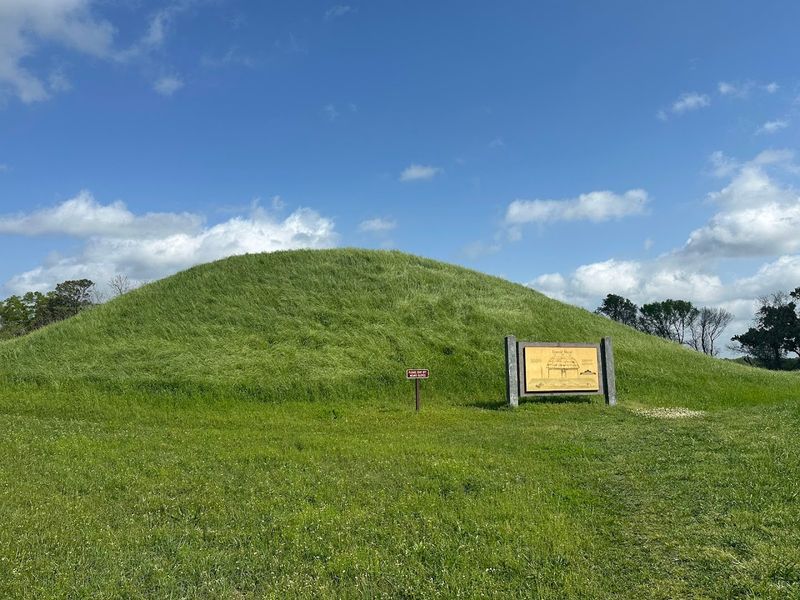
The base platform covers a full eight acres and rises 35 feet off the ground. Two secondary mounds sit on top of that platform, pushing the total height to about 60 feet.
The larger of the two secondary mounds measures 190 feet by 160 feet and stands 30 feet tall on its own.
To put that in perspective, you could fit a football stadium on the main platform and still have room to spare. Every bit of it was built by hand, without machines, by people who understood engineering long before the word existed.
The whole structure stretches 770 feet by 435 feet at its base. Standing on top and looking out at the Mississippi countryside is an experience that genuinely shifts your sense of scale.
Few things in this country match the quiet power of a place this enormous and this old.
Emerald Mound On Emerald Mound Road, Natchez, MS 39120
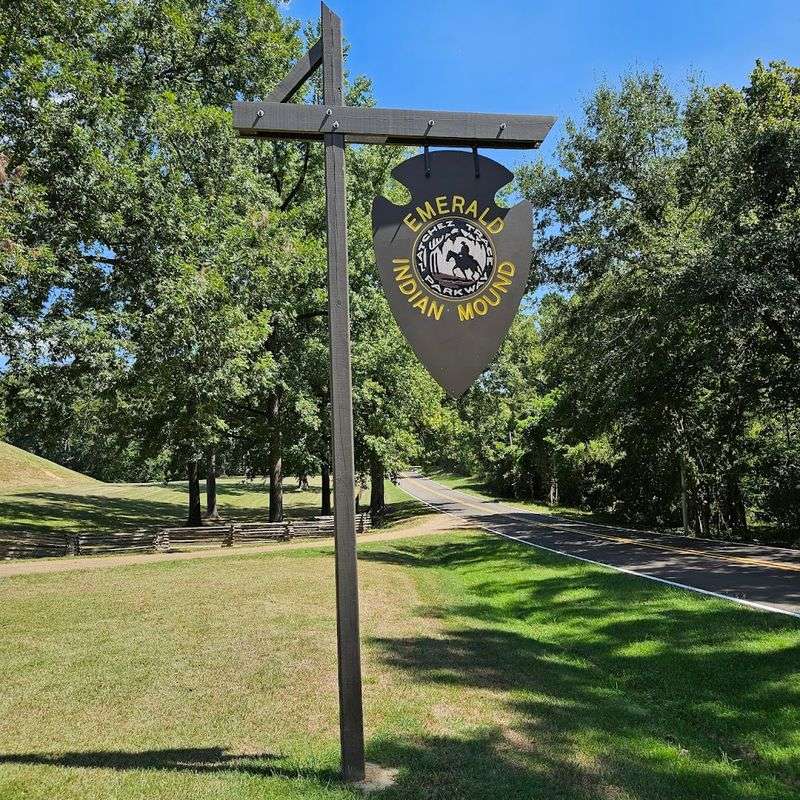
About ten miles northeast of Natchez on the Natchez Trace Parkway at milepost 10.3, you will find Emerald Mound Road leading to one of the most underrated historic sites in the entire country. The address is Emerald Mound Road, Natchez, MS 39120, and the site is managed by the National Park Service.
Entry is completely free. The grounds are open daily from 8 AM to 5 PM, and there is no staff at the gate.
You simply park, pass through a small gate, and the mound is right in front of you. A paved path takes you to the top without much difficulty.
Emerald Mound holds the title of second-largest Mississippian Period ceremonial mound in the United States. Only Monks Mound near Cahokia, Illinois, is larger.
The National Park Service stabilized the site back in 1955, and it has been a designated National Historic Landmark ever since. For anyone driving the Natchez Trace, skipping this stop would be a genuine missed opportunity.
The site carries a 4.7-star rating from hundreds of visitors, and that number tells its own story about how consistently this place delivers.
Who Built This And Why It Still Matters
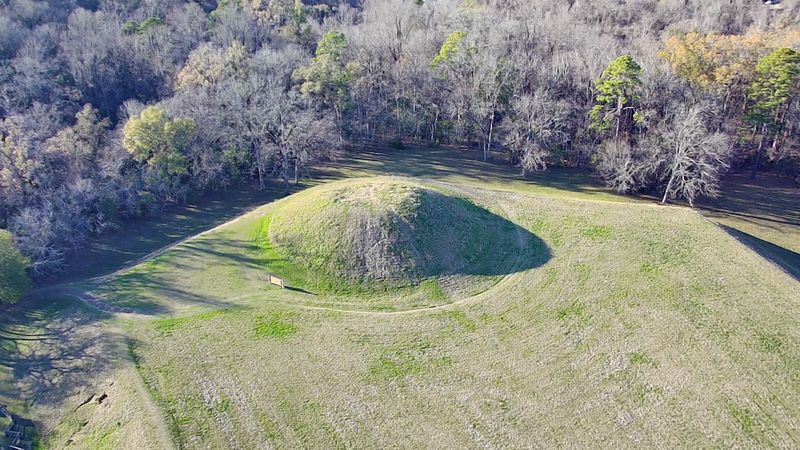
The Mississippian culture built Emerald Mound somewhere between 1200 CE and 1730 CE. These were the ancestors of the Natchez Indians, and they were sophisticated people with a complex society built around ceremony, agriculture, and community leadership.
Archaeologists believe the mound platforms supported temples and ceremonial buildings used for civic processions, ritual dances, and religious gatherings. The site functioned as a major political and spiritual center for the surrounding population.
It was not just a pile of dirt; it was the heart of a civilization.
Historical records suggest smaller mounds once lined the sides of the primary platform but gradually disappeared due to erosion and farming over the centuries. What remains today is still breathtaking in scope.
The Natchez Indians continued using the site as late as 1730, which means this place bridges ancient prehistory and recorded colonial history in one location. Mississippi holds a deep well of Native American history, and Emerald Mound is one of its most honest and powerful expressions.
Free Entry And Zero Excuses Not To Go
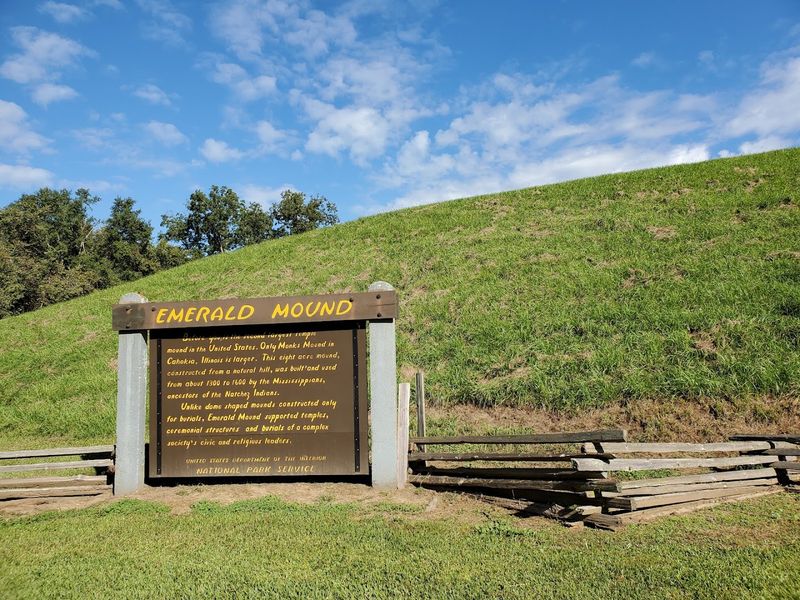
Few bucket-list destinations come without a price tag, but Emerald Mound is a genuine exception. The National Park Service manages the site at no cost to visitors.
There are no tickets to buy, no reservations to make, and no crowds fighting over parking spots.
The site opens at 8 AM every day and closes at 5 PM. There is no on-site staff, so the experience feels refreshingly unstructured.
You set your own pace and take as long as you want within the operating hours. For families, solo travelers, and road-trippers alike, that kind of freedom is hard to find at a place this historically significant.
Because entry is free, Emerald Mound is also one of the best stops along the Natchez Trace Parkway for travelers on a budget. You are getting access to a National Historic Landmark, a site older than most European settlements in North America, and a landscape that has barely changed in centuries.
Bringing kids along adds even more value. The wide open platform gives younger visitors room to move while absorbing real history.
Not many places can offer all of that without charging a single dollar.
What The Natchez Trace Adds To The Journey
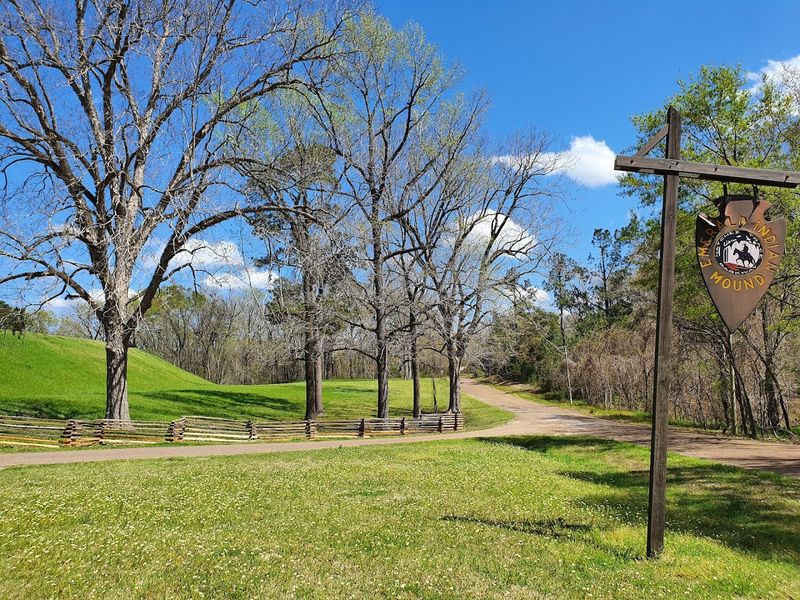
Driving the Natchez Trace Parkway is already one of the great American road trip experiences. The road runs 444 miles through Mississippi, Alabama, and Tennessee, and it follows the path of an ancient trail used by Native Americans, traders, and early American settlers for centuries.
Emerald Mound sits at milepost 10.3, making it one of the earliest major stops for anyone driving north from Natchez. The parkway itself is a federally protected road with no commercial traffic and a speed limit that encourages you to actually look at your surroundings.
It feels like a different era the moment you turn onto it.
Pairing the Natchez Trace drive with a stop at Emerald Mound creates a travel experience that is both scenic and deeply educational. The mound is less than five minutes off the main parkway, so the detour costs almost nothing in time.
Many travelers report that the mound ends up being the highlight of their entire drive along the Trace. Given the competition along that stretch of road, that is a meaningful statement.
Mississippi has a way of surprising people who thought they already knew what the South had to offer.
A Ceremonial Giant With A Quiet Personality
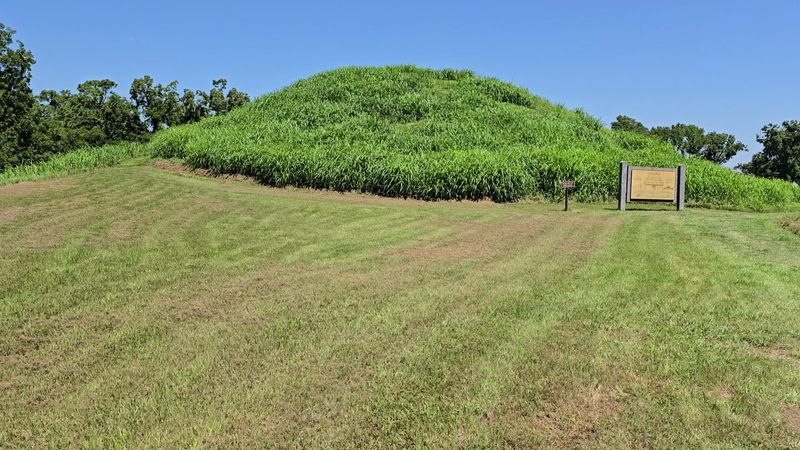
There is something unusual about Emerald Mound. It does not try to impress you the way a museum or monument might.
It simply exists, enormous and unhurried, and lets you draw your own conclusions. That restraint is part of what makes it so memorable.
Recreational activities like ball games and kite flying are not permitted on the mound, out of respect for its ceremonial origins. That rule alone sets the tone for how the site should be experienced.
This is not a park or a playground. It is a place that deserves a certain kind of attention.
Visitors who take time to read the informational signage near the base tend to leave with a much richer experience than those who simply climb and descend. The signs explain the archaeological timeline, the cultural practices of the Mississippian people, and the ongoing significance of the site to Native American communities today.
That context transforms a grassy mound into a living chapter of American history. The quiet atmosphere is not emptiness; it is the kind of stillness that comes from standing somewhere that has witnessed more human activity than most people can fully comprehend.
Kids, History, And Wide Open Space
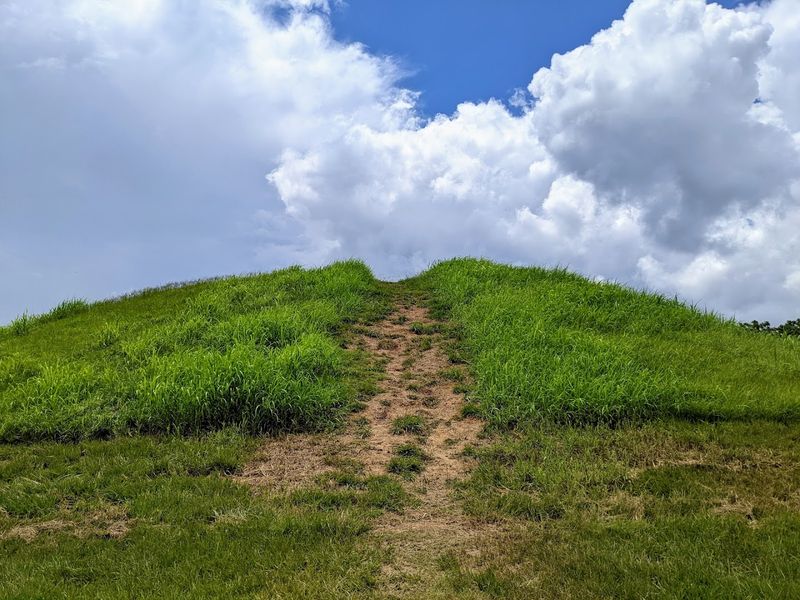
History lessons hit differently when you are actually standing inside them. Emerald Mound gives younger visitors a chance to connect with the past in a way that no textbook can replicate.
The open platform at the top is wide enough for kids to move around freely while adults take in the surroundings.
Parents often find that the sheer size of the mound sparks genuine curiosity in children. Questions come naturally when the thing in front of you is eight acres of hand-built earth that has been standing for over 800 years.
The informational signs near the entrance are written clearly enough for older kids to read and understand on their own.
The site is also stroller-friendly along the base path, and the paved trail up the slope is manageable for most ages. Because there is no admission fee, families can make a spontaneous stop without worrying about budget.
The lack of crowds also means kids have space to explore without the usual frustrations of busy tourist spots. For a family driving the Natchez Trace, adding Emerald Mound to the itinerary is one of those decisions that tends to become a favorite memory from the trip.
Why This Place Deserves A Permanent Spot On Your List
A place earns bucket-list status by doing something no other place can do. Emerald Mound earns it by being genuinely irreplaceable.
Only one other mound in the entire country is larger, and that one is in Illinois. What Mississippi has here is extraordinary by any measure.
The combination of free access, natural beauty, deep cultural history, and physical scale creates an experience that is hard to categorize. It is not a museum.
It is not a theme park. It is a living archaeological site that has been part of this landscape for longer than the United States has existed as a country.
Travelers who have visited once tend to come back. There is something about the place that stays with you after you leave, a quiet insistence that history is not just something in books.
The Natchez Trace Parkway makes the logistics easy, and the site itself does the rest. For anyone who values authenticity, perspective, and the kind of travel that actually means something, Emerald Mound belongs on the list.
Mississippi does not shout about its treasures. It trusts that the right people will find them, and Emerald Mound is proof that the quiet ones are often the most worth finding.