
New York Is Home To One Of The Grandest Gothic Cathedrals Ever Built In The World
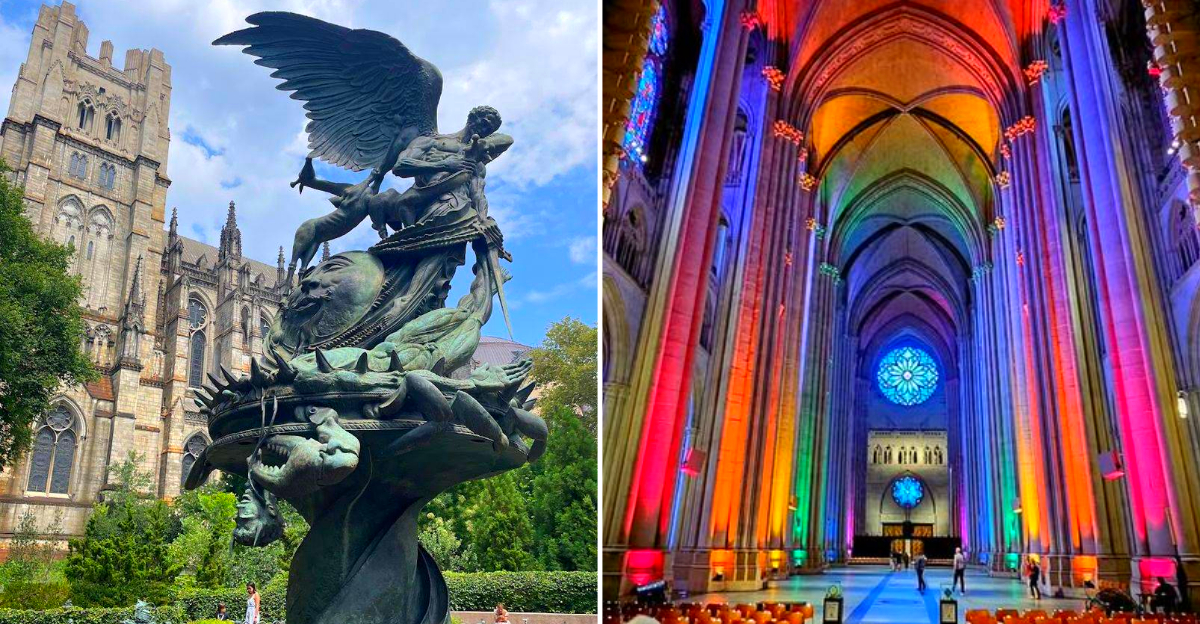
New York does not do things quietly and this Gothic cathedral is the most magnificent proof of that statement available in stone. One of the largest ever built anywhere on earth, can you believe that?
It is delivering a scale and grandeur so completely overwhelming it makes first time visitors stop at the entrance and simply stare before they have even decided to go in.
Construction began in 1892 and the cathedral is still unfinished which somehow makes the whole thing more extraordinary rather than less.
What exists already is breathtaking beyond reasonable description. New York has landmarks worth going out of your way for and this one belongs at the very top of that list in 2026.
This place is something that makes the world feel small for a while. That experience is rarer than it sounds and this cathedral delivers it completely.
A Scale That Defies Belief Before You Even Walk In
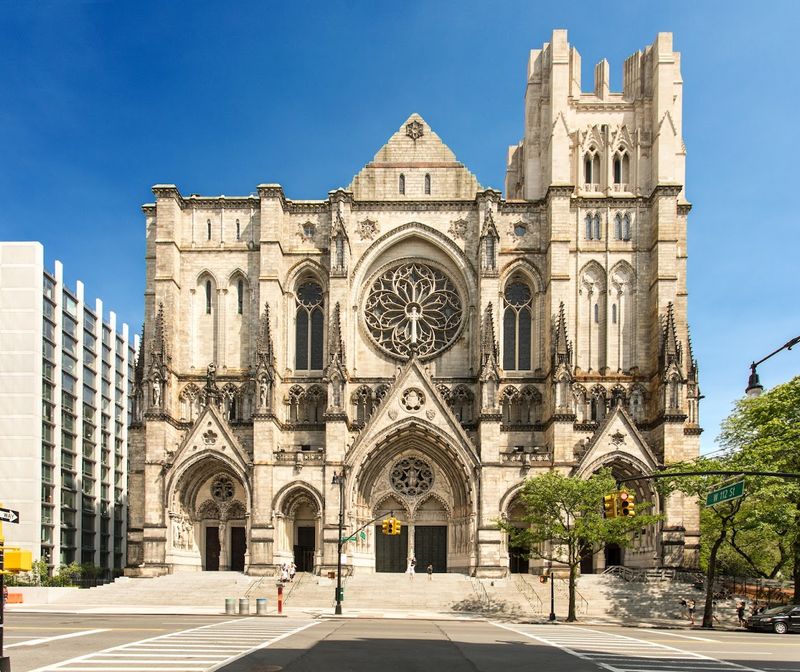
The cathedral covers approximately 121,000 square feet of floor space. To put that in perspective, a standard NFL football field is about 48,000 square feet.
You could fit more than two football fields inside this building and still have room left over. That kind of size is not just impressive on paper.
It is overwhelming in person.
The nave stretches 601 feet from end to end, making it the longest cathedral nave in the world. The roof above that nave rises 177 feet into the air.
Every single measurement here is a world record or close to one. New York has no shortage of grand buildings, but St. John the Divine occupies a category entirely its own.
Nothing quite prepares you for the moment the full exterior comes into view for the first time.
The Cathedral Of St. John The Divine On Amsterdam Avenue
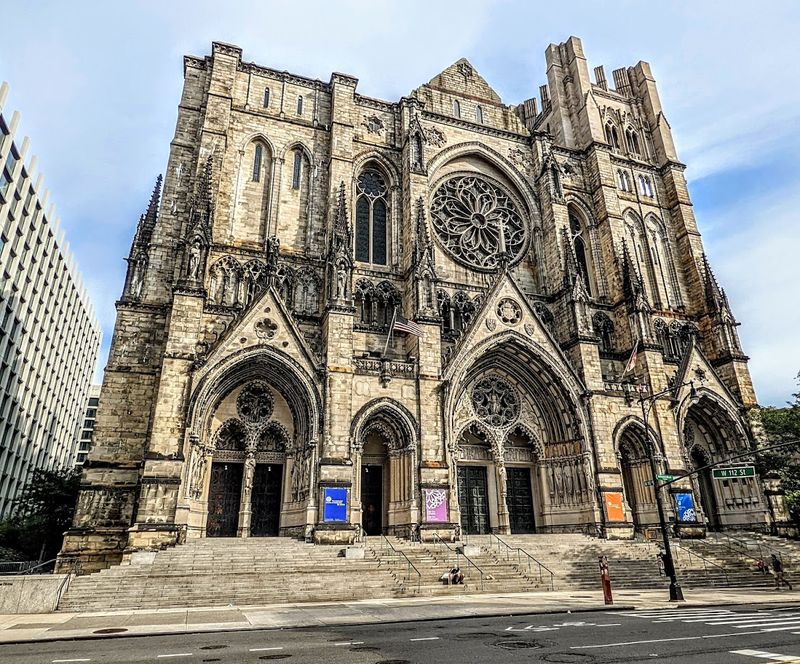
Right on Amsterdam Avenue in the Morningside Heights section of Manhattan, the Cathedral of St. John the Divine holds court like a stone giant from another era. The address is 1047 Amsterdam Ave, New York, NY 10025, and getting there is straightforward.
The C train to 110th Street puts you just a short walk away.
Construction on the cathedral began in 1892, making it over 130 years in the making. The original architects Heins and LaFarge started with a Byzantine Revival and Romanesque Revival design.
After 1909, the plan shifted dramatically toward Gothic Revival, which is the style most visitors associate with the building today. That architectural evolution is actually visible inside the walls if you know what to look for.
The cathedral is open Monday through Saturday from 9:30 AM to 5 PM, and on Sundays from noon to 5 PM. There is an admission fee for general visitors, and daily services are also held on site.
Beyond worship, St. John the Divine hosts concerts, art exhibitions, and community events throughout the year. It is genuinely one of the most active and welcoming sacred spaces in all of New York.
Gothic Grandeur With A Romanesque Soul
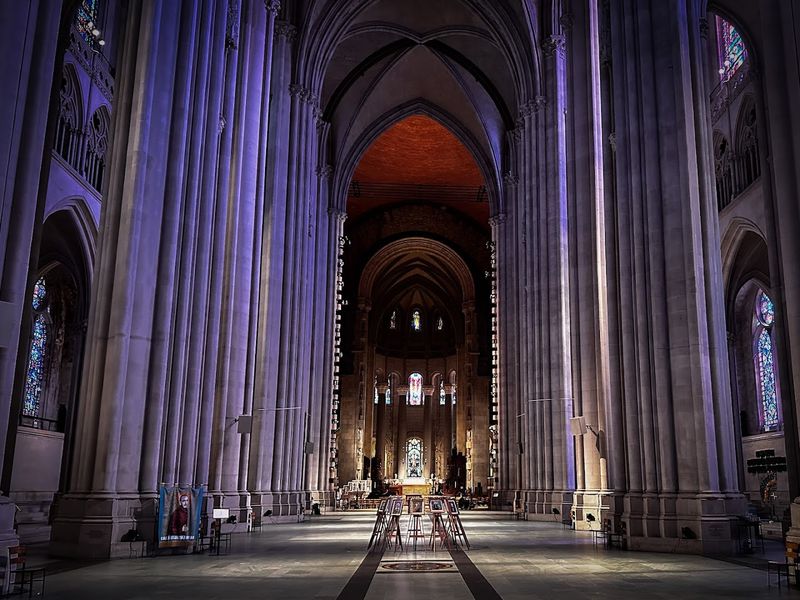
Architecture nerds, this one is for you. The Cathedral of St. John the Divine is not purely Gothic, and that is actually what makes it so fascinating.
The building tells two architectural stories at once, and both of them are worth paying attention to.
The apse and the surrounding chapels were built in the original Byzantine and Romanesque style from the 1890s. You can see the rounded arches and heavier stonework in those sections.
Then the nave, designed by Ralph Adams Cram and completed in 1941, shifts into full Gothic Revival mode. Ribbed vaulting climbs overhead.
Pointed arches frame every opening. Flying buttresses grip the exterior walls from outside.
The result is a building that blends two of the most powerful architectural traditions in Western history. Most cathedrals pick one style and stick with it.
St. John the Divine carries both, and somehow the combination feels intentional rather than awkward. Experts and casual visitors alike tend to find the contrast genuinely compelling.
Walking from the Romanesque chapels into the Gothic nave feels like moving through two different centuries in just a few steps. Few buildings anywhere in the world offer that kind of layered experience.
The Great Rose Window Is A Masterpiece In Glass
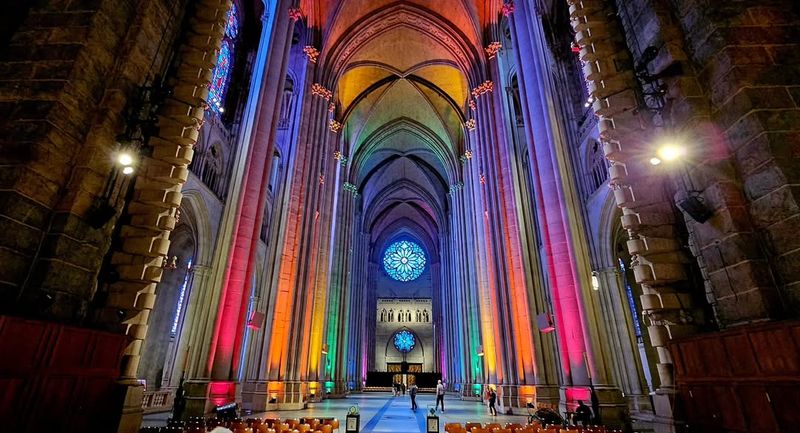
Stained glass has been a defining feature of Gothic cathedrals for centuries, but the Great Rose Window at St. John the Divine takes that tradition to an entirely new level. Mounted on the western wall of the cathedral, the window measures 40 feet in diameter.
That makes it the largest rose window in the United States and among the top five largest in the entire world.
The window is made up of over ten thousand individual pieces of glass. Ten thousand.
Each piece was cut, colored, and assembled to create the breathtaking circular pattern that catches light at every hour of the day differently. At sunrise, the colors shift toward warm amber and gold.
By midday, the blues and purples become electric. The window essentially performs a slow, silent light show all day long.
Visitors often walk past it without fully stopping to appreciate what they are looking at. Do not make that mistake.
Find a pew near the center of the nave and tilt your head back. The window fills your entire field of vision from that angle.
It is the kind of moment that stays with you long after you have left the building and returned to the busy streets of New York.
St. John The Unfinished And Proud Of It
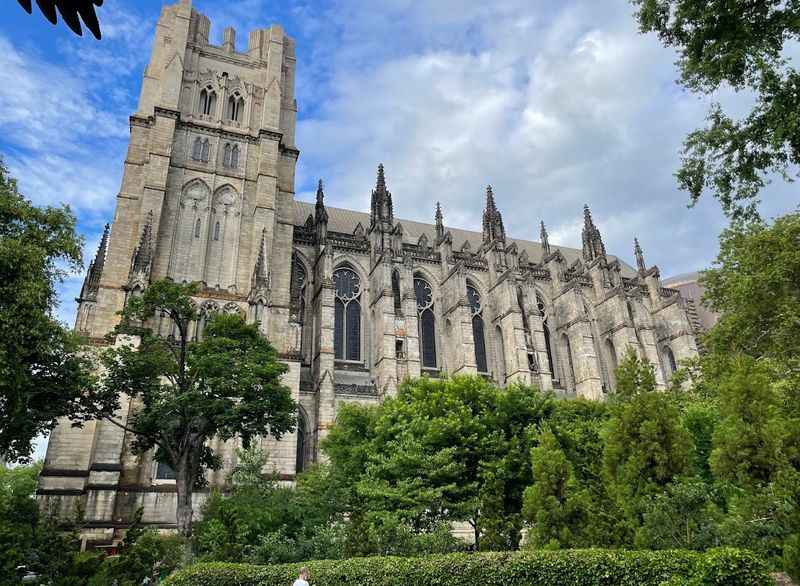
Only two-thirds of the cathedral have been completed so far. That fact alone should tell you something about the ambition behind this project.
The towers above the western facade remain unfinished. The southern transept has not been completed.
A proposed steeple above the crossing is still just a plan on paper. And yet the building already ranks as one of the largest churches on Earth.
The nickname St. John the Unfinished has stuck around for decades, and the cathedral wears it with a kind of dignity. Construction has been paused multiple times over the years due to funding gaps and global events.
A significant fire in 2001 damaged part of the building, and major renovation work followed before the cathedral was rededicated in 2008.
Far from feeling incomplete, the cathedral communicates something rare in modern life: patience. Great things take time, and this building is proof of that.
The ongoing construction is a reminder that the most meaningful projects are rarely the fastest ones. Visitors who know the full story tend to look at the unfinished towers not with disappointment but with curiosity about what the final version might one day look like.
That anticipation is part of the experience.
A Dome Big Enough To Shelter Lady Liberty
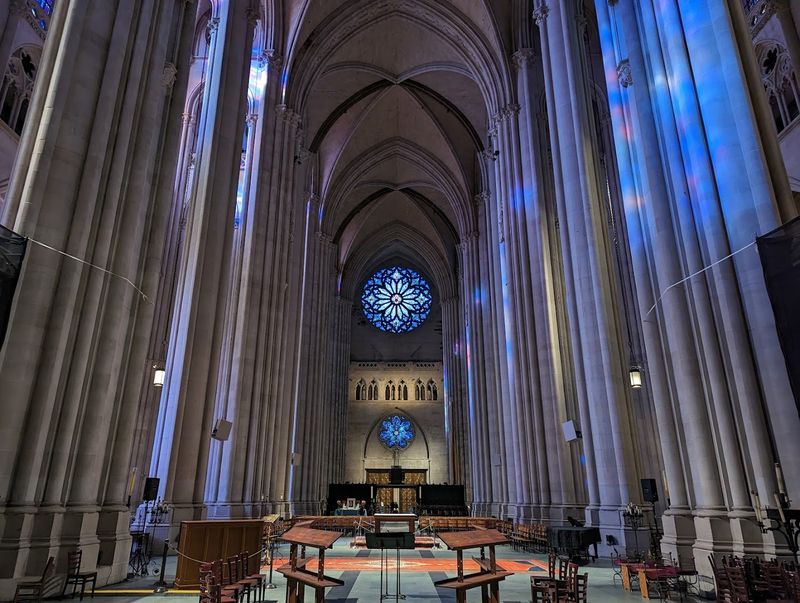
Here is a fact that genuinely stops people mid-sentence: the temporary dome over the crossing of the Cathedral of St. John the Divine is large enough to fit the Statue of Liberty underneath it. Not the torch.
Not the crown. The whole statue, from base to tip.
That is the scale of what you are dealing with here.
The crossing is the area where the nave and transepts intersect, forming a cross shape when viewed from above. Most Gothic cathedrals have a tower or lantern at this point.
St. John the Divine has a massive temporary dome while the permanent structure remains unbuilt. Even in its unfinished state, the space underneath is staggering.
Standing at the crossing and looking straight up gives you one of the most powerful architectural experiences available anywhere in the United States. The vertical distance above your head is almost disorienting.
Sound echoes and swirls in that space in ways that feel almost orchestrated. Musicians who have performed at the cathedral often describe the acoustics at the crossing as unlike anything else they have encountered.
The reverberation from a single note can linger for ten to fifteen seconds before fading. That is not an accident.
It is physics and stonework working together beautifully.
Art Lives And Breathes Inside These Walls
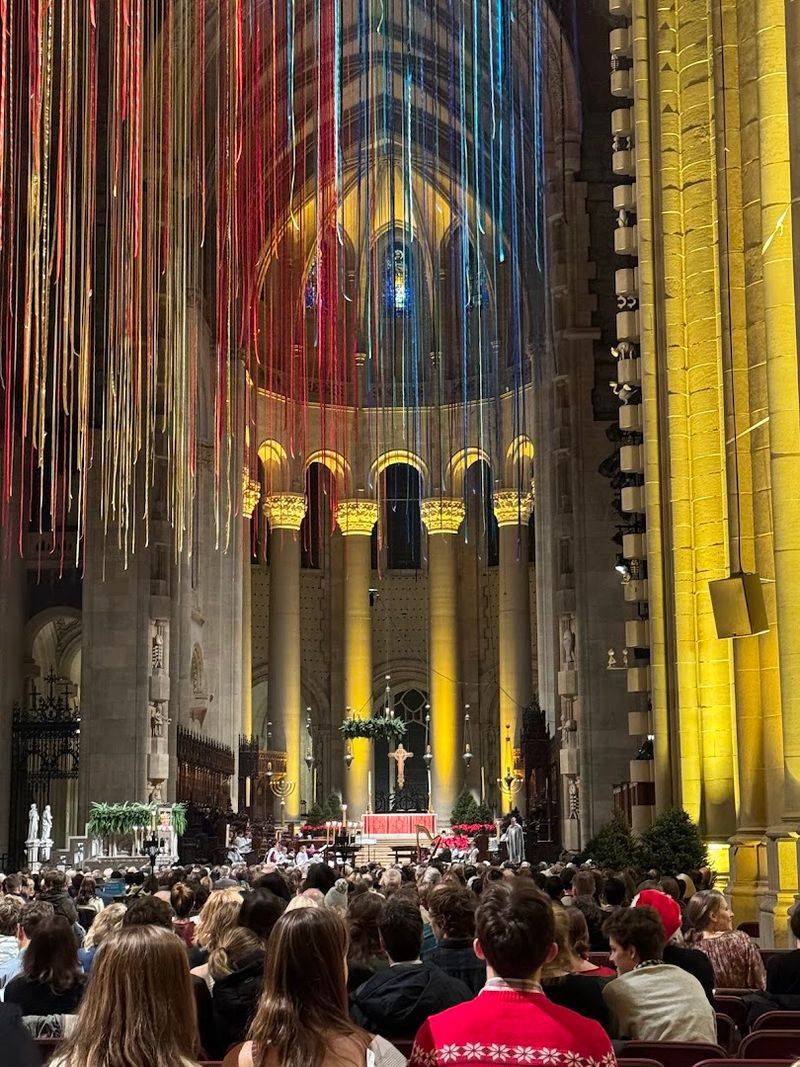
Sacred space and contemporary art are not always comfortable neighbors, but at St. John the Divine they have found a way to genuinely complement each other.
The cathedral has hosted art exhibitions, installations, and performances for decades, turning its massive interior into one of the most unusual gallery spaces in all of New York.
The scale of the building allows for artwork that simply cannot fit anywhere else. Towering sculptures, large-format photography, and immersive installations have all found a home beneath those Gothic arches.
The stone walls and filtered light create a backdrop that makes almost any artwork look more powerful than it would in a conventional white-box gallery setting.
Beyond exhibitions, the cathedral has welcomed ballet performances, choral concerts, film screenings, and community celebrations. The annual Blessing of the Animals draws crowds every October as people bring their pets, large and small, for a formal blessing in the nave.
A Halloween concert featuring the cathedral’s massive pipe organ playing along to a silent film has become a beloved seasonal tradition. The building is not just a monument to the past.
It is an active, creative, and community-driven institution that New York genuinely relies on throughout the year.
The Pipe Organ And Acoustics That Move You Physically
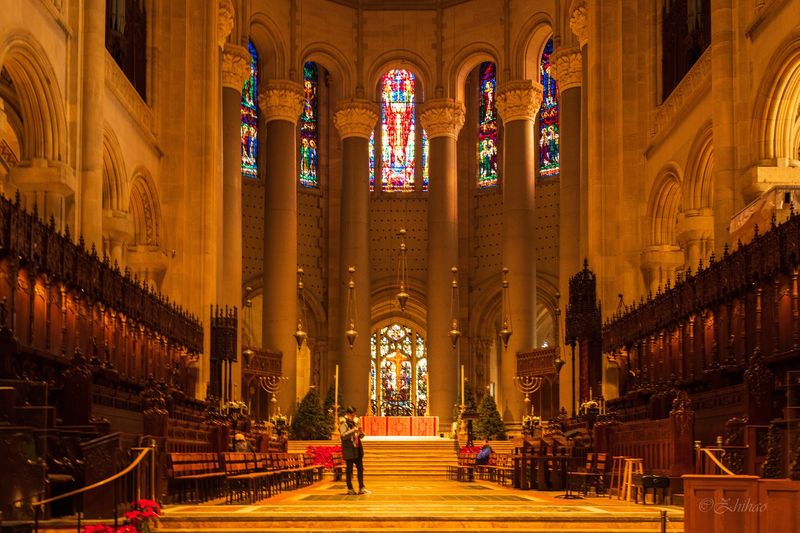
Sound inside the Cathedral of St. John the Divine is not background noise. It is an event.
The cathedral’s pipe organ is one of the largest and most powerful in the world, and hearing it played at full volume inside that stone space is an experience that registers in your chest, not just your ears.
The acoustics of the building are a direct result of its construction. Stone walls, vaulted ceilings, and an enormous interior volume combine to create a reverberation time that musicians describe as extraordinary.
A single chord played on the organ can sustain and echo for well over ten seconds before the sound fully dissipates. Choral singers who have performed at the cathedral report that the sound literally surrounds them from every direction.
The cathedral hosts regular concerts and musical events throughout the year, and attending one is arguably the single best way to experience the building. Reading about the acoustics is one thing.
Feeling a full organ chord vibrate through the stone floor beneath your feet is something else entirely. Check the event calendar on the cathedral’s official website before you visit.
Timing your trip around a live performance turns an already remarkable visit into something genuinely unforgettable for anyone who loves music.
Inclusivity Written Into The Stone And The Mission
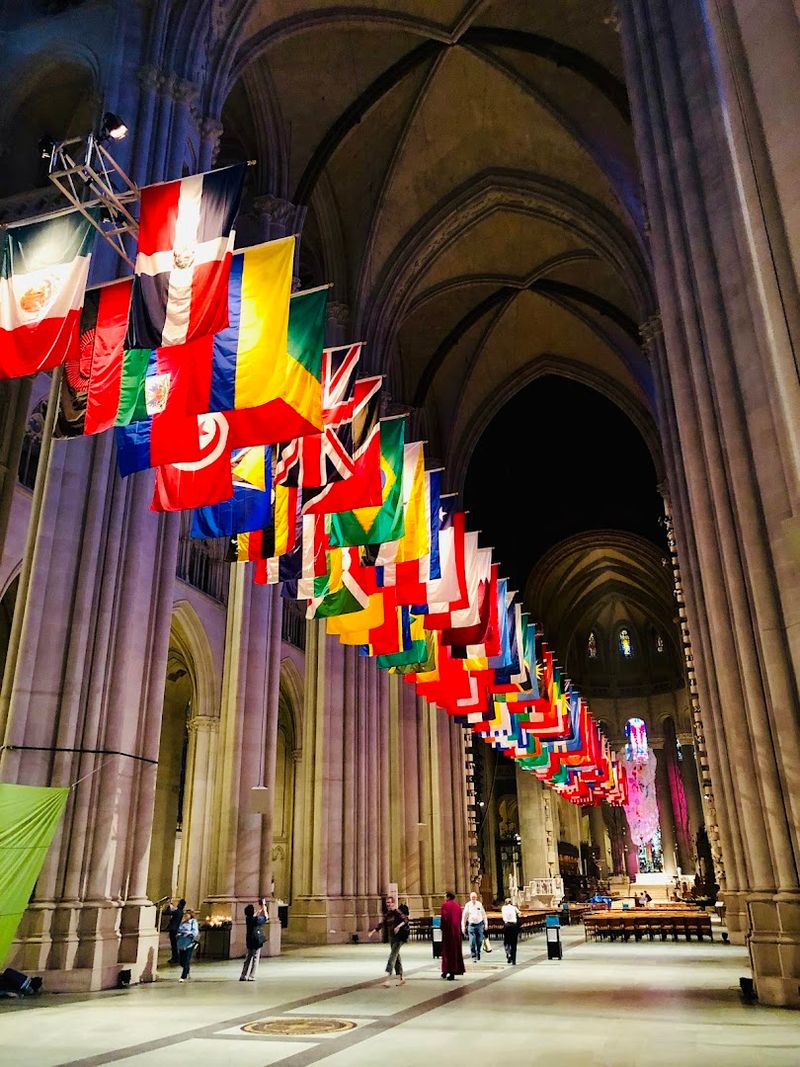
One of the most striking things about the Cathedral of St. John the Divine is how deliberately it has chosen to be a welcoming place. The rainbow flag displayed at the entrance is not a recent addition meant to chase trends.
The cathedral has a long and documented history of advocacy, community service, and radical hospitality going back decades.
The cathedral has hosted Pride events, community health programs, food initiatives, and advocacy campaigns throughout its history. It has consistently used its platform and its space to serve the surrounding neighborhood in practical, tangible ways.
Morningside Heights is a diverse and dynamic community, and the cathedral has worked hard to reflect that diversity in its programming and its outreach.
For visitors who are not Episcopalian or even religious, the cathedral still offers something meaningful. It is a space that takes seriously the idea that architecture, art, and community can exist together without contradiction.
The combination of stunning Gothic stonework and genuine social commitment creates an atmosphere that feels both ancient and urgently present. New York has plenty of beautiful buildings.
It has far fewer that also carry this kind of moral weight and community purpose alongside their architectural splendor.
Planning Your Visit To A True American Wonder
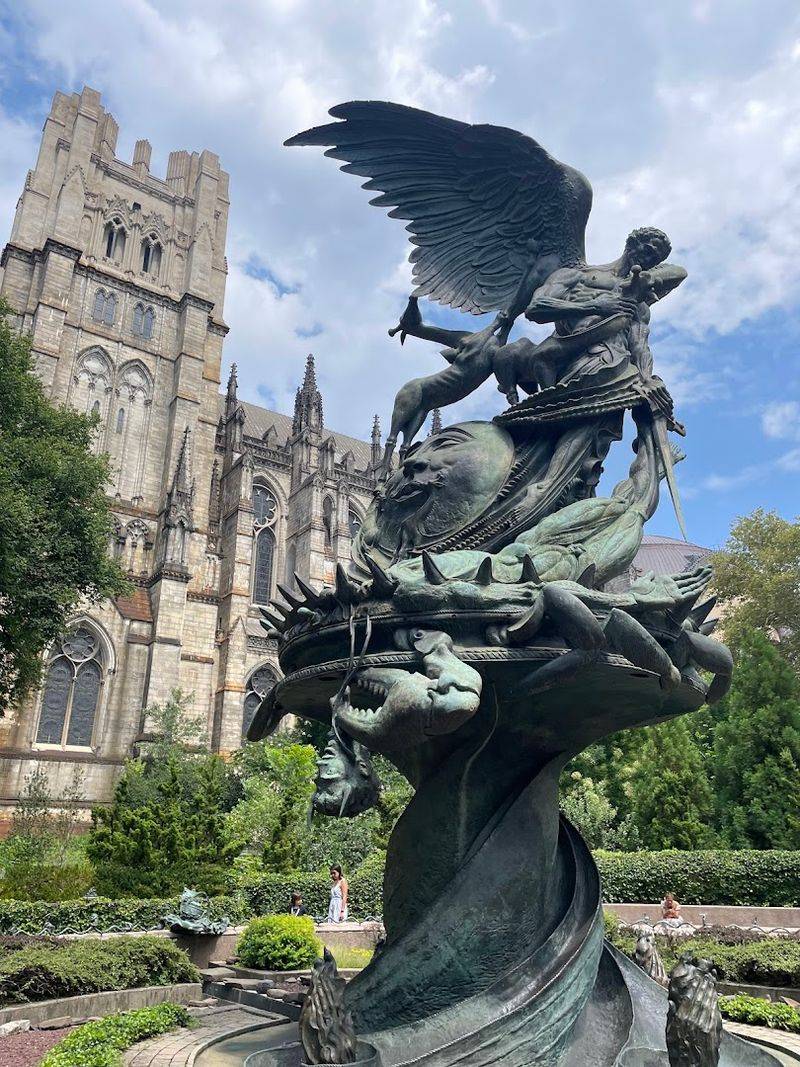
A visit to the Cathedral of St. John the Divine rewards preparation. The cathedral is open Monday through Saturday from 9:30 AM to 5 PM, and on Sundays from noon to 5 PM.
There is an admission fee for general visitors who want to explore the interior, and the cathedral also holds daily services that are open to the public free of charge.
Getting there is easy. The C train to 110th Street Cathedral Parkway is the most direct option, and the walk from the station is just a few minutes.
The cathedral sits between West 110th Street and West 113th Street, and the surrounding neighborhood is well worth exploring before or after your visit. There are also seven mini-chapels behind the main altar that many visitors overlook entirely but absolutely should not.
Allow at least two hours if you want to do the visit properly. The cathedral is enormous, and rushing through it means missing the details that make it extraordinary.
Check the event calendar at stjohndivine.org before you go. There is almost always something happening, from concerts and art exhibitions to seasonal celebrations.
A visit timed around a live event turns a great trip into a story you will be telling for years. New York saved the best surprise for last.